

ProductPRODUCT
Featured products
Contact Us
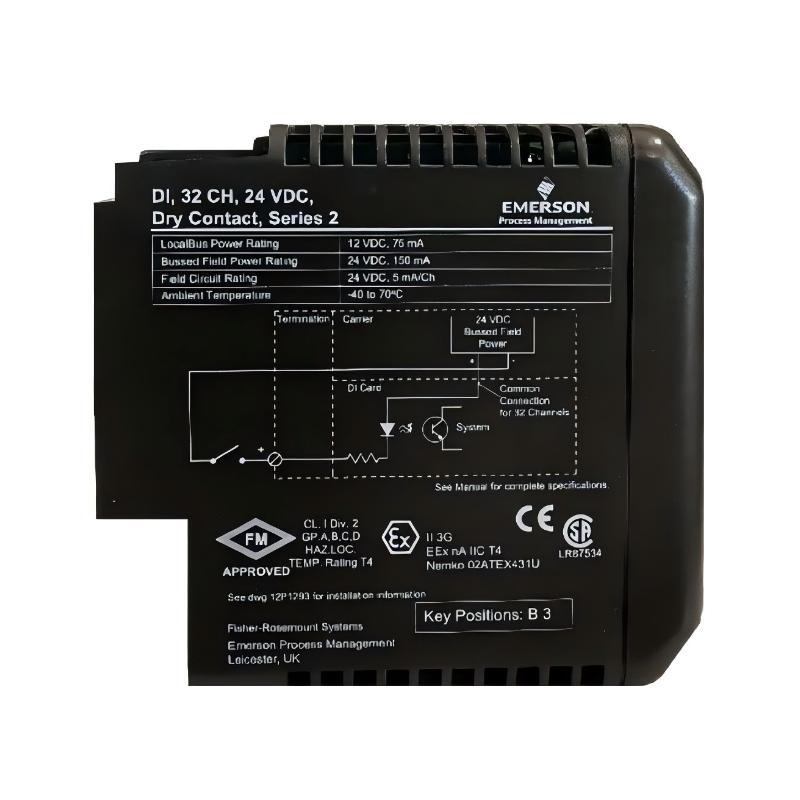
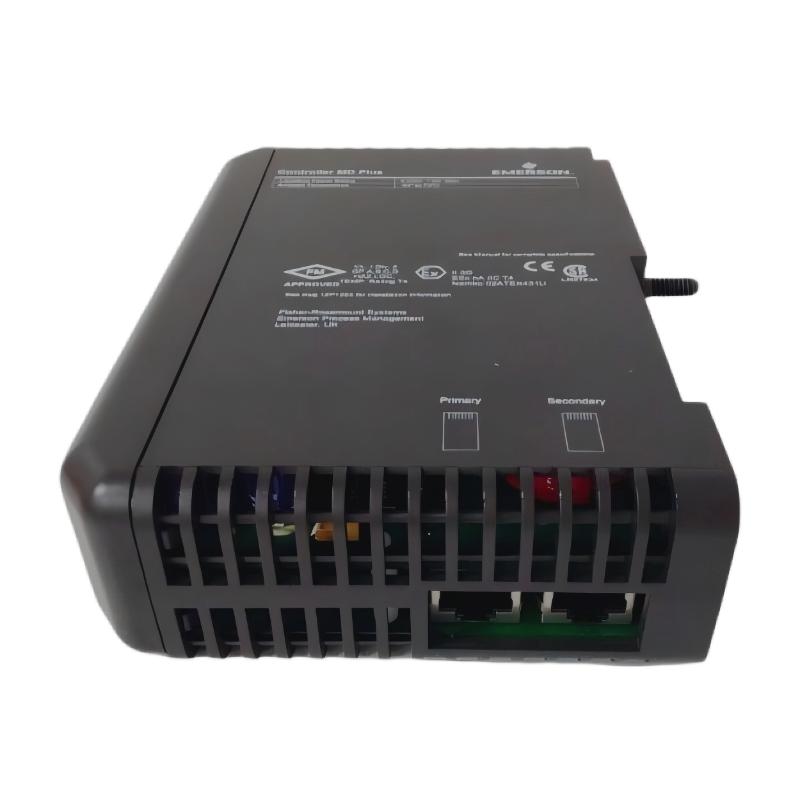
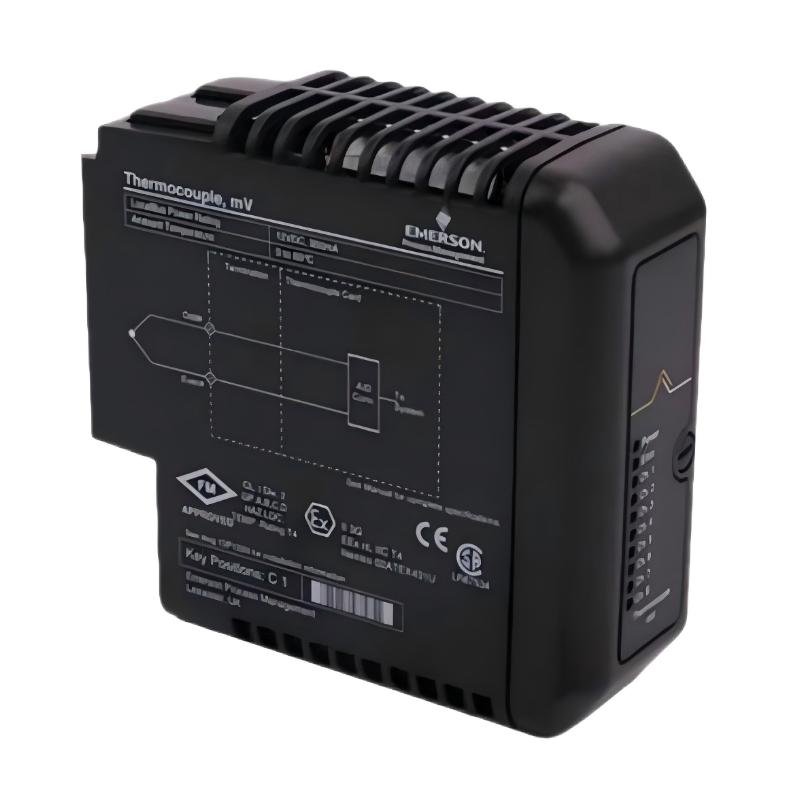
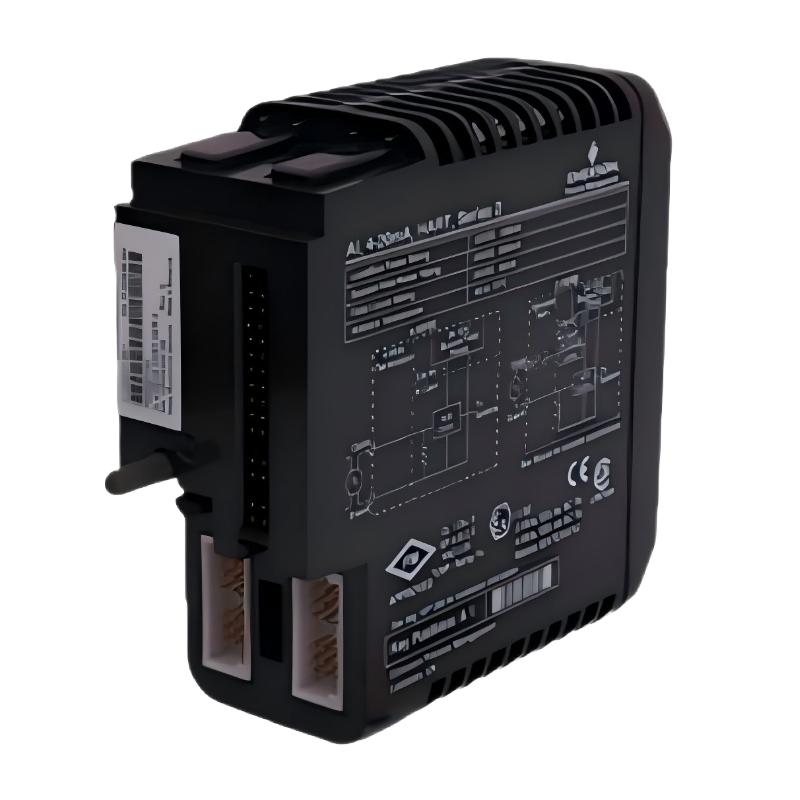
- Emerson
- VE4001S4T1B2
- Discrete Input Card
- USA
- 107 x 41 x 105 mm
- 0.25 kg
- Xiamen, China
- New & In Stock
- T/T, PayPal, Western Union
- 1 Year
- 1-3 Working Days
- DHL, UPS, TNT, FedEx and EMS.
- 24-Hour Service
- COO
- 6
Our advantage

Global Logistics
We have a 10-year logistics and express cooperation agreement, so our products can be shipped to any place in the world.

Brand new and original
Our products are imported in bulk from the place of origin. Because of the cooperative relationship, our products are all original and 100% new.

24-hour service
We provide 7*24 hours service to our customers. We will be there whenever you need us.

Price advantage
All our products are priced very favorably because we have our own warehouse and supply.
| Company Information | |||
| [email protected] | |||
| Mobile | +8615980777398 | ||
| +8615980777398 | |||
| 15980777398 |
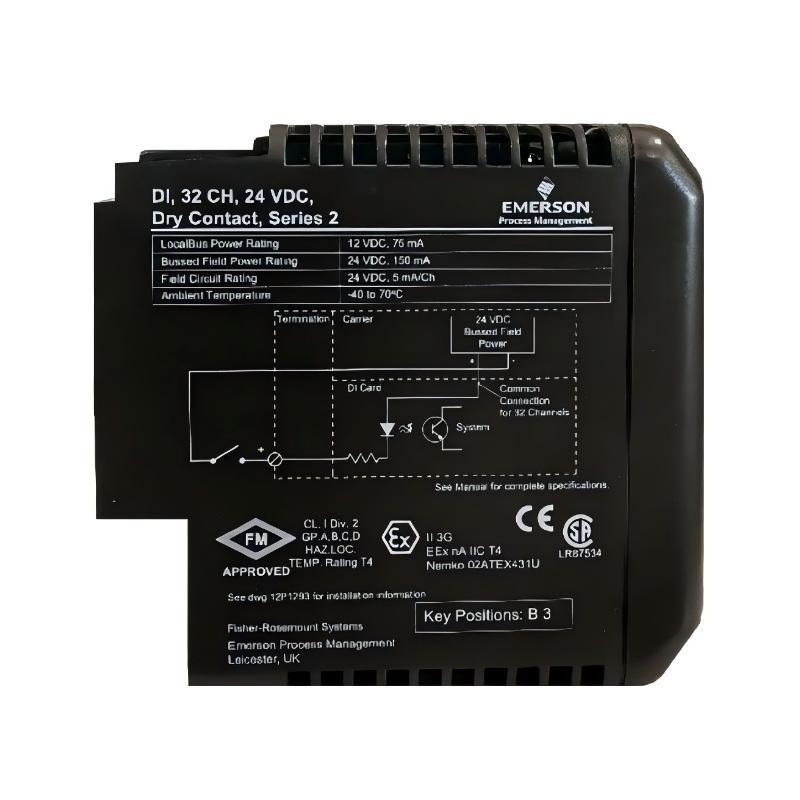
Product Overview
The Emerson VE4001S4T1B2 Discrete Input Card is an industrial automation I/O component designed for discrete signal acquisition in Emerson process control systems. As part of the DeltaV distributed control architecture, the card provides an interface between field devices and the control system, allowing discrete electrical signals to be acquired, monitored, and processed by the control application.
Discrete input cards are commonly used where field equipment provides two-state information, such as ON/OFF, open/closed, running/stopped, healthy/fault, or active/inactive conditions. By collecting these signals through a structured I/O architecture, the control system can monitor equipment status, generate alarms, implement interlocks, and coordinate automated process sequences.
The Emerson VE4001S4T1B2 has specified dimensions of 107 × 41 × 105 mm and a weight of 0.25 kg. Its compact form factor allows it to be integrated into industrial control system cabinets where multiple I/O cards may be installed in a relatively limited space.
The card is particularly relevant to process industries where reliable discrete signal monitoring is required across large numbers of field devices. Typical applications include valves, motor starters, switches, limit devices, equipment status contacts, alarms, and other binary field signals.
Technical Specifications
| Parameter | Details |
|---|---|
| Manufacturer | Emerson |
| Model | VE4001S4T1B2 |
| Product Type | Discrete Input Card |
| Automation Platform | Emerson DeltaV |
| I/O Function | Discrete signal acquisition |
| Signal Type | Discrete / Binary |
| Dimensions (H × W × D) | 107 × 41 × 105 mm |
| Weight | 0.25 kg |
| Installation | Industrial control system / I/O subsystem |
| System Role | Field signal interface |
| Typical Applications | Process monitoring, equipment status, alarms, interlocks |
| Typical Industries | Oil & gas, chemical, power, water treatment, manufacturing |
What Is the Emerson VE4001S4T1B2?
The Emerson VE4001S4T1B2 is a Discrete Input Card used to acquire binary signals from field equipment and make those signals available to the control system.
In an industrial process, many important operating conditions are represented by simple states.
For example:
- Pump running
- Pump stopped
- Valve open
- Valve closed
- Motor fault
- High-level switch activated
- Emergency status
- Pressure switch active
- Equipment ready
- Equipment unavailable
A discrete input card provides the control system with the ability to recognize these states.
The VE4001S4T1B2 therefore forms part of the interface between the physical process and the control logic. It does not normally perform the complete control strategy by itself. Instead, it collects field information that can then be evaluated by the DeltaV control environment.
Role of a Discrete Input Card in Process Automation
A process control system can be divided into several functional layers:
Field Devices → I/O Interface → Controller → Control Logic → HMI / Operator Station
The VE4001S4T1B2 operates at the I/O interface level.
Field equipment generates electrical states. The discrete input card receives the corresponding signals and converts them into information that can be interpreted by the control system.
The controller can then use these states for:
- Equipment monitoring
- Sequence control
- Interlocks
- Alarm generation
- Permissive logic
- Equipment protection
- Production status
- Operator indication
This makes discrete input cards essential in applications where reliable equipment status information is required.
Function and Working Principle
The basic function of the Emerson VE4001S4T1B2 Discrete Input Card is to acquire discrete field signals.
A simplified signal path is:
Field Contact → Input Circuit → Discrete Input Card → Control System → Logic / HMI
When a field device changes state, the corresponding input circuit detects the electrical condition.
The control system then interprets the input according to the configured channel definition.
For example, a motor auxiliary contact may provide a signal indicating whether the motor contactor has successfully energized. The control logic can compare the expected command with the actual feedback.
If the PLC or DCS commands the motor to start but the running feedback does not appear, the system can generate an alarm or initiate a protective sequence.
This illustrates why discrete input monitoring is more than simple signal collection. It provides the control system with information about actual field conditions.
Common Discrete Signals
A discrete input card can be used for many types of two-state information.
Typical field signals include:
Equipment Status
- Motor running
- Motor stopped
- Motor fault
- Drive ready
- Equipment available
Valve Feedback
- Valve open
- Valve closed
- Valve travel complete
- Valve fault
Process Switches
- High pressure
- Low pressure
- High level
- Low level
- Flow switch status
Safety and Protection Signals
- Trip condition
- Interlock status
- Equipment protection status
- Emergency condition
Operator Devices
- Push buttons
- Selector switches
- Local/remote switches
- Start/stop commands
The exact electrical characteristics and permissible field wiring arrangement must be verified against the intended DeltaV system configuration before installation.
Application in Emerson DeltaV Systems
The VE4001S4T1B2 can form part of a larger Emerson control architecture.
A typical process control system may include:
- Emerson controllers
- DeltaV I/O subsystems
- Discrete input cards
- Discrete output cards
- Analog input cards
- Analog output cards
- Terminal blocks
- Field wiring
- Industrial communication infrastructure
- Operator workstations
- Engineering workstations
- Process instrumentation
Within this architecture, the discrete input card collects binary field information and passes the resulting status information into the control system.
The controller can then use these signals within configured control modules and sequences.
Industrial Applications
The Emerson VE4001S4T1B2 Discrete Input Card is suitable for industrial applications where discrete equipment status and process events must be monitored.
Oil and Gas
Oil and gas facilities contain large numbers of binary signals.
Applications include:
- Pump status
- Valve position
- Compressor status
- Equipment trips
- Alarm switches
- Process interlocks
Reliable status feedback is essential for safe and efficient operation.
Chemical Processing
Chemical plants use discrete signals to monitor equipment and process conditions.
Typical applications include:
- Valve feedback
- Motor status
- Tank level switches
- Equipment permissives
- Alarm contacts
- Process interlocks
Power Generation
Power facilities contain numerous discrete signals from:
- Pumps
- Fans
- Breakers
- Switchgear
- Motors
- Protection systems
- Auxiliary equipment
The input card can be part of the control system used to monitor these conditions.
Water and Wastewater
Discrete signals are commonly used to monitor:
- Pump operation
- Valve status
- Float switches
- High-level alarms
- Low-level alarms
- Equipment faults
Manufacturing
Industrial manufacturing systems can use discrete input channels for machine status, limit switches, interlocks, and equipment feedback.
Installation Considerations
Before installing the VE4001S4T1B2, engineers should verify the complete I/O architecture and ensure that the selected card is appropriate for the intended system configuration.
Important considerations include:
- Confirm the complete model number.
- Verify the correct I/O slot or position.
- Confirm compatibility with the associated DeltaV hardware.
- Check field wiring documentation.
- Verify terminal assignments.
- Confirm signal type.
- Check grounding requirements.
- Maintain appropriate cable routing.
- Inspect the card before installation.
The specified dimensions are 107 × 41 × 105 mm, while the specified weight is 0.25 kg.
Adequate cabinet space should be provided for the card and its associated terminal and wiring arrangement.
Field Wiring Considerations
Discrete input signals can be affected by wiring problems, electrical noise, and incorrect signal configuration.
Good installation practices include:
- Clearly label every field conductor.
- Use the correct terminal locations.
- Separate signal wiring from high-power conductors where appropriate.
- Avoid unnecessary cable loops.
- Verify polarity where applicable.
- Check shielding and grounding practices.
- Inspect insulation for damage.
- Confirm field-device power requirements.
A carefully documented wiring system makes future maintenance significantly easier.
Commissioning Procedure
A systematic commissioning process should be used when installing or replacing a VE4001S4T1B2.
Step 1: Verify Hardware
Confirm:
- Model number
- Card position
- Associated I/O hardware
- Terminal configuration
- System documentation
Step 2: Inspect the Card
Check for:
- Physical damage
- Bent contacts
- Contamination
- Signs of overheating
Step 3: Verify Wiring
Compare the field wiring with the approved electrical drawings.
Step 4: Power Verification
Confirm that the associated system is correctly powered.
Step 5: Engineering Configuration
Verify that the configured I/O channels correspond to the actual hardware.
Step 6: Test Individual Inputs
Activate representative field devices and verify that the control system detects the correct state.
Step 7: Test Alarms and Interlocks
Where applicable, confirm that configured alarms, permissives, and interlocks respond correctly.
Step 8: Final Functional Test
Run the process under controlled conditions and confirm reliable signal acquisition.
Troubleshooting the Emerson VE4001S4T1B2
Troubleshooting should begin with the complete signal path rather than immediately assuming that the input card is defective.
A practical diagnostic sequence is:
Field Device → Field Wiring → Terminal Connection → Input Card → I/O System → Controller → Control Logic
This approach makes it easier to identify whether the problem is physical, electrical, hardware-related, or software-related.
Fault Scenario 1: Input Remains OFF
If the control system continuously shows an OFF state, possible causes include:
- Field device not activated
- Broken field wire
- Incorrect terminal connection
- Missing field power
- Incorrect channel configuration
- Faulty input circuit
- Problem in associated I/O hardware
Recommended checks:
- Verify the field device.
- Measure the field signal where appropriate.
- Check wiring continuity.
- Inspect terminal connections.
- Verify channel configuration.
- Compare the input status with the actual field condition.
Fault Scenario 2: Input Remains ON
Possible causes include:
- Field contact stuck closed
- Short circuit
- Incorrect wiring
- Incorrect channel configuration
- Electrical interference
- Fault in the input circuit
The technician should first determine whether the signal is physically present at the input.
If the correct field condition exists but the control system shows an incorrect state, further investigation of the input channel and system configuration is required.
Fault Scenario 3: Intermittent Input
Intermittent signals can be caused by:
- Loose terminals
- Damaged field cables
- Mechanical vibration
- Worn switches
- Electrical noise
- Poor connections
- Unstable field devices
The maintenance team should monitor the signal while the equipment is operating under normal conditions.
A fault that occurs only when a motor starts, a valve moves, or machinery vibrates may provide a useful clue about the root cause.
Fault Scenario 4: Multiple Inputs Fail
If several input channels fail simultaneously, the technician should avoid replacing individual field devices immediately.
Possible causes include:
- Power supply problem
- Terminal assembly problem
- Common wiring issue
- I/O subsystem problem
- Communication issue
- Hardware configuration problem
The number and physical distribution of failed channels can help determine whether the problem originates in the field or in the I/O system.
Preventive Maintenance
Preventive maintenance is important for long-term reliability of process control I/O systems.
Recommended activities include:
- Inspect I/O card seating.
- Inspect terminal connections.
- Check for loose wiring.
- Review diagnostic messages.
- Monitor recurring input failures.
- Inspect cabinet temperature and ventilation.
- Check for dust or contamination.
- Verify field wiring labels.
- Maintain updated electrical drawings.
- Record replacement history.
For critical process systems, historical fault information can be particularly valuable for identifying recurring field-device or wiring problems.
Replacement Guidelines
When replacing the Emerson VE4001S4T1B2, verify the complete model number before removing the existing component.
| Identification | Specification |
|---|---|
| Manufacturer | Emerson |
| Model | VE4001S4T1B2 |
| Product Type | Discrete Input Card |
| Dimensions | 107 × 41 × 105 mm |
| Weight | 0.25 kg |
| Application | Industrial process control |
| System Role | Discrete field signal acquisition |
Do not rely only on physical appearance when selecting a replacement.
Discrete input cards can have similar dimensions while having different electrical characteristics, channel configurations, or system compatibility.
After installation, the complete signal path should be tested before returning the process to normal operation.
Spare-Part Management
Maintaining an appropriate spare inventory is especially important for process plants where an I/O card failure could affect equipment availability.
Spare inventory may include:
- Discrete input cards
- Discrete output cards
- Analog input cards
- Analog output cards
- Terminal assemblies
- Interface components
- Communication components
- Power-related hardware
The full VE4001S4T1B2 model number should be recorded in the plant’s spare-parts database.
Storage conditions should protect the spare card from:
- Moisture
- Dust
- Static electricity
- Mechanical impact
- Excessive temperature
Integration with Process Control and HMI
Discrete input information becomes significantly more useful when integrated into the control strategy.
For example, a motor control sequence may use several discrete signals:
Start Command → Motor Contactor → Running Feedback → Fault Feedback
The input card can provide the controller with the feedback information required to determine whether the commanded operation actually occurred.
The HMI can then display:
- Running
- Stopped
- Fault
- Ready
- Not Available
- Interlocked
This allows operators to understand equipment status without physically inspecting every field device.
Importance for Alarm and Interlock Logic
Discrete inputs are frequently associated with alarms and interlocks.
For example, a high-level switch may generate a discrete input when a process vessel reaches a defined condition.
The control system may then:
- Detect the input.
- Generate an alarm.
- Stop an upstream pump.
- Close a valve.
- Record the event.
- Display the condition to the operator.
This illustrates how a relatively small I/O component can participate in important process-control functions.
For safety-critical applications, however, the actual safety architecture must be designed and validated according to the applicable system requirements rather than assuming that a standard discrete input card provides a safety function.
Engineering Best Practices
Maintain Signal Documentation
Every input should have a clear description and physical location.
Verify Field States During Commissioning
Do not rely exclusively on software indications. Compare the displayed state with the actual field-device condition.
Use Fault Isolation
When an input fails, determine whether the problem follows the field device, wiring, terminal, or input channel.
Record Repeated Failures
Recurring faults may indicate:
- Environmental issues
- Wiring design problems
- Electrical interference
- Aging field devices
- Incorrect configuration
Keep Spare Hardware Identified
The complete model number should be clearly documented to prevent accidental substitution.
Key Advantages
The Emerson VE4001S4T1B2 Discrete Input Card provides several practical advantages within a compatible process automation architecture:
- Compact 107 × 41 × 105 mm design
- Specified weight of 0.25 kg
- Designed for discrete signal acquisition
- Suitable for industrial process monitoring
- Supports equipment status feedback
- Useful for alarm and interlock logic
- Supports distributed I/O architectures
- Suitable for machine and process equipment monitoring
- Facilitates centralized status supervision
- Supports systematic troubleshooting and maintenance
Technical FAQs
What is the Emerson VE4001S4T1B2?
The VE4001S4T1B2 is an Emerson Discrete Input Card used to acquire binary field signals within a compatible process automation system.
What are the dimensions of the VE4001S4T1B2?
The specified dimensions are 107 × 41 × 105 mm.
How much does the VE4001S4T1B2 weigh?
The specified weight is 0.25 kg.
What type of signals does a discrete input card handle?
Discrete input cards are intended for binary states such as ON/OFF, open/closed, running/stopped, ready/fault, and similar two-state information. Exact electrical signal requirements depend on the specific card and system configuration.
Where is the VE4001S4T1B2 used?
It can be used in industrial process control applications involving equipment status monitoring, alarms, interlocks, valves, motors, switches, and other discrete field signals.
Can a faulty input card cause multiple signal problems?
Yes, depending on the system architecture. If several input channels become unavailable simultaneously, technicians should investigate the I/O hardware, power, terminal arrangement, and associated system infrastructure rather than assuming that several field devices failed independently.
What should be checked before replacing the card?
Verify the complete model number VE4001S4T1B2, physical installation, associated terminal arrangement, field wiring, system configuration, and diagnostic information.
Conclusion
The Emerson VE4001S4T1B2 Discrete Input Card is a compact industrial automation component designed to provide reliable acquisition of discrete field information within a compatible Emerson process control architecture. With specified dimensions of 107 × 41 × 105 mm and a weight of 0.25 kg, it is suitable for high-density industrial control installations.
By collecting binary signals from equipment such as motors, valves, switches, alarms, and process devices, the VE4001S4T1B2 enables the control system to monitor real-world operating conditions. These signals can then be used for equipment status indication, alarm management, interlocking, sequence control, and process supervision.
For system integrators and maintenance engineers, the most effective