

ProductPRODUCT
Featured products
Contact Us
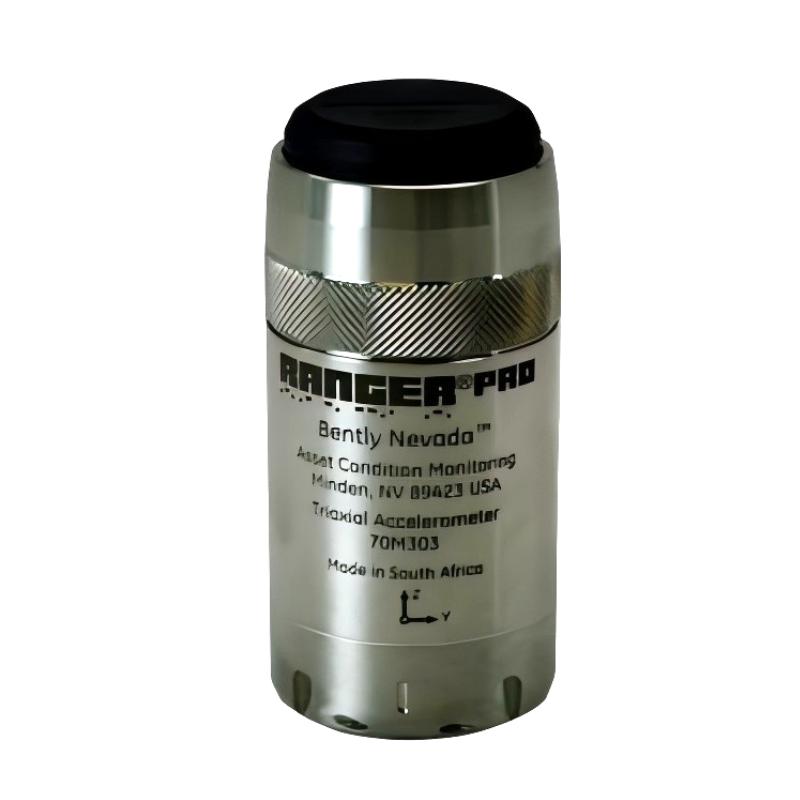
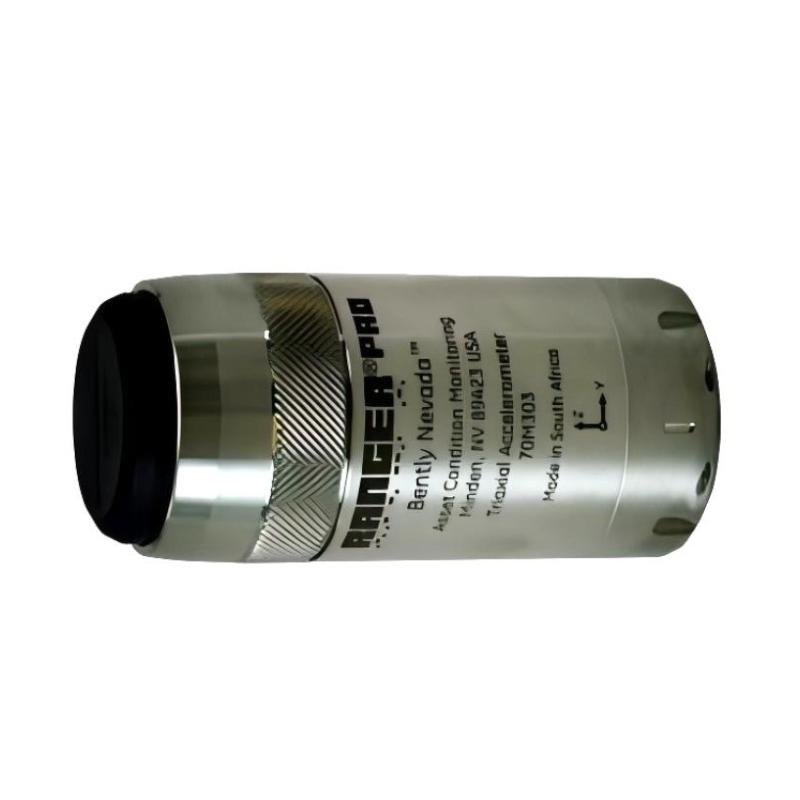
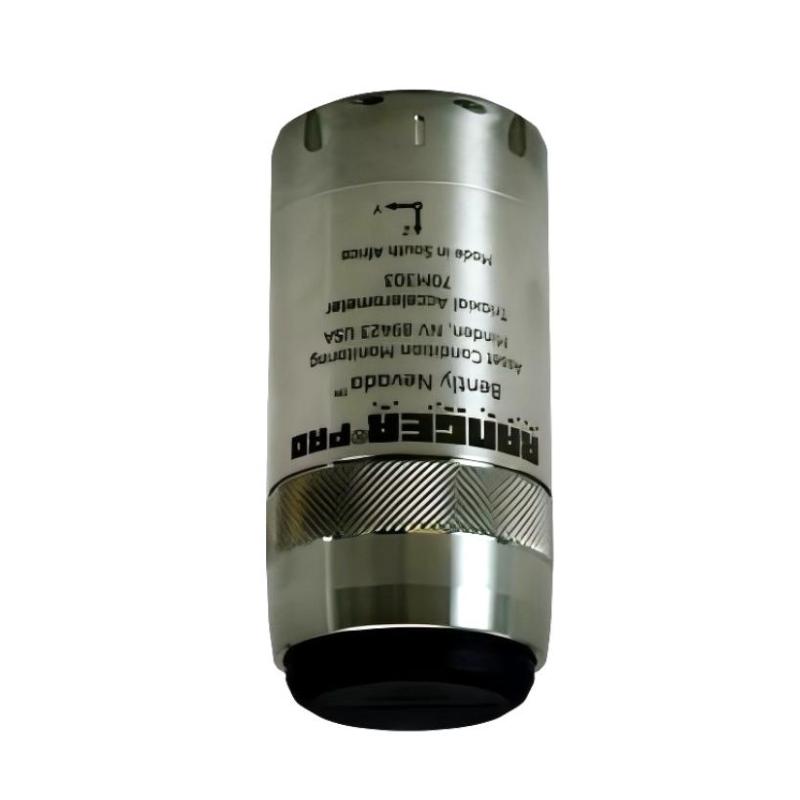
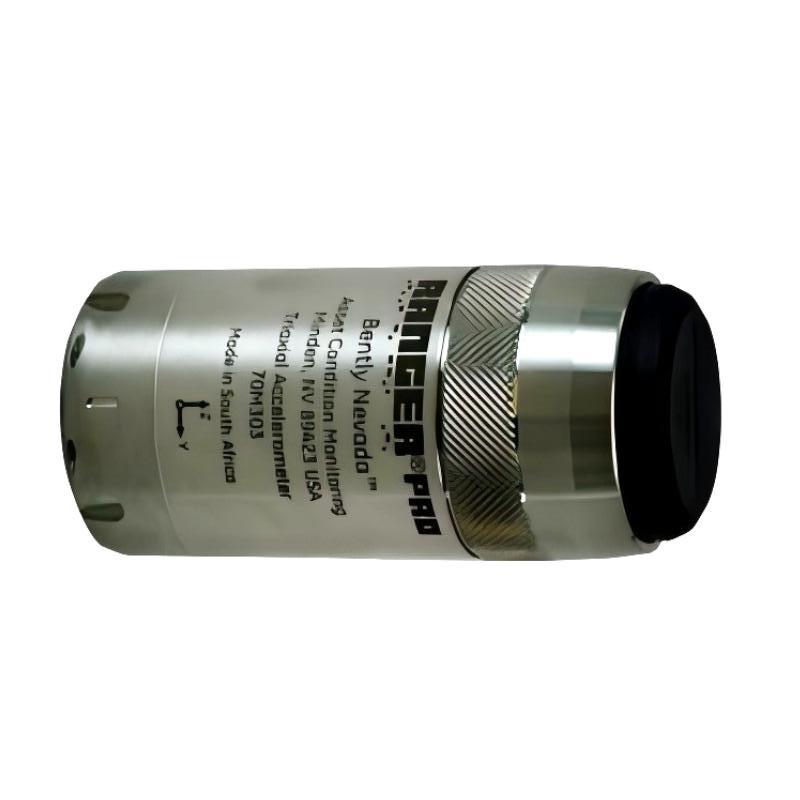
- Bently Nevada
- 70M303-10-01-01-CN
- Wireless Triaxial Accelerometer
- USA
- 88 × 40 mm
- 0.23 kg
- Xiamen, China
- New & In Stock
- T/T, PayPal, Western Union
- 1 Year
- 1-3 Working Days
- DHL, UPS, TNT, FedEx and EMS.
- 24-Hour Service
- COO
- 4
Our advantage

Global Logistics
We have a 10-year logistics and express cooperation agreement, so our products can be shipped to any place in the world.

Brand new and original
Our products are imported in bulk from the place of origin. Because of the cooperative relationship, our products are all original and 100% new.

24-hour service
We provide 7*24 hours service to our customers. We will be there whenever you need us.

Price advantage
All our products are priced very favorably because we have our own warehouse and supply.
| Company Information | |||
| [email protected] | |||
| Mobile | +8615980777398 | ||
| +8615980777398 | |||
| 15980777398 |
Product Overview
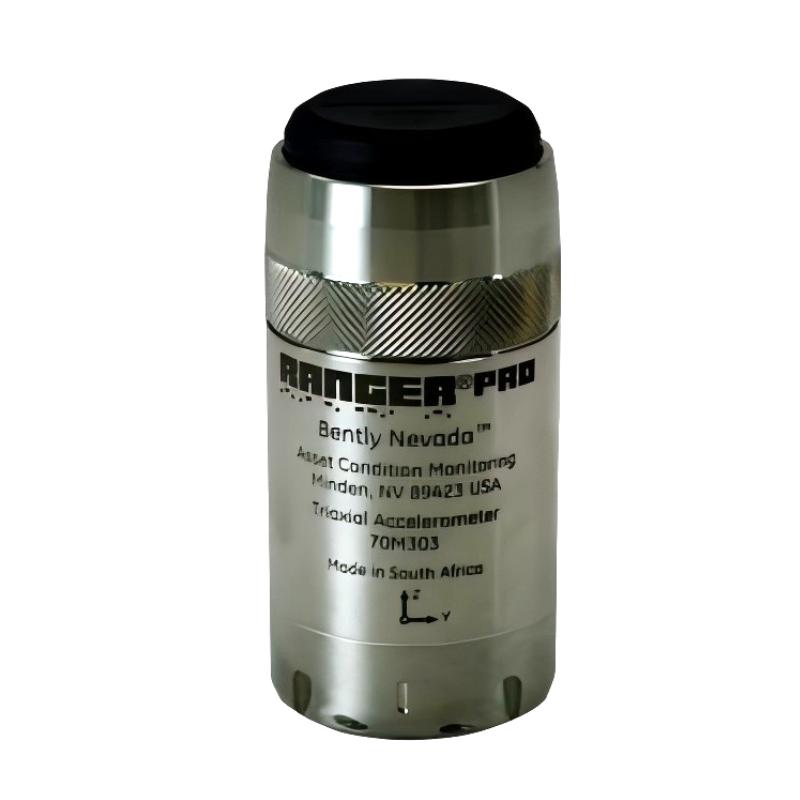
The Bently Nevada 70M303-10-01-01-CN Ranger Pro Wireless Triaxial Accelerometer is a wireless vibration sensor for condition monitoring of rotating and fixed industrial equipment. As part of the Ranger Pro platform, it captures vibration along three axes and transmits measurement data wirelessly, reducing the need for conventional signal cabling between individual sensors and monitoring infrastructure.
The triaxial configuration allows vibration behavior to be observed in three orthogonal directions from a single sensing point. This is useful for equipment such as motors, pumps, fans, gearboxes, compressors, and other machinery where vibration can vary significantly with mounting orientation or machine operating condition.
The wireless architecture is particularly useful for adding condition-monitoring points to existing equipment without installing extensive new instrumentation wiring. The sensor can be installed at selected measurement locations and incorporated into a broader machinery condition-monitoring strategy.
Technical Specifications
| Parameter | Specification |
|---|---|
| Manufacturer | Bently Nevada |
| Model | 70M303-10-01-01-CN |
| Product Family | Ranger Pro |
| Product Type | Wireless Triaxial Accelerometer |
| Measurement Type | Vibration |
| Sensor Type | Triaxial Accelerometer |
| Communication | Wireless |
| Application | Industrial machinery condition monitoring |
| Measurement Axes | Three orthogonal axes |
| Dimensions | 88 × 40 mm |
| Weight | 0.23 kg |
Product Features
- Measures vibration in three orthogonal axes from a single monitoring point.
- Uses a wireless architecture for condition-monitoring data transmission.
- Suitable for rotating equipment and other machinery where vibration trends are required.
- Supports condition monitoring of motors, pumps, fans, compressors, gearboxes, and similar assets.
- Reduces the amount of dedicated signal cabling required for distributed vibration monitoring.
- Allows additional measurement points to be incorporated into an existing monitoring strategy.
- Suitable for applications where vibration direction and machine behavior need to be evaluated together.
Working Principle
The 70M303-10-01-01-CN uses three-axis acceleration sensing to capture mechanical vibration along three perpendicular directions. When the monitored equipment operates, mechanical movement causes acceleration changes at the sensor mounting point.
The sensor converts these mechanical acceleration changes into electrical measurement data. Because the sensing arrangement covers three axes, vibration behavior can be evaluated in multiple directions rather than relying on a single measurement axis.
The basic signal path can be represented as:
Machine Structure → Triaxial Accelerometer → Wireless Data Transmission → Monitoring Platform
The wireless connection allows the measured vibration information to reach the associated monitoring infrastructure without requiring a dedicated signal cable from every sensor location. Vibration data can then be used for condition assessment, trending, and identification of developing mechanical abnormalities.
Role in a Bently Nevada Ranger Pro Condition Monitoring Architecture
The accelerometer acts as the field-level sensing point in a distributed wireless condition-monitoring system.
| System Element | Function |
|---|---|
| Ranger Pro Wireless Triaxial Accelerometer | Captures three-axis vibration data at the machine |
| Sensor Mounting Point | Transfers machine vibration to the sensing element |
| Wireless Communication Network | Transmits sensor data to the monitoring infrastructure |
| Monitoring Platform | Collects and analyzes vibration measurements |
| Condition Monitoring System | Tracks vibration trends and identifies changes in machine behavior |
| Maintenance System | Uses monitoring information to support inspection and maintenance planning |
| Rotating Equipment | Provides the mechanical vibration being measured |
The wireless accelerometer is therefore positioned close to the machine, while the monitoring and analysis functions can remain centralized.
Industrial Applications
- Electric motor condition monitoring
- Pump vibration monitoring
- Industrial fan monitoring
- Gearbox condition monitoring
- Compressor machinery monitoring
- Rotating equipment in process plants
- Power generation auxiliary equipment
- Petrochemical and refining machinery
- Distributed plant-wide condition monitoring
- Machinery monitoring in locations where new signal cabling is difficult to install
Installation and Maintenance
- Verify the sensor model — Confirm that the 70M303-10-01-01-CN is appropriate for the intended Ranger Pro monitoring application.
- Select the measurement point — Choose a structurally representative location close to the bearing or machine component of interest.
- Prepare the mounting surface — The mounting surface should be clean, secure, and suitable for transferring the machine’s vibration to the accelerometer.
- Orient the sensor correctly — Record the sensor orientation so that vibration measurements from the three axes can be interpreted correctly.
- Secure the sensor — Use the specified mounting method and ensure that the sensor cannot move independently of the machine structure.
- Check wireless communication — Confirm that the installed sensor can communicate with the associated monitoring infrastructure.
- Verify the initial measurement — Review the initial vibration data after installation and establish an appropriate baseline for the monitored machine.
- Avoid unsuitable mounting locations — Do not place the sensor where loose structures, excessive heat, impact, or other local conditions could distort the measurement.
- Check the sensor periodically — Inspect the mounting condition and surrounding area during scheduled maintenance.
- Monitor vibration trends — Compare new measurements with established operating baselines rather than relying only on isolated readings.
- Investigate abnormal changes — Sudden changes in one or more axes should be evaluated together with machine operating conditions and other available diagnostic information.
- Document sensor locations — Maintain records of sensor identification, mounting position, axis orientation, machine association, and maintenance history.
Related Components
- Bently Nevada Ranger Pro wireless monitoring system
- Wireless vibration monitoring infrastructure
- Machinery condition monitoring platform
- Industrial wireless communication network
- Sensor mounting hardware
- Motor and pump monitoring points
- Gearbox vibration monitoring equipment
- Compressor condition monitoring systems
Recommended Related Models
- Bently Nevada Ranger Pro Wireless Accelerometers
- Bently Nevada Ranger Pro Triaxial Accelerometers
- Bently Nevada Ranger Pro Wireless Monitoring Devices
- Bently Nevada 3500 Series Machinery Protection Systems
- Bently Nevada 2300 Series Vibration Monitoring Systems
- Bently Nevada vibration monitoring sensors
Key Advantages
- Provides three-axis vibration measurement from one sensor location.
- Uses wireless communication for distributed condition monitoring.
- Reduces the need for individual signal cables at each monitoring point.
- Suitable for motors, pumps, fans, compressors, and gearboxes.
- Supports vibration trending across multiple machine locations.
- Helps extend condition monitoring to equipment where conventional wired instrumentation is difficult to install.
Technical FAQs
What does triaxial measurement mean on the Ranger Pro accelerometer?
Triaxial measurement means the accelerometer detects vibration along three mutually perpendicular axes. This provides a broader view of machine vibration behavior than a single-axis sensor.
Why use a wireless accelerometer instead of a conventional wired sensor?
A wireless sensor can simplify installation where new instrumentation cabling is difficult, expensive, or disruptive. It can also make it easier to add monitoring points to existing equipment without extensive wiring modifications.
Where should the accelerometer be installed?
The sensor should normally be mounted at a mechanically representative point close to the component being monitored, such as a bearing housing or other rigid machine structure. The selected location should provide a good vibration transmission path and avoid loose or mechanically isolated surfaces.
How should abnormal triaxial vibration data be evaluated?
The three axes should be reviewed together with machine speed, load, operating condition, and historical vibration trends. A change isolated to one axis may indicate a directional mechanical condition, while changes across multiple axes may require a broader inspection of the machine and mounting arrangement.