

ProductPRODUCT
Featured products
Contact Us
- Allen Bradley
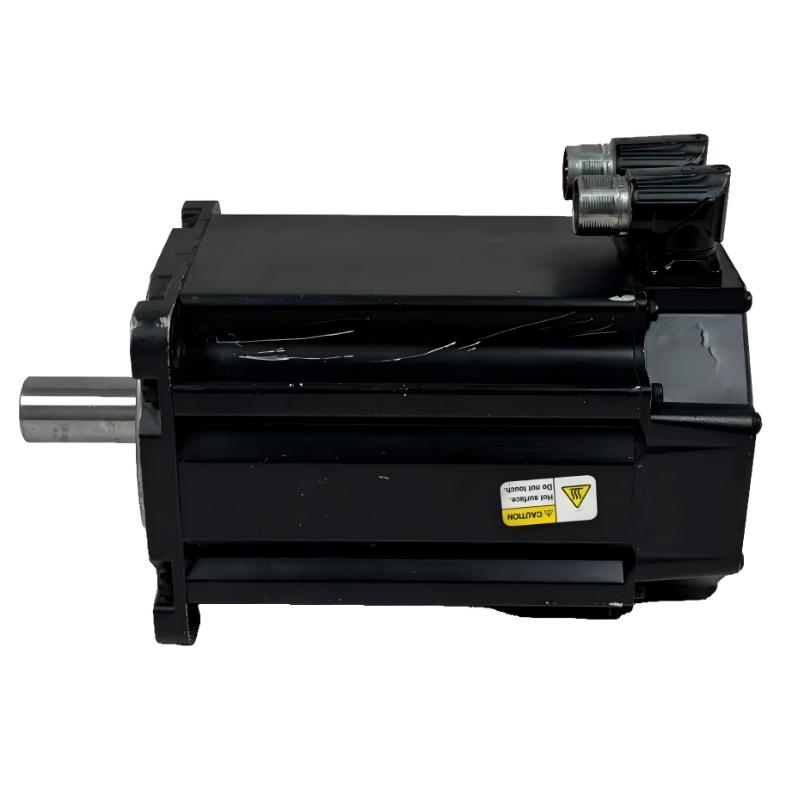
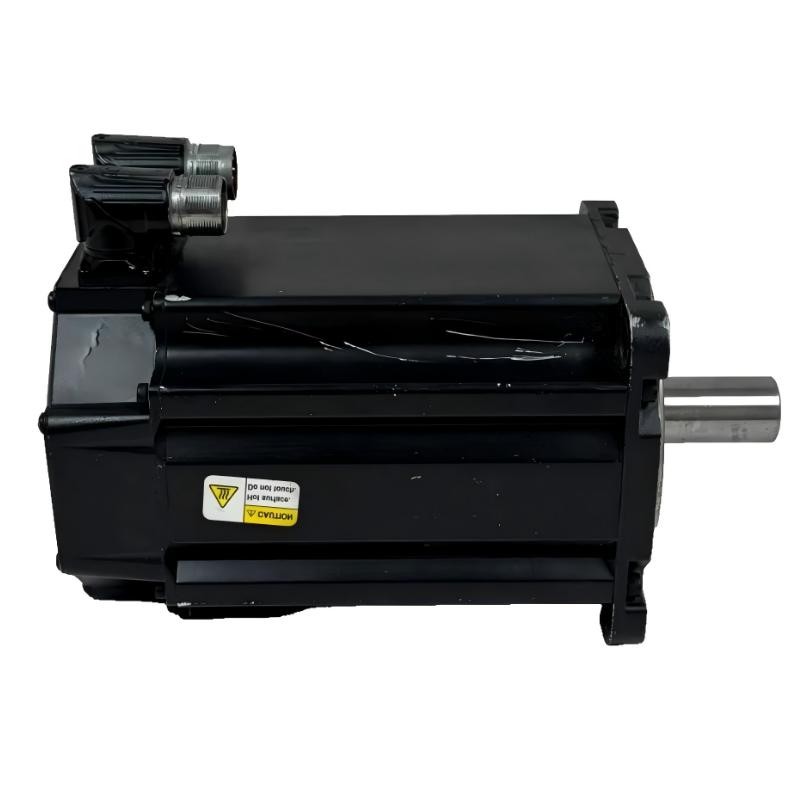
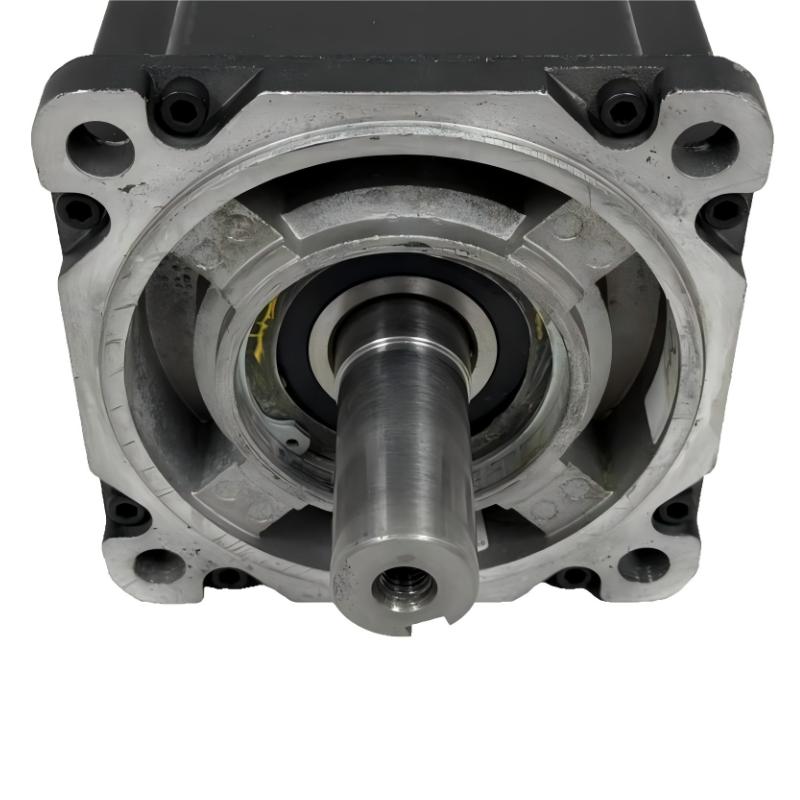
- MPL-B980B-SJ72AA
- Low-Inertia Brushless Servo Motors Product
- USA
- 215 mm ×203.2 mm × 325 mm
- 42.7 kg
- Xiamen, China
- New & In Stock
- T/T, PayPal, Western Union
- 1 Year
- 1-3 Working Days
- DHL, UPS, TNT, FedEx and EMS.
- 24-Hour Service
- COO
- 5
Our advantage

Global Logistics
We have a 10-year logistics and express cooperation agreement, so our products can be shipped to any place in the world.

Brand new and original
Our products are imported in bulk from the place of origin. Because of the cooperative relationship, our products are all original and 100% new.

24-hour service
We provide 7*24 hours service to our customers. We will be there whenever you need us.

Price advantage
All our products are priced very favorably because we have our own warehouse and supply.
| Company Information | |||
| [email protected] | |||
| Mobile | +8615980777398 | ||
| +8615980777398 | |||
| 15980777398 |
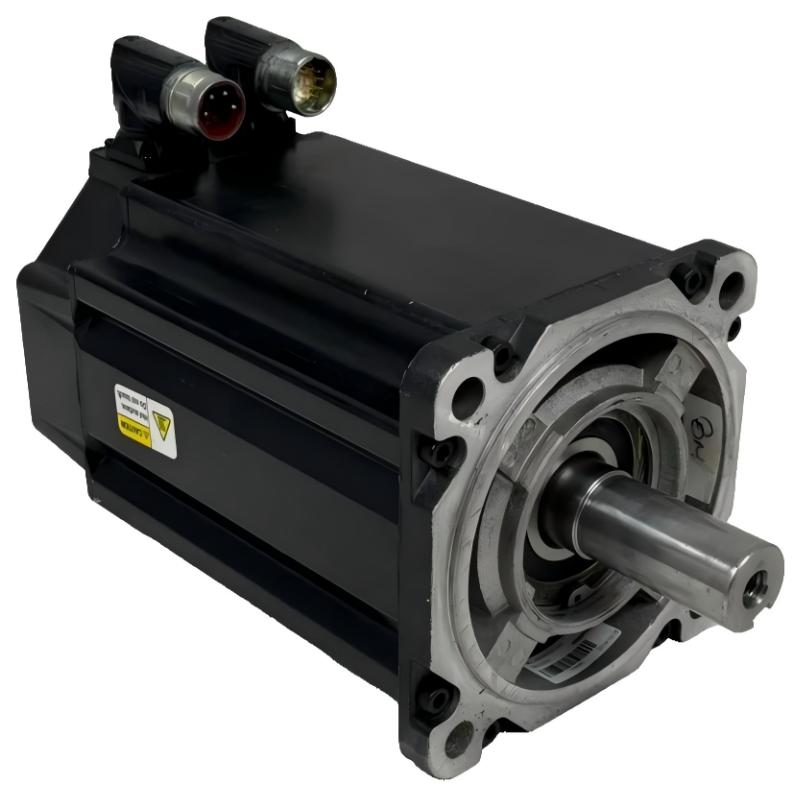
Allen-Bradley MPL-B980B-SJ72AA Servo Motor: Technical Parameters, Product Description, Applications, Advantages, and Related Models
1. Product Overview
The Allen-Bradley MPL-B980B-SJ72AA is a model designation in the MPL low-inertia servo motor family. It is intended for industrial motion-control systems that require controlled rotation, repeatable positioning, and coordinated movement between machine axes.
MPL-series motors are designed for use with compatible servo drives and controllers. They are commonly considered for automated production machinery, packaging equipment, material handling systems, assembly lines, and positioning mechanisms where movement must follow a defined speed or position command.
The key difference between similar MPL catalog numbers can lie in the feedback configuration, speed rating, frame and stack dimensions, shaft design, connector arrangement, or brake option. For this reason, the complete model number should be retained when ordering a replacement or preparing a technical specification.
The SJ72AA configuration differs from the corresponding MJ72AA designation in the feedback option. The exact encoder type and its compatibility with the intended drive should be confirmed before installation. Similarly, the complete electrical ratings, external dimensions, and net weight should be verified against the nameplate and mechanical drawing for this specific motor.
2. Brand and Product Series
|
Item |
Description |
|---|---|
|
Brand |
Allen-Bradley |
|
Product series |
MPL Series |
|
Model |
|
|
Product category |
Industrial servo motor |
|
Motor technology |
Brushless permanent-magnet AC servo motor |
|
Design characteristic |
Low inertia |
|
Main function |
Controlled rotary motion and positioning |
|
Nominal speed designation |
1,000 RPM |
|
Frame designation |
Frame size 9 |
|
Stack-length configuration |
B980 |
|
Shaft configuration |
Keyed shaft configuration indicated by the model family code |
|
Feedback configuration |
SJ-series feedback option; exact encoder specification should be verified |
|
Brake configuration |
No integrated brake indicated by the SJ72AA configuration; confirm the exact catalog definition |
|
Mounting arrangement |
Metric flange configuration; confirm the complete mounting drawing |
|
Typical application |
Industrial automation and motion control |
The MPL series is intended for applications where motion control needs to be more precise than simple constant-speed rotation. When paired with a compatible servo drive, the motor can respond to commands for speed, position, and torque within the limits of the complete system.
A typical installation includes a motion controller, servo drive, motor feedback connection, power cable, and mechanical transmission. These elements work together to produce the required movement and maintain controlled operation.
The motor should therefore be selected according to the actual load and machine requirements rather than the model number alone. Torque, speed, acceleration, feedback compatibility, mounting dimensions, and duty cycle all affect whether a motor is suitable for a particular application.
3.1 Verified Performance Reference Values
|
Performance parameter |
Specification |
|---|---|
|
Nominal speed designation |
1,000 RPM |
|
Maximum speed reference |
1,200 RPM |
|
Continuous stall torque |
162.7 N·m |
|
Peak stall torque |
278 N·m |
|
Rated output power |
15.2 kW |
|
Rotor inertia |
0.0354 kg·m² |
|
Approximate motor weight |
94.5 kg |
|
Magnet stack length |
203.2 mm |
|
Frame dimension class |
300 mm |
|
Brake |
No brake |
|
Feedback |
Single-turn high-resolution encoder |
The weight shown here is approximately 94.5 kg, not 14.5 kg. Use the nameplate or the exact technical drawing to confirm the mass of the individual unit, especially for lifting, shipping, and mounting calculations.
4. Product Applications

4.1 Packaging Machinery
The motor can be considered for packaging applications involving product feeding, indexing, conveyor synchronization, filling, sealing, and labeling. Servo control helps equipment follow programmed speed and position commands, making it useful for repetitive movements that need to stay synchronized with other machine operations.

4.2 Automated Assembly Systems
Assembly machines use servo-driven axes to position parts for insertion, fastening, inspection, and transfer. The motor’s low-inertia design can support responsive movement when the motor, drive, and mechanical load are correctly matched.

4.3 Machine Tools and Positioning Equipment
Servo motors are used in positioning tables, rotary mechanisms, auxiliary machine axes, and automated tool-handling equipment. The required torque, speed, acceleration, and duty cycle should be calculated before selecting this motor for a specific axis.

4.4 Material Handling Systems
Servo-driven conveyors and transfer mechanisms can move materials to defined locations and coordinate movement between production stations. This model has no integrated brake, so any required holding or load-retention function must be provided by an appropriate system design.

4.5 Printing and Converting Equipment
Printing, labeling, and converting machinery can use servo motors to control rollers, feed mechanisms, cutters, and indexing units. Controlled speed and position help coordinate material movement with the processing sequence.
Other potential uses include automated inspection equipment, electronics manufacturing, industrial transfer mechanisms, and general-purpose production machinery. Suitability depends on the actual torque and speed requirements, feedback compatibility, mounting dimensions, and operating environment.
5. Main Product Advantages
5.1 Low-Inertia Design
Low inertia helps a servo system respond to changes in commanded motion. It is useful for equipment that repeatedly accelerates, decelerates, stops, and restarts.
Actual response depends on the load inertia reflected to the motor shaft, the mechanical transmission, drive capacity, and tuning.
5.2 Brushless Construction
Brushless construction eliminates routine brush replacement. This can simplify maintenance planning for equipment that operates over long production cycles.
The motor still requires appropriate inspection of bearings, cables, connectors, couplings, and mounting hardware.
5.3 High-Resolution Single-Turn Feedback
The SJ72AA configuration uses a single-turn high-resolution encoder. Single-turn feedback provides position information within one motor revolution; it should not be confused with a multi-turn absolute encoder.
The encoder and drive must be compatible. If the application requires absolute position tracking across multiple revolutions, confirm that the installed control system provides the required functionality.
5.4 High Torque Capability
The listed continuous stall torque is 162.7 N·m, with a peak stall torque of 278 N·m. These figures help characterize the motor’s torque capability, but stall torque should not be treated as the guaranteed torque available at every operating speed.
For practical sizing, use the full torque-speed curve and consider the required acceleration, load inertia, duty cycle, and thermal limits.
5.5 1,000 RPM Configuration
The B speed designation identifies a 1,000 RPM configuration. This provides a defined nominal speed option for applications that do not require the higher nominal speeds of other variants.
The motor’s maximum permitted speed and torque at that speed should be confirmed for the specific drive and application.
5.6 Longer Magnet Stack
The B980 configuration uses a 203.2 mm magnet stack. This distinguishes it from shorter-stack configurations in the same product family.
Stack length is useful for identifying the mechanical configuration, but it does not replace the complete torque, power, and dimension specifications.
5.7 Flexible Connector Orientation
The right-angle connector can be rotated to accommodate different installation layouts. This can simplify cable routing where space is restricted.
The cable bend radius, connector clearance, and separation from moving or hot components should still be checked.
5.8 No-Brake Configuration
The no-brake arrangement may be suitable for axes that do not need an integrated motor holding brake. It avoids the additional brake wiring and control requirements associated with brake-equipped models.
If the machine needs to hold a load while the motor is disabled, a suitable external holding or braking arrangement may be required. Vertical axes need particular care because the load may move under gravity.
6. Five Related Models in the Same Series
The following models are useful for comparison within the MPL family. The primary differences include speed designation, stack length, and feedback or brake configuration.
|
Model |
Main parameters |
Dimensions |
Weight |
|---|---|---|---|
|
MPL-B980C-SJ72AA |
460 V AC class; 1,500 RPM designation; frame 9; single-turn high-resolution feedback; keyed shaft; no brake |
300 mm frame class; 203.2 mm stack; overall envelope requires drawing |
Confirm, kg |
|
MPL-B980D-MJ72AA |
460 V AC class; 2,000 RPM designation; frame 9; multi-turn absolute feedback; keyed shaft; no brake |
300 mm frame class; 203.2 mm stack; overall envelope requires drawing |
Approx. 94.5 kg; confirm |
|
MPL-B980C-MJ72AA |
460 V AC class; 1,500 RPM designation; frame 9; multi-turn absolute feedback; keyed shaft; no brake |
300 mm frame class; 203.2 mm stack; overall envelope requires drawing |
Confirm, kg |
|
MPL-B960B-SJ72AA |
460 V AC class; 1,000 RPM designation; frame 9; single-turn feedback; keyed shaft; no brake |
300 mm frame class; 152.4 mm stack; overall envelope requires drawing |
Confirm, kg |
|
MPL-B980B-MJ72AA |
460 V AC class; 1,000 RPM designation; frame 9; multi-turn absolute feedback; keyed shaft; no brake |
300 mm frame class; 203.2 mm stack; overall envelope requires drawing |
Confirm, kg |
Model Comparison Notes
MPL-B980C-SJ72AA is a comparison candidate when a higher speed designation is required while retaining a similar B980 frame and single-turn feedback arrangement.
MPL-B980D-MJ72AA has a higher speed designation and a multi-turn feedback configuration. It may be worth considering if the application requires position tracking over multiple revolutions and the drive supports the encoder.
MPL-B980C-MJ72AA combines the 1,500 RPM designation with multi-turn feedback and a no-brake configuration.
MPL-B960B-SJ72AA has the same 1,000 RPM designation but a shorter 152.4 mm stack. It may be worth comparing when the available installation space or required motor characteristics differ from the B980 configuration.
MPL-B980B-MJ72AA is the closest comparison to the target model because it shares the B980 frame, speed designation, shaft style, connector arrangement, and no-brake configuration. The principal distinction is the feedback option.
These are comparison candidates, not guaranteed drop-in replacements. Confirm the exact catalog specification, feedback compatibility, torque ratings, shaft dimensions, and mounting details before substitution.
7. Five Additional Models from the Same Brand
The following models provide a wider comparison across the same brand’s servo-motor range. They are suggested alternatives, not a verified sales or popularity ranking.
|
Model |
Main parameters |
Dimensions |
Weight |
|---|---|---|---|
|
MPL-B880D-SJ72AA |
MPL series; 460 V AC class; 2,000 RPM designation; frame 8; single-turn feedback; keyed shaft; no brake |
265 mm frame class; 203.2 mm stack; overall envelope requires drawing |
Confirm, kg |
|
MPL-B960C-MJ72AA |
MPL series; 460 V AC class; 1,500 RPM designation; frame 9; multi-turn feedback; keyed shaft; no brake |
300 mm frame class; 152.4 mm stack; overall envelope requires drawing |
Confirm, kg |
|
MPL-B980D-MJ74AA |
MPL series; 460 V AC class; 2,000 RPM designation; frame 9; multi-turn feedback; keyed shaft; 24 V DC brake |
300 mm frame class; 203.2 mm stack; brake clearance requires drawing |
Approx. 94.5 kg; confirm |
|
MPL-B960D-MJ72AA |
MPL series; 460 V AC class; 2,000 RPM designation; frame 9; multi-turn feedback; keyed shaft; no brake |
300 mm frame class; 152.4 mm stack; overall envelope requires drawing |
Confirm, kg |
|
MPL-B980B-MJ74AA |
MPL series; 460 V AC class; 1,000 RPM designation; frame 9; multi-turn feedback; keyed shaft; 24 V DC brake |
300 mm frame class; 203.2 mm stack; brake clearance requires drawing |
Confirm, kg |
The models in this table differ in speed, frame or stack configuration, feedback, or brake option. A similar model number does not guarantee that its torque curve, connector, encoder, or dimensions will match the target motor.
For replacement purposes, start with the machine’s existing catalog number and determine which characteristics must remain unchanged. If the motor is part of an established control system, feedback and drive compatibility should be checked before considering a change in frame or speed.
8. Installation and Maintenance Considerations
Installation
Mount the motor on a rigid surface and align the shaft with the driven mechanism. Incorrect alignment can cause excessive radial or axial loads, abnormal vibration, and premature bearing wear.
Check the flange pattern, pilot diameter, shaft diameter, shaft extension, overall length, and connector clearance before installation. The frame size and magnet stack length are helpful identifiers, but they are not the complete external dimensions.
Power and feedback cables should be routed to avoid sharp bends, excessive connector strain, heat, and moving components.
Drive Compatibility
The servo drive must support the motor’s voltage class, feedback option, and electrical requirements. Use the complete catalog number when selecting the motor configuration in the drive.
Drive sizing should consider continuous torque, peak torque, acceleration, duty cycle, and the inertia of the driven load. The 1,000 RPM designation alone is not sufficient to establish that the motor will meet the application’s requirements.
Commissioning
Before enabling motion, verify the motor model, wiring, feedback readings, rotation direction, mechanical clearance, and drive settings.
Initial tests should be performed under controlled conditions. Confirm that the feedback signal behaves as expected and that the motor follows commands correctly.
Unusual noise, vibration, heating, or position errors should be investigated before the equipment enters normal production.
Routine Maintenance
Brushless construction eliminates routine brush replacement, but regular inspections are still necessary. Check cables, connectors, mounting hardware, bearings, couplings, and the surrounding machine for signs of wear or damage.
The inspection interval should reflect the duty cycle, operating temperature, contamination level, and maintenance policy.
9. Product Advantages Summary
|
Advantage |
Practical value |
|---|---|
|
Low-inertia design |
Supports responsive acceleration and deceleration |
|
Brushless construction |
Eliminates routine brush replacement |
|
Single-turn high-resolution feedback |
Provides precise position information within one revolution |
|
1,000 RPM speed designation |
Offers a defined nominal-speed configuration |
|
203.2 mm magnet stack |
Identifies the B980 stack-length configuration |
|
Continuous stall torque of 162.7 N·m |
Provides a reference for torque sizing |
|
Peak stall torque of 278 N·m |
Helps characterize short-duration torque capability |
|
15.2 kW rated output |
Provides a reference for power sizing |
|
Keyed shaft |
Supports compatible mechanical couplings |
|
Rotatable right-angle connector |
Provides flexibility in cable routing |
|
No-brake configuration |
Suitable for applications that do not require an integrated holding brake |
|
Metric flange mounting |
Supports installation in machinery designed for matching dimensions |
10. Final Product Summary
The Allen-Bradley MPL-B980B-SJ72AA is an MPL low-inertia brushless servo motor with a 460 V AC voltage class, a 1,000 RPM speed designation, a frame size of 9, a 203.2 mm magnet stack, single-turn high-resolution feedback, a keyed shaft, a rotatable right-angle connector, and no integrated brake.
Its key characteristics include a continuous stall torque reference of 162.7 N·m, a peak stall torque reference of 278 N·m, rated output power of 15.2 kW, and an approximate weight of 94.5 kg. The full external dimensions and exact net weight should be confirmed against the technical drawing for the specific motor.
The motor can be considered for suitable industrial applications involving positioning, indexing, conveyor synchronization, assembly, and other controlled rotary movements. Final selection should be based on the complete torque-speed curve, the load and duty cycle, encoder compatibility, mechanical fit, and the requirements of the servo drive.