

ProductPRODUCT
Featured products
Contact Us
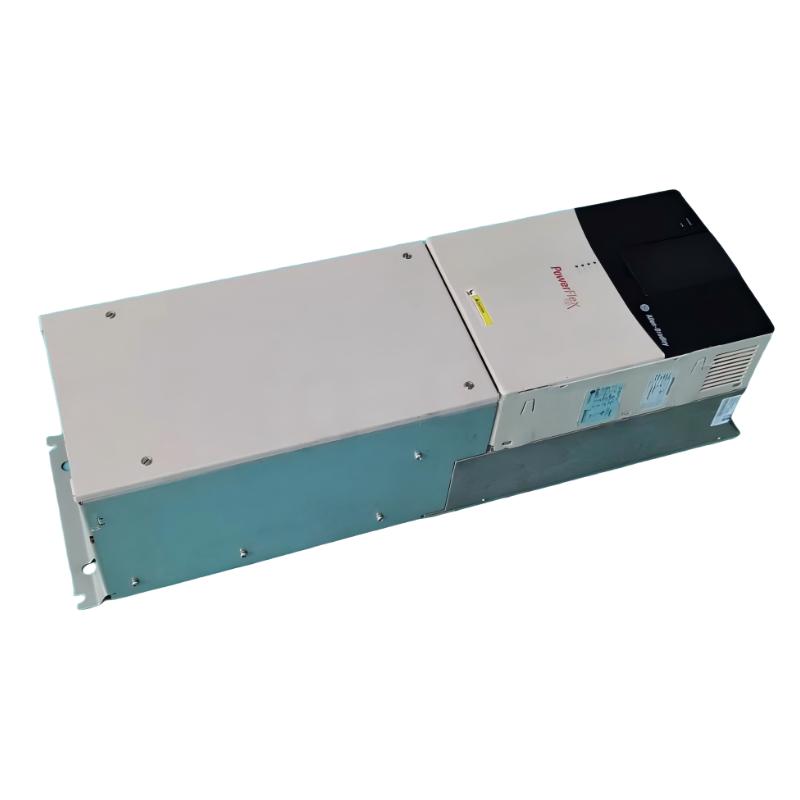
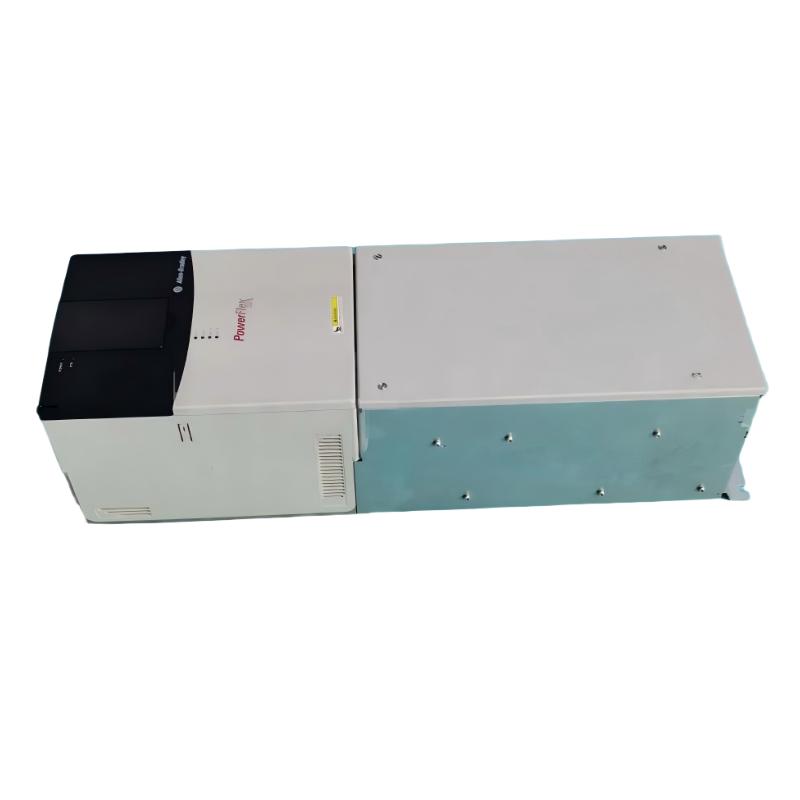
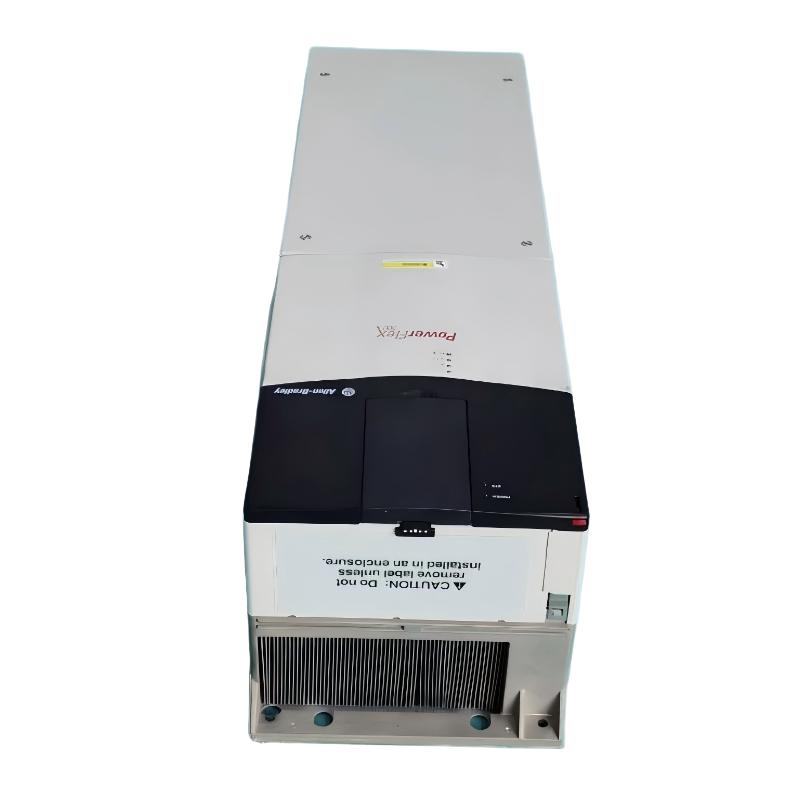
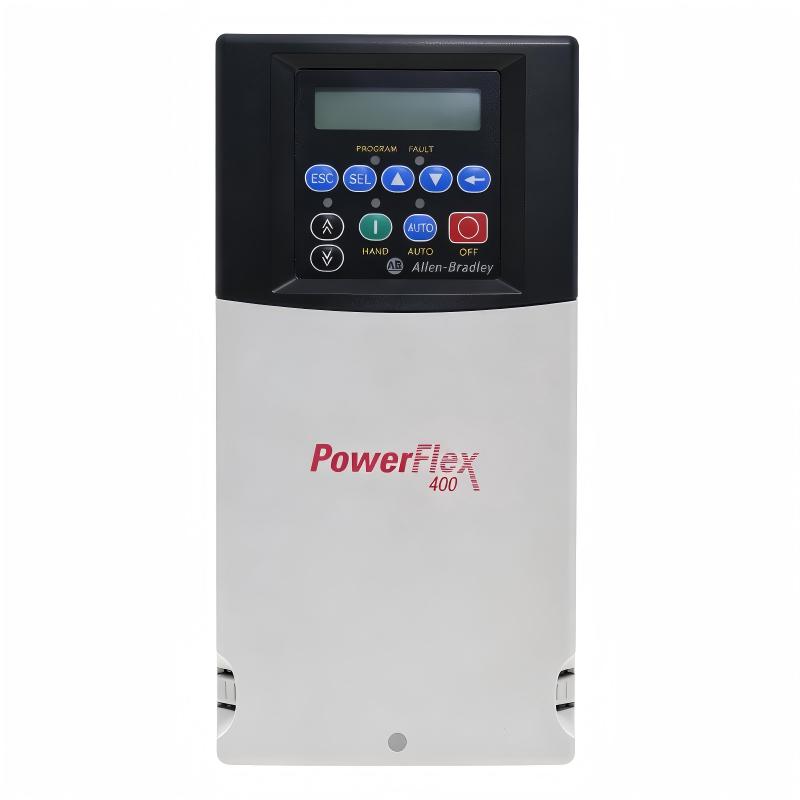
- Allen Bradley
- 20BP260F0ANNANC0
- PowerFlex AC Drive
- USA
- 689.6 × 308.9 × 275.4 mm
- 14.51kg
- Xiamen, China
- New & In Stock
- T/T, PayPal, Western Union
- 1 Year
- 1-3 Working Days
- DHL, UPS, TNT, FedEx and EMS.
- 24-Hour Service
- COO
- 2
Our advantage

Global Logistics
We have a 10-year logistics and express cooperation agreement, so our products can be shipped to any place in the world.

Brand new and original
Our products are imported in bulk from the place of origin. Because of the cooperative relationship, our products are all original and 100% new.

24-hour service
We provide 7*24 hours service to our customers. We will be there whenever you need us.

Price advantage
All our products are priced very favorably because we have our own warehouse and supply.
| Company Information | |||
| [email protected] | |||
| Mobile | +8615980777398 | ||
| +8615980777398 | |||
| 15980777398 |
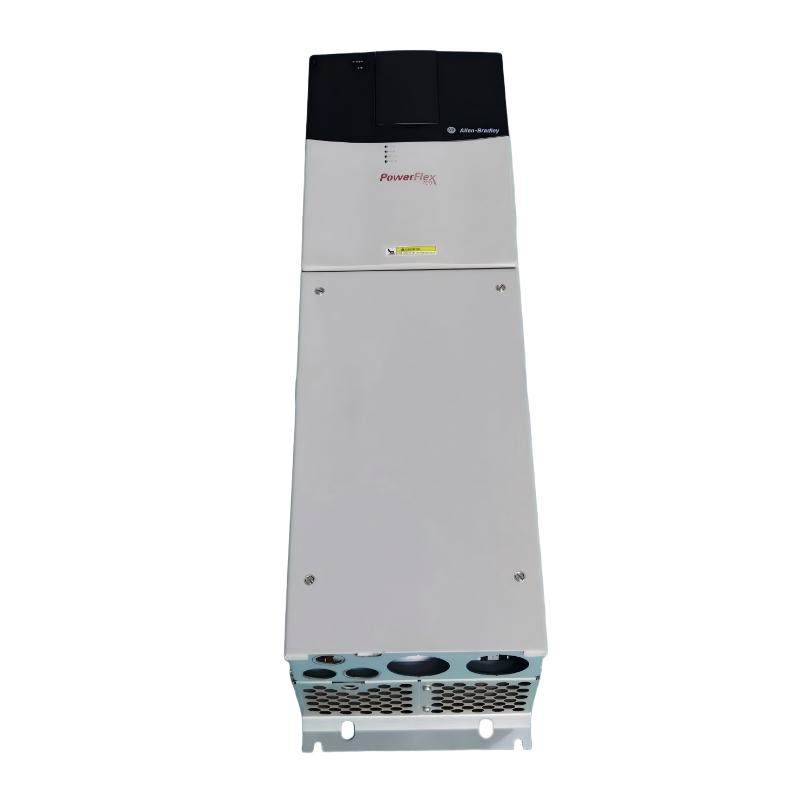
Allen-Bradley 20BP260F0ANNANC0 AC Drive — Technical Specifications, Product Description, Applications, Advantages, and Related Models
1. Product Overview
The Allen-Bradley 20BP260F0ANNANC0 is a model designation associated with the PowerFlex 700 family of industrial AC drives. This product family is designed for adjustable-speed motor control in industrial machinery, manufacturing equipment, and process-control applications.
An AC drive regulates the electrical power supplied to a compatible motor, allowing motor speed and operating behavior to be adjusted according to the requirements of the application. Depending on the system design and drive configuration, this can help provide smoother acceleration, controlled deceleration, more flexible production speeds, and improved coordination between machines.
The complete catalog number is essential when identifying the product. Even a small difference in a model suffix can indicate a different hardware configuration, option set, or other product characteristic. The specific model 20BP260F0ANNANC0 should therefore be checked against the unit’s nameplate before purchase, replacement, or installation.
2. Brand and Product Series
| Parameter | Description |
|---|---|
| Model | 20BP260F0ANNANC0 |
| Brand | Allen-Bradley |
| Product family | PowerFlex |
| Product series | PowerFlex 700 family |
| Product category | Industrial AC drive |
| Equipment type | Adjustable-frequency motor controller |
| Primary function | Variable-speed AC motor control |
| Typical use | Industrial machinery and automated production equipment |
| Control purpose | Motor speed regulation and controlled acceleration or deceleration |
| Installation environment | Industrial electrical installation, subject to the exact enclosure specification |
| Hardware configuration | Must be confirmed using the full catalog number and nameplate |
| Dimensions (H × W × D) | Not verified for this exact model |
| Weight (kg) | Not verified for this exact model |
The PowerFlex 700 family is intended for industrial environments where motor performance needs to be adjusted to suit production demands. Depending on the particular configuration, the drive may be used as part of a standalone machine or integrated into a larger automation system.
The exact voltage class, output current, power rating, enclosure, control options, and physical frame size must be verified separately. These values should not be inferred from the catalog number alone.
3. Technical Parameters
The table below provides the principal product identification details and the technical items that should be confirmed before the drive is selected for an application.
| Parameter | Specification |
|---|---|
| Model | 20BP260F0ANNANC0 |
| Brand | Allen-Bradley |
| Series | PowerFlex 700 family |
| Product type | Industrial adjustable-frequency AC drive |
| Main function | Variable-speed motor control |
| Compatible motor | AC motor compatible with the drive’s verified electrical ratings |
| Input voltage | Requires nameplate verification |
| Input phase | Requires nameplate verification |
| Input frequency | Requires nameplate verification |
| Rated output power | Not verified for this exact catalog number |
| Rated output current | Not verified for this exact catalog number |
| Output voltage | Depends on the confirmed input rating and drive configuration |
| Output frequency range | Requires confirmation against the exact product specification |
| Overload capacity | Depends on the applicable rating and operating duty |
| Motor control modes | Must be confirmed for the installed hardware and configuration |
| Communication interfaces | Must be confirmed for the installed option modules |
| Control inputs and outputs | Dependent on the hardware and installed options |
| Protection functions | Depend on the drive configuration, settings, and surrounding system |
| Cooling arrangement | Requires confirmation for the specific frame and enclosure |
| Enclosure rating | Not verified for this exact model |
| Mounting arrangement | Requires confirmation from the applicable installation specification |
| Operating temperature | Requires confirmation from the exact product specification |
| Storage temperature | Requires confirmation from the exact product specification |
| Dimensions (H × W × D) | Not verified |
| Weight (kg) | Not verified |
Dimensions and Weight
The exact physical dimensions and net weight of 20BP260F0ANNANC0 cannot be reliably established from the model designation alone.
Dimensions and weight are important when planning cabinet layouts, replacing an existing drive, arranging transport, or determining lifting requirements. A unit with a similar model number may have a different frame size or hardware arrangement.
Before installation, confirm the following physical specifications for the exact unit:
-
Overall height, width, and depth.
-
Mounting-hole positions and required installation clearances.
-
Required ventilation space and cooling arrangements.
-
Net weight in kilograms.
-
Any additional space or weight associated with installed accessories.
The actual values should be recorded from the verified product specification or the physical unit’s identification information. Unconfirmed measurements should not be used for cabinet engineering or lifting plans.
4. Detailed Product Description
The PowerFlex 700 family is designed to provide adjustable-speed control for industrial AC motors. In a typical installation, the drive receives electrical power from the supply, processes operating commands, and produces a controlled output for the connected motor.
The motor’s operation can then be adjusted to suit the requirements of the machine or process. Instead of operating at one fixed speed under all conditions, the motor can run at different speeds where the application and configuration permit.
This type of control is useful in production environments where equipment must respond to changing throughput, material flow, process conditions, or operating schedules. It can also help coordinate connected machines so that different stages of a production line operate at appropriate speeds.
Another important aspect of drive operation is acceleration and deceleration control. When configured appropriately, the drive can increase or reduce motor speed gradually rather than relying on an abrupt change in operating conditions. This can reduce unnecessary mechanical shock on selected components, although the achievable benefit depends on the machine’s mechanical design and load characteristics.
The drive may also form part of a larger industrial automation system. Depending on the installed hardware and options, it may exchange operating commands, speed references, status information, or fault information with other control equipment.
For the specific 20BP260F0ANNANC0, the actual electrical ratings and installed options must be verified before determining whether it is suitable for a particular motor, machine, or replacement project.
5. Product Applications
5.1 Conveyor and Material Handling Systems
Conveyor systems often need to operate at different speeds depending on production volume, product spacing, and the requirements of connected equipment. An appropriately selected AC drive can adjust motor speed to support these operating conditions.
Controlled acceleration may help reduce sudden loading on belts, couplings, gearboxes, and other mechanical components. For conveyors carrying heavy loads or operating on an incline, the drive must be selected according to starting torque, load inertia, duty cycle, and braking requirements.
5.2 Pumping Systems
Industrial pumping systems may operate under varying flow or pressure requirements. Where the pump and process permit variable-speed operation, a drive can adjust motor speed to suit demand.
Potential benefits include more flexible flow control and reduced energy use under suitable operating conditions. Actual savings depend on the pump type, system characteristics, operating hours, and required flow range.
Pump applications should also account for minimum operating speed, motor cooling, fluid characteristics, and process-specific protection requirements.
5.3 Fans and Blowers
Fans and blowers used for ventilation, air circulation, and industrial processes may need different airflow levels at different times. A variable-speed drive can help adjust fan motor speed according to the required airflow.
For suitable fan systems, reducing motor speed can lower energy consumption. Correct selection still requires consideration of motor current, cooling, ambient temperature, airflow requirements, and the electrical characteristics of the installation.
5.4 Manufacturing Machinery
Manufacturing equipment may require adjustable motor speed for feeding, mixing, processing, conveying, or other mechanical operations. A drive can help the machine operate at different production rates without changing the motor’s fixed electrical supply frequency directly.
For applications involving heavy loads, frequent starting, or rapid speed changes, the drive rating must be checked against the required torque and duty cycle.
5.5 Industrial Processing Equipment
Processing machinery often needs stable motor operation as production conditions change. A drive may be used to adjust operating speed and coordinate motor behavior with the wider process-control system.
The appropriate configuration depends on the machine’s mechanical load, required speed range, control accuracy, and stopping requirements.
5.6 Automated Production Lines
In an automated production line, drives can be used to coordinate conveyors, feeding systems, and other motor-driven equipment. Where supported by the installed configuration, drive status and operating commands can be incorporated into a larger control strategy.
Before integration, confirm the communication interface, command source, available feedback, and compatibility with the existing automation hardware.
6. Product Advantages
6.1 Flexible Speed Adjustment
The primary advantage of an AC drive is the ability to adjust motor speed to suit the actual operating requirements of a machine.
This flexibility can be useful when production volume changes, when different products require different operating speeds, or when several machine stages must work together.
6.2 Controlled Acceleration and Deceleration
A properly configured drive can provide gradual motor acceleration and deceleration. This may reduce sudden mechanical loading on belts, shafts, couplings, gearboxes, and connected machinery.
The appropriate acceleration and deceleration times depend on the load, process requirements, and stopping behavior required by the application.
6.3 Improved Process Flexibility
Adjustable-speed operation can help equipment respond to changes in throughput, flow, and production requirements.
Rather than relying exclusively on mechanical speed adjustments, operators may be able to change operating speed through the configured control system, provided the required interface and functionality are available.
6.4 Potential Energy Savings
In suitable applications, particularly certain pump and fan systems, reducing motor speed can lower energy consumption.
The amount of energy saved depends on the load characteristics, required operating speed, operating schedule, and overall system design. Savings should be evaluated for the actual application rather than assumed for every installation.
6.5 Integration with Automation Equipment
Depending on its installed options, a drive in this family may be integrated with a controller or other industrial automation equipment.
This can help coordinate machine operation and make relevant operating status or fault information available to the control system.
6.6 Maintenance and Troubleshooting Support
Where the required monitoring functions are available, drive status and fault information can assist maintenance personnel in investigating operating problems.
Useful troubleshooting depends on accurate fault interpretation, suitable parameter records, and inspection of the complete motor and electrical system.
6.7 Suitability for Industrial Duty
A correctly selected industrial drive can provide a controlled interface between the electrical supply and the motor. Its suitability for a particular installation depends on the verified rating, enclosure, cooling arrangements, operating environment, and application requirements.
7. Installation and Commissioning Requirements
Before installing the 20BP260F0ANNANC0, confirm that its electrical and physical specifications are compatible with the intended application.
| Installation Item | Requirement |
|---|---|
| Electrical supply | Verify input voltage, phase, frequency, and available supply capacity |
| Motor compatibility | Match drive ratings to the motor nameplate and operating duty |
| Drive sizing | Consider continuous current, overload requirements, and load characteristics |
| Cabinet space | Verify actual height, width, depth, and mounting clearances |
| Weight | Confirm net weight in kilograms before transport and installation |
| Cooling | Provide the specified airflow and ventilation clearance |
| Grounding | Follow the applicable electrical installation requirements |
| Circuit protection | Select suitable protective devices for the installation |
| Motor wiring | Check cable suitability, routing, and installation requirements |
| Control interface | Confirm the command source and required control connections |
| Parameter settings | Configure motor data, speed limits, acceleration, and deceleration |
| Functional testing | Verify motor direction, operating response, and fault behavior before production |
Installation and commissioning should be performed by qualified personnel. Electrical isolation, stored-energy precautions, and the applicable safety procedures must be followed before maintenance or wiring work begins.
8. Maintenance Recommendations
A planned maintenance routine can help identify developing problems before they cause an unexpected production interruption.
| Maintenance Item | Recommended Action |
|---|---|
| Cooling and ventilation | Inspect airflow paths and cooling components for obstruction |
| Cabinet cleanliness | Check for dust accumulation, moisture, and contamination |
| Electrical connections | Inspect for signs of overheating or loose connections under safe, isolated conditions |
| Drive status | Review available alarms and fault history |
| Motor condition | Investigate unusual noise, vibration, temperature, or current changes |
| Grounding and wiring | Inspect for damage or deterioration |
| Parameter backup | Keep a record of approved operating settings |
| Spare parts | Verify compatibility with the exact catalog number and hardware revision |
| Physical installation | Check mounting security and ventilation clearances |
| Replacement planning | Confirm electrical ratings, dimensions, weight, and installed options |
Maintenance frequency should be determined by the operating environment, product requirements, machine duty, and site maintenance procedures.
9. Five Related or Same-Series Models
The models below are examples of related product designations from the broader PowerFlex 700 family. Their inclusion does not establish that they are electrically or mechanically interchangeable with 20BP260F0ANNANC0.
| Model | Product Series | Product Type | Key Parameters to Verify | Dimensions (H × W × D) | Weight (kg) |
|---|---|---|---|---|---|
| 20BP205A0ANNANC0 | PowerFlex 700 family | Industrial AC drive | Input voltage, output current, power rating, configuration | Not verified | Not verified |
| 20BP170A0ANNANC0 | PowerFlex 700 family | Industrial AC drive | Voltage class, current rating, frame size, options | Not verified | Not verified |
| 20BP140A0ANNANC0 | PowerFlex 700 family | Industrial AC drive | Electrical ratings, enclosure, control configuration | Not verified | Not verified |
| 20BP105A0ANNANC1 | PowerFlex 700 family | Industrial AC drive | Complete catalog configuration, current rating, installed options | Not verified | Not verified |
| 20BP260A0ANNANC0 | PowerFlex 700 family | Industrial AC drive | Verify exact ratings and hardware configuration before comparison | Not verified | Not verified |
These examples can serve as an initial list for product-family comparison. Before selecting a replacement, compare the actual nameplate data, rated current, voltage class, frame size, control options, and physical dimensions.
10. Five Other Models from the Same Brand
The following models represent other industrial drive families. They cover different application types and sizes, so they should be considered candidates for separate evaluation rather than confirmed direct replacements.
| Model | Product Series | Product Category | Typical Application Focus | Key Parameters to Verify | Dimensions | Weight (kg) |
|---|---|---|---|---|---|---|
| 20G11ND077AA0NNNNN | PowerFlex 755 | Industrial AC drive | General-purpose industrial motor control | Input voltage, output current, power rating, options | Not verified | Not verified |
| 20F11NC060JA0NNNNN | PowerFlex 700S | Industrial AC drive | Applications requiring the relevant 700S control capabilities | Electrical ratings, control configuration, installed hardware | Not verified | Not verified |
| 25B-D017N104 | PowerFlex 525 | Compact AC drive | Compact machinery and adjustable-speed applications | Voltage class, rated current, motor power, frame size | Not verified | Not verified |
| 22B-D012N104 | PowerFlex 40 | Compact AC drive | General-purpose small machinery | Input supply, output current, enclosure, options | Not verified | Not verified |
| 22F-D013N104 | PowerFlex 4M | Compact AC drive | Basic variable-speed motor applications | Electrical ratings, mounting dimensions, accessories | Not verified | Not verified |
The exact catalog number must be checked before purchasing any of these models. Their presence in the same brand portfolio does not mean they share the same electrical ratings, control functionality, mounting dimensions, or accessory requirements.
11. Model Selection and Replacement Guide
When choosing a drive for the same machine or comparing possible replacements, evaluate the following parameters.
| Selection Factor | Required Comparison |
|---|---|
| Supply voltage | Confirm that the drive matches the available electrical supply |
| Motor current | Ensure the rated output current is suitable for the motor |
| Motor power | Check motor power and application duty against the drive rating |
| Load characteristics | Consider starting torque, inertia, overload, and continuous operating requirements |
| Speed range | Verify that the required operating range is supported |
| Control method | Confirm compatibility with the required control strategy |
| Communications | Check compatibility with the existing controller and network |
| Protection | Review motor and application protection requirements |
| Physical fit | Compare height, width, depth, mounting holes, and clearances |
| Weight | Verify the net weight in kilograms for lifting and installation |
| Cooling | Check ventilation and environmental requirements |
| Accessories | Confirm the required control interfaces, option modules, and other hardware |
| Configuration | Check hardware revision and parameter compatibility |
| Lifecycle planning | Consider availability of compatible spare parts and replacement options |
A replacement should not be selected solely because the catalog number looks similar or the nominal power appears comparable. The electrical, mechanical, and control requirements must all be satisfied.
12. Purchasing Checklist
Before purchasing the 20BP260F0ANNANC0, confirm the following points:
1. The full catalog number matches the intended unit.
2. The input voltage, phase, and frequency match the installation.
3. The output current and power rating are suitable for the connected motor and load.
4. The installed control and communication options meet the machine requirements.
5. The enclosure and cooling arrangement are suitable for the operating environment.
6. The exact dimensions have been verified for cabinet fit and mounting.
7. The net weight in kilograms has been confirmed for transport and lifting.
8. Required accessories and option modules are identified.
9. Hardware revision and parameter compatibility have been considered.
10. The commissioning and functional-testing plan is prepared before the equipment returns to service.
13. Final Product Summary
The Allen-Bradley 20BP260F0ANNANC0 is associated with the PowerFlex 700 family of industrial AC drives, a product family intended for adjustable-speed motor control in industrial machinery and process applications.
Its main potential benefits include flexible motor-speed adjustment, controlled acceleration and deceleration, adaptable production operation, and integration with suitable industrial control systems. Depending on the application, drive-based speed control may also reduce mechanical stress or energy consumption.
The exact electrical specifications, installed options, dimensions, and weight of this particular model remain unverified here. For this reason, the tables identify those values as requiring confirmation rather than assigning unsupported figures.
Before purchasing or installing the unit, verify its complete catalog number, nameplate ratings, physical dimensions, and net weight (kg). These checks are essential for electrical compatibility, mechanical fit, safe handling, and reliable operation.