

ProductPRODUCT
Featured products
Contact Us
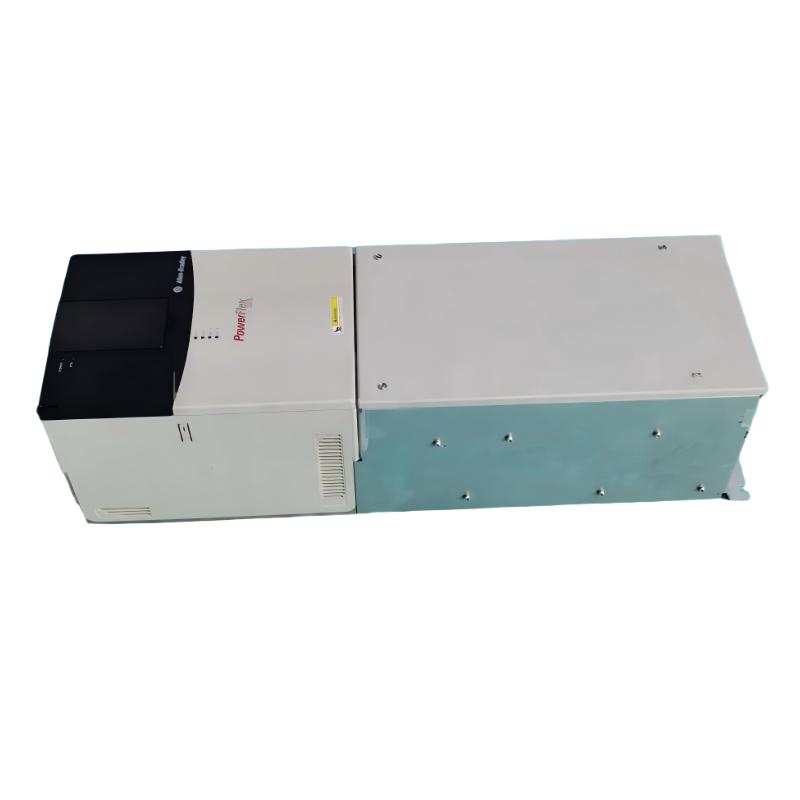
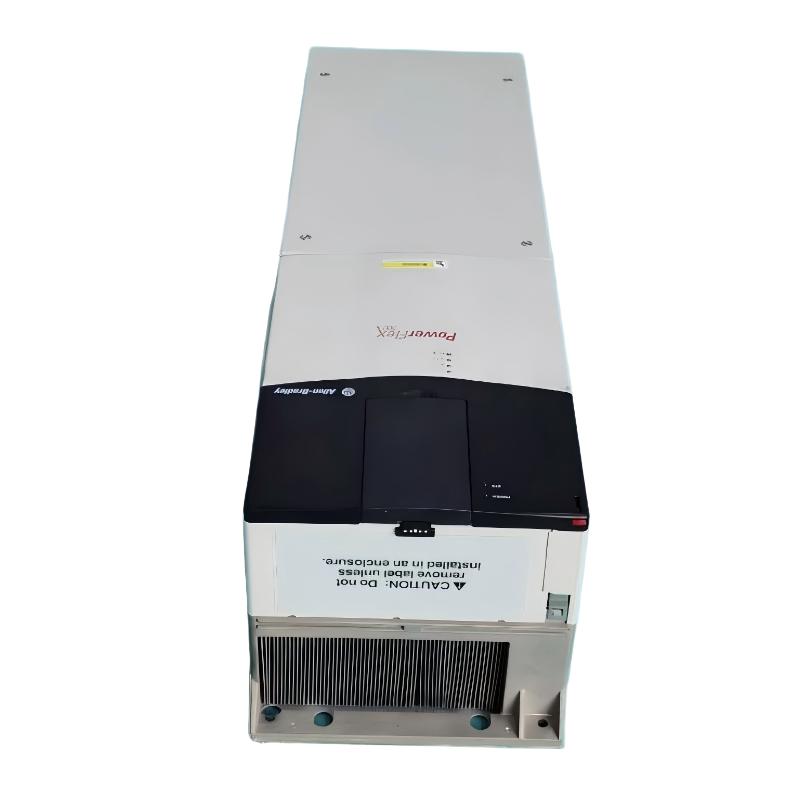
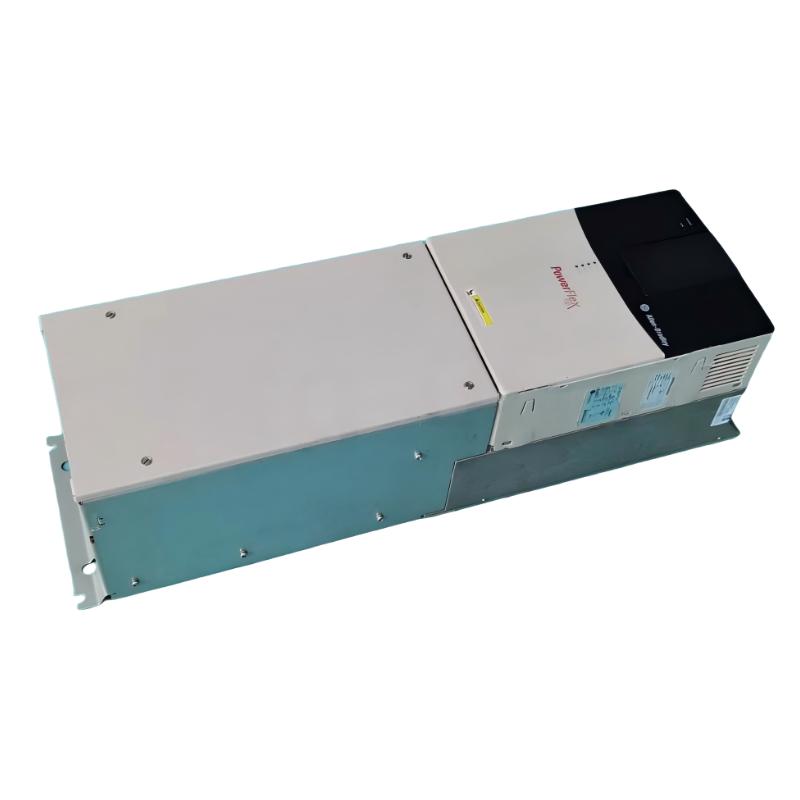
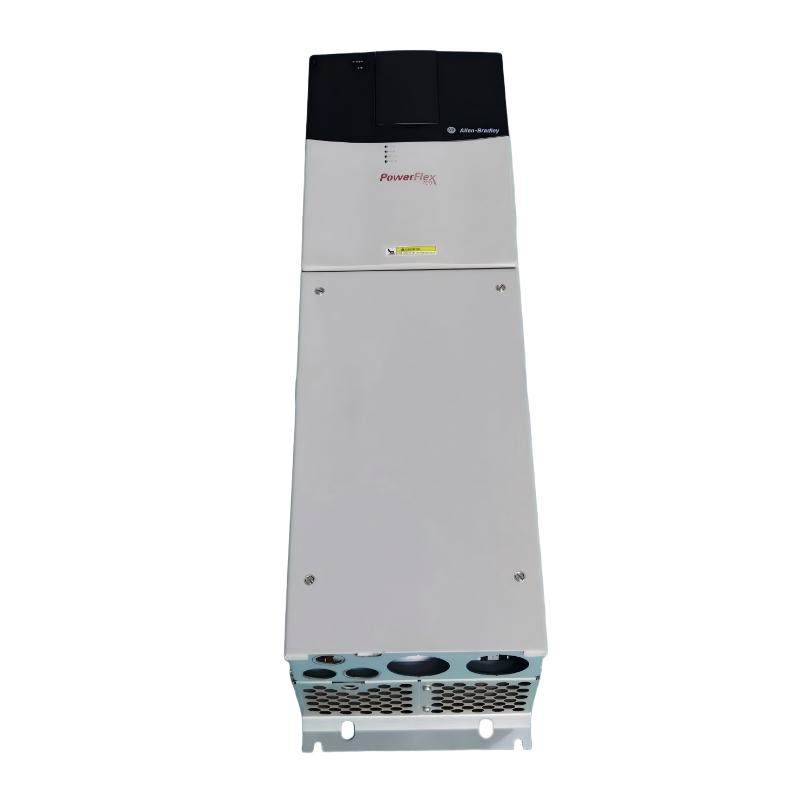
- Allen Bradley
- 20BF142A0ANNANC0
- PowerFlex AC Drive
- USA
- 689.6 × 308.9 × 275.4 mm
- 37.19kg
- Xiamen, China
- New & In Stock
- T/T, PayPal, Western Union
- 1 Year
- 1-3 Working Days
- DHL, UPS, TNT, FedEx and EMS.
- 24-Hour Service
- COO
- 4
Our advantage

Global Logistics
We have a 10-year logistics and express cooperation agreement, so our products can be shipped to any place in the world.

Brand new and original
Our products are imported in bulk from the place of origin. Because of the cooperative relationship, our products are all original and 100% new.

24-hour service
We provide 7*24 hours service to our customers. We will be there whenever you need us.

Price advantage
All our products are priced very favorably because we have our own warehouse and supply.
| Company Information | |||
| [email protected] | |||
| Mobile | +8615980777398 | ||
| +8615980777398 | |||
| 15980777398 |
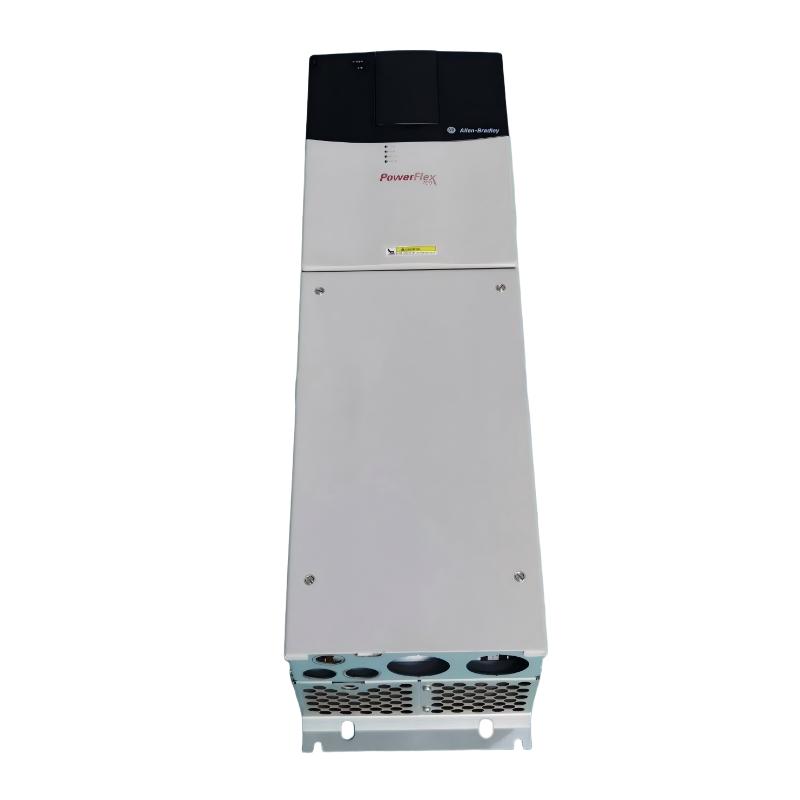
Allen-Bradley 20BF142A0ANNANC0 Variable Frequency Drive: Product Specifications, Features, Applications, and Model Recommendations
1. Product Overview
The Allen-Bradley 20BF142A0ANNANC0 is a model number associated with the PowerFlex 700 series of variable frequency AC drives. This product family is designed for industrial motor speed control, process automation, mechanical power transmission, and applications requiring flexible motor operation.
A variable frequency drive (VFD) regulates the speed and torque of an AC motor by adjusting the frequency and voltage supplied to the motor. Compared with operating a motor directly at a fixed supply frequency, a drive provides more control over acceleration, deceleration, operating speed, and machine response.
The PowerFlex 700 family is intended for industrial environments in which reliable motor control, integration with automation systems, and adjustable operating parameters are important. Typical applications include conveyor systems, pumps, fans, mixers, material-handling equipment, and general-purpose production machinery.
The complete catalog number contains several configuration codes. These codes identify the product’s hardware and configuration options, so the exact electrical rating, enclosure arrangement, communication options, physical dimensions, and weight should be confirmed against the nameplate and the corresponding catalog-number configuration before procurement or installation.
The following description is organized for product documentation, industrial purchasing, equipment selection, engineering reference, and technical catalog preparation. It distinguishes general PowerFlex 700 family characteristics from specifications that require confirmation for the exact model.
2. Brand and Product Series
| Item | Description |
|---|---|
| Brand | Allen-Bradley |
| Product family | PowerFlex |
| Product series | PowerFlex 700 |
| Product type | Variable Frequency AC Drive |
| Equipment category | Industrial motor control and power conversion |
| Primary function | Adjustable-speed control of compatible AC motors |
| Typical control applications | Speed regulation, acceleration and deceleration, torque control, process control |
| Installation environment | Industrial control panels and suitable electrical enclosures |
| Automation applications | Conveyor control, pumping systems, fans, mixers, production equipment |
| Main system role | Motor speed and operating control within an industrial machine or process |
The PowerFlex 700 series is positioned for industrial applications that require more than basic motor starting and stopping. Its application flexibility makes it suitable for machinery with changing loads, adjustable production speeds, programmed acceleration and deceleration, and integration with industrial control equipment.
When selecting this model, engineers should distinguish the overall series capabilities from the functions actually included in the particular drive configuration. Features that depend on installed options, firmware, voltage class, power rating, or communication hardware should not automatically be assumed to be present in every unit.
3. Detailed Technical Specifications
The table below summarizes the main technical characteristics associated with the PowerFlex 700 product family and the identification of the requested catalog number. Values that depend on the exact hardware configuration are marked for verification rather than presented as confirmed specifications.
| Parameter | Technical description |
|---|---|
| Model | 20BF142A0ANNANC0 |
| Brand | Allen-Bradley |
| Series | PowerFlex 700 |
| Product category | Variable frequency AC drive |
| Drive type | Industrial adjustable-frequency drive |
| Voltage class | 690 V AC class, indicated by the F voltage code |
| Input phase | Three-phase |
| Rated current | Approximately 142 A, subject to confirmation against the exact catalog configuration |
| Motor power | Depends on the applicable motor rating and duty classification |
| Motor compatibility | Compatible AC motors within the drive’s electrical ratings |
| Speed control | Adjustable-frequency motor speed control |
| Acceleration control | Programmable acceleration ramp |
| Deceleration control | Programmable deceleration ramp |
| Operating control | Start, stop, speed reference, and configurable drive commands |
| Control configuration | Depends on installed control hardware and firmware |
| Protection functions | Drive protection and fault monitoring, subject to configuration |
| Enclosure protection | Must be confirmed for the complete catalog number |
| Cooling | Depends on the drive frame and installation arrangement |
| Communication | Depends on the installed communication options |
| Installation | Industrial electrical cabinet or an appropriate approved installation arrangement |
| Dimensions (H × W × D) | Exact dimensions require confirmation against the catalog-number-specific mechanical drawing |
| Weight (kg) | Exact net weight requires confirmation against the relevant frame and enclosure configuration |
3.1 Electrical Ratings and Power Compatibility
The voltage class is one of the first specifications to check when selecting this drive. The 690 V AC class is used in industrial power systems where the motor, incoming supply, and associated switching equipment must all be selected for the same voltage environment.
Rated current is equally important. The drive must be selected according to the motor’s nameplate current, load characteristics, and required overload capability. Motor horsepower or kilowatts alone are not sufficient for confirming compatibility.
For example, a conveyor carrying a relatively constant load may have different operating requirements from a crusher, mixer, or machine that experiences frequent load changes. The required drive capacity can therefore vary even when two motors have similar nominal power ratings.
Before installation, the following electrical details should be checked:
-
Incoming supply voltage and frequency.
-
Three-phase supply configuration.
-
Motor rated voltage and current.
-
Motor power in kW or HP.
-
Normal-duty or heavy-duty rating, where applicable.
-
Required overload capacity.
-
Short-circuit protection and upstream protective devices.
-
Earthing, cable sizing, and electromagnetic compatibility requirements.
-
Control voltage and the configuration of digital and analog signals.
3.2 Speed and Torque Control
The primary purpose of a variable frequency drive is to provide controlled motor operation over a suitable speed range. The drive changes the output frequency and voltage according to its control strategy and the connected motor’s requirements.
In a conveyor application, the motor may start at a low speed, accelerate gradually, and maintain a selected operating speed while material moves through the production line. In a pump application, speed can be adjusted to match process demand instead of continuously running the motor at full speed.
Torque requirements depend on the application and control mode. A machine that starts under a heavy load may require a different control setup from a fan that starts with relatively low mechanical resistance.
The exact performance available from the 20BF142A0ANNANC0 must be evaluated against its configured control functions, firmware, motor type, and application settings.
3.3 Dimensions and Installation Space
Physical dimensions are essential when replacing an existing drive or designing a new electrical cabinet. The required space includes more than the drive’s external height, width, and depth.
Engineers should also allow for:
-
Manufacturer-specified ventilation clearances.
-
Cable entry and termination space.
-
Access to power and control terminals.
-
Door opening and maintenance access.
-
Heat dissipation and cabinet airflow.
-
Lifting and handling requirements for larger equipment.
-
Clearance from other heat-generating electrical components.
The exact dimensions of the requested catalog number should not be inferred solely from its voltage rating or current code. PowerFlex 700 drives are available in different frame sizes and installation configurations, and enclosure arrangements can substantially change the overall dimensions.
3.4 Weight and Mechanical Handling
Weight affects mounting strength, cabinet construction, transportation, and installation procedures. The relevant figure may be the drive’s net weight or the combined weight of the drive and its packaging; these are not interchangeable.
For engineering purposes, the installation drawing should be used to establish the final weight and mounting requirements. If the drive is being installed in a cabinet, the design should also account for cable loads, mounting hardware, vibration, and any additional equipment attached to the assembly.
For this specific model, an exact net weight should not be treated as confirmed without the applicable frame and configuration information.
4. Product Introduction and Operating Principle
The PowerFlex 700 is an industrial motor-control product designed to regulate the operation of AC motors in production equipment and process machinery. It converts incoming electrical power into a controlled output suitable for variable-speed operation.
A conventional motor connected directly to a fixed-frequency supply generally operates close to its designed running speed, with limited flexibility for changing speed during normal operation. A VFD allows the operating speed to be adjusted through a control reference, enabling the machine to respond more closely to the requirements of the process.
The basic operating sequence is as follows.
1. Power input: The drive receives electrical power from a compatible supply.
2. Power conversion: The internal power electronics convert the incoming power into an intermediate DC form and then produce a controlled AC output.
3. Motor control: The output frequency and voltage are adjusted according to the selected operating mode and control parameters.
4. Speed adjustment: The motor accelerates, decelerates, or runs at a selected speed based on commands from the operator or automation system.
5. Fault monitoring: The drive monitors operating conditions and responds to supported fault or protection conditions.
6. Process integration: Where the required interface and configuration are available, the drive can operate as part of a larger machine-control or automation system.
The actual control functions, communication interfaces, and protective capabilities depend on the installed configuration. The model number should therefore be treated as the starting point for identification rather than a substitute for checking the complete technical specification.
5. Main Product Advantages
5.1 Flexible Motor Speed Adjustment
The ability to change motor speed is one of the most useful features of a VFD. Production equipment can operate at different speeds according to the material being processed, the required output, or the needs of a downstream machine.
This flexibility can be particularly useful in manufacturing lines where the operating speed changes during different production stages. It also allows a machine designer to adapt the motor’s operation without relying exclusively on mechanical speed-reduction arrangements.
5.2 Controlled Starting and Stopping
Direct-on-line starting can create a sudden mechanical response, depending on the motor and load. A VFD allows the starting and stopping process to be adjusted through acceleration and deceleration settings.
A properly configured ramp can reduce abrupt changes in mechanical loading on belts, couplings, gearboxes, and other transmission components. It can also make machine operation more predictable.
The achievable benefit depends on the mechanical system, the load, and the selected parameters.
5.3 Process Adjustment
Adjustable motor speed can help production equipment respond to changing process requirements. For example, a conveyor may need to run more slowly during inspection, while a pump may need to change speed in response to flow demand.
Using an adjustable drive can simplify this type of operating adjustment, provided the process instrumentation and control system are designed accordingly.
5.4 Integration with Industrial Automation
A configured PowerFlex 700 installation can form part of a wider motor-control system. Commands and feedback may be exchanged through available control terminals or compatible communication options.
This can help coordinate motor operation with programmable logic controllers, operator interfaces, sensors, and other machine components. The available interfaces must be verified for the specific drive rather than assumed from the series name alone.
5.5 Reduced Mechanical Stress
Gradual acceleration and deceleration can help reduce sudden mechanical loading. This may be beneficial for conveyor belts, rotating equipment, mixers, and other systems in which abrupt speed changes can affect product handling or component wear.
A drive does not eliminate mechanical maintenance requirements. Correct alignment, lubrication, load sizing, and preventive maintenance remain necessary.
5.6 Potential Energy Savings
Energy savings are most likely in applications where the required output varies with operating demand, particularly suitable pump and fan systems.
Instead of continuously running a motor at full speed and controlling output through a restrictive mechanical method, a properly engineered variable-speed system may reduce unnecessary energy consumption.
Savings are not guaranteed. They depend on the application, motor efficiency, operating profile, process requirements, and the amount of time spent at reduced speed.
5.7 Configurable Operating Parameters
Industrial drives typically provide configurable parameters for commands, references, ramps, limits, monitoring, and fault handling. These settings allow the drive to be adapted to the machine’s operating requirements.
Configuration should be documented carefully. Incorrect settings may cause unexpected acceleration, insufficient torque, nuisance trips, or unsuitable motor operation.
5.8 Suitability for Industrial Machinery
The PowerFlex 700 family is intended for industrial motor-control applications rather than simple consumer equipment. Its suitability for a specific installation depends on the drive’s electrical rating, mechanical arrangement, environment, and the functions required by the machine.
For replacement projects, retaining the same series can be helpful when the existing cabinet and control system were designed around that product family. However, compatibility must be confirmed before treating another catalog number as a direct replacement.
6. Product Applications

6.1 Conveyor and Material-Handling Systems
The drive can be used to regulate conveyor speed, coordinate material movement, and provide controlled starting and stopping. Typical applications include packaging lines, assembly conveyors, transfer equipment, and material-handling machinery.
The main selection considerations are starting torque, load inertia, required speed range, and the frequency of starts and stops.

6.2 Pumping Systems
In suitable pumping applications, a VFD adjusts motor speed to match process demand. This can help maintain the required flow or pressure and may reduce energy consumption when demand varies.
Pump type, minimum operating speed, system pressure, fluid characteristics, and motor cooling requirements should be assessed before commissioning.

6.3 Industrial Fans and Ventilation
Variable-speed control can help adjust airflow to process conditions. Applications include industrial ventilation, air circulation, dust extraction, and selected cooling systems.
The drive must be matched to the fan motor, operating load, environmental conditions, and required airflow range.

6.4 Mixers and Agitators
Adjustable speed can help operators adapt mixing conditions to different materials or production stages. Controlled acceleration may also reduce sudden mechanical loading on the drive train.
The required torque, viscosity changes, shaft loading, and duration of low-speed operation should be considered during drive selection.

6.5 General Manufacturing Machinery
The PowerFlex 700 family can be considered for compatible motor-driven equipment in production environments where adjustable speed and controlled operation are required.
The final choice should account for motor power, overload requirements, machine duty cycle, available control interfaces, and the required protection functions.
7. Five Recommended Models from the Same Series or Related Configurations
The following five catalog numbers are candidates for comparison within the PowerFlex 700 family. They are not all direct replacements for the 20BF142A0ANNANC0; voltage class, rated current, frame, and installed options must be checked before selecting an alternative.
| Model | Series | Voltage class | Rated current | Typical application | Dimensions (H × W × D) | Weight (kg) |
|---|---|---|---|---|---|---|
| 20BF142A0AYNANA0 | PowerFlex 700 | 690 V AC class | Verify exact rating | Comparison candidate with a different catalog configuration | Confirm exact frame drawing | Confirm exact configuration |
| 20BD096A0AYNANC0 | PowerFlex 700 | 480 V AC class | 96 A nominal catalog rating; verify duty | General industrial motor control | Confirm exact frame drawing | Confirm exact configuration |
| 20BD114A0AYNANC0 | PowerFlex 700 | 480 V AC class | 114 A nominal catalog rating; verify duty | Conveyors and process machinery | Confirm exact frame drawing | Confirm exact configuration |
| 20BD146A0AYNANC0 | PowerFlex 700 | 480 V AC class | 146 A nominal catalog rating; verify duty | Higher-load industrial machinery | Confirm exact frame drawing | Confirm exact configuration |
| 20BD180A0AYNANC0 | PowerFlex 700 | 480 V AC class | 180 A nominal catalog rating; verify duty | Larger motor-control applications | Confirm exact frame drawing | Confirm exact configuration |
Important selection note: The D voltage code identifies the 480 V class, whereas the F voltage code identifies the 690 V class. These configurations must not be treated as interchangeable. The current ratings in this table are catalog-code-based identification values and should be checked against the applicable duty rating and full product configuration.
7.1 How to Choose Among These Models
-
For a like-for-like replacement: Start with the exact original catalog number and compare all configuration codes, the motor rating, and the enclosure.
-
For a different supply voltage: Check the complete motor and supply requirements before considering a different voltage-class model.
-
For a higher-current application: Evaluate the actual motor nameplate current, overload requirements, and load profile rather than selecting a drive based only on its nominal current.
-
For cabinet replacement: Confirm the frame size, mounting holes, cable clearances, ventilation, and weight.
-
For automation upgrades: Check the installed control interface, feedback requirements, and compatibility with the existing control system.
The five models above are comparison candidates, not a ranking of interchangeable products. If the existing equipment operates on a 690 V supply, a 480 V catalog number is not a suitable substitute without a properly engineered change to the electrical system.
8. Five Recommended Allen-Bradley Models from Related Product Families
The following models represent other established industrial drive families from the same brand. They provide alternatives when a project calls for a different drive generation, installation size, control approach, or application requirement.
The dimensional and weight information is configuration-dependent. Where an exact model-specific value cannot be established confidently, it is marked for verification rather than replaced with an invented figure.
| Model | Product series | General specification | Typical applications | Dimensions (H × W × D) | Weight (kg) |
|---|---|---|---|---|---|
| 25B-D017N104 | PowerFlex 525 | Compact AC drive; voltage and current rating depend on the complete catalog configuration | Conveyors, pumps, fans, compact machinery | Confirm exact frame and enclosure | Confirm exact configuration |
| 25A-D013N104 | PowerFlex 523 | Compact adjustable-frequency drive | General machinery, packaging, small conveyor systems | Confirm exact frame and enclosure | Confirm exact configuration |
| 20G11ND077AA0NNNNN | PowerFlex 755 | Industrial AC drive with a configurable control platform | Production machinery, demanding motor-control applications | Confirm exact frame and enclosure | Confirm exact configuration |
| 20F11NC022JA0NNNNN | PowerFlex 753 | Industrial AC drive for general-purpose and process applications | Fans, pumps, conveyors, industrial machinery | Confirm exact frame and enclosure | Confirm exact configuration |
| 22B-D012N104 | PowerFlex 4M | Compact AC drive for straightforward speed control | Small conveyors, auxiliary machinery, basic motor applications | Confirm exact frame and enclosure | Confirm exact configuration |
These are model identifiers for product-family comparison, not a verified list of currently available or universally compatible replacements. The complete ordering code and the electrical specifications should be checked before purchase. In particular, the PowerFlex 525, 523, 755, 753, and 4M families differ in their application capabilities, control options, and physical configurations.
8.1 PowerFlex 525 — Compact Machine Control
The PowerFlex 525 is a compact drive family suited to a wide range of smaller machine-control applications. It is worth considering when panel space, straightforward commissioning, and integration into a modern machine-control design are important.
Compared with retaining an older drive, moving to this family may require changes to mounting, wiring, parameter configuration, and control-system integration. It should not be considered a direct drop-in replacement without a compatibility assessment.
8.2 PowerFlex 523 — General-Purpose Speed Control
The PowerFlex 523 family is intended for general-purpose adjustable-speed applications. It can be a candidate for machinery that does not require all the capabilities of a larger industrial drive platform.
The correct choice depends on the motor’s voltage and current ratings, the load characteristics, the required operating functions, and the environmental conditions.
8.3 PowerFlex 755 — Configurable Industrial Drive
The PowerFlex 755 family is designed for industrial applications that may require a broader set of control and integration capabilities. It can be considered for complex machinery or projects in which control functionality, feedback, and system integration are key selection factors.
A project moving from PowerFlex 700 to PowerFlex 755 should include an engineering review of the power section, enclosure, control hardware, communication architecture, and commissioning procedure.
8.4 PowerFlex 753 — Industrial Process and Machine Applications
The PowerFlex 753 family is another industrial drive option for compatible motor-control applications. It may be appropriate where the project requires a configurable drive platform and integration with industrial automation equipment.
The choice between PowerFlex 753 and PowerFlex 755 depends on the application’s functions, installed options, power requirements, and control-system design. The model number alone does not establish that the products are equivalent.
8.5 PowerFlex 4M — Basic Compact Applications
The PowerFlex 4M is associated with compact, general-purpose motor-speed control. It can be considered for simpler auxiliary machinery where its electrical ratings and control features are sufficient.
Because it belongs to a different drive family, it should not be treated as an equivalent replacement for a 690 V industrial drive. Voltage class, current capacity, motor requirements, and application duty must all be suitable.
9. Comparison of the Main Product Families
| Comparison item | PowerFlex 700 | PowerFlex 525 | PowerFlex 523 | PowerFlex 755 | PowerFlex 753 | PowerFlex 4M |
|---|---|---|---|---|---|---|
| Product positioning | Industrial motor control | Compact machine control | General-purpose compact control | Configurable industrial drive | Industrial process and machine control | Basic compact motor control |
| Typical installation | Industrial cabinet or suitable enclosure | Compact machinery | Compact machinery | Industrial machinery and systems | Industrial machinery and systems | Compact equipment |
| Motor power range | Depends on frame and voltage | Depends on catalog number | Depends on catalog number | Depends on catalog number | Depends on catalog number | Depends on catalog number |
| Control flexibility | Configuration-dependent | Application-dependent | General-purpose | Application-dependent, configurable | Application-dependent, configurable | Basic application requirements |
| Automation integration | Depends on installed options | Depends on configuration | Depends on configuration | Depends on installed options | Depends on installed options | Depends on configuration |
| Direct replacement for the target model | Requires exact configuration match | Not assumed | Not assumed | Requires engineering assessment | Requires engineering assessment | Not assumed |
| Dimensions | Frame-dependent | Model-dependent | Model-dependent | Frame-dependent | Frame-dependent | Model-dependent |
| Weight (kg) | Frame-dependent | Model-dependent | Model-dependent | Frame-dependent | Frame-dependent | Model-dependent |
10. Purchasing and Engineering Checklist
Before purchasing the 20BF142A0ANNANC0 or one of the recommended alternatives, confirm the following details.
| Verification item | What needs to be checked | Why it matters |
|---|---|---|
| Complete catalog number | All characters on the nameplate | Identifies the precise hardware configuration |
| Supply voltage | Actual incoming voltage and frequency | Prevents voltage-class mismatch |
| Motor rating | Voltage, current, kW/HP, frequency | Establishes electrical compatibility |
| Duty classification | Normal-duty or heavy-duty requirements | Ensures the drive can handle the load |
| Enclosure | Protection rating and cabinet arrangement | Determines environmental suitability |
| Frame size | Mechanical drawing and mounting pattern | Ensures the drive fits the installation |
| Dimensions | Height, width, and depth | Establishes cabinet and installation clearance |
| Weight | Net drive weight and, separately, packaged weight | Supports mounting and handling calculations |
| Cooling | Required ventilation and ambient conditions | Helps prevent overheating |
| Control interfaces | Installed I/O, feedback, and communications | Ensures compatibility with the control system |
| Protection | Required upstream fuses, circuit protection, and grounding | Supports safe electrical installation |
| Product condition | New, refurbished, or used | Affects inspection, warranty, and lifecycle planning |
11. Final Recommendation
For an existing installation built around the Allen-Bradley 20BF142A0ANNANC0, the first choice should generally be to identify the exact installed configuration and establish whether the project requires a like-for-like replacement or a broader upgrade.
If the objective is to maintain the existing machine with minimal engineering changes, compare the complete catalog number, voltage class, current rating, enclosure, frame, control options, and communication interfaces before considering another PowerFlex 700 model.
If the objective is to modernize the control system, the PowerFlex 525, PowerFlex 753, or PowerFlex 755 families may be worth evaluating, depending on the required motor capacity and application complexity. The PowerFlex 523 and PowerFlex 4M are more relevant to applications whose power and control requirements fit their respective compact-drive designs.
Dimensions and weight remain the main outstanding items for a procurement-ready specification. They should be filled in from the mechanical drawing for the exact catalog number rather than estimated from a related model. This is especially important for a high-voltage industrial drive, where the wrong frame or enclosure assumption can lead to cabinet redesign, mounting problems, or installation delays.