
NewsNEWCENTER
Featured products
Contact Us
Allen-Bradley 140G-K3F4-D40 Molded Case Circuit Breaker Fault Diagnosis Guide
2026-06-26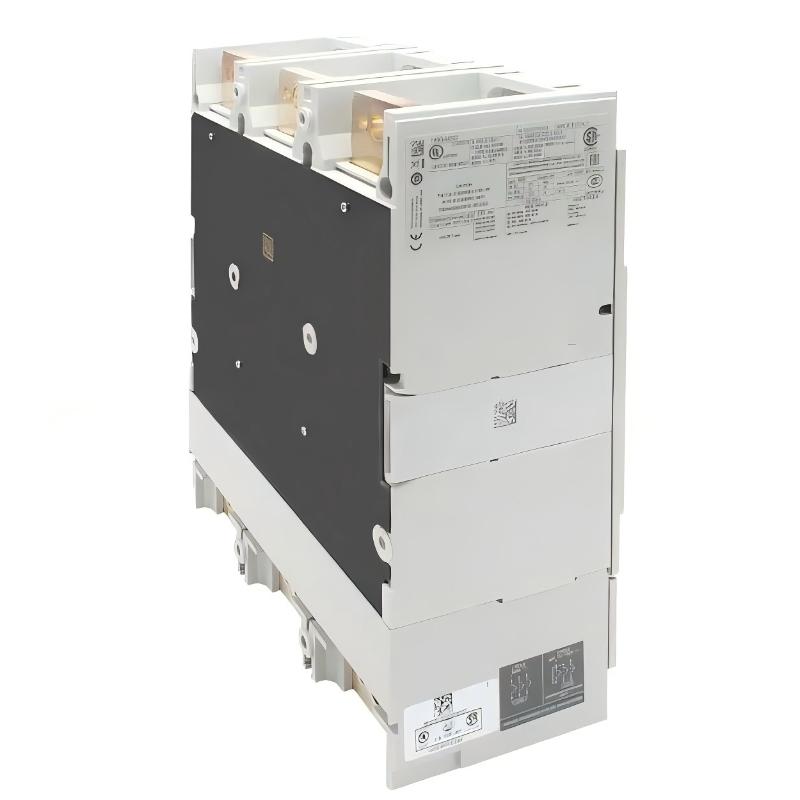
Table of Contents
- Field Case: 400A MCCB Trips After Short Motor Run
- Fault Symptoms of 140G-K3F4-D40 MCCB
- Observed Thermal Rise & Current Distortion
- Root Cause Analysis (Contact Resistance & Thermal Drift)
- Diagnostic Workflow for MCCB System
- Repair & Recovery Actions
- Prevention Strategy for MCC Panel Stability
- FAQs on 140G-K3F4-D40 Faults
- Engineering Summary
Field Case: Unexpected Trip During Continuous Pump Operation
Allen-Bradley 140G-K3F4-D40 molded case circuit breaker faults often appear as nuisance tripping under normal operating load. In one water treatment plant, the breaker tripped repeatedly after 10–15 minutes of stable pump operation. Initial checks showed no overload condition, leading engineers to investigate thermal and connection-related causes.
Fault Symptoms of 140G-K3F4-D40 MCCB
Typical field symptoms include:
- Breaker trips after thermal buildup during steady load
- Intermittent shutdown without visible short circuit
- Uneven heating across breaker terminals
- Reset required after cooling period
Observed Thermal Rise & Current Distortion
During field measurement, engineers observed abnormal heating patterns:
LOAD_CURRENT = 310A stable
TERMINAL_TEMP = 68°C (Phase B higher than others)
AMBIENT_TEMP = 35°C
TRIP_EVENT = occurs after thermal accumulation
CONTACT_RESISTANCE = elevated on one phase
The asymmetry in temperature rise indicated localized resistance rather than system-wide overload.
Root Cause Analysis (Contact Resistance & Thermal Drift)
The 140G-K3F4-D40 MCCB relies on mechanical contact integrity for stable operation. Common failure mechanisms include:
- Loose terminal torque causing micro-arcing under load
- Oxidation of contact surfaces increasing resistance
- Thermal cycling weakening internal contact pressure
- Busbar misalignment creating uneven current distribution
In one case, a slightly under-torqued Phase B terminal caused a 12°C higher temperature rise, triggering thermal protection after extended operation.
Diagnostic Workflow for MCCB System
A structured electrical and thermal analysis is required:
- Measure phase current balance under steady load
- Perform infrared thermal scanning of breaker terminals
- Check torque values on all incoming and outgoing connections
- Inspect for discoloration or arc marks on terminals
- Compare contact resistance between phases
MCCB_DIAG /MODEL=140G-K3F4-D40 /THERMAL_SCAN /CONTACT_RESISTANCE /LOAD_ANALYSIS
Repair & Recovery Actions
- Re-torqued all power terminals to specification
- Cleaned oxidized contact surfaces
- Re-aligned busbar connections for equal pressure distribution
- Replaced breaker in case of severe internal wear
After correction, temperature balance across all phases returned to normal and nuisance tripping stopped completely.
Prevention Strategy for MCC Panel Stability
- Perform periodic torque verification during maintenance cycles
- Use thermal imaging for early detection of hot spots
- Avoid operating near maximum rated current for long durations
- Ensure clean and dry connection surfaces during installation
- Implement regular inspection of busbar alignment
FAQs on 140G-K3F4-D40 Faults
Why does the breaker trip even when current is normal?
Because localized heating from high contact resistance can trigger thermal protection independently of total load current.
Can loose terminals really cause tripping?
Yes. Even slight loosening increases resistance and generates significant heat under high current.
Is breaker replacement always required?
No. Many cases are resolved by restoring proper torque and cleaning contacts.
Engineering Summary
The Allen-Bradley 140G-K3F4-D40 MCCB is highly reliable when properly installed, but most real-world faults are caused by connection degradation rather than internal failure. Contact resistance, torque accuracy, and thermal management are the key factors for long-term stability in industrial power distribution systems.