

ProductPRODUCT
Featured products
Contact Us
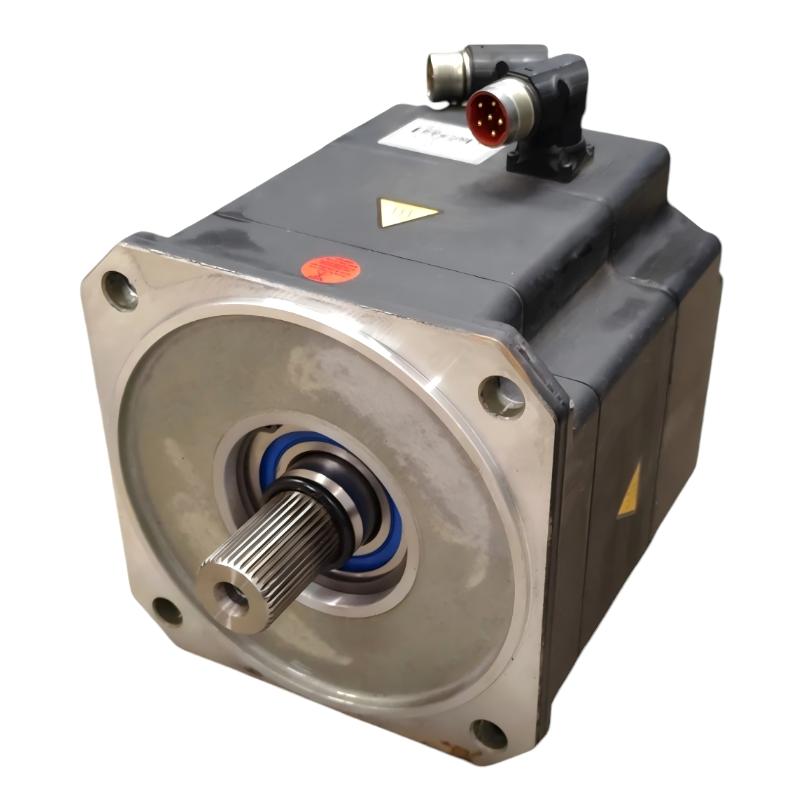
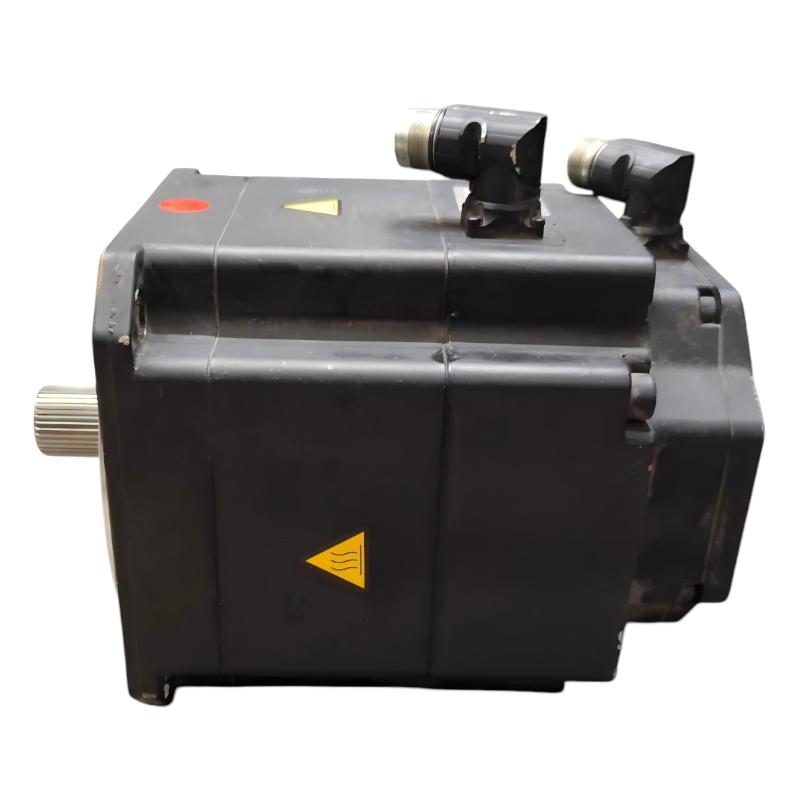
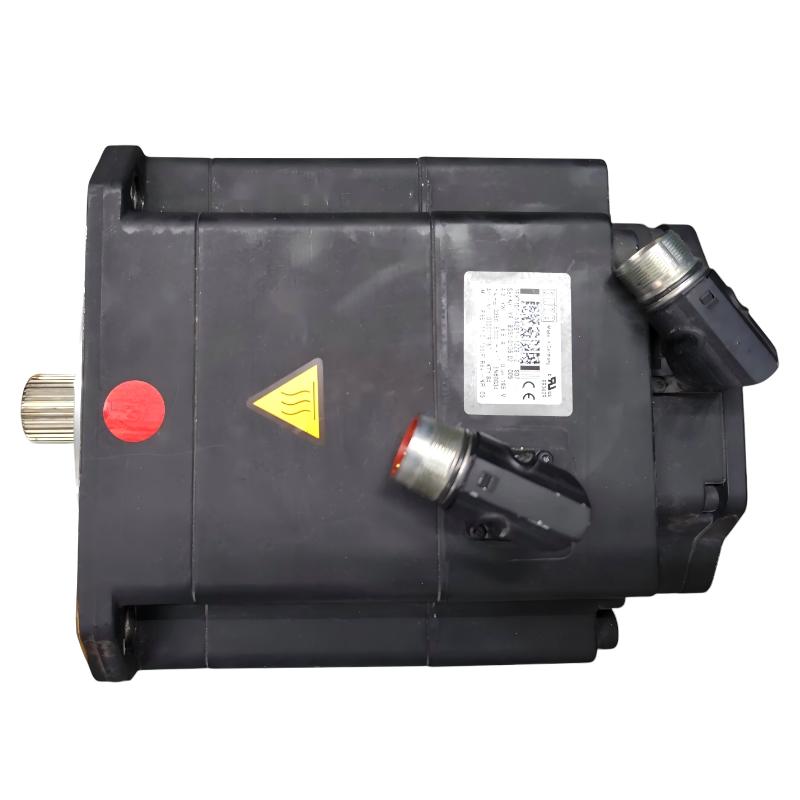
- ABB (KUKA)
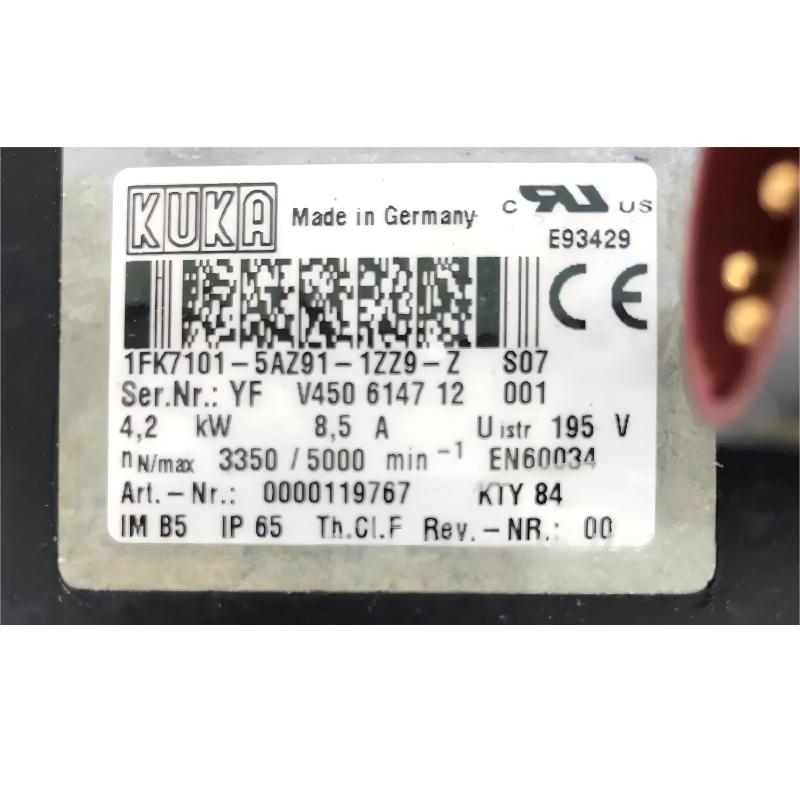
- 1FK7101-5AZ91-1ZZ9-ZS07 00-119-767
- Robot Servo Motor
- Germany
- 320 × 50 × 220 mm
- 6.8 kg
- Xiamen, China
- New & In Stock
- T/T, PayPal, Western Union
- 1 Year
- 1-3 Working Days
- DHL, UPS, TNT, FedEx and EMS.
- 24-Hour Service
- COO
- 61
Our advantage

Global Logistics
We have a 10-year logistics and express cooperation agreement, so our products can be shipped to any place in the world.

Brand new and original
Our products are imported in bulk from the place of origin. Because of the cooperative relationship, our products are all original and 100% new.

24-hour service
We provide 7*24 hours service to our customers. We will be there whenever you need us.

Price advantage
All our products are priced very favorably because we have our own warehouse and supply.
| Company Information | |||
| [email protected] | |||
| Mobile | +8615980777398 | ||
| +8615980777398 | |||
| 15980777398 |
Product Overview
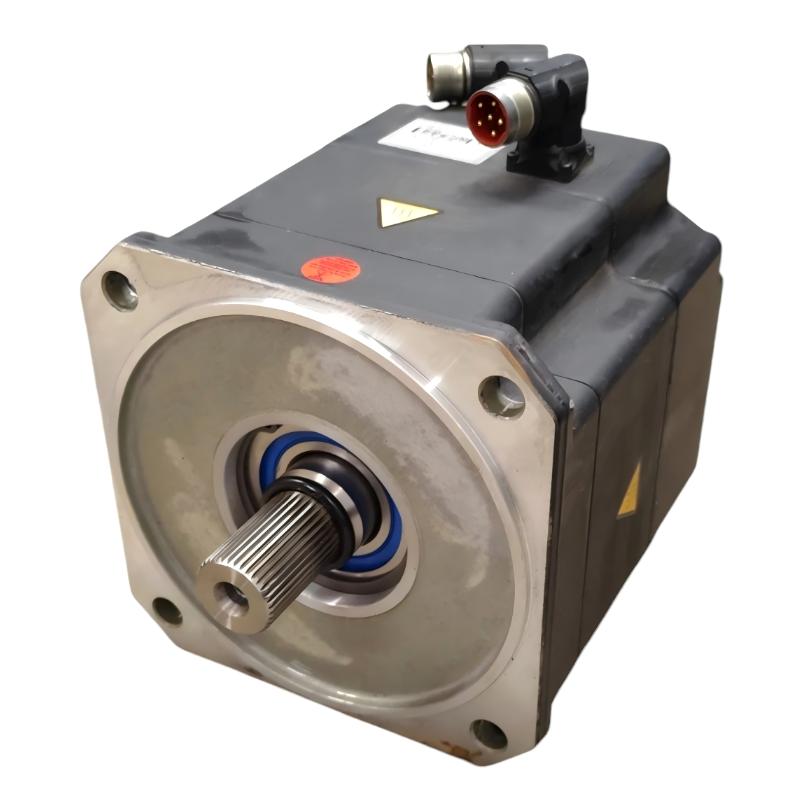
The KUKA 1FK7101-5AZ91-1ZZ9-ZS07, identified by KUKA part number 00-119-767, is a brushless AC servo motor used in industrial robotic motion systems. It belongs to the 1FK7101 servo motor family and is intended for applications where controlled torque, repeatable positioning, and coordinated axis movement are required.
Unlike a conventional three-phase motor that can be connected directly to an AC supply, this type of servo motor operates together with a dedicated servo drive. The drive controls the motor’s electrical output according to the robot controller’s motion commands, allowing the motor to accelerate, decelerate, and hold a commanded position as part of a closed-loop motion system.
The 1FK7101 family is suitable for robotic mechanisms and other automated machinery where the motor must respond quickly to changing motion commands. In a KUKA installation, the motor may be coupled to a gearbox or other mechanical transmission so that the motor’s rotational output is converted into the torque and speed required by the robot axis.
The 00-119-767 identification is particularly important when sourcing a replacement. A servo motor should not be selected solely by comparing physical dimensions or rated power. The feedback configuration, brake arrangement, shaft interface, flange, servo-drive compatibility, and robot-axis requirements should all be checked before installation.
Technical Specifications
| Parameter | Specification |
|---|---|
| Manufacturer | KUKA |
| Model | 1FK7101-5AZ91-1ZZ9-ZS07 |
| KUKA Part Number | 00-119-767 |
| Product Type | Robot Servo Motor |
| Motor Family | 1FK7101 |
| Motor Type | Brushless AC Servo Motor |
| Motor Construction | Three-Phase Servo Motor |
| Rated Speed | Model-dependent servo operating range |
| Application | Industrial Robot and Motion Control |
| Feedback | Servo feedback system |
| Motor Protection | Industrial servo motor enclosure |
| Mounting | Flange-mounted servo motor |
| Dimensions | 320 × 50 × 220 mm |
| Weight | 6.8 kg |
Because KUKA motor suffixes identify specific configurations, the complete 1FK7101-5AZ91-1ZZ9-ZS07 designation should be retained when purchasing or replacing the motor. The suffix should not be shortened to the basic 1FK7101 family designation when verifying compatibility.
Product Features
The 1FK7101-5AZ91-1ZZ9-ZS07 is built around the requirements of servo-controlled motion rather than simple continuous-speed operation.
Its relatively compact 6.8 kg construction makes it suitable for robot and machine axes where motor mass is an important consideration. Keeping the motor assembly compact can reduce the mechanical burden on moving structures, particularly when the motor is mounted directly on or near a robot mechanism.
Important characteristics include:
- KUKA 00-119-767 identification
- 1FK7101 servo motor family
- Brushless AC servo motor design
- Three-phase servo operation
- Closed-loop motion-control application
- Suitable for robotic axis movement
- Flange-mounted construction
- Compact 320 × 50 × 220 mm form factor
- 6.8 kg stated weight
- Designed for operation with a compatible servo drive
- Suitable for applications requiring controlled acceleration and deceleration
- Intended for coordinated industrial automation motion
For replacement applications, the motor’s physical envelope is only one part of the selection process. The drive and feedback system must recognize and correctly control the specific motor configuration.
Working Principle
The 1FK7101-5AZ91-1ZZ9-ZS07 functions as the actuator in a closed-loop servo system:
Robot Controller → Servo Drive → 1FK7101 Servo Motor → Mechanical Transmission → Robot Axis
The robot controller generates the desired movement, while the servo drive converts that command into controlled electrical current for the motor.
The motor produces torque through its electromagnetic field and rotates according to the current supplied by the drive. The resulting shaft movement is transmitted through the connected mechanical system, which may include a gearbox, coupling, belt, or other mechanical transmission.
Feedback is fundamental to servo operation. The control system compares the commanded motion with actual motor movement and adjusts the drive output when there is a position or velocity error.
This allows the motor to perform repeated movements with much greater control than a conventional motor operated directly from the power supply.
During a typical robot cycle, the motor may repeatedly accelerate from low speed, operate at a commanded velocity, decelerate, and then hold a specific position. The servo drive manages these transitions while the mechanical system converts the motor’s rotary output into useful machine or robot movement.
Role in a Servo Motion System
The 1FK7101-5AZ91-1ZZ9-ZS07 should be considered one part of a complete motion-control chain rather than an independent motor.
A typical architecture is:
Motion Controller → Servo Drive → Servo Motor → Gearbox / Coupling → Robot Mechanism
The servo drive determines how much current is supplied to the motor and regulates its torque and speed. The controller determines the desired trajectory, while the feedback system supplies actual movement information.
The mechanical transmission determines how the motor’s rotational characteristics are converted into useful axis movement. For a robot, the gearbox may significantly reduce motor speed while increasing output torque at the joint.
This relationship is important when selecting a replacement. A motor with similar dimensions but different motor constants or feedback characteristics may not operate correctly with the existing servo drive.
Industrial Applications
The 1FK7101-5AZ91-1ZZ9-ZS07 is appropriate for applications requiring controlled and repeatable rotary motion.
| Application | Typical Use |
|---|---|
| Industrial Robots | Servo-controlled robot-axis movement |
| Robotic Handling | Positioning arms, tooling, or workpieces |
| Assembly Machines | Repetitive positioning operations |
| Automated Production Lines | Coordinated multi-axis movement |
| Packaging Equipment | Synchronized rotary motion |
| Material Handling | Controlled acceleration and positioning |
| Machine Tools | Precision axis actuation |
| Special-Purpose Machinery | Closed-loop motion control |
The actual suitability depends on the required torque, speed, acceleration, duty cycle, and mechanical load. A motor that performs well on a lightly loaded axis may not be appropriate for an axis with high inertia or frequent high-acceleration cycles.
Installation and Maintenance
Installation should be carried out with the complete servo system in mind. Before removing an existing motor, record its full part number, connector configuration, axis position, and drive parameters.
The 1FK7101-5AZ91-1ZZ9-ZS07 should be compared directly with the motor being replaced. Do not assume that another 1FK7101 motor is mechanically or electrically interchangeable.
Mechanical installation requires careful attention to the mounting flange, shaft, coupling, and alignment. Excessive misalignment can create additional bearing loads and produce vibration during operation.
Recommended checks include:
- Confirm the complete 1FK7101-5AZ91-1ZZ9-ZS07 designation.
- Verify KUKA part number 00-119-767.
- Compare the motor with the original unit before installation.
- Check the servo-drive motor configuration.
- Inspect motor power connections.
- Verify feedback wiring.
- Check the motor shaft and coupling.
- Confirm flange alignment.
- Inspect mounting hardware.
- Check cable routing for moving-axis applications.
- Look for signs of bearing wear or abnormal vibration.
- Monitor motor temperature during operation.
- Review servo-drive diagnostic messages.
- Perform low-speed jogging after replacement.
- Verify axis positioning before returning the equipment to production.
If the axis produces abnormal noise, excessive current, or positioning errors after motor replacement, inspect the mechanical transmission as well as the motor. Gearbox wear, coupling problems, incorrect feedback, and unsuitable servo parameters can create symptoms that resemble a motor fault.
Related Components
The motor normally operates together with several components that form the complete servo axis.
| Component | Function |
|---|---|
| Servo Drive | Controls motor current, torque, speed, and acceleration |
| Robot Controller | Generates programmed motion commands |
| Feedback System | Provides actual motor position and speed |
| Gearbox | Converts motor speed and torque for the robot mechanism |
| Coupling | Transfers motor torque to the mechanical transmission |
| Motor Power Cable | Carries controlled electrical power |
| Feedback Cable | Transfers position and speed information |
| Robot Axis Assembly | Converts motor output into controlled mechanical movement |
| Control Cabinet | Houses the servo drive and associated control equipment |
| Brake System | Provides mechanical holding where configured |
Compatibility should be checked across the complete chain. The motor, drive, feedback system, and mechanical transmission must work together for the axis to operate correctly.
Recommended Related Models
The following products are useful comparison points when selecting KUKA servo motors for robotic and industrial motion applications.
| Model / Part Number | Product Type | Typical Application |
|---|---|---|
| KUKA 1FK7101-5AZ91-1ZZ9-ZS07 / 00-119-767 | Robot Servo Motor | Compact robotic servo applications |
| KUKA 1FK6100-8AF91-1ZZ9-ZS09 / 69-225-463 | Robot Servo Motor | Higher-power robot-axis applications |
| KUKA 1FK6100-8AF71-1ZZ9-ZS09 | Robot Servo Motor | Industrial robotic motion |
| KUKA 1FK6100-8AF91-1ZZ9-ZS49 | Robot Servo Motor | External robot-axis / linear-track applications |
| KUKA KSD Servo Drive Family | Servo Drive | KUKA closed-loop motor control |
| KUKA Robot Controller | Motion Controller | Multi-axis robot coordination |
The 1FK6100 motors are useful comparison products when a higher motor capacity is required, while the 1FK7101 family offers a different motor configuration and physical package.
These models should not be treated as automatic substitutes. The exact robot model, axis assignment, feedback configuration, mechanical interface, drive parameters, and load requirements should be verified before selecting an alternative.
Key Advantages
- 1FK7101 brushless AC servo motor construction.
- KUKA part number 00-119-767 for precise product identification.
- Suitable for closed-loop industrial motion systems.
- Compact physical construction at 6.8 kg.
- 320 × 50 × 220 mm stated dimensions.
- Suitable for robotic and automated machine axes.
- Supports controlled acceleration and deceleration.
- Works with dedicated servo drives rather than direct-on-line motor starters.
- Suitable for applications requiring repeatable positioning.
- Can be integrated with gearboxes and mechanical transmissions.
- Appropriate for coordinated multi-axis automation.
- Compact motor construction can be advantageous on moving robot mechanisms.
Technical FAQs
What should be matched when replacing a KUKA 1FK7101-5AZ91-1ZZ9-ZS07?
The full motor designation should be matched first, followed by the KUKA part number 00-119-767. The feedback system, shaft and flange configuration, drive compatibility, connector arrangement, and mechanical load should then be checked before installation.
Why is the 6.8 kg motor weight relevant to robotic applications?
Motor mass can affect the mechanical load of a moving robot assembly. A heavier motor mounted on a moving axis can increase inertia and influence the torque required from another axis. The relatively compact 6.8 kg package can therefore be an important consideration when evaluating robot-axis mechanics.
What happens if the servo feedback is incompatible with the existing drive?
The drive may fail to initialize the motor correctly, report a feedback fault, or lose accurate position information. Because servo control depends on continuous feedback, an electrically compatible motor is not necessarily a functional replacement if its feedback configuration does not match the controller and drive.
How can a technician distinguish a motor problem from a gearbox problem?
Check the motor’s current behavior, feedback signals, mechanical noise, shaft movement, and servo alarms first. If the motor responds correctly but the axis still shows abnormal vibration, backlash, excessive resistance, or positioning errors, the gearbox, coupling, or downstream mechanism should also be inspected rather than replacing the motor again.