

ProductPRODUCT
Featured products
Contact Us
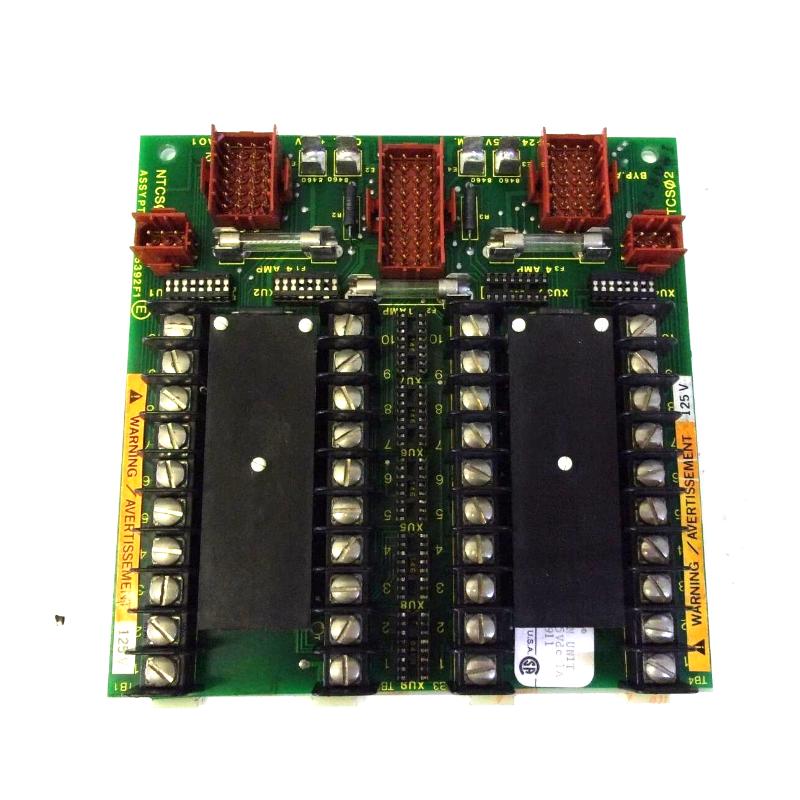
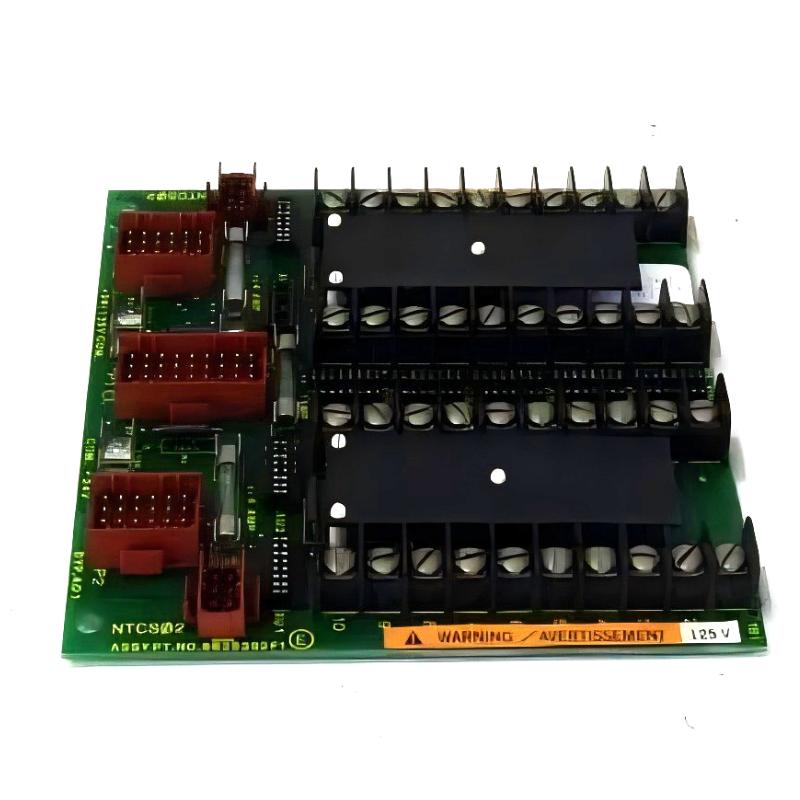
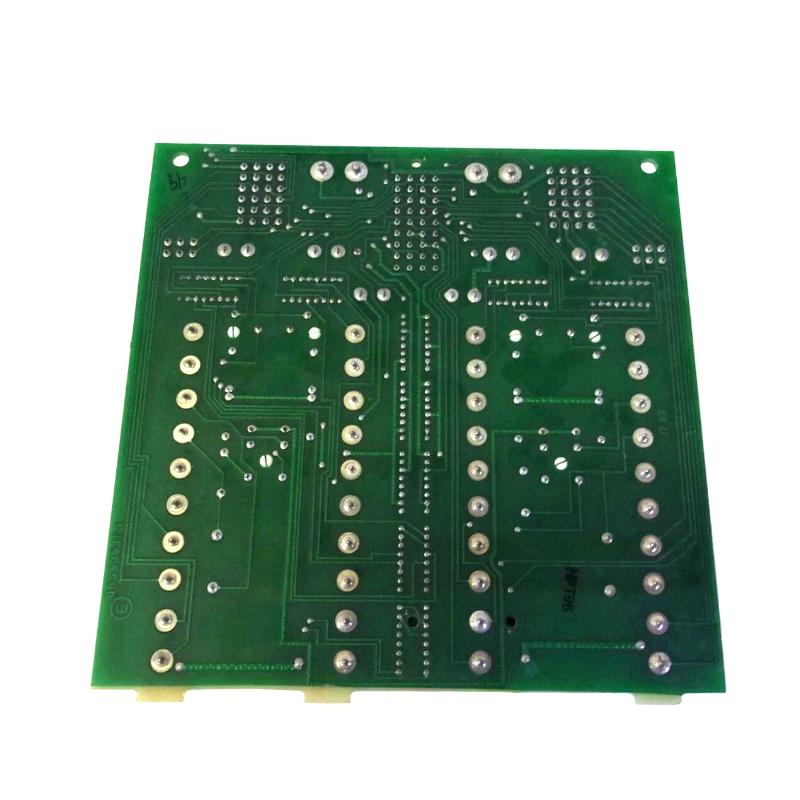
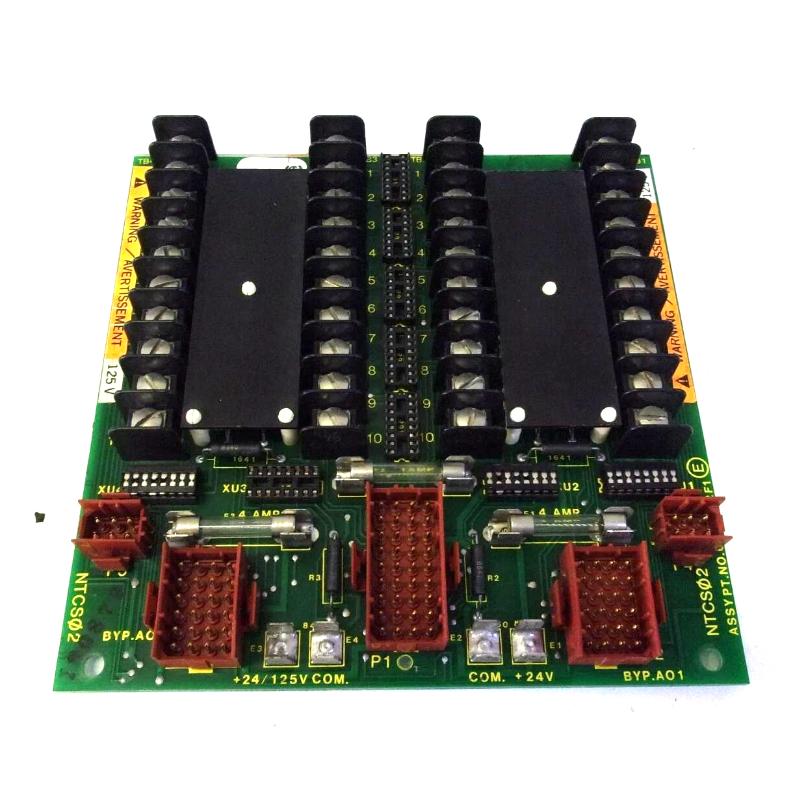
- ABB Bailey
- NTCS02
- Control I/O Termination Unit
- Sweden (SE)
- 233.68 × 78.74 × 213.36 mm
- 0.499 kg
- Xiamen, China
- New & In Stock
- T/T, PayPal, Western Union
- 1 Year
- 1-3 Working Days
- DHL, UPS, TNT, FedEx and EMS.
- 24-Hour Service
- COO
- 82
Our advantage

Global Logistics
We have a 10-year logistics and express cooperation agreement, so our products can be shipped to any place in the world.

Brand new and original
Our products are imported in bulk from the place of origin. Because of the cooperative relationship, our products are all original and 100% new.

24-hour service
We provide 7*24 hours service to our customers. We will be there whenever you need us.

Price advantage
All our products are priced very favorably because we have our own warehouse and supply.
| Company Information | |||
| [email protected] | |||
| Mobile | +8615980777398 | ||
| +8615980777398 | |||
| 15980777398 |
Product Overview
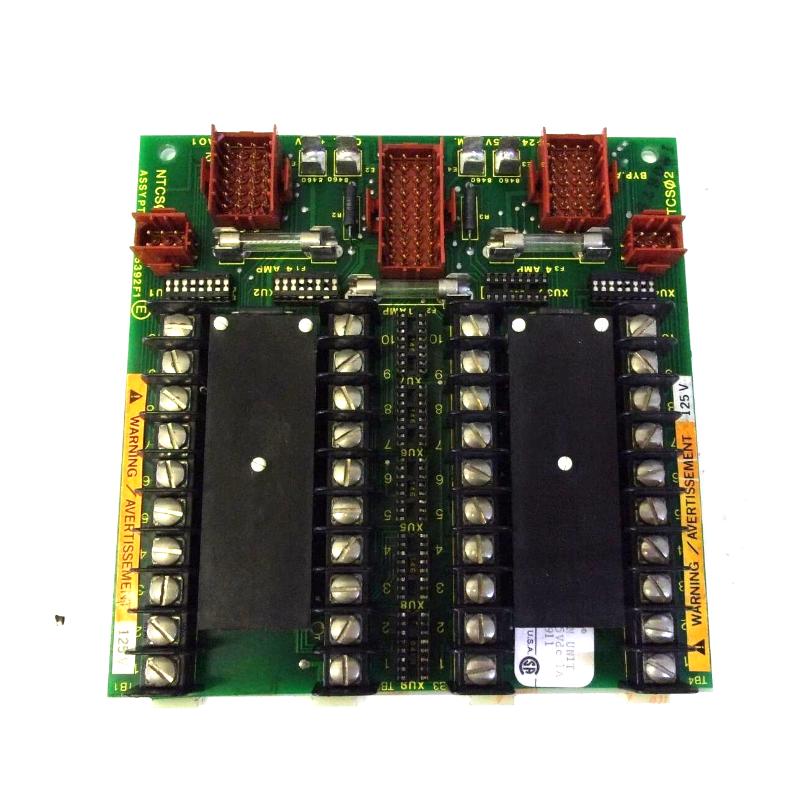
The ABB Bailey NTCS02 is a Control I/O Termination Unit used within ABB Bailey Symphony Harmony control-system installations. It serves as an interface for control-system I/O connections, providing an organized termination point between associated I/O equipment and field wiring.
In a Symphony Harmony control architecture, the NTCS02 is positioned at the I/O termination layer. Field signals can be routed through the termination interface toward the corresponding I/O circuitry, while output signals from the control system can be passed toward connected field equipment.
The NTCS02 is applicable to process automation, power generation, industrial plant control, and other installations using Symphony Harmony equipment. Its termination function is particularly useful in control cabinets where multiple I/O circuits require structured and identifiable wiring connections.
During maintenance, the NTCS02 should be evaluated together with the associated I/O modules and field circuits. Channel identification, terminal connections, field wiring, and I/O configuration all need to correspond correctly when commissioning or replacing the unit.
Technical Specifications
| Parameter | Specification |
|---|---|
| Model | NTCS02 |
| Product Family | ABB Bailey Symphony Harmony |
| Product Type | Control I/O Termination Unit |
| Primary Function | Control I/O signal termination and interface |
| System Role | I/O interface |
| Application | Industrial control and process automation systems |
| Dimensions | 233.68 × 78.74 × 213.36 mm |
| Weight | 0.499 kg |
Product Features
- Control I/O termination for ABB Bailey Symphony Harmony systems
- Provides an interface between I/O circuitry and field wiring
- Suitable for distributed control-system architectures
- Supports organized termination of control-system I/O connections
- Applicable to process automation and power-generation installations
- Helps simplify field signal routing inside control cabinets
- Suitable for I/O maintenance and replacement applications
- Integrates with compatible ABB Bailey Symphony Harmony I/O equipment
Working Principle
The NTCS02 provides the physical termination point for control-system I/O circuits. Input signals from field instruments are routed through the termination interface to the associated I/O module, while controller output signals follow the reverse path toward field devices.
Field Devices → NTCS02 Control I/O Termination Unit → I/O Module → Symphony Harmony Controller
For an output circuit:
Symphony Harmony Controller → I/O Module → NTCS02 → Field Actuator / Equipment
The NTCS02 does not perform process-control calculations. Its function is to establish the physical connection between field circuits and the control-system I/O layer. When an I/O point fails, the termination connection should be checked together with the field device, wiring, I/O module, and controller configuration.
Role in a Symphony Harmony Control Architecture
The NTCS02 forms part of the I/O interface layer in a Symphony Harmony control architecture. It provides the termination point through which field signals are connected to the associated I/O equipment.
Field Device → NTCS02 → I/O Module → Symphony Harmony Controller → Control Logic
| System Element | Function |
|---|---|
| Field Sensors | Provide process measurement signals |
| NTCS02 | Terminates and interfaces control I/O connections |
| I/O Module | Processes input and output signals |
| Symphony Harmony Controller | Executes control logic and process functions |
| Field Actuators | Respond to controller output signals |
Industrial Applications
| Application | Typical Use |
|---|---|
| Process Automation | Termination of field signals connected to control-system I/O |
| Power Generation | Interface between plant field wiring and control-system I/O |
| Industrial Plants | Organized I/O connections inside control cabinets |
| Distributed Control Systems | Connection of distributed field signals to Symphony Harmony I/O |
| Process Instrumentation | Routing signals from transmitters and switches |
| Industrial Equipment | Interface between control I/O and machine-side devices |
Installation and Maintenance
- Confirm that the NTCS02 is compatible with the installed Symphony Harmony I/O architecture before replacement.
- Record existing terminal and channel assignments before disconnecting the unit.
- Identify each field cable before removing it from the termination interface.
- Inspect terminals for loose connections, corrosion, or physical damage.
- Verify that field wiring corresponds to the intended I/O channel.
- Keep signal wiring organized and clearly identified inside the control cabinet.
- Inspect conductors and insulation for damage during maintenance.
- Confirm that the associated I/O module is correctly installed and powered.
- Check controller I/O configuration when an expected signal is not detected.
- Verify field signal continuity when an input channel shows no response.
- Check output wiring and the connected field device when an output channel does not operate correctly.
- Perform a point-to-point I/O test after replacement or rewiring before returning the system to service.
Related Components
| Component | Function |
|---|---|
| ABB Bailey Symphony Harmony Controller | Control logic and process control |
| Symphony Harmony I/O Module | Input and output signal processing |
| NTCS02 Control I/O Termination Unit | I/O signal termination and interface |
| Field Transmitter | Provides process measurement signals |
| Field Switch | Provides discrete process status signals |
| Field Actuator | Responds to control-system output signals |
| Terminal Wiring | Connects field circuits to the I/O interface |
| Control Cabinet | Houses control and I/O equipment |
Recommended Related Models
| Model / Product Family | Product Type | Typical Application |
|---|---|---|
| ABB Bailey NTCS01 | Control I/O Termination Unit | Control I/O termination |
| ABB Bailey NTCS02 | Control I/O Termination Unit | Control I/O termination |
| ABB Bailey NTCL01 | Communication Termination Unit | Communication termination |
| ABB Bailey NTCF22 | Fiber Optic Communication Termination Unit | Fiber communication termination |
| ABB Bailey NTCF23 | Fiber Optic Communication Termination Unit | Fiber communication termination |
| ABB Bailey Symphony Harmony Series | Distributed Control System | Process and industrial automation |
| ABB Bailey Symphony I/O Modules | Industrial I/O Modules | Field signal acquisition and control |
| ABB Bailey Symphony Controllers | Process Controllers | Plant control and automation |
Key Advantages
- Control I/O termination interface for Symphony Harmony installations
- Supports organized connections between field wiring and I/O modules
- Suitable for distributed industrial control architectures
- Applicable to process and power-generation control systems
- Simplifies identification and maintenance of I/O termination circuits
- Integrates with associated ABB Bailey Symphony Harmony I/O equipment
Technical FAQs
What is the primary purpose of the ABB Bailey NTCS02?
The NTCS02 functions as a Control I/O Termination Unit, providing the physical interface between field wiring and the associated Symphony Harmony I/O circuitry.
How can an NTCS02 connection problem affect an I/O point?
A loose, incorrectly terminated, or damaged connection can interrupt the signal path. For an input, this may appear as a missing or unstable process signal; for an output, the field actuator may fail to respond even though the controller is issuing the expected command.
What is the correct signal path for an input connected through the NTCS02?
A typical input path is Field Device → NTCS02 → I/O Module → Symphony Harmony Controller. Troubleshooting should follow this complete path so that wiring, termination, I/O hardware, and controller configuration can each be verified.
Can the NTCS02 be replaced without checking the I/O configuration?
The physical replacement should not be treated independently of the system configuration. Terminal assignments and I/O channel mapping should be documented before removal, and the completed installation should be verified with a point-to-point test.