
NewsNEWCENTER
Featured products
Contact Us
The Rise of Edge Computing in Industrial Automation: Transforming PLC and DCS Systems in 2026
2026-06-12Industrial automation is undergoing a fundamental transformation in 2026, with edge computing becoming one of the most influential technologies reshaping PLC (Programmable Logic Controller) and DCS (Distributed Control System) architectures. As manufacturing environments become more data-driven and interconnected, the need for real-time processing, low latency, and decentralized decision-making has never been greater.
Edge computing brings computation closer to the source of industrial data—machines, sensors, and control devices—reducing reliance on centralized cloud systems. This shift is significantly improving responsiveness, reliability, and efficiency in automated production environments.
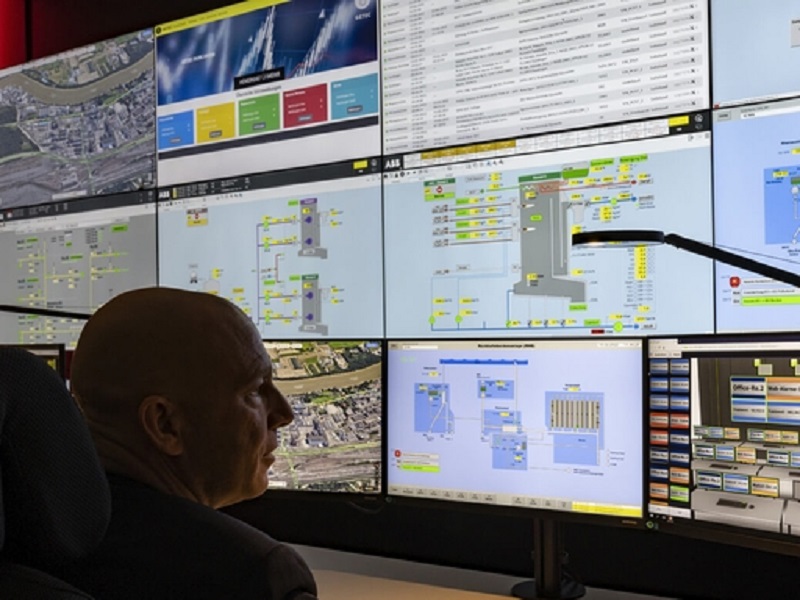
Why Edge Computing Matters in Industrial Automation
Traditional automation systems rely heavily on centralized control rooms or cloud-based platforms. However, in modern industrial environments, milliseconds matter. Delays in decision-making can lead to production inefficiencies, equipment damage, or even safety risks.
Edge computing solves this challenge by enabling PLCs, industrial PCs, and edge gateways to process data locally. This allows machines to react instantly to changing conditions without waiting for cloud instructions.
For example, in high-speed packaging lines, edge-enabled PLCs can adjust conveyor speed, detect defects, and trigger rejection mechanisms in real time. This reduces waste and improves production accuracy.
Integration of Edge Computing with PLC Systems
Modern PLC systems are no longer isolated controllers. In 2026, they are evolving into intelligent edge devices capable of:
- Running advanced logic and analytics locally
- Communicating with IoT sensors in real time
- Supporting AI-based decision-making algorithms
- Integrating seamlessly with SCADA and MES systems
With increased processing power and embedded Linux-based environments, PLCs are now capable of handling tasks that previously required external servers.
This evolution is particularly important for industries requiring ultra-low latency, such as semiconductor manufacturing, robotics, and automotive assembly lines.
DCS Systems and Edge Intelligence
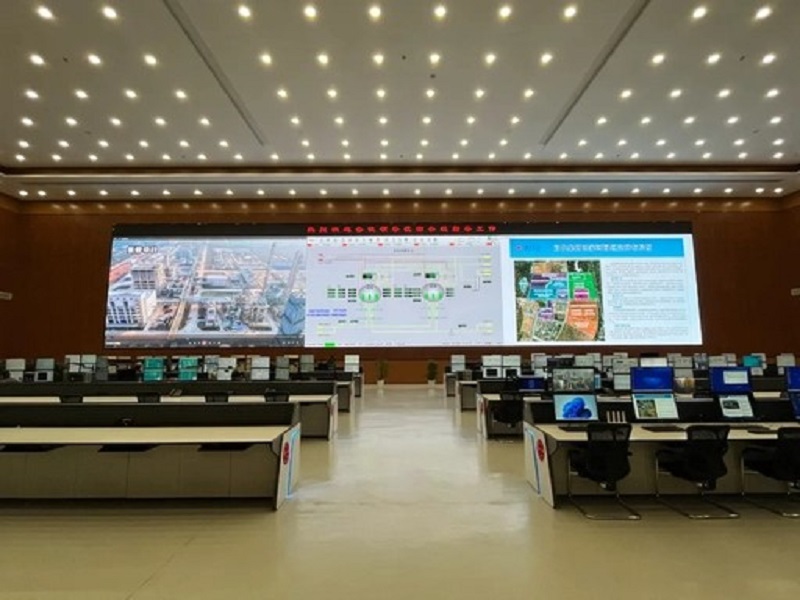
Distributed Control Systems are also benefiting significantly from edge computing integration. In large-scale process industries such as oil refineries, chemical plants, and power generation facilities, DCS architectures are becoming more modular and distributed.
Instead of relying solely on centralized controllers, modern DCS nodes now include edge intelligence that enables:
- Local loop optimization
- Real-time anomaly detection
- Autonomous process adjustments
- Reduced network load on central servers
This hybrid architecture improves system resilience. Even if network connectivity is interrupted, local nodes can continue operating safely and efficiently.
Industrial IoT and Data Explosion
The expansion of Industrial IoT (IIoT) devices has led to an explosion of data in manufacturing environments. Sensors continuously generate information related to temperature, vibration, pressure, energy consumption, and machine health.
Without edge computing, transmitting all this data to centralized systems would create bottlenecks. Edge processing filters and analyzes data locally, sending only relevant insights to cloud platforms.
This reduces bandwidth usage and enables more efficient long-term data storage and analytics.
Cybersecurity in Edge-Based Automation
As automation systems become more decentralized, cybersecurity becomes increasingly critical. Each edge device—whether a PLC or DCS controller—can become a potential entry point for cyber threats.
To address this, modern industrial systems in 2026 are implementing:
- End-to-end encryption
- Secure boot mechanisms for PLC firmware
- Role-based access control
- Continuous network monitoring
- AI-driven intrusion detection systems
These measures ensure that distributed automation networks remain secure and resilient against cyberattacks.
Industrial Applications
Edge computing is now widely used across multiple industries:
- Manufacturing: Real-time quality inspection and robotic control
- Energy: Smart grid optimization and distributed power management
- Oil & Gas: Remote pipeline monitoring and predictive maintenance
- Logistics: Automated warehouse sorting and fleet management
- Pharmaceuticals: Precision control in sterile production environments
Advantages of Edge-Enabled Automation
| Advantage | Description |
|---|---|
| Low Latency | Faster response times for critical operations |
| Reduced Cloud Dependency | Local processing minimizes network reliance |
| Higher Reliability | Systems continue operating during network outages |
| Improved Efficiency | Optimized data handling and reduced bandwidth usage |
| Enhanced Security | Localized data reduces exposure to cyber threats |
Future Outlook
The integration of edge computing with PLC and DCS systems is expected to deepen further beyond 2026. Future automation systems will likely combine edge intelligence with AI-driven autonomous control, enabling self-optimizing factories that require minimal human intervention.
Manufacturers adopting edge-enabled automation today are positioning themselves for long-term competitiveness in an increasingly digital industrial landscape.