
NewsNEWCENTER
Featured products
Contact Us
Industrial Robot Exports Surge: Overview of North China Industrial Control Embedded AI Computers
2026-06-01Record Growth in Industrial Robot Exports
In 2026, China’s industrial robot export volume has experienced significant growth, reflecting rising global demand for automation equipment and smart manufacturing solutions. North China, a key hub for industrial automation and control technology, has been at the forefront of this expansion.
Industry data indicates that the growth is driven by:
- Increasing automation adoption in manufacturing worldwide
- Rising need for precision and reliability in industrial operations
- Expansion of cross-border trade channels and logistics efficiency
The surge in industrial robot exports has created strong demand for embedded AI computing solutions, which form the core of modern industrial automation systems.
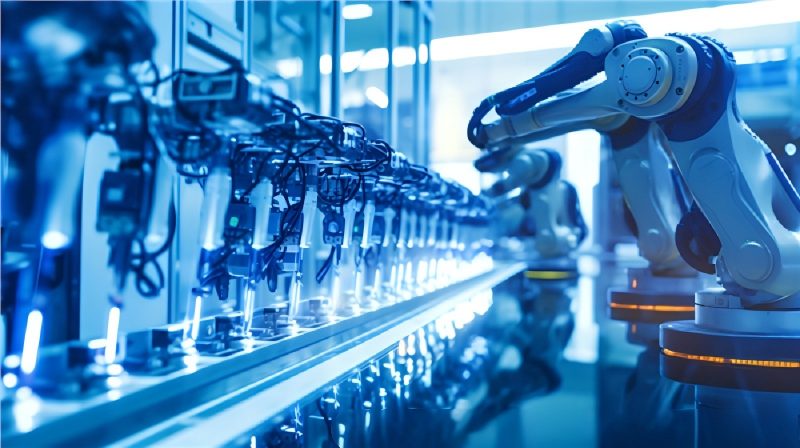
North China Industrial Control: Embedded AI Computing Solutions
Manufacturers in North China have been actively developing embedded AI computers for industrial control, which integrate machine vision, predictive maintenance, and real-time process optimization.
Key features of these solutions include:
- High-performance AI processors for industrial automation
- Real-time data processing for robotics control
- Multi-interface connectivity for sensors, PLCs, and actuators
- Compact design suitable for robotic and smart factory integration
- Robust industrial-grade durability for harsh environments
These embedded AI computers enable industrial robots to perform complex tasks with higher efficiency, supporting applications in assembly, logistics, welding, material handling, and quality inspection.
Driving Factors for Industrial AI Embedded Systems
1. Smart Manufacturing Demand
Factories worldwide are upgrading to Industry 4.0 standards, requiring embedded AI systems to enhance production intelligence.
2. Robotics Integration
Industrial robots increasingly rely on real-time AI computing for motion planning, defect detection, and operational efficiency.
3. Export-Oriented Innovation
North China’s industrial control companies are optimizing embedded AI solutions for export markets, meeting international compliance and reliability standards.
4. Edge AI Applications
Embedded AI enables edge computing, allowing robots and automation systems to process data locally, reducing latency and improving real-time decision-making.
Market Outlook: Embedded AI Computers as a Core Export Enabler
Analysts predict that as industrial robot exports continue to rise, the demand for embedded AI computing hardware will grow proportionally.
This trend presents opportunities for:
- Industrial control manufacturers to expand overseas markets
- Robotics integrators to deploy advanced automation solutions
- Cross-border industrial technology trade and collaboration
- Smart factory operators to enhance production efficiency and reliability
North China is positioning itself as a key global supplier of industrial-grade embedded AI computing solutions, supporting both domestic automation and international exports.
Conclusion
The surge in industrial robot exports highlights the growing importance of embedded AI computers in industrial control and automation. North China’s industrial manufacturers are leveraging AI-embedded computing to meet global demand, strengthen exports, and support the ongoing digital transformation of manufacturing worldwide.
As global industries continue to adopt robotics and smart automation, embedded AI systems will play an increasingly critical role in enhancing efficiency, precision, and operational intelligence.