

ProductPRODUCT
Featured products
Contact Us
- GE
- 8922-RB-IS
- Railbus Signal Isolator
- USA
- 160 x 42 x 110 mm
- 0.345 kg
- Xiamen, China
- New & In Stock
- T/T, PayPal, Western Union
- 1 Year
- 1-3 Working Days
- DHL, UPS, TNT, FedEx and EMS.
- 24-Hour Service
- COO
- 8
Our advantage

Global Logistics
We have a 10-year logistics and express cooperation agreement, so our products can be shipped to any place in the world.

Brand new and original
Our products are imported in bulk from the place of origin. Because of the cooperative relationship, our products are all original and 100% new.

24-hour service
We provide 7*24 hours service to our customers. We will be there whenever you need us.

Price advantage
All our products are priced very favorably because we have our own warehouse and supply.
| Company Information | |||
| [email protected] | |||
| Mobile | +8615980777398 | ||
| +8615980777398 | |||
| 15980777398 |
Product Overview
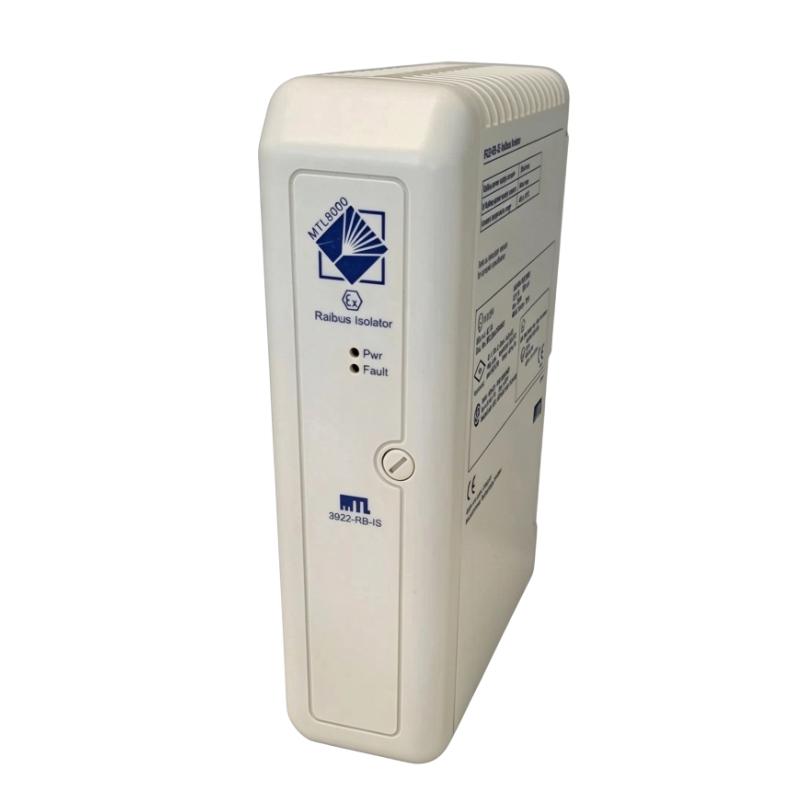
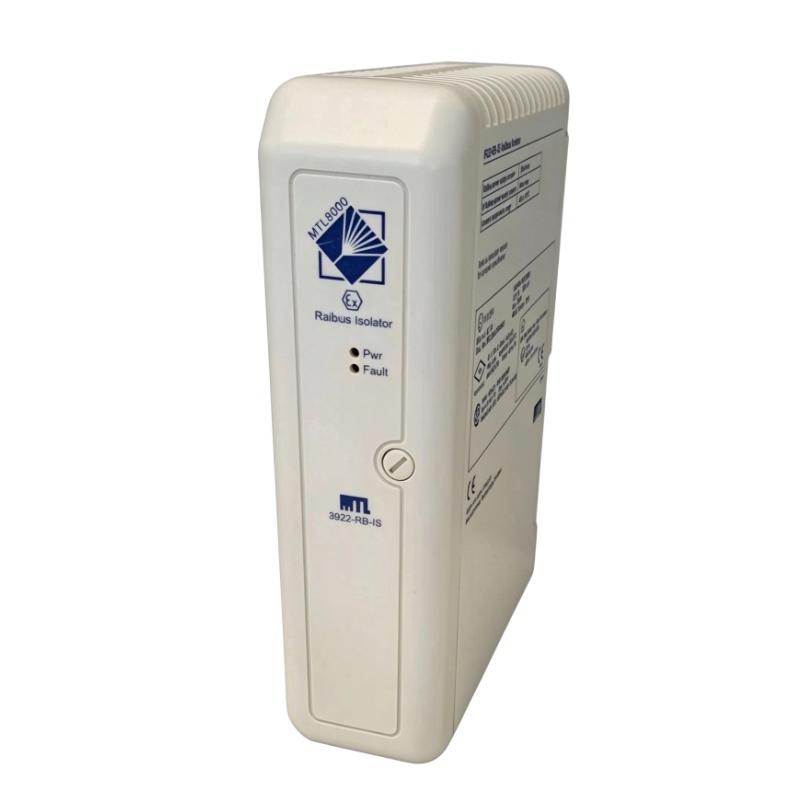
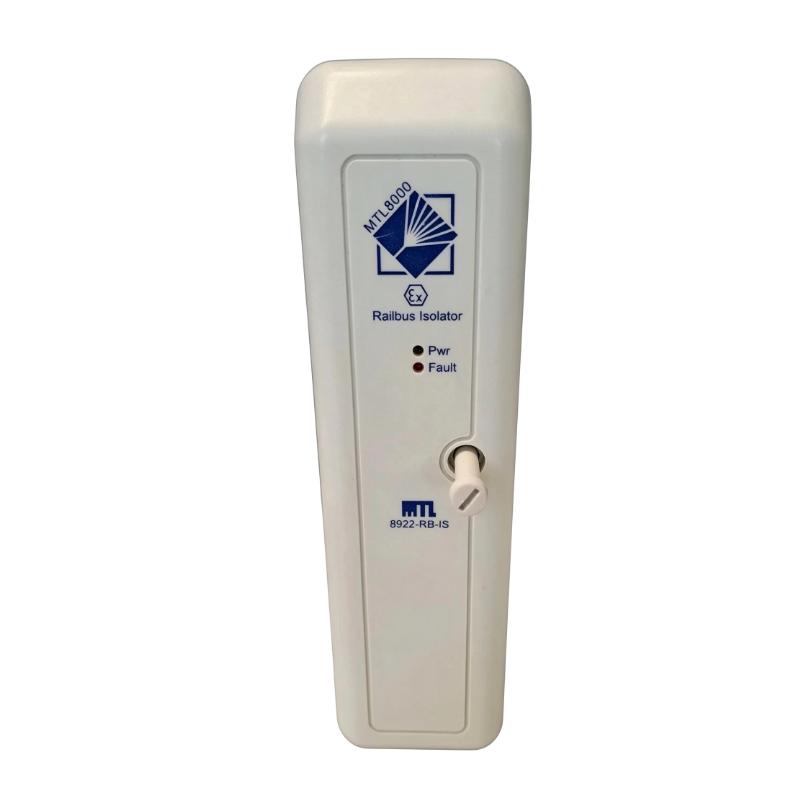
The GE 8922-RB-IS Railbus Signal Isolator is an industrial bus isolation module designed for compatible PAC8000 and MTL8000 distributed I/O systems. Its primary function is to provide galvanic isolation between conventional I/O bus sections and intrinsically safe (IS) I/O bus sections.
In industrial automation, control systems frequently connect equipment installed in different electrical and environmental zones. Some field devices operate in hazardous areas where intrinsically safe circuit design is required. Separating these circuits from conventional control-system wiring is important for limiting the transfer of electrical faults and protecting connected equipment.
The 8922-RB-IS provides this separation within the system’s internal Railbus architecture. It is used between the conventional 2/2 section and the intrinsically safe 2/1 section, helping prevent fault voltages from crossing the isolation boundary.
The module is not a conventional analog signal conditioner or an individual field signal isolator. Instead, it isolates sections of the internal system bus. This distinction is important when selecting replacement components or planning an I/O architecture.
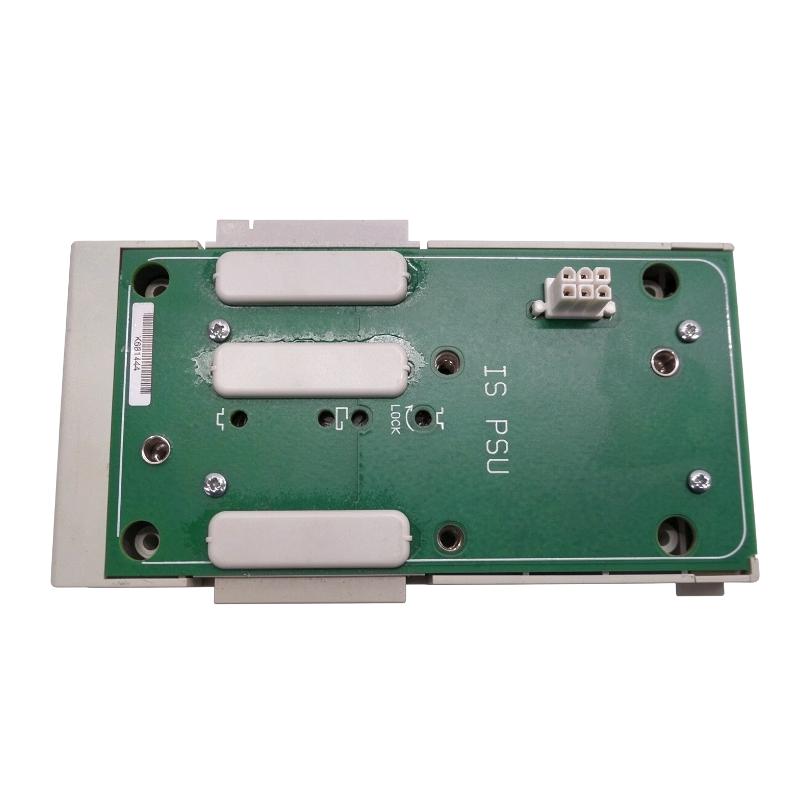
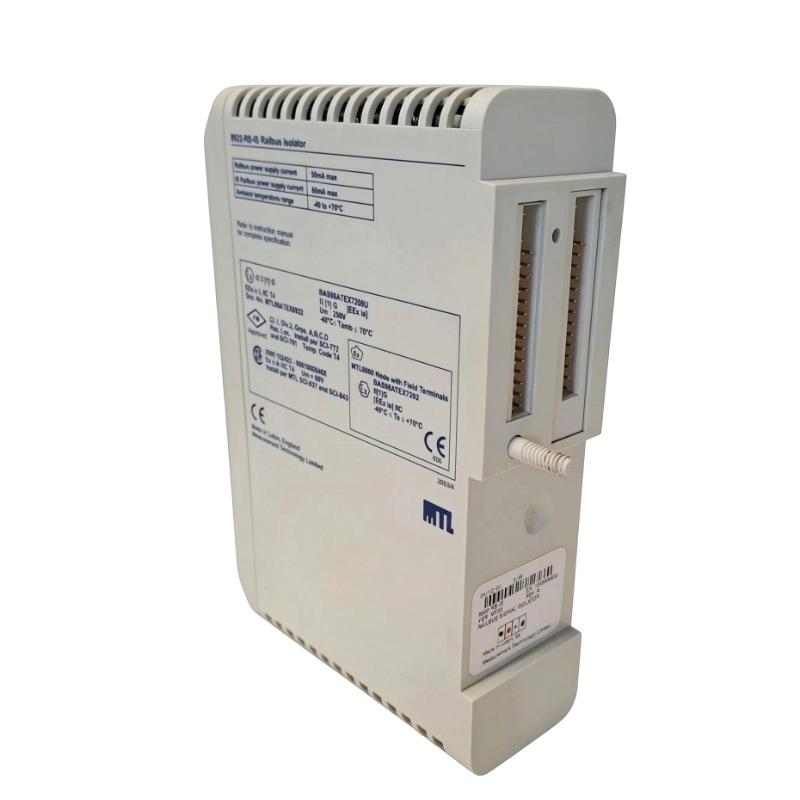
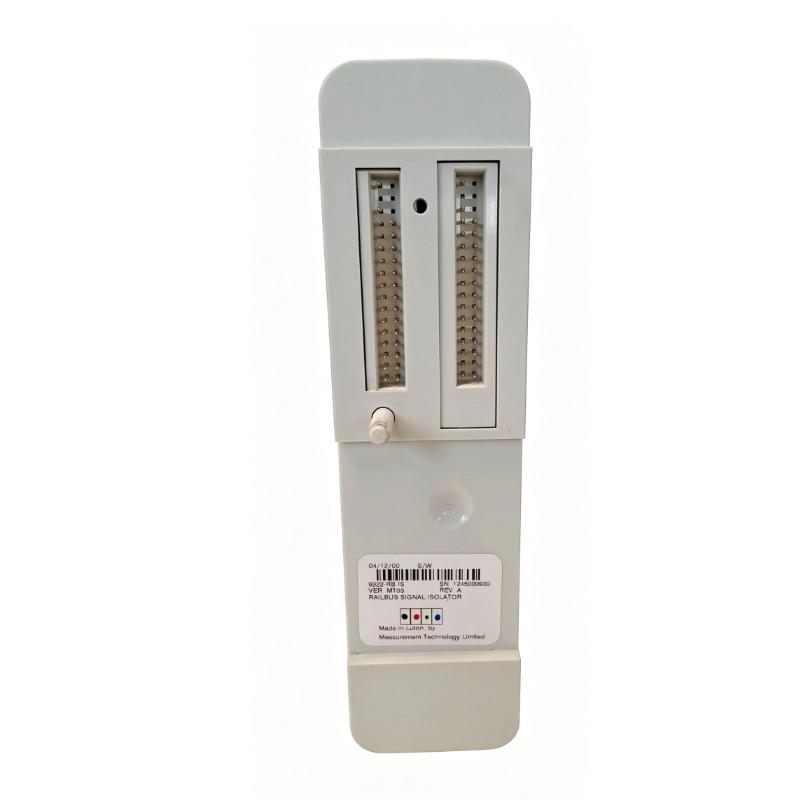
The 8922-RB-IS has female input and male output Railbus connectors and supports module addressing configurations of 1–32 or 1–64. It is installed on a dedicated Railbus Isolator Carrier, identified as 8725-CA-RB in the PAC8000 documentation.
A particularly important installation requirement is that system power does not pass from one side of the isolator to the other. The conventional and intrinsically safe sections therefore require their respective power supplies.
For maintenance teams working with legacy GE automation equipment or PAC8000-based installations, the 8922-RB-IS is an important infrastructure component for maintaining the separation between conventional and intrinsically safe I/O sections.
Technical Specifications
| Parameter | Specification |
|---|---|
| Brand / Product Identification | GE / PAC8000 Railbus Isolator |
| Model | 8922-RB-IS |
| Product Type | Railbus Signal Isolator |
| Product Family | PAC8000 / MTL8000 I/O Infrastructure |
| Main Function | Galvanic isolation between Railbus sections |
| Conventional Bus Section | 2/2 |
| Intrinsically Safe Bus Section | 2/1 |
| Railbus Input Connector | Female |
| Railbus Output Connector | Male |
| Module Addressing | 1–32 or 1–64 |
| Conventional-Side Supply | 12 V DC Railbus |
| Conventional-Side Current | 50 mA maximum |
| IS-Side Supply | 12 V DC Railbus |
| IS-Side Current | 60 mA maximum |
| Maximum Power Dissipation | 1.2 W |
| Mounting Arrangement | Dedicated Railbus Isolator Carrier |
| Compatible Carrier | 8725-CA-RB |
| Dimensions Provided | 160 × 42 × 110 mm |
| Weight Provided | 0.345 kg |
| Lifecycle Information | Listed as active in the referenced PAC8000 product specification |
Dimensions are expressed in the supplied order. Manufacturer documentation lists approximately 42 × 160 × 110 mm as width × depth × height.
Function and Working Principle
The 8922-RB-IS works as an isolation boundary within the PAC8000 Railbus architecture. It separates the electrical sections associated with conventional I/O and intrinsically safe field wiring.
1. Galvanic Isolation Between Railbus Sections
The main purpose of the module is to provide protective electrical isolation between the conventional and intrinsically safe portions of the internal bus.
The conventional 2/2 section may contain a controller or bus interface and associated conventional I/O modules. The 2/1 section supports I/O modules intended for intrinsically safe field circuits.
The isolator creates a defined separation between these sections. This helps prevent fault voltages on one side from being transferred directly to the other side through the Railbus connection.
2. Protection of Intrinsically Safe I/O
Intrinsically safe systems are designed to limit the electrical energy available to field circuits under specified normal and fault conditions.
The 8922-RB-IS contributes to this system architecture by separating the intrinsically safe I/O bus section from the conventional bus section. It helps protect the IS field-wiring modules against electrical fault propagation across the internal bus boundary.
It is important to understand that the module does not independently make an ordinary field circuit intrinsically safe. The complete system must use appropriate certified components, power supplies, wiring methods, and installation arrangements.
3. Railbus Signal Continuity
The module provides the required bus connection between the two Railbus sections while maintaining their electrical separation.
Its female input and male output connectors establish the intended connection arrangement within the system. This helps maintain the correct physical sequence of carriers and modules.
The isolator must be installed in the correct position and orientation according to the system configuration. Incorrect carrier placement can prevent the intended separation or make the I/O arrangement incompatible.
4. Independent Power Supply Requirements
The 8922-RB-IS does not transfer system power from one side to the other.
The conventional 2/2 side and intrinsically safe 2/1 side must receive power from their respective compatible sources. The documented maximum current consumption is 50 mA on the conventional side and 60 mA on the IS side, both at 12 V DC.
This arrangement is essential to the isolation concept. During system design or troubleshooting, engineers should verify that both sections have suitable power supplies and that the correct power is available on each side.
5. Support for Different Module Addressing Configurations
The module supports Railbus addressing arrangements of 1–32 or 1–64. This allows it to be used in compatible system configurations with different addressing capacities.
The addressing arrangement must be consistent with the controller, carrier, and I/O modules used in the node. Engineers should verify the complete system configuration rather than treating the isolator as an independent addressing device.
Role in Industrial Control Systems
The 8922-RB-IS is an infrastructure component within a distributed control system. Its role is to maintain the required isolation between conventional control-system equipment and intrinsically safe I/O sections.
Integration with PAC8000 Controllers
In a PAC8000 installation, the controller or bus interface communicates with distributed I/O modules through the internal Railbus.
When an installation includes intrinsically safe I/O modules, the 8922-RB-IS provides the isolation boundary between the conventional and IS bus sections.
This arrangement allows the control system to support field devices located in areas where intrinsic safety requirements apply, while keeping the conventional control-system section electrically separated.
Integration with Intrinsically Safe I/O Modules
The 2/1 section is intended for compatible intrinsically safe I/O modules. These modules connect to field instruments and devices through appropriately designed IS circuits.
The 8922-RB-IS helps protect this section from fault-voltage transfer originating on the conventional side of the internal bus.
The isolator must be used with the correct carriers and power-supply components. It should not be replaced by an ordinary Railbus connector or a standard I/O module.
Distributed I/O Architecture
Distributed I/O systems place input and output modules closer to field devices rather than concentrating all wiring at a central controller cabinet.
This architecture can simplify plant wiring and support modular expansion. In installations containing both conventional and intrinsically safe field circuits, the Railbus isolation arrangement provides a defined separation point.
System Maintenance and Replacement
When a Railbus isolator fails or requires replacement, maintenance personnel must confirm the complete model number and carrier arrangement.
A replacement should match the original isolation function, connector orientation, addressing arrangement, and system compatibility. Substituting a conventional bus component for the 8922-RB-IS could compromise the intended system architecture.
Industrial Applications
The 8922-RB-IS is relevant to industrial facilities that use PAC8000-compatible distributed I/O systems with intrinsically safe field circuits.
1. Oil and Gas Processing
Oil and gas facilities frequently contain hazardous areas where field instruments are installed near process equipment, storage systems, and pipelines.
Pressure, temperature, level, and status signals may be connected to intrinsically safe I/O modules. The 8922-RB-IS provides the required isolation between the conventional Railbus section and the IS section in a compatible PAC8000 node.
2. Chemical and Petrochemical Plants
Chemical production facilities may contain flammable gases, vapors, or combustible atmospheres. Instrumentation installed in these locations often requires an appropriate hazardous-area protection concept.
The 8922-RB-IS supports the separation of conventional control-system bus sections from intrinsically safe I/O sections, helping maintain the intended system architecture.
3. Refinery Instrumentation
Refineries use distributed control systems to monitor and control a wide range of process variables.
Where intrinsically safe field circuits are part of the I/O design, the Railbus isolator provides a defined electrical boundary between the relevant I/O sections.
4. Gas Processing and Storage Facilities
Gas processing and storage installations use field devices to monitor pressure, temperature, valve position, and other process conditions.
The 8922-RB-IS can be used within compatible distributed I/O nodes to separate the conventional bus from the intrinsically safe bus section serving field instrumentation.
5. Industrial Utilities
Some industrial utility systems include hazardous-area instrumentation around fuel systems, chemical storage, or process-support equipment.
The isolator may be used in compatible PAC8000 installations where conventional and intrinsically safe I/O sections are arranged within the same distributed control architecture.
Installation and System Integration
Correct installation is essential for maintaining the intended isolation boundary and reliable Railbus communication.
1. Confirm the System Architecture
Before installation, identify the conventional 2/2 section and the intrinsically safe 2/1 section.
Confirm the controller or bus interface, I/O carriers, and module arrangement. The 8922-RB-IS is required in compatible configurations that include 2/1 modules.
The system documentation should determine the correct position of the isolator within the Railbus sequence.
2. Use the Dedicated Isolator Carrier
The 8922-RB-IS mounts on its dedicated Railbus Isolator Carrier, identified as 8725-CA-RB.
The carrier provides the correct mechanical and electrical interface for the module. Do not assume that a standard I/O carrier can replace this dedicated carrier.
Before installation, inspect the carrier and module connectors for bent contacts, contamination, mechanical damage, or signs of overheating.
3. Verify Independent Power Supplies
The two sides of the isolator require separate system power arrangements.
The conventional 2/2 side has a documented maximum supply current of 50 mA at 12 V DC, while the IS 2/1 side has a maximum supply current of 60 mA at 12 V DC.
Because power is not transferred through the isolator, confirm that both sides receive power from the appropriate compatible supplies.
4. Check Connector Orientation
The module has a female Railbus input connector and a male Railbus output connector.
Verify the intended orientation before fitting the module. Correct connector alignment is important for maintaining the designed bus sequence and avoiding mechanical damage.
Never force a connector into place if its orientation or mating arrangement appears incorrect.
5. Verify Grounding and Hazardous-Area Requirements
Follow the system manufacturer’s grounding and installation instructions. Confirm that the complete I/O arrangement complies with the applicable hazardous-area design requirements.
The isolator is only one component of an intrinsically safe system. Field devices, wiring, power supplies, carriers, and associated protection components must all be suitable for the intended application.
6. Perform Commissioning Checks
After installation, verify the physical seating of the module, the condition of the carrier, and the availability of power on both sides.
Check that the controller recognizes the intended I/O configuration and that the connected modules operate correctly.
Any diagnostic or communication fault should be investigated before the system is returned to normal service.
Compatible System Components
The 8922-RB-IS operates as part of a compatible PAC8000 / MTL8000 Railbus arrangement. The following components are relevant to a typical installation.
| Component | Function | Integration Considerations |
|---|---|---|
| 8725-CA-RB Railbus Isolator Carrier | Dedicated mounting carrier for the isolator | Required for the intended installation |
| PAC8000 Controller or Bus Interface | Provides control-system communication with distributed I/O | Verify the system architecture and Railbus configuration |
| 2/2 I/O Carriers | Support conventional I/O modules | Installed on the conventional side of the isolation boundary |
| 2/1 I/O Carriers | Support intrinsically safe I/O modules | Must be compatible with the IS Railbus section |
| IS I/O Modules | Interface with intrinsically safe field circuits | Confirm module type and hazardous-area requirements |
| Conventional I/O Modules | Interface with standard field circuits | Verify carrier and controller compatibility |
| IS System Power Supply | Supplies the intrinsically safe side | Must provide the required power independently |
| Conventional System Power Supply | Supplies the conventional side | Must not rely on power passing through the isolator |
| Railbus Connectors | Carry the internal bus connection | Confirm correct male/female orientation |
The 8725-CA-RB carrier is an important part of the installation. The isolator should not be treated as a standalone module that can be mounted on an arbitrary carrier.
Alternative Models and Replacement Considerations
The 8922-RB-IS performs a specific isolation function in the PAC8000 Railbus architecture. Replacement selection should therefore prioritize functional and mechanical compatibility rather than physical appearance alone.
| Alternative or Related Component | Considerations |
|---|---|
| Another 8922-RB-IS module | Preferred like-for-like option when the original hardware and configuration are confirmed |
| 8725-CA-RB Railbus Isolator Carrier | Required mounting accessory; it is not a substitute for the isolator itself |
| PAC8000 2/1 I/O Carrier | Supports the intrinsically safe I/O section but does not perform the same isolation function |
| PAC8000 2/2 I/O Carrier | Used for conventional I/O modules and does not replace the Railbus isolator |
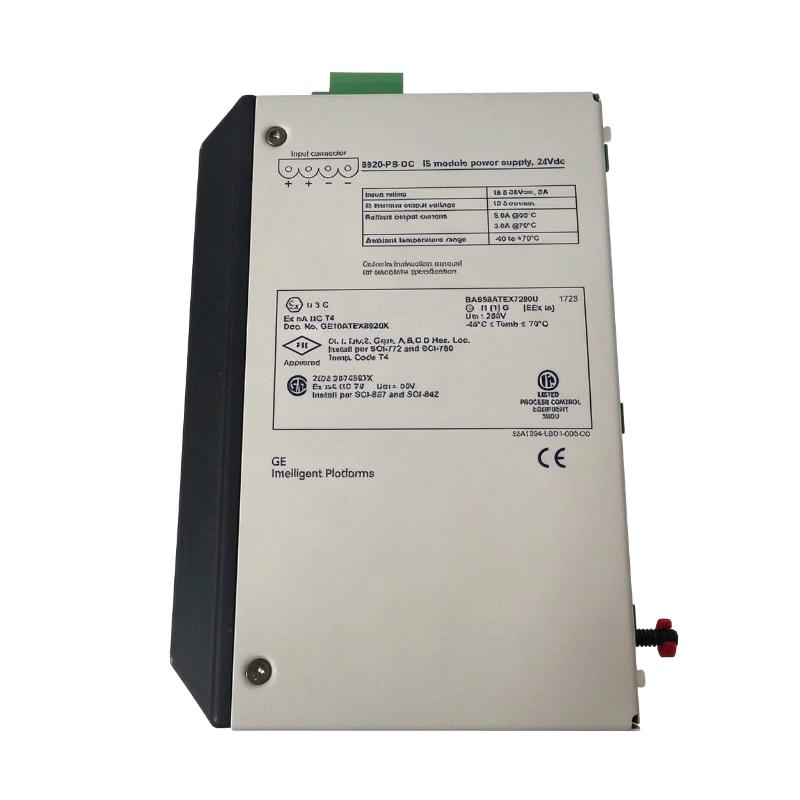
| 8920-PS-DC IS Module Power Supply | Related IS infrastructure component, but performs a different power-supply function |
Before replacing the module, check:
- Complete model number: 8922-RB-IS.
- Compatible PAC8000 / MTL8000 system architecture.
- Dedicated carrier type.
- Female input and male output connector arrangement.
- Conventional and intrinsically safe Railbus sections.
- Independent power requirements for both sides.
- Module addressing configuration.
- Physical dimensions and mounting arrangement.
- Hazardous-area system design requirements.
A standard Railbus connector or I/O carrier should not be used as a substitute for the isolator. Doing so may remove the intended electrical separation between conventional and intrinsically safe sections.
Key Advantages
Galvanic Isolation
The module provides electrical isolation between conventional and intrinsically safe Railbus sections, helping prevent fault-voltage transfer across the bus boundary.
Protection of IS I/O Infrastructure
By separating the two Railbus sections, the isolator helps protect intrinsically safe field-wiring modules within a compatible control-system architecture.
Dedicated Bus Interface
The female input and male output connectors provide the intended Railbus connection arrangement and support the correct system sequence.
Independent Power Architecture
The two sides receive power independently. This arrangement maintains the intended separation between conventional and intrinsically safe system sections.
Flexible Addressing Support
The module supports 1–32 or 1–64 addressing configurations, allowing it to be used in compatible system arrangements.
Compact Industrial Design
With a listed weight of 0.345 kg and dimensions of 160 × 42 × 110 mm, the module is suitable for installation within compatible industrial control-system carrier arrangements.
Established PAC8000 Compatibility
The 8922-RB-IS is designed for the PAC8000 Railbus isolation architecture and can support maintenance of existing installations that use compatible I/O hardware.
Technical FAQs
1. What is the GE 8922-RB-IS?
The 8922-RB-IS is a Railbus Isolator used in compatible PAC8000 / MTL8000 distributed I/O systems. It provides galvanic isolation between conventional 2/2 and intrinsically safe 2/1 Railbus sections.
2. What is the main function of the 8922-RB-IS?
Its main function is to create an electrical isolation boundary between the conventional and intrinsically safe sections of the internal Railbus. This helps prevent fault voltages from transferring between the two sections.
3. Does the module support intrinsically safe I/O?
Yes. It is used in system arrangements that include compatible 2/1 intrinsically safe I/O modules. However, the isolator alone does not make a field circuit intrinsically safe. The complete system must meet the relevant design and certification requirements.
4. Which carrier is required?
The module mounts on the dedicated 8725-CA-RB Railbus Isolator Carrier. The correct carrier should be confirmed before ordering or installing the module.
5. Does power pass through the isolator?
No. System power is not passed from one side to the other. The conventional 2/2 side and intrinsically safe 2/1 side require their own compatible power supplies.
6. What is the current consumption of the module?
The documented maximum current is 50 mA at 12 V DC on the conventional side and 60 mA at 12 V DC on the intrinsically safe side.
7. What addressing configurations does it support?
The 8922-RB-IS supports module addressing arrangements of 1–32 or 1–64, depending on the system configuration.
8. What type of Railbus connectors does it use?
The module uses a female input connector and a male output connector. Correct orientation is important during installation.
9. Can a standard I/O carrier replace the 8922-RB-IS?
No. A conventional or intrinsically safe I/O carrier does not perform the same galvanic isolation function. The dedicated isolator and its compatible carrier should be used where the system design requires this isolation boundary.
10. What should be checked before purchasing a replacement?
Verify the complete model number, physical condition, connector arrangement, dedicated carrier compatibility, system addressing, and the power requirements on both sides. For critical installations, confirm that the replacement is suitable for the existing hazardous-area system design.
Procurement and Maintenance Recommendations
When sourcing the 8922-RB-IS, verify the exact model number and confirm that it is intended for the PAC8000 / MTL8000 Railbus architecture. Do not rely on a generic description such as signal isolator, because individual signal isolators and Railbus isolators perform different functions.
Check whether the dedicated 8725-CA-RB carrier is already installed in the control system. If it is not available, include the correct carrier in the procurement plan.
For used or refurbished units, inspect the enclosure, connector contacts, and mounting interface. Request clear photographs of the model label and connector arrangement. Confirm the unit’s condition and any available functional test information before installation.
During maintenance, check that the isolator is securely mounted and that the Railbus connectors are correctly aligned. Verify that the conventional and IS sections receive power independently. If communication faults occur after installation, inspect the module position, carrier connections, power supplies, and I/O configuration.
Keep the system documentation updated with the isolator location, carrier identification, power-supply arrangement, and associated I/O modules. This information helps maintenance personnel preserve the isolation boundary during future modifications.
Conclusion
The GE 8922-RB-IS Railbus Signal Isolator is an important infrastructure component for compatible PAC8000 / MTL8000 distributed I/O systems. Its primary purpose is to provide galvanic isolation between conventional 2/2 and intrinsically safe 2/1 Railbus sections, helping protect IS field-wiring modules from fault-voltage transfer across the internal bus.
The module supports 1–32 or 1–64 addressing arrangements, uses female input and male output Railbus connectors, and requires the dedicated 8725-CA-RB carrier. Since power does not pass through the isolator, both sides must be supplied independently.
For industrial maintenance, replacement, and system expansion, confirming the exact model, carrier compatibility, power arrangement, and hazardous-area system requirements is essential for maintaining reliable operation.