

ProductPRODUCT
Featured products
Contact Us
- Siemens
- 6AG1315-2EH14-2AY0
- Central Processing Unit
- Germany
- 40 × 125 × 130 mm
- 0.46 kg
- Xiamen, China
- New & In Stock
- T/T, PayPal, Western Union
- 1 Year
- 1-3 Working Days
- DHL, UPS, TNT, FedEx and EMS.
- 24-Hour Service
- COO
- 7
Our advantage

Global Logistics
We have a 10-year logistics and express cooperation agreement, so our products can be shipped to any place in the world.

Brand new and original
Our products are imported in bulk from the place of origin. Because of the cooperative relationship, our products are all original and 100% new.

24-hour service
We provide 7*24 hours service to our customers. We will be there whenever you need us.

Price advantage
All our products are priced very favorably because we have our own warehouse and supply.
| Company Information | |||
| [email protected] | |||
| Mobile | +8615980777398 | ||
| +8615980777398 | |||
| 15980777398 |
Product Overview
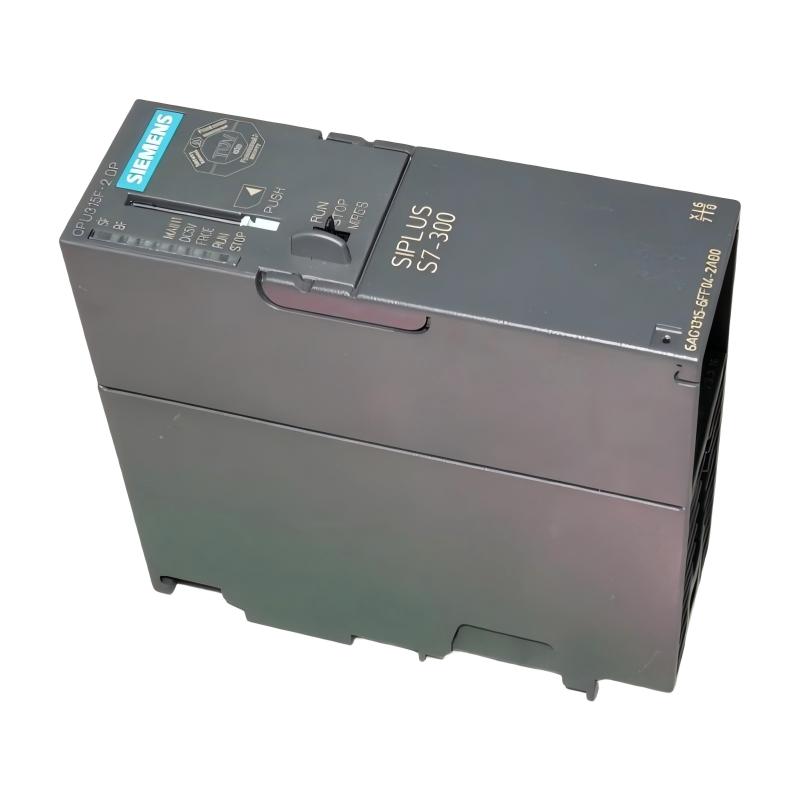
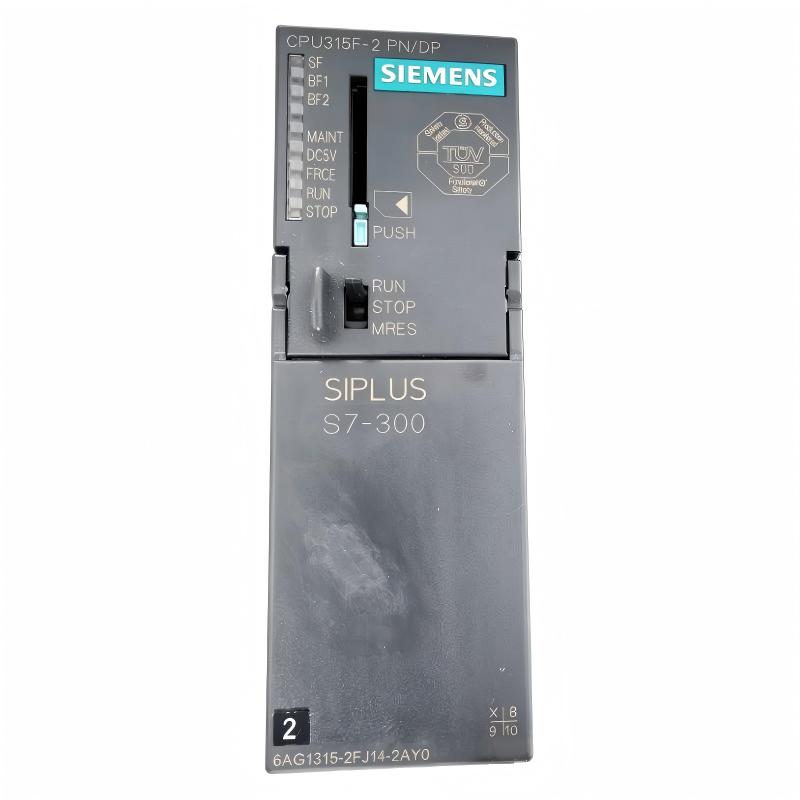
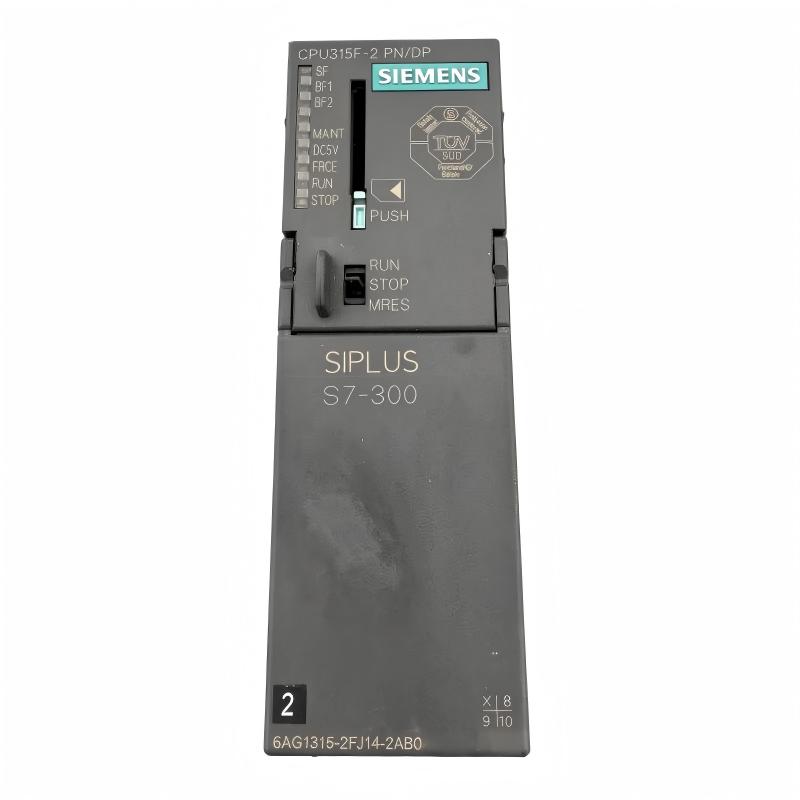
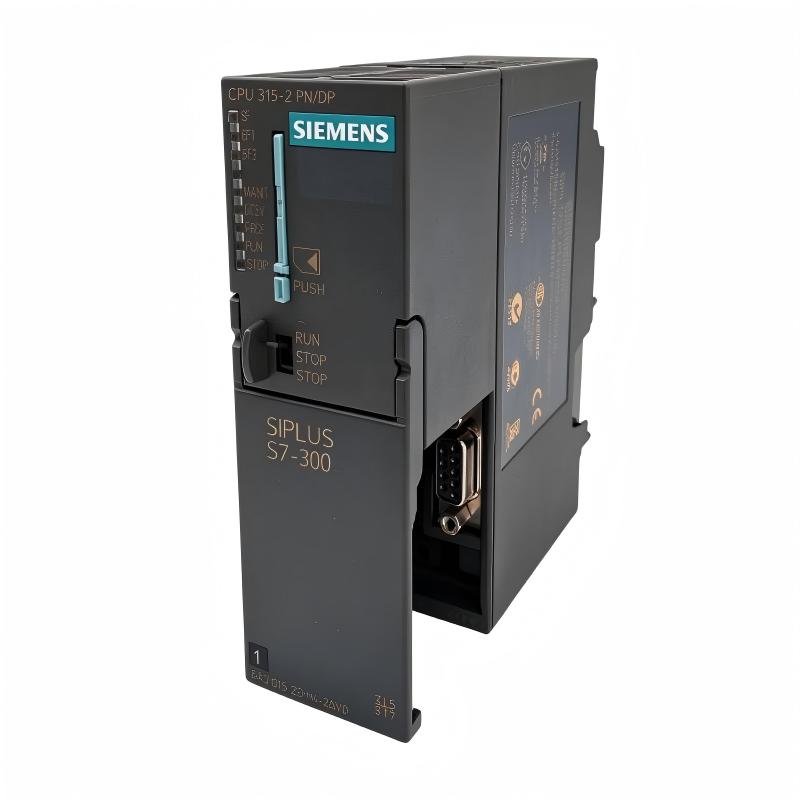
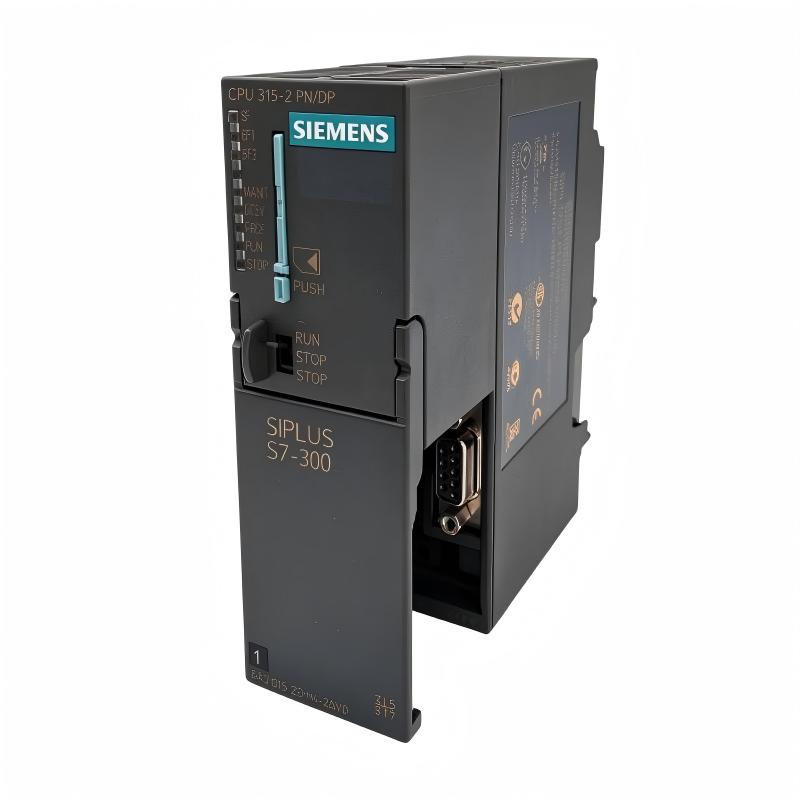
The Siemens 6AG1315-2EH14-2AY0 is a SIPLUS S7-300 CPU 315-2 PN/DP Central Processing Unit designed for industrial automation systems operating under extended environmental conditions. It combines PLC processing capabilities with integrated MPI/DP and Ethernet PROFINET communication interfaces, making it suitable for applications that require reliable control, distributed I/O communication, and network integration.
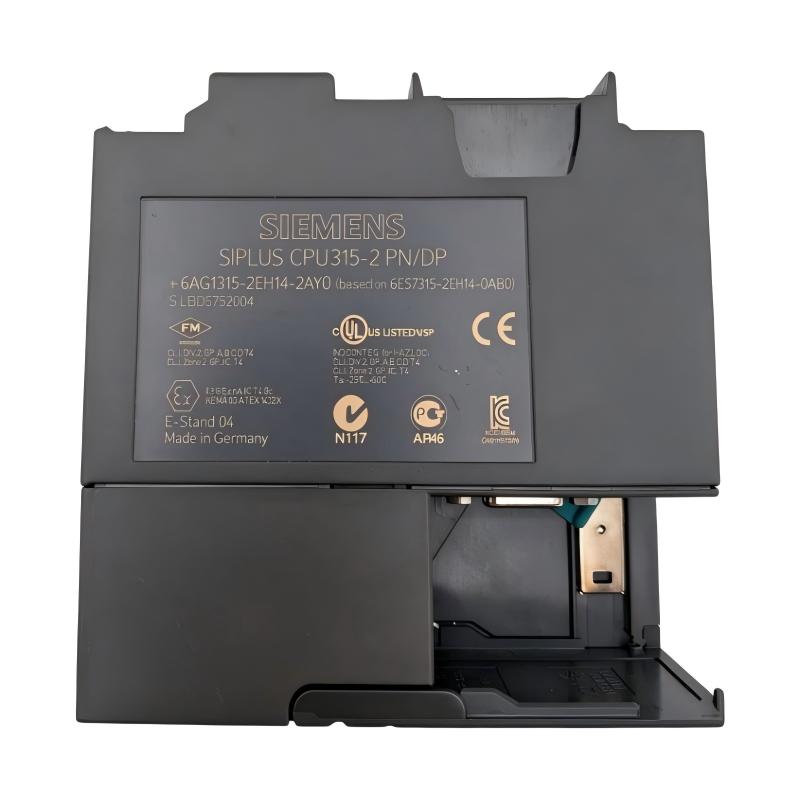
This CPU belongs to the Siemens SIPLUS product range and is based on the standard SIMATIC S7-300 CPU 315-2 PN/DP, model 6ES7315-2EH14-0AB0. The SIPLUS version incorporates conformal coating and an extended operating temperature range. Its documented operating temperature range is -25°C to +60°C, supporting installations where ordinary industrial environmental conditions may not be sufficient.
The 6AG1315-2EH14-2AY0 provides 384 KB of work memory for PLC program execution and data handling. It integrates an MPI/DP interface supporting communication speeds up to 12 Mbps and an Ethernet PROFINET interface with a two-port switch. These interfaces allow the controller to communicate with programming devices, operator panels, distributed I/O stations, and other compatible automation equipment.
As the central processing unit of an S7-300 control station, the module executes the user program, processes input information, updates output states, and coordinates communication with connected devices. It can be used in machine control, transportation-related automation, process equipment, and other installations that require a compact programmable controller with industrial communication capabilities.
The 6AG1315-2EH14-2AY0 requires a Siemens Micro Memory Card for program storage. The memory card must be selected according to the system requirements and supported configuration. When replacing an existing CPU, engineers should also check the hardware configuration, firmware compatibility, communication settings, and stored program before commissioning.
Technical Specifications
| Parameter | Specification |
|---|---|
| Brand | Siemens |
| Product Family | SIPLUS S7-300 |
| Model | 6AG1315-2EH14-2AY0 |
| Product Type | Central Processing Unit |
| CPU Designation | CPU 315-2 PN/DP |
| Base Model | 6ES7315-2EH14-0AB0 |
| Work Memory | 384 KB |
| First Interface | MPI/DP |
| MPI/DP Transmission Rate | Up to 12 Mbps |
| Second Interface | Ethernet PROFINET |
| PROFINET Port Configuration | Integrated 2-port switch |
| Memory Card | Siemens Micro Memory Card required |
| Environmental Protection | Conformal coating |
| Operating Temperature | -25°C to +60°C |
| Railway Standard | EN 50155-related configuration |
| Dimensions Provided | 40 × 125 × 130 mm |
| Weight | 0.46 kg |
| Product Category | PLC Central Processing Unit |
| Typical Application | Industrial automation and railway-related control systems |
Note: The dimensions above are the supplied listing values. Confirm the physical unit and mounting drawing before panel-layout or replacement work. Memory card, power supply, rack, and I/O modules are separate system components unless explicitly included in the purchase.
Function and Working Principle
The Siemens 6AG1315-2EH14-2AY0 operates as the central processing unit of a SIMATIC S7-300 automation system. It executes the PLC program and coordinates information exchange between field devices, distributed I/O, operator interfaces, and other controllers.
Its operation is based on a cyclic control process involving input acquisition, program execution, output updating, and communication management.
1. PLC Program Execution
The CPU processes the user program stored in its supported memory configuration. The program contains the control logic that determines how the machine or process should respond to incoming signals.
Typical program operations include:
- Reading digital and analog input information.
- Evaluating operating conditions and interlocks.
- Executing logic, arithmetic, and comparison instructions.
- Managing timers and counters.
- Updating output states.
- Coordinating communication with other automation devices.
The 384 KB work memory provides resources for program execution and data handling. Actual application capacity depends on the size and complexity of the PLC program, configured functions, and communication requirements.
2. Input and Output Processing
The CPU works with compatible S7-300 signal modules to monitor field conditions and control connected equipment.
Input modules collect signals from sensors, switches, transmitters, and other field devices. The CPU processes these signals according to the programmed control logic and determines the required output response.
Output modules then send control signals to actuators such as relays, contactors, solenoid valves, and other industrial equipment.
This coordinated process enables the controller to manage machine sequences, equipment interlocks, alarms, and process operations.
3. MPI/DP Communication
The first integrated interface supports MPI/DP communication with a transmission rate of up to 12 Mbps.
MPI can be used for communication with compatible programming and operator devices. PROFIBUS DP provides communication with supported distributed I/O stations and other automation equipment.
Through this interface, the CPU can exchange process information with remote devices and coordinate control functions across a distributed automation architecture.
4. Ethernet PROFINET Communication
The second interface provides Ethernet PROFINET connectivity and includes an integrated two-port switch.
PROFINET allows the CPU to communicate with compatible field devices, distributed I/O systems, operator panels, and other networked automation equipment.
The two-port switch supports convenient network connections within a suitable topology. It can help reduce the need for an external switch in some installations, although network architecture and topology requirements must be evaluated for each project.
5. Memory and Program Storage
The 6AG1315-2EH14-2AY0 requires a Siemens Micro Memory Card. The card is used for the CPU’s program and associated data storage requirements.
The correct memory card must be selected according to the controller documentation and application requirements. During replacement, the existing program and hardware configuration should be backed up whenever possible.
6. Operation Under Extended Environmental Conditions
The SIPLUS configuration is designed for environments that require a wider operating temperature range than standard industrial versions.
The documented temperature range is -25°C to +60°C. Conformal coating provides additional protection for electronic assemblies under specified environmental conditions.
These characteristics are relevant to equipment exposed to temperature variation and challenging operating environments. However, conformal coating does not make the CPU waterproof or suitable for unrestricted exposure to corrosive substances.
Role in Industrial Control Systems
The 6AG1315-2EH14-2AY0 performs the main processing and communication functions within an S7-300 automation station. It coordinates field signals, executes machine-control logic, and exchanges data with other devices.
Centralized Control
In a centralized automation architecture, the CPU processes information from local signal modules and controls connected equipment according to the stored program.
It can manage machine sequences, operating modes, alarms, permissive conditions, and equipment interlocks. The exact functions depend on the application software and installed I/O configuration.
Distributed I/O Management
Industrial systems often place I/O modules close to field equipment to reduce wiring distances and simplify installation.
Through its integrated communication interfaces, the CPU can communicate with compatible distributed I/O stations. This architecture allows the controller to process information from multiple areas of a machine or facility.
PROFINET Network Integration
The integrated Ethernet PROFINET interface supports communication with compatible industrial network devices.
Depending on the network configuration, the CPU may exchange process data with remote I/O, HMIs, engineering stations, and other controllers. Network addresses, device names, communication relationships, and update requirements must be configured correctly.
Operator Interface Coordination
An HMI can provide operators with access to process values, equipment status, alarms, and operating commands.
The CPU exchanges information with the HMI through a supported communication connection. This allows operators to monitor the automation process without directly interacting with the controller’s internal program.
System Diagnostics
The CPU supports diagnostic functions that help maintenance personnel identify controller and communication conditions.
Diagnostic information can assist with troubleshooting hardware faults, network communication problems, and program-related issues. A structured maintenance process should include checking CPU status, connected modules, network connections, and relevant diagnostic messages.
Industrial Applications
The Siemens SIPLUS S7-300 CPU 315-2 PN/DP is suitable for automation systems that require integrated PLC processing and industrial communication interfaces. Its extended environmental characteristics also make it relevant to selected transportation and railway-related applications.
1. Railway Automation
The 6AG1315-2EH14-2AY0 is associated with an EN 50155-oriented SIPLUS configuration.
Potential application areas include auxiliary equipment control, monitoring systems, and other automation functions within railway-related installations. Actual suitability depends on the complete equipment design, certification requirements, and system-level environmental conditions.
2. Industrial Machinery
Manufacturing machinery uses PLCs to coordinate motors, sensors, actuators, and safety-related interlocks.
The CPU can execute machine sequences, process sensor signals, manage operating modes, and communicate with compatible distributed I/O devices.
3. Material Handling Systems
Conveyors, transfer stations, sorting equipment, and lifting machinery often require coordinated control across multiple equipment sections.
The CPU can process operating conditions and coordinate commands between local I/O modules and networked devices.
4. Process Equipment
Industrial process equipment may require continuous monitoring and control of operating conditions.
The CPU can manage discrete control sequences, collect signals from compatible measurement modules, and exchange process information with supervisory systems.
5. Distributed Automation Systems
Facilities with multiple equipment stations can use distributed I/O and industrial communication networks to coordinate operations.
The CPU’s MPI/DP and PROFINET interfaces provide communication options for compatible automation components, subject to the configured system architecture.
6. Equipment Operating in Variable Temperatures
The SIPLUS version’s -25°C to +60°C operating temperature range makes it relevant to installations where temperature conditions extend beyond the standard industrial range.
System designers should still evaluate enclosure conditions, condensation risks, vibration, power quality, and other environmental factors.
Installation and System Integration
Proper installation is essential for reliable CPU operation and communication stability.
1. Verify the Complete Order Number
Before installation, confirm that the module is marked 6AG1315-2EH14-2AY0.
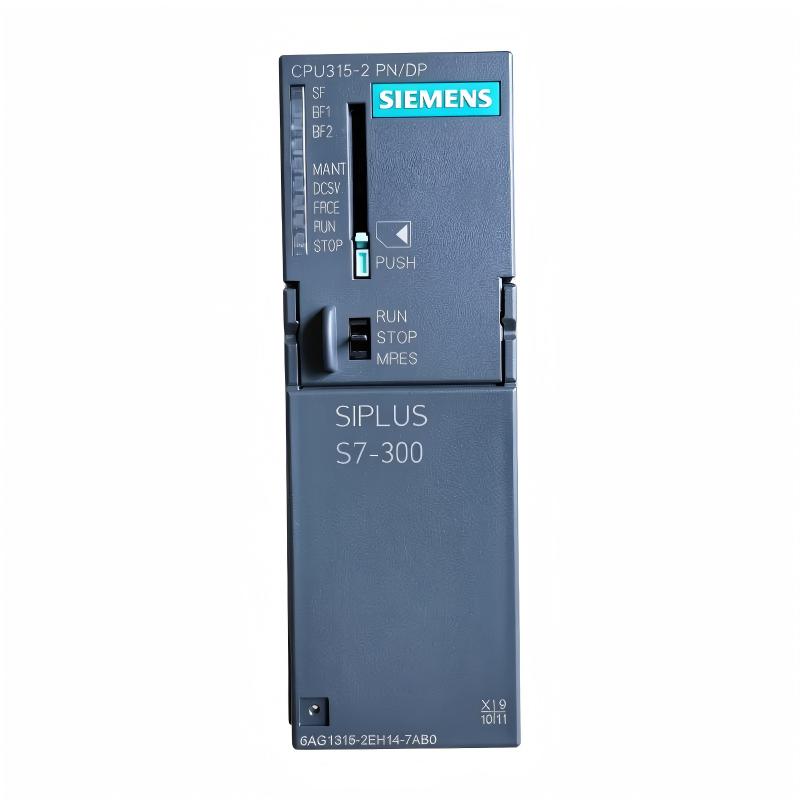
This is the SIPLUS S7-300 CPU 315-2 PN/DP version based on 6ES7315-2EH14-0AB0. It should not be confused with the standard 6AG1315-2EH14-7AB0 version or other S7-300 CPU models.
The complete order number is particularly important when replacing equipment in railway or extended-environment installations.
2. Check the Rack and Power Supply
The CPU must be installed in a compatible S7-300 system configuration.
Confirm the rack or mounting arrangement, power supply, backplane connections, and required adjacent modules. Verify that the available power supply meets the electrical requirements of the complete station.
3. Install the Required Micro Memory Card
A compatible Siemens Micro Memory Card is required for this CPU.
Check the card type and capacity against the applicable documentation. Before replacing an existing CPU, confirm whether the program and configuration are stored on the memory card and whether they are compatible with the replacement hardware.
4. Connect MPI/DP Devices
The MPI/DP interface can be used to connect compatible programming devices, operator interfaces, and PROFIBUS DP equipment.
Verify the bus connector, cable arrangement, communication speed, station addresses, and termination settings where applicable.
Incorrect bus termination or address configuration may cause communication interruptions.
5. Configure the PROFINET Interface
The Ethernet PROFINET interface includes a two-port switch.
During commissioning, configure the required network settings and device relationships. Check IP addresses, PROFINET device names, communication partners, and network topology.
Use suitable industrial Ethernet cables and connectors, and keep network wiring appropriately separated from power conductors.
6. Check Environmental Conditions
The SIPLUS version supports an operating temperature range of -25°C to +60°C.
Even with conformal coating, the CPU should be installed in an enclosure appropriate for the application. Prevent direct exposure to water, conductive contamination, and conditions outside the manufacturer’s permitted limits.
7. Commission the Controller
After installation, verify the power supply, CPU status, memory card, connected modules, and communication interfaces.
Load or restore the appropriate program and hardware configuration. Test the controller’s response to input signals and confirm that output commands operate correctly.
Record the final hardware configuration, firmware information, network settings, and program version for future maintenance.
Compatible System Components
The CPU operates as part of a SIMATIC S7-300 automation station and requires compatible system components.
| Component | Function | Integration Considerations |
|---|---|---|
| Siemens S7-300 rack | Provides mechanical mounting and system connections | Confirm rack and slot compatibility |
| Compatible S7-300 power supply | Supplies operating power to the automation station | Verify voltage and power requirements |
| Siemens Micro Memory Card | Stores the required user program and data | Required; confirm supported card type and capacity |
| S7-300 digital input modules | Collect signals from switches and sensors | Verify signal voltage and module configuration |
| S7-300 digital output modules | Control relays, contactors, and actuators | Check output type and load requirements |
| S7-300 analog input modules | Collect analog measurement signals | Match signal ranges and sensor types |
| S7-300 analog output modules | Provide analog control signals | Verify output range and connected device requirements |
| PROFIBUS DP devices | Provide distributed I/O and field communication | Configure bus address, speed, and termination |
| PROFINET devices | Support Ethernet-based automation communication | Configure device names, IP settings, and network topology |
| HMI panel | Provides operator monitoring and control | Verify supported communication configuration |
| Engineering workstation | Supports PLC programming and diagnostics | Use compatible Siemens engineering software |
The listed components are examples of equipment used in an S7-300 control system. They are not necessarily included with the CPU.
Alternative Models and Replacement Considerations
When replacing the 6AG1315-2EH14-2AY0, the complete technical configuration must be considered. A CPU with a similar product designation may not provide the same environmental characteristics or communication functions.
| Model | Product Description | Replacement Considerations |
|---|---|---|
| 6ES7315-2EH14-0AB0 | SIMATIC S7-300 CPU 315-2 PN/DP | Standard base version; does not automatically provide the same SIPLUS environmental configuration |
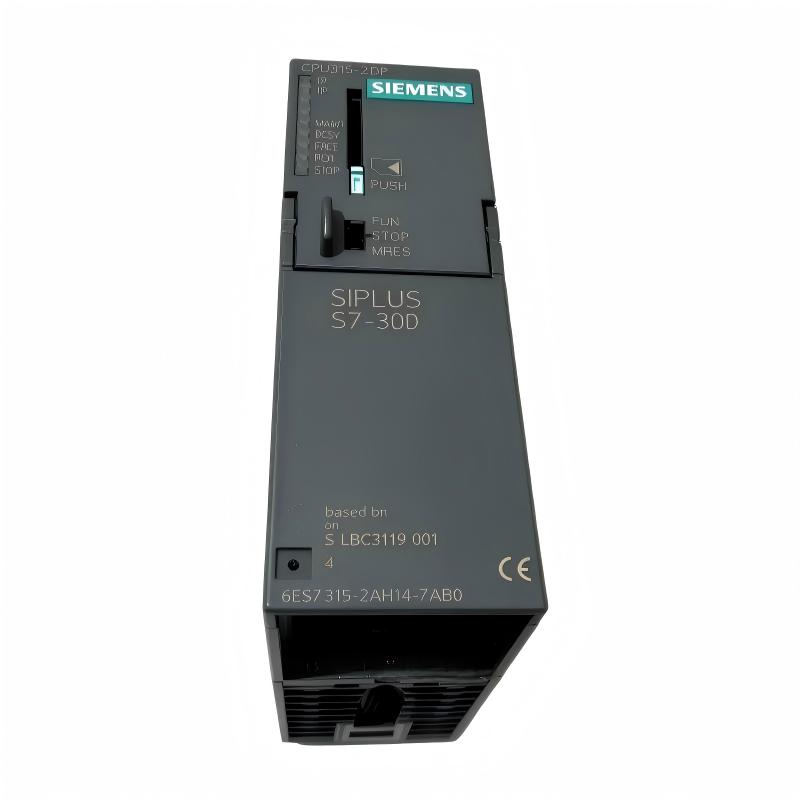
| 6AG1315-2EH14-7AB0 | SIPLUS S7-300 CPU 315-2 PN/DP | Related SIPLUS version; verify environmental specifications and order-number differences |
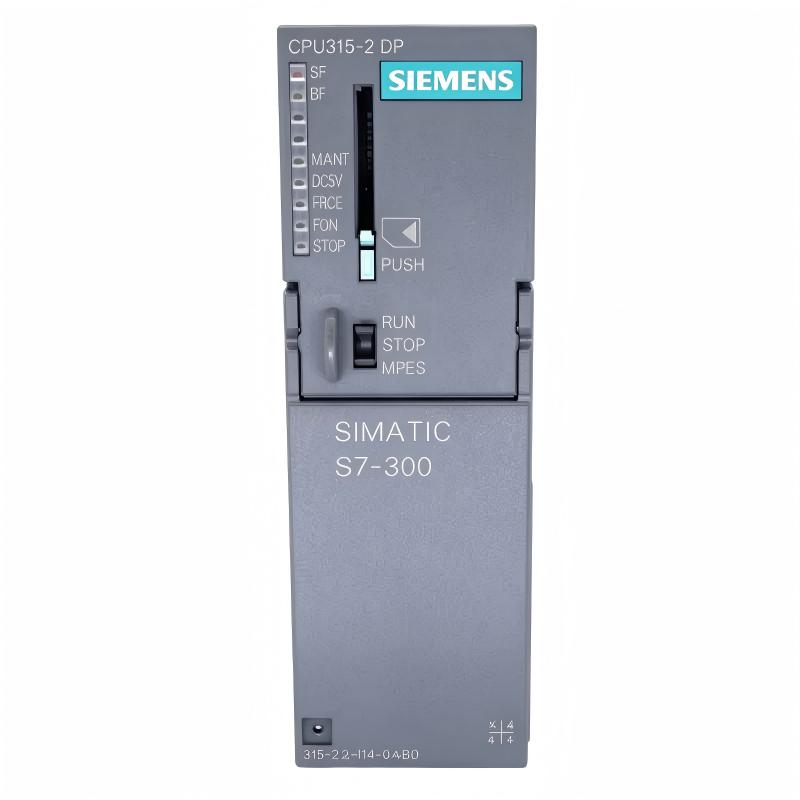
| 6AG1315-2AH14-2AY0 | SIPLUS S7-300 CPU 315-2DP | Provides a different communication configuration; lacks the same integrated PROFINET interface |
| 6AG1317-2EK14-2AY0 | SIPLUS S7-300 CPU 317-2 PN/DP | Higher-level related CPU; requires hardware and software compatibility evaluation |
Before selecting an alternative, compare:
- Work memory capacity.
- CPU performance and supported functions.
- MPI/DP communication requirements.
- PROFINET interface availability.
- Number and type of Ethernet ports.
- Memory card requirements.
- Operating temperature range.
- Conformal coating and environmental specifications.
- Firmware and engineering software compatibility.
- Existing rack, I/O, and power supply configuration.
A replacement CPU may require hardware configuration changes, program adjustments, or a new commissioning procedure. For railway-related installations, system-level compliance must also be reviewed.
Key Advantages
1. Integrated PLC Processing
The CPU provides the processing functions required to execute S7-300 control programs and coordinate connected automation equipment.
2. 384 KB Work Memory
Its 384 KB work memory provides resources for program execution and data handling in appropriately sized industrial automation applications.
3. Dual Communication Options
The integrated MPI/DP and Ethernet PROFINET interfaces support communication with compatible programming devices, distributed I/O, operator panels, and other automation equipment.
4. PROFINET Two-Port Switch
The integrated two-port switch supports Ethernet network connections and can simplify wiring arrangements in suitable network topologies.
5. Extended Temperature Range
The -25°C to +60°C operating temperature range supports installations that experience wider temperature variation than conventional industrial environments.
6. Conformal Coating
The SIPLUS configuration includes conformal coating to provide additional protection for electronic assemblies under specified environmental conditions.
7. Railway-Related Application Suitability
The model is associated with EN 50155 railway application requirements, making it relevant to selected transportation automation projects when the complete installation meets the required standards.
8. Integration with S7-300 Equipment
The CPU belongs to the established SIMATIC S7-300 platform and can operate with compatible racks, power supplies, signal modules, and communication equipment.
Technical FAQs
1. What is the Siemens 6AG1315-2EH14-2AY0?
It is a SIPLUS S7-300 CPU 315-2 PN/DP Central Processing Unit designed for industrial automation systems requiring PLC processing and MPI/DP and PROFINET communication.
2. What is the difference between 6AG1315-2EH14-2AY0 and 6ES7315-2EH14-0AB0?
The 6AG1315-2EH14-2AY0 is the SIPLUS version based on the standard 6ES7315-2EH14-0AB0. The SIPLUS version includes conformal coating and an extended environmental operating temperature range.
3. How much work memory does this CPU provide?
The CPU provides 384 KB of work memory. Actual program capacity depends on the application, program structure, and configured system functions.
4. Does the CPU support PROFINET?
Yes. It has an integrated Ethernet PROFINET interface with a two-port switch for communication with compatible network devices.
5. Does it support PROFIBUS DP?
Yes. Its first integrated interface supports MPI/DP communication at speeds up to 12 Mbps.
6. Is a Micro Memory Card required?
Yes. A Siemens Micro Memory Card is required for the CPU’s program storage configuration. Select a compatible card according to the applicable Siemens documentation.
7. What is the operating temperature range?
The documented operating temperature range is -25°C to +60°C. The actual permitted conditions for a complete installation also depend on the enclosure and surrounding equipment.
8. Can this CPU be used in railway applications?
It is a SIPLUS configuration associated with EN 50155 railway application requirements. The complete system must still meet the applicable railway standards and project-specific certification requirements.
9. Can it replace a standard CPU 315-2 PN/DP?
It may be suitable for some replacement projects, but compatibility should not be assumed. Check the hardware configuration, firmware, memory card, environmental requirements, communication settings, and system documentation.
10. What should be checked before purchasing this CPU?
Confirm the complete order number, hardware condition, memory card requirements, communication interfaces, environmental specification, and available accessories. For replacement projects, also verify the stored PLC program and system configuration.
Procurement and Maintenance Recommendations
When sourcing the Siemens 6AG1315-2EH14-2AY0, verify the complete SIPLUS order number rather than relying only on the CPU 315-2 PN/DP product designation.
The distinction between the SIPLUS and standard versions is important. The 6AG1315-2EH14-2AY0 includes an extended environmental configuration, so replacing it with a standard CPU may affect the environmental suitability of the installed control system.
For procurement, check the product label, physical condition, terminal and connector condition, communication interfaces, and availability of the required Micro Memory Card. If the CPU is supplied without a memory card, confirm that a compatible card can be sourced separately.
For maintenance, keep the control cabinet clean and ensure that the operating environment remains within the specified limits. Inspect rack connections, power supply connections, communication cables, and connected I/O modules according to the maintenance schedule.
Before replacing the CPU, back up the PLC program, hardware configuration, and communication settings whenever possible. After installation, verify the memory card, CPU status, module configuration, MPI/DP communication, and PROFINET network operation.
For railway and other demanding installations, replacement decisions should consider the complete environmental and compliance requirements of the system rather than CPU functionality alone.
Conclusion
The Siemens 6AG1315-2EH14-2AY0 SIPLUS S7-300 CPU 315-2 PN/DP is a central processing unit designed for industrial automation applications requiring integrated PLC processing, MPI/DP communication, and Ethernet PROFINET connectivity.
With 384 KB of work memory, a two-port PROFINET switch, conformal coating, and an operating temperature range of -25°C to +60°C, it provides a combination of automation functionality and extended environmental characteristics.
For industrial maintenance, railway-related automation, and S7-300 system replacement projects, accurate identification of the complete order number and verification of the memory card, communication configuration, and environmental requirements are essential for reliable integration.