

ProductPRODUCT
Featured products
Contact Us
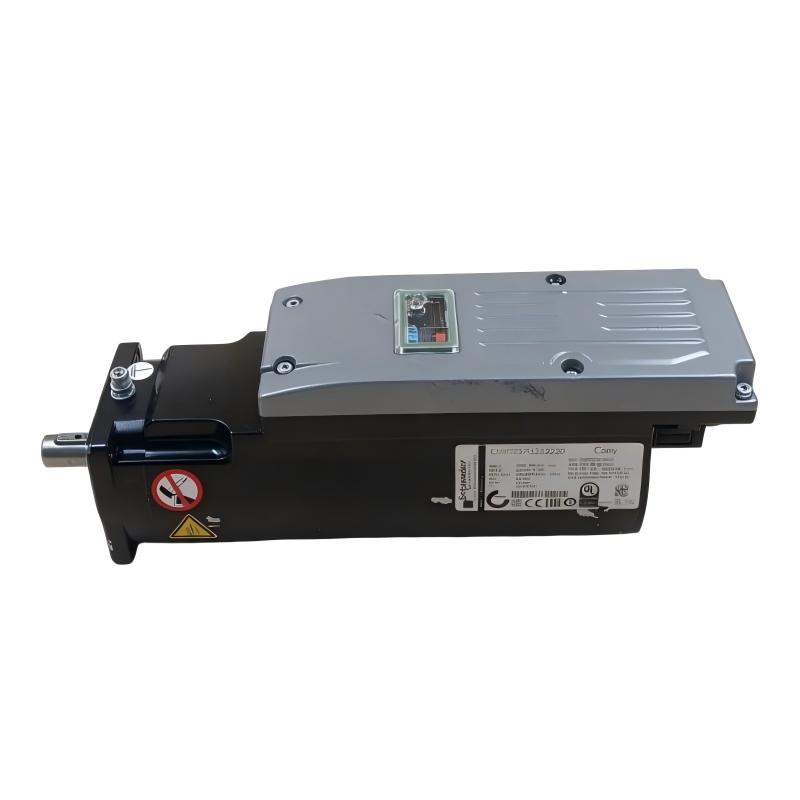
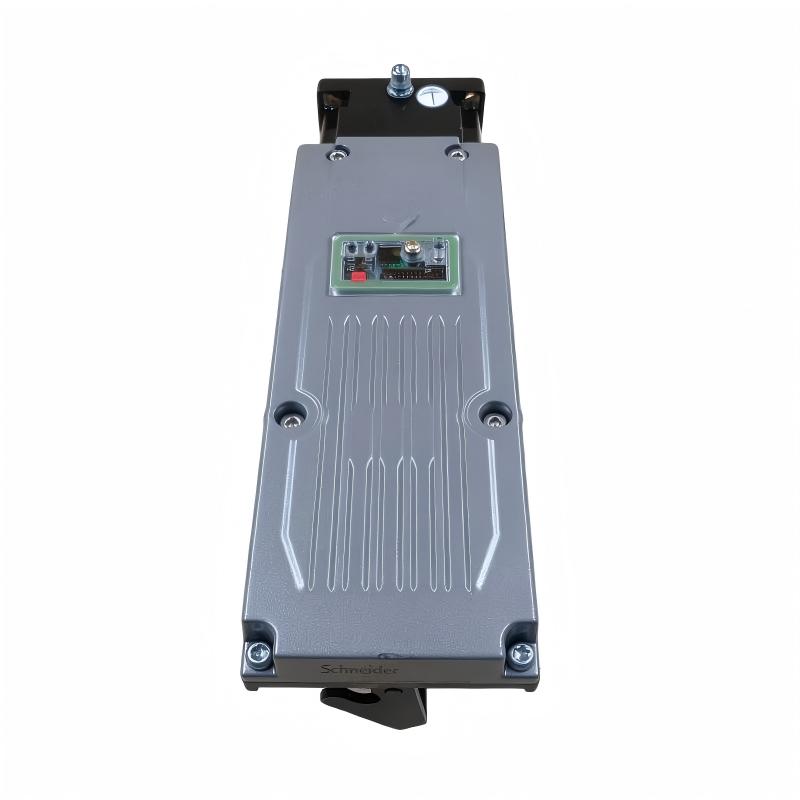
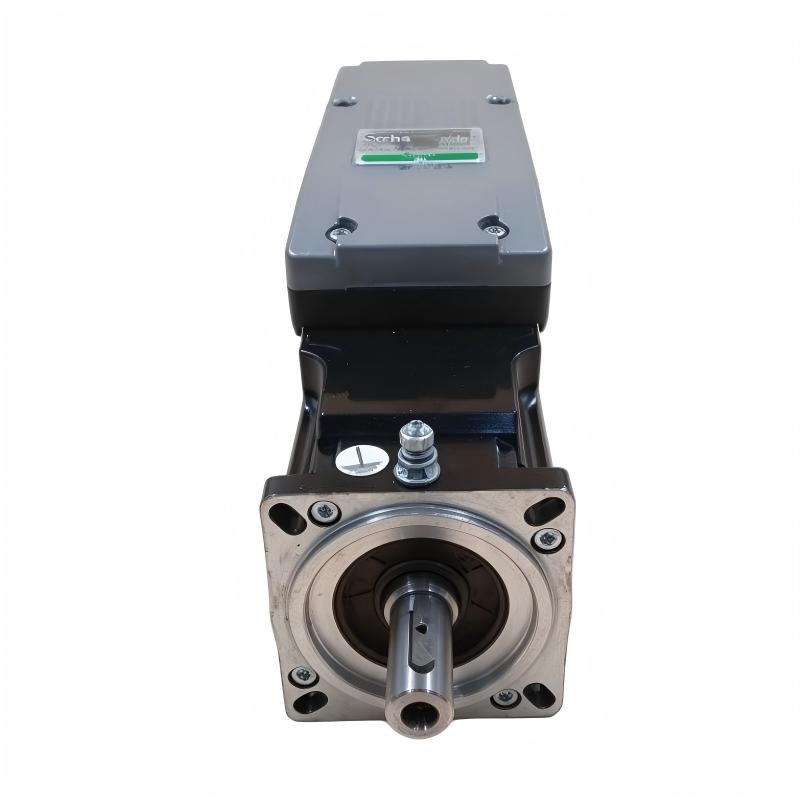
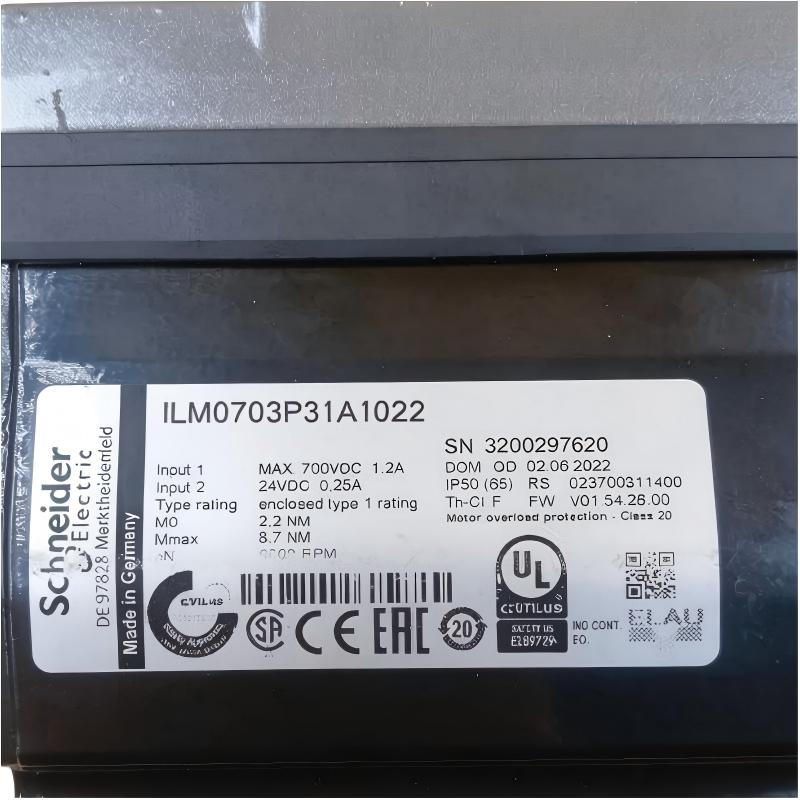
- Schneider
- ILM0703P31A1022
- Integrated Servo Motor
- France
- 70 mm
- 4.2 kg
- Xiamen, China
- New & In Stock
- T/T, PayPal, Western Union
- 1 Year
- 1-3 Working Days
- DHL, UPS, TNT, FedEx and EMS.
- 24-Hour Service
- COO
- 3
Our advantage

Global Logistics
We have a 10-year logistics and express cooperation agreement, so our products can be shipped to any place in the world.

Brand new and original
Our products are imported in bulk from the place of origin. Because of the cooperative relationship, our products are all original and 100% new.

24-hour service
We provide 7*24 hours service to our customers. We will be there whenever you need us.

Price advantage
All our products are priced very favorably because we have our own warehouse and supply.
| Company Information | |||
| [email protected] | |||
| Mobile | +8615980777398 | ||
| +8615980777398 | |||
| 15980777398 |
Product Overview
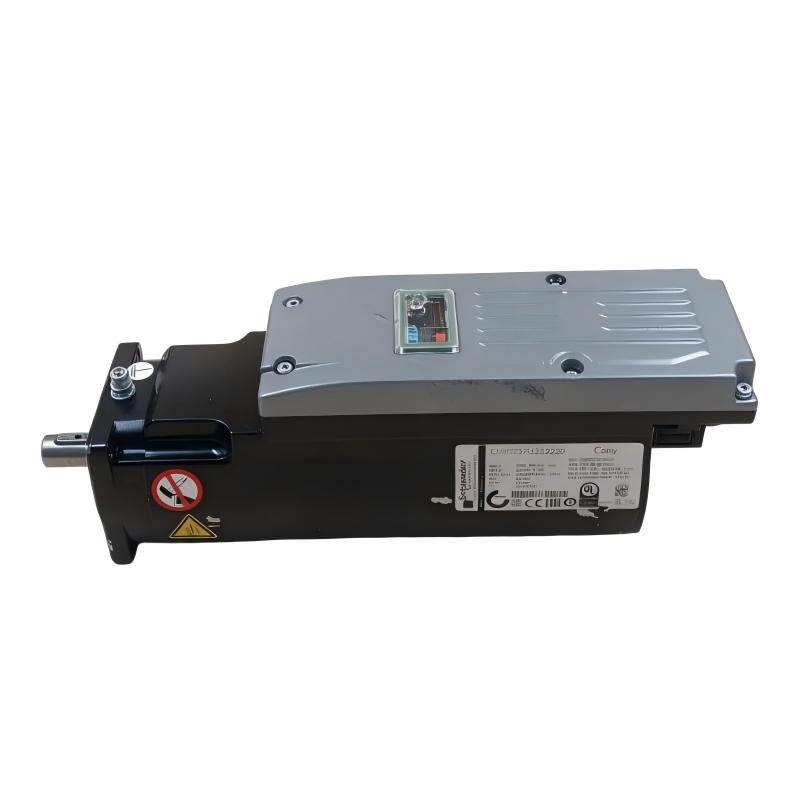
The Schneider Electric ILM0703P31A1022 Integrated Servo Motor belongs to the Lexium 62 ILM product family, part of Schneider Electric’s PacDrive 3 motion-control platform. It combines a servo motor and drive electronics in a compact assembly, making it suitable for decentralized machine architectures where individual motor axes are distributed throughout the equipment.
Unlike a conventional servo motor that requires a separate drive unit, an integrated servo motor brings the motor and its associated drive technology together in one housing. This arrangement can reduce the need for separate drive cabinets, simplify machine wiring, and support modular equipment layouts.
The ILM0703 designation identifies a 70 mm flange-size motor with a three-stack motor configuration. Published specifications for the ILM0703 family include a nominal output power of 720 W, a nominal speed of 6000 rpm, a continuous stall torque of 2.2 N·m, and a peak stall torque of 8.7 N·m. These values provide a useful reference for understanding the motor family, although the complete P31A1022 configuration should be verified against its nameplate and applicable product documentation.
The Lexium 62 ILM platform is intended for applications requiring coordinated servo motion, accurate speed control, and compact machine integration. Typical uses include packaging equipment, automated assembly systems, material-handling machinery, and multi-axis production lines.
The exact suffix is important when selecting a replacement. Shaft construction, encoder configuration, holding brake, sealing, and other options can vary among ILM references. A replacement should therefore be matched by its complete catalog number rather than flange size or power rating alone.
Technical Specifications
| Parameter | Specification |
|---|---|
| Brand | Schneider Electric |
| Product Series | Lexium 62 ILM |
| Automation Platform | PacDrive 3 |
| Model | ILM0703P31A1022 |
| Product Type | Integrated Servo Motor |
| Device Short Name | ILM |
| Motor Flange Size | 70 mm |
| Motor Stack Configuration | 3 stacks |
| Family Nominal Output Power | 720 W |
| Family Nominal Speed | 6000 rpm |
| Family Continuous Stall Torque | 2.2 N·m |
| Family Peak Stall Torque | 8.7 N·m |
| Family Nominal Torque | 1.15 N·m |
| Family Rated Current | 1.5 A |
| Family Continuous Stall Current | 3 A |
| Family Maximum Current | 12 A RMS |
| Rated Supply Voltage Range | 250–700 V |
| Feedback Technology | SinCos Hiperface family configuration; verify exact suffix |
| Holding Brake | Verify exact P31A1022 configuration |
| Shaft Configuration | Verify exact P31A1022 configuration |
| Dimensions | Confirm from the actual unit and mechanical drawing |
| Weight Provided | 4.2 kg |
Important: The electrical performance values above are published ILM0703 family reference specifications, not a separately verified data sheet for the complete ILM0703P31A1022 suffix. Confirm exact shaft, encoder, brake, protection rating, and dimensions before ordering or replacing the unit.
Function and Working Principle
The ILM0703P31A1022 is designed for servo motion applications in which motor speed, torque, and movement must be coordinated with a machine-control system. Its integrated architecture combines the motor and drive functions in a single assembly.
1. Integrated Motor and Drive Architecture
A traditional servo system generally uses a separate servo motor and servo drive. The drive receives motion commands and controls the electrical power supplied to the motor.
The Lexium 62 ILM architecture integrates these functions into a compact unit. This can simplify the physical arrangement of a machine, particularly when multiple motor axes are installed at different locations.
The integrated design can reduce the amount of separate drive hardware required in a central cabinet. It also supports modular machine construction, where individual motion units are installed near the mechanisms they operate.
2. Servo Speed and Torque Control
Servo systems regulate motor operation according to commands from the motion controller. Depending on the application, these commands may specify speed, torque, or position.
The motor converts controlled electrical energy into mechanical rotation. Feedback information is used by the control system to monitor motor behavior and support accurate motion regulation.
The ILM0703 family is designed for high-speed servo applications, with a published nominal speed of 6000 rpm. Actual operating limits depend on the complete motor configuration, mechanical load, thermal conditions, and controller settings.
3. Encoder Feedback
Encoder feedback is an important part of a servo motion system. It provides information about the motor shaft’s movement and position.
The Lexium 62 ILM family supports absolute SinCos Hiperface feedback configurations. Depending on the selected reference, the encoder may provide single-turn or multi-turn position information.
The exact feedback configuration must be checked for ILM0703P31A1022 before connecting it to a controller or replacing an existing motor. Encoder type and resolution influence system compatibility and commissioning.
4. Motion Coordination
In a multi-axis machine, the motion controller coordinates several servo motors to perform a production sequence. For example, a packaging machine may synchronize product feeding, film movement, cutting, and sealing.
The integrated servo motor receives commands through the PacDrive 3 architecture and operates according to the configured motion profile.
This coordination can support repeatable machine cycles and consistent product handling when the complete control system is correctly designed.
5. Thermal and Mechanical Operation
Servo motor performance depends on electrical loading, mechanical installation, ambient temperature, and cooling conditions.
The motor must be mounted securely and operated within the specified torque, speed, and thermal limits. Mechanical misalignment, excessive radial force, or unsuitable load inertia can reduce service life and affect motion accuracy.
Role in Industrial Automation Systems
The ILM0703P31A1022 is intended to operate as a motion-control component within a broader automation architecture.
PacDrive 3 Motion Control
PacDrive 3 provides a motion-control platform for coordinating machine axes and production sequences. The Lexium 62 ILM family is designed to integrate with this architecture.
A central controller can coordinate multiple motors, manage machine sequences, and synchronize motion according to the production process.
Distributed Machine Architecture
The integrated design is suitable for decentralized installations where servo motors are positioned near their mechanical loads.
This can help reduce the amount of separate drive hardware required in a central cabinet. It can also make machine modules easier to arrange and maintain, provided that power distribution, communication, grounding, and environmental requirements are correctly addressed.
HMI and Operator Interface
An HMI can provide operators with access to machine status, alarms, production settings, and operating modes. The HMI normally works with the machine controller, which coordinates the servo axes.
The motor itself does not replace the PLC or motion controller. Its operation depends on the correct control architecture and configuration.
Feedback and Diagnostics
Feedback information helps the motion-control system evaluate motor movement and respond to operating conditions.
When diagnosing a servo-axis problem, engineers should consider the motor, encoder, drive electronics, power supply, communication network, mechanical transmission, and controller configuration as parts of one system.
Industrial Applications
The Lexium 62 ILM family is intended for automated machinery requiring compact, coordinated servo motion. The ILM0703 configuration can be considered for applications whose speed, torque, power, and mechanical requirements fall within the relevant specifications.
1. Packaging Machinery
Packaging machines use servo motors for product feeding, film transport, sealing, cutting, and positioning.
Integrated servo motors can help simplify machine layouts where several axes are distributed along a production line. Coordinated servo motion supports repeatable movement and synchronization between machine stations.
2. Automated Assembly Equipment
Assembly machinery often requires accurate movement for component insertion, indexing, positioning, and transfer.
Servo control allows the machine designer to define motion profiles for different stages of the assembly process. The integrated motor-and-drive structure can support compact machine modules.
3. Material Handling Systems
Automated material-handling equipment may use servo axes for product transfer, positioning, indexing, and controlled movement.
The motor’s speed and torque characteristics must be matched to the load, mechanical transmission, acceleration requirements, and duty cycle.
4. Printing and Converting Equipment
Printing and converting machines frequently require synchronized movement between rollers, feeding mechanisms, cutting units, and other machine sections.
Servo motion control can help maintain coordinated movement and repeatable positioning. The motion controller must be configured to account for the mechanical relationship between the different axes.
5. Pick-and-Place Systems
Pick-and-place machinery uses controlled motion to transfer components between locations. Servo motors can support rapid movement and repeatable positioning when properly sized and integrated.
The required accuracy depends on the complete system, including encoder feedback, mechanical rigidity, controller performance, and motion-profile tuning.
6. Multi-Axis Production Lines
Production lines with several coordinated axes can benefit from distributed servo architecture. Integrated motor units may help reduce cabinet space and support modular machine construction.
Before selecting the ILM0703P31A1022, engineers should verify that its power, speed, torque, feedback, and mechanical configuration match the intended axis.
Installation and System Integration
Correct installation is essential for reliable operation and safe integration into a servo motion system.
1. Verify the Complete Model Number
Before installation, check the complete ILM0703P31A1022 catalog number on the nameplate.
Do not assume that another ILM0703 motor is interchangeable. Different suffixes can identify different shaft designs, encoder configurations, holding-brake options, and protection features.
2. Confirm Mechanical Compatibility
Check the 70 mm flange size, mounting-hole arrangement, shaft dimensions, shaft-end design, and mechanical coupling.
The motor must be mounted on a rigid, properly aligned surface. Incorrect alignment can introduce excessive radial or axial forces and damage bearings or connected mechanical components.
3. Check Power and Control Connections
Use the appropriate power and communication connections specified for the Lexium 62 ILM system.
Verify connector assignments, cable types, supply requirements, grounding, and shielding before energizing the equipment. Do not rely on connector appearance alone when replacing a motor.
4. Integrate with the Motion Controller
Confirm that the installed controller and system hardware support the selected ILM configuration.
Check the required firmware, device configuration, communication settings, and axis parameters. The controller must recognize the correct motor data before the axis is commissioned.
5. Configure Feedback and Motor Parameters
Verify the encoder type and motor parameters in the control system. Incorrect feedback configuration can cause position errors, commissioning faults, or unexpected motor behavior.
Follow the applicable Schneider Electric commissioning instructions for the exact hardware and software versions.
6. Perform Mechanical and Electrical Checks
Before operation, inspect the mounting, shaft coupling, cable routing, grounding, and connector condition.
After energizing the system, perform controlled commissioning at appropriate operating limits. Verify motor direction, feedback response, speed, torque behavior, and any safety-related functions before releasing the machine for production.
Compatible System Components
The ILM0703P31A1022 is intended for integration into a suitable PacDrive 3 motion-control installation.
| Component | Function | Integration Considerations |
|---|---|---|
| PacDrive 3 controller | Coordinates machine motion and production sequences | Confirm controller model, firmware, and supported configuration |
| Lexium 62 power supply system | Provides the required DC power architecture | Verify voltage range and system capacity |
| Lexium 62 distribution hardware | Distributes power and supports the drive architecture | Check compatibility with the installed system |
| Sercos communication network | Supports communication between motion devices and controller | Verify network topology, cables, and configuration |
| Servo motor power cable | Connects the motor to the power distribution system | Confirm connector and cable specifications |
| Feedback and communication cable | Carries feedback and communication signals | Match the exact motor and system configuration |
| Machine controller software | Configures axes and motion functions | Confirm software version and device support |
| Mechanical coupling | Transfers motor torque to the driven mechanism | Match shaft dimensions and mechanical load |
| Machine frame | Supports the motor and connected equipment | Provide sufficient rigidity and alignment |
The components listed are typical elements of a compatible motion-control installation. They are not necessarily supplied with the motor.
Alternative Models and Replacement Considerations
When replacing an ILM0703P31A1022, selection should be based on the complete motor configuration and the requirements of the existing axis.
| Related Model or Option | Main Consideration |
|---|---|
| Schneider Electric ILM0703P01A0000 | Related 70 mm flange, three-stack integrated servo motor family configuration; verify shaft, feedback, and brake differences |
| Schneider Electric ILM0703P01F0000 | Related ILM0703 configuration with holding brake; not automatically interchangeable |
| Schneider Electric ILM0703P12A0000 | Related ILM0703 multi-turn encoder configuration; confirm shaft and other options |
| Schneider Electric ILM0701 series | Same general flange family but different motor-stack and performance configuration |
| Schneider Electric ILM0702 series | Related 70 mm flange family with a different motor configuration |
Before selecting an alternative, compare:
- Complete catalog number and hardware version.
- Motor flange size and mounting geometry.
- Rated output power and speed.
- Continuous and peak torque.
- Shaft diameter, length, and key arrangement.
- Encoder type and resolution.
- Holding-brake configuration.
- Protection rating and sealing.
- Power and communication connectors.
- PacDrive 3 controller compatibility.
- Firmware and commissioning requirements.
A motor with the same flange size may still be unsuitable if its encoder, shaft, brake, or electrical characteristics differ.
Key Advantages
Integrated Motor and Drive
The motor and drive electronics are combined in one assembly, supporting compact machine layouts and distributed motion-control architectures.
Compact 70 mm Flange
The 70 mm flange size supports installation in machinery designed around this motor frame.
High-Speed Servo Capability
The ILM0703 family has a published nominal speed of 6000 rpm, making it suitable for compatible high-speed motion applications.
Servo Torque Performance
The family reference specifications include 2.2 N·m continuous stall torque and 8.7 N·m peak stall torque. These values provide useful selection information when evaluating an appropriate machine axis.
PacDrive 3 Integration
The Lexium 62 ILM family is designed for integration into Schneider Electric’s PacDrive 3 motion-control architecture.
Distributed Installation
The integrated design can reduce the need for separate motor-drive assemblies and support decentralized machine layouts.
Feedback-Based Motion Control
Compatible encoder configurations provide feedback for motion monitoring and control. The exact feedback option must be confirmed for the complete catalog number.
Technical FAQs
1. What is the Schneider Electric ILM0703P31A1022?
It is an integrated servo motor from the Lexium 62 ILM family, designed for use in PacDrive 3 motion-control systems. The ILM0703 designation identifies a 70 mm flange-size, three-stack motor configuration.
2. What does the ILM product family do?
The Lexium 62 ILM family combines servo motor and drive functions in one unit. It is designed for decentralized machine architectures and coordinated servo motion.
3. What is the flange size of this model?
The ILM0703 family uses a 70 mm motor flange. The mounting-hole pattern and mechanical dimensions should still be checked against the exact model drawing.
4. What is the rated power of the ILM0703 family?
Published ILM0703 family data lists a nominal output power of 720 W. Confirm the exact rating for the complete P31A1022 configuration before final application selection.
5. What is the nominal speed?
The published ILM0703 family nominal speed is 6000 rpm. Actual operation must remain within the motor’s specified mechanical and thermal limits.
6. What is the continuous stall torque?
The ILM0703 family reference specification lists a continuous stall torque of 2.2 N·m. The allowable operating torque depends on the application, cooling conditions, and motor configuration.
7. Does the motor include an encoder?
The Lexium 62 ILM family supports absolute SinCos Hiperface feedback options. The exact encoder configuration must be confirmed from the complete catalog number and nameplate.
8. Can the motor be used with a standard standalone servo drive?
It is designed as an integrated servo motor for the Lexium 62 ILM architecture. Do not assume compatibility with an arbitrary standalone servo drive. Confirm the power, feedback, communication, and control requirements before considering another drive platform.
9. What should be checked before replacing an existing ILM motor?
Verify the complete catalog number, flange and shaft dimensions, encoder type, holding-brake option, protection rating, connectors, and controller compatibility. The replacement should also be commissioned with the correct motor parameters.
10. Why should the full suffix P31A1022 be checked?
The suffix identifies configuration details that can affect mechanical installation and electrical integration. Similar ILM0703 models may have different shaft, encoder, brake, or other options. A partial model match is not sufficient for a reliable replacement.
Procurement and Maintenance Recommendations
When sourcing the Schneider Electric ILM0703P31A1022, begin by checking the complete model number on the motor nameplate. The ILM0703 family includes multiple configurations, and small differences in the catalog suffix can affect mechanical and electrical compatibility.
For procurement, request clear photographs of the nameplate, connectors, shaft, mounting flange, and housing. Confirm whether the motor is new, unused, refurbished, or previously installed. If the application is critical, request suitable test information and verify the supplier’s warranty and return conditions.
During maintenance, inspect the motor mounting, shaft coupling, connectors, cables, grounding, and surrounding environment. Pay attention to mechanical vibration, unusual noise, overheating, and changes in motor performance.
Keep the motor and connected cables within the environmental and operating limits specified for the exact configuration. Avoid applying excessive radial or axial loads to the shaft, and maintain correct alignment between the motor and driven mechanism.
For replacement projects, verify controller compatibility, encoder configuration, communication settings, and motor parameters before commissioning. A replacement with the same flange size or similar power rating may still require changes to the machine configuration.
Conclusion
The Schneider Electric ILM0703P31A1022 is identified as a 70 mm flange-size integrated servo motor in the Lexium 62 ILM family. The family combines motor and drive functions in a compact assembly designed for PacDrive 3 decentralized motion-control systems.
Published ILM0703 family reference data includes 720 W nominal output power, 6000 rpm nominal speed, 2.2 N·m continuous stall torque, and 8.7 N·m peak stall torque. For procurement and replacement, the complete P31A1022 configuration should be checked carefully, particularly its shaft, encoder, brake, and protection options. Accurate identification and correct commissioning help maintain reliable operation in industrial servo applications.