

ProductPRODUCT
Featured products
Contact Us
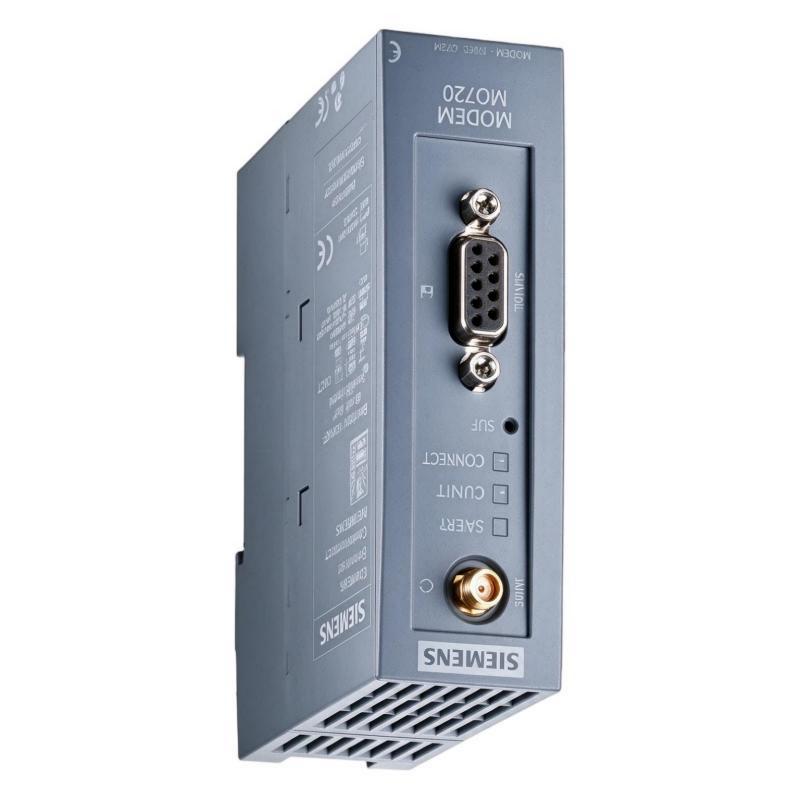
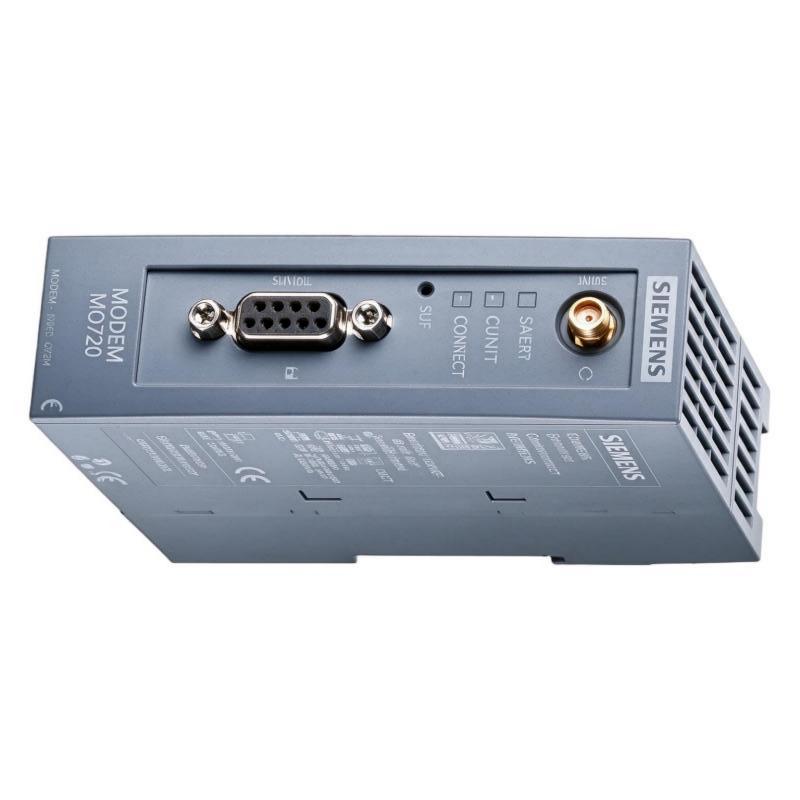
- Siemens
- 6AG1720-3AA01-7XX0
- Wireless Modem
- Germany
- 90 × 100 × 30 mm
- 0.15 kg
- Xiamen, China
- New & In Stock
- T/T, PayPal, Western Union
- 1 Year
- 1-3 Working Days
- DHL, UPS, TNT, FedEx and EMS.
- 24-Hour Service
- COO
- 5
Our advantage

Global Logistics
We have a 10-year logistics and express cooperation agreement, so our products can be shipped to any place in the world.

Brand new and original
Our products are imported in bulk from the place of origin. Because of the cooperative relationship, our products are all original and 100% new.

24-hour service
We provide 7*24 hours service to our customers. We will be there whenever you need us.

Price advantage
All our products are priced very favorably because we have our own warehouse and supply.
| Company Information | |||
| [email protected] | |||
| Mobile | +8615980777398 | ||
| +8615980777398 | |||
| 15980777398 |
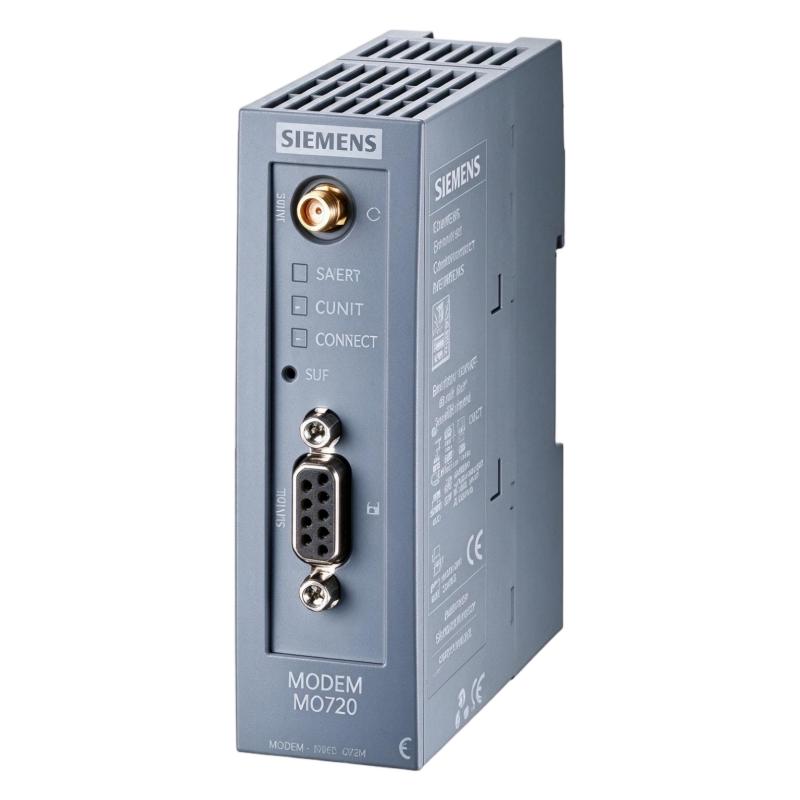
Product Overview
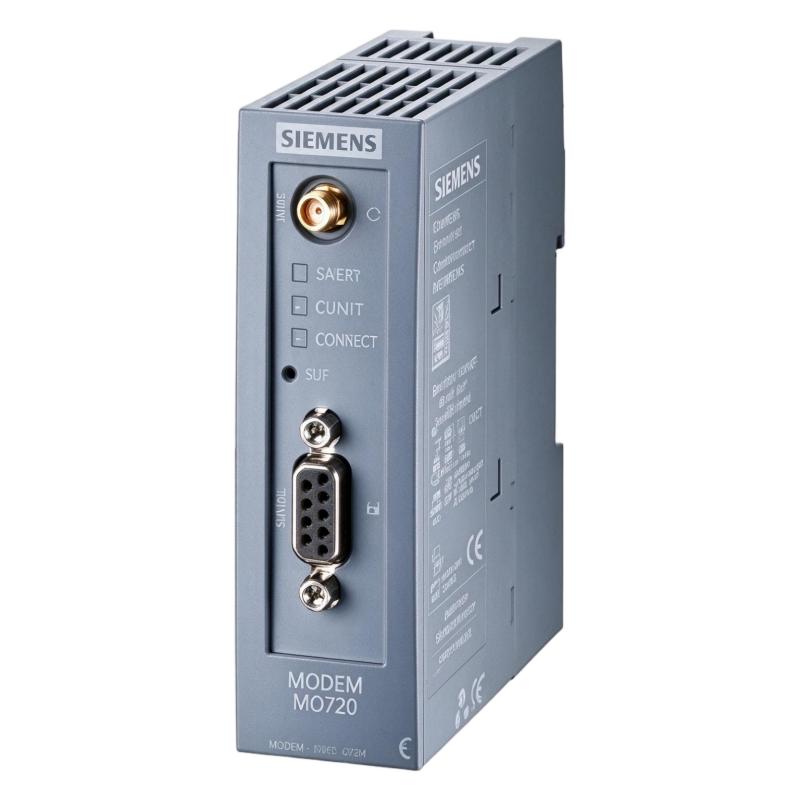
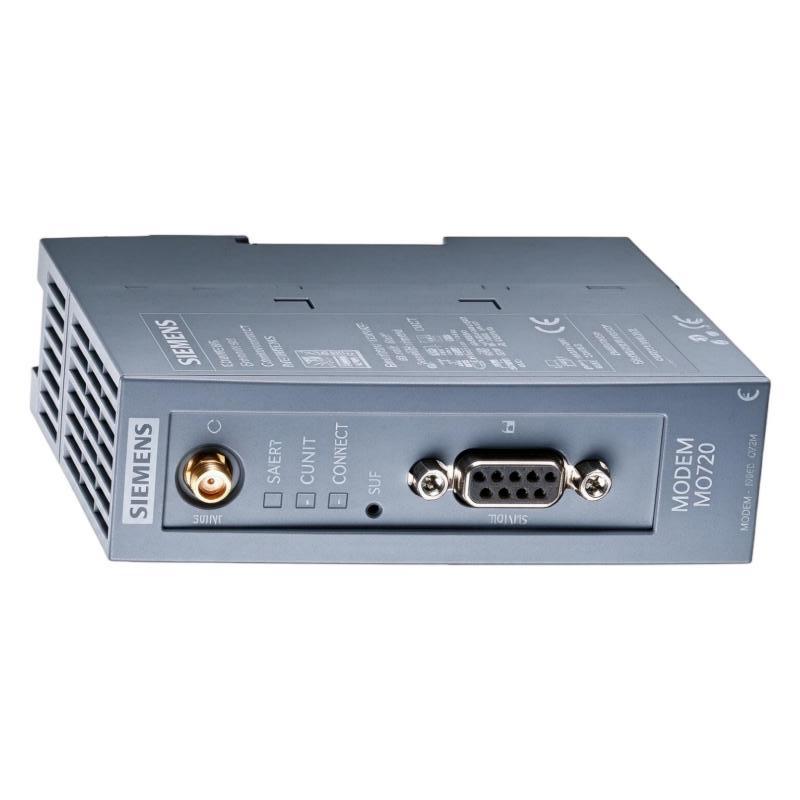
The Siemens 6AG1720-3AA01-7XX0 SIPLUS ST7 MD720 2G Wireless Modem is an industrial communication device designed to support remote data transmission between automation equipment and mobile communication networks. Based on the Siemens MD720 modem platform, this SIPLUS version combines GSM/GPRS communication capabilities with conformal coating for applications that require additional protection for electronic components.
In industrial automation, communication equipment enables controllers and field systems to exchange information with remote monitoring stations, maintenance personnel, and supervisory systems. Where wired communication infrastructure is unavailable or difficult to install, a cellular modem can provide an alternative communication path, subject to network availability and the requirements of the application.
The 6AG1720-3AA01-7XX0 supports legacy 2G mobile communication services, including GSM, GPRS, SMS, and CSD. It provides an RS-232 serial interface for connecting compatible automation equipment and supports AT commands for modem configuration and communication management. Its automatic GPRS connection setup can support applications designed for remote data transmission.
As a SIPLUS product, this model features conformal coating and an extended temperature specification compared with its standard MD720 counterpart. The documented operating temperature range is approximately -25°C to +70°C, with startup permitted at -25°C under the specified conditions.
The modem is intended for integration into compatible industrial communication systems. Before deployment, users should confirm the host controller’s serial interface, communication protocol, modem configuration, SIM card requirements, antenna installation, and local cellular network support.
Technical Specifications
| Parameter | Specification |
|---|---|
| Brand | Siemens |
| Product Series | SIPLUS NET / SIPLUS ST7 |
| Model | 6AG1720-3AA01-7XX0 |
| Product Name | SIPLUS ST7 MD720 2G |
| Product Type | Industrial Wireless Modem |
| Base Model | 6NH9720-3AA01-0XX0 |
| Wireless Technology | GSM / GPRS, 2G |
| Supported Services | CSD, GPRS, SMS |
| GSM Frequency Bands | 850 / 900 / 1800 / 1900 MHz |
| Serial Interface | RS-232 |
| Antenna Interface | SMA, 50 ohms |
| Power Supply | 12–30 V DC |
| Nominal Supply Voltage | 24 V DC |
| Maximum Current Consumption | Approximately 355 mA at rated supply conditions |
| Typical Power Consumption | Approximately 3.4 W |
| Configuration Interface | AT commands |
| SIM Card | Required for cellular network services |
| Environmental Protection | Conformal coating |
| Operating Temperature | Approximately -25°C to +70°C under specified conditions |
| Dimensions Provided | 90 × 100 × 30 mm |
| Weight Provided | 0.15 kg |
| Typical Applications | Remote monitoring, telemetry, SMS alarms, serial communication |
Specifications are based on published product information for this model and its MD720 platform. Confirm the exact hardware revision and installation documentation before commissioning.
Function and Working Principle
The Siemens 6AG1720-3AA01-7XX0 provides a communication link between compatible serial automation equipment and a supported cellular network. It does not replace the PLC or perform the control logic of the connected machine. Instead, it transfers information between the automation system and remote communication endpoints.
1. GSM and GPRS Communication
GSM provides the underlying cellular communication technology, while GPRS supports packet-based data transmission over compatible 2G networks.
Depending on the host application and configuration, the modem can be used to exchange data with remote systems or support remote access to automation equipment. Actual performance depends on cellular coverage, network availability, signal strength, service provisioning, and the communication method selected.
GPRS is a legacy mobile data technology. Before installing the modem in a new project, engineers should confirm that a compatible network remains available at the deployment site.
2. SMS Communication
Short Message Service (SMS) can be used for transmitting short text messages through a compatible cellular network.
In an automation application, a controller or associated software may use SMS functions to send status notifications, alarms, or other predefined information. For example, a remote pumping station may report an abnormal condition to a maintenance team.
The message logic is implemented in the connected controller or software. The modem provides the communication interface and cellular transmission capability; it does not independently determine which industrial events require an alarm.
3. RS-232 Serial Interface
The modem uses an RS-232 interface to communicate with compatible automation equipment. This serial connection can carry data and modem commands between the host device and the modem.
Before connection, verify the electrical interface, connector pinout, serial settings, and communication protocol. The correct cable or adapter may be necessary, depending on the host device.
The RS-232 interface is particularly relevant to legacy PLCs and serial communication systems that were designed for modem-based remote access or telemetry.
4. AT Command Configuration
AT commands provide a method for configuring and controlling supported modem functions. Depending on the application, these commands can be used to manage modem settings, establish connections, or control communication services.
The host controller or application software must support the relevant command sequence. Correct configuration of the modem, SIM card, network parameters, and serial communication settings is essential for reliable operation.
5. Conformal Coating and Environmental Protection
The SIPLUS version includes conformal coating intended to provide additional protection for electronic assemblies under specified environmental conditions.
This feature can be valuable in industrial environments where temperature variation or certain contaminants may affect electronic reliability. However, conformal coating does not make the modem waterproof or suitable for every corrosive environment. The installation must still comply with the manufacturer’s environmental and mounting requirements.
Role in Industrial Control Systems
The 6AG1720-3AA01-7XX0 can serve as a communication component in industrial systems where remote access or data transmission is required.
PLC Remote Monitoring
A compatible PLC can exchange data through the modem and an appropriate remote communication arrangement. Depending on the PLC model and software, this may support status reporting, alarm notifications, or selected remote monitoring functions.
Compatibility depends on the PLC’s serial interface and the communication software. The modem does not automatically provide remote programming or monitoring for every Siemens controller.
Telemetry and Remote Stations
Industrial installations sometimes operate at locations far from a central control room. Examples include pumping stations, water-treatment facilities, utility installations, and distributed equipment.
Where supported by the network and host system, the modem can provide a cellular communication path for sending selected process information to a remote monitoring system.
Alarm Notification
SMS functionality may be used as part of an alarm-notification arrangement. A controller can detect an event and initiate a predefined message through compatible software and the modem.
The reliability of the notification path depends on cellular coverage, network service, correct configuration, and the logic implemented in the control system. SMS should not be treated as a substitute for a dedicated safety system or a guaranteed real-time alarm channel.
Legacy Automation Support
Many existing industrial systems use serial communication interfaces and older telemetry architectures. The MD720 platform may be relevant to maintaining such installations where the original system was designed around GSM/GPRS communication.
Because 2G network availability varies by country and carrier, the long-term suitability of this modem must be evaluated before it is selected for ongoing operation.
Industrial Applications
1. Water and Wastewater Systems
Distributed water and wastewater installations may need to report operating status, equipment faults, or other selected information to a central monitoring location.
When paired with a compatible controller and supported network, the modem can provide a communication channel for telemetry or SMS-based notifications. Engineers should assess cellular coverage at the remote site before installation.
2. Pumping Stations
Remote pumping stations can use cellular communication to support alarm reporting and selected operating-data transfers. A PLC or other controller handles the monitoring logic, while the modem provides the communication path.
The system design should account for network outages, power interruptions, and the need for local control to continue safely when remote communication is unavailable.
3. Utility and Infrastructure Monitoring
Some legacy utility and infrastructure installations rely on serial devices and cellular communication to transmit operating information. The MD720 platform may support such systems when the host equipment and network remain compatible.
Before deploying the modem, verify service availability, local radio approvals, SIM requirements, and the supported communication protocol.
4. Industrial Equipment Remote Diagnostics
Compatible equipment may use a serial modem connection for remote diagnostics or maintenance-related communication. The exact functions available depend on the connected controller, software, and original system design.
Remote access should be designed with appropriate authentication, access restrictions, and operational safeguards. A cellular connection alone does not provide a complete cybersecurity solution.
5. Legacy PLC Communication
The MD720 platform has been used with compatible PLC systems for remote data monitoring and SMS-related functions. Siemens documentation describes applications involving S7-200, S7-200 SMART, and selected serial communication arrangements.
Actual compatibility varies by controller model and operating mode. Engineers should consult the relevant PLC and modem manuals before assuming that a specific remote monitoring or programming function is supported.
Installation and System Integration
Correct installation is essential for stable communication and dependable operation.
1. Verify the DC Power Supply
The specified supply range is 12–30 V DC, with 24 V DC as the nominal supply voltage. Check the power supply’s output capacity and polarity before connecting the modem.
Avoid unstable supplies or wiring arrangements that introduce excessive voltage drop. Where the modem is installed in a remote station, consider the power system’s behavior during startup and under changing environmental conditions.
2. Connect the RS-232 Interface
Connect the modem to a compatible serial port using the correct cable or adapter. Verify the pinout, signal compatibility, serial communication settings, and host device requirements.
Do not assume that every RS-232 connector uses the same wiring arrangement. Incorrect cabling can prevent communication or cause connection problems.
3. Install the SIM Card
A suitable SIM card and supported cellular service are required for network communication. Confirm that the service supports the modem’s GSM/GPRS technology and required functions.
SIM card activation, PIN handling, carrier restrictions, roaming policies, and network coverage can affect operation. Test the SIM card and communication service before commissioning the complete automation system.
4. Connect the Antenna
The modem provides an SMA antenna connection with a 50-ohm interface. Use an antenna appropriate for the supported GSM bands and the local installation environment.
Place the antenna where it can obtain a suitable signal. Metal cabinets, reinforced structures, and remote underground installations may weaken reception. If the modem is installed inside a metal enclosure, consider an appropriate external antenna arrangement.
5. Configure the Modem and Host Controller
Configure the serial communication parameters, modem commands, network settings, and application software according to the intended use.
For SMS or GPRS functions, verify that the host application uses a supported communication method. Conduct tests for successful connection, data transfer, and recovery after temporary network loss.
6. Evaluate Network Availability
This modem uses legacy 2G technology. Cellular networks have been retired or reduced in some regions, while availability varies by carrier and country.
Before purchase or deployment, verify that GSM/GPRS service and the necessary frequency bands remain supported at the installation location. If the local network no longer supports 2G, the modem will not provide the intended cellular communication service even if the device itself is functioning correctly.
7. Test and Document the Installation
After installation, check the power supply, serial connection, antenna, signal strength, SIM status, and communication behavior. Test the actual data-transfer or SMS functions required by the application.
Document the configuration and the steps needed to restore communication after maintenance. For remote sites, define what the local automation system should do if cellular service becomes unavailable.
Compatible System Components
The modem may be integrated with the following types of equipment, subject to the specific interface and application requirements.
| Component | Function | Compatibility Considerations |
|---|---|---|
| Siemens S7-200 PLC | Provides automation control and selected serial communication functions | Verify the controller model, port, software, and communication mode |
| Siemens S7-200 SMART | Can be used in supported MD720 communication arrangements | Confirm supported functions and configuration limitations |
| Compatible serial communication processor | Provides a serial interface for automation data | Verify electrical compatibility and protocol support |
| 24 V DC power supply | Supplies power to the modem | Maintain the specified 12–30 V DC operating range |
| GSM antenna | Provides the cellular radio connection | Match the supported frequency bands and antenna interface |
| SIM card | Provides access to the mobile network | Confirm GSM/GPRS service availability and carrier requirements |
| RS-232 cable or adapter | Connects the modem to the host device | Check pinout, connector type, and serial signal requirements |
| Remote monitoring software | Processes data received from the remote equipment | Confirm that the software supports the modem and host protocol |
The table lists potential system components, not items guaranteed to be included with the modem. Compatibility must be checked against the exact installation.
Alternative Models and Replacement Considerations
The standard MD720 base model has been cancelled, and 2G technology is increasingly limited in many regions. Replacement planning should consider both the legacy control interface and the future availability of cellular services.
| Alternative | Potential Use | Considerations |
|---|---|---|
| Siemens 6NH9720-3AA01-0XX0 MD720 | Standard MD720 platform | Similar base platform, but verify coating, environmental ratings, and hardware configuration |
| Siemens SCALANCE M cellular products | Modern industrial cellular communication | Select a model based on supported mobile networks, interfaces, security, and regional approvals |
| Siemens industrial communication gateways | Connect legacy serial equipment to supported networks | Verify serial compatibility and required gateway functions |
| Third-party industrial cellular modem | Replace a legacy modem in selected systems | Confirm RS-232 compatibility, protocol support, carrier bands, and environmental ratings |
A replacement should not be selected based solely on the word “modem” in the product description. Important factors include:
- Supported cellular generations and frequency bands.
- Availability of the required network service.
- RS-232 or other required serial interfaces.
- SMS, packet-data, and remote-access requirements.
- Host PLC compatibility and communication protocol.
- Supply voltage and power consumption.
- Temperature range and environmental protection.
- Cybersecurity features and remote-access controls.
- Local radio approvals and carrier requirements.
If the original automation system depends on 2G, moving to a newer modem may require changes to the host software, communication protocol, antenna, SIM arrangement, or remote server configuration.
Key Advantages
Industrial Cellular Communication
GSM/GPRS capability supports communication with compatible remote systems where the required 2G services remain available.
SMS and Data Functions
Support for SMS, CSD, and GPRS provides several legacy communication options for compatible automation applications.
RS-232 Connectivity
The serial interface supports integration with suitable PLCs and industrial devices designed for serial modem communication.
SIPLUS Environmental Design
Conformal coating and the specified extended operating temperature range support applications that require additional environmental tolerance compared with the standard base product.
Automatic GPRS Connection Setup
The documented automatic connection function can support applications designed to establish GPRS communication without requiring every connection step to be managed manually by an operator.
Compact Installation
The supplied dimensions of 90 × 100 × 30 mm and weight of 0.15 kg make the modem suitable for compact installations where the mounting arrangement and environmental conditions meet the manufacturer’s requirements.
Legacy-System Maintenance
The modem may be relevant to maintaining existing automation installations that depend on the MD720 platform and its established communication methods.
Technical FAQs
1. What is the Siemens 6AG1720-3AA01-7XX0?
It is a SIPLUS ST7 MD720 2G industrial wireless modem with conformal coating. It supports legacy GSM/GPRS communication and provides an RS-232 interface for compatible automation equipment.
2. What is the difference between this model and the standard MD720?
The 6AG1720-3AA01-7XX0 is a SIPLUS version based on the standard 6NH9720-3AA01-0XX0 platform. It includes conformal coating and a specified extended temperature range. Check the product documentation for exact environmental limits and installation requirements.
3. Which communication services does it support?
The modem supports GSM and GPRS, as well as CSD and SMS functions, subject to the host configuration and availability of compatible mobile network services.
4. What is the supply voltage?
The documented operating supply range is 12–30 V DC, with 24 V DC nominal.
5. Which interface connects it to a PLC?
The modem provides an RS-232 serial interface. The correct cable, serial parameters, and communication protocol depend on the connected PLC or communication processor.
6. Can it send SMS alarms?
It can support SMS functions in a compatible system. The PLC or application software must implement the alarm logic and configure the required modem commands and message handling.
7. Does it support 4G or 5G?
No. The 6AG1720-3AA01-7XX0 is a 2G GSM/GPRS modem. It does not provide native 4G LTE or 5G connectivity.
8. Can it still be used today?
It may continue to operate where compatible GSM/GPRS services remain available. However, 2G network availability varies by country and carrier. Confirm local support before selecting it for a new or existing installation.
9. What should be checked before purchasing?
Verify the full order number, product condition, environmental requirements, serial interface, antenna connection, power supply, and included accessories. Confirm whether the local cellular network supports the required 2G services.
10. Is the 0.15 kg weight suitable for a product listing?
Yes. The supplied weight of 0.15 kg matches the net weight published for the standard MD720 base product. The listed dimensions of 90 × 100 × 30 mm represent the same three dimensions as the 30 × 100 × 90 mm arrangement shown in product data, with the order changed.
Procurement and Maintenance Recommendations
When purchasing the Siemens 6AG1720-3AA01-7XX0, verify the complete catalog number rather than relying on the general MD720 product name. The SIPLUS version includes environmental features that may distinguish it from the standard model.
Confirm the condition of the serial connector, antenna connector, power terminals, and housing. For used or surplus units, request clear product photographs and test information where available. Verify whether the antenna, serial adapter, and other accessories are included.
Before commissioning, confirm the local 2G network status, SIM card requirements, signal strength, and supported frequency bands. A functional modem cannot provide cellular communication if the relevant network has been shut down or the required service is unavailable.
For maintenance, document the serial settings, modem commands, network parameters, and application configuration. If the system is critical, plan for network outages and consider whether a modern cellular gateway would provide a more sustainable long-term solution.
Conclusion
The Siemens 6AG1720-3AA01-7XX0 SIPLUS ST7 MD720 2G Wireless Modem is an industrial communication device designed for legacy GSM/GPRS applications. With an RS-232 interface, SMS and GPRS support, a 12–30 V DC supply range, conformal coating, and an extended specified temperature range, it can serve compatible telemetry and remote-monitoring systems.
Its primary limitation is reliance on 2G mobile networks. Before purchasing or deploying this modem, verify local cellular availability, host-controller compatibility, and environmental requirements. For long-term projects, assess whether a modern industrial cellular communication solution would better meet future network and cybersecurity needs.