

ProductPRODUCT
Featured products
Contact Us
- Bently Nevada
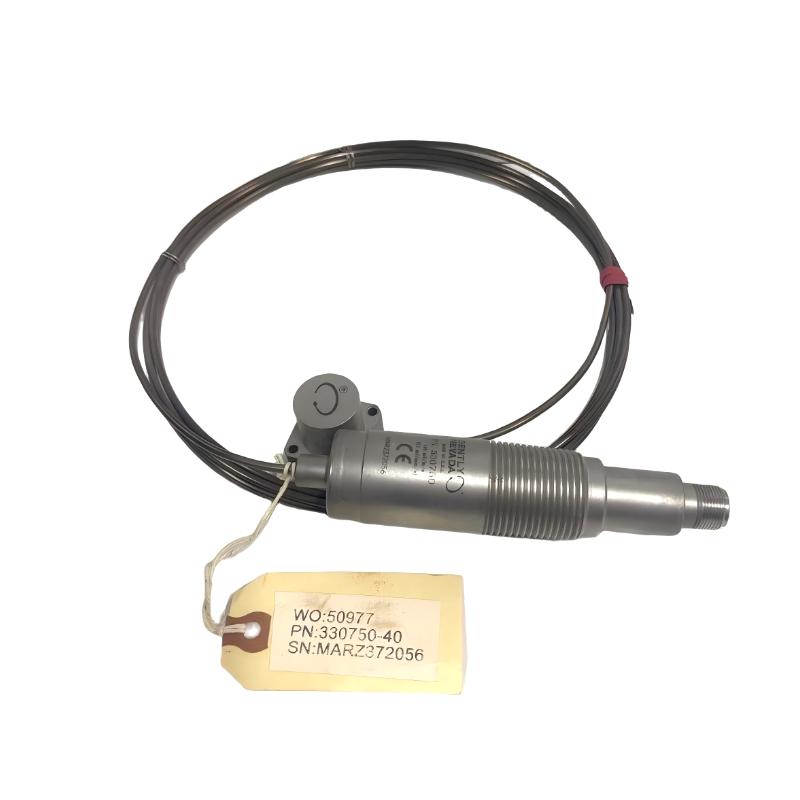
- 330750-40
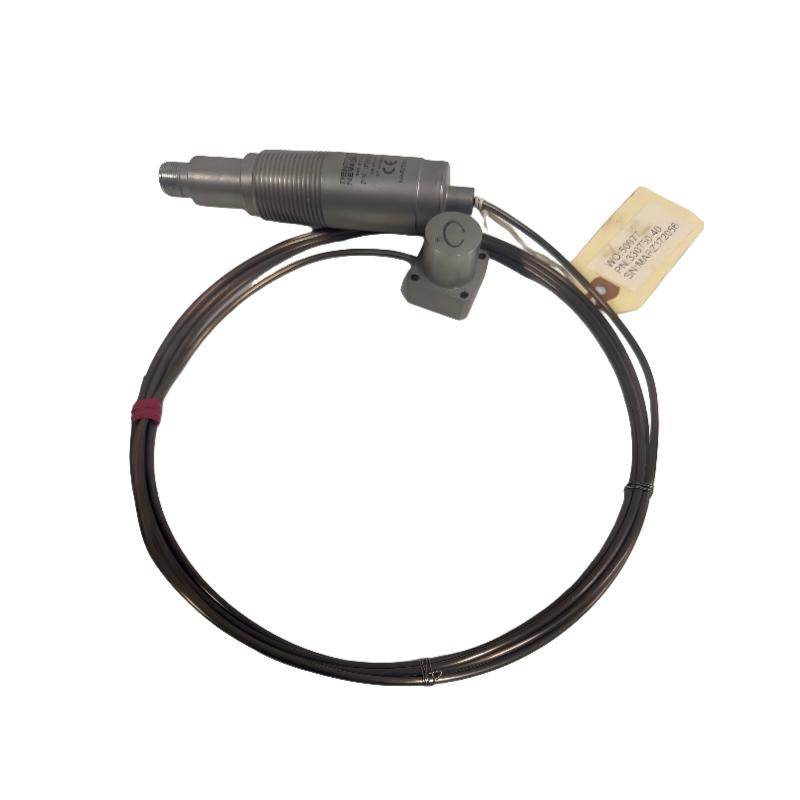
- High Temperature Velomitor Velocity Sensor
- USA
- 33.4 mm × 152.1 mm
- 0.3kg
- Xiamen, China
- New & In Stock
- T/T, PayPal, Western Union
- 1 Year
- 1-3 Working Days
- DHL, UPS, TNT, FedEx and EMS.
- 24-Hour Service
- COO
- 5
Our advantage

Global Logistics
We have a 10-year logistics and express cooperation agreement, so our products can be shipped to any place in the world.

Brand new and original
Our products are imported in bulk from the place of origin. Because of the cooperative relationship, our products are all original and 100% new.

24-hour service
We provide 7*24 hours service to our customers. We will be there whenever you need us.

Price advantage
All our products are priced very favorably because we have our own warehouse and supply.
| Company Information | |||
| [email protected] | |||
| Mobile | +8615980777398 | ||
| +8615980777398 | |||
| 15980777398 |
Bently Nevada 330750-40: Product Description, Technical Specifications, Applications, Advantages, and Related Models
1. Product Overview
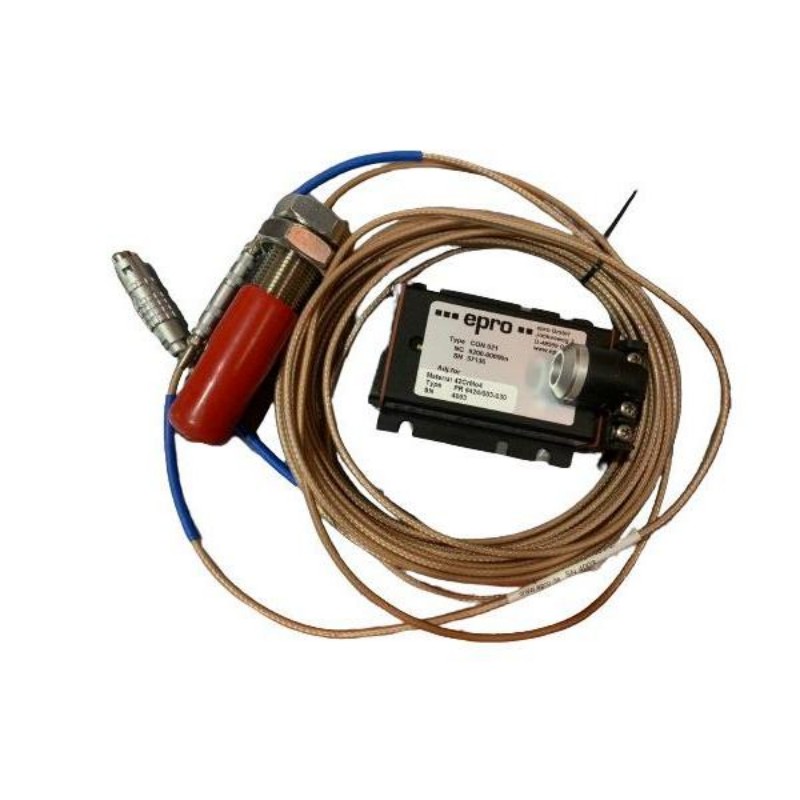
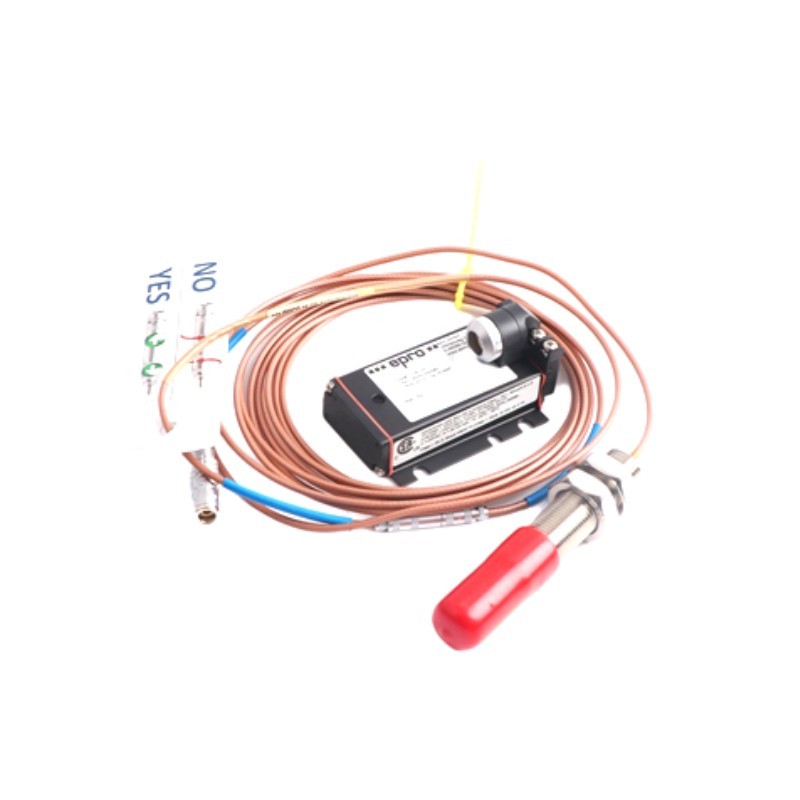
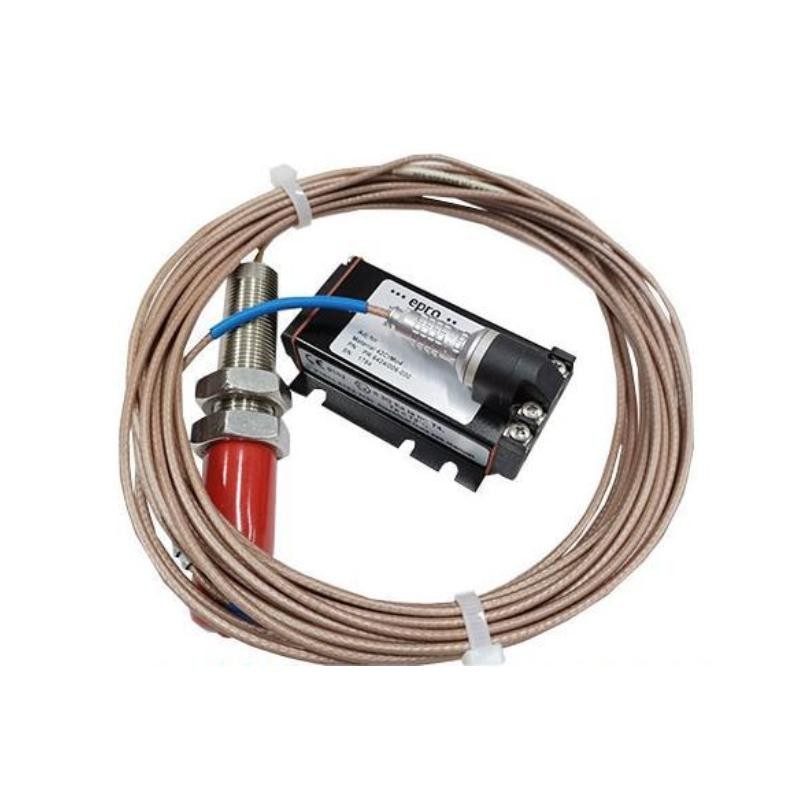
The Bently Nevada 330750-40 is associated with the High Temperature Velomitor vibration measurement product family. It is designed for industrial machinery monitoring applications where vibration velocity must be measured at locations exposed to elevated temperatures.
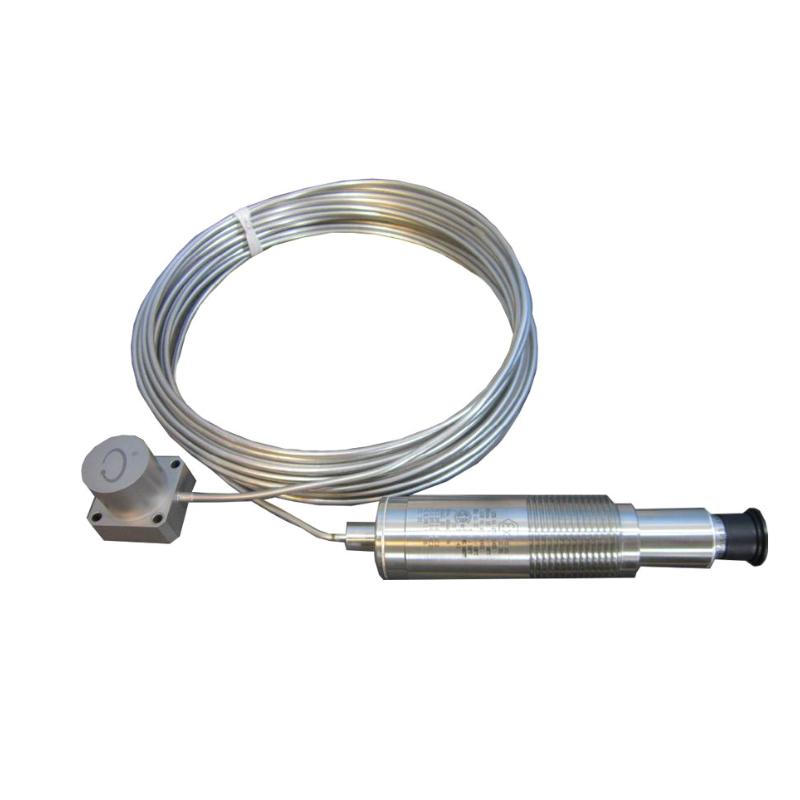
The product family uses a separated sensing-head and electronics arrangement. This design allows the sensing head to be installed close to a hot machinery surface while the electronic section can be positioned farther away in a cooler environment, provided that all installation requirements are met.
The 330750-40 configuration is associated with a nominal 4 m cable option in the relevant product family. This additional cable length can provide greater flexibility when the measurement point is separated from the preferred electronics mounting location.
Brand: Bently Nevada
Product series: 330750 High Temperature Velomitor System
Product category: Industrial vibration velocity sensor and transducer system
Primary function: Machinery vibration measurement, condition monitoring, and maintenance assessment
Typical industries: Power generation, petrochemical processing, oil and gas, and general industrial manufacturing
The exact specifications of an individual unit should be confirmed against its complete ordering code. In particular, temperature ratings, connector details, approvals, dimensions, and weight should not be assumed from the model family alone.
2. Detailed Technical Parameters
The following table summarizes the principal characteristics associated with the 330750 product family. Values identified as family-level specifications should be checked against the exact 330750-40 configuration before they are used for engineering acceptance or procurement.
| Parameter | Technical specification |
|---|---|
| Model | 330750-40 |
| Brand | Bently Nevada |
| Product series | 330750 High Temperature Velomitor System |
| Product type | High-temperature vibration velocity transducer |
| Measurement variable | Absolute casing vibration velocity |
| Sensing principle | Piezoelectric vibration sensing |
| Nominal sensitivity | 5.7 mV/mm/s (145 mV/in/s), ±5% for the applicable family specification |
| Frequency response | 15 Hz–2,000 Hz, ±3 dB for the applicable specification |
| Tighter frequency-response range | 20 Hz–1,000 Hz, ±0.9 dB for the applicable specification |
| Amplitude linearity | Approximately ±2% up to 152 mm/s peak for the applicable specification |
| Sensor-head temperature | Up to +400°C for the applicable high-temperature configuration |
| Integral cable temperature | Up to +400°C for the applicable configuration |
| Electronics operating temperature | Approximately −55°C to +121°C for the applicable specification |
| Cable arrangement | Integral high-temperature cable |
| Nominal cable length | 4 m |
| Sensor-head material | Stainless steel construction for the applicable assembly |
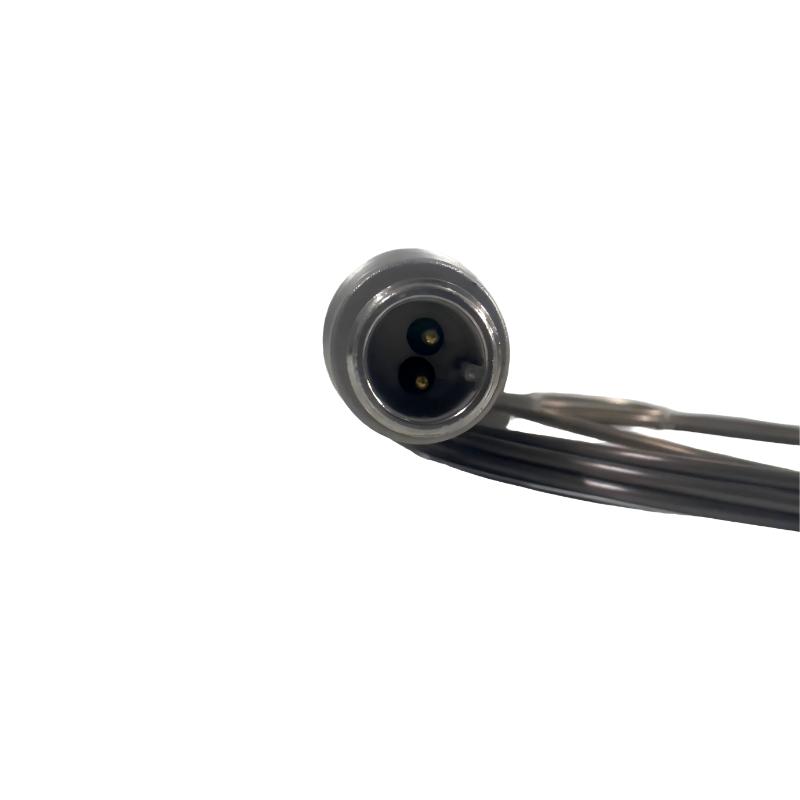
| Connector | Two-pin MIL-C-5015-type connector for the applicable configuration |
| Sensor-head diameter | Approximately 25.4 mm; confirm the exact mechanical drawing |
| Electronics housing diameter | Approximately 33.4 mm; confirm the exact version |
| Electronics housing length | Approximately 152.1 mm; confirm the exact version |
| Overall dimensions | Depend on the complete assembly and cable configuration |
| Weight (kg) | Exact weight of the complete 330750-40 assembly requires confirmation |
| Installation method | Mechanical mounting at a designated machinery measurement point |
| Signal processing | Requires compatible monitoring instrumentation |
| Primary application | High-temperature machinery vibration monitoring |
The nominal cable length is the principal configuration distinction highlighted for the 330750-40. It should not be treated as proof that all other specifications are identical across every ordering variant.
3. Product Dimensions and Weight
The complete assembly contains multiple components with different dimensional and environmental requirements. For this reason, the sensing head, cable, electronics housing, and complete assembly should be considered separately.
| Component | Dimensions | Temperature consideration | Weight (kg) |
|---|---|---|---|
| Sensor head | Approximately 25.4 mm diameter; mounting thread and height require confirmation | Up to +400°C for the applicable version | Requires confirmation |
| Integral cable | Nominal 4 m length; exact diameter and construction require confirmation | High-temperature rated for the applicable configuration | Requires confirmation |
| Electronics housing | Approximately 33.4 mm diameter × 152.1 mm long | Must remain within its specified operating-temperature range | Requires confirmation |
| Connector section | Depends on the supplied connector and assembly | Subject to applicable connector limits | Requires confirmation |
| Complete sensor assembly | Depends on the complete ordering code and included components | Component-dependent | Requires confirmation |
| Packaged product | Depends on packaging and accessories | Not applicable | Requires confirmation |
Dimensional note: The component measurements above are reference values for the product family, not a substitute for the controlled drawing of the exact 330750-40 assembly.
Weight note: A verified weight in kilograms is not available for the exact configuration in this offline response. It is preferable to confirm the value from the unit’s identification label or technical specification rather than insert an unsupported estimate.
4. Product Introduction
The 330750-40 is intended for applications in which the temperature at the vibration measurement point presents a challenge for conventional integrated sensors.
In rotating machinery, vibration velocity is commonly used to evaluate overall mechanical vibration behavior. Changes in vibration can be associated with imbalance, misalignment, mechanical looseness, structural resonance, bearing-related problems, or changes in operating conditions.
The 330750 product family addresses the additional challenge of measuring vibration near hot machinery surfaces. By separating the sensing head from the electronic section, it allows the sensing element to be located close to the machine while the electronics can be placed in a cooler area.
The nominal 4 m cable configuration offers installation flexibility when the selected measurement point and the preferred electronics location are not close together.
The sensor functions as one component of a broader machinery-monitoring system. It provides measurement data that compatible monitoring equipment can process, display, and record for trend analysis and maintenance assessment.
5. Operating Principle
The sensor uses a piezoelectric sensing principle to detect mechanical vibration and produce an electrical signal corresponding to vibration velocity.
When the machine surface vibrates, the sensing element responds to the mechanical movement. The resulting signal is passed through the appropriate signal-conditioning arrangement and delivered to compatible monitoring instrumentation.
The system’s separated construction is particularly useful in elevated-temperature installations. The sensing head can be located near the hot surface, while the electronic section is positioned away from the highest-temperature area.
The 4 m cable configuration provides additional routing distance, although the actual cable route must still comply with installation requirements for support, bending, protection, and electrical compatibility.
The resulting measurements can be used to establish operating baselines, track changes over time, and identify vibration conditions that require further investigation.
A vibration sensor does not independently identify the precise cause of a fault. Diagnostic conclusions depend on measurement quality, machine operating conditions, alarm limits, and other available engineering information.
6. Main Applications
6.1 Steam Turbines and Power-Generation Equipment
Steam turbines and related power-generation machinery operate under substantial thermal and mechanical loads. Selected casing locations may be too hot for conventional sensors with integrated electronics.
The 330750-40 can be considered for vibration velocity measurement at suitable high-temperature points where the installation design supports this type of transducer.
Typical monitoring objectives include:
-
Tracking changes in casing vibration during normal operation.
-
Comparing vibration trends across operating conditions.
-
Recording changes before and after maintenance.
-
Providing measurement signals to compatible monitoring systems.
-
Supporting investigations into abnormal vibration behavior.
The sensor must be installed at a measurement location appropriate for the turbine’s monitoring design. It should not be assumed to replace shaft-relative vibration probes or axial-position sensors where those measurements are required.
6.2 Industrial Compressors
Large industrial compressors may operate continuously and generate significant heat around casings, bearing supports, and process equipment.
The 330750-40 can be evaluated for suitable casing vibration measurement points when the temperature and measurement requirements fall within the applicable specifications.
The longer cable arrangement can be useful where the electronics mounting position needs to be separated from the hot measurement location.
Potential applications include vibration trending, comparative measurements, and the collection of data for machinery condition assessment.
6.3 Pumps and Process Machinery
Process pumps, circulation pumps, and other rotating equipment can be installed near hot fluids, heated pipework, or high-temperature process systems.
Where the selected measurement surface is too hot for an ordinary integrated sensor, a high-temperature sensing arrangement may provide a suitable alternative.
The sensor can support monitoring programs intended to identify changes in vibration behavior and prioritize maintenance inspections.
Selection should account for operating temperature, mounting surface, machine speed, required frequency range, and the capabilities of the receiving monitoring equipment.
6.4 Petrochemical and Refinery Equipment
Petrochemical facilities contain a wide range of hot rotating machinery, including pumps, compressors, turbines, and auxiliary equipment.
A high-temperature vibration sensor can help provide measurement coverage at selected locations where conventional sensor arrangements may be unsuitable.
For these installations, engineers should also evaluate hazardous-area requirements, cable routing, enclosure placement, grounding, and any applicable certification requirements.
The complete model suffix and installation classification must be checked before specifying the sensor for a regulated or hazardous environment.
6.5 Industrial Fans, Blowers, and Auxiliary Equipment
Large fans and blowers can develop vibration changes caused by imbalance, looseness, misalignment, or changing mechanical loads.
Where the mounting location is exposed to elevated temperatures, the 330750 family may be considered for casing vibration measurement.
The sensor can provide data for routine trend monitoring and maintenance investigations, provided that its frequency response and environmental ratings suit the application.
7. Product Advantages
| Advantage | Technical explanation | Practical benefit |
|---|---|---|
| High-temperature measurement | The sensing head is designed for elevated-temperature service in the applicable configuration | Expands the range of locations that can be monitored |
| Separated electronics | The sensing head and electronic section are physically separated | Allows the electronics to be positioned in a cooler area |
| Nominal 4 m cable | Provides additional distance between the measurement point and electronics location | Offers greater flexibility for machine layouts |
| Velocity measurement | Provides a signal related to machinery vibration velocity | Supports vibration trending and condition assessment |
| Integral cable construction | Reduces the need for an intermediate connection at the sensing head | Simplifies the hot-end installation |
| Industrial construction | Uses a construction intended for industrial machinery monitoring | Supports demanding operating environments within rated limits |
| Monitoring-system integration | Can supply vibration data to compatible monitoring equipment | Supports centralized monitoring and maintenance records |
| Condition-monitoring support | Provides data that can be compared against operating baselines | Helps identify changes requiring further investigation |
The actual value of these advantages depends on correct mounting, appropriate signal conditioning, good cable management, and the quality of the overall monitoring program.
8. Five Related Models in the Same Series or Product Family
The following models are relevant candidates for comparison within the high-temperature Velomitor family. Cable lengths and suffixes must be confirmed against the applicable ordering scheme before purchase.
| Model | Product series | Main characteristics | Nominal cable length | Dimensions | Weight (kg) |
|---|---|---|---|---|---|
| 330750-20 | High Temperature Velomitor | Shorter cable configuration for compatible high-temperature installations | 2 m | Sensor-head diameter approximately 25.4 mm; complete dimensions require confirmation | Requires confirmation |
| 330750-40 | High Temperature Velomitor | High-temperature vibration velocity measurement with longer cable reach | 4 m | Sensor-head diameter approximately 25.4 mm; complete dimensions require confirmation | Requires confirmation |
| 330750-60 | High Temperature Velomitor | Longer cable configuration for suitable installations | 6 m | Sensor-head diameter approximately 25.4 mm; complete dimensions require confirmation | Requires confirmation |
| 330750-80 | High Temperature Velomitor | Extended cable configuration for suitable installations | 8 m | Sensor-head diameter approximately 25.4 mm; complete dimensions require confirmation | Requires confirmation |
| 330752-40 | Related High Temperature Velomitor family | Related configuration for compatible monitoring arrangements | Verify exact ordering code | Confirm the model-specific mechanical drawing | Requires confirmation |
These options are intended to illustrate the range of related configurations. The model number alone does not establish complete interchangeability. Check mounting details, sensitivity, frequency response, approvals, connector requirements, and the receiving monitoring channel before selecting an alternative.
8.1 Model 330750-20
The 330750-20 is the shorter-cable counterpart to the 330750-40 in the relevant product configuration scheme.
It may be suitable when the sensing location and electronics mounting point are relatively close together. The shorter cable can simplify routing, but the final choice should account for the actual installation path rather than only the straight-line distance.
8.2 Model 330750-60
The 330750-60 is associated with a nominal 6 m cable option in the relevant configuration scheme.
It may be considered when the preferred electronics mounting point is farther from the high-temperature measurement location. Cable routing and environmental requirements should be assessed before installation.
8.3 Model 330750-80
The 330750-80 is associated with a nominal 8 m cable option in the relevant configuration scheme.
It may offer additional flexibility in larger equipment installations where the sensing point and electronics mounting position are separated by a longer distance.
The complete cable path must be planned to prevent abrasion, unsupported spans, excessive bending, and interference with moving machinery.
8.4 Model 330752-40
The 330752-40 belongs to a related high-temperature Velomitor family.
It may be worth evaluating when the existing monitoring installation uses compatible equipment from this product family. However, a shared series designation does not guarantee identical sensitivity, connector arrangements, mounting dimensions, or electrical behavior.
8.5 Model 330750-20-CN
The 330750-20-CN is a related ordering designation that may be relevant when comparing existing inventory or replacement requirements.
The meaning of the -CN suffix must be verified from the applicable ordering information. It should not be assumed to identify a particular cable length, approval, or performance specification without confirmation.
9. Five Additional Related Models from the Same Brand
The following models cover alternative vibration-monitoring approaches, including standard velocity sensing and acceleration measurement.
They are not all direct substitutes for the 330750-40.
| Model | Product category | Main technical parameters | Dimensions | Weight (kg) |
|---|---|---|---|---|
| 330500 | Velomitor velocity sensor | Standard vibration velocity measurement; temperature limits depend on the exact version | Confirm housing and mounting dimensions | Requires confirmation |
| 330525 | Velomitor XA sensor | Industrial vibration velocity sensing; verify electrical and environmental limits | Confirm complete assembly dimensions | Requires confirmation |
| 330400 | Accelerometer | Piezoelectric acceleration measurement; requires compatible signal conditioning | Confirm exact version and mounting dimensions | Requires confirmation |
| 330425 | Accelerometer | Industrial acceleration sensing for machinery vibration monitoring | Confirm exact version and mounting dimensions | Requires confirmation |
| 190501 | Velocity transducer | Related velocity-monitoring product; suitability depends on the intended monitoring system | Confirm exact model drawing | Requires confirmation |
These products are included as related options for evaluation rather than as a verified sales ranking. Exact technical data, availability, and interchangeability have not been established for every configuration.
9.1 Model 330500 — Standard Velomitor Velocity Sensor
The 330500 is a conventional velocity-sensing option for industrial machinery where the measurement-point temperature remains within the applicable operating limits.
Its simpler sensor arrangement may be suitable for standard-temperature locations where the separated high-temperature architecture is unnecessary.
Before selecting it in place of the 330750-40, engineers should compare the temperature limits, sensitivity, frequency response, mounting arrangement, and monitoring-system compatibility.
9.2 Model 330525 — Velomitor XA
The 330525 is another velocity-sensing product that can be considered for compatible industrial monitoring installations.
Its suitability depends on the measurement range, electrical interface, installation conditions, and monitoring-system requirements.
It should not be considered a direct replacement for a high-temperature transducer unless the complete specifications support the proposed substitution.
9.3 Model 330400 — Accelerometer
The 330400 is an accelerometer designed for applications requiring vibration acceleration measurement.
Acceleration data can be useful when the monitoring objective includes higher-frequency vibration, impacts, or specific bearing-related phenomena. The suitability of the sensor depends on the required sensitivity, frequency range, mounting method, and signal-conditioning arrangement.
9.4 Model 330425 — Accelerometer
The 330425 is another accelerometer option for industrial machinery monitoring.
It may be appropriate when the monitoring design calls for acceleration rather than velocity measurement. Its environmental limits and compatibility must be checked before it is selected for a particular installation.
9.5 Model 190501 — Velocity Transducer
The 190501 is a related velocity-transducer option for compatible monitoring applications.
It may be evaluated for existing systems or new monitoring designs where its output characteristics and environmental specifications are suitable.
Its use as a replacement for the 330750-40 requires confirmation of the complete electrical and mechanical interface.
10. Installation and Maintenance Considerations
10.1 Mechanical installation
The sensor should be mounted securely at the designated measurement location. The mounting surface must be mechanically sound and suitable for the required measurement accuracy.
The mounting arrangement should follow the requirements for the exact sensor version. Incorrect mounting can affect measurement quality and repeatability.
10.2 Cable routing
The nominal 4 m cable provides installation flexibility, but it must be routed and supported correctly.
Avoid unnecessary mechanical loading, abrasion, sharp bends, contact with moving components, and exposure beyond the cable’s rated environmental limits.
10.3 Electronics placement
The electronic section must remain within its specified operating-temperature range.
A high-temperature sensing head does not mean that every part of the assembly can operate at the same temperature. The sensing head, cable, connector, and electronics must each be evaluated according to their own limits.
10.4 Electrical integration
Confirm the sensor’s sensitivity, output characteristics, connector arrangement, and monitoring-channel requirements before installation.
The monitoring system must be configured for the correct sensor type and measurement scaling. Incorrect settings can produce misleading vibration readings.
10.5 Routine inspection
Periodic inspection should cover mounting security, cable condition, connector integrity, and evidence of overheating or physical damage.
Vibration measurements should be compared with historical baseline values and interpreted alongside machine speed, load, operating conditions, and maintenance history.
11. Final Technical Summary
The Bently Nevada 330750-40 is associated with the 330750 High Temperature Velomitor System, a vibration velocity measurement product family intended for designated industrial locations exposed to elevated temperatures.
Its principal characteristics include a separated sensing head and electronics arrangement, an integral high-temperature cable, and a nominal 4 m cable configuration for the applicable model.
The product can support vibration monitoring on suitable turbines, compressors, pumps, and other rotating machinery. Its advantages include installation flexibility, the ability to measure vibration at suitable hot locations, and integration into compatible condition-monitoring systems.
The related 330750 configurations provide different cable-length options, while other velocity sensors and accelerometers offer alternative approaches for different measurement requirements.
For a final purchase specification, confirm the exact ordering code, approved operating limits, complete assembly dimensions, verified weight in kilograms, and compatibility with the intended monitoring system. These checks are particularly important when selecting a replacement or preparing a formal equipment datasheet.