

ProductPRODUCT
Featured products
Contact Us
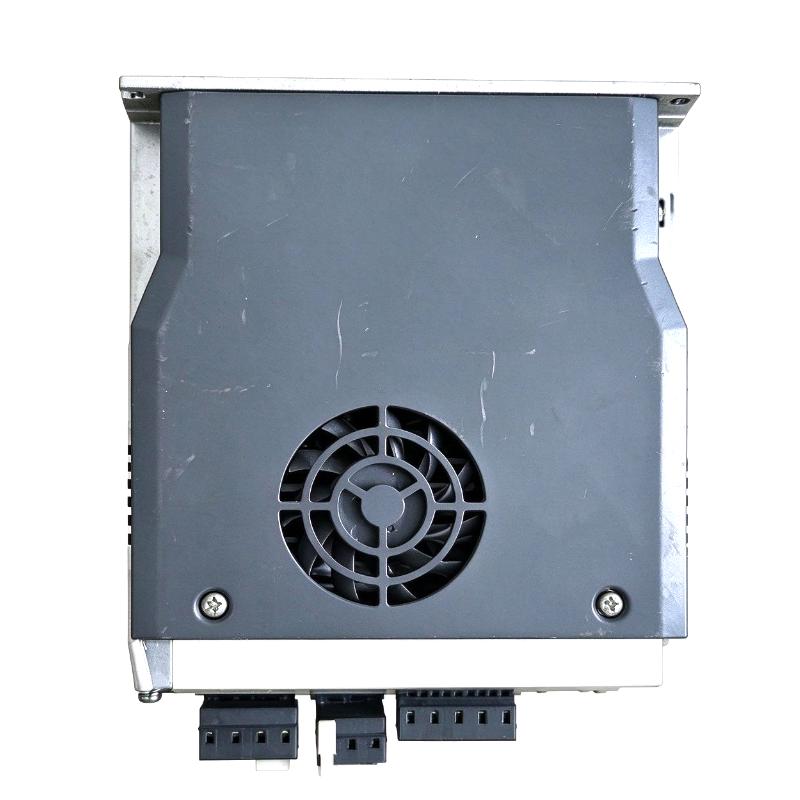
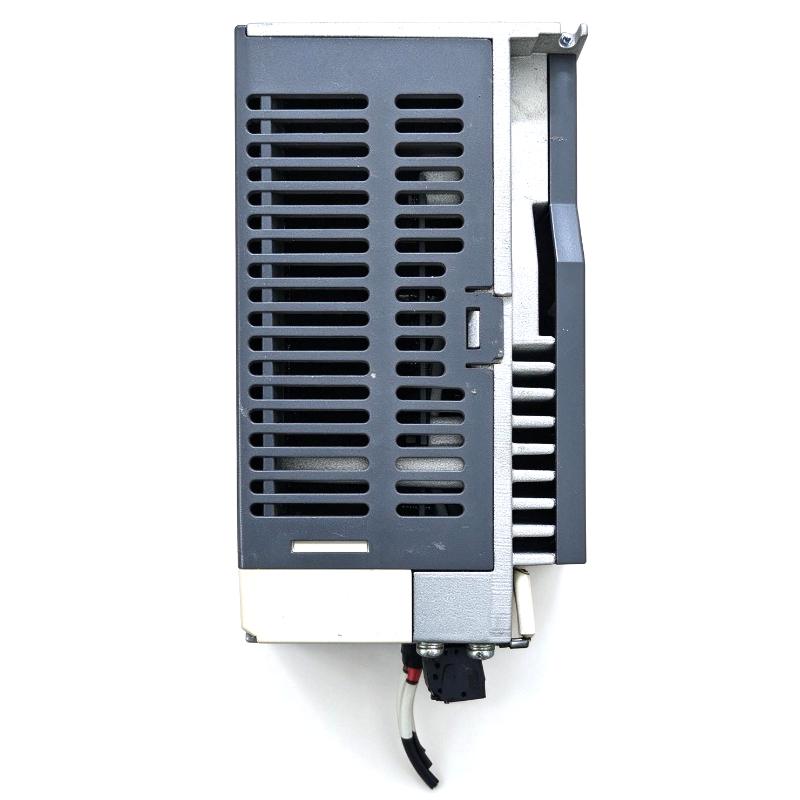
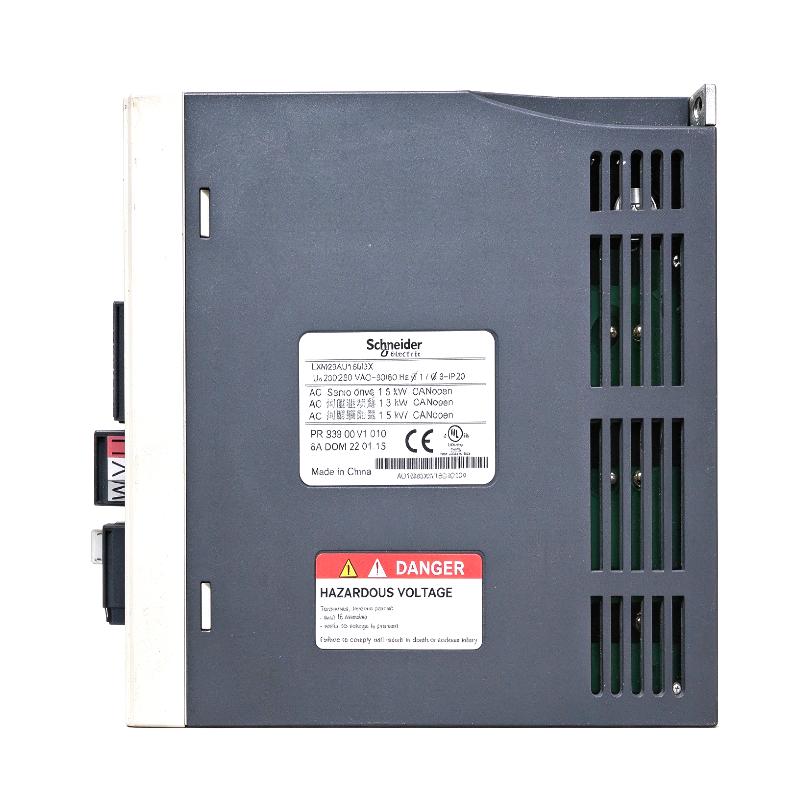
- Schneider
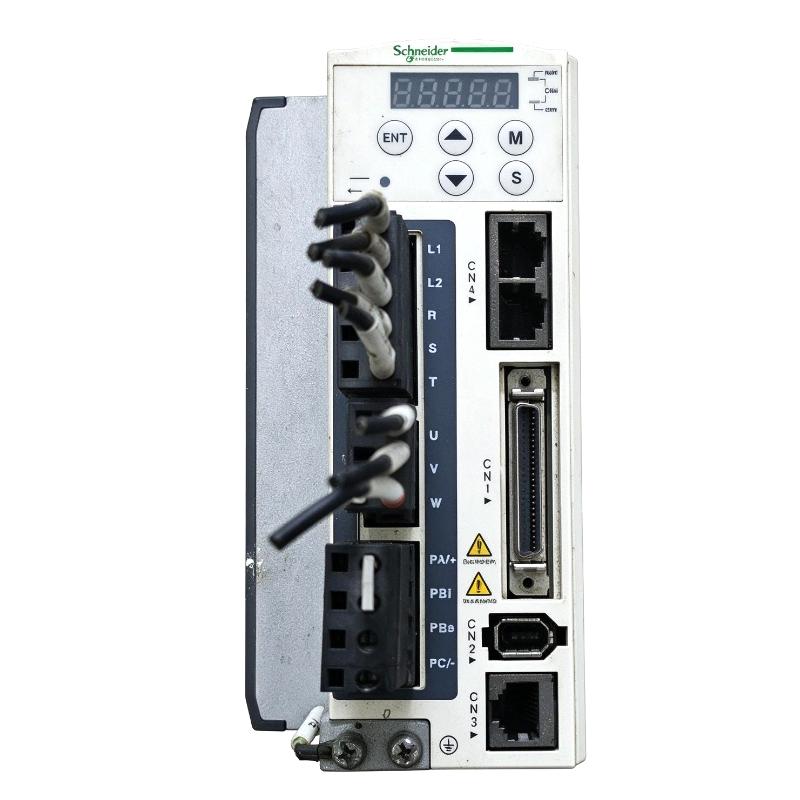
- LXM23AU15M3X
- Motion Servo Drive
- France
- 85 × 162 × 180 mm
- 2.2 kg
- Xiamen, China
- New & In Stock
- T/T, PayPal, Western Union
- 1 Year
- 1-3 Working Days
- DHL, UPS, TNT, FedEx and EMS.
- 24-Hour Service
- COO
- 6
Our advantage

Global Logistics
We have a 10-year logistics and express cooperation agreement, so our products can be shipped to any place in the world.

Brand new and original
Our products are imported in bulk from the place of origin. Because of the cooperative relationship, our products are all original and 100% new.

24-hour service
We provide 7*24 hours service to our customers. We will be there whenever you need us.

Price advantage
All our products are priced very favorably because we have our own warehouse and supply.
| Company Information | |||
| [email protected] | |||
| Mobile | +8615980777398 | ||
| +8615980777398 | |||
| 15980777398 |
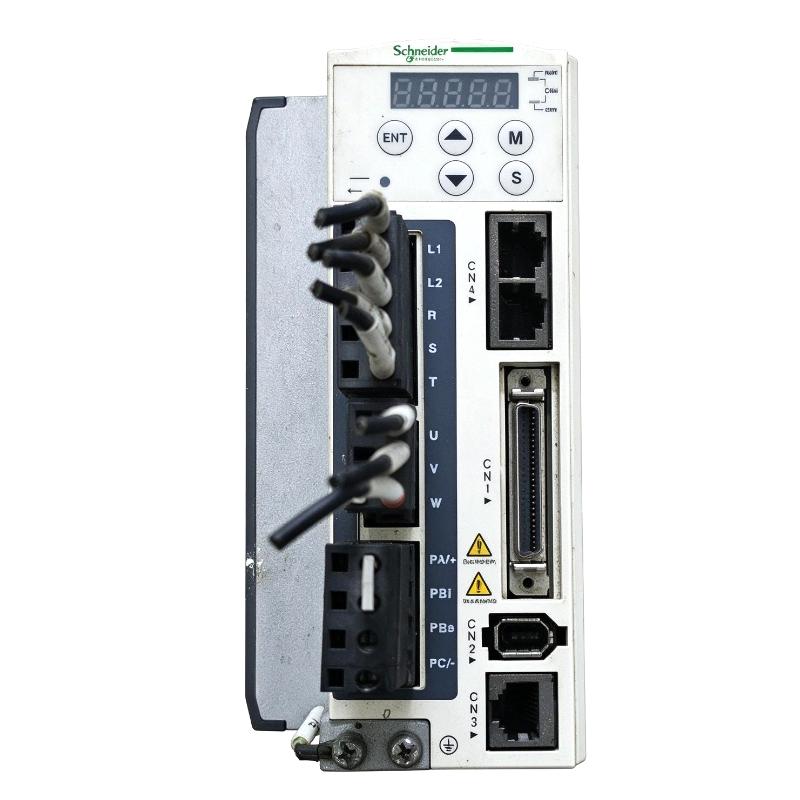
Product Overview
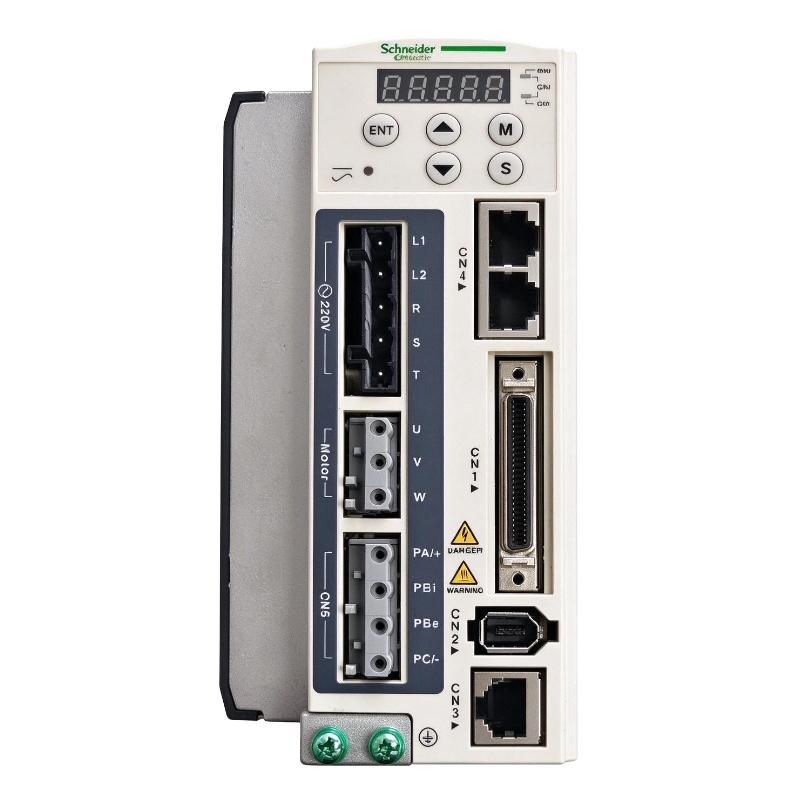
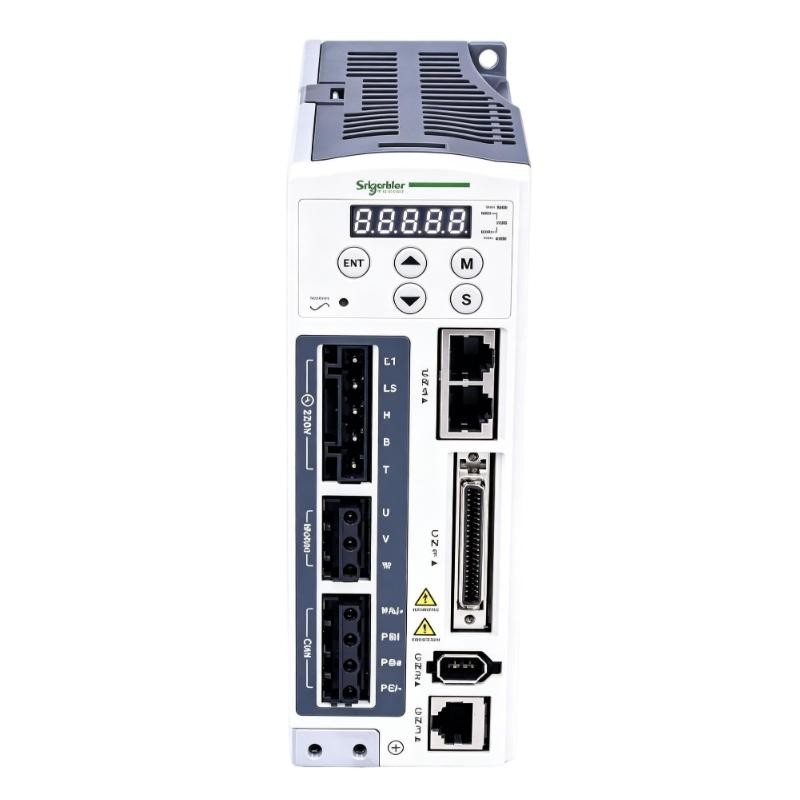
The Schneider LXM23AU15M3X Lexium 23 Motion Servo Drive is a 1.5 kW AC servo drive from the Lexium 23 Plus series. It regulates the operation of a compatible servo motor and supports position, speed and torque control for industrial machinery. The drive accepts single-phase or three-phase AC input within its specified voltage ranges and includes a CANopen communication interface for integration with compatible motion-control systems.
This model is suitable for machine axes that require controlled acceleration, repeatable positioning and coordinated movement. Applications include packaging equipment, automated assembly machinery, material-handling systems and production machines in which motor movement must follow defined operating sequences.
The LXM23AU15M3X includes programmable digital inputs and outputs, analog voltage inputs and a motor encoder feedback interface. These connections allow the drive to work with a PLC, motion controller and associated machine-control devices. The choice between network-based and pulse-based control depends on the controller architecture and the configured drive operating mode.
When selecting this drive for an existing installation, engineers should check the complete order number, motor electrical ratings, feedback interface, supply arrangement and control requirements. The 1.5 kW rating is an important sizing parameter, but the motor and drive must also be matched for current, operating conditions and the machine’s dynamic load.
Technical Specifications
| Parameter | Specification |
|---|---|
| Manufacturer | Schneider Electric |
| Model / Part Number | LXM23AU15M3X |
| Product Family | Lexium 23 Plus |
| Product Type | Motion Servo Drive |
| Device Short Name | LXM23 |
| Drive Category | AC Servo Drive |
| Rated Motor Power | 1.5 kW |
| Rated Supply Voltage | 220 V AC |
| Single-Phase Input Range | 200–255 V AC |
| Three-Phase Input Range | 170–255 V AC |
| Supply Frequency | 50/60 Hz |
| Continuous Output Current | 8.3 A |
| Control Modes | Position, speed and torque |
| Communication Interface | CANopen |
| Programmable Digital Inputs | 8 |
| Digital Outputs | 5 |
| Analog Inputs | 2 |
| Analog Input Range | -10 to +10 V |
| Motor Feedback | Encoder feedback |
| Pulse-Based Control | Supported |
| Braking Resistor Connection | Supported |
| Mounting Orientation | Vertical |
| Protection Rating | IP10 |
| Dimensions | 85 × 162 × 180 mm |
| Weight | 2.2 kg |
Product Features
- 1.5 kW servo control: Supports motor applications requiring regulated speed, torque and position.
- Flexible AC supply: Accepts the specified single-phase or three-phase input arrangements.
- CANopen communication: Exchanges supported commands and operating data with a compatible network controller.
- Multiple operating modes: Supports position, speed and torque regulation according to the configured application.
- Programmable digital inputs: Provides eight inputs for supported machine-control signals.
- Digital output signals: Offers five outputs for configured control and status functions.
- Analog command interfaces: Includes two voltage inputs for supported analog references.
- Encoder feedback: Uses motor feedback for closed-loop motion regulation.
- Braking resistor connection: Accommodates applications that require additional dissipation of regenerated energy.
- Cabinet mounting: Uses a vertical installation arrangement suitable for an appropriately ventilated industrial control cabinet.
Working Principle
The LXM23AU15M3X converts incoming AC electrical power into controlled output power for a compatible servo motor. It processes the selected motion command, evaluates the motor feedback and adjusts its output to achieve the requested movement.
In position-control mode, the drive follows a configured position command through a supported control interface. Speed control regulates the motor toward the requested rotational speed, while torque control regulates the motor’s torque-producing current according to the configured command and operating limits. The selected mode determines how the controller communicates the motion demand and how the drive responds.
Encoder feedback allows the drive to compare the motor’s actual response with the commanded movement. This is particularly useful in machinery where positioning errors can affect product spacing, assembly accuracy or synchronization with other axes.
Consider an automated packaging machine that uses a servo motor to advance a product feed mechanism. The machine controller issues a movement command, and the LXM23AU15M3X regulates the motor to follow the required motion profile. The controller then coordinates the feed movement with sealing, cutting or labeling operations.
During deceleration, a servo motor can return energy to the drive. If the amount of regenerated energy exceeds what the system can accommodate, an external braking resistor may be required. Its selection and installation must comply with the drive’s electrical specifications and the machine’s duty cycle.
Correct operation depends on the motor configuration, feedback wiring, command scaling and control parameters. A mismatch in these areas can cause positioning errors, unstable movement or drive faults.
Role in a Lexium 23 Servo Control System
The LXM23AU15M3X acts as the motor power-conversion and regulation stage between the machine controller and the servo motor. It receives motion commands, processes feedback and adjusts the motor output to execute the required axis movement.
Motion Controller / PLC → LXM23AU15M3X Servo Drive → Servo Motor → Mechanical Transmission → Machine Axis
| System Component | Function | Relationship to the Drive |
|---|---|---|
| LXM23AU15M3X Servo Drive | Regulates power supplied to the motor | Executes the configured servo-control functions |
| Motion Controller / PLC | Generates machine sequences and motion commands | Coordinates the servo axis with other equipment |
| Compatible Servo Motor | Converts electrical energy into mechanical motion | Executes the commanded movement |
| Motor Encoder | Supplies position and speed feedback | Provides feedback for closed-loop regulation |
| CANopen Network | Exchanges supported control and status data | Connects the drive to a compatible network master |
| Pulse Command Interface | Transfers configured positioning commands | Supports pulse-based control where applicable |
| Analog Command Source | Supplies voltage references | Provides supported analog commands |
| Motor Power Cable | Carries electrical power to the motor | Connects the drive output to the motor |
| Encoder Cable | Transfers feedback signals | Connects the motor encoder to the drive |
| Braking Resistor | Dissipates regenerated energy when required | Supports applications with demanding deceleration |
| Circuit Protection | Protects the incoming electrical supply | Provides protection according to the installation requirements |
| Operator HMI | Displays machine status and alarms | Presents information through the wider control system |
Industrial Applications
| Application | Typical Equipment | Role of the LXM23AU15M3X |
|---|---|---|
| Packaging Machinery | Product feeders, indexing mechanisms and sealing stations | Regulates repeated movements within production cycles |
| Automated Assembly | Positioning tables and assembly mechanisms | Supports controlled movement and repeatable positioning |
| Material Handling | Transfer systems and sorting equipment | Coordinates servo-driven movement with machine sequences |
| Labeling Equipment | Label feed and placement mechanisms | Controls movement according to programmed commands |
| Printing and Converting | Feed rollers and positioning axes | Regulates motor speed and position during processing |
| Inspection Equipment | Automated positioning stages | Moves inspection components through defined positions |
| OEM Machinery | Dedicated production equipment | Provides servo control for appropriately sized machine axes |
| General Industrial Automation | Servo-driven mechanisms | Supports configured position, speed or torque operation |
Installation and Maintenance
- Verify the drive reference: Confirm that LXM23AU15M3X matches the required 1.5 kW rating, supply arrangement and communication requirements.
- Check motor compatibility: Compare the motor’s rated power, voltage, current and encoder specifications with the drive requirements.
- Isolate the electrical supply: Follow the applicable lockout procedure and allow the specified DC-bus discharge time before handling power connections.
- Prepare the control cabinet: Mount the drive vertically and provide the required ventilation clearances for heat dissipation.
- Confirm the input supply: Verify the incoming voltage, phase arrangement, grounding and protective devices before energizing the equipment.
- Connect the motor power cable: Check the cable specification, terminal connections and protective earth connection.
- Inspect the encoder wiring: Verify the feedback cable, connector pinout and motor encoder compatibility before enabling the drive.
- Configure the command interface: Select the intended CANopen, pulse-based or other supported control arrangement and configure the relevant parameters.
- Set the motor parameters: Enter the correct motor data and review speed, torque, acceleration and deceleration limits.
- Evaluate braking requirements: Determine whether an external braking resistor is necessary and verify its electrical ratings before installation.
- Perform a controlled commissioning test: Check rotation direction, feedback response, communication and positioning behavior under controlled operating conditions.
- Record maintenance findings: Document the drive reference, motor configuration, parameter settings, active alarms and commissioning results.
Compatible System Components
| Component | Function | Compatibility Consideration |
|---|---|---|
| Compatible Lexium Servo Motor | Provides controlled rotary motion | Match motor ratings and encoder feedback to the drive |
| Motor Encoder | Supplies position and speed feedback | Verify the feedback interface and cable arrangement |
| Motion Controller / PLC | Generates axis commands | Confirm support for the selected control method |
| CANopen Master | Coordinates networked automation devices | Configure the network and supported communication functions |
| Motor Power Cable | Connects the drive to the motor | Match connector type and electrical ratings |
| Encoder Cable | Transfers motor feedback signals | Confirm pin assignments and feedback compatibility |
| Braking Resistor | Dissipates regenerated energy | Select according to the drive’s electrical specifications |
| Circuit Breaker / Protective Device | Protects the incoming supply | Follow the applicable installation and protection requirements |
| Control Cabinet | Houses the drive and associated equipment | Provide suitable ventilation and environmental protection |
| Operator HMI | Displays operating states and alarms | Integrate through the PLC or supervisory system |
Recommended Related Models
| Model / Product | Product Type | Relationship | Selection Consideration |
|---|---|---|---|
| Schneider LXM23AU04M3X | Lexium 23 Motion Servo Drive | Related drive with a 400 W rating | Check whether its output rating suits the motor and load |
| Schneider LXM23AU07M3X | Lexium 23 Motion Servo Drive | Related drive with a 750 W rating | Verify motor sizing and supply requirements |
| Schneider LXM23AU10M3X | Lexium 23 Motion Servo Drive | Related drive with a 1 kW rating | Compare output current and motor requirements |
| Schneider LXM23AU15M3X | Lexium 23 Motion Servo Drive | Requested 1.5 kW drive | Match the complete model reference and control configuration |
| Schneider LXM28AU15M3X | Lexium 28 Motion Servo Drive | Related 1.5 kW drive in the Lexium 28 family | Verify motor compatibility, wiring and commissioning requirements |
Key Advantages
- Supports servo motor applications rated at 1.5 kW.
- Offers position, speed and torque control.
- Provides CANopen communication for compatible automation systems.
- Includes programmable digital and analog interfaces.
- Supports encoder feedback and external braking-resistor integration.
Technical FAQs
How does the LXM23AU15M3X differ from the 1 kW LXM23AU10M3X?
The LXM23AU15M3X has a nominal power rating of 1.5 kW, compared with 1 kW for the LXM23AU10M3X. Selection should also account for continuous output current, motor ratings and the machine’s acceleration and load requirements.
Can this drive be connected to either a single-phase or three-phase supply?
Yes. Its specified input range is 200–255 V AC for single-phase operation and 170–255 V AC for three-phase operation. The actual connection must follow the drive’s wiring requirements and the installation’s electrical design.
What should be checked when configuring CANopen communication?
Verify the network wiring, node configuration, communication settings and controller support. The drive’s communication parameters must match the CANopen master configuration before the machine is commissioned.
How can regenerated energy affect the drive during repeated deceleration?
Repeated deceleration can return energy from the motor to the drive. If the application exceeds the system’s energy-handling capability, a suitable braking resistor may be necessary. Check the deceleration profile and resistor requirements against the drive specifications.