

ProductPRODUCT
Featured products
Contact Us
- Schneider
- HMISTO735
- Touch Panel Screen
- France
- 90.4 × 124.9 × 38.8 mm
- 0.22 kg
- Xiamen, China
- New & In Stock
- T/T, PayPal, Western Union
- 1 Year
- 1-3 Working Days
- DHL, UPS, TNT, FedEx and EMS.
- 24-Hour Service
- COO
- 6
Our advantage

Global Logistics
We have a 10-year logistics and express cooperation agreement, so our products can be shipped to any place in the world.

Brand new and original
Our products are imported in bulk from the place of origin. Because of the cooperative relationship, our products are all original and 100% new.

24-hour service
We provide 7*24 hours service to our customers. We will be there whenever you need us.

Price advantage
All our products are priced very favorably because we have our own warehouse and supply.
| Company Information | |||
| [email protected] | |||
| Mobile | +8615980777398 | ||
| +8615980777398 | |||
| 15980777398 |
Product Overview
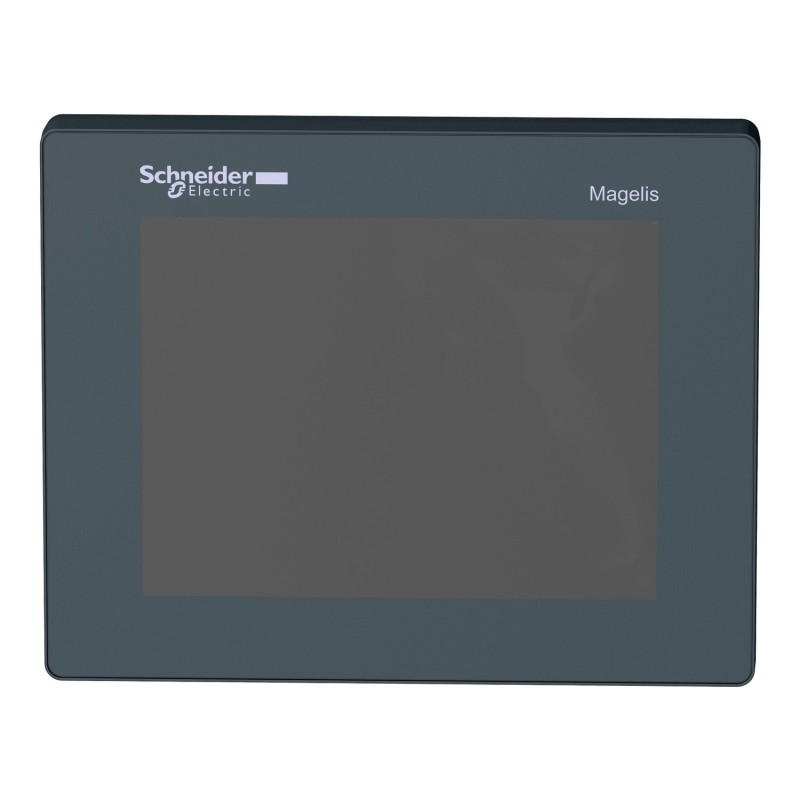
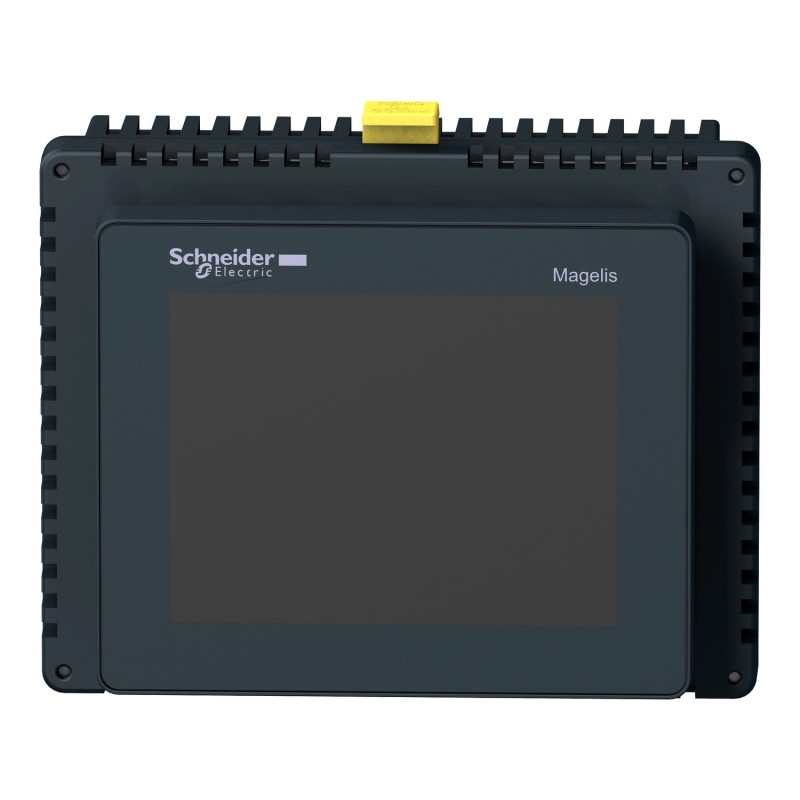
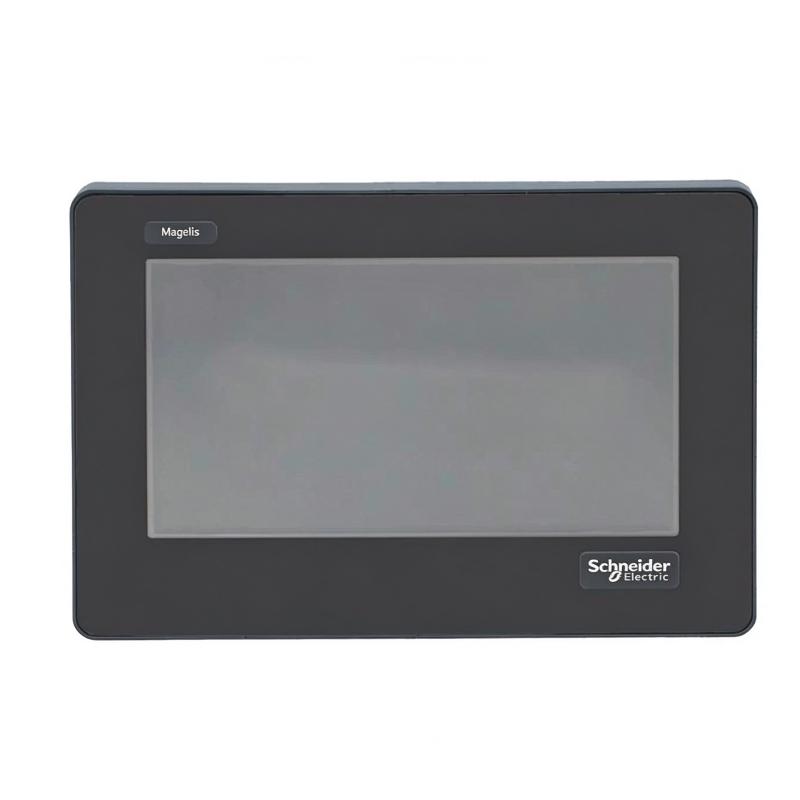
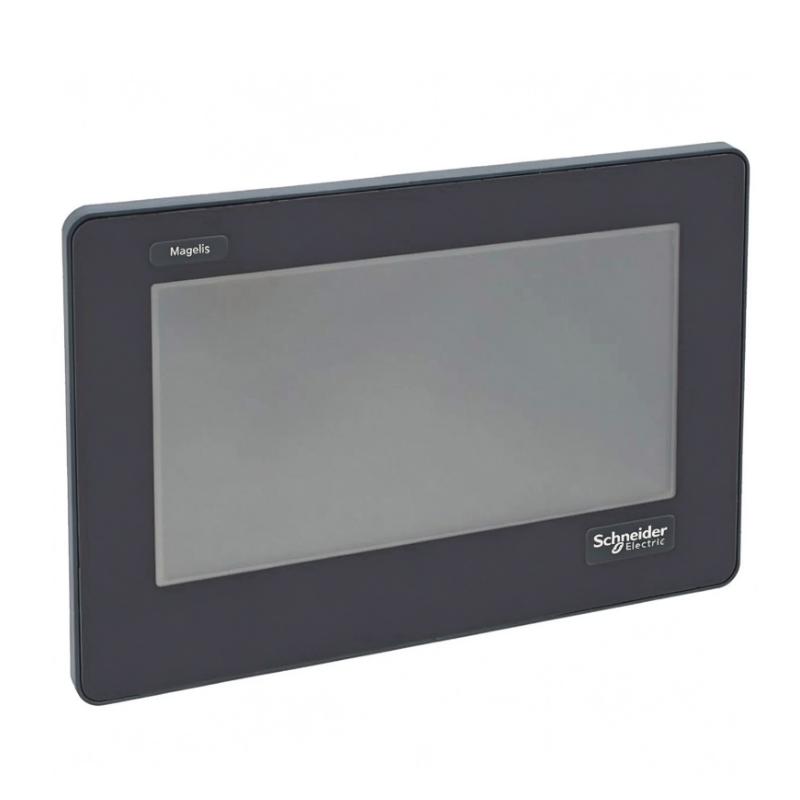
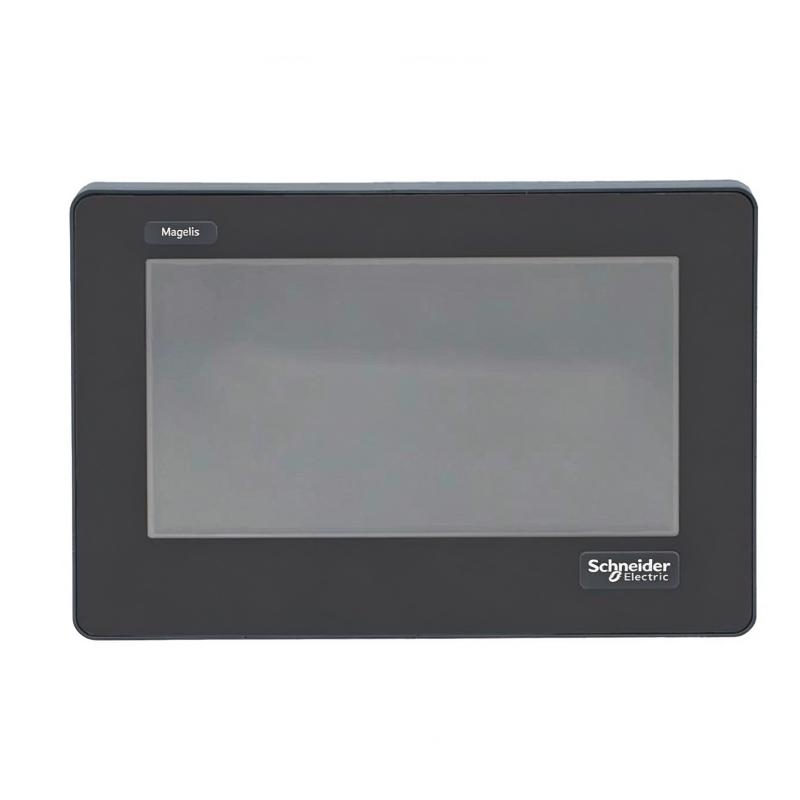
The Schneider HMISTO735 Harmony STO & STU Touch Panel Screen is a compact human-machine interface (HMI) terminal with a 4.3-inch color touchscreen and an integrated Ethernet interface. It is intended for machine-level visualization, allowing operators to monitor process values, acknowledge alarms, enter settings and interact with a PLC-based control system through a locally mounted panel.
The HMISTO735 differs from the HMISTO715 primarily in its communication interface. The HMISTO735 includes Ethernet connectivity, supporting network-based communication with compatible controllers, whereas the HMISTO715 uses a serial interface. This distinction is important when selecting a replacement terminal or developing a new machine control panel.
On a packaging line, for example, the HMISTO735 can display conveyor status, production counts, alarm messages and operating parameters while communicating with a compatible PLC over Ethernet. An operator can navigate between configured screens, check machine conditions and enter permitted settings without accessing the controller program directly.
The terminal uses EcoStruxure Operator Terminal Expert for application development. Machine builders can configure graphical screens, data displays, operator controls and alarm pages according to the connected controller and the required operating sequence. Its compact display makes it suitable for equipment where panel space is limited but a dedicated visual interface is still necessary.
Technical Specifications
| Parameter | Specification |
|---|---|
| Manufacturer | Schneider Electric |
| Model / Part Number | HMISTO735 |
| Product Family | Harmony STO & STU |
| Product Type | Touch Panel Screen |
| HMI Category | Human-Machine Interface |
| Display Size | 4.3 inch |
| Display Type | Color TFT LCD |
| Display Resolution | 480 × 272 pixels |
| Display Colors | 65,536 colors |
| Touchscreen Type | Analog resistive touchscreen |
| Software Designation | EcoStruxure Operator Terminal Expert |
| Operating System | Harmony |
| Rated Supply Voltage | 12–24 V DC |
| Power Consumption | 8.1 W |
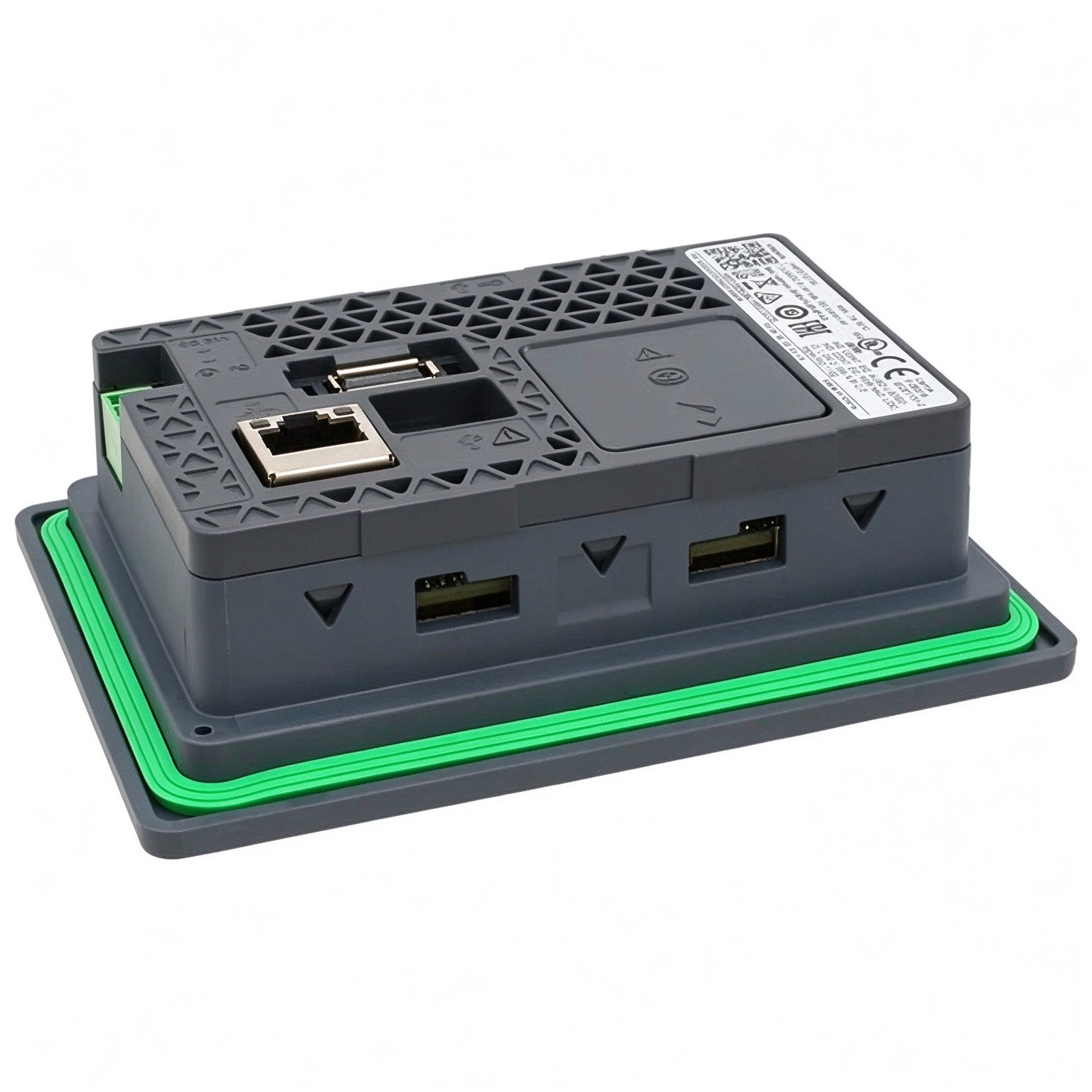
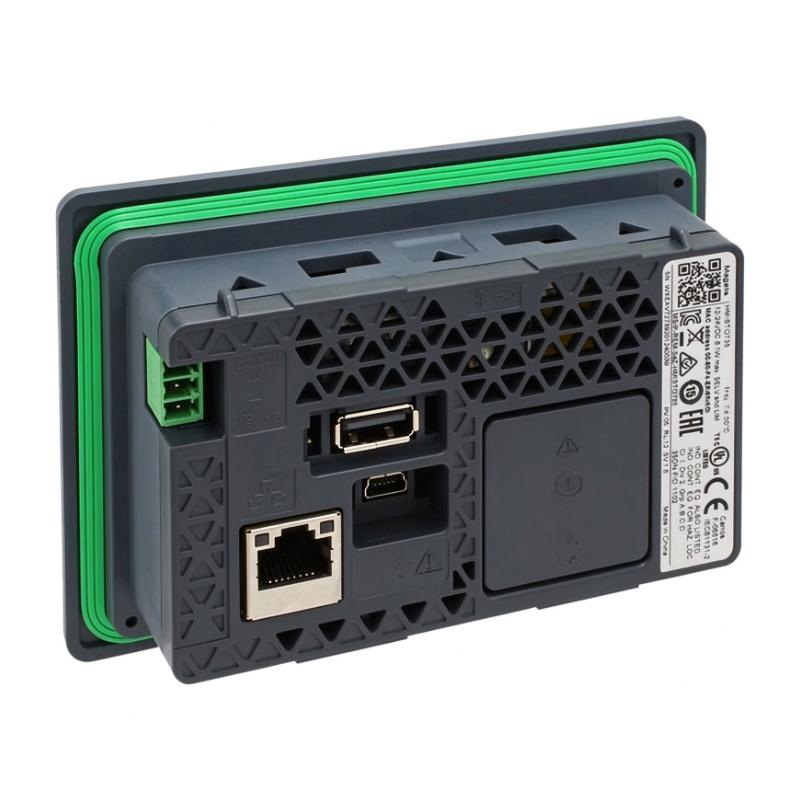
| Ethernet Interface | 10BASE-T / 100BASE-TX |
| Ethernet Connector | RJ45 |
| USB Interfaces | 1 × USB Type-A; 1 × USB Mini-B |
| Supported Protocols | Modbus TCP, Modbus and supported third-party protocols |
| Application Memory | 26 MB |
| Backup Memory | 512 KB |
| Backlight Lifespan | 50,000 hours |
| Operating Temperature | 0 to 50°C |
| Protection Rating | IP65 / NEMA 4X for the applicable front-panel installation |
| Dimensions | 90.4 × 124.9 × 38.8 mm |
| Weight | 0.22 kg |
Product Features
- 4.3-inch color display: Presents machine status, process values, alarm messages and graphical operator controls.
- Ethernet connectivity: Supports network communication with compatible PLCs and other supported automation equipment.
- Modbus TCP support: Allows configured data exchange with compatible devices over Ethernet.
- EcoStruxure Operator Terminal Expert: Provides the development environment for creating and maintaining HMI applications.
- USB connectivity: Supports applicable engineering, data-transfer and peripheral functions.
- Resistive touchscreen: Accepts operator input through configured screen objects and controls.
- Compact panel integration: Suits machine interfaces where available mounting space is restricted.
- Multilingual display support: Supports a range of character sets for applications requiring different operator languages.
- Front-panel protection: Supports installation in appropriate industrial environments when the specified mounting and sealing requirements are met.
Working Principle
The HMISTO735 functions as the visualization and operator-input layer of a machine control system. Its application defines the screens, graphical objects, alarm displays and data fields that operators use during normal operation.
Through its Ethernet interface, the terminal exchanges data with a compatible PLC or controller using the configured communication protocol. The HMI reads variables for display and sends permitted operator inputs to the controller. The controller then executes the relevant machine logic and determines how the equipment responds.
Consider a conveyor system with several operating modes. The HMISTO735 can show whether the conveyor is running, stopped or waiting for an upstream machine. If the PLC detects a motor overload or a sensor fault, the corresponding alarm can appear on the HMI. An operator may acknowledge the message or select an authorized operating command, while the controller remains responsible for executing the required interlocks.
Communication depends on correct network addressing, protocol configuration and variable mapping. A terminal may power up and display its application correctly while showing stale or unavailable process data if the Ethernet connection or controller communication settings are incorrect.
The HMISTO735 does not replace the PLC’s control logic or the machine’s safety system. It provides the interface through which operators observe and interact with the functions implemented by the underlying automation equipment.
Role in a Harmony STO Machine Control System
The HMISTO735 provides the local operator interface and communicates with the machine controller over Ethernet. Its role is to present operating information and transmit permitted commands while the PLC manages the actual machine sequence.
Operator Input → HMISTO735 HMI Application → Ethernet / Modbus TCP → PLC or Controller → Machine Equipment
| System Component | Function | Relationship to the HMISTO735 |
|---|---|---|
| HMISTO735 Touch Panel Screen | Displays operating information and accepts operator input | Provides the local visualization and control interface |
| PLC or Machine Controller | Executes logic, sequencing and interlocks | Exchanges process variables and commands with the HMI |
| Ethernet Network | Carries data between connected automation devices | Provides the HMI’s network communication path |
| Modbus TCP | Defines data exchange over Ethernet | Supports communication when configured at both ends |
| EcoStruxure Operator Terminal Expert | Develops and configures the HMI application | Defines screen layouts, variables and operator functions |
| Ethernet Switch | Connects devices within the machine network | May connect the HMI and PLC where the network architecture requires it |
| Sensors and Transmitters | Measure machine or process conditions | Supply data to the PLC for processing and display |
| Motor Drives | Control motor operation | Receive commands through the machine control architecture |
| Alarm Logic | Detects and reports abnormal operating conditions | Supplies alarm information for HMI display |
| USB Engineering Connection | Supports applicable application-transfer tasks | Used for supported engineering operations |
| Panel Power Supply | Provides DC power to the HMI | Supplies the terminal within its rated voltage range |
Industrial Applications
| Application | Typical Equipment | Role of the HMISTO735 |
|---|---|---|
| Packaging Machinery | Filling, sealing and labeling machines | Displays production status, alarms and operating parameters |
| Assembly Automation | Automated assembly stations | Provides operator prompts and machine-state visualization |
| Material Handling | Conveyors and transfer systems | Displays equipment status and permitted operating commands |
| Food Processing | Compact preparation and packaging equipment | Presents process information and operator instructions |
| Machine Tools | Auxiliary machinery and automated workstations | Provides local status monitoring and operator input |
| Test Equipment | Automated inspection and functional-test stations | Displays test progress, results and alarm conditions |
| Industrial Utilities | Pumping and ventilation systems | Presents operating values and equipment status |
| OEM Machinery | Purpose-built equipment using compatible PLCs | Provides a dedicated Ethernet-connected operator interface |
Installation and Maintenance
- Verify the model number: Confirm that HMISTO735 is required and that the application needs Ethernet communication rather than the serial interface used by related models.
- Check the panel cutout: Match the mounting opening, panel thickness and fastening arrangement to the specified installation requirements.
- Confirm the power supply: Provide a compatible 12–24 V DC supply and verify polarity before energizing the terminal.
- Prepare the Ethernet connection: Check the cable, connector and network port for correct termination and physical condition.
- Configure network settings: Set the HMI’s IP address and other required network parameters to match the machine network plan.
- Verify the communication protocol: Confirm that the PLC and HMI use compatible communication settings and that the required Modbus TCP or other supported driver is configured.
- Check application variables: Ensure that the HMI’s addresses, data types and variable assignments match the controller program.
- Inspect USB connections: Check the USB ports when using supported application-transfer or peripheral functions.
- Secure the terminal: Install the unit using the specified mounting arrangement and maintain the required front-panel sealing.
- Transfer and test the application: Load the approved project using a supported method, then check screen navigation and process-data updates.
- Test operator functions: Verify configured buttons, numerical entries, alarm acknowledgments and other permitted controls under controlled conditions.
- Record maintenance findings: Document the model, application revision, network settings and any changes made during servicing.
Compatible System Components
| Component | Function | Compatibility Consideration |
|---|---|---|
| Schneider Electric PLC | Executes machine logic and processes I/O | Verify Ethernet communication and protocol support |
| Modbus TCP-Compatible Controller | Exchanges process data with the HMI | Match network configuration and data mapping |
| Industrial Ethernet Switch | Connects the HMI and other network devices | Select according to the network layout and environmental requirements |
| Ethernet Cable | Carries network data | Use suitable cabling and connectors for the installation |
| EcoStruxure Operator Terminal Expert | Develops the HMI project | Use a compatible software version and target configuration |
| USB Host Peripheral | Supports applicable USB functions | Confirm peripheral and application compatibility |
| USB Engineering Connection | Supports application-transfer tasks | Follow the terminal’s supported transfer procedure |
| Machine Sensors | Supply process measurements and status signals | Values are normally processed by the PLC before HMI display |
| Motor Drives | Control motor speed and operation | Integrate through the PLC or a supported network arrangement |
| Panel Power Supply | Provides DC power to the terminal | Match the specified voltage and electrical requirements |
Recommended Related Models
| Model / Product | Product Type | Relationship | Selection Consideration |
|---|---|---|---|
| Schneider HMISTO705 | Harmony STO & STU Touch Panel Screen | Related 4.3-inch model with a serial communication configuration | Consider when the controller requires the corresponding serial interface |
| Schneider HMISTO715 | Harmony STO & STU Touch Panel Screen | Related 4.3-inch model with RS-232C/RS-485 communication | Choose according to the existing controller interface |
| Schneider HMISTO735 | Harmony STO & STU Touch Panel Screen | Requested Ethernet-equipped model | Match the Ethernet interface and application requirements |
| Schneider HMISTU655 | Harmony STO & STU Touch Panel Screen | Related compact HMI model | Compare display, mounting and communication requirements |
| Schneider HMISTU855 | Harmony STO & STU Touch Panel Screen | Related STU model with a larger display | Consider when the application requires a different display size and interface configuration |
Key Advantages
- Provides a compact touchscreen interface for industrial machines.
- Supports Ethernet communication with compatible controllers.
- Enables Modbus TCP-based visualization and operator interaction.
- Uses EcoStruxure Operator Terminal Expert for HMI application development.
- Displays process values, operating states and alarms through a configured project.
Technical FAQs
What is the main difference between the HMISTO735 and HMISTO715?
The HMISTO735 has an Ethernet interface supporting 10BASE-T/100BASE-TX, while the HMISTO715 uses RS-232C/RS-485 serial communication. The correct model depends on the controller’s available interface and the machine’s network architecture.
Can the HMISTO735 communicate with a PLC using Modbus TCP?
Yes, the HMISTO735 supports Modbus TCP. The PLC must support the protocol, and the HMI’s network settings, communication driver and variable mapping must be configured correctly.
Why might the HMISTO735 show its application but fail to display current process values?
The HMI application can run independently of a successful PLC connection. Check the Ethernet cable, network addressing, controller availability, protocol settings and data addresses used by the application.
Does the HMISTO735 provide machine safety functions?
The terminal is an operator interface, not a substitute for safety-rated control equipment. Emergency stops, safety interlocks and other protective functions must be implemented through the appropriate safety architecture, with the HMI used for visualization and permitted operator commands.