

ProductPRODUCT
Featured products
Contact Us
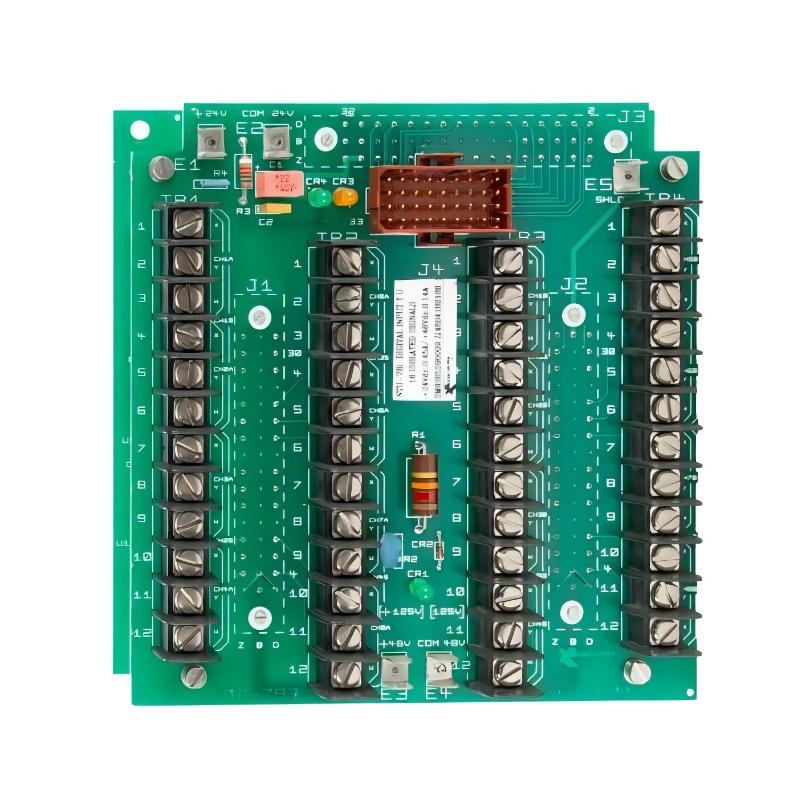
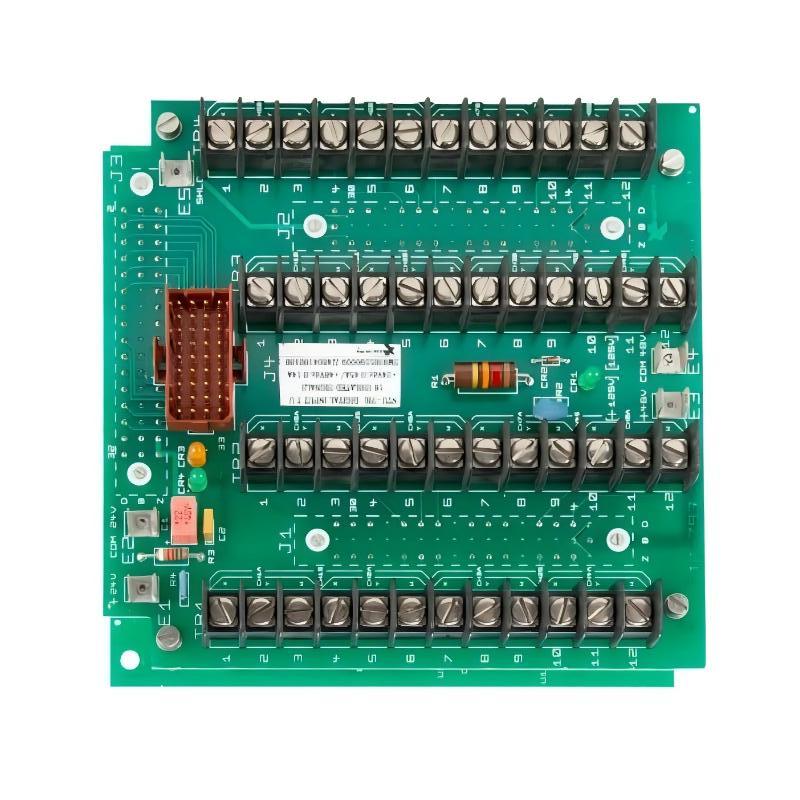
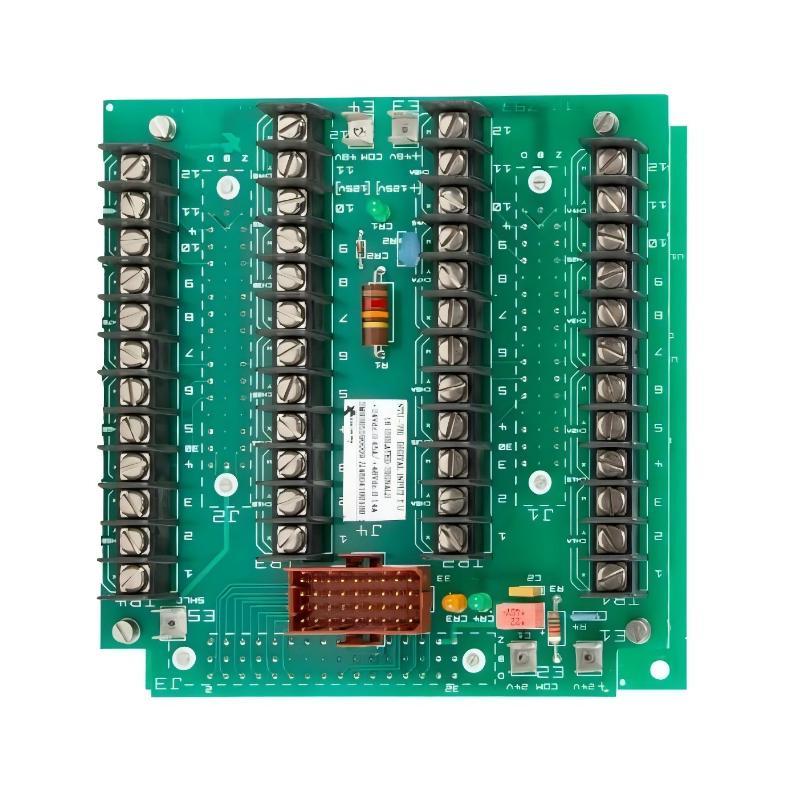
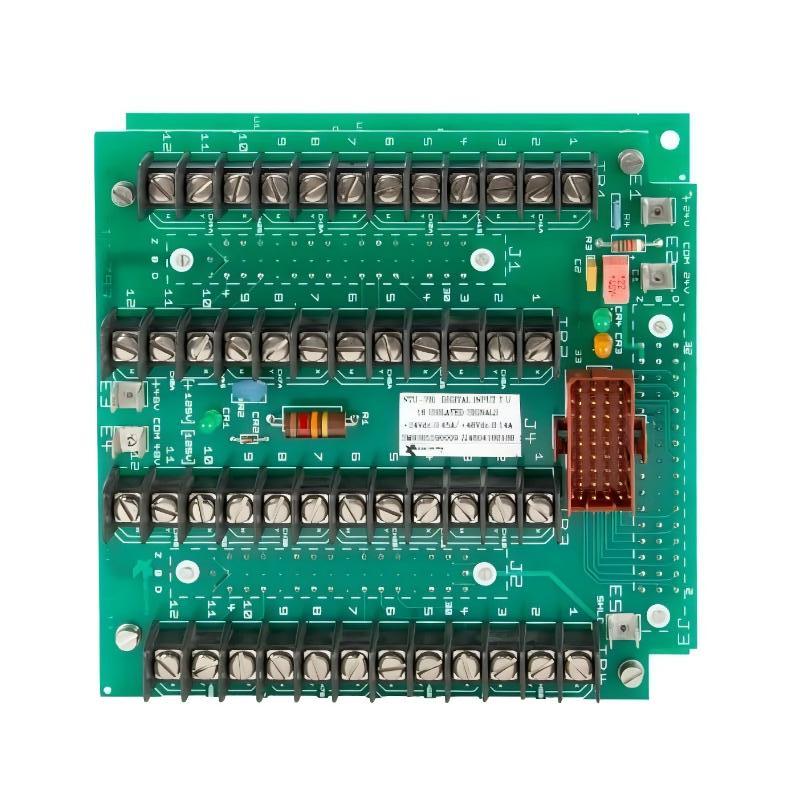
- ABB Bailey
- NTU-7I0
- Digital Input Module
- Sweden (SE)
- 185 × 40 × 150 mm
- 0.82 kg
- Xiamen, China
- New & In Stock
- T/T, PayPal, Western Union
- 1 Year
- 1-3 Working Days
- DHL, UPS, TNT, FedEx and EMS.
- 24-Hour Service
- COO
- 5
Our advantage

Global Logistics
We have a 10-year logistics and express cooperation agreement, so our products can be shipped to any place in the world.

Brand new and original
Our products are imported in bulk from the place of origin. Because of the cooperative relationship, our products are all original and 100% new.

24-hour service
We provide 7*24 hours service to our customers. We will be there whenever you need us.

Price advantage
All our products are priced very favorably because we have our own warehouse and supply.
| Company Information | |||
| [email protected] | |||
| Mobile | +8615980777398 | ||
| +8615980777398 | |||
| 15980777398 |
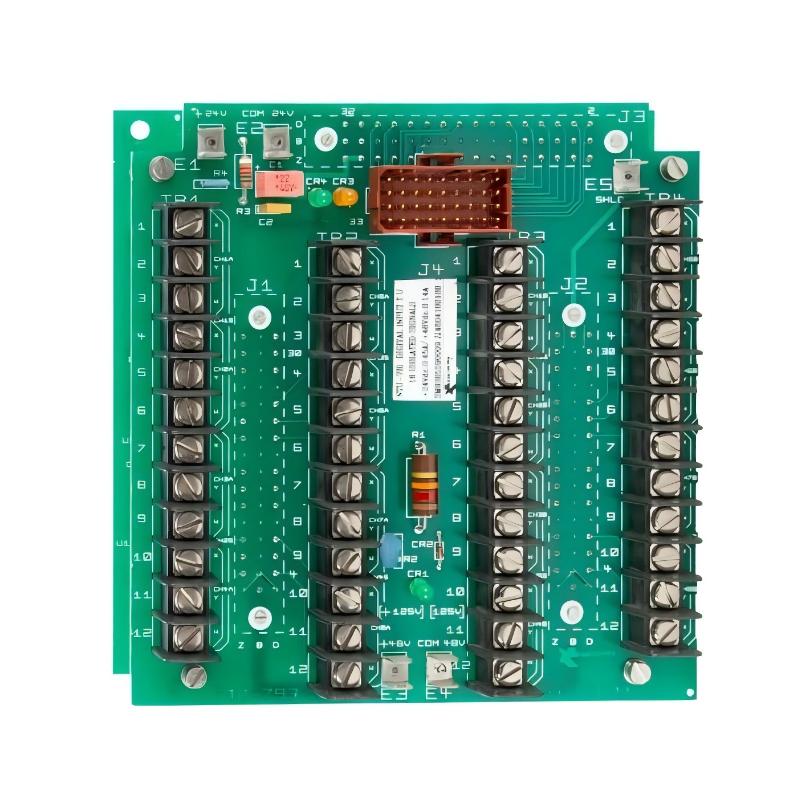
Product Overview
The ABB Bailey NTU-7I0 INFI 90 Digital Input Module acquires discrete field signals for use in compatible Bailey INFI 90 and Network 90 control systems. It is intended for applications where the control system needs to distinguish between defined field states, such as a switch being open or closed, a piece of equipment being in operation, or an alarm contact changing state.
The NTU-7I0 supports 16 isolated digital input signals and is associated with 24/48 V DC input applications. These inputs allow a control system to monitor multiple equipment conditions without treating every field signal as an analog measurement. For example, a process plant may use discrete inputs to monitor pump running feedback, motor protection contacts, valve limit switches and equipment fault indications. The controller can then use the acquired states in interlocks, operating sequences and alarm processing.
Within an INFI 90 installation, the input module forms part of the signal path between field devices and the control logic. The field wiring and associated termination hardware must match the module’s electrical requirements and the installed system configuration. Correct channel assignment is also important when replacing an existing module, because each input may be associated with a specific equipment status or protective interlock.
The NTU-7I0 is particularly relevant to maintenance and retrofit work on established Bailey control systems. Replacing a module requires more than matching the part number: technicians should verify the input voltage, signal isolation, termination arrangement and existing channel assignments before returning the control system to service.
Technical Specifications
| Parameter | Specification |
|---|---|
| Manufacturer | ABB Bailey |
| Model / Part Number | NTU-7I0 |
| Product Family | INFI 90 / Network 90 |
| Product Type | Digital Input Module |
| Input Type | Digital / Discrete |
| Number of Input Signals | 16 isolated signals |
| Input Voltage | 24/48 V DC |
| Primary Function | Acquisition of discrete field signals |
| System Application | Industrial process control and automation |
| Signal Examples | Equipment status, switch contacts and alarm indications |
| Dimensions | 185 × 40 × 150 mm |
| Weight | 0.82 kg |
Product Features
- 16 isolated input signals: Supports the acquisition of multiple discrete field states within the same control system.
- 24/48 V DC input application: Matches the specified DC input arrangement for compatible installations.
- INFI 90 system integration: Supports field signal acquisition within established Bailey control architectures.
- Discrete-state monitoring: Handles on/off conditions rather than continuous process measurements.
- Equipment status acquisition: Can be used for operating feedback, switch states and alarm contact monitoring when the field devices match the input requirements.
- Isolation between input signals: Helps separate the individual input circuits according to the module’s specified isolation arrangement.
- Maintenance identification: The NTU-7I0 part number supports replacement planning and channel configuration records.
- Retrofit suitability: Can be considered for existing INFI 90 installations when the electrical and hardware configuration is compatible.
Working Principle
The NTU-7I0 receives discrete electrical signals from field devices and makes their states available to the associated control system. Each input represents a defined condition rather than a continuously varying quantity. The control application can use these states to determine whether equipment is running, a contact has changed position or an alarm condition has been indicated.
Consider a pump station in which the controller must confirm that a motor has started before opening a downstream valve. A motor auxiliary contact can provide the running-status signal, while a separate contact reports a protection trip. The digital input arrangement acquires these conditions so the configured control logic can distinguish normal operation from a fault or an incomplete startup sequence.
The module’s isolated input channels are relevant when multiple field circuits must be acquired within the same installation. However, the actual isolation characteristics, input thresholds and wiring requirements must follow the module’s applicable electrical specifications. Isolation should not be interpreted as permission to connect arbitrary voltage levels.
The NTU-7I0 does not itself perform the complete process sequence or determine every alarm response. The control logic interprets the input states and decides how the system should respond. Reliable operation therefore depends on correct field wiring, suitable input signal levels, accurate channel mapping and appropriate controller configuration.
Role in an ABB Bailey INFI 90 Control Architecture
The NTU-7I0 occupies the field signal acquisition layer of the control system. It receives discrete states from connected equipment and makes those states available to the associated control logic, where they can be used for monitoring, sequencing and interlocking.
Field Contacts and Status Signals → NTU-7I0 Digital Input Module → INFI 90 Control System → Configured Logic, Alarms and Interlocks
| System Component | Function | Relationship to the NTU-7I0 |
|---|---|---|
| Field Switches and Contacts | Generate discrete electrical states | Supply the signals acquired by the module |
| Motor Auxiliary Contacts | Indicate motor operating or contactor states | Provide equipment status feedback |
| Alarm and Trip Contacts | Indicate abnormal conditions | Supply discrete alarm or protection status signals |
| Field Termination Hardware | Provides the field wiring interface | Connects field circuits to the designated input channels |
| NTU-7I0 Digital Input Module | Acquires 16 isolated digital input signals | Converts field conditions into input states for the control system |
| INFI 90 Controller | Executes configured control logic | Uses acquired states in sequences and interlocks |
| Operator Interface | Presents equipment status and alarms | Displays information made available by the control application |
| Output Modules | Operate designated control devices | Execute commands generated by the control logic |
| Control System Power Supply | Supplies the required electrical power to the system hardware | Supports operation of the installed control equipment |
Industrial Applications
| Application | Typical Equipment | Role of the NTU-7I0 |
|---|---|---|
| Pump and Motor Monitoring | Pumps, motors and motor starters | Acquires running feedback, trip contacts and equipment status |
| Power Generation | Auxiliary equipment and plant control systems | Monitors discrete equipment conditions and alarm contacts |
| Oil and Gas Processing | Process skids, pumps and compressors | Collects operating states used by configured control logic |
| Chemical Processing | Mixing equipment, transfer pumps and process valves | Acquires switch and alarm states for process sequencing |
| Water and Wastewater Treatment | Pump stations, valve actuators and treatment equipment | Monitors discrete operating and fault conditions |
| Manufacturing Plants | Conveyors, motors and machine interlocks | Provides equipment state information to the control system |
| Utility Systems | Fans, cooling equipment and auxiliary machinery | Acquires run, stop and fault indications |
| INFI 90 System Maintenance | Existing Bailey control cabinets | Supports replacement of a matching digital input module |
Installation and Maintenance
- Verify the module reference: Confirm that NTU-7I0 matches the installed system’s required digital input module.
- Check the input voltage: Verify that the field signals conform to the specified 24/48 V DC input application before connecting the wiring.
- Review the channel assignments: Record the existing channel-to-device mapping so each field signal remains associated with the correct control point.
- Isolate the equipment: Follow the plant’s approved electrical isolation and process safety procedures before removing or installing the module.
- Inspect the mounting position: Check the designated module position and associated rack or mounting hardware for damage or contamination.
- Examine the field wiring: Look for loose terminals, damaged insulation, incorrect conductor identification and signs of overheating.
- Check the termination arrangement: Confirm that the installed termination hardware and wiring interface match the system configuration.
- Verify input polarity and signal levels: Check the electrical connections against the applicable wiring documentation before energizing the circuit.
- Install the replacement module: Fit the module into its designated position using the approved installation procedure and without forcing the connectors.
- Confirm the control configuration: Verify that the controller configuration and channel assignments correspond to the connected field devices.
- Perform functional testing: Test representative input signals and confirm that the correct states appear in the control system before resuming normal operation.
- Record the maintenance results: Document the replacement part number, channel checks, wiring corrections and functional test results.
Compatible System Components
| Component | Function | Compatibility Consideration |
|---|---|---|
| ABB Bailey INFI 90 Controller | Executes configured process control logic | Verify compatibility with the installed system generation and I/O configuration |
| ABB Bailey Network 90 System Hardware | Provides the associated control system architecture | Confirm the intended module application and mounting arrangement |
| Field Termination Assembly | Connects external field wiring to the input channels | Match the terminal assignments and electrical interface to the NTU-7I0 configuration |
| 24/48 V DC Field Circuits | Supply the discrete input signals | Ensure that signal levels meet the module’s specified input requirements |
| Industrial Limit Switches | Indicate mechanical position or travel limits | Verify contact type, voltage and channel wiring |
| Motor Auxiliary Contacts | Report motor or contactor status | Confirm the signal state and field circuit arrangement |
| Alarm and Trip Contacts | Provide discrete fault indications | Match the contact wiring to the configured input channels |
| INFI 90 Power Supply | Supplies power to the associated control hardware | Verify system power requirements and the installed rack configuration |
| Digital Output Module | Operates designated field devices | Serves the output function, separate from digital input acquisition |
Recommended Related Models
| Model / Product | Product Type | Relationship | Selection Consideration |
|---|---|---|---|
| ABB Bailey NTU-7I4 | Digital Input Termination Module | Related digital input hardware in the Bailey INFI 90 family | Verify the termination function and field wiring interface; it is not automatically a substitute for NTU-7I0 |
| ABB Bailey NTU-7I6/24S1 | Digital Input Module | Related digital input hardware for a specific input configuration | Compare the complete model designation and electrical requirements |
| ABB Bailey NTU-7I6/48S1 | Digital Input Module Termination Unit | Related digital input termination hardware | Confirm whether the application requires an input module or a termination unit |
| ABB Bailey IMDSI02 | Digital Input Slave Module | Related digital input product within the broader INFI 90 family | Verify system architecture, mounting and interface compatibility |
| ABB Bailey IMDSI12 | Universal Digital Input Slave Module | Alternative digital input hardware within the INFI 90 family | Compare supported signal types and the required system configuration |
| ABB Bailey IMDSI22 | Digital Input Module | Related digital input hardware | Confirm the module’s electrical characteristics and installation requirements |
Key Advantages
- Acquires 16 isolated discrete input signals.
- Supports specified 24/48 V DC input applications.
- Integrates with compatible Bailey INFI 90 and Network 90 control systems.
- Supports equipment status, alarm and interlock signal acquisition.
- Provides a defined part reference for maintenance and replacement planning.
Technical FAQs
What types of signals can the NTU-7I0 monitor?
The NTU-7I0 is intended for discrete field signals, such as switch states, motor status contacts and alarm indications. Each connected circuit must meet the module’s specified electrical input requirements.
How should the 16 isolated input channels be assigned?
Assign each channel according to the plant’s I/O schedule and control configuration. Record the associated field device, signal description and expected normal state so that maintenance or replacement does not introduce incorrect status indications.
What should be checked if an input remains in the wrong state?
Inspect the field contact, wiring continuity, polarity, input voltage and termination connections. If the field signal is correct but the controller still reports an incorrect state, verify the channel mapping and the associated control configuration.
Can the NTU-7I0 be replaced with another Bailey digital input module?
Not solely because both products are digital input modules. Different Bailey modules can have different electrical characteristics, termination interfaces and system requirements. Confirm the complete part number, input specification and INFI 90 hardware configuration before selecting a substitute.