

ProductPRODUCT
Featured products
Contact Us
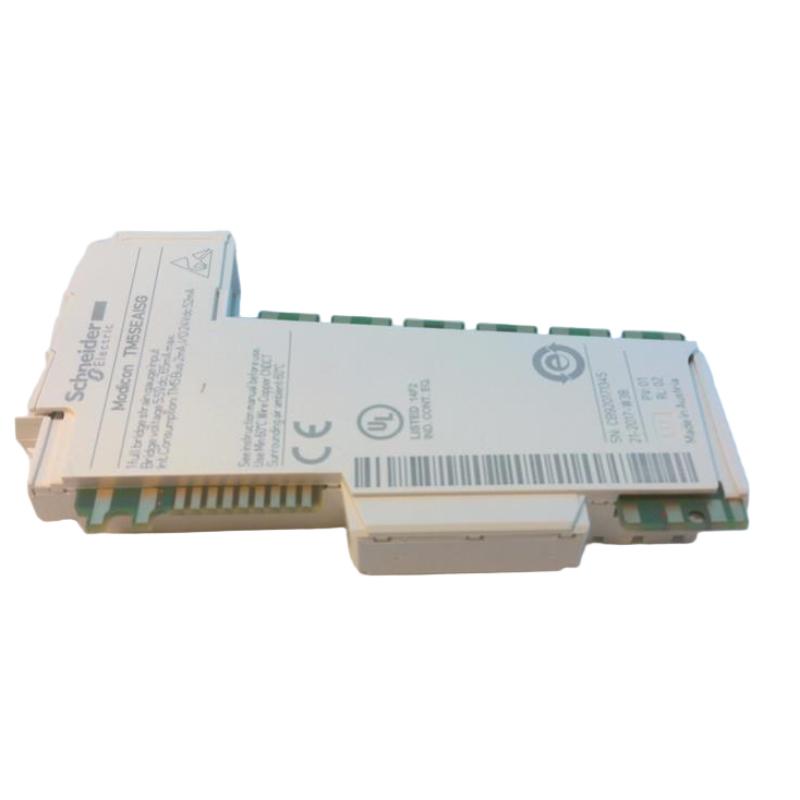
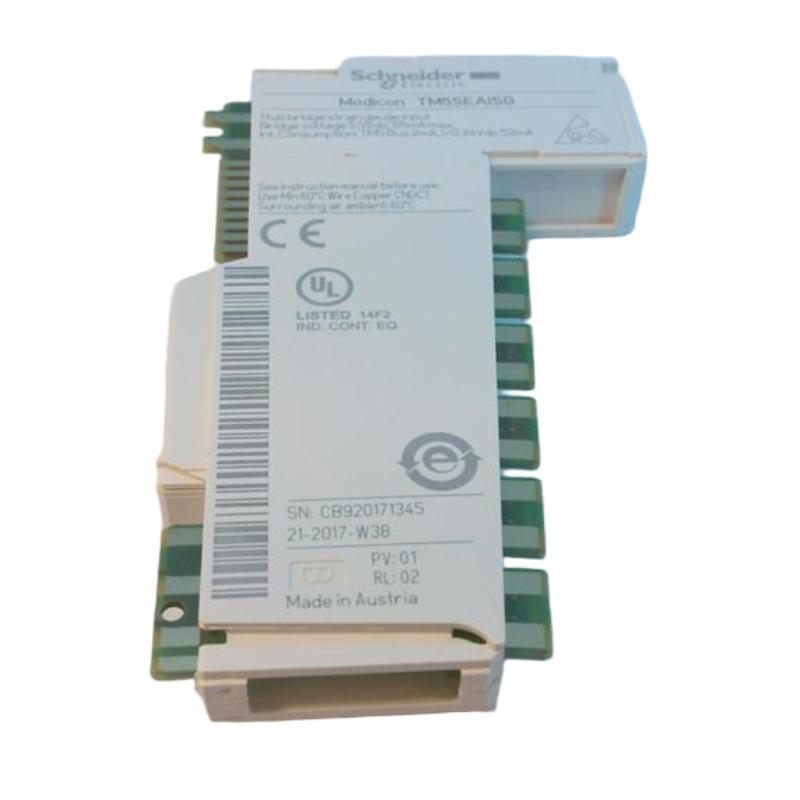
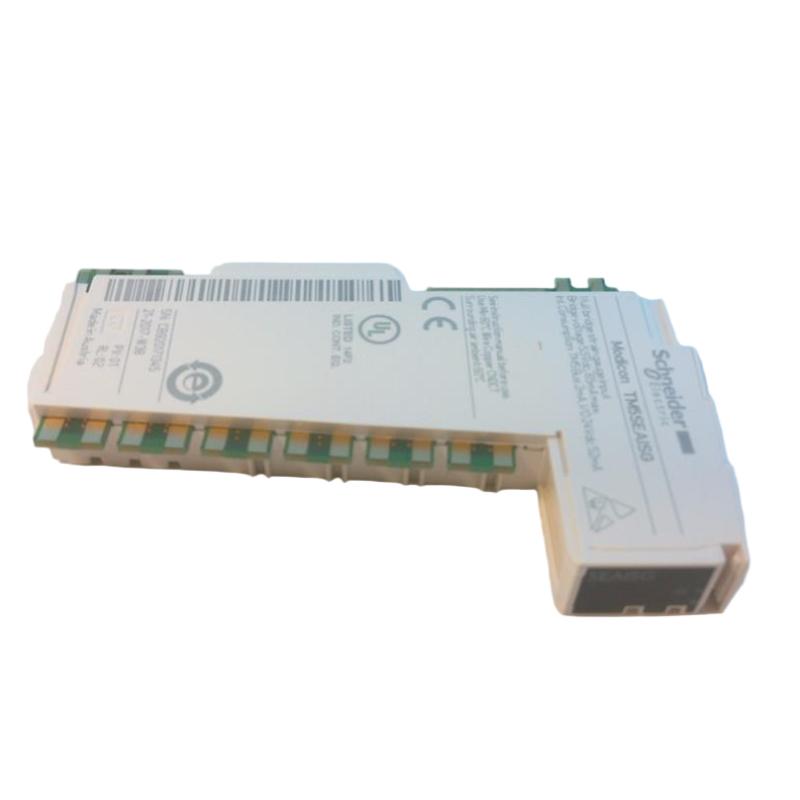
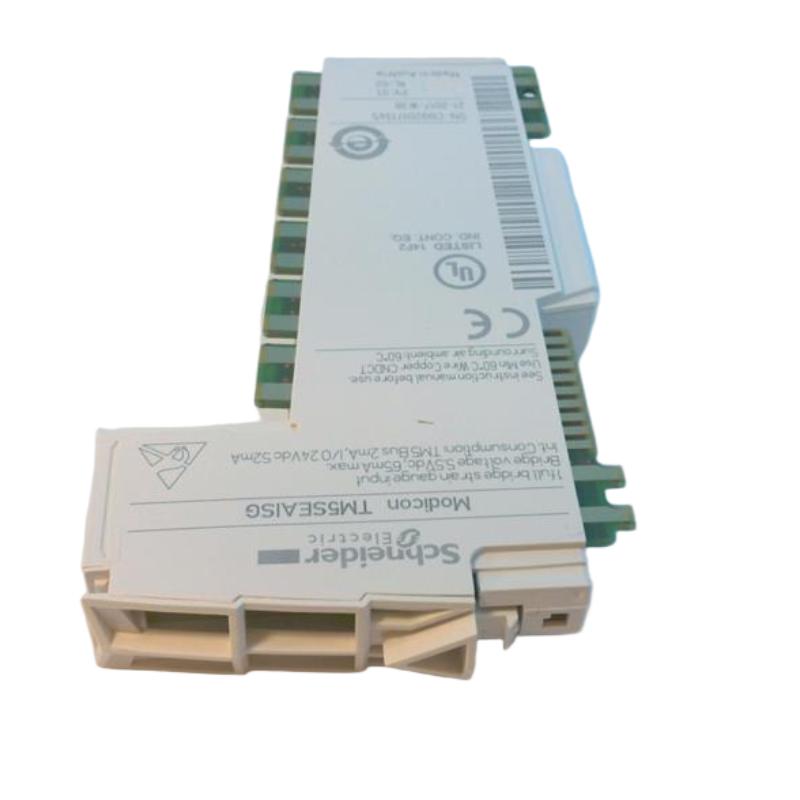
- Schneider
- TM5SEAISG
- Analog Input Module
- France
- 99 × 12.5 × 75 mm
- 0.025 kg
- Xiamen, China
- New & In Stock
- T/T, PayPal, Western Union
- 1 Year
- 1-3 Working Days
- DHL, UPS, TNT, FedEx and EMS.
- 24-Hour Service
- COO
- 4
Our advantage

Global Logistics
We have a 10-year logistics and express cooperation agreement, so our products can be shipped to any place in the world.

Brand new and original
Our products are imported in bulk from the place of origin. Because of the cooperative relationship, our products are all original and 100% new.

24-hour service
We provide 7*24 hours service to our customers. We will be there whenever you need us.

Price advantage
All our products are priced very favorably because we have our own warehouse and supply.
| Company Information | |||
| [email protected] | |||
| Mobile | +8615980777398 | ||
| +8615980777398 | |||
| 15980777398 |
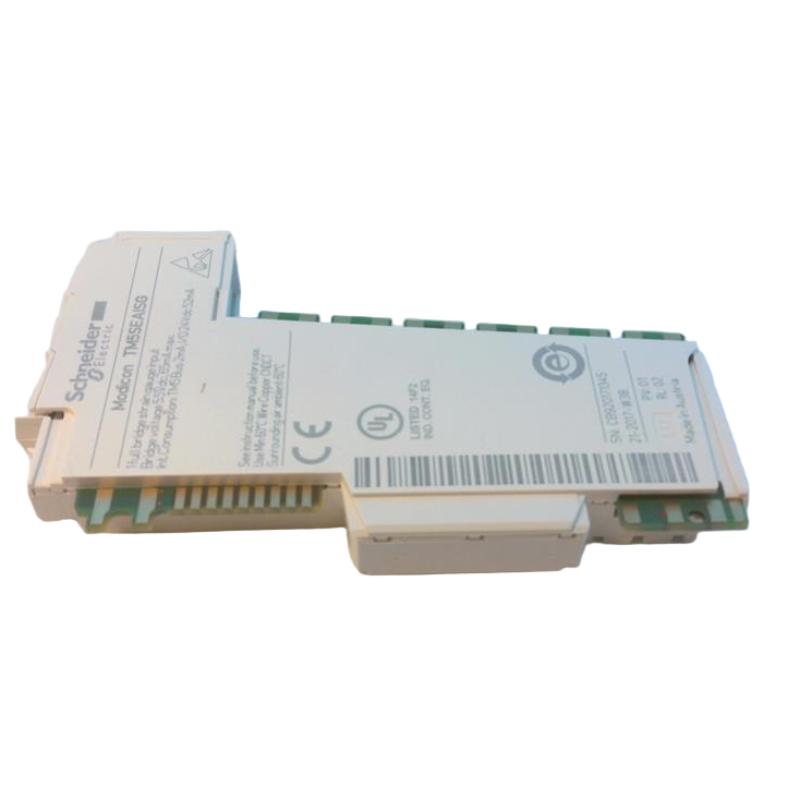
1. Product Overview
The Schneider TM5SEAISG Analog Input Module is a specialized electronic module in the Modicon TM5 modular I/O system. It is designed to acquire measurement signals from full-bridge strain gauge sensors and convert them into digital values that can be processed by a compatible logic controller or motion controller.
Unlike conventional analog input modules designed for standard voltage or current signals, the TM5SEAISG is intended for strain gauge measurement applications. These applications commonly involve monitoring force, weight, mechanical load, tension, and other physical quantities that can be measured using strain gauge sensors.
With its 24-bit conversion resolution and differential input design, the TM5SEAISG supports precision measurement applications in automated machinery and industrial equipment. Its compact form factor makes it suitable for modular control cabinets where installation space is limited.
The module can be integrated into compatible Modicon TM5 configurations, including systems using Modicon M258 and LMC058 controllers, subject to the relevant hardware and software compatibility requirements.
2. Technical Specifications
| Parameter | Specification |
|---|---|
| Brand | Schneider Electric |
| Model Number | TM5SEAISG |
| Product Type | Analog Input Module |
| Product Range | Modicon TM5 |
| Input Channel | 1 |
| Input Type | Full-bridge strain gauge, differential |
| Sensor Resistance Range | 85–5000 Ω |
| Digital Conversion Resolution | 24 bits |
| Rated Supply Voltage | 24 V DC |
| Strain Gauge Excitation | 5.5 V DC |
| Compatible Sensor Wiring | 4-wire or 6-wire full-bridge strain gauge |
| Communication and Control | Modicon TM5 expansion bus |
| Compatible Controllers | Modicon M258 and LMC058, subject to configuration |
| Dimensions | 99 × 12.5 × 75 mm |
| Weight | 0.025 kg |
| Cable Recommendation | Shielded, twisted-pair cable |
| Typical Applications | Force, load, weight, and strain measurement |
The specifications above describe the principal characteristics of the TM5SEAISG. Actual performance depends on sensor selection, wiring configuration, controller compatibility, software configuration, and operating conditions.
3. Function and Working Principle
The primary function of the TM5SEAISG is to receive signals from a full-bridge strain gauge and convert them into digital measurement values for use by a control system.
A strain gauge detects small changes in electrical resistance caused by mechanical deformation. When installed in a suitable sensor assembly, the strain gauge can be used to measure physical quantities such as force, load, tension, or weight.
The TM5SEAISG processes the sensor signal through several stages.
3.1 Strain Gauge Signal Acquisition
The module accepts a differential signal from a compatible full-bridge strain gauge. The sensor must fall within the supported resistance range of 85–5000 Ω.
Because strain gauge signals can be very small, correct sensor selection, cable routing, shielding, and grounding are important for obtaining stable measurement results.
3.2 Signal Conversion
The module uses a 24-bit analog-to-digital conversion system to convert the acquired measurement signal into digital data. The nominal bit resolution describes the converter’s digital representation capability; actual effective resolution and accuracy also depend on noise, sensor characteristics, calibration, and installation conditions.
3.3 Controller Data Processing
Once the signal has been converted, the measurement value is made available to the compatible controller through the Modicon TM5 system.
The controller can then use the value in application logic, monitoring screens, alarms, data recording, or closed-loop control functions, depending on the machine design and software configuration.
3.4 Measurement Scaling and Calibration
The raw measurement value may need to be scaled and calibrated according to the sensor’s rated capacity, sensitivity, mechanical installation, and application requirements.
For example, a weighing system may convert the measured strain gauge signal into a weight value, while a press machine may use the signal to monitor applied force. Calibration should be performed using the procedure appropriate to the sensor and control application.
4. Role in Industrial Automation Systems
The TM5SEAISG provides a dedicated interface between strain gauge sensors and a programmable control system. It helps integrate physical measurements into automated processes without requiring the controller to handle the sensor’s raw electrical signal directly.
Precision Measurement
The module supports measurement applications where small changes in sensor output must be captured and converted into digital data. The suitability of the overall measurement system depends on the module, sensor, wiring, mechanical assembly, and calibration process.
Process Monitoring
A controller can use the acquired measurement values to monitor changing loads, detect deviations from expected operating conditions, and generate alarms when configured limits are exceeded.
Machine Control
In applications where force or weight affects the operating sequence, the measurement value can be incorporated into control logic. Examples include stopping a process at a target load, verifying a pressing operation, or checking whether a material-handling task has reached a configured threshold.
Data Collection
When supported by the controller and application software, measurement data can be recorded for production monitoring, quality analysis, process traceability, and maintenance investigations.
5. Industrial Applications
5.1 Weighing and Load Measurement
The TM5SEAISG can be used in control systems that acquire signals from compatible strain gauge load cells. Examples include automated weighing equipment, material dosing systems, and industrial load-monitoring installations.
The load cell and mechanical mounting arrangement must be suitable for the required capacity and measurement accuracy.
5.2 Packaging Machinery
Packaging equipment may need to verify product weight, monitor material tension, or measure mechanical force during a production cycle. When paired with suitable sensors, the module can provide measurement data for these functions.
5.3 Material Handling
Conveyors, lifting equipment, and handling machines may use strain gauge sensors to monitor loads or detect changes in mechanical force. The TM5SEAISG can provide input data for compatible control applications.
Safety-related load protection must use an appropriately designed and validated safety system; a standard measurement module alone should not be treated as a safety-rated protective device.
5.4 Pressing and Forming Equipment
Industrial presses and forming machines may use force sensors to monitor pressure-related mechanical loads. The module can acquire strain gauge measurements for process monitoring and control logic, provided that the sensor and measurement system meet the application’s requirements.
5.5 Industrial Testing Equipment
Testing machines may require measurements of force, tension, or load during material or component tests. The module can serve as an input interface for compatible full-bridge strain gauge sensors in these systems.
5.6 Automated Production Lines
In production lines, measurement values can be used for quality checks, process verification, and equipment monitoring. Integration depends on the controller program, sensor arrangement, and machine-specific requirements.
6. Installation and System Integration
Correct installation is essential for obtaining reliable measurements and preventing damage to the module or connected equipment.
6.1 Verify the Hardware Configuration
Before installation, confirm that the TM5SEAISG is compatible with the controller, TM5 bus base, terminal block, firmware, and engineering software used in the application.
The module is associated with the TM5ACBM11 or TM5ACBM15 bus base and the TM5ACTB12 terminal block. Confirm the exact hardware arrangement and ordering requirements before replacing or installing components.
6.2 Mount the Module
Install the module in the designated position within the compatible TM5 system. Follow the applicable installation instructions for DIN-rail mounting, bus-base assembly, terminal-block installation, cabinet clearances, and environmental conditions.
Disconnect power and follow appropriate electrical safety procedures before installing, removing, or rewiring the equipment.
6.3 Connect the Strain Gauge
Use a compatible full-bridge strain gauge with a supported resistance range. The module supports 4-wire and 6-wire sensor arrangements, but terminal assignments and wiring must follow the relevant connection diagram.
Incorrect wiring can produce unstable readings, invalid measurements, or equipment damage.
6.4 Use Appropriate Cable Routing
Use shielded, twisted-pair cable for the sensor connection. Keep the cable as short as practical and route it away from motor cables, switching devices, contactors, and other sources of electrical interference.
Follow the manufacturer’s wiring and shielding recommendations, including applicable requirements for grounding and shield termination.
6.5 Check the Power Supply
Verify that the TM5 system’s 24 V DC I/O power segment is within the permitted supply range and that the power supply has sufficient capacity for the complete system.
The strain gauge excitation circuit and module power requirements should be considered when designing the installation.
6.6 Configure the Controller Software
Use the appropriate engineering environment and module driver or library to configure the TM5SEAISG. Confirm that the controller recognizes the module and that the configured sensor parameters match the installed sensor.
Set the required measurement range and application scaling according to the supported configuration options. Validate the resulting values using a known reference load or measurement standard where applicable.
6.7 Test the Measurement System
After installation, verify the module status indicators, sensor wiring, controller diagnostics, and measurement values. Apply a known test load or other suitable reference condition to confirm that the measurement responds as expected.
Record the test results and calibration settings as part of the commissioning process.
7. Troubleshooting Common Problems
Problem 1: No Measurement Value
Possible causes:
- The TM5 system is not powered correctly.
- The module is not installed or recognized correctly.
- Sensor wiring is incomplete or incorrect.
- The controller configuration is missing or incompatible.
Recommended checks:
- Confirm the module and I/O power supply status.
- Check the bus-base and terminal-block installation.
- Verify the sensor wiring against the correct diagram.
- Review the controller’s I/O configuration and diagnostic messages.
- Confirm that the software driver and controller configuration support the module.
Problem 2: Unstable or Fluctuating Readings
Possible causes:
- Electrical interference from nearby equipment.
- Poor shielding or grounding.
- Loose terminal connections.
- Mechanical vibration or an unstable sensor mounting arrangement.
- Inadequate sensor calibration.
Recommended checks:
- Inspect the sensor cable and terminals.
- Separate the sensor wiring from high-power cables.
- Verify shielding and grounding practices.
- Check the mechanical installation of the strain gauge or load cell.
- Compare readings under a stable, known reference condition.
Problem 3: Incorrect Measurement Values
Possible causes:
- Incorrect sensor sensitivity or measurement scaling.
- A mismatch between the configured sensor and the installed sensor.
- Incorrect wiring.
- Calibration errors.
- Mechanical loading outside the sensor’s intended operating range.
Recommended checks:
- Verify the sensor specifications and bridge configuration.
- Review the controller program’s scaling calculations.
- Check the sensor wiring and polarity.
- Repeat calibration using a suitable reference.
- Confirm that the sensor and mechanical assembly are appropriate for the application.
Problem 4: Module Status Indicates an Error
Possible causes:
- A detected module or configuration error.
- A wiring fault.
- An initialization or communication problem within the TM5 system.
- A power supply issue.
Recommended checks:
- Record the status LED conditions.
- Review controller diagnostics and module status information.
- Check the power supply and system assembly.
- Inspect the sensor wiring for faults.
- Follow the applicable troubleshooting procedure before replacing the module.
Problem 5: Measurement Does Not Change as Expected
Possible causes:
- The sensor is not mechanically coupled correctly.
- The sensor or cable is damaged.
- The wrong input configuration is being used.
- The controller is reading or scaling the wrong data value.
Recommended checks:
- Confirm that the sensor responds to a known mechanical input.
- Inspect the sensor mounting and cable connections.
- Verify the module configuration and data mapping.
- Compare raw measurement data with the application’s scaled value.
- Test the module with a known-good compatible sensor if appropriate.
8. Compatible System Components
The TM5SEAISG is part of a modular I/O platform. The following components are relevant to system integration, but exact compatibility must be confirmed for the complete hardware configuration.
| Component | Model or Category | Function |
|---|---|---|
| Analog input module | TM5SEAISG | Acquires full-bridge strain gauge signals |
| Bus base | TM5ACBM11 | Supports installation in the TM5 system |
| Bus base with address setting | TM5ACBM15 | Alternative bus-base configuration |
| Terminal block | TM5ACTB12 | Provides the associated electrical connection interface |
| Logic controller | Modicon M258 | Compatible controller family, subject to configuration |
| Motion controller | Modicon LMC058 | Compatible controller family, subject to configuration |
| Sensor | Compatible full-bridge strain gauge | Measures force, load, weight, or strain-related quantities |
| Sensor cable | Shielded, twisted-pair cable | Carries the measurement signal while helping reduce interference |
A compatible module alone does not guarantee system compatibility. Verify the controller version, TM5 hardware arrangement, software support, and sensor wiring before installation or replacement.
9. Replacement and Alternative Selection
When replacing a TM5SEAISG, the replacement should be selected according to the measurement function rather than physical size alone.
| Selection Factor | What to Verify |
|---|---|
| Measurement type | Full-bridge strain gauge input |
| Number of channels | One input channel |
| Sensor resistance | Compatibility with the installed sensor |
| Conversion requirements | Required measurement resolution and performance |
| Wiring arrangement | Support for the installed 4-wire or 6-wire sensor |
| Controller compatibility | Support within the existing Modicon TM5 configuration |
| Mechanical fit | Dimensions, bus base, terminal block, and installation arrangement |
| Software configuration | Module recognition, driver support, and data mapping |
| Calibration | Ability to reproduce the required measurement range and accuracy |
Other Modicon TM5 analog input modules may support voltage, current, temperature, or different sensor types. They should not be assumed to be direct replacements for the TM5SEAISG. If the application depends on full-bridge strain gauge measurement, select a replacement that explicitly supports that sensor type.
10. Key Advantages
Dedicated Strain Gauge Input
The TM5SEAISG is designed specifically for full-bridge strain gauge measurement, making it suitable for applications that require a dedicated sensor interface.
24-Bit Conversion Resolution
Its 24-bit converter provides a high-resolution digital representation of the input signal. Actual measurement performance still depends on the sensor, installation, noise conditions, calibration, and effective resolution.
Compact Modular Design
With dimensions of 99 × 12.5 × 75 mm and a weight of 0.025 kg, the module supports space-efficient integration into compatible TM5 I/O assemblies.
Integration with Compatible Controllers
The module can provide strain gauge measurement data to supported Modicon controller configurations, allowing the data to be incorporated into machine logic and monitoring functions.
Flexible Sensor Wiring
Support for compatible 4-wire and 6-wire full-bridge strain gauge arrangements offers flexibility when designing or maintaining measurement systems.
Useful for Measurement-Based Automation
The module can support automated weighing, load monitoring, force measurement, and related industrial processes when correctly matched with the sensor and application.
11. Technical FAQs
Q1: What is the Schneider TM5SEAISG used for?
The TM5SEAISG is an analog input module for full-bridge strain gauge sensors. It converts the sensor’s electrical signal into digital measurement data for a compatible control system.
Q2: How many input channels does the TM5SEAISG have?
The module has one full-bridge strain gauge input channel.
Q3: What is the conversion resolution?
The TM5SEAISG uses a 24-bit analog-to-digital conversion system. Effective measurement resolution and accuracy depend on the complete measurement system.
Q4: Which sensor types are supported?
It is designed for compatible full-bridge strain gauges with a specified resistance range of 85–5000 Ω. Verify the exact sensor characteristics and wiring before connecting it.
Q5: Can it be used with load cells?
It can be used with compatible load cells that provide an appropriate full-bridge strain gauge signal. Confirm the load cell’s electrical specifications, wiring arrangement, and excitation requirements.
Q6: Which controllers are compatible?
The module is associated with Modicon M258 and LMC058 controller configurations. Check the specific controller, firmware, software, and TM5 system documentation to confirm compatibility for the intended installation.
Q7: What are the dimensions and weight?
The supplied product specifications list dimensions of 99 × 12.5 × 75 mm and a weight of 0.025 kg.
Q8: What should be checked before replacing the module?
Confirm the exact model number, sensor type, controller compatibility, bus base, terminal block, software support, wiring, and calibration requirements. A module with similar dimensions may not support the same measurement function.
Q9: Why might the measurement value fluctuate?
Common causes include electrical interference, poor shielding, loose connections, mechanical vibration, sensor problems, and inadequate calibration. Troubleshoot the sensor, wiring, mechanical assembly, and controller configuration systematically.
Q10: Does a 24-bit resolution guarantee measurement accuracy?
No. Bit resolution describes the converter’s digital representation capability, not the accuracy of the entire measurement system. Sensor quality, electrical noise, calibration, mechanical installation, and effective resolution all affect the final result.
12. Conclusion
The Schneider TM5SEAISG Analog Input Module is a specialized component for acquiring full-bridge strain gauge signals within compatible Modicon TM5 automation systems. Its single-channel input, 24-bit conversion resolution, and compact design make it suitable for industrial measurement applications involving force, load, weight, and strain-related variables.
For maintenance teams, system integrators, and industrial automation equipment buyers, selecting the correct module requires more than matching the model number and physical dimensions. Sensor compatibility, wiring, controller support, software configuration, and calibration must also be verified.
When correctly integrated with a compatible strain gauge and control system, the TM5SEAISG can provide useful measurement data for machine monitoring, process verification, and measurement-based automation.