

ProductPRODUCT
Featured products
Contact Us
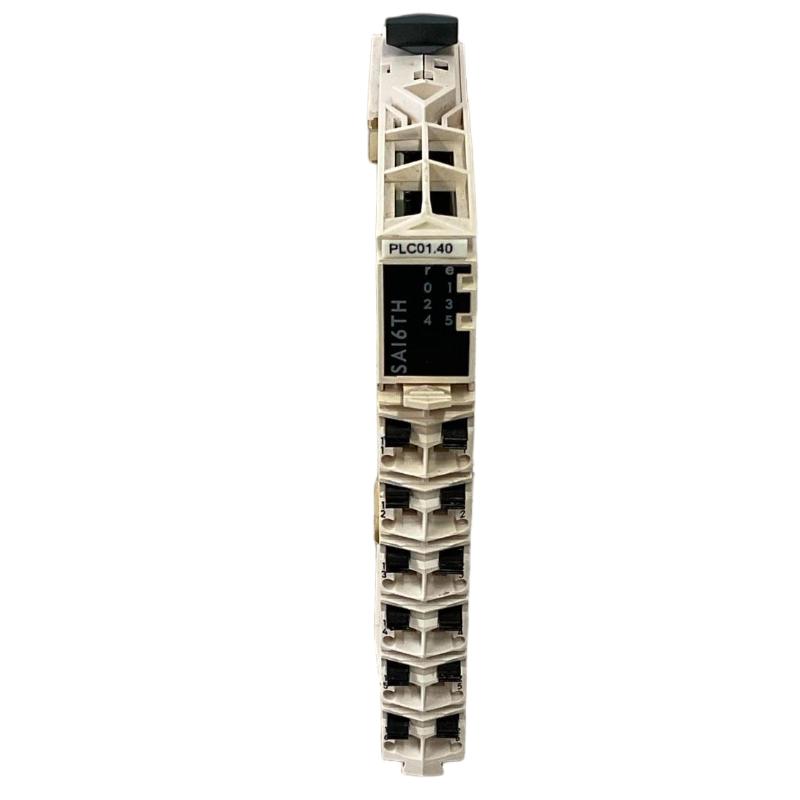
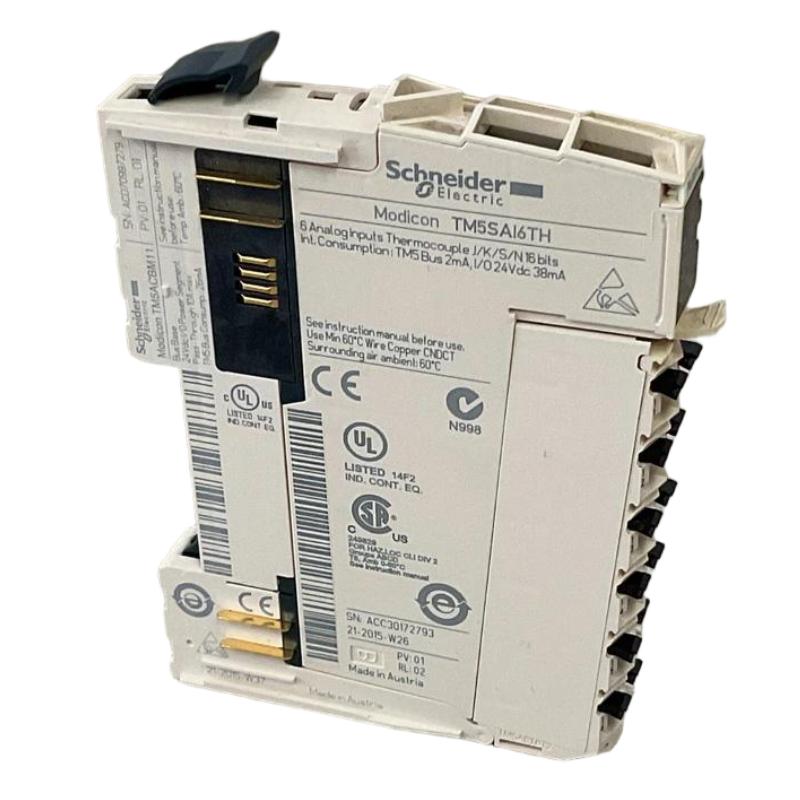
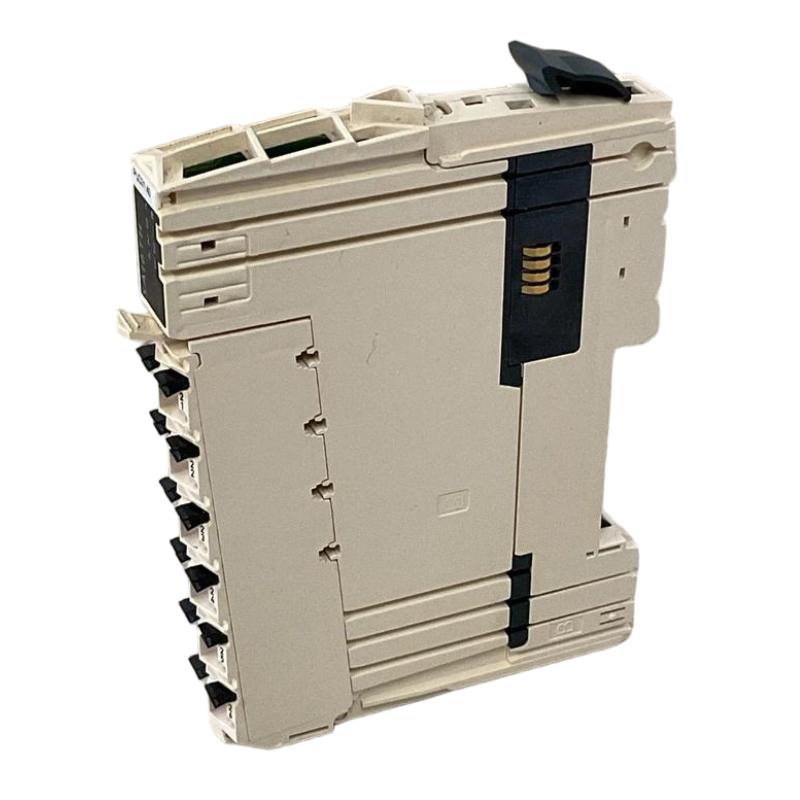
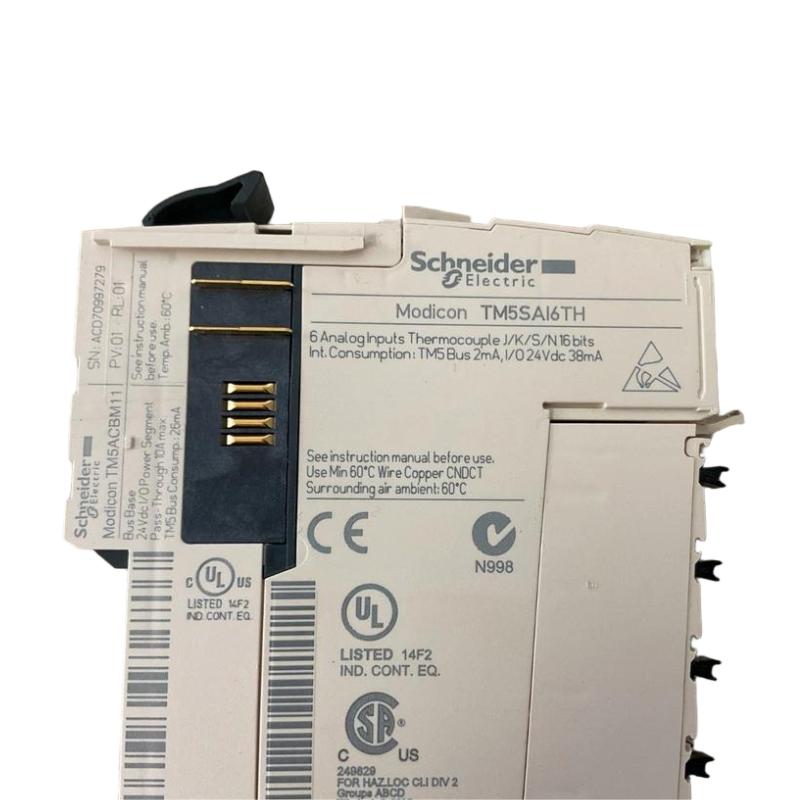
- Schneider
- TM5SAI6TH
- Analog Input Module
- France
- 99 × 12.5 × 75 mm
- 0.025 kg
- Xiamen, China
- New & In Stock
- T/T, PayPal, Western Union
- 1 Year
- 1-3 Working Days
- DHL, UPS, TNT, FedEx and EMS.
- 24-Hour Service
- COO
- 5
Our advantage

Global Logistics
We have a 10-year logistics and express cooperation agreement, so our products can be shipped to any place in the world.

Brand new and original
Our products are imported in bulk from the place of origin. Because of the cooperative relationship, our products are all original and 100% new.

24-hour service
We provide 7*24 hours service to our customers. We will be there whenever you need us.

Price advantage
All our products are priced very favorably because we have our own warehouse and supply.
| Company Information | |||
| [email protected] | |||
| Mobile | +8615980777398 | ||
| +8615980777398 | |||
| 15980777398 |
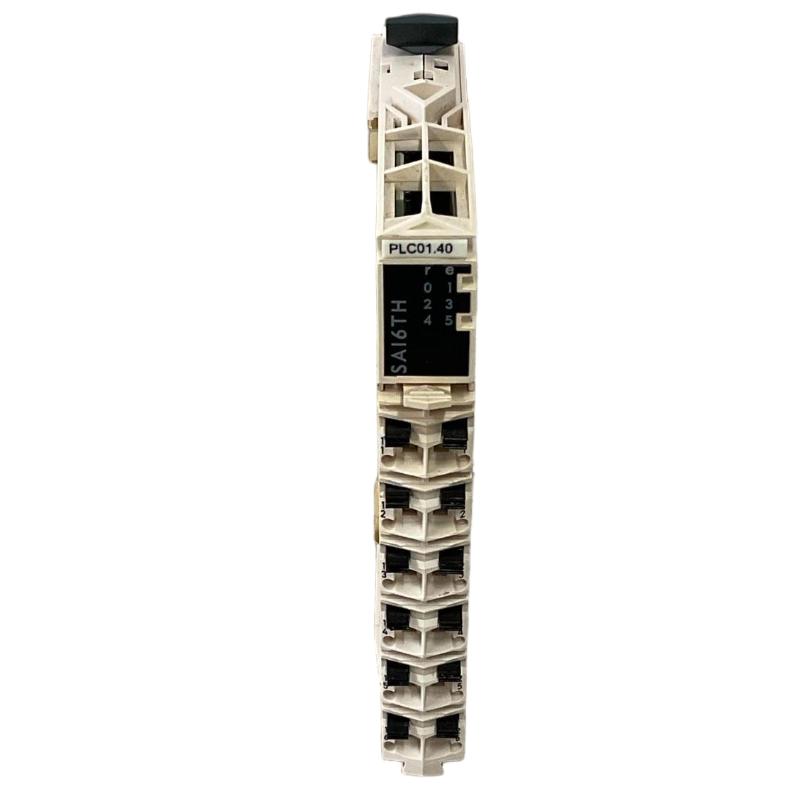
1. Product Overview
The Schneider TM5SAI6TH Analog Input Module is an industrial automation component intended for integration into modular control systems where analog signal acquisition is required. Analog input modules enable controllers to receive measurement signals from field instruments and use the collected information for monitoring, process regulation, alarm handling, and automated control.
In industrial environments, accurate signal acquisition is essential for maintaining stable operation and supporting reliable decision-making. Analog input modules provide an interface between field-level measurement devices and the control platform, helping translate process information into data that can be used by automation programs.
The TM5SAI6TH belongs to Schneider Electric’s TM5 modular I/O product family. Its compact form factor makes it suitable for control cabinets and distributed machine-control applications where installation space is limited. Before integration, engineers should verify the exact channel configuration, supported input signal types, wiring requirements, and system compatibility against the documentation for the specific module revision.
With dimensions of 99 × 12.5 × 75 mm and a weight of 0.025 kg, the module is designed for space-conscious automation installations. Its suitability for a particular application depends on the required measurement signals, controller platform, environmental conditions, and overall system configuration.
2. Technical Specifications
| Parameter | Specification |
|---|---|
| Brand | Schneider Electric |
| Model | TM5SAI6TH |
| Product Type | Analog Input Module |
| Product Family | TM5 Modular I/O |
| Dimensions | 99 × 12.5 × 75 mm |
| Weight | 0.025 kg |
| Primary Function | Analog signal acquisition |
| Application | Industrial automation and process monitoring |
| Installation Environment | Industrial control cabinet or approved system mounting location |
| System Integration | Compatible TM5 architecture and associated controller configuration, subject to verification |
Technical note: The exact number of channels, supported signal ranges, resolution, accuracy, sensor compatibility, and electrical isolation characteristics should be confirmed using the technical documentation for TM5SAI6TH. These parameters should not be inferred from the model number alone.
3. Function and Working Principle
The primary purpose of an analog input module is to receive measurement signals from field devices and make the corresponding information available to an industrial controller.
In a typical automation system, a sensor detects a physical process variable and produces an electrical signal. Depending on the instrument, this signal may represent temperature, pressure, flow, level, or another operating condition. The analog input module receives the supported signal and processes it according to its hardware design and configured parameters.
The controller can then use the resulting input data in its application program.
3.1 Analog Signal Acquisition
Industrial sensors and transmitters provide information about changing process conditions. The analog input interface allows the control system to obtain this information for monitoring and automated decision-making.
Correct operation depends on matching the field instrument’s output signal to the input type supported by the module. Signal compatibility must be checked before wiring or commissioning.
3.2 Measurement Data Processing
After a signal is received, the module’s internal electronics handle the measurement according to the device’s design. The controller uses the available input data to evaluate process conditions, calculate control responses, or trigger alarms.
Engineers should configure scaling, engineering units, and application-level limits in accordance with the actual instrument range and controller software.
3.3 Communication with the Controller
As part of a modular I/O architecture, the analog input module operates within a larger control system. The controller configuration must recognize the installed hardware and use the correct module parameters.
Incorrect hardware selection, configuration mismatches, wiring errors, or communication problems can prevent reliable acquisition of process data.
4. Role in Industrial Automation Systems
The Schneider TM5SAI6TH Analog Input Module can serve as an analog measurement interface in an appropriately configured TM5-based automation system. Its practical role depends on the installed field instruments and the control strategy implemented by the system designer.
4.1 Process Monitoring
Analog measurements allow operators and control programs to observe continuously changing process variables. This information can support process visualization, operating reports, alarm evaluation, and maintenance decisions.
4.2 Closed-Loop Control
In a closed-loop control application, measurement data is compared with a target value. The controller calculates a response and adjusts an appropriate output device to reduce the difference between the measured condition and the target.
For example, a controller may use a supported process measurement to regulate a pump, valve, heater, or drive. The specific application depends on the sensor, controller program, and output equipment.
4.3 Equipment Protection
Measurement data can help identify abnormal operating conditions. When suitable sensors and application logic are configured, the control system may generate alarms or initiate predefined responses when measurements exceed permitted limits.
The analog input module itself should not be assumed to provide independent safety protection. Safety-related functions require appropriately rated hardware, architecture, and validated application design.
4.4 Data Availability for Supervisory Systems
Analog input values may also be used by supervisory control systems, human-machine interfaces, and industrial data collection applications through the controller and its configured communication interfaces.
Reliable data presentation depends on the complete system, including sensor calibration, controller configuration, communication, and visualization software.
5. Industrial Applications
The TM5SAI6TH may be considered for suitable analog measurement applications in industrial automation, provided that its verified electrical and system specifications meet the requirements of the installation.
5.1 Manufacturing Equipment
Automated production machinery often requires measurement feedback for process supervision and equipment coordination. Analog input interfaces can support the collection of compatible sensor data used by the machine controller.
5.2 Temperature Monitoring
Temperature measurement is common in manufacturing, packaging, material processing, and equipment cooling systems. The suitability of this module for a specific temperature sensor depends on the input signal supported by the exact product configuration. Direct temperature-sensor compatibility should not be assumed without verification.
5.3 Pressure and Flow Monitoring
Industrial pressure transmitters and flow measurement instruments may provide analog signals for process supervision. Before connecting these devices, engineers must confirm signal type, range, wiring, and scaling requirements.
5.4 Pump and Motor Systems
Analog feedback can be used to monitor relevant operating conditions in pump stations, motor-driven equipment, and auxiliary machinery. Depending on the application, measurements may contribute to operating control, alarm generation, or maintenance planning.
5.5 Process Automation
In process-oriented installations, analog measurements provide information about changing production conditions. The controller can use this data to support consistent operation and help operators identify deviations from normal process parameters.
6. Installation and System Integration
Correct installation is essential for stable analog measurement and dependable controller operation. The following procedures provide a general integration framework. The official installation instructions for the exact module and controller take precedence.
6.1 Verify the Model and System Compatibility
Before installation, confirm the complete model number, hardware revision where applicable, and intended controller platform. Check that the module is supported by the selected TM5 system configuration and that any required base, bus, or accessory components are present.
Do not assume that modules from different product families are interchangeable simply because they have similar dimensions or functions.
6.2 Isolate Power Before Wiring
Disconnect the relevant power supplies and follow the site’s lockout/tagout procedures before installing or removing hardware. Verify that the equipment is in a safe state before touching electrical connections.
Observe the specified grounding, power distribution, and wiring requirements. Incorrect wiring may damage the module or connected field devices.
6.3 Confirm Field Signal Compatibility
Check the output type and electrical characteristics of every connected instrument. Confirm that the module supports the required signal range and connection method.
Do not connect a field device solely on the basis of its intended measurement purpose. For example, two instruments may both measure temperature but use different electrical signal types and therefore require different input interfaces.
6.4 Install and Secure the Module
Install the module in the designated position according to the system’s mechanical assembly instructions. Ensure that it is properly seated and secured, and inspect the terminal or connector arrangement before energizing the system.
Allow sufficient clearance for wiring, maintenance access, and the environmental conditions specified for the equipment.
6.5 Configure the Controller
Use the applicable engineering software to configure the hardware and required module parameters. Verify that the controller recognizes the module and that the input data is mapped correctly to the application program.
Configure engineering-unit scaling and alarm thresholds based on the field instrument’s actual measurement range.
6.6 Commission the Input Signals
After checking the wiring and configuration, restore power in accordance with the commissioning procedure. Compare displayed input values with a known reference or a reliable field measurement.
Test representative operating conditions and verify that the measured values, scaling, alarm limits, and controller responses are correct. Record the final configuration for maintenance and future replacement work.
7. Troubleshooting Common Problems
Analog input problems can originate from the module, field instrument, wiring, power supply, controller configuration, or system communication. A systematic diagnostic process helps isolate the source.
7.1 No Input Value
Possible causes:
- Field instrument is not powered.
- Wiring is disconnected or incorrectly terminated.
- The input signal is incompatible with the module.
- The controller hardware configuration is incorrect.
- The module is not properly installed.
Recommended checks:
- Confirm that the field instrument is operating normally.
- Inspect wiring and terminal connections with the system in a safe state.
- Verify the supported signal type and range.
- Check controller diagnostics and hardware recognition.
- Test the field signal using an appropriate instrument and approved procedure.
7.2 Incorrect or Unstable Readings
Possible causes:
- Incorrect scaling or engineering-unit conversion.
- Electrical interference or poor grounding.
- Loose connections.
- A faulty or poorly calibrated field instrument.
- Signal values outside the permitted input range.
Recommended checks:
- Compare the raw input value with the expected field signal.
- Confirm the controller’s scaling calculations.
- Inspect cable routing and shielding practices.
- Check the sensor or transmitter against a known reference.
- Verify that wiring and grounding follow the manufacturer’s instructions.
7.3 Controller Does Not Recognize the Module
Possible causes:
- Incorrect hardware configuration.
- Incomplete system assembly.
- Unsupported module or controller combination.
- A bus, base, or connection problem.
- A hardware fault.
Recommended checks:
- Confirm the complete module model number.
- Review the controller’s hardware diagnostics.
- Inspect the physical installation and system connections.
- Verify that the installed hardware matches the configured system.
- Follow the platform-specific diagnostic procedure before replacing components.
7.4 Readings Remain at a Fixed Value
A fixed reading does not necessarily mean that the input module has failed. The field instrument may be producing a constant output, the process variable may not be changing, or the controller may be displaying a scaled or mapped value incorrectly.
Check the actual field signal, controller data mapping, and instrument operation before concluding that the module requires replacement.
7.5 Repeated Input Errors
If input errors continue after wiring and configuration have been verified, review diagnostic information and compare the module’s behavior with a known-good, compatible setup where practical.
Replace the module only after confirming that the fault is not caused by field wiring, the sensor, the power supply, or the controller configuration. Follow site procedures for handling potentially damaged electronic components.
8. Compatible System Components
A complete analog measurement installation may include the following components. Exact compatibility must be confirmed for the specific TM5SAI6TH configuration.
| Component | Function |
|---|---|
| Compatible Schneider Electric controller | Executes the control program and processes input data |
| TM5 system base or associated mounting components | Provides the required mechanical and electrical system interface |
| Compatible field sensors or transmitters | Measure process variables and provide supported electrical signals |
| Field wiring and terminal connections | Carry signals between instruments and the I/O interface |
| Suitable power supply | Provides power required by the applicable system components |
| Engineering software | Supports hardware configuration, diagnostics, and application programming |
| HMI or supervisory system | Displays process information through the configured controller interface |
| Industrial network components | Provide communication where required by the overall architecture |
The final bill of materials should be based on the official hardware configuration and the electrical requirements of the application.
9. Replacement and Alternative Selection
When replacing a Schneider TM5SAI6TH Analog Input Module, selecting a component with a similar appearance or general function is not sufficient. The replacement must meet the system’s electrical, mechanical, and configuration requirements.
| Selection Factor | What to Verify |
|---|---|
| Product family | Confirm compatibility with the installed TM5 system |
| Input signal type | Match the field instrument’s electrical output |
| Channel configuration | Ensure the required number and arrangement of inputs are supported |
| Measurement range | Confirm that the full operating range is covered |
| Accuracy and resolution | Verify that measurement performance meets process requirements |
| Wiring and terminals | Check connector layout and installation requirements |
| Controller support | Confirm software and hardware compatibility |
| Physical dimensions | Check available installation space and mounting arrangements |
| Environmental requirements | Verify operating temperature and other installation conditions |
A replacement should be approved only after the relevant specifications and system configuration have been checked. If the exact TM5SAI6TH is unavailable, choose an alternative based on verified functional equivalence rather than a general similarity in product description.
10. Key Advantages
When correctly selected and integrated, the Schneider TM5SAI6TH Analog Input Module offers several practical benefits for industrial control applications.
Compact form factor: Its listed dimensions of 99 × 12.5 × 75 mm support installations where cabinet space must be managed carefully.
Low listed weight: At 0.025 kg, the module contributes little weight to a modular control assembly.
Analog measurement interface: It provides a means of bringing compatible field measurements into an automation system.
Support for modular architectures: As a TM5-family component, it can be evaluated for applications using the corresponding modular I/O architecture, subject to system compatibility.
Centralized monitoring: Input data can support process visualization, controller logic, alarm evaluation, and supervisory monitoring when the overall system is configured appropriately.
Maintainability: Clear hardware identification, documented wiring, and saved controller configuration can simplify troubleshooting and replacement.
11. Technical FAQs
Q1: What is the Schneider TM5SAI6TH?
The Schneider TM5SAI6TH is identified as an analog input module in the Schneider Electric TM5 modular I/O family. It is intended to support analog signal acquisition in a compatible industrial automation configuration.
Q2: What are its dimensions and weight?
The supplied specifications list dimensions of 99 × 12.5 × 75 mm and a weight of 0.025 kg.
Q3: Which sensors can be connected to the TM5SAI6TH?
Sensor compatibility depends on the module’s supported input types and electrical ranges. Confirm these details using the exact product documentation before connecting a sensor or transmitter.
Q4: Can the module be used with any Schneider Electric PLC?
No. Compatibility depends on the controller platform, modular I/O architecture, hardware configuration, and applicable software support. Verify the complete system combination before installation.
Q5: Why might the analog value be incorrect?
Potential causes include wiring errors, signal mismatch, incorrect scaling, electrical interference, a faulty field instrument, or incorrect controller data mapping. Check the complete measurement loop rather than assuming that the module itself is defective.
Q6: How can the module be tested?
Follow the manufacturer’s diagnostic procedures. Check hardware recognition, field wiring, the actual input signal, and controller-reported values. Where appropriate, compare measurements with a calibrated reference using approved electrical test procedures.
Q7: What should be checked before purchasing a replacement?
Confirm the complete model number, supported input types, channel configuration, system compatibility, wiring arrangement, and required measurement performance. Physical dimensions alone do not establish interchangeability.
12. Conclusion
The Schneider TM5SAI6TH Analog Input Module is a compact industrial automation component intended to provide an analog measurement interface within a compatible TM5 modular I/O system. Its role is to make supported field signals available to the controller for monitoring, process regulation, alarm logic, and other automation functions.
For reliable operation, engineers should verify the exact electrical specifications, field-device compatibility, controller support, wiring arrangement, and software configuration before installation. Proper commissioning and systematic troubleshooting can help maintain dependable measurement data and reduce avoidable downtime.
For purchasing, maintenance, and replacement planning, the complete model number and confirmed technical specifications should be used to ensure that the selected module meets the requirements of the existing industrial control system.