

ProductPRODUCT
Featured products
Contact Us
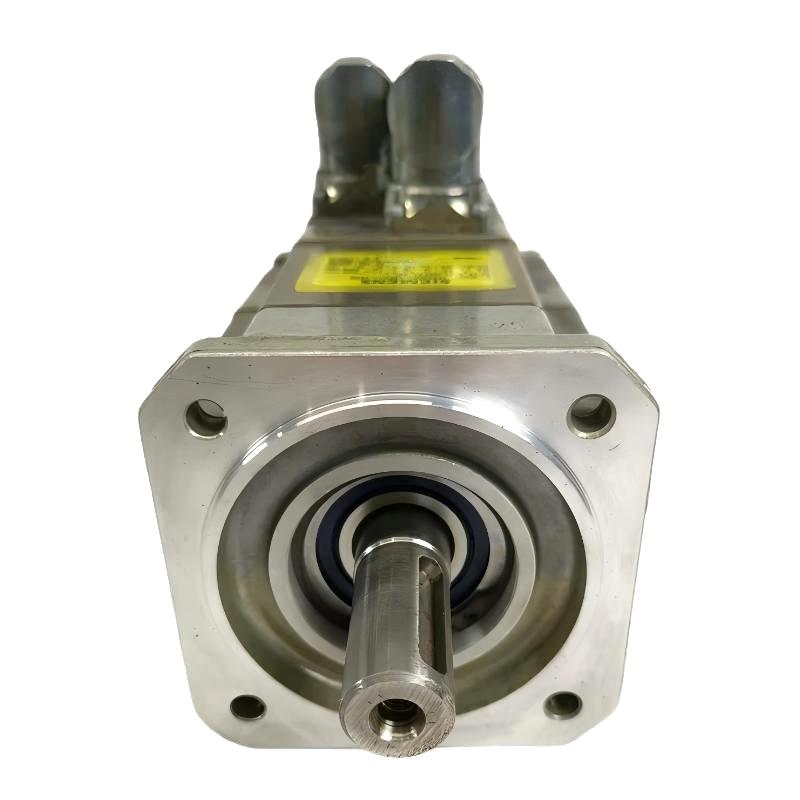
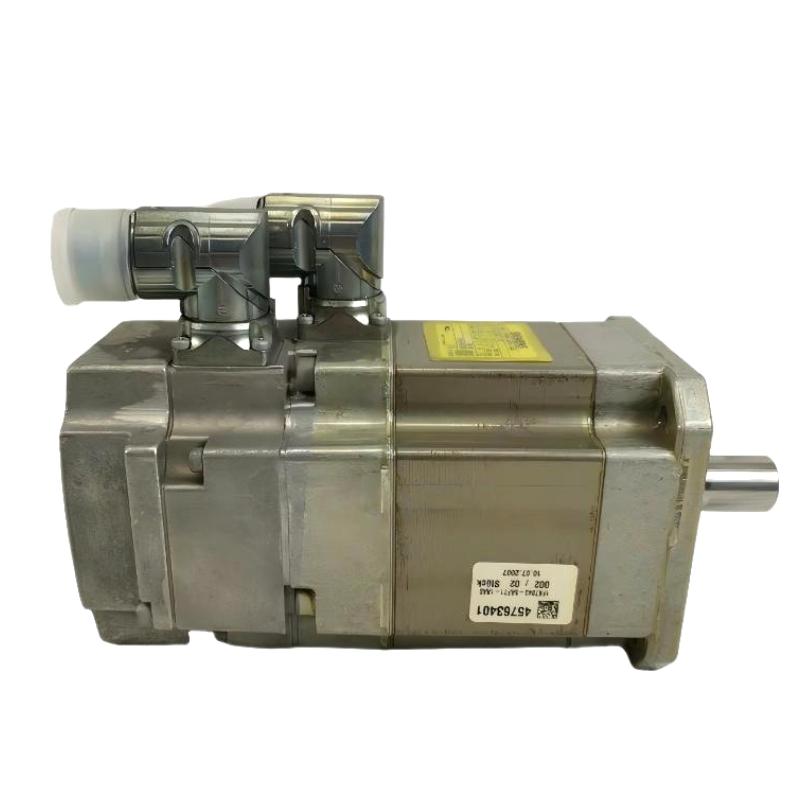
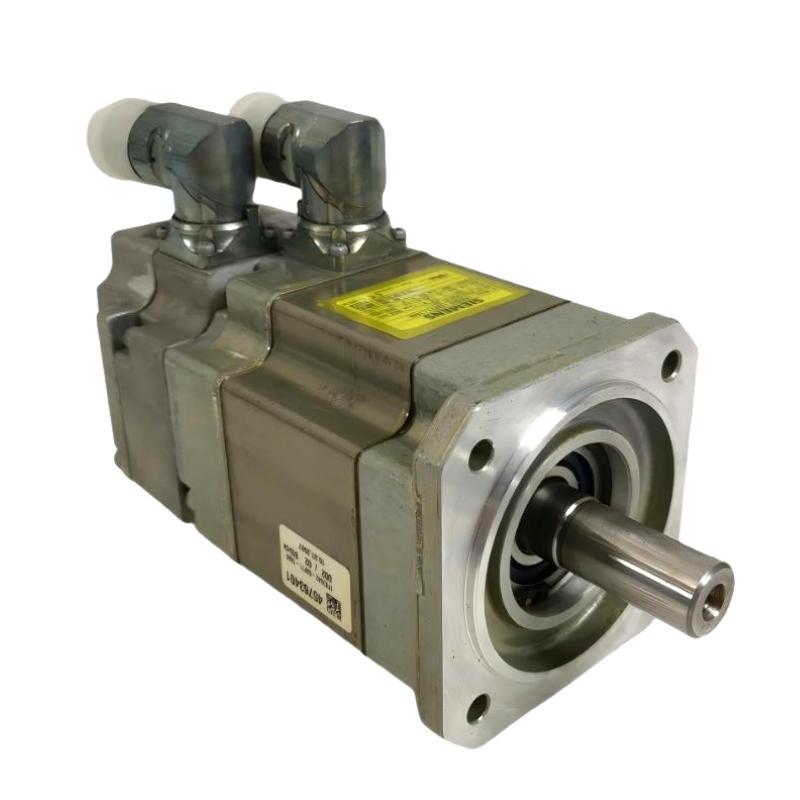
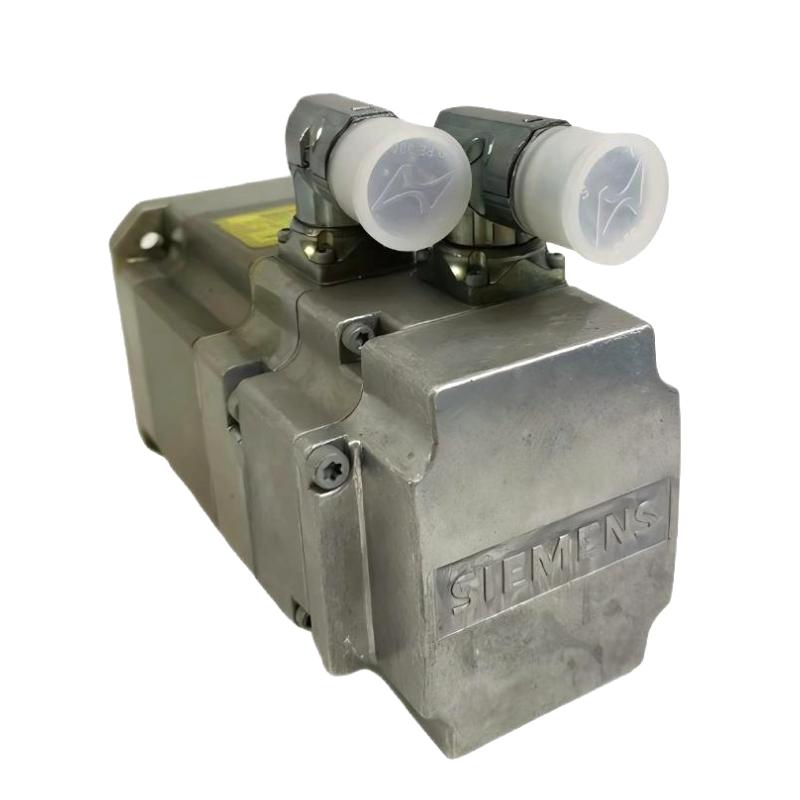
- Siemens
- 1FK7042-5AF71-1AA0
- Synchronous Servo Motor
- Germany
- 48 mm
- 4.903 kg
- Xiamen, China
- New & In Stock
- T/T, PayPal, Western Union
- 1 Year
- 1-3 Working Days
- DHL, UPS, TNT, FedEx and EMS.
- 24-Hour Service
- COO
- 5
Our advantage

Global Logistics
We have a 10-year logistics and express cooperation agreement, so our products can be shipped to any place in the world.

Brand new and original
Our products are imported in bulk from the place of origin. Because of the cooperative relationship, our products are all original and 100% new.

24-hour service
We provide 7*24 hours service to our customers. We will be there whenever you need us.

Price advantage
All our products are priced very favorably because we have our own warehouse and supply.
| Company Information | |||
| [email protected] | |||
| Mobile | +8615980777398 | ||
| +8615980777398 | |||
| 15980777398 |
Product Overview
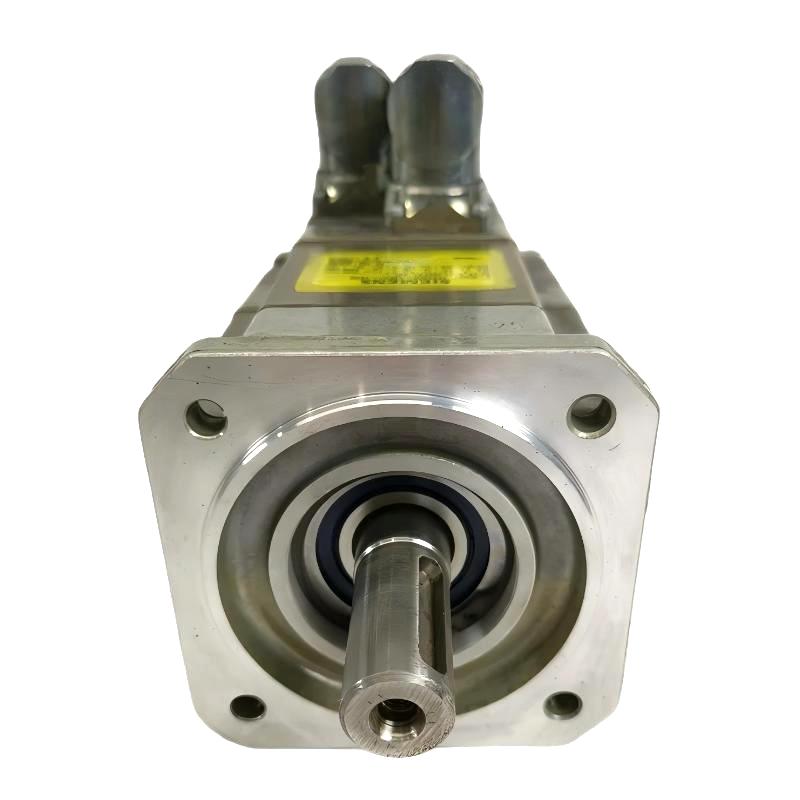
The Siemens 1FK7042-5AF71-1AA0 SIMOTICS S Synchronous Servo Motor is a compact permanent-magnet synchronous motor in the SIMOTICS S-1FK7 family. It has a rated power of 0.82 kW, a rated speed of 3,000 rpm and a rated torque of 2.6 Nm at a 100 K temperature rise. Natural cooling and an IM B5 mounting arrangement make it suitable for integration into appropriately configured industrial machine axes.
This model uses an incremental sin/cos encoder with a 1 Vpp signal and 2,048 pulses per revolution. Its shaft has a fitted key, and the motor is supplied without an integrated holding brake. The encoder feedback supports closed-loop speed and position regulation when connected to a compatible drive and correctly configured controller.
The motor’s power and signal connectors can be rotated through 270°, allowing connection orientation to be adapted to the machine layout. Its IP64 protection rating and defined mounting arrangements should be considered when selecting the installation location and associated cabling.
Technical Specifications
| Parameter | Specification |
|---|---|
| Manufacturer | Siemens |
| Model / Order Number | 1FK7042-5AF71-1AA0 |
| Product Family | SIMOTICS S-1FK7 |
| Product Type | Synchronous Servo Motor |
| Motor Design | Compact permanent-magnet synchronous motor |
| Rated Power | 0.82 kW |
| DC-Link Voltage | 600 V |
| Rated Speed | 3,000 rpm |
| Rated Torque (100 K) | 2.6 Nm |
| Static Torque (100 K) | 3.0 Nm |
| Rated Current | 1.9 A |
| Cooling Method | Natural cooling |
| Mounting Design | IM B5 (IM V1, IM V3) |
| Shaft Design | Shaft with fitted key |
| Shaft Tolerance | N |
| Encoder Type | Incremental sin/cos encoder |
| Encoder Signal | 1 Vpp |
| Encoder Resolution | 2,048 pulses per revolution |
| Holding Brake | Without integrated holding brake |
| Degree of Protection | IP64 |
| Shaft Height | 48 mm |
| Weight | 4.903 kg |
Product Features
- Permanent-magnet synchronous technology: Supports controlled rotary motion with a compatible servo drive.
- Incremental encoder feedback: Supplies sin/cos position signals for closed-loop speed and position regulation.
- 2,048-pulse encoder: Provides incremental position information for motion-control applications.
- Natural cooling: Uses the specified self-cooled motor configuration without requiring a separate motor-cooling circuit.
- Keyed shaft: Provides a mechanical connection for compatible couplings and transmission components.
- No integrated holding brake: Allows use in applications where a motor-mounted holding brake is not required or where load holding is handled separately.
- Rotatable connectors: The power and signal connector arrangement can be adjusted through 270° to suit installation requirements.
- IP64 protection: Provides protection against dust ingress and water splashes under the specified enclosure test conditions.
Working Principle
The motor converts electrical energy into mechanical rotation through the interaction between its stator’s magnetic field and the permanent magnets in its rotor. A compatible servo drive regulates current in the stator windings to generate the torque required by the machine axis.
The incremental sin/cos encoder generates feedback signals as the rotor turns. The drive processes these signals to determine changes in rotor position and rotational speed, then adjusts motor current according to the motion command. This feedback loop supports controlled acceleration, speed regulation and positioning within the capabilities of the configured drive system.
Because the encoder is incremental rather than an absolute encoder, the control system generally needs a reference or homing procedure when the application requires a known machine position after startup. The appropriate method depends on the machine’s feedback configuration and control strategy.
This model has no integrated holding brake. If a machine must retain a vertical or otherwise load-sensitive axis when the motor is not energized, the system must provide a suitable external holding arrangement where required.
Role in a SIMOTICS S Servo Control Architecture
The 1FK7042-5AF71-1AA0 functions as the rotary actuator in a closed-loop servo system. The controller issues motion commands, the servo drive supplies regulated motor current, and the incremental encoder returns feedback used to regulate the axis.
| System Component | Function | Relationship to the Motor |
|---|---|---|
| SIMOTICS S-1FK7 Motor | Converts electrical energy into rotary motion | Executes the commanded movement |
| Compatible Siemens Servo Drive | Regulates motor current, speed and torque | Powers the motor and evaluates encoder signals |
| Incremental Encoder | Generates sin/cos feedback signals | Supplies position-change and speed information |
| Encoder Signal Cable | Carries feedback signals to the drive | Connects the encoder to compatible feedback inputs |
| Motor Power Cable | Supplies electrical power | Connects the motor to the drive output |
| Motion Controller / PLC | Executes motion sequences and machine logic | Supplies axis commands and control setpoints |
| Mechanical Coupling | Transfers torque to the driven mechanism | Connects the keyed motor shaft to the machine |
| External Holding Mechanism, Where Required | Helps prevent unwanted movement when the motor is not producing torque | Addresses load-holding requirements not covered by an integrated motor brake |
Industrial Applications
| Application | Motion-Control Task | Role of the Motor |
|---|---|---|
| Automated Production Machinery | Controlling rotary axes and machine mechanisms | Supplies controlled servo torque with incremental feedback |
| Packaging Equipment | Coordinating movement during product handling | Supports speed regulation and repeatable movement |
| Assembly Automation | Moving mechanisms between programmed positions | Acts as a servo actuator in a configured motion system |
| Machine Tools | Operating servo-driven feed or positioning mechanisms | Provides controlled rotary motion for appropriately sized axes |
| Material Handling Equipment | Driving transfer or positioning mechanisms | Supports closed-loop motion where the motor ratings are suitable |
| Special-Purpose Machinery | Executing programmed movements | Combines encoder feedback with a keyed shaft connection |
Installation and Maintenance
- Verify the motor reference: Confirm that 1FK7042-5AF71-1AA0 matches the required encoder, shaft, brake and protection configuration.
- Check mechanical mounting: Ensure that the machine interface matches the specified IM B5 mounting arrangement or an approved IM V1 or IM V3 position.
- Confirm drive compatibility: Select a compatible servo drive and verify the electrical ratings and encoder input requirements.
- Isolate the equipment: Follow the applicable electrical lockout procedure and secure the driven mechanism before installation or maintenance.
- Inspect power connections: Check the motor power connector and cable for damage, contamination or loose connections.
- Verify encoder wiring: Confirm that the sin/cos 1 Vpp signals are connected to compatible feedback inputs using the correct cable arrangement.
- Configure encoder parameters: Set the encoder type and resolution correctly in the drive and motion-control configuration.
- Establish the reference position: Configure the required homing or referencing procedure if the application depends on a known machine position after startup.
- Inspect the keyed shaft: Check the shaft key and mating coupling for damage, incorrect fit or mechanical play.
- Check the operating environment: Ensure that installation conditions meet the motor’s specified protection and operating requirements.
- Perform a controlled commissioning test: Verify rotation direction, encoder response, speed regulation and positioning behavior before normal operation.
- Record maintenance findings: Document the motor reference, drive parameters, encoder configuration and any abnormal noise, vibration or temperature observations.
Compatible System Components
| Component | Function | Compatibility Consideration |
|---|---|---|
| Compatible Siemens Servo Drive | Supplies regulated power and performs motor control | Must support the motor’s electrical ratings and incremental encoder signals |
| Motor Power Cable | Carries power from the drive to the motor | Match the connector and cable specification |
| Encoder Signal Cable | Transfers incremental feedback signals | Confirm compatibility with the sin/cos 1 Vpp encoder interface |
| Motion Controller / PLC | Generates motion commands and sequences | Configure for the selected drive and feedback arrangement |
| Mechanical Coupling | Transfers torque to the machine mechanism | Match the keyed shaft and mechanical load |
| External Holding Brake or Locking Mechanism, Where Required | Provides load holding when the application requires it | Select according to load characteristics and machine safety requirements |
| Machine Reference Sensor, Where Required | Establishes a known reference position | Select according to the homing strategy and controller configuration |
Recommended Related Models
| Model | Product Type | Relationship | Selection Consideration |
|---|---|---|---|
| Siemens 1FK7042-5AF71-1FA0 | SIMOTICS S Synchronous Servo Motor | Related 1FK7 Compact motor with an absolute encoder and no holding brake | Compare encoder type and feedback requirements before substitution |
| Siemens 1FK7042-5AF71-1FG0 | SIMOTICS S Synchronous Servo Motor | Related 1FK7 Compact configuration with a plain shaft and no holding brake | Check the shaft interface and encoder configuration |
| Siemens 1FK7042-5AF71-1AB0 | SIMOTICS S Synchronous Servo Motor | Related motor configuration in the same 1FK7 family | Verify the full order-code details before considering it as an alternative |
| Siemens SINAMICS S120 | Servo Drive System | Drive family used in compatible Siemens servo architectures | Confirm drive sizing and support for the motor’s incremental encoder interface |
Key Advantages
- Provides 0.82 kW of rated power for appropriately sized servo applications.
- Supports closed-loop motion control through incremental sin/cos encoder feedback.
- Uses natural cooling and a keyed shaft arrangement.
- Offers flexible connector orientation for machine integration.
- Supports IM B5, IM V1 and IM V3 mounting arrangements.
- Fits servo systems where an integrated holding brake is not required.
Technical FAQs
What type of encoder is used in the 1FK7042-5AF71-1AA0?
The motor uses an incremental sin/cos encoder with a 1 Vpp signal and 2,048 pulses per revolution. The drive must support this feedback type and be configured for the correct encoder resolution.
Does this motor have an integrated holding brake?
No. The 1FK7042-5AF71-1AA0 is specified without an integrated holding brake. Applications that must hold a load while the motor is stationary or de-energized may require a separate holding mechanism.
Is homing required when using the incremental encoder?
If the application needs a known absolute machine position after startup, a reference or homing procedure is generally required. The exact procedure depends on the controller, machine reference sensors and axis configuration.
What should be checked if the servo drive cannot read the encoder correctly?
Check the encoder cable, connector assignment, sin/cos signal compatibility and drive feedback configuration. Verify the motor order number and encoder resolution before changing drive parameters or replacing the motor.