

ProductPRODUCT
Featured products



Contact Us
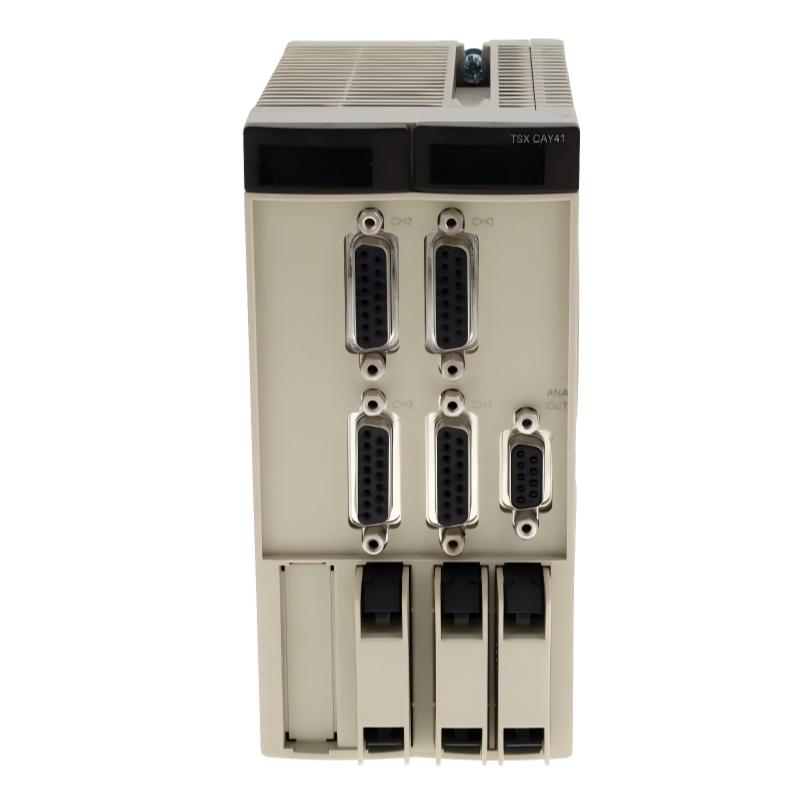
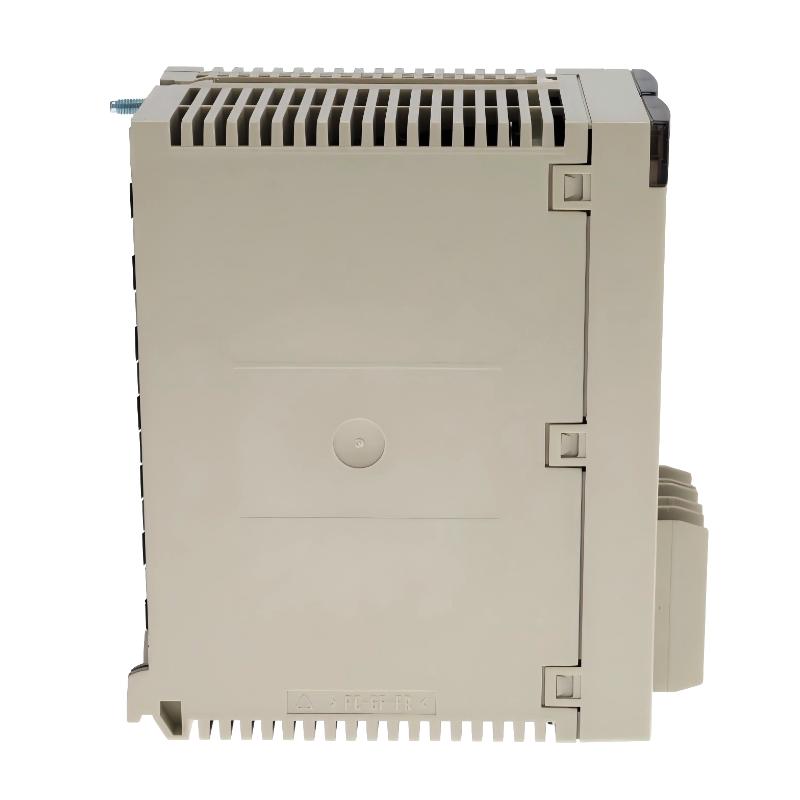
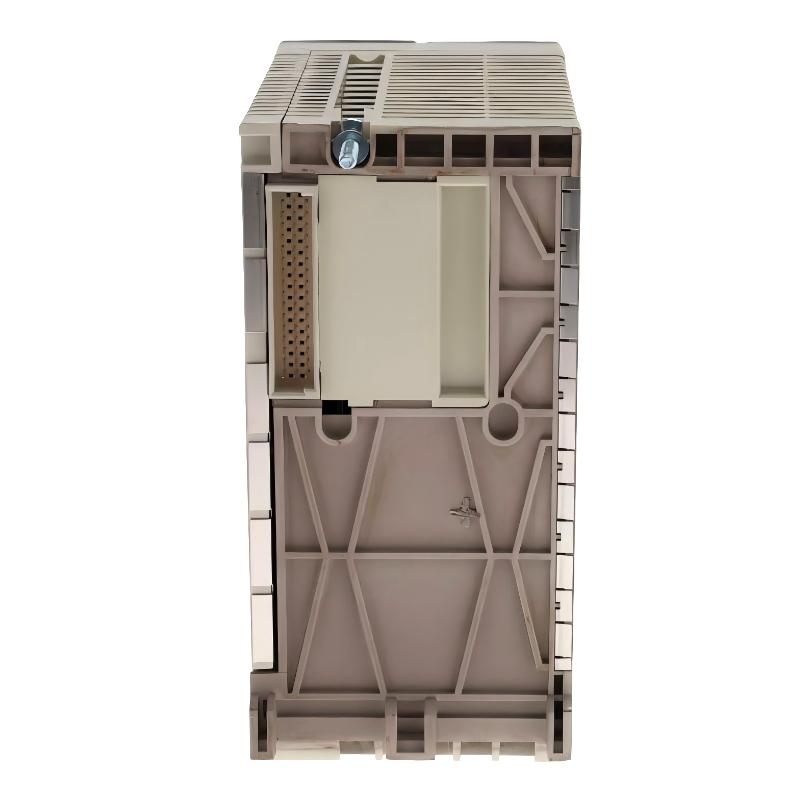
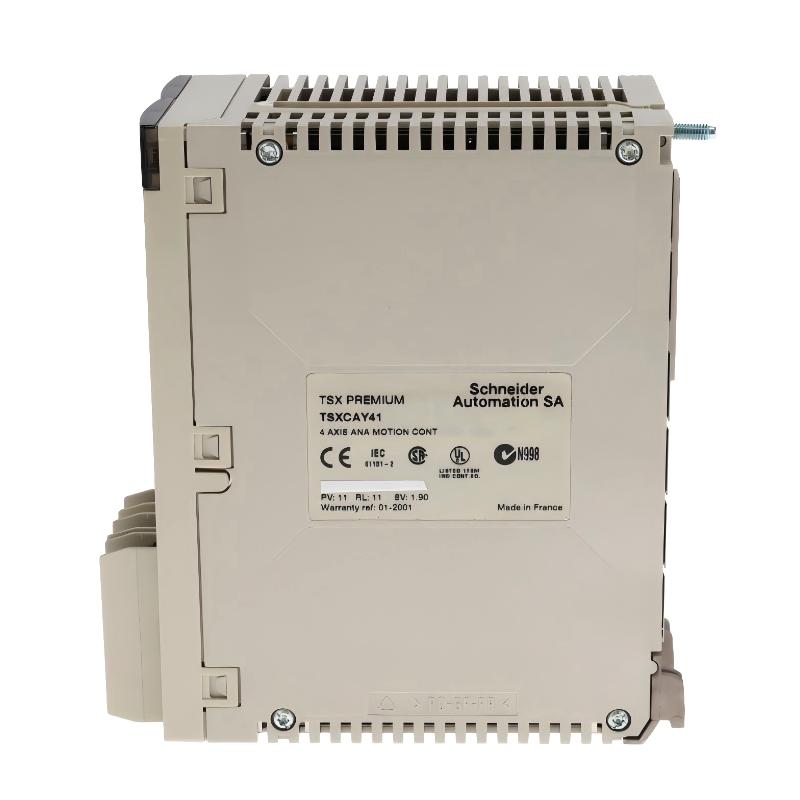
- Schneider
- TSXCAY41
- Motion Control Module
- France
- 179.9 × 80.7 × 99.5 mm
- 0.61 kg
- Xiamen, China
- New & In Stock
- T/T, PayPal, Western Union
- 1 Year
- 1-3 Working Days
- DHL, UPS, TNT, FedEx and EMS.
- 24-Hour Service
- COO
- 19
Our advantage

Global Logistics
We have a 10-year logistics and express cooperation agreement, so our products can be shipped to any place in the world.

Brand new and original
Our products are imported in bulk from the place of origin. Because of the cooperative relationship, our products are all original and 100% new.

24-hour service
We provide 7*24 hours service to our customers. We will be there whenever you need us.

Price advantage
All our products are priced very favorably because we have our own warehouse and supply.
| Company Information | |||
| [email protected] | |||
| Mobile | +8615980777398 | ||
| +8615980777398 | |||
| 15980777398 |
Product Overview
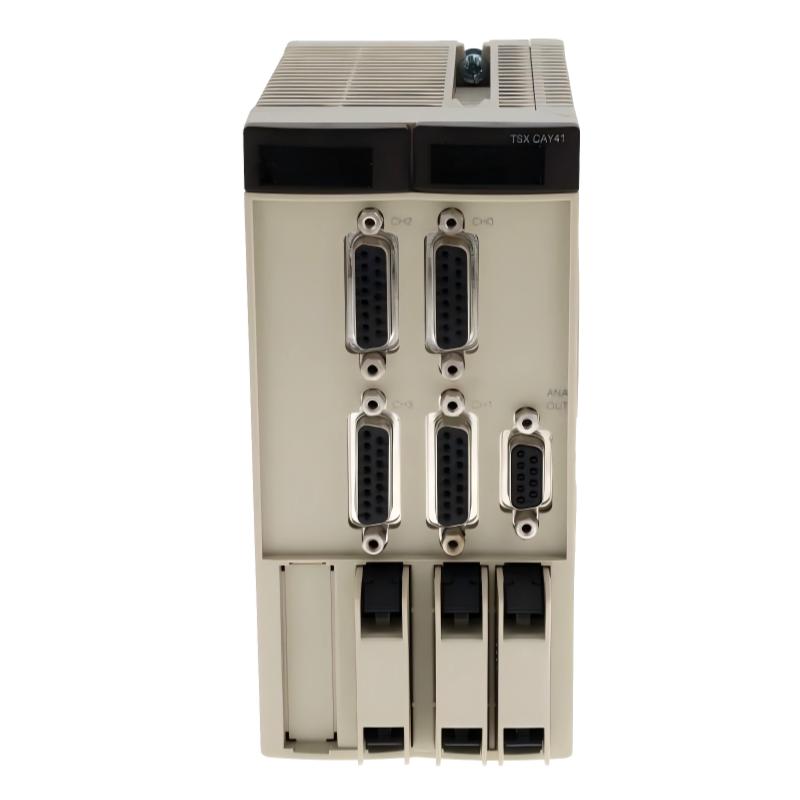
The Schneider Electric TSXCAY41 Modicon Premium Control Module is a four-axis motion-control module for servo motor applications within the Modicon Premium automation platform. It manages positioning and movement commands, processes encoder feedback, and exchanges control signals with compatible servo drives.
Unlike a standard discrete I/O module, the TSXCAY41 is intended for applications where movement must be coordinated according to position, speed, and acceleration requirements. It supports independent-axis control and following-axis configurations, making it suitable for machinery that requires repeatable positioning or synchronized movement between mechanical sections.
Typical applications include packaging equipment, material handling machinery, automated cutting systems, and production lines with multiple servo-driven mechanisms. The module supports trapezoidal and parabolic speed profiles, allowing motion behavior to be configured for the requirements of the application.
The TSXCAY41 works as part of a Modicon Premium PLC system. The controller manages the overall machine sequence, while the motion module processes axis commands and feedback signals. Correct operation depends on compatible encoder types, suitable servo drives, correctly wired safety and reference signals, and properly configured motion parameters.
Technical Specifications
| Parameter | Specification |
|---|---|
| Manufacturer | Schneider Electric |
| Model | TSXCAY41 |
| Product Family | Modicon Premium |
| Product Type | Motion Control Module |
| Application | Servo motor control |
| Number of Axes | 4 |
| Servo Loop | Proportional control with overshoot compensation and gain switching |
| Speed Profile | Trapezoidal or parabolic |
| Acceleration Time | 8 ms to 10 s |
| Position Resolution | 0.5 to 1,000 position units per point |
| Axis Length Range | 32,000 to 32,000,000 position units |
| Incremental Encoder Compatibility | 5 V RS-422 or 10–30 V DC Totem Pole |
| Absolute Encoder Compatibility | SSI, 16–25 bits |
| SSI Clock Frequency | Up to 200 kHz |
| Incremental Encoder Frequency | Up to 500 kHz for x1; up to 1,000 kHz for x4 counting |
| Acquisition Speed | 54,000 to 270,000 points/min |
| Analog Speed Reference Output | ±10 V to ±24 V range, depending on configuration |
| Analog Output Resolution | 13 bits plus sign |
| Power Dissipation | 10–17 W |
| Product Dimensions | 179.9 × 80.7 × 99.5 mm |
| Product Weight | 0.61 kg |
Product Features
- Four-axis motion control: Manages up to four axes within a compatible Modicon Premium configuration.
- Servo-loop control: Uses proportional control with overshoot compensation and gain switching to regulate axis movement.
- Multiple encoder interfaces: Accepts supported incremental encoder signals and SSI absolute encoder feedback.
- Configurable movement profiles: Offers trapezoidal and parabolic speed profiles for different motion requirements.
- Adjustable acceleration: Supports acceleration times from 8 ms to 10 seconds, allowing motion parameters to be adapted to the application.
- Axis operating modes: Includes automatic, manual, direct-drive, follower, and OFF modes.
- Drive and feedback monitoring: Checks relevant command consistency, encoder coupling, drive presence, emergency-stop input status, and movement execution.
- Integrated signal connections: Provides dedicated connections for encoder feedback, servo-drive control, auxiliary inputs, and analog speed references.
The module’s available functions depend on the configured axis type, selected encoder interface, drive arrangement, and application parameters. These settings should be coordinated with the PLC program and the electrical design of the machine.
Working Principle
The TSXCAY41 converts programmed motion commands into axis-control signals while processing feedback from the connected encoder. The PLC application defines the operating sequence, and the motion module manages the movement-related functions for each configured axis.
PLC Motion Command → TSXCAY41 Axis Processing → Servo Drive → Servo Motor → Mechanical Movement
Encoder Feedback → TSXCAY41 → Position and Movement Monitoring
When a movement command is issued, the module uses the configured speed profile, acceleration parameters, and target position to determine the required motion behavior. The servo drive receives the applicable speed reference and control signals, then operates the motor. Encoder feedback allows the module to monitor movement and evaluate whether the axis is following the intended command.
For example, in a packaging machine, one axis may control film feed while another controls a cutting mechanism. The TSXCAY41 can manage the configured axes as part of the programmed sequence, with the required position references and timing coordinated through the PLC application.
The module also checks conditions associated with drive availability, encoder coupling, command consistency, and emergency-stop inputs. These monitoring functions contribute to motion supervision, but they do not replace a properly engineered machine safety system. Emergency-stop functions must be implemented according to the machine’s safety architecture.
Role in a Modicon Premium Motion-Control Architecture
The TSXCAY41 occupies the motion-control position in a Modicon Premium PLC rack. It works with the CPU, encoder devices, servo drives, and mechanical axes to coordinate programmed movement.
Modicon Premium CPU → TSXCAY41 → Servo Drive → Servo Motor → Mechanical Axis
| System Component | Function |
|---|---|
| Modicon Premium CPU | Executes the machine-control program and issues motion commands |
| TSXCAY41 | Processes axis commands, encoder feedback, and motion-control signals |
| Incremental Encoder | Provides position-related pulses for axis monitoring |
| SSI Absolute Encoder | Supplies absolute position data through the supported serial interface |
| Servo Drive | Controls motor current and motor response according to the reference and drive configuration |
| Servo Motor | Produces the mechanical movement required by the machine |
| Speed Reference Connection | Carries the analog reference used by the compatible drive arrangement |
| Auxiliary Inputs | Receive reference, adjustment, and emergency-stop-related signals as configured |
| Machine Mechanics | Convert motor movement into linear or rotary motion |
The TSXCAY41 supports limited-axis and following-axis configurations. In a following-axis application, one axis can be configured to follow a reference relationship defined in the motion program. The achievable coordination depends on the mechanics, feedback arrangement, drive configuration, and programmed axis parameters.
Industrial Applications
| Application | Typical Use |
|---|---|
| Packaging Machinery | Coordinating film feed, sealing, cutting, and product positioning |
| Automated Cutting Systems | Controlling material feed and cutting-axis movement |
| Material Handling | Managing servo-driven transfer mechanisms and positioning axes |
| Assembly Equipment | Repeating controlled movements during automated assembly sequences |
| Printing and Converting | Coordinating feed rollers and other servo-driven mechanisms |
| Pick-and-Place Machinery | Managing programmed axis movements for component transfer |
| Production Lines | Synchronizing selected machine axes with a defined movement sequence |
| Specialized Machinery | Implementing encoder-based positioning and following-axis control |
The module is most appropriate where the application requires dedicated axis-control functions rather than only basic motor start/stop logic. Encoder selection, servo-drive compatibility, motion range, and required response characteristics should be evaluated together.
Installation and Maintenance
- Verify the module reference. Confirm that TSXCAY41 is the required motion module for the Modicon Premium rack and intended axis configuration.
- Isolate the rack power. Switch off the relevant power sources before inserting, removing, or rewiring the module.
- Check rack compatibility. Confirm that the rack, CPU, and installed hardware support the intended module arrangement.
- Plan encoder connections. Identify whether each axis uses a supported incremental encoder or SSI absolute encoder, and select the matching wiring arrangement.
- Wire the servo-drive interface. Connect the speed reference and drive-control signals according to the drive type and module connection diagram.
- Connect auxiliary signals. Verify the reference, adjustment, and emergency-stop-related inputs required by the application.
- Separate signal and power wiring. Route encoder and reference-signal cables to reduce interference from motor power cables and switching equipment.
- Configure the axis parameters. Set the encoder type, position scaling, speed profile, acceleration time, operating mode, and axis limits in the application.
- Check the feedback direction. Confirm that encoder counts and commanded movement correspond to the intended mechanical direction before enabling normal operation.
- Test one axis at a time. Begin with a controlled, low-risk movement and verify the direction, reference response, and position feedback before testing coordinated movement.
- Check diagnostic conditions. Investigate encoder coupling, drive-presence, command-consistency, and movement-execution errors when they occur.
- Record the configuration. Keep a copy of the PLC program, axis parameters, encoder scaling, and drive settings so that maintenance or module replacement can be performed consistently.
During troubleshooting, distinguish between PLC command issues, incorrect encoder feedback, servo-drive faults, wiring interference, and mechanical resistance. A movement error may arise from any of these areas, so changing motion parameters without identifying the cause can introduce additional positioning problems.
Related Components
| Component | Function |
|---|---|
| Modicon Premium CPU | Executes the PLC application and coordinates machine operations |
| Modicon Premium Rack | Provides the module mounting and backplane connections |
| Incremental Encoder | Supplies position feedback through supported 5 V RS-422 or 10–30 V DC signals |
| SSI Absolute Encoder | Provides absolute position data to the motion module |
| Servo Drive | Converts control references into motor movement |
| Servo Motor | Drives the mechanical axis |
| Encoder Connection Cable | Carries encoder signals between the feedback device and module |
| Servo-Drive Control Cable | Carries the applicable control and reference signals |
| Emergency-Stop Circuit | Implements the machine’s required safety-related stopping function |
| Mechanical Axis Assembly | Converts servo movement into the required machine operation |
Recommended Related Models
| Model / Product Family | Product Type | Typical Application |
|---|---|---|
| Schneider TSXCAY21 | Modicon Premium Motion Control Module | Two-axis servo control with incremental encoder feedback |
| Schneider TSXCAY22 | Modicon Premium Motion Control Module | Servo control for compatible independent or continuous-axis applications |
| Schneider TSXCAY33 | Modicon Premium Motion Control Module | Three-axis servo control and supported interpolation applications |
| Schneider TSXCAY42 | Modicon Premium Motion Control Module | Four-axis following applications with real-time offset correction |
| Schneider TSXCAY2 Series | Modicon Premium Motion Control Modules | Two-axis motion-control configurations |
| Schneider TSXCAY4 Series | Modicon Premium Motion Control Modules | Four-axis servo-control configurations |
| Schneider TSX Premium CPU Family | Programmable Logic Controllers | Executing the PLC program associated with the motion application |
| Schneider Modicon Premium Racks | PLC Rack System | Mounting compatible CPU and motion-control modules |
Key Advantages
- Controls up to four configured servo axes from a single module.
- Supports incremental and SSI absolute encoder feedback.
- Offers trapezoidal and parabolic motion profiles.
- Provides configurable acceleration times and position scaling.
- Includes drive, encoder, command-consistency, and movement checks.
- Integrates dedicated motion-control functions into a Modicon Premium PLC architecture.
Technical FAQs
How many axes can the TSXCAY41 control?
The TSXCAY41 supports up to four axes. Each axis must be configured with suitable encoder feedback, drive connections, motion parameters, and a compatible application program. The number of axes that can be operated effectively also depends on the machine’s movement requirements and the overall control-system configuration.
Which encoder types are compatible with the TSXCAY41?
The module supports 5 V RS-422 incremental encoders, 10–30 V DC Totem Pole incremental encoders, and SSI absolute encoders with 16–25-bit output. Encoder wiring, signal levels, counting mode, and position scaling must match the selected interface and application.
What motion profiles and acceleration times does the module support?
The TSXCAY41 supports trapezoidal and parabolic speed profiles, with acceleration times from 8 ms to 10 seconds. The appropriate profile and acceleration settings depend on the mechanical load, motor and drive capabilities, target movement, and required positioning behavior.
What should be checked if an axis does not reach its target position?
Check the encoder connection and direction, position scaling, target and axis limits, speed-reference wiring, servo-drive status, and configured motion parameters. Also verify that the mechanical axis can move freely and that the required enable and emergency-stop-related conditions are satisfied. Review diagnostic information before changing the motion settings.