

ProductPRODUCT
Featured products



Contact Us
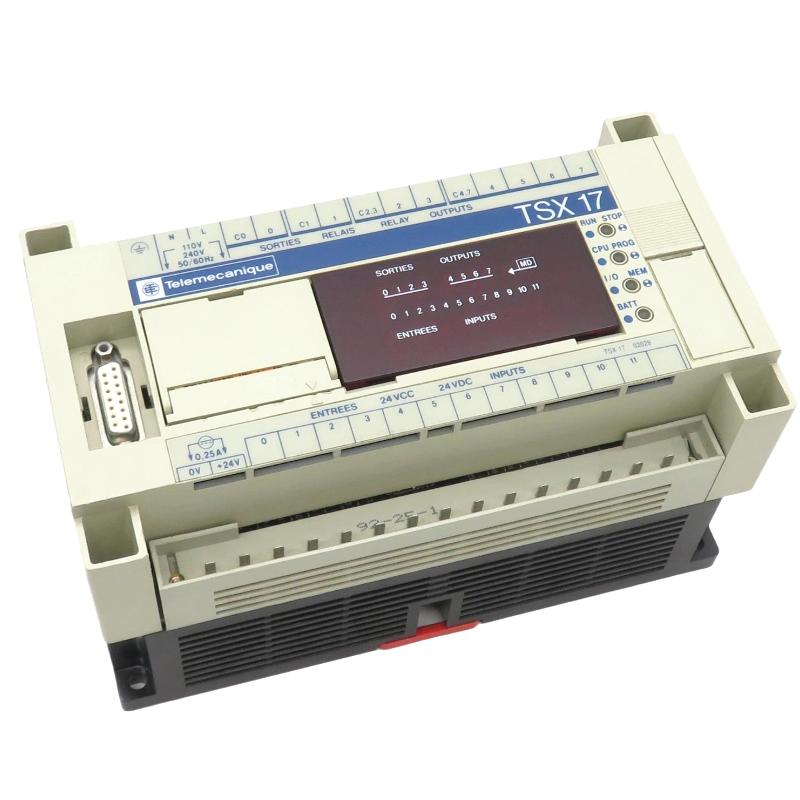
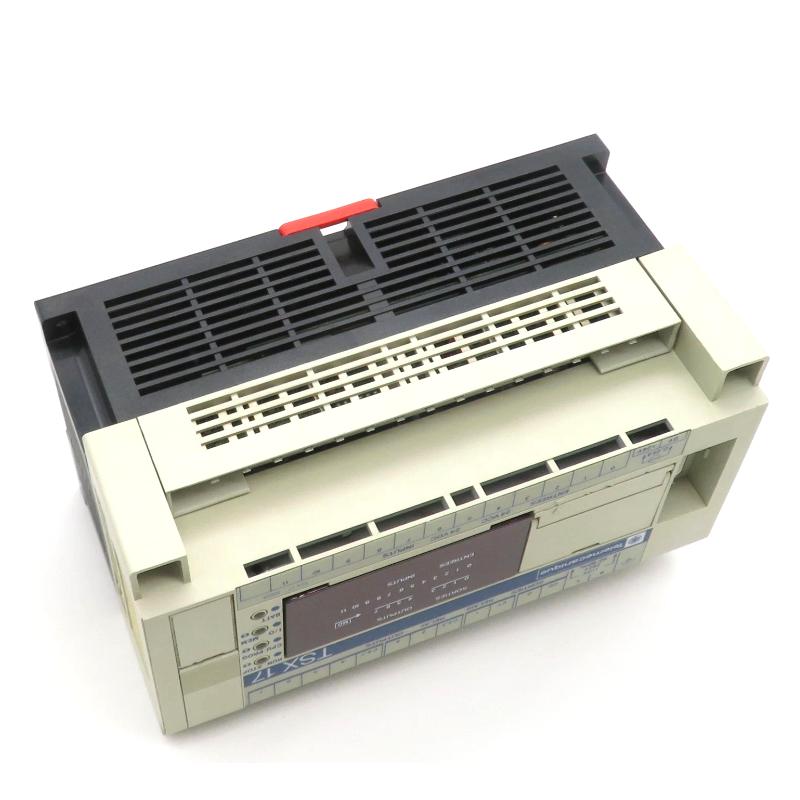
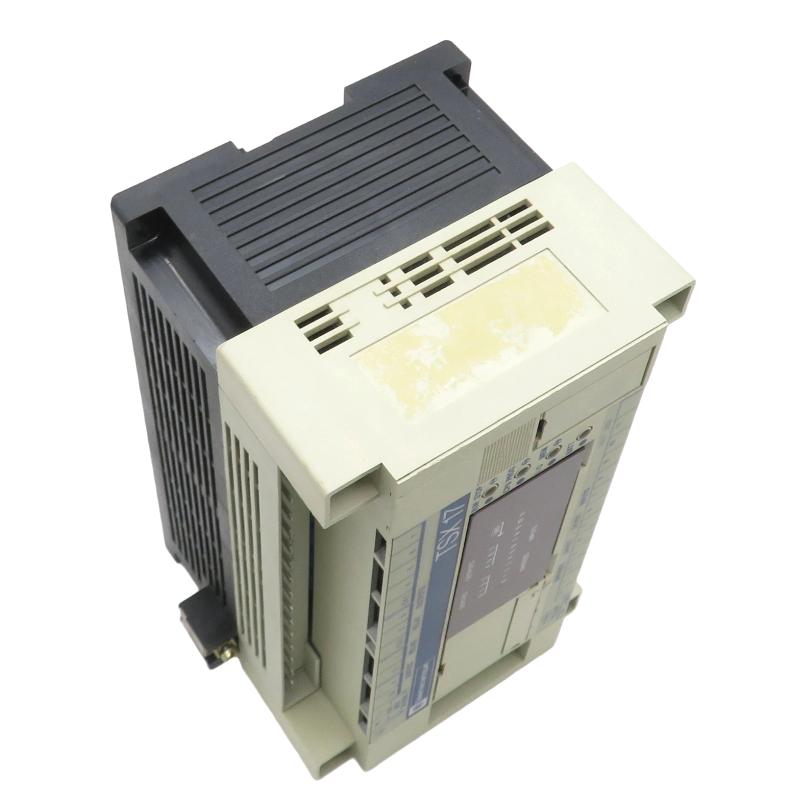
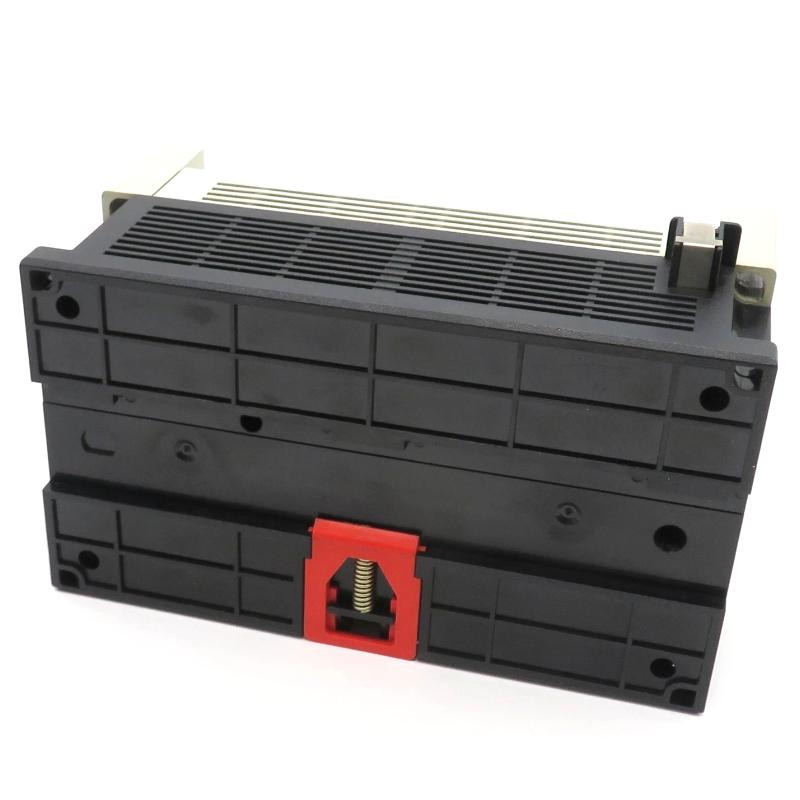
- Schneider
- TSX1702028
- Programmable Controller
- USA
- 220 × 110 × 65 mm
- 1.18 kg
- Xiamen, China
- New & In Stock
- T/T, PayPal, Western Union
- 1 Year
- 1-3 Working Days
- DHL, UPS, TNT, FedEx and EMS.
- 24-Hour Service
- COO
- 16
Our advantage

Global Logistics
We have a 10-year logistics and express cooperation agreement, so our products can be shipped to any place in the world.

Brand new and original
Our products are imported in bulk from the place of origin. Because of the cooperative relationship, our products are all original and 100% new.

24-hour service
We provide 7*24 hours service to our customers. We will be there whenever you need us.

Price advantage
All our products are priced very favorably because we have our own warehouse and supply.
| Company Information | |||
| [email protected] | |||
| Mobile | +8615980777398 | ||
| +8615980777398 | |||
| 15980777398 |
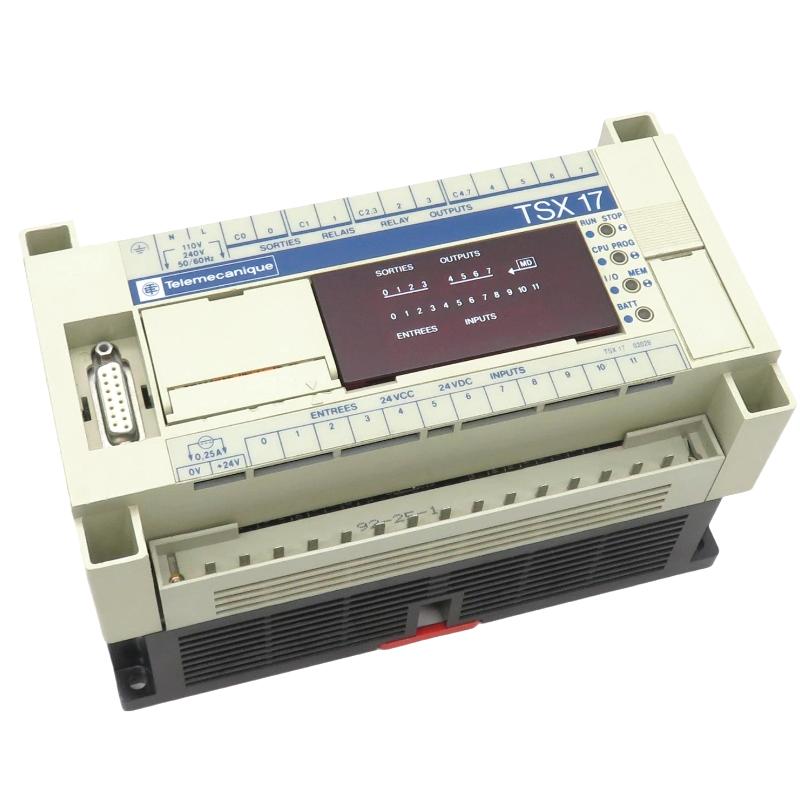
Product Overview
The Schneider Electric TSX1702028 Modicon TSX 17 Programmable Controller is a compact legacy PLC intended for basic industrial machine control. Its integrated input and relay-output circuits allow it to handle straightforward control tasks without requiring a separate rack of I/O modules for every signal.
The TSX1702028 uses a 110–240 V AC power supply and provides 24 V DC inputs with relay outputs. This arrangement suits control panels that monitor discrete signals from switches, limit sensors, and other field devices, then operate contactors, indicator lamps, solenoid valves, or similar loads through relay contacts within their electrical ratings.
Typical applications include small machinery, older production equipment, and established control systems where the original PLC program and wiring are still in service. For maintenance teams, retaining the original controller can preserve existing machine logic and reduce the immediate need to redesign field wiring. However, the TSX 17 is a discontinued product family, and its programming environment and accessories belong to an older generation of automation technology.
Before installing a replacement, confirm the exact controller variant, terminal arrangement, input configuration, output ratings, and program requirements. Similar TSX 17 references can have different I/O counts or output technologies, so the family name alone is not sufficient to establish interchangeability.
Technical Specifications
| Parameter | Specification |
|---|---|
| Manufacturer | Schneider Electric / Telemecanique |
| Model | TSX1702028 |
| Product Family | Modicon TSX 17 |
| Product Type | Compact Programmable Logic Controller |
| Controller Category | Legacy Micro-PLC |
| Power Supply | 110–240 V AC |
| Input Type | 24 V DC discrete inputs |
| Number of Integrated I/O Points | 20 |
| Input Configuration | 12 inputs |
| Output Configuration | 8 relay outputs |
| Output Type | Electromechanical relay |
| Programming Environment | PL7 family; exact software version depends on the controller variant |
| Product Status | Legacy, discontinued product family |
| Product Dimensions | 220 × 110 × 65 mm |
| Product Weight | 1.18 kg |
Product Features
- Integrated discrete I/O: Combines input monitoring and relay-based output control in one controller, reducing the need for separate basic I/O hardware.
- 24 V DC input circuits: Accepts discrete signals from compatible control switches and sensors.
- Relay output switching: Uses relay contacts to switch compatible AC or DC control loads within the specified electrical limits.
- AC-powered controller: Operates from a 110–240 V AC supply, suitable for compatible industrial control panels.
- Legacy machine-control platform: Can be relevant when maintaining existing equipment whose wiring, program, and operating sequence were built around the TSX 17.
- Expandable system concept: The TSX 17 family included compatible extension blocks and specialized modules, subject to the particular controller variant and system configuration.
Relay outputs should not be treated as unrestricted power outputs. Load current, voltage, switching frequency, inductive transients, and the required electrical life of the contacts must all be considered when connecting field equipment.
Working Principle
The TSX1702028 receives AC power and executes a stored control program to coordinate its discrete inputs and relay outputs.
Field Sensors and Switches → 24 V DC Inputs → PLC Program → Relay Outputs → Controlled Equipment
When a connected switch changes state, the corresponding input circuit reports that state to the controller. The PLC evaluates the input conditions against its stored logic, including any interlocks, timers, counters, or sequencing functions used by the application. It then updates the relevant output states.
For example, on a small machine, a limit switch may indicate that a moving component has reached its end position. The controller evaluates that signal alongside the machine’s operating conditions and changes the relevant relay output to stop a motor contactor or activate the next step in the sequence.
The relay contacts provide electrical switching between the PLC’s control logic and the connected load circuit. They do not eliminate the need for correctly rated contactors, fuses, overload protection, or external safety devices where the application requires them.
The controller’s actual programming options and available functions depend on its precise TSX 17 variant and the installed program. When servicing an existing installation, preserving the original logic and confirming its input/output mapping are essential to avoiding unintended machine operation.
Role in a Modicon TSX 17 Control Architecture
The TSX1702028 serves as the central logic device in a compact control system. It collects discrete signals, evaluates the programmed conditions, and switches output circuits to control the machine sequence.
Operator Controls and Sensors → TSX1702028 PLC → Relay-Controlled Loads
| System Component | Function |
|---|---|
| TSX1702028 PLC | Executes the control program and manages integrated discrete I/O |
| 110–240 V AC Supply | Provides the controller’s operating power |
| 24 V DC Control Circuit | Supplies compatible input devices and associated control signals |
| Push Buttons and Selector Switches | Provide operator commands |
| Limit Switches and Proximity Sensors | Report machine position or equipment status |
| Contactors and Interposing Relays | Switch loads that exceed the PLC output’s direct switching suitability or require electrical separation |
| Solenoid Valves and Indicator Lamps | Provide machine actuation or status indication |
| Programming Cable and Interface | Connect a compatible programming computer to the controller |
| Program Backup Media | Preserves the application program where supported by the specific controller configuration |
The TSX 17 family is a legacy platform. Programming access, software availability, and communication accessories may be difficult to maintain, and modern PLC software should not be assumed to program this controller directly. Schneider Electric documentation identifies PL7-2 as a TSX 17 programming environment that is not compatible with modern Windows operating systems without an appropriate legacy setup.
Industrial Applications
| Application | Typical Use |
|---|---|
| Legacy Machine Control | Maintaining established machine sequences and discrete interlocks |
| Packaging Equipment | Monitoring switches and controlling relay-operated machine functions |
| Conveyor Systems | Coordinating simple start, stop, and position-dependent operations |
| Material Handling | Processing discrete equipment states and switching control circuits |
| Small Assembly Machines | Sequencing actuators based on sensor feedback |
| Utility Equipment | Controlling basic auxiliary equipment through discrete logic |
| Industrial Maintenance | Replacing a failed controller in an existing TSX 17 installation when the exact variant and program are available |
| Training and Troubleshooting | Studying or maintaining older PLC-based control systems |
For new machine designs, the TSX 17’s discontinued status and legacy programming requirements are important selection considerations. Its strongest use case is typically the maintenance of an existing compatible installation rather than the development of a new automation platform.
Installation and Maintenance
- Confirm the exact model. Check the complete part number and controller markings before connecting power or field wiring.
- Review the existing wiring. Identify the AC supply, 24 V DC input circuits, relay output terminals, and protective earth connection.
- Isolate the equipment. Disconnect the relevant supplies and verify that the panel is de-energized before installation or maintenance.
- Check the supply voltage. Confirm that the incoming AC supply is within the controller’s specified range and that the protective devices are correctly rated.
- Inspect input wiring. Verify sensor voltage, polarity where applicable, common connections, and input assignments against the original wiring diagram.
- Check relay output loads. Confirm the voltage, current, and load type for every connected output. Use appropriate external switching and protection for loads that exceed the permitted direct switching conditions.
- Verify the program. Preserve the existing application program before making changes, where a valid backup and compatible programming setup are available.
- Inspect terminals and mounting. Look for loose connections, corrosion, damaged insulation, discoloration, or signs of overheating.
- Test the control sequence. After wiring checks, verify input status and output operation in a controlled commissioning procedure, with hazardous machine movement prevented.
- Record maintenance findings. Document wiring changes, program revisions, replaced components, and any differences between the actual installation and its drawings.
Because the TSX 17 is a legacy platform, programming access should be checked before a controller is removed from a working machine. A replacement unit may require the original program to be restored, and the necessary legacy software or programming cable may not be readily available.
Related Components
| Component | Function |
|---|---|
| TSX17ACCPC Programming Cable Assembly | Legacy connection arrangement for linking a PC to a TSX 17 controller |
| TSXACC8 | RS-232/RS-485 converter used in the TSX17ACCPC programming connection |
| TSXACC11 | Cable component used in the TSX17ACCPC programming connection |
| TSX17ACC1 | Battery accessory for RAM backup on applicable TSX 17-20 controllers |
| TSX17ACC2 | PL7-2 display adapter accessory |
| TSX CBB 003 | Legacy extension connection cable, 0.32 m |
| TSX CBB 009 | Legacy extension connection cable, 0.90 m |
| TSX CBB 016 | Legacy extension connection cable, 1.60 m |
| TSX DMF Extension Blocks | Expand compatible TSX 17 configurations with additional I/O |
| TSX DTF 400 | Legacy timer and analog-related module for supported TSX 17 systems |
Accessory compatibility depends on the specific TSX 17 controller generation and the intended function. An accessory listed for the wider family should not be assumed to work with every controller variant.
Recommended Related Models
| Model / Product Family | Product Type | Typical Application |
|---|---|---|
| Schneider TSX1712028 | TSX 17-10 Programmable Controller | Compact discrete control with integrated relay outputs |
| Schneider TSX1722028 | TSX 17-20 Programmable Controller | Legacy PLC control with integrated discrete I/O |
| Schneider TSX1722044 | TSX 17-20 Programmable Controller | Legacy control applications requiring a different I/O configuration |
| Schneider TSX1713428 | TSX 17-10 Programmable Controller | Discrete machine control with additional integrated I/O compared with 20-point variants |
| Schneider TSX1712002 | TSX 17-10 Programmable Controller | Legacy controller configuration with transistor outputs |
| Schneider TSX1714002 | TSX 17-10 Programmable Controller | Discrete control using transistor outputs and a different I/O arrangement |
| Schneider TSX DMF 242A | TSX 17 Extension Block | I/O expansion in compatible TSX 17 systems |
| Schneider TSX DMF 342A | TSX 17 Extension Block | Expansion of supported legacy PLC configurations |
These models belong to the broader TSX 17 family, but they are not necessarily direct replacements for the TSX1702028. Input voltage, output technology, I/O count, controller generation, and program compatibility must be compared before substitution.
Key Advantages
- Combines discrete input processing and relay output switching in one controller.
- Provides a familiar architecture for maintaining existing TSX 17-based machinery.
- Handles straightforward machine sequences without a separate modular I/O rack.
- Offers a documented legacy programming and accessory ecosystem for compatible installations.
- Can reduce redesign work when an existing control system must retain its established I/O arrangement.
Technical FAQs
How many inputs and outputs does the TSX1702028 have?
The TSX1702028 is identified as a 20-point discrete I/O controller with 12 inputs and 8 relay outputs. Check the complete model designation and terminal diagram before wiring, because other TSX 17 variants have different I/O counts and output technologies.
What power supply does the TSX1702028 require?
The specified controller uses a 110–240 V AC power supply, while its discrete inputs are 24 V DC. The AC supply and low-voltage control wiring must be connected to their designated terminals and protected according to the installation requirements.
Can the TSX1702028 be programmed using current Schneider Electric PLC software?
Do not assume that current programming software supports this legacy controller. The TSX 17 family used older PL7 programming tools, and Schneider Electric documentation notes that PL7-2 is not compatible with modern Windows operating systems. A compatible legacy programming environment and the appropriate connection hardware may be necessary to access an existing program.
What should be checked before replacing a failed TSX1702028?
Confirm the complete part number, power supply, input configuration, relay output ratings, terminal layout, expansion arrangement, and application program. Also establish whether the original program can be backed up or restored and whether the existing programming cable and software are available. A controller with a similar TSX 17 designation is not automatically a direct replacement.