

ProductPRODUCT
Featured products



Contact Us
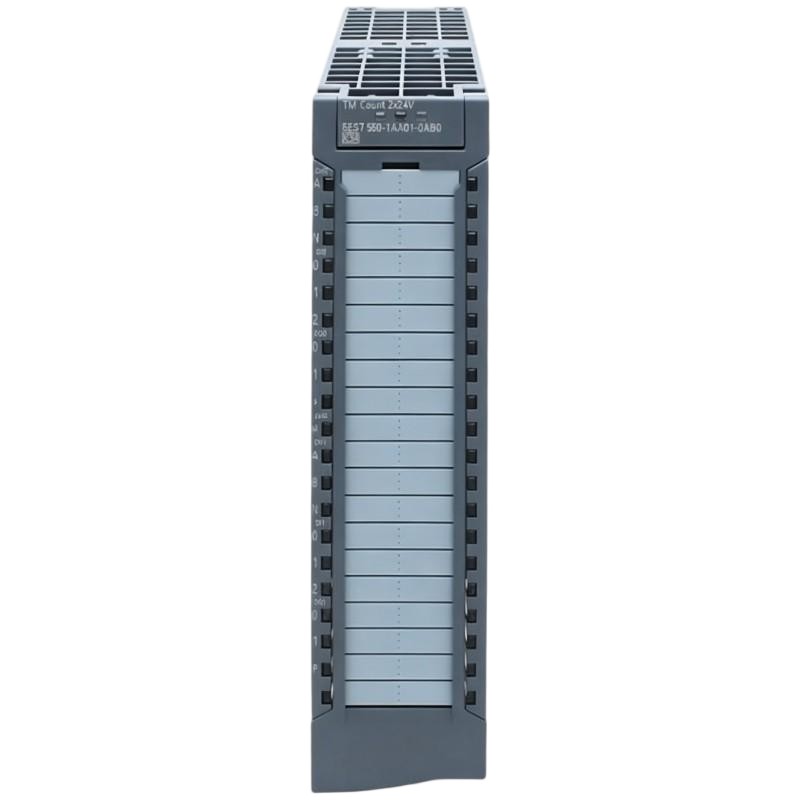
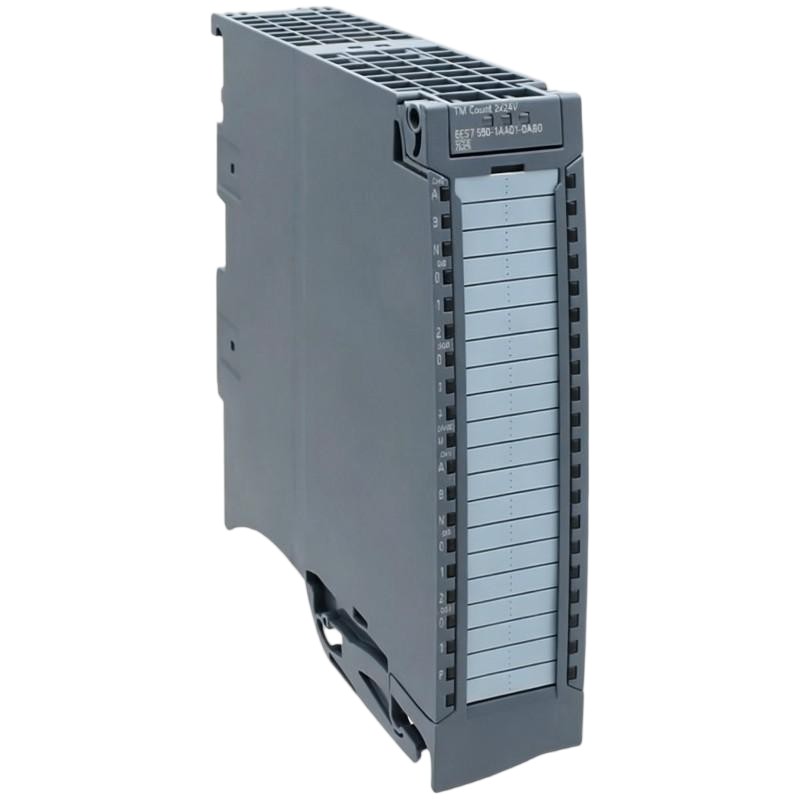
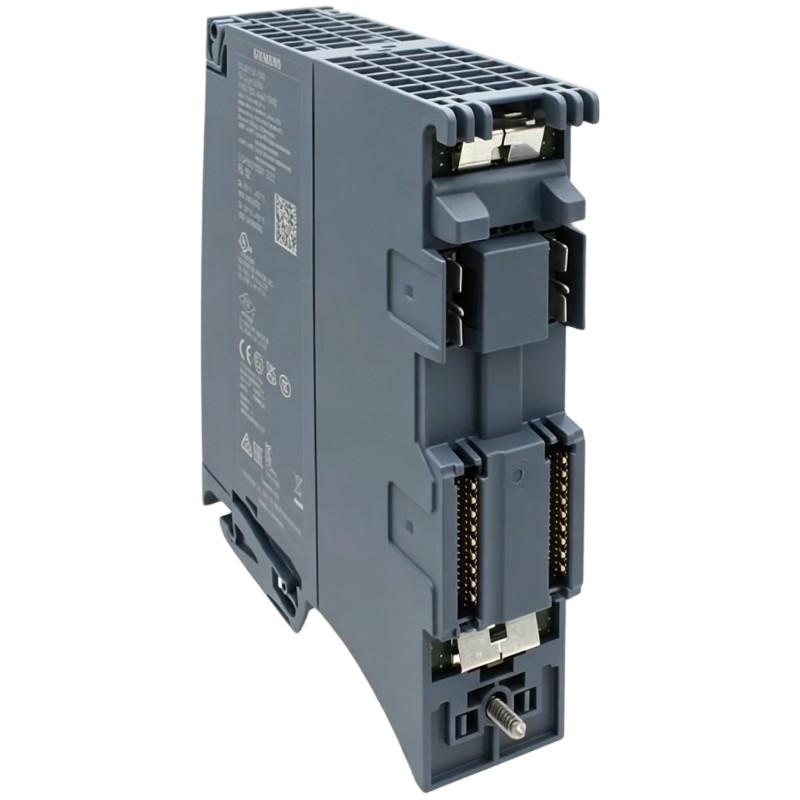
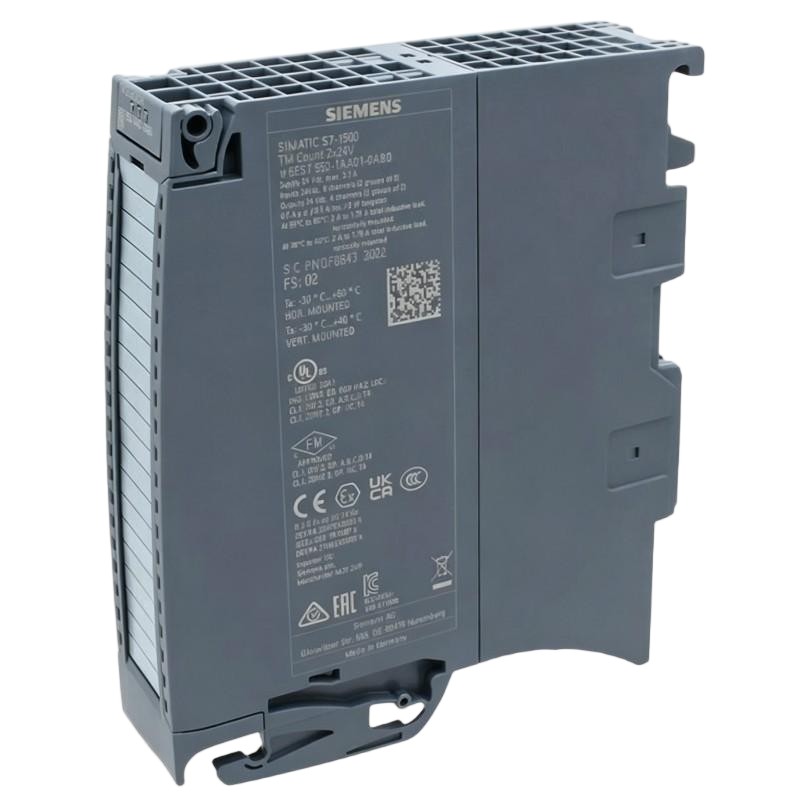
- Siemens
- 6AG1550-1AA01-7AB0
- Counter Module
- Germany
- 35 × 147 × 129 mm
- 0.359 kg
- Xiamen, China
- New & In Stock
- T/T, PayPal, Western Union
- 1 Year
- 1-3 Working Days
- DHL, UPS, TNT, FedEx and EMS.
- 24-Hour Service
- COO
- 41
Our advantage

Global Logistics
We have a 10-year logistics and express cooperation agreement, so our products can be shipped to any place in the world.

Brand new and original
Our products are imported in bulk from the place of origin. Because of the cooperative relationship, our products are all original and 100% new.

24-hour service
We provide 7*24 hours service to our customers. We will be there whenever you need us.

Price advantage
All our products are priced very favorably because we have our own warehouse and supply.
| Company Information | |||
| [email protected] | |||
| Mobile | +8615980777398 | ||
| +8615980777398 | |||
| 15980777398 |
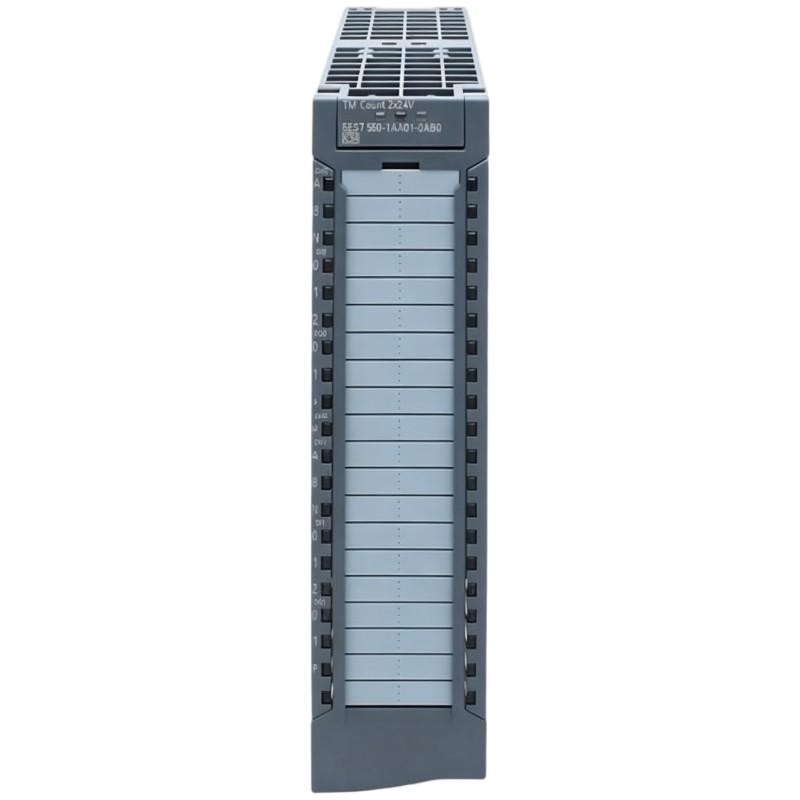
Product Overview
The Siemens 6AG1550-1AA01-7AB0 is a SIPLUS S7-1500 Counter Module used for pulse-based counting tasks in industrial automation. It is suited to applications where the control system needs to track repetitive events, machine cycles, product quantities, or movement-related pulses rather than simply monitor a conventional on/off state.
A practical example is a production conveyor where a sensor generates a pulse whenever a product passes a defined point. The counter function can accumulate these events so the S7-1500 control program can use the count for production tracking, sequence control, or machine interlocks. Similar arrangements can be found on indexing mechanisms, rotary equipment, packaging machines, and automated assembly stations.
The module belongs to the SIPLUS S7-1500 platform and is therefore used as part of a larger PLC architecture rather than as a standalone counting device. When replacing an installed module, the pulse source, wiring, hardware configuration, counting application, and surrounding S7-1500 modules should all be checked together.
Technical Specifications
| Parameter | Specification |
|---|---|
| Product Model | 6AG1550-1AA01-7AB0 |
| Product Type | Counter Module |
| Product Family | SIPLUS |
| Automation Platform | S7-1500 |
| Module Function | Pulse Counting |
| System Role | Counter and Pulse Signal Acquisition |
| Signal Application | Repetitive Pulse / Event Monitoring |
| Control Integration | Siemens S7-1500 PLC |
| Application | Industrial Machine and Process Automation |
| Processing Function | Counting and Evaluation of Pulse Events |
| Component Type | S7-1500 Counter Module |
| Installation | S7-1500 Control Cabinet |
| Dimensions | 35 × 147 × 129 mm |
| Weight | 0.359 kg |
Product Features
- SIPLUS S7-1500 counter module for pulse-based automation applications.
- Captures repetitive events for counting and machine monitoring.
- Suitable for product counting on conveyors and production lines.
- Can be used for monitoring machine cycles and repetitive operating events.
- Supports applications involving pulse-generating sensors and encoders.
- Integrates count information into the S7-1500 control program.
- Suitable for automated assembly, packaging, material handling, and production machinery.
- Fits into existing S7-1500 control architectures where dedicated counting functions are required.
- Useful for maintenance and replacement of established SIPLUS S7-1500 installations.
Working Principle
The 6AG1550-1AA01-7AB0 receives repetitive electrical pulses from a connected field device and turns those events into counting information that can be used by the S7-1500 control system.
Consider a conveyor application: a photoelectric sensor detects each passing product and generates a pulse. The counter module processes the incoming events and maintains the corresponding count, while the PLC program can use that information to determine when a target quantity has been reached or when a subsequent machine action should occur.
A typical signal path is:
Pulse Sensor / Encoder → 6AG1550-1AA01-7AB0 → S7-1500 Controller → Control Logic → Machine Action
The same principle applies to rotary mechanisms, indexing tables, production cycles, and other equipment where a sequence of discrete pulses represents a physical process. During commissioning, the actual field signal and the configured counting function need to agree; wiring problems, incorrect signal assignments, or unsuitable configuration can all result in missed or unexpected counts.
Role in a SIPLUS S7-1500 Counter Control Architecture
The counter module sits between the pulse-generating field device and the PLC application. It handles the counting task while the S7-1500 CPU uses the resulting information within the machine or process logic.
| Control Architecture Layer | Typical Component | Function |
|---|---|---|
| Control Layer | Siemens S7-1500 CPU | Executes machine and process logic |
| Counter Layer | 6AG1550-1AA01-7AB0 | Acquires and processes pulse-counting information |
| Signal Source | Pulse Sensor / Encoder | Generates repetitive electrical events |
| Field Interface | Machine Sensors | Detects products, movement, or machine events |
| Application Logic | PLC Program | Uses count information for sequencing and monitoring |
| Actuation Layer | Drives / Actuators | Performs machine actions based on control logic |
| Process Layer | Production Equipment | Generates or responds to the counted events |
Industrial Applications
| Application | Typical Use |
|---|---|
| Conveyor Systems | Counting products as they pass a defined detection point |
| Packaging Machinery | Tracking products, indexing events, or production cycles |
| Automated Assembly | Monitoring repeated assembly operations |
| Material Handling | Counting transported items and movement events |
| Rotary Machinery | Processing pulse signals associated with rotating equipment |
| Production Lines | Recording production quantities and machine cycles |
| Indexing Equipment | Tracking repeated positioning or indexing events |
| Machine Automation | Feeding pulse-count information into PLC-based sequence control |
Installation and Maintenance
- Verify the module identification — Confirm that 6AG1550-1AA01-7AB0 matches the intended SIPLUS S7-1500 application.
- Review the existing configuration — Check the PLC hardware configuration and installed module arrangement before replacement.
- Isolate the equipment — Follow the plant’s electrical isolation procedure before accessing the S7-1500 control hardware.
- Identify the pulse source — Determine whether the counting signal comes from a sensor, encoder, or another pulse-generating device.
- Inspect the module and connections — Check the module, terminals, and surrounding wiring for visible damage or loose connections.
- Check the signal wiring — Verify conductor condition, termination, shielding where applicable, and correct assignment of the counting signal.
- Remove the existing module — Follow the applicable S7-1500 maintenance procedure and avoid disturbing adjacent hardware unnecessarily.
- Install the replacement module — Mount the new counter module correctly and ensure that its interfaces are properly engaged.
- Reconnect the field signals — Restore the counting inputs according to the approved electrical documentation.
- Verify the PLC configuration — Confirm that the hardware configuration and counting parameters correspond to the installed module and field application.
- Perform a controlled counting test — Generate a known number of pulse events and compare the observed count with the expected result.
- Record the maintenance results — Document the replacement part number, configuration, signal source, test results, and any corrective work performed.
Compatible System Components
| Component | Function |
|---|---|
| Siemens S7-1500 CPU | Executes the PLC application and uses counter information |
| SIPLUS S7-1500 System Components | Provide the control-system structure for the module |
| Pulse Sensor | Generates discrete pulses representing machine or production events |
| Encoder | Supplies pulse information related to movement or rotation |
| Field Signal Wiring | Carries pulse signals to the counter module |
| S7-1500 I/O Modules | Handle other machine and process signals within the automation system |
| HMI | Displays production counts, machine status, and operating information |
| Engineering System | Supports hardware configuration, commissioning, and diagnostics |
Recommended Related Models
| Model / Product Family | Product Type | Typical Relationship |
|---|---|---|
| Siemens SIPLUS S7-1500 | Industrial Automation Platform | Product family associated with the counter module |
| Siemens S7-1500 Technology Modules | Technology Module | Related hardware for specialized machine functions |
| Siemens S7-1500 Signal Modules | Signal Module | Associated I/O hardware within the S7-1500 platform |
| Siemens SIPLUS S7-1500 Modules | Industrial Automation Module | Related SIPLUS hardware family |
| Siemens S7-1500 CPUs | PLC CPU | Associated control hardware |
Key Advantages
- Dedicated pulse-counting function within an S7-1500 control architecture.
- Suitable for product, cycle, and event counting.
- Supports pulse-based machine monitoring.
- Allows count information to be incorporated into PLC control logic.
- Suitable for production, packaging, material handling, and machine automation.
- Fits into SIPLUS S7-1500-based control systems.
Technical FAQs
What is the 6AG1550-1AA01-7AB0 used to count?
It can be used for repetitive pulse events generated by suitable sensors, encoders, or machine devices. Depending on the application, those pulses may represent products, machine cycles, movement events, or rotational activity.
What is the practical difference between a pulse counter and a normal digital input?
A normal digital input primarily reports the state of an electrical signal to the control system. A counter function is intended to handle repetitive events as a sequence of pulses, allowing the automation program to work with accumulated counts and related counting information.
What should be checked when a counter misses pulses?
Start with the pulse source and field wiring, then check the module configuration, signal assignment, and application logic. A controlled test using a known number of input events is useful for determining whether the discrepancy originates at the field device, signal path, module configuration, or PLC application.
Is the counter module suitable for encoder-based applications?
It can be considered for applications where an encoder supplies the appropriate pulse signals, but suitability depends on the encoder’s electrical signal characteristics and the counting requirements of the application. These should be checked against the module’s applicable specifications before installation.