

ProductPRODUCT
Featured products
Contact Us
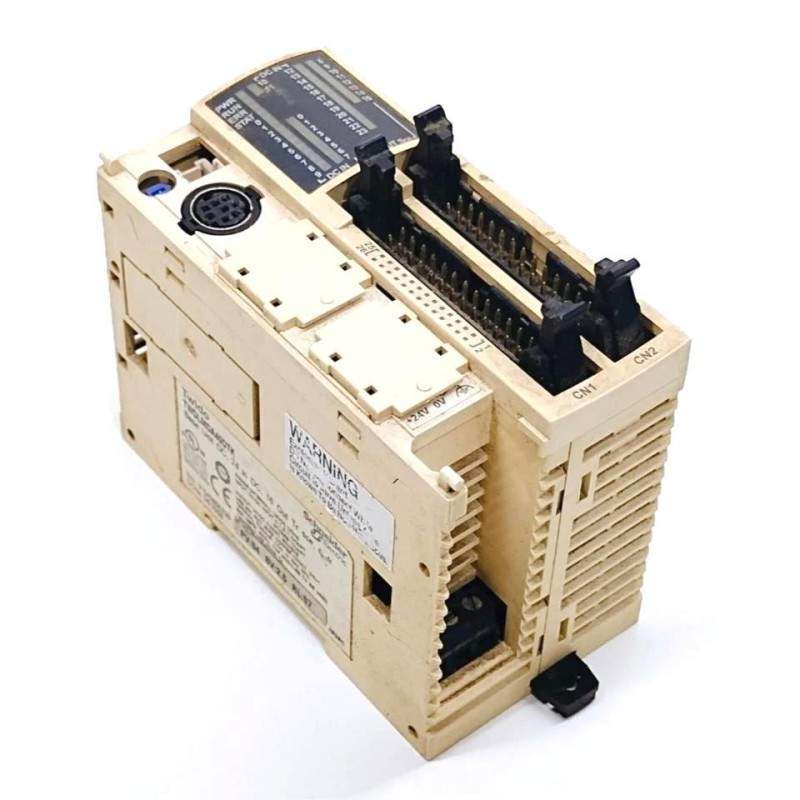
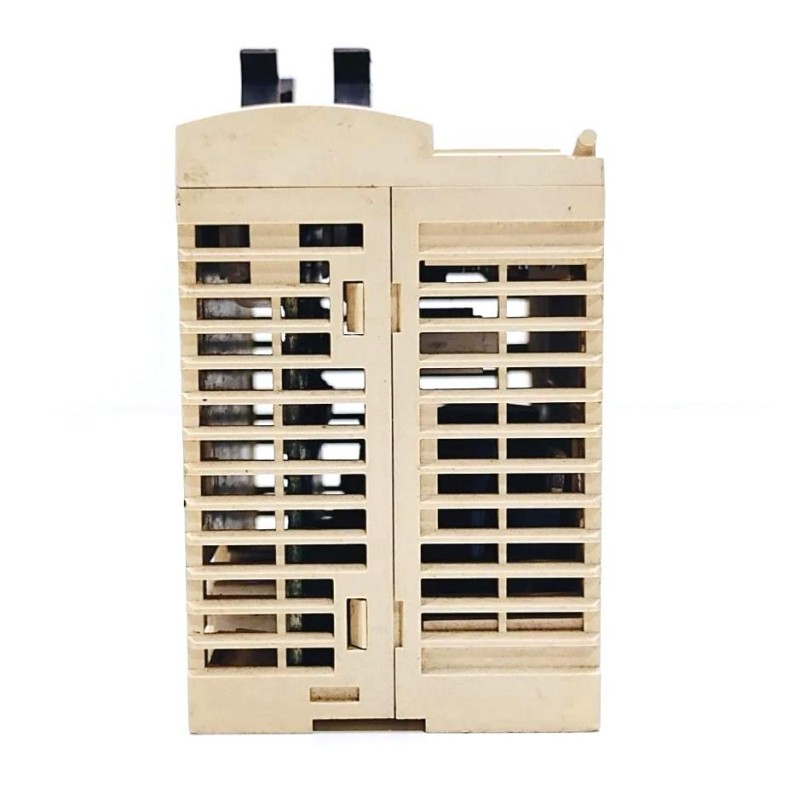
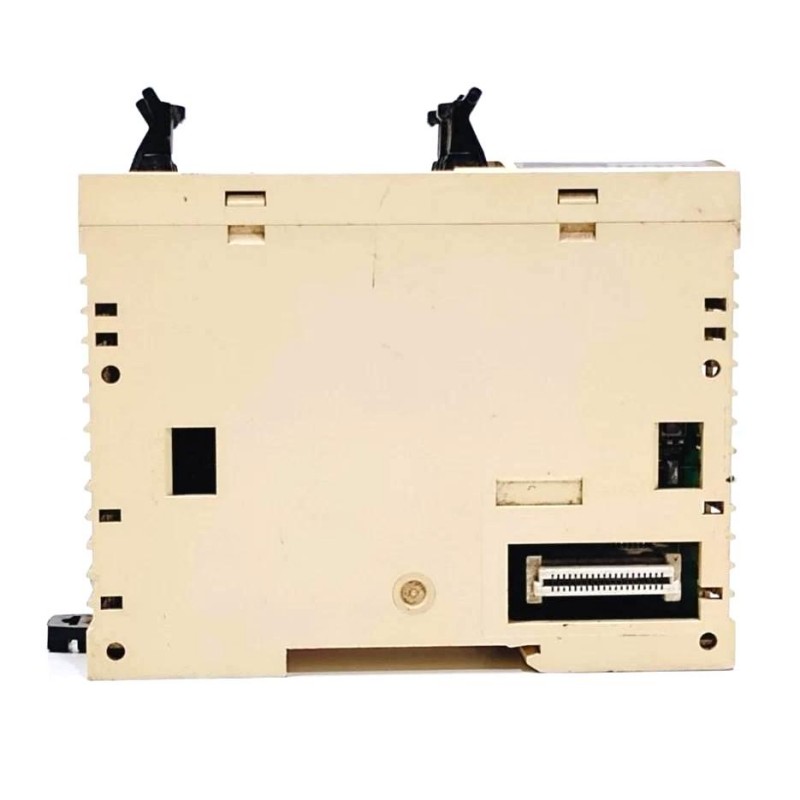
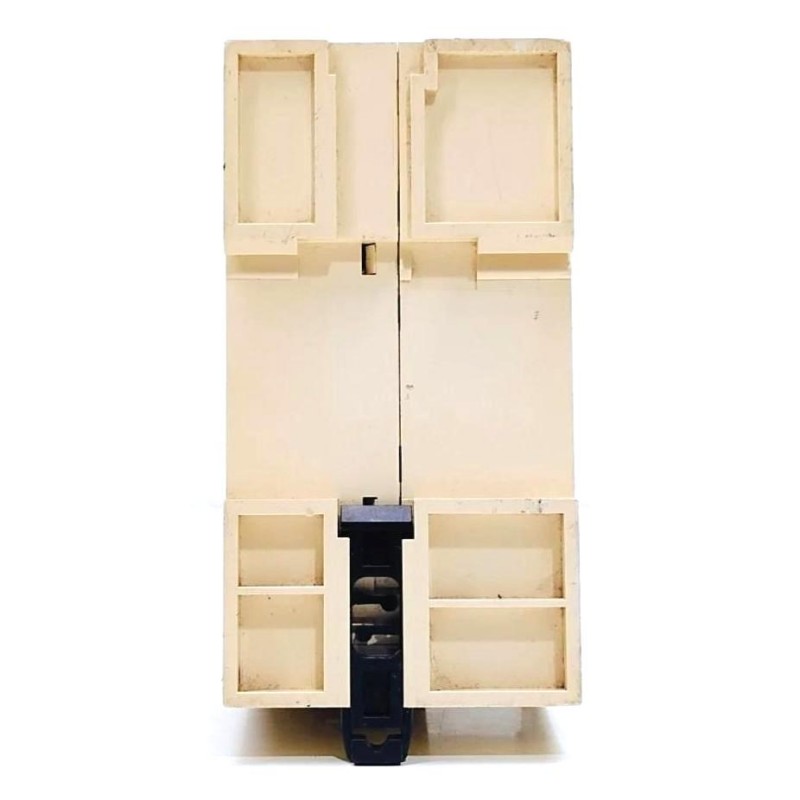
- Schneider
- TWDLMDA40DTK
- Programmable Controller
- France
- 94.5 × 81.3 × 47.5 mm
- 0.18 kg
- Xiamen, China
- New & In Stock
- T/T, PayPal, Western Union
- 1 Year
- 1-3 Working Days
- DHL, UPS, TNT, FedEx and EMS.
- 24-Hour Service
- COO
- 86
Our advantage

Global Logistics
We have a 10-year logistics and express cooperation agreement, so our products can be shipped to any place in the world.

Brand new and original
Our products are imported in bulk from the place of origin. Because of the cooperative relationship, our products are all original and 100% new.

24-hour service
We provide 7*24 hours service to our customers. We will be there whenever you need us.

Price advantage
All our products are priced very favorably because we have our own warehouse and supply.
| Company Information | |||
| [email protected] | |||
| Mobile | +8615980777398 | ||
| +8615980777398 | |||
| 15980777398 |
Product Overview
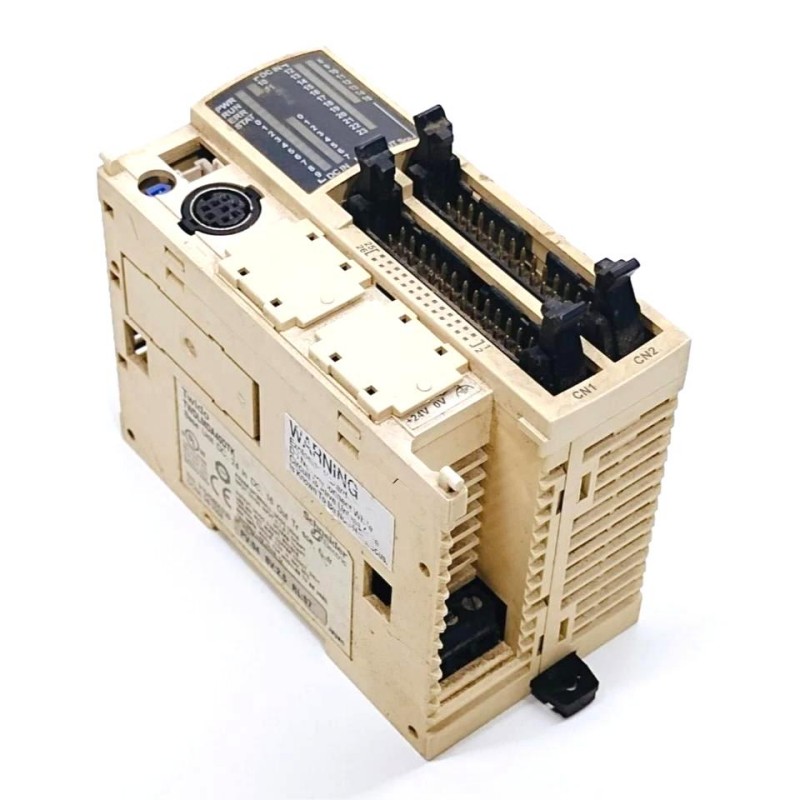
The Schneider TWDLMDA40DTK Modicon Twido Programmable Controller is a compact PLC used for machine automation and discrete control applications. It combines the controller function with integrated I/O in a small form factor, making it suitable for machines where the control architecture does not require a large modular PLC rack.
In a typical application, the controller receives signals from push buttons, proximity sensors, limit switches, selector switches, and equipment contacts. The PLC program evaluates these conditions and controls connected outputs such as relays, contactors, solenoid valves, indicator devices, and other machine actuators.
This type of compact controller is particularly useful when the machine has a relatively concentrated set of control points. A small conveyor, packaging machine, pumping skid, material-handling unit, or automated assembly station can often place the controller close to the equipment and handle the required sequence without a large centralized I/O system.
The TWDLMDA40DTK belongs to the Modicon Twido family, so its role is different from a standalone I/O expansion module. It contains the processing function that executes the machine-control application while its integrated I/O handles the corresponding field signals.
For maintenance, the controller should be treated as both a hardware and software component. A replacement involves more than exchanging the physical unit; the application program, I/O assignments, communication settings, and machine sequence should also be considered.
Technical Specifications
| Parameter | Specification |
|---|---|
| Manufacturer | Schneider Electric |
| Model | TWDLMDA40DTK |
| Product Family | Modicon Twido |
| Product Type | Programmable Controller |
| System Role | Compact PLC Controller |
| Primary Function | Machine Control and Logic Processing |
| Application | Industrial Automation / Machine Control |
| Architecture | Compact PLC |
| Installation | Modicon Twido Control System |
| Dimensions | 94.5 × 81.3 × 47.5 mm |
| Weight | 0.18 kg |
Product Features
The TWDLMDA40DTK combines PLC processing with integrated control I/O for compact automation systems.
- Schneider Electric Modicon Twido Programmable Controller
- Model TWDLMDA40DTK
- Compact PLC architecture
- Intended for machine-control applications
- Executes programmed control logic
- Handles field input information
- Controls connected machine outputs
- Suitable for discrete automation sequences
- Useful where cabinet space is limited
- Suitable for compact equipment and machine builders
- Relevant to Twido system maintenance and replacement
The actual control capacity should be evaluated against the machine’s required I/O, communication, memory, expansion, and application functions.
Working Principle
The TWDLMDA40DTK operates by continuously processing field information according to the PLC application.
A simplified control path is:
Sensors / Switches → TWDLMDA40DTK → PLC Logic → Outputs → Machine Equipment
Consider a small conveyor system. A sensor detects a product entering the conveyor, while another switch confirms the end position. The controller reads these conditions, evaluates the programmed sequence, and determines when the conveyor motor or associated actuator should operate.
A typical operating sequence can be represented as:
Input Acquisition → Program Execution → Output Control → Status Update → Next PLC Cycle
The controller repeatedly evaluates the conditions defined by the application program. This allows machine actions to depend on combinations of field signals rather than simple one-to-one switching.
For example:
Start Command + Safety Permissive + Product Present → Conveyor Start
or:
Position Confirmed + Process Complete → Actuator Retract
This logic-based approach allows a compact PLC to coordinate multiple machine functions from one controller.
When diagnosing a problem, engineers should compare the physical machine condition with the PLC’s input and output status. This helps determine whether the problem originates in the field device, wiring, controller input, application logic, or output circuit.
Role in a Modicon Twido Control Architecture
The TWDLMDA40DTK serves as the central controller in a compact Twido automation system.
A typical architecture can be represented as:
Field Devices → TWDLMDA40DTK → Machine Actuators
Additional expansion or communication components may be incorporated when the application requires more I/O or external system connectivity.
| System Element | Function |
|---|---|
| TWDLMDA40DTK | Executes the machine-control program |
| Integrated Inputs | Acquire discrete field conditions |
| Integrated Outputs | Control connected equipment |
| Expansion Modules | Add additional control points where required |
| Sensors | Detect machine and process conditions |
| Push Buttons | Provide operator commands |
| Limit Switches | Confirm mechanical positions |
| Relays / Contactors | Switch external equipment |
| HMI | Display operating information |
| Communication Devices | Exchange data with external systems |
The controller therefore combines the processing layer and local I/O interface in a compact package.
Compact PLC Control in Practice
The main advantage of a compact controller becomes clear in smaller machines.
Consider an automated packaging unit:
- An operator presses the start button.
- A sensor confirms that a package is correctly positioned.
- A limit switch confirms actuator position.
- The PLC evaluates the permissive conditions.
- The controller activates the appropriate output.
- The machine performs the next operation.
- Feedback signals confirm completion.
- The sequence continues or stops according to the program.
The TWDLMDA40DTK coordinates these steps through its programmed logic.
This type of arrangement avoids the need to build a large PLC rack for every small machine. Where the I/O and control requirements remain within the capabilities of the compact architecture, the controller can serve as the central control point.
Industrial Applications
| Application | Typical Use |
|---|---|
| Packaging Machines | Sequence and actuator control |
| Conveyor Equipment | Motor and sensor coordination |
| Assembly Machines | Position and sequence control |
| Material Handling | Equipment movement and status logic |
| Pumping Equipment | Pump start/stop and permissive logic |
| Small Manufacturing Machines | Compact PLC control |
| Automated Inspection | Sensor-based machine sequences |
| Machine Tools | Discrete machine-control functions |
The actual application depends on the PLC program, connected I/O, and machine architecture.
Installation and Maintenance
Because the TWDLMDA40DTK combines control processing and local I/O functions, maintenance should cover both the physical controller and its application configuration.
Recommended practices include:
- Confirm the complete TWDLMDA40DTK model.
- Record the existing PLC configuration.
- Back up the application program before replacement.
- Document I/O assignments.
- Identify connected field devices.
- Check controller diagnostics.
- Inspect power connections.
- Check input and output wiring.
- Verify communication connections where applicable.
- Compare actual field conditions with PLC input status.
- Check the relevant control logic.
- Follow the approved electrical isolation procedure.
- Remove the controller according to the maintenance procedure.
- Install the replacement unit.
- Restore the required application configuration.
- Verify input and output assignments.
- Check controller startup status.
- Confirm normal PLC diagnostics.
- Test representative field inputs.
- Test corresponding outputs.
- Run the machine through representative operating sequences.
- Verify alarms, permissives, and interlocks.
- Record the final configuration.
If the controller powers up but the machine sequence does not operate correctly, engineers should check the application program and I/O states before concluding that the replacement controller is defective.
Compatible System Components
The TWDLMDA40DTK can form the center of a compact Twido control arrangement with supporting field and expansion hardware.
| Component | Function |
|---|---|
| TWDLMDA40DTK | Main Twido programmable controller |
| Twido Expansion Modules | Increase I/O or application capability |
| Digital Input Devices | Provide machine-status signals |
| Digital Output Devices | Control external equipment |
| Analog Modules | Handle analog process signals where required |
| Sensors | Detect machine conditions |
| Push Buttons | Provide operator commands |
| Relays / Contactors | Interface with electrical loads |
| HMI | Operator monitoring and control |
| Communication Equipment | Exchange information with external systems |
| Field Wiring | Carries signals between controller and equipment |
The exact combination should be matched to the original Twido project.
Recommended Related Models
For SEO and replacement searches, the most useful related products are other Modicon Twido controllers and expansion hardware that serve similar compact machine-control requirements.
| Model / Product Family | Product Type | Typical Application |
|---|---|---|
| Schneider TWDLMDA40DTK | Modicon Twido Programmable Controller | Compact machine control |
| Schneider TWDLMDA20DRT | Modicon Twido Programmable Controller | Small machine automation |
| Schneider TWDLMDA20DTK | Modicon Twido Programmable Controller | Compact discrete control |
| Schneider TWDLMDA20DUK | Modicon Twido Programmable Controller | Machine-control applications |
| Schneider TWDLMDA40DUK | Modicon Twido Programmable Controller | Higher I/O compact control |
| Schneider TWDNOZ485D | Modicon Twido Communication Module | Serial communication applications |
| Schneider TWDAMI2HT | Modicon Twido Analog Input Module | Analog signal acquisition |
| Schneider TWDAMM3HT | Modicon Twido Analog I/O Module | Mixed analog applications |
Key Advantages
- Schneider Electric Modicon Twido Programmable Controller.
- Model TWDLMDA40DTK.
- Compact PLC architecture.
- Integrates control processing with local I/O.
- Suitable for small and medium machine-control applications.
- Supports programmed sequence and logic control.
- Useful for sensor, switch, relay, and actuator coordination.
- Suitable for compact control cabinets.
- Relevant to Twido maintenance and replacement projects.
Technical FAQs
Why use a compact Twido controller instead of a larger modular PLC?
A compact controller can be a practical choice when the machine has a relatively concentrated I/O requirement and does not need the extensive modular architecture of a larger PLC platform. It can reduce hardware complexity and cabinet space for suitable applications.
What should be checked if the TWDLMDA40DTK runs but a machine output does not activate?
Start by checking whether the expected input conditions are reaching the controller. Then examine the corresponding PLC logic and output status. If the PLC output state changes correctly but the physical actuator does not respond, the investigation should move toward the output circuit, relay, wiring, or actuator.
Why is the original PLC program important when replacing a TWDLMDA40DTK?
The physical controller alone does not contain the machine’s complete application intent. The program defines how inputs are interpreted and how outputs respond. Without restoring the appropriate application configuration, a replacement controller may power up normally but fail to operate the machine as intended.
How can intermittent machine faults be investigated on a Twido controller?
Monitor the relevant input and output states while the fault occurs and compare them with the actual machine condition. Intermittent sensors, loose terminals, unstable power, damaged wiring, or logic conditions that are only occasionally satisfied can all produce intermittent behavior.