

ProductPRODUCT
Featured products

Contact Us
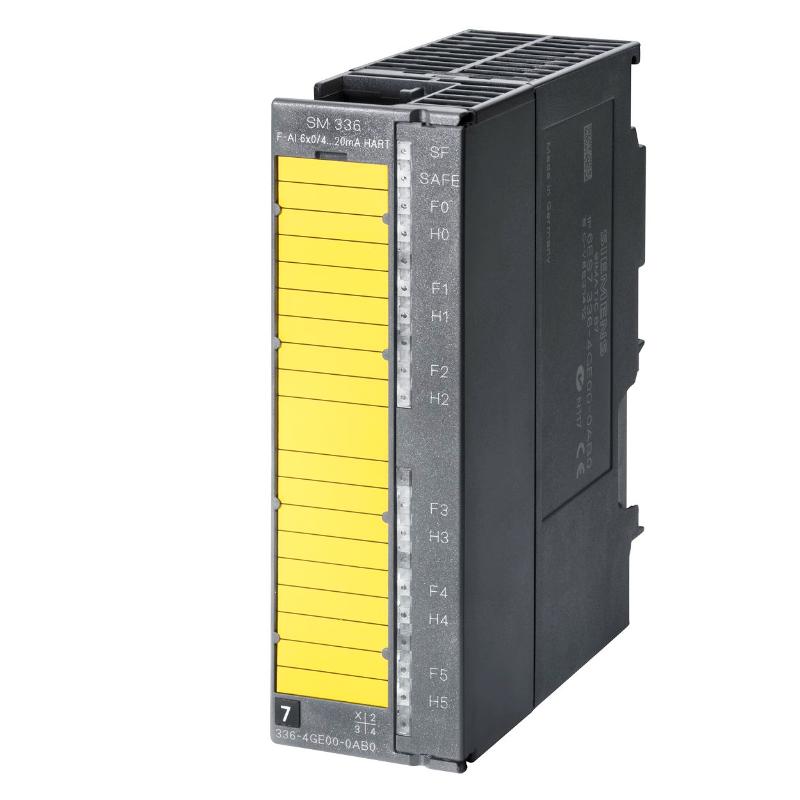
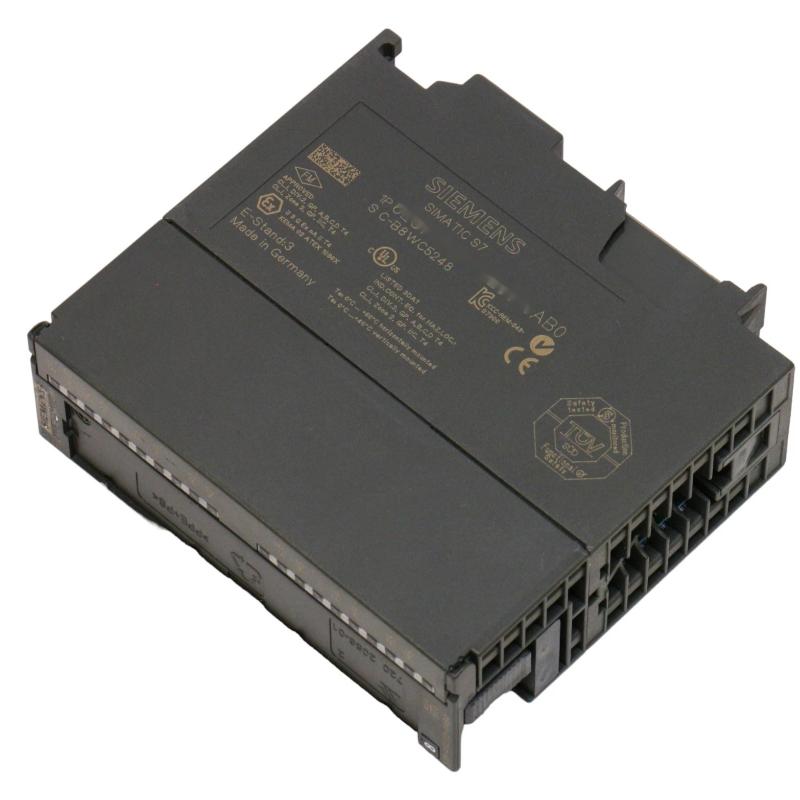
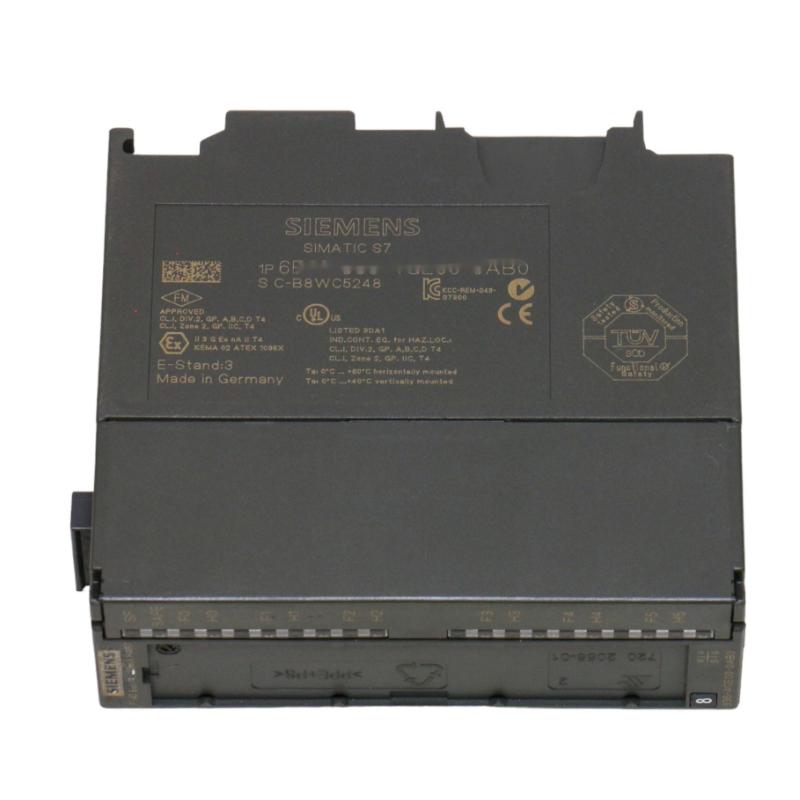
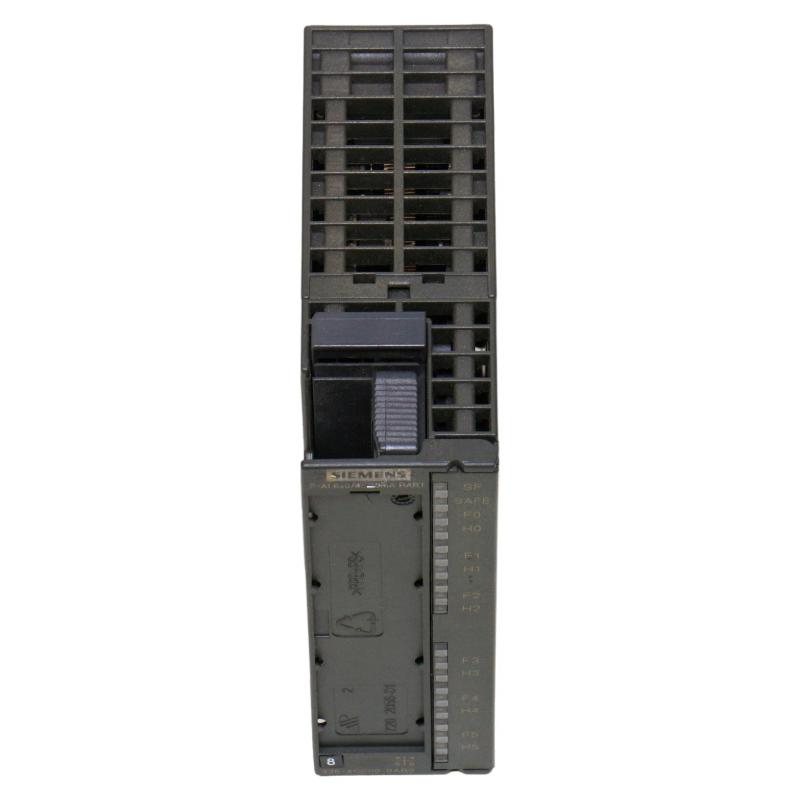
- Siemens
- 6AG1336-4GE00-2AB0
- Analog Input Module
- Germany
- 40 × 125 × 120 mm
- 0.357 kg
- Xiamen, China
- New & In Stock
- T/T, PayPal, Western Union
- 1 Year
- 1-3 Working Days
- DHL, UPS, TNT, FedEx and EMS.
- 24-Hour Service
- COO
- 65
Our advantage

Global Logistics
We have a 10-year logistics and express cooperation agreement, so our products can be shipped to any place in the world.

Brand new and original
Our products are imported in bulk from the place of origin. Because of the cooperative relationship, our products are all original and 100% new.

24-hour service
We provide 7*24 hours service to our customers. We will be there whenever you need us.

Price advantage
All our products are priced very favorably because we have our own warehouse and supply.
| Company Information | |||
| [email protected] | |||
| Mobile | +8615980777398 | ||
| +8615980777398 | |||
| 15980777398 |
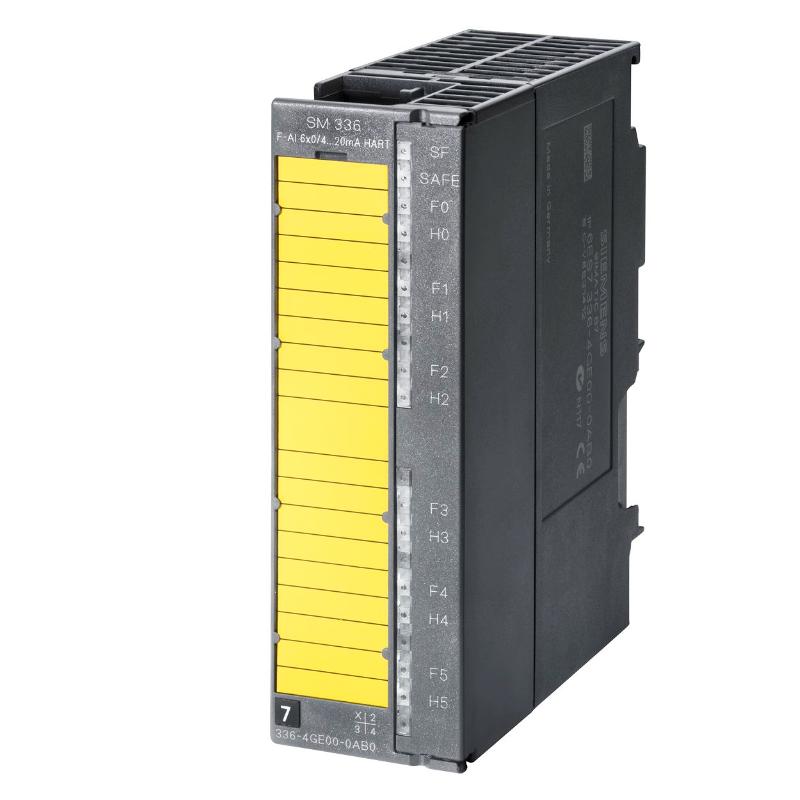
Product Overview
The Siemens 6AG1336-4GE00-2AB0 SIPLUS S7-300 Analog Input Module is an analog signal acquisition module for the SIPLUS S7-300 automation platform. It connects field-level analog instruments with the PLC, allowing continuously varying process signals to be brought into the control program for monitoring, calculation, regulation, and alarm handling.
In a typical industrial installation, transmitters and sensors generate electrical signals that represent physical process conditions. The analog input module receives these signals and converts them into usable process data for the S7-300 control system.
This makes the 6AG1336-4GE00-2AB0 different from a digital input card. Digital inputs generally identify discrete states, while an analog input module handles continuously changing measurements. It is therefore more appropriate for applications involving process values rather than simple ON/OFF status.
For maintenance engineers, the module is relevant in S7-300 installations where analog measurement channels need to be maintained, replaced, or integrated into an existing PLC configuration.
Technical Specifications
| Parameter | Specification |
|---|---|
| Manufacturer | Siemens |
| Model | 6AG1336-4GE00-2AB0 |
| Product Family | SIPLUS S7-300 |
| Product Type | Analog Input Module |
| Primary Function | Analog Signal Acquisition |
| System Role | Process Measurement Interface |
| Application | Industrial Automation / Process Control |
| Dimensions | 40 × 125 × 120 mm |
| Weight | 0.357 kg |
Product Features
The 6AG1336-4GE00-2AB0 is intended for analog measurement tasks within an S7-300-based control architecture.
Key characteristics include:
- Siemens SIPLUS S7-300 analog input module
- Model 6AG1336-4GE00-2AB0
- Designed for analog process signal acquisition
- Connects field instrumentation with the PLC
- Suitable for continuously varying process measurements
- Supports monitoring and closed-loop control applications
- Integrates with S7-300 automation architectures
- Suitable for industrial measurement systems
- Useful for PLC maintenance and replacement projects
The module forms only one part of the measurement chain. Accurate process information also depends on the connected transmitter, field wiring, signal conditioning, channel configuration, and PLC scaling.
Working Principle
The module converts electrical signals from field instrumentation into process values that the S7-300 controller can use.
A simplified measurement path is:
Process Variable → Sensor / Transmitter → Analog Input Module → S7-300 CPU → Control Program
The acquisition process can be viewed in several stages:
-
Field Measurement
A sensor or transmitter detects a physical process condition such as temperature, pressure, level, or flow.
-
Analog Signal Transmission
The field instrument sends a corresponding analog electrical signal toward the PLC input system.
-
Signal Acquisition
The 6AG1336-4GE00-2AB0 receives the incoming analog signal through the assigned input channel.
-
Digital Representation
The module processes the analog input so that the measured condition can be represented as data available to the PLC.
-
PLC Processing
The S7-300 CPU uses the acquired value for monitoring, calculations, alarms, sequencing, or process regulation.
The complete chain can therefore be summarized as:
Physical Measurement → Electrical Signal → Analog Acquisition → PLC Process Value → Control Decision
A fault at any point in this chain can result in an incorrect process value, so troubleshooting should not automatically assume that the analog input module itself is defective.
Role in an S7-300 Process Control Architecture
The 6AG1336-4GE00-2AB0 occupies the measurement interface layer between field instrumentation and the PLC controller.
A practical architecture is:
Field Sensor → Transmitter → Analog Input → S7-300 CPU → Control Logic → Output Device
The module allows the PLC to work with process variables that cannot be adequately represented using simple binary states.
For example, a temperature transmitter may continuously change its output as the process temperature changes. The analog input module acquires this changing signal, allowing the PLC program to determine whether the temperature is within the required operating range and take the appropriate control action.
This measurement path is also important for diagnostics. A sudden change in the PLC value may originate from the field instrument, wiring, grounding, configuration, or module hardware. Separating these possibilities makes troubleshooting considerably more efficient.
Industrial Applications
| Application | Typical Use |
|---|---|
| Process Automation | Continuous process-variable acquisition |
| Water Treatment | Monitoring pressure, level, and flow |
| Chemical Processing | Analog process measurement |
| Manufacturing | Machine and process monitoring |
| HVAC Systems | Temperature and pressure measurement |
| Pumping Systems | Monitoring operating parameters |
| Industrial Utilities | Acquisition of process instrumentation |
| Production Lines | Analog condition monitoring |
The actual measurement task depends on the connected field instrumentation and the configuration of the S7-300 application.
Installation and Maintenance
Analog input modules require careful attention to field wiring and signal integrity because electrical disturbances can directly affect measured values.
Recommended practices include:
- Confirm the complete part number 6AG1336-4GE00-2AB0.
- Verify the module position in the S7-300 configuration.
- Record channel assignments before replacement.
- Identify the field instrument connected to each channel.
- Inspect terminal connections and wiring.
- Check signal cables for damage or poor termination.
- Verify shielding and grounding arrangements.
- Confirm the configured signal type and scaling.
- Install the replacement module correctly.
- Check PLC hardware configuration after replacement.
- Compare PLC readings with the actual field signal.
- Monitor channel values during commissioning.
- Investigate abnormal readings before replacing additional hardware.
If only one channel reports an abnormal value, technicians should first compare the corresponding field signal and wiring with a known-good channel where practical. If multiple channels become unstable simultaneously, common wiring, grounding, power, or environmental conditions should also be considered.
Related Components
The analog input module normally works as part of a complete measurement chain.
| Component | Function |
|---|---|
| S7-300 CPU | Processes acquired measurement data |
| Analog Transmitter | Converts a physical variable into an electrical signal |
| Process Sensor | Detects the physical process condition |
| Signal Wiring | Transfers analog signals to the PLC |
| Terminal Connections | Provides field-side electrical termination |
| Analog Output Module | Sends analog control commands |
| Engineering Software | Supports PLC configuration |
| Power Supply | Provides operating power |
| Control Valve / Actuator | Responds to control-system commands |
The module’s measurement accuracy and stability should be evaluated together with the connected instrumentation and signal path.
Recommended Related Models
| Model / Product Family | Product Type | Typical Application |
|---|---|---|
| Siemens 6AG1336-4GE00-2AB0 | SIPLUS S7-300 Analog Input Module | Analog process measurement |
| Siemens SIPLUS S7-300 Analog Input Modules | Analog Input Hardware | Field signal acquisition |
| Siemens SIPLUS S7-300 Analog Output Modules | Analog Output Hardware | Analog control signals |
| Siemens SIPLUS S7-300 CPU Modules | PLC CPU | Control-program execution |
| Siemens SIPLUS S7-300 Power Supply Modules | Power Supply | Automation-system power |
Key Advantages
- Siemens SIPLUS S7-300 analog input module.
- Model 6AG1336-4GE00-2AB0.
- Provides an interface for analog field measurements.
- Suitable for continuously varying process signals.
- Supports PLC-based monitoring and process control.
- Integrates with S7-300 control architectures.
- Useful for industrial instrumentation systems.
- Suitable for maintenance, replacement, and retrofit applications.
Technical FAQs
Why would an analog input value differ from the actual process measurement?
Possible causes include transmitter errors, damaged wiring, incorrect channel configuration, scaling problems, electrical interference, grounding issues, or an input-module fault. Comparing the field signal with the PLC value helps determine where the discrepancy originates.
How should an engineer troubleshoot a single abnormal analog channel?
Start by checking the connected transmitter and field wiring, then verify the corresponding channel configuration and scaling. If the incoming signal is correct but the PLC value remains incorrect, the module and its channel become stronger candidates for further investigation.
Why is shielding important for analog input wiring?
Analog signals can be relatively sensitive to electrical interference. Appropriate shielding and grounding practices help reduce unwanted noise that can appear as unstable or inaccurate process readings.
Can the module be evaluated independently from the connected transmitter?
Only to a limited extent. The analog input is part of a complete measurement chain. A meaningful diagnosis requires consideration of the transmitter output, wiring, terminals, configuration, and PLC interpretation in addition to the module hardware.