

ProductPRODUCT
Featured products
Contact Us
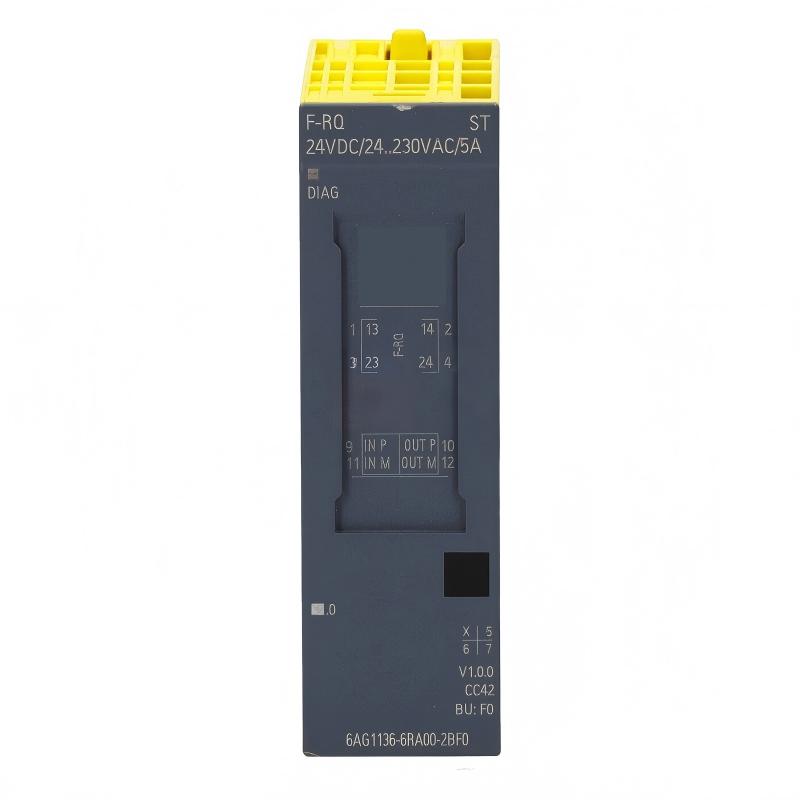
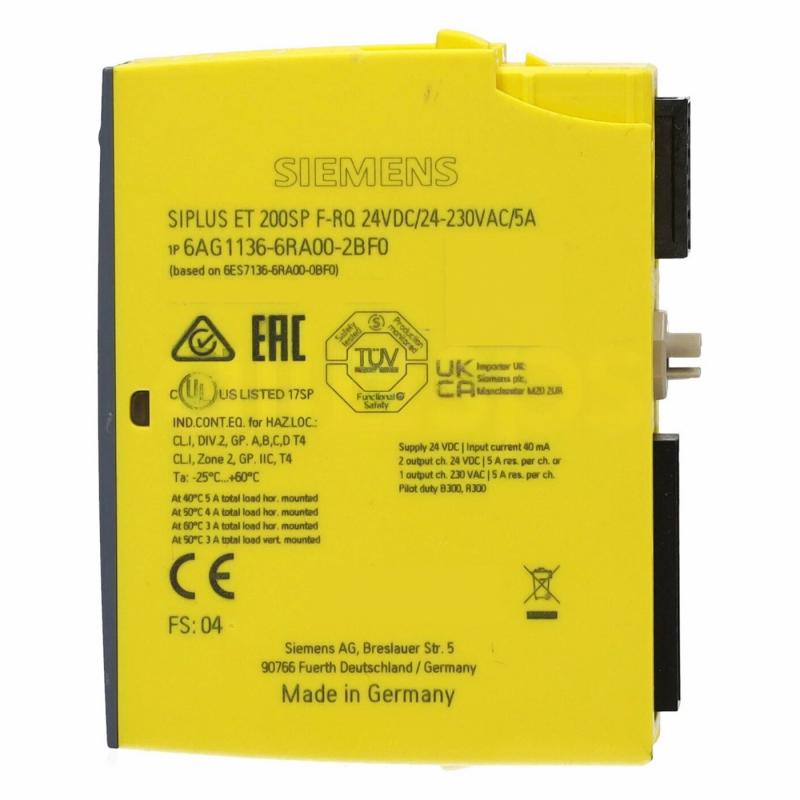
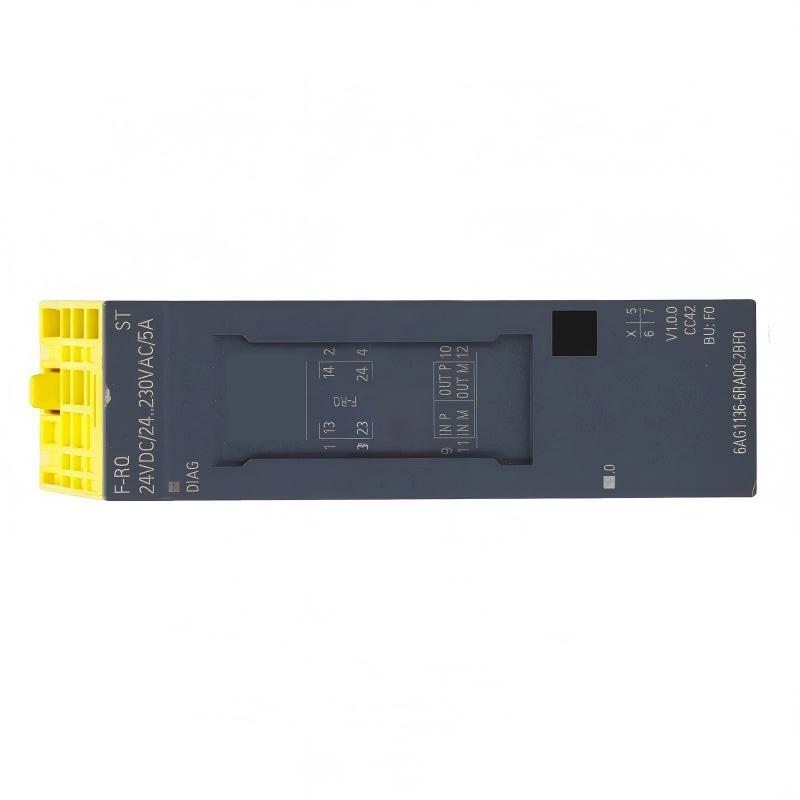
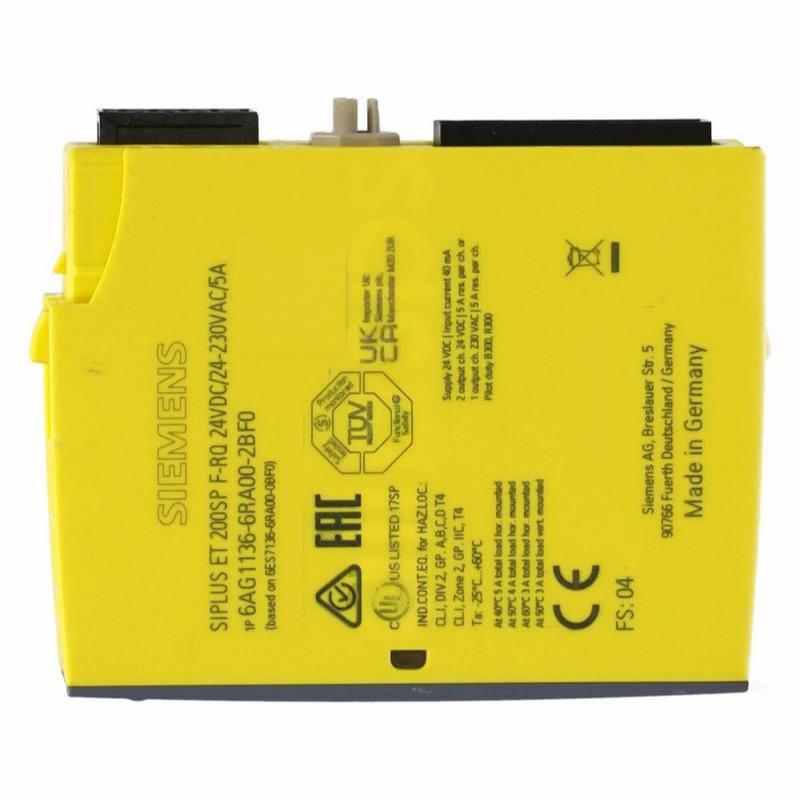
- Siemens
- 6AG1136-6RA00-2BF0
- Relay Output Module
- Germany
- 20 × 73 × 58 mm
- 0.09 kg
- Xiamen, China
- New & In Stock
- T/T, PayPal, Western Union
- 1 Year
- 1-3 Working Days
- DHL, UPS, TNT, FedEx and EMS.
- 24-Hour Service
- COO
- 40
Our advantage

Global Logistics
We have a 10-year logistics and express cooperation agreement, so our products can be shipped to any place in the world.

Brand new and original
Our products are imported in bulk from the place of origin. Because of the cooperative relationship, our products are all original and 100% new.

24-hour service
We provide 7*24 hours service to our customers. We will be there whenever you need us.

Price advantage
All our products are priced very favorably because we have our own warehouse and supply.
| Company Information | |||
| [email protected] | |||
| Mobile | +8615980777398 | ||
| +8615980777398 | |||
| 15980777398 |
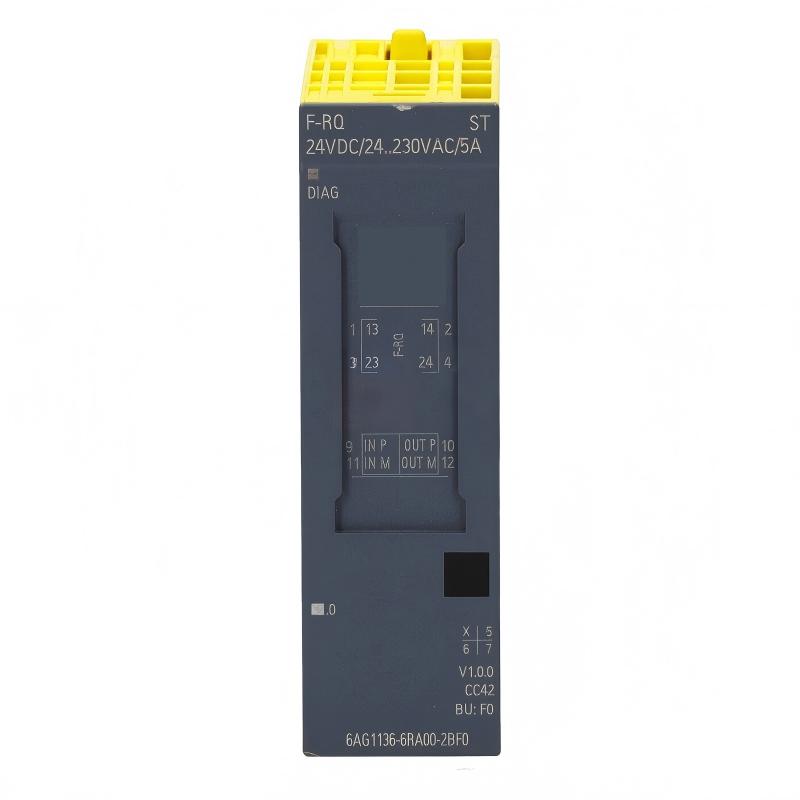
Product Overview
The Siemens 6AG1136-6RA00-2BF0 Relay Output Module is an industrial automation output component designed to provide reliable switching between a compatible PLC control system and external field devices. By using relay-based output switching, the module can interface control logic with a wide range of electrical loads used in industrial machinery and process equipment.
Relay output modules are particularly useful when a control system needs electrical isolation between the PLC electronics and the connected load. The relay contacts provide a practical interface for switching compatible AC or DC circuits, making this type of module suitable for applications involving contactors, valves, alarms, indicator devices, and other discrete equipment.
The 6AG1136-6RA00-2BF0 can be integrated into a modular Siemens automation architecture together with CPUs, digital input modules, digital output modules, analog I/O modules, communication interfaces, power components, and remote I/O.
With dimensions of 20 × 73 × 58 mm and a specified weight of 0.09 kg, the module provides a compact solution for control cabinets where efficient use of installation space is important.
Technical Specifications
| Parameter | Details |
|---|---|
| Manufacturer | Siemens |
| Model | 6AG1136-6RA00-2BF0 |
| Product Type | Relay Output Module |
| Primary Function | Relay-based discrete output switching |
| Module Category | PLC Output Module |
| Output Type | Relay |
| Application | Industrial automation and control |
| Dimensions | 20 × 73 × 58 mm |
| Weight | 0.09 kg |
| Installation | Modular automation system |
| Mounting | System / module mounting, depending on configuration |
| Field Interface | Relay-switched electrical loads |
| System Integration | Siemens modular automation architecture |
| Operating Environment | Industrial control environment |
| Service Application | Installation, maintenance and replacement |
Function and Working Principle
The main function of the Siemens 6AG1136-6RA00-2BF0 is to provide relay-based switching between PLC control logic and connected field equipment.
The PLC controller determines when an output should be activated. The relay output module receives the corresponding control command and changes the state of the appropriate relay contact.
A simplified control sequence is:
PLC CPU → Relay Output Module → Relay Contact → Field Device
When an output command is activated, the associated relay changes state and allows the connected electrical circuit to be switched.
Relay outputs are useful because the switching contact can provide electrical separation between the controller circuitry and the external load, subject to the module’s actual electrical specifications and installation requirements.
Typical applications include controlling:
- Contactors
- Motor starters
- Solenoid valves
- Alarm circuits
- Signal lamps
- Control relays
- Actuators
- Auxiliary electrical equipment
The relay output module therefore acts as an interface between low-level PLC control decisions and external electrical circuits.
Role in Industrial Control Systems
The 6AG1136-6RA00-2BF0 serves as an output interface within a larger Siemens industrial automation system.
A typical control architecture can contain:
- Siemens PLC CPU
- Power Supply
- Relay Output Modules
- Digital Input Modules
- Digital Output Modules
- Analog Input Modules
- Analog Output Modules
- Communication Modules
- Interface Modules
- Remote I/O
- HMI
- Motor Drives
- Sensors
- Contactors
- Valves and Actuators
The controller processes the application program and determines the required output states. The relay output module then provides the switching interface needed to control external equipment.
This arrangement is especially useful when the field equipment requires relay contacts rather than a conventional solid-state digital output.
Industrial Applications
The Siemens 6AG1136-6RA00-2BF0 can be applied to many industrial control systems requiring relay-based switching.
Manufacturing Automation
Production equipment often requires discrete control of contactors, alarms, indicator devices, and machine actuators. Relay outputs provide a flexible interface for these loads.
Machine Control
Automated machines can use relay outputs to control auxiliary circuits, motor starters, valves, and other equipment.
Packaging Equipment
Packaging machinery contains numerous discrete devices that must be activated according to machine sequences. Relay outputs can provide the required switching functions.
Material Handling
Conveyor and sorting systems can use relay outputs to operate motor starters, warning devices, control relays, and auxiliary equipment.
Process Automation
Industrial process equipment may require switching of valves, pumps, alarms, and other electrical loads.
Building and Infrastructure Automation
Relay outputs can also be useful in infrastructure systems where PLC controllers need to switch compatible electrical equipment such as fans, pumps, alarms, or auxiliary control circuits.
Installation and System Integration
The 6AG1136-6RA00-2BF0 should be installed within a compatible Siemens modular automation system.
Before installation, engineers should verify:
- Correct module model
- PLC and I/O system compatibility
- Relay contact ratings
- Load voltage
- Load current
- AC or DC load characteristics
- Inductive load requirements
- Wiring configuration
- Protection devices
- Cabinet environmental conditions
Basic Installation Procedure
- Place the automation system into a safe maintenance condition.
- Disconnect electrical power according to approved safety procedures.
- Verify the Siemens 6AG1136-6RA00-2BF0 model.
- Inspect the module and terminals for damage.
- Install the module in the designated I/O position.
- Secure the module correctly.
- Connect field wiring according to the approved electrical drawing.
- Verify relay contact wiring.
- Confirm that the connected load is within the applicable relay specifications.
- Check protection and suppression requirements.
- Restore system power.
- Verify module status.
- Test each required output function.
- Perform controlled commissioning before returning the equipment to production.
Special care should be taken when switching inductive loads. Contactors, solenoids, and motor starters can generate electrical transients, so appropriate suppression and protection should be considered as part of the overall electrical design.
Compatible System Components
The relay output module can operate together with a range of Siemens automation components.
| Component | Function |
|---|---|
| Siemens PLC CPU | Executes application control logic |
| Power Supply | Provides system operating power |
| Digital Input Module | Receives discrete field signals |
| Digital Output Module | Provides solid-state digital switching where applicable |
| Relay Output Module | Switches compatible electrical loads |
| Analog Input Module | Acquires analog process measurements |
| Analog Output Module | Generates analog control signals |
| Communication Module | Provides industrial network connectivity |
| Interface Module | Supports system integration |
| Remote I/O | Extends field-level I/O |
| HMI | Provides operator monitoring and control |
| Contactor | Switches higher-power electrical loads |
| Solenoid Valve | Provides pneumatic or hydraulic control |
| Alarm / Indicator | Provides equipment status indication |
The final system configuration depends on the electrical characteristics of the application and the selected Siemens automation platform.
Recommended Alternative Models
The following Siemens products may be considered when evaluating related I/O and control requirements. Because digital, relay, and analog modules have different electrical characteristics, they should not be treated as automatic direct replacements.
| Model | Type | Key Feature | Application |
|---|---|---|---|
| Siemens 6AG1136-6RA00-2BF0 | Relay Output Module | Relay-based discrete switching | Industrial automation |
| Siemens 6AG1136-6DC00-2CA0 | Digital Output Module | Digital output control | Machine automation |
| Siemens 6AG1136-6PA00-2BC0 | Power Module | Power distribution support | Modular automation |
| Siemens 6AG1131 Series | Digital Input Module | Discrete signal acquisition | PLC systems |
| Siemens 6AG1132 Series | Digital Output Module | Discrete output control | Industrial automation |
| Siemens 6AG1134 Series | Analog Input Module | Analog process measurement | Process control |
| Siemens 6AG1135 Series | Analog Output Module | Analog signal output | Process automation |
| Siemens 6AG1151 Series | Interface / I/O Module | Distributed system integration | Automation networks |
When selecting a replacement relay output module, engineers should verify contact configuration, switching voltage, switching current, load type, electrical isolation, wiring requirements, and compatibility with the existing PLC configuration.
Key Advantages
- Provides relay-based discrete output switching
- Provides a practical interface between PLC logic and external loads
- Suitable for compatible Siemens modular automation systems
- Useful for AC and DC switching applications when within the applicable specifications
- Suitable for contactors, relays, valves, alarms, and auxiliary equipment
- Compact industrial module design
- Dimensions of 20 × 73 × 58 mm
- Product weight of approximately 0.09 kg
- Suitable for manufacturing and machine automation
- Supports modular PLC system architectures
- Useful for maintenance and replacement applications
Technical FAQs
What is the Siemens 6AG1136-6RA00-2BF0?
The Siemens 6AG1136-6RA00-2BF0 is a Relay Output Module designed to provide relay-based switching within a compatible Siemens industrial automation system.
What is the main function of this module?
Its primary function is to receive output commands from a PLC controller and switch connected electrical loads through relay contacts.
What is the difference between a relay output and a standard digital output?
A relay output uses mechanical relay contacts to switch the external circuit, while a conventional solid-state digital output uses electronic switching components. The appropriate choice depends on load characteristics and system requirements.
What are the dimensions of 6AG1136-6RA00-2BF0?
The specified dimensions are 20 × 73 × 58 mm.
How much does the module weigh?
The specified product weight is approximately 0.09 kg.
What devices can a relay output module control?
Depending on the applicable electrical specifications, relay outputs can control contactors, solenoid valves, alarms, indicator devices, relays, actuators, and other electrical loads.
Can the module control a motor directly?
A relay output should generally be used to control an appropriate motor starter, contactor, or interface circuit rather than directly switching a motor load unless the electrical design and module ratings specifically permit it.
Where is the module installed?
The module is installed within a compatible Siemens modular PLC or I/O system.
What should be checked before installation?
Engineers should verify the module model, system compatibility, relay contact ratings, load voltage, current, AC/DC characteristics, wiring, protection, and inductive-load suppression requirements.
Why are relay output modules useful?
Relay outputs provide a flexible switching interface and can be suitable for applications where electrical isolation and compatibility with different types of discrete electrical loads are required.
Conclusion
The Siemens 6AG1136-6RA00-2BF0 Relay Output Module is an industrial automation component designed to provide relay-based switching between compatible PLC control logic and external electrical equipment.
With dimensions of 20 × 73 × 58 mm and a specified weight of approximately 0.09 kg, the module provides a compact solution for modular automation systems where reliable discrete switching and efficient cabinet utilization are important.
The module can be used in manufacturing, machine control, packaging, material handling, process automation, and infrastructure applications. By providing a relay interface between the PLC and field equipment, it can support control of contactors, valves, alarms, relays, indicator devices, and other compatible loads.
For system integrators and maintenance engineers, the most important considerations when installing or replacing a relay output module are electrical compatibility, load characteristics, relay contact ratings, wiring configuration, and system architecture. Proper verification of these factors helps ensure reliable switching performance and safe long-term operation.