

ProductPRODUCT
Featured products
Contact Us
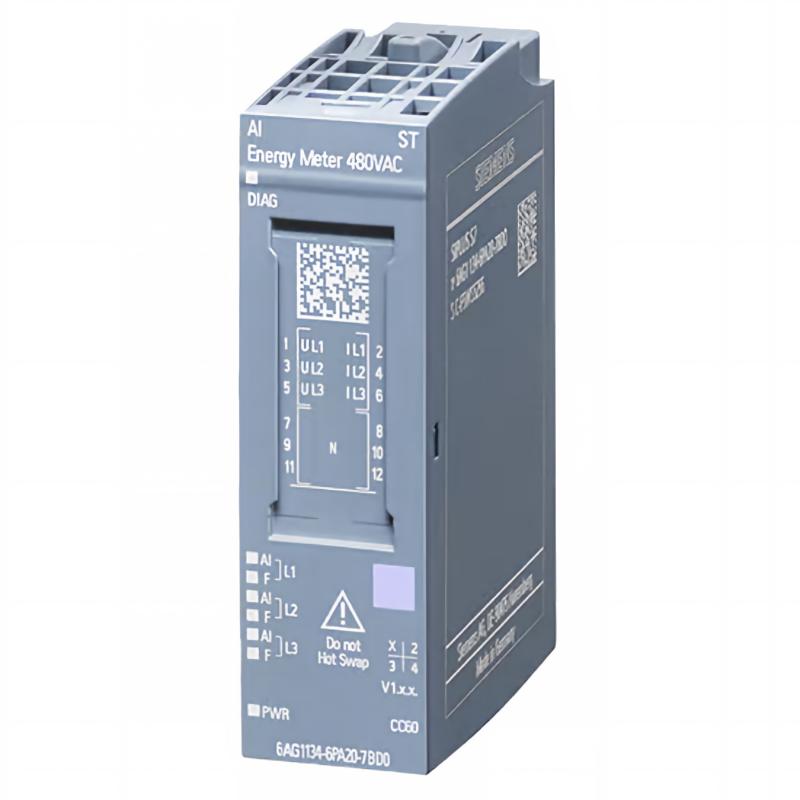
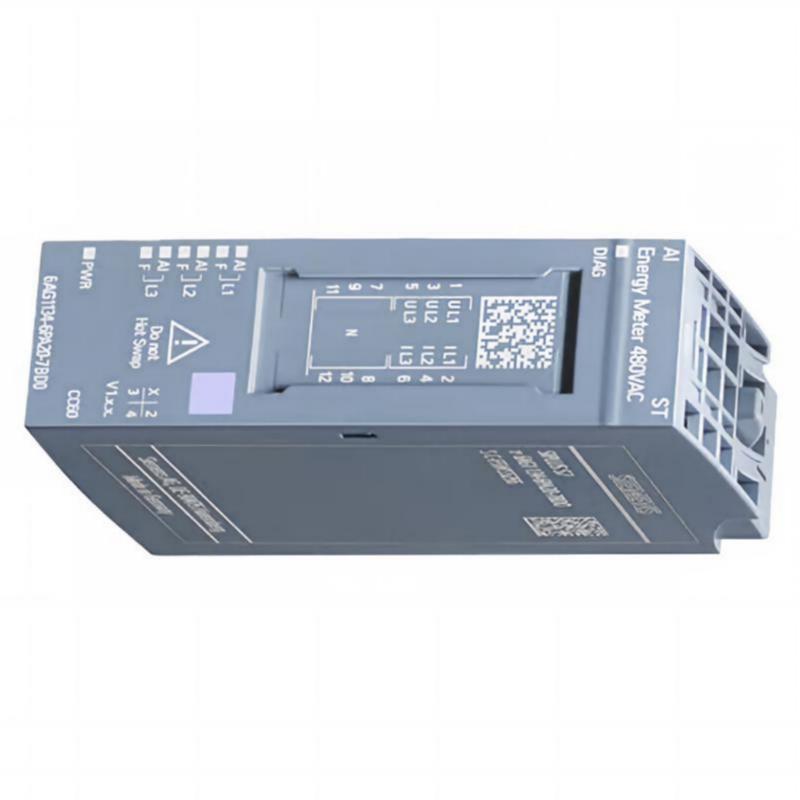
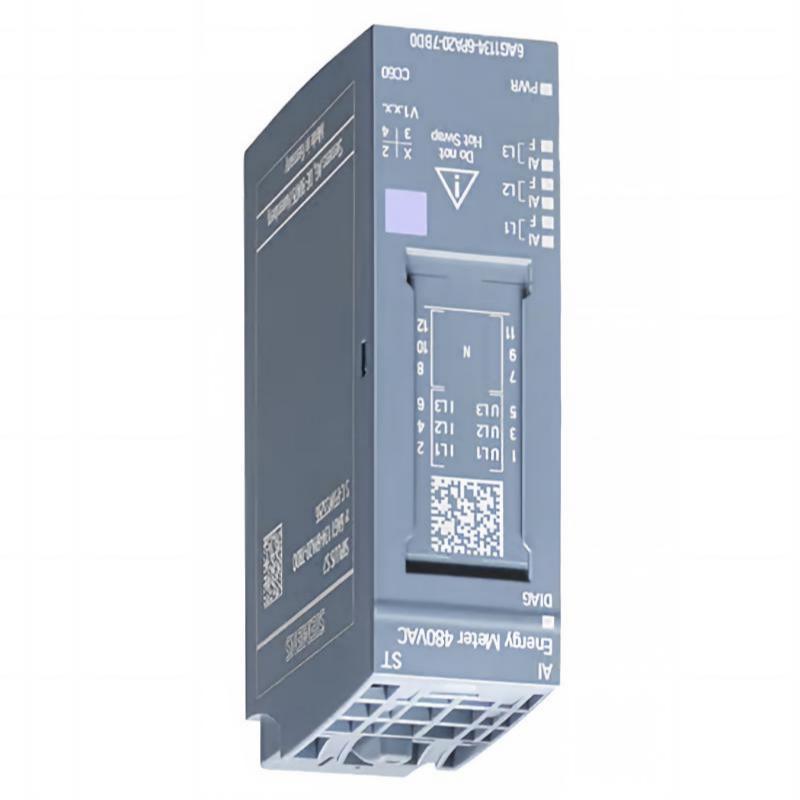
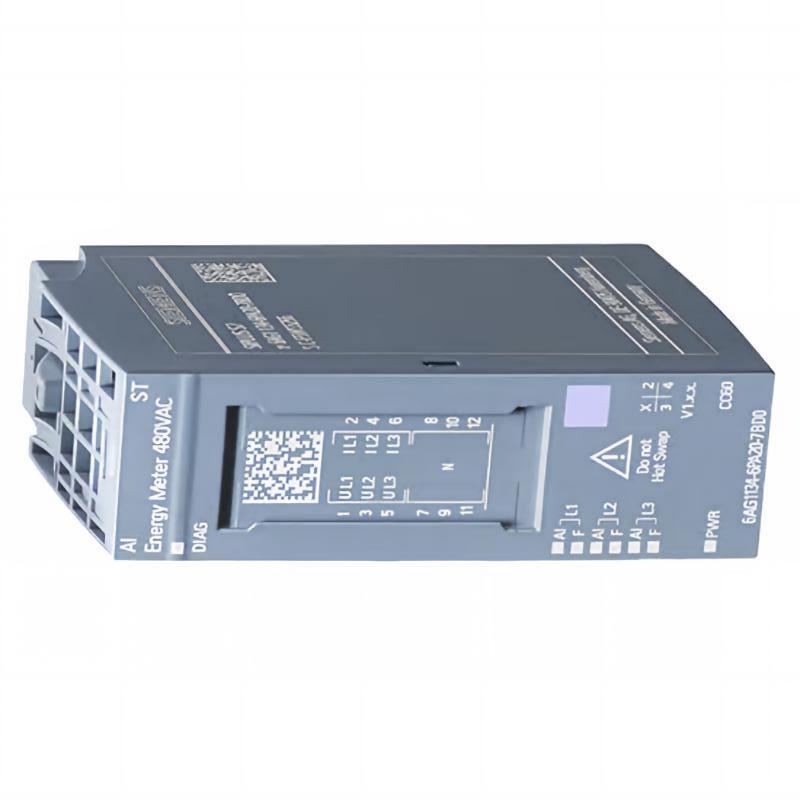
- Siemens
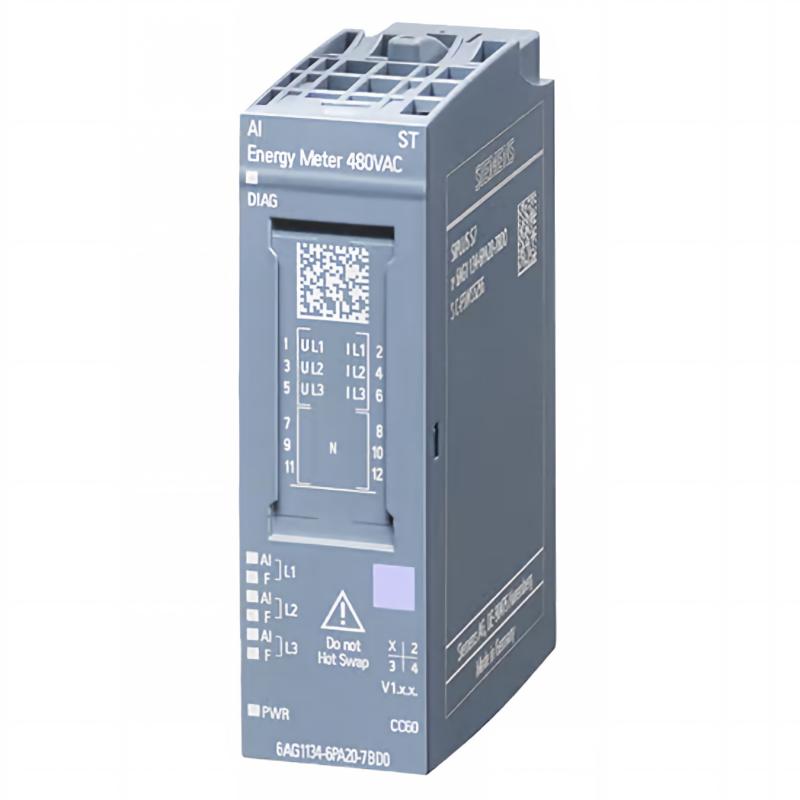
- 6AG1134-6PA20-7BD0
- Analog Input Module
- Germany
- 20 × 73 × 58 mm
- 0.045 kg
- Xiamen, China
- New & In Stock
- T/T, PayPal, Western Union
- 1 Year
- 1-3 Working Days
- DHL, UPS, TNT, FedEx and EMS.
- 24-Hour Service
- COO
- 67
Our advantage

Global Logistics
We have a 10-year logistics and express cooperation agreement, so our products can be shipped to any place in the world.

Brand new and original
Our products are imported in bulk from the place of origin. Because of the cooperative relationship, our products are all original and 100% new.

24-hour service
We provide 7*24 hours service to our customers. We will be there whenever you need us.

Price advantage
All our products are priced very favorably because we have our own warehouse and supply.
| Company Information | |||
| [email protected] | |||
| Mobile | +8615980777398 | ||
| +8615980777398 | |||
| 15980777398 |
Product Overview
Reliable analog signal acquisition is essential in industrial automation systems where controllers must continuously monitor process variables such as temperature, pressure, flow, level, current, and voltage. The Siemens 6AG1134-6PA20-7BD0 is a SIPLUS analog input module designed to provide an interface between field-level analog instruments and a Siemens automation system. By acquiring continuously varying electrical signals and converting them into process values that can be processed by the controller, the module supports monitoring, regulation, diagnostics, and automated process control.
The 6AG1134-6PA20-7BD0 is particularly suited to applications where compact installation and reliable analog measurement are required. With dimensions of 20 × 73 × 58 mm and a weight of approximately 0.045 kg, the module can be incorporated into space-conscious industrial control cabinets. As part of the SIPLUS product family, it is intended for demanding industrial applications where environmental conditions may require a more robust automation component.
Technical Specifications
| Parameter | Details |
|---|---|
| Manufacturer | Siemens |
| Model | 6AG1134-6PA20-7BD0 |
| Product Family | SIPLUS |
| Product Type | Analog Input Module |
| Module Type | Analog Signal Acquisition |
| Signal Type | Analog process signals |
| Input Channels | Application-dependent |
| Input Signal | Compatible analog voltage / current signals |
| Signal Conversion | Analog-to-digital conversion |
| Process Interface | Field-level analog instrumentation |
| Diagnostic Functions | Module and channel diagnostics |
| System Integration | Siemens automation system |
| Installation | Industrial control cabinet / automation station |
| Dimensions | 20 × 73 × 58 mm |
| Weight | 0.045 kg |
| Application | Industrial process measurement and control |
| Environment | Industrial / enhanced-environment application |
| Product Series | SIPLUS |
| Typical Use | Analog measurement, monitoring and control |
| Reliability | Designed for continuous industrial operation |
Function and Working Principle
The main purpose of the Siemens 6AG1134-6PA20-7BD0 is to acquire analog signals generated by field devices and convert them into digital process information that can be interpreted by the associated Siemens control system.
Industrial sensors and transmitters measure physical quantities continuously. Instead of producing a simple ON/OFF signal, these instruments can generate an electrical signal proportional to the measured value. The analog input module receives the signal, processes it, and makes the resulting digital value available to the automation controller.
The principal functions include:
- Analog process signal acquisition
- Analog-to-digital conversion
- Continuous measurement monitoring
- Process value transmission
- Signal-range monitoring
- Channel diagnostics
- Module diagnostics
- Integration with PLC control programs
- Support for process regulation
- Support for alarm and monitoring functions
A typical signal path can be represented as:
Field Instrument → Analog Signal → 6AG1134-6PA20-7BD0 → Digital Process Value → Siemens Controller → Automation Program
For example, a temperature transmitter can generate an analog signal corresponding to the measured temperature. The input module converts that signal into a digital value, allowing the controller to compare the measurement against configured limits or use it as part of a closed-loop control strategy.
Correct input configuration and signal scaling are important to ensure that the controller interprets the acquired process value correctly.
Role in Industrial Control Systems
The 6AG1134-6PA20-7BD0 functions as a signal-acquisition interface within a Siemens industrial automation architecture. It provides the connection between analog field instrumentation and the digital processing environment of the controller.
Depending on the system design, the module may work with:
- Siemens PLC CPUs
- SIPLUS automation components
- Analog transmitters
- Pressure sensors
- Temperature transmitters
- Flow transmitters
- Level instruments
- Process analyzers
- Electrical measurement devices
- HMI systems
- Industrial communication networks
- SCADA systems
In a process-control installation, the module can collect information from multiple field instruments and make the values available to the PLC program.
For example, a pumping station can use analog inputs to monitor pressure and flow. The PLC can then use these values to regulate pump operation or generate alarms when the process exceeds predefined limits.
The analog input module therefore acts as an important interface between physical process conditions and software-based automation logic.
Industrial Applications
The Siemens 6AG1134-6PA20-7BD0 can be applied to industrial systems where reliable analog measurement is required.
Typical applications include:
- Water and wastewater treatment
- Process automation
- Chemical processing
- Oil and gas facilities
- Power generation
- Manufacturing plants
- Pharmaceutical production
- Food and beverage processing
- Industrial HVAC
- Pumping stations
- Process machinery
- Production-line monitoring
- Energy-management systems
- Material-processing equipment
- General industrial automation
In water-treatment systems, analog instrumentation can provide continuous measurements of pressure, flow, level, and other process parameters.
In manufacturing equipment, analog signals can be used to monitor temperature, force, position, pressure, or other machine conditions.
In energy-related applications, compatible electrical measurement instruments can provide continuously varying values for monitoring and control.
The module can therefore be used wherever the automation controller needs reliable access to analog process information.
Installation and System Integration
Correct installation is important for maintaining accurate analog signal acquisition. Analog measurement circuits can be sensitive to electrical noise, incorrect wiring, grounding problems, and incorrect signal configuration.
Recommended installation practices include:
- Install the module in the designated Siemens automation station.
- Secure the module correctly before connecting field wiring.
- Verify the hardware configuration before commissioning.
- Connect field instruments according to the selected signal type.
- Use suitable instrumentation cables.
- Use shielded cables where required by the application.
- Keep analog signal cables separated from high-power conductors where practical.
- Verify wiring polarity before energizing the system.
- Configure the correct input signal range.
- Configure the appropriate measurement parameters.
- Apply correct engineering-unit scaling in the PLC program.
- Verify diagnostic information during commissioning.
- Compare PLC readings with the actual field instrument values.
- Perform an individual channel test before automatic operation.
For current-loop instruments, the transmitter, power supply, and input channel must be connected according to the applicable wiring configuration.
For voltage signals, grounding, shielding, cable length, and electromagnetic interference should be considered during system design.
After installation, the module should be correctly configured in the associated Siemens engineering environment so that the controller recognizes the hardware and processes the input channels correctly.
Compatible System Components
The 6AG1134-6PA20-7BD0 can operate as part of a broader Siemens industrial automation architecture.
Typical associated components include:
- Siemens PLC CPUs
- SIPLUS I/O modules
- Siemens signal modules
- Siemens interface modules
- Remote I/O stations
- Analog pressure transmitters
- Temperature transmitters
- Flow transmitters
- Level sensors
- Process analyzers
- Siemens HMI panels
- Industrial Ethernet systems
- PROFINET-based automation networks
- SCADA systems
- Industrial control cabinets
The exact compatible hardware depends on the specific SIPLUS platform, system architecture, firmware requirements, signal configuration, and application.
Additional digital input/output modules, communication modules, power supplies, interface modules, and remote I/O components can be combined with analog input hardware to build a complete control system.
Recommended Alternative Models
Depending on the required channel configuration, signal type, environmental requirements, and automation architecture, the following Siemens modules may be considered:
| Model | Type | Key Feature | Application |
|---|---|---|---|
| 6AG1134-6PA20-7BD0 | SIPLUS Analog Input Module | Compact analog signal acquisition | Industrial process measurement |
| 6AG1134-6JD00-2CA1 | SIPLUS Analog Input Module | Multi-channel analog acquisition | Demanding industrial environments |
| 6AG1134-6JF00-2CA1 | SIPLUS Analog Input Module | Multi-channel process measurement | Industrial signal acquisition |
| 6ES7531-7KF00-0AB0 | S7-1500 Analog Input Module | General-purpose analog inputs | Standard automation systems |
| 6ES7531-7NF10-0AB0 | S7-1500 Analog Input Module | High-performance measurement | Precision process applications |
| 6ES7134-6GD01-0BA1 | ET 200SP Analog Input Module | Compact distributed I/O | Remote signal acquisition |
| 6ES7134-6HD01-0BA1 | ET 200SP Analog Input Module | Multi-channel analog input | Distributed automation |
The most suitable alternative depends on the actual Siemens controller platform, number of analog channels, signal type, measurement range, resolution, isolation requirements, environmental conditions, and installation architecture.
A standard Siemens module should not automatically be treated as a direct replacement for a SIPLUS module. Environmental specifications and complete system compatibility should be verified before substitution.
Key Advantages
- Designed for industrial analog signal acquisition
- SIPLUS product family
- Suitable for Siemens automation architectures
- Converts analog field signals into digital process values
- Supports continuous process measurement
- Suitable for compatible voltage and current signals
- Provides diagnostic monitoring
- Suitable for PLC-based process control
- Compact 20 × 73 × 58 mm dimensions
- Approximately 0.045 kg weight
- Space-efficient installation
- Suitable for pressure measurement
- Suitable for temperature monitoring
- Suitable for flow measurement
- Suitable for level monitoring
- Suitable for industrial process-control applications
- Designed for continuous industrial operation
- Suitable for demanding automation environments
Technical FAQs
What is the Siemens 6AG1134-6PA20-7BD0?
The Siemens 6AG1134-6PA20-7BD0 is a SIPLUS analog input module designed to acquire compatible analog field signals and provide digital process information to a Siemens automation system.
What is the main function of this module?
Its main function is to receive analog signals from field instruments, convert the signals into digital values, and make those values available to the associated control system.
What are the dimensions of the 6AG1134-6PA20-7BD0?
The specified dimensions are 20 × 73 × 58 mm.
How much does the 6AG1134-6PA20-7BD0 weigh?
The specified product weight is approximately 0.045 kg, equivalent to about 45 grams.
What type of signals can an analog input module receive?
Depending on the specific module configuration, analog input hardware can be designed for compatible current and voltage signals from industrial sensors and transmitters. The actual supported ranges should be verified against the module configuration before installation.
What process variables can be monitored?
With suitable field instruments, analog inputs can be used to acquire values representing pressure, temperature, flow, level, position, electrical measurements, and other continuously varying process conditions.
Can the module be used in process automation?
Yes. Analog input modules are commonly used in process automation to connect field transmitters with PLC and control systems.
Is the 6AG1134-6PA20-7BD0 suitable for industrial environments?
The SIPLUS product family is designed for industrial applications requiring enhanced environmental performance. The actual environmental conditions should still be checked against the applicable module specifications before installation.
What components normally work with an analog input module?
Typical associated components include Siemens PLCs, SIPLUS modules, field transmitters, sensors, remote I/O systems, HMI panels, communication modules, and SCADA systems.
Conclusion
The Siemens 6AG1134-6PA20-7BD0 Analog Input Module provides an interface between compatible analog field instruments and Siemens industrial automation systems. By acquiring continuously varying electrical signals and converting them into digital process values, it enables controllers to monitor and respond to important industrial variables such as pressure, temperature, flow, level, and other process conditions.
With compact dimensions of 20 × 73 × 58 mm and a specified weight of approximately 0.045 kg, the module is suitable for space-conscious control-panel installations. Its SIPLUS design makes it relevant to industrial applications where reliable analog signal acquisition and enhanced environmental performance are important. When correctly selected, configured, installed, and integrated with the surrounding automation system, it can serve as a dependable interface for process measurement and PLC-based control.