
NewsNEWCENTER
Featured products





Contact Us
Bently Nevada Machinery Protection and Vibration Monitoring: How Condition Monitoring Improves Industrial Equipment Reliability
2026-08-25Introduction
Rotating machinery is at the heart of many industrial facilities.
Turbines, compressors, pumps, generators, motors and gearboxes often operate continuously under demanding conditions. When one of these machines develops a mechanical problem, the consequences can extend far beyond the cost of repairing a single component.
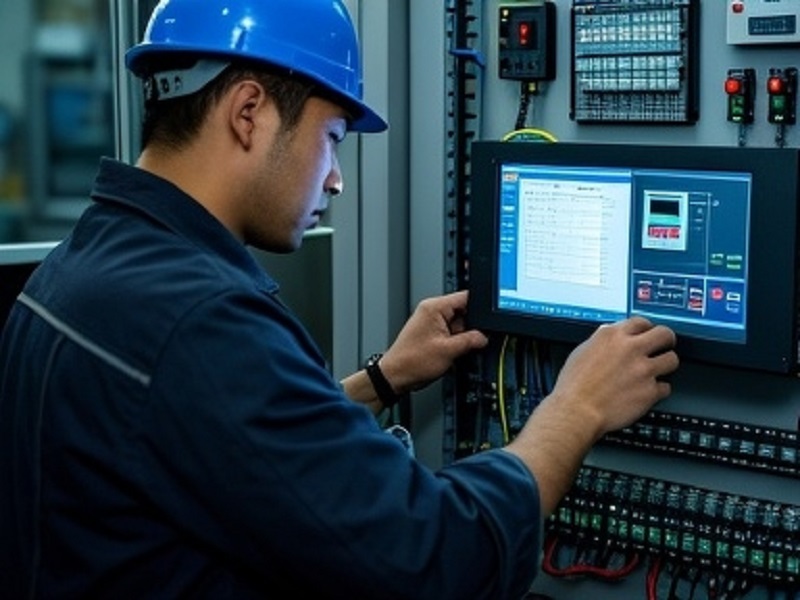
Unexpected equipment failure can result in:
- Unplanned production shutdowns
- Equipment damage
- Maintenance emergencies
- Production losses
- Reduced plant availability
- Increased operating costs
This is why machinery condition monitoring has become an important part of modern industrial automation.
Bently Nevada is widely associated with machinery monitoring, vibration measurement and protection technologies for critical rotating equipment. Its monitoring approach combines sensors, monitoring hardware, protection functions and diagnostic analysis to provide engineers with information about machine condition.
Rather than waiting until a machine fails, engineers can use condition-monitoring information to identify abnormal behavior at an earlier stage.
Why Vibration Monitoring Matters
Mechanical equipment normally produces vibration while operating.
However, changes in vibration behavior can indicate developing problems.
Potential causes include:
- Bearing degradation
- Shaft imbalance
- Misalignment
- Mechanical looseness
- Rotor problems
- Gear defects
- Lubrication problems
- Structural resonance
A vibration-monitoring system continuously measures relevant machine parameters and compares the results with defined operating conditions.
This gives maintenance personnel additional information for deciding when inspection or intervention may be necessary.
Bently Nevada Proximity Sensors
Proximity measurement is particularly important for rotating machinery.
A proximity probe can monitor the position and movement of a rotating shaft without requiring physical contact with the shaft.
This type of measurement can provide information about:
- Shaft vibration
- Radial movement
- Axial position
- Rotor behavior
For critical machines, this information can be essential for understanding mechanical condition.
Shaft Vibration and Rotor Behavior
Rotating shafts should operate within an expected mechanical range.
If shaft movement gradually increases, it may indicate a developing mechanical condition.
For example, an imbalance can cause the rotor to generate greater vibration at operating speed.
Misalignment can produce another characteristic pattern.
Engineers can analyze these changes to determine whether further inspection is necessary.
Bearing Monitoring
Bearings are critical components in rotating machinery.
A bearing problem can gradually develop before a major failure occurs.
Monitoring may include:
- Vibration
- Temperature
- Shaft position
- Speed
- Other process parameters
A change in vibration characteristics can provide an early indication that a bearing requires attention.
This is particularly valuable for machinery where bearing failure could result in a major shutdown.
Continuous Online Monitoring
For highly critical equipment, continuous monitoring can be more effective than occasional manual measurements.
An online monitoring architecture can continuously collect machine information.
A typical structure can be represented as:
Sensor → Monitoring Module → Protection System → Control/Monitoring System → Diagnostic Software
The system can continuously observe the machine while it is operating.
This is particularly useful for equipment that cannot easily be stopped for routine inspection.
Machinery Protection Versus Condition Monitoring
These two functions are related but have different objectives.
Machinery Protection
The primary objective is to protect equipment when a dangerous operating condition occurs.
If a monitored parameter exceeds a defined protection threshold, the system may generate an alarm or initiate an appropriate protective action.
Condition Monitoring
The objective is to understand the longer-term health of the machine.
Engineers can analyze:
- Trends
- Historical data
- Vibration patterns
- Operating conditions
- Event information
Combining both approaches provides a more complete machine-health strategy.
Bently Nevada Monitoring Systems in Critical Industries
Machinery monitoring is particularly important in industries where rotating equipment is critical to production.
Applications include:
- Oil and gas
- Petrochemical plants
- Power generation
- Mining
- Metals processing
- Manufacturing
- Pulp and paper
- Cement
- Renewable energy
In these industries, a single rotating machine may have a major influence on plant production.
Turbine Monitoring
Turbines can operate at high speed and under demanding thermal and mechanical conditions.
A turbine monitoring system may need to observe:
- Shaft vibration
- Rotor position
- Speed
- Bearing behavior
- Temperature
- Other operating parameters
Continuous monitoring provides operators and maintenance engineers with information about machine behavior.
Compressor Monitoring
Compressors are another important application.
A compressor may contain multiple rotating components and bearings.
Changes in vibration or process behavior can indicate potential problems.
Condition monitoring can therefore support:
- Equipment protection
- Maintenance planning
- Fault diagnosis
- Operational decision-making
Pumps and Motors
Not every application requires a large rack-based monitoring system.
Smaller industrial machines can also benefit from vibration monitoring.
For pumps and motors, engineers may monitor:
- Vibration
- Temperature
- Speed
- Motor condition
This information can help identify mechanical degradation before it becomes a major operational problem.
From Preventive Maintenance to Predictive Maintenance
Traditional preventive maintenance uses fixed schedules.
For example, a bearing might be inspected every six months.
However, equipment does not necessarily degrade according to a fixed calendar.
Condition monitoring allows maintenance decisions to be based more heavily on actual equipment condition.
This supports a transition from:
Time-Based Maintenance
to:
Condition-Based Maintenance
and eventually:
Predictive Maintenance
Importance of Trend Analysis
A single vibration measurement provides limited information.
A trend is often much more useful.
For example:
Normal → Slight Increase → Continued Increase → Alarm → Maintenance
Engineers can observe whether a parameter is stable or changing over time.
Trend information can help maintenance teams determine whether an abnormal condition is temporary or developing.
Integration With Industrial Control Systems
Condition monitoring does not necessarily operate as an isolated system.
Monitoring information can be integrated into broader automation architectures.
Possible connections include:
- PLC systems
- DCS systems
- SCADA
- HMIs
- Plant historians
- Maintenance platforms
This allows machine-health information to become part of the overall industrial information environment.
Alarm Management
Alarm configuration is an important part of machinery monitoring.
Too many alarms can overwhelm operators.
Too few alarms may delay recognition of a serious problem.
A well-designed monitoring strategy should distinguish between:
- Normal operation
- Alert condition
- Dangerous condition
- Protective trip condition
The alarm strategy should reflect the actual characteristics and criticality of the machine.
Troubleshooting With Vibration Data
When a machine develops a problem, vibration data can provide valuable clues.
Engineers can investigate:
- When the abnormality started
- Which parameter changed
- Whether the change is speed-related
- Whether the problem is increasing
- Whether other process parameters changed simultaneously
This can make troubleshooting more systematic.
Maintenance Planning
Condition-monitoring information can help maintenance departments prioritize work.
Instead of treating every machine equally, engineers can identify equipment showing signs of degradation.
Maintenance resources can then be allocated according to:
- Machine criticality
- Equipment condition
- Failure risk
- Production requirements
This can improve maintenance efficiency.
The Role of Diagnostic Expertise
Condition-monitoring systems produce large amounts of technical information.
However, collecting data is only the beginning.
Engineers need to understand what the data means.
Effective diagnosis requires knowledge of:
- Mechanical systems
- Vibration behavior
- Bearings
- Rotors
- Process conditions
- Machine operating states
The combination of instrumentation and engineering expertise is therefore essential.
Bently Nevada and the Future of Machinery Monitoring
Modern condition monitoring is increasingly moving toward digital architectures.
Sensors provide data.
Monitoring systems process signals.
Industrial networks transport information.
Software provides visualization and analysis.
Remote monitoring can extend access to machinery expertise.
This creates a more comprehensive approach to asset management.
Conclusion
Bently Nevada machinery protection and condition-monitoring technologies provide an important layer of protection and diagnostic capability for critical industrial equipment.
Vibration sensors can provide information about shaft and machine behavior.
Monitoring systems can continuously evaluate operating conditions.
Protection functions can respond to dangerous conditions.
Diagnostic analysis can help maintenance teams understand developing problems.
For industries that depend heavily on turbines, compressors, pumps, motors and other rotating equipment, condition monitoring can be an important part of improving reliability and reducing unexpected downtime.
The long-term value of a machinery monitoring system is not simply the ability to measure vibration. Its greater value lies in turning machine-condition information into better maintenance decisions, better equipment protection and greater operational confidence.