Introduction
Siemens is one of the most recognized names in industrial automation.
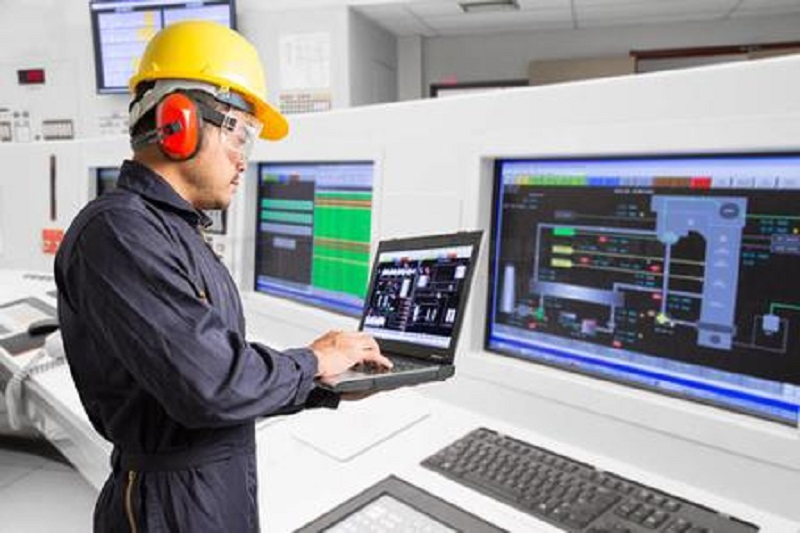
Its technologies are widely associated with:
- PLC control
- Distributed I/O
- HMI
- Industrial networking
- Motion control
- Drives
- Industrial PCs
- Process automation
- Manufacturing software
Modern Siemens automation architectures are designed to connect different levels of an industrial system.
A production machine may combine controllers, sensors, drives and operator interfaces.
A larger factory can connect these machines with supervisory and manufacturing systems.
This creates an integrated automation environment.
Siemens PLCs as the Core of Machine Control
PLC controllers are fundamental to many Siemens automation systems.
A PLC can execute:
- Logic
- Sequencing
- Motion commands
- Data processing
- Communication
- Alarm functions
The controller continuously receives information from field devices.
It processes the signals according to the application program.
Outputs are then generated for motors, valves, actuators and other equipment.
Siemens S7 Controller Families
Siemens has developed multiple PLC families for different automation requirements.
Depending on the application, engineers may select controllers for:
- Compact machines
- Modular production systems
- High-performance automation
- Distributed architectures
The appropriate controller depends on factors such as:
- Number of I/O points
- Processing requirements
- Communication
- Motion requirements
- Application complexity
TIA-Based Automation Architecture
The Totally Integrated Automation concept is an important part of Siemens industrial automation.
The objective is to provide integration between different automation components.
A machine can combine:
- PLC
- HMI
- Drives
- Remote I/O
- Industrial networks
within a coordinated engineering environment.
This can simplify configuration and system integration.
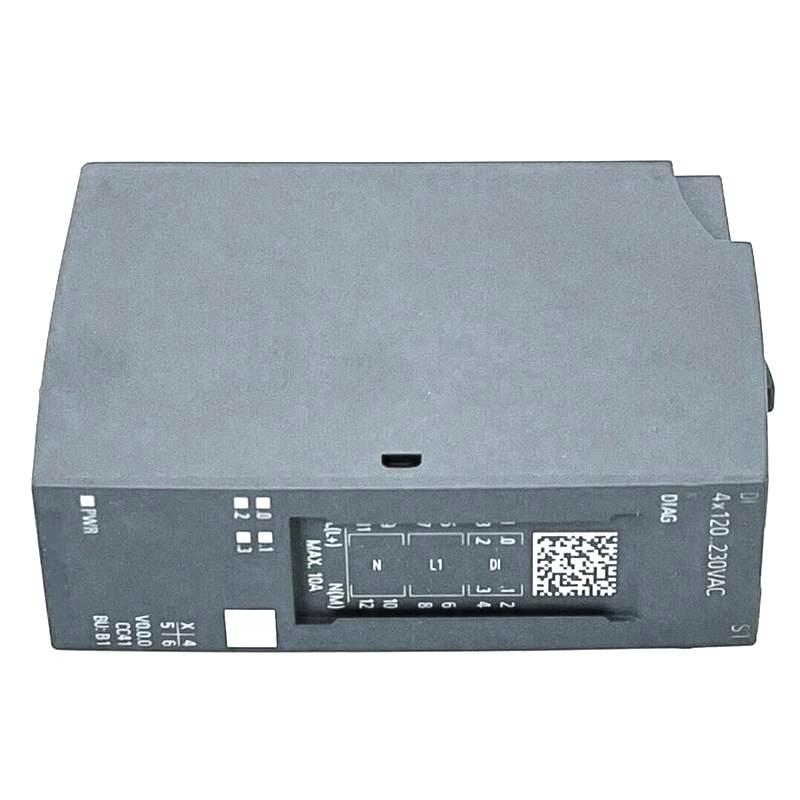
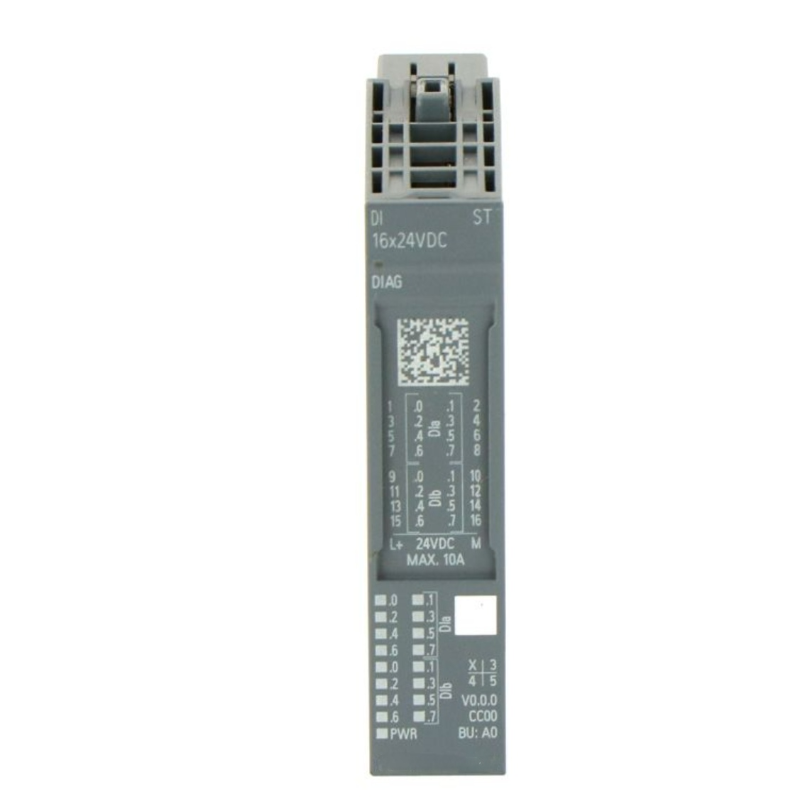
Siemens Distributed I/O
Distributed I/O allows field signals to be collected close to machines.
A distributed I/O system can handle:
- Digital inputs
- Digital outputs
- Analog inputs
- Analog outputs
- Technology signals
The I/O station communicates with the main controller through an industrial network.
This reduces the amount of wiring required between field devices and the central cabinet.
Siemens Drives
Motor control is another important area of Siemens automation.
Variable speed drives can control motors used in:
- Conveyors
- Pumps
- Fans
- Compressors
- Machine tools
- Material handling
The drive receives a speed or torque command and adjusts motor operation.
Drive and PLC Integration
Integrating drives with PLC systems provides greater machine coordination.
The PLC can manage:
- Start and stop commands
- Speed references
- Operating modes
- Fault handling
- Production sequences
The drive can return:
- Actual speed
- Current
- Status
- Fault information
This creates two-way communication.
Siemens Motion Control
High-performance machines may require synchronized motion.
Examples include:
- Packaging
- Printing
- Robotics
- Assembly
- Machine tools
The control system needs to coordinate multiple axes.
Important parameters include:
- Position
- Speed
- Acceleration
- Torque
Motion control can be integrated with PLC-based machine control.
Siemens HMI Systems
Operators need clear information about machine operation.
A Siemens HMI can provide:
- Machine status
- Alarm information
- Process values
- Production data
- Parameter settings
A well-designed HMI can make machine operation easier.
It can also help maintenance personnel identify faults.
Siemens Industrial Networks
Industrial communication is essential for integrated automation.
A typical system can connect:
PLC → Remote I/O → Drives → HMI → Industrial PC
Reliable communication allows the controller to exchange real-time and diagnostic information with other devices.
Diagnostics and Maintenance
Modern Siemens automation systems provide extensive diagnostic information.
Engineers can identify:
- I/O faults
- Communication problems
- Drive alarms
- Controller errors
- Device configuration issues
This reduces the need for manual troubleshooting.
Siemens Automation in Manufacturing
Manufacturing applications can include:
- Automotive production
- Packaging
- Food processing
- Electronics
- Machine building
- Material handling
The same automation principles can be adapted to different industries.
Siemens Process Automation
Large process plants have different requirements from discrete machines.
They may need continuous monitoring and regulation of:
- Pressure
- Temperature
- Flow
- Level
- Chemical conditions
Siemens process automation technologies can provide control and supervision for these applications.
Automation and Production Data
A modern PLC does more than control equipment.
It can also provide operational information.
Useful data can include:
- Machine cycle time
- Production count
- Alarm history
- Motor status
- Process values
This information can be transferred to higher-level systems.
Siemens and Industrial Digitalization
Digitalization is changing how automation systems are used.
The architecture can be represented as:
Sensors → PLC → Industrial Network → Edge/SCADA → Manufacturing Analytics
This connects the physical machine with digital production management.
Energy Monitoring
Energy consumption is becoming an increasingly important production parameter.
Automation systems can monitor:
- Motor power
- Machine energy consumption
- Production-related energy use
Engineers can compare energy consumption with production output.
This can help identify inefficient operating conditions.
Predictive Maintenance
Automation data can also support predictive maintenance.
For example, engineers can analyze:
- Motor temperature
- Drive alarms
- Operating hours
- Current
- Machine cycle time
Changes in these parameters may indicate developing equipment problems.
Siemens and Smart Factory Development
Smart factories require flexible and connected automation systems.
Siemens automation technologies can support:
- Automated production
- Data collection
- Machine networking
- Motion control
- Digital engineering
- Production monitoring
The objective is to connect automation functions without sacrificing reliable machine control.
Legacy Siemens System Modernization
Many factories operate older Siemens PLCs and automation equipment.
Modernization can be performed in stages.
Potential upgrades include:
- PLC processors
- HMI systems
- Remote I/O
- Industrial networks
- Drives
- Engineering systems
A phased strategy can reduce production disruption.
Importance of Backup and Documentation
Industrial automation systems should have complete documentation.
Important information includes:
- PLC programs
- Hardware configurations
- I/O assignments
- Drive parameters
- HMI projects
- Network settings
Regular backups can significantly simplify recovery after hardware failure or configuration problems.
Siemens Automation and Future Manufacturing
The future factory will increasingly combine:
- PLCs
- Drives
- Motion systems
- Industrial Ethernet
- Edge computing
- Analytics
- Digital engineering
The PLC will remain responsible for deterministic machine control, while digital technologies will provide additional intelligence and visibility.
Conclusion
Siemens industrial automation technologies provide a broad foundation for modern machine and factory control.
PLCs execute control logic.
Distributed I/O connects field devices.
Drives regulate motors.
Motion systems provide precise movement.
HMIs provide operator interaction.
Industrial networks connect the automation architecture.
Higher-level digital systems can then use production information for monitoring and optimization.
For manufacturers, the value of a Siemens automation architecture is not limited to individual components.
The larger benefit comes from integrating controllers, field devices, drives, communication and software into a coordinated industrial system.
As manufacturing continues to move toward greater connectivity, flexibility and digitalization, Siemens automation technology will remain an important part of modern industrial control.