

ProductPRODUCT
Featured products
Contact Us
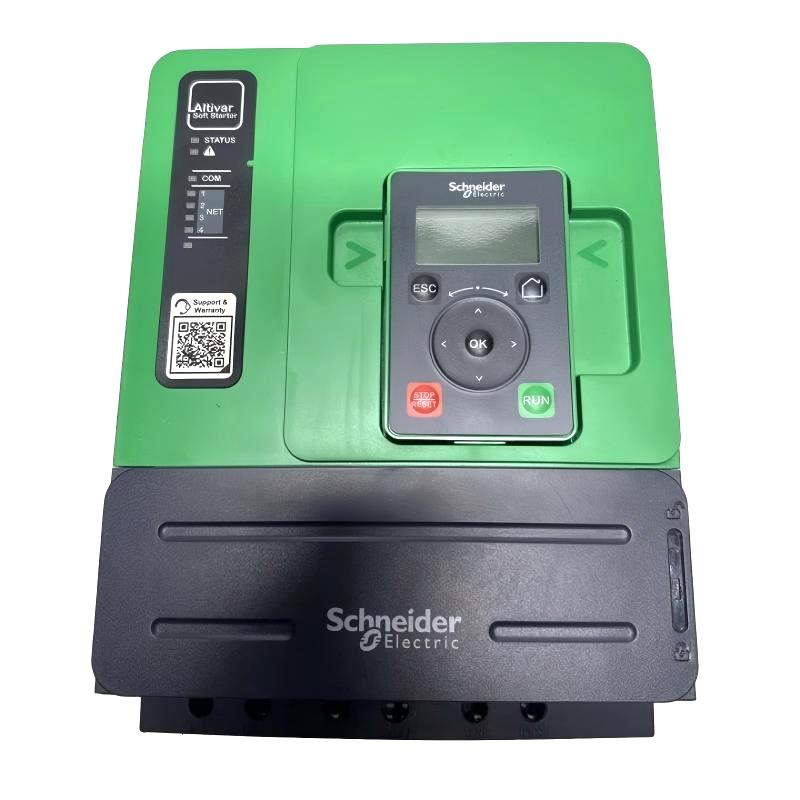
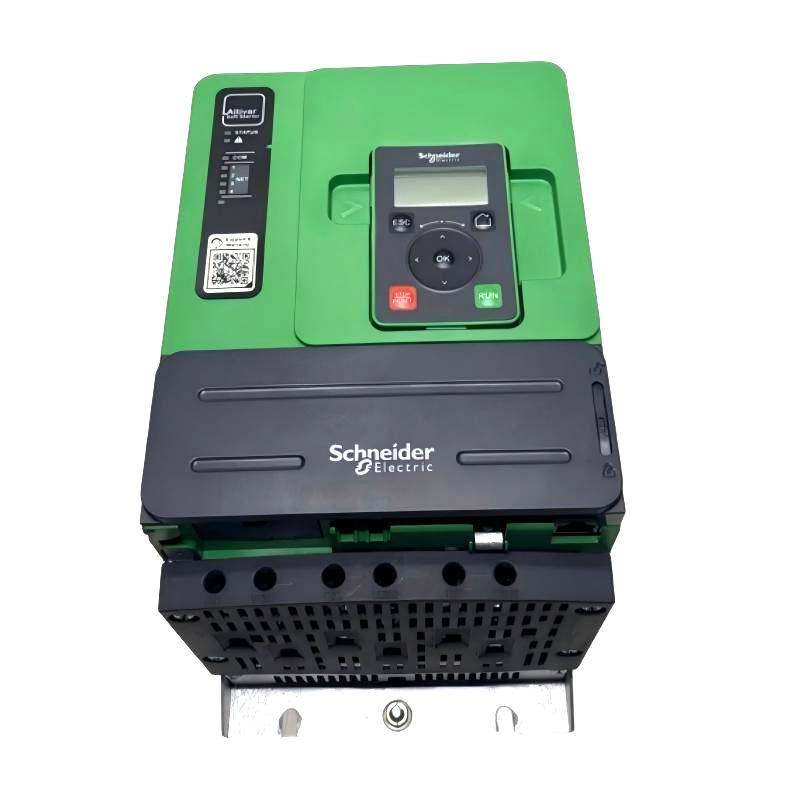
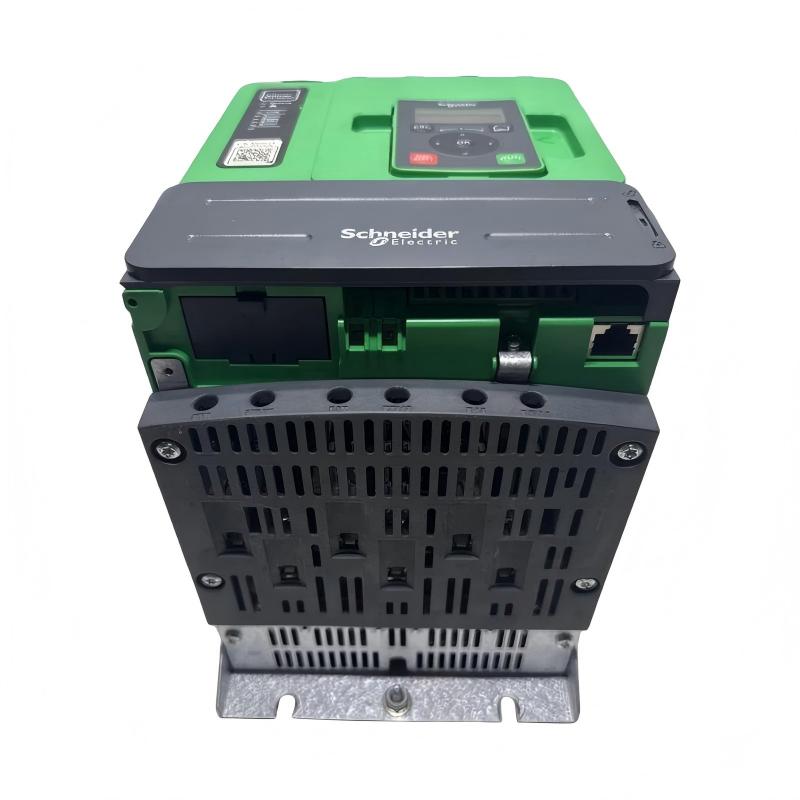
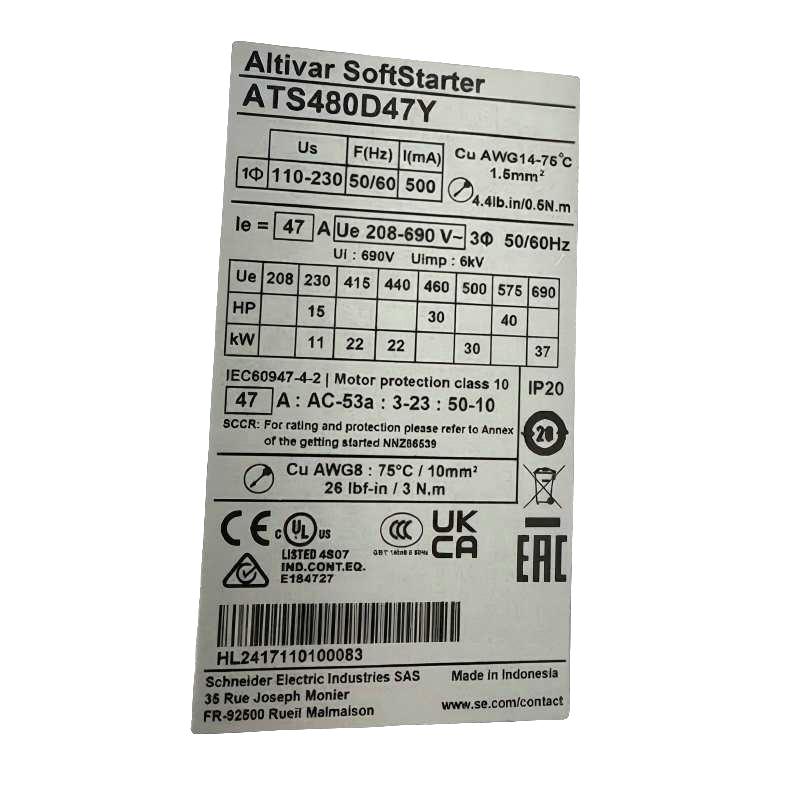
- Schneider
- ATS480D47Y
- Soft Starter
- France
- 275 × 160 × 203 mm
- 4.9 kg
- Xiamen, China
- New & In Stock
- T/T, PayPal, Western Union
- 1 Year
- 1-3 Working Days
- DHL, UPS, TNT, FedEx and EMS.
- 24-Hour Service
- COO
- 70
Our advantage

Global Logistics
We have a 10-year logistics and express cooperation agreement, so our products can be shipped to any place in the world.

Brand new and original
Our products are imported in bulk from the place of origin. Because of the cooperative relationship, our products are all original and 100% new.

24-hour service
We provide 7*24 hours service to our customers. We will be there whenever you need us.

Price advantage
All our products are priced very favorably because we have our own warehouse and supply.
| Company Information | |||
| [email protected] | |||
| Mobile | +8615980777398 | ||
| +8615980777398 | |||
| 15980777398 |
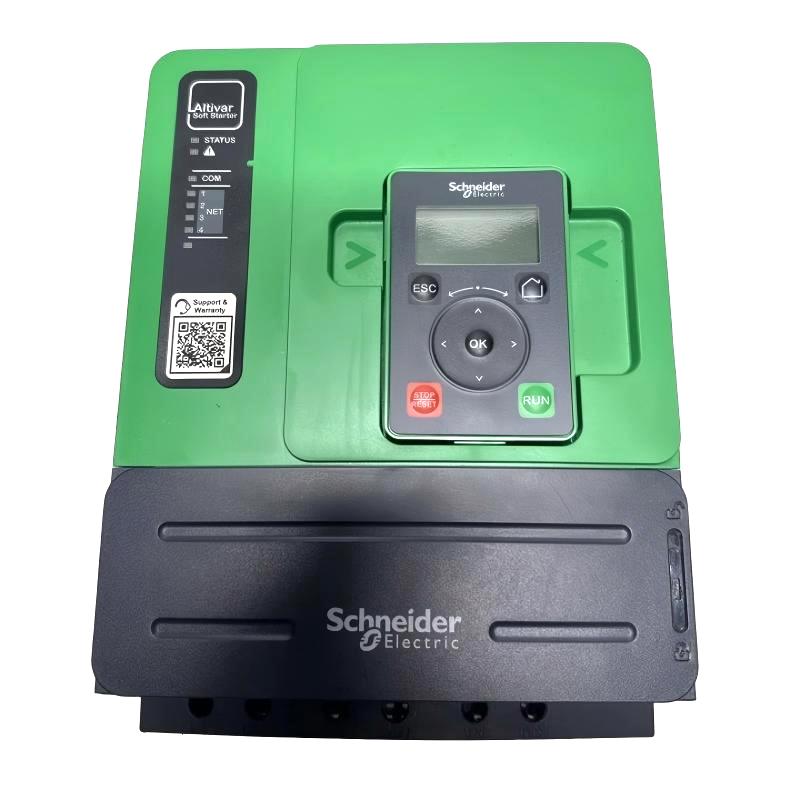
Product Overview
The Schneider ATS480D47Y Soft Starter is an industrial motor-control device designed to provide controlled acceleration and deceleration for three-phase AC induction motors. It is intended for motor-driven equipment where a direct-on-line start may create high inrush current, excessive torque, or unnecessary mechanical stress.
By progressively controlling the motor during startup, the ATS480D47Y can help provide smoother acceleration and reduce sudden loading on shafts, couplings, gearboxes, belts, pumps, fans, and other mechanical components. Controlled stopping can likewise help reduce abrupt changes in motor speed and improve process stability.
The ATS480D47Y is suitable for integration into industrial control panels and automated motor-control systems. It can operate as the interface between the plant electrical supply and the motor while receiving commands from a PLC, DCS, HMI, relay circuit, or other control architecture.
The supplied product information specifies 275 × 160 × 203 mm dimensions and a 4.9 kg weight for the ATS480D47Y.
Product Identification
| Parameter | Specification |
|---|---|
| Manufacturer | Schneider Electric |
| Model | ATS480D47Y |
| Product Family | ATS480 |
| Product Type | Soft Starter |
| Application | Industrial Motor Control |
| Motor Type | Three-Phase AC Induction Motor |
| Main Function | Controlled Motor Starting and Stopping |
| Starting Method | Soft Start |
| Stopping Method | Controlled Stop |
| Dimensions | 275 × 160 × 203 mm |
| Weight | 4.9 kg |
| Installation | Industrial Control Cabinet |
| Typical Loads | Pumps, Fans, Compressors, Conveyors, Mixers |
The dimensional and weight information in this article is based on the specifications supplied for the product. Actual electrical ratings and application suitability should be confirmed during engineering and commissioning.
Technical Specifications
The ATS480D47Y is intended for industrial motor applications where smooth starting, controlled acceleration, and predictable stopping are required.
| Technical Item | Specification |
|---|---|
| Manufacturer | Schneider Electric |
| Model | ATS480D47Y |
| Series | Altivar ATS480 |
| Product Type | Soft Starter |
| Motor Application | Three-Phase AC Motor |
| Starting Control | Controlled Acceleration |
| Stopping Control | Controlled Deceleration |
| Installation | Panel / Cabinet |
| Dimensions | 275 × 160 × 203 mm |
| Weight | 4.9 kg |
| Typical Application | Industrial Motor Control |
| Common Loads | Pumps, Fans, Compressors, Conveyors, Mixers |
For actual equipment selection, the motor’s rated current, operating duty, starting conditions, ambient conditions, and driven-load characteristics should be considered together.
Functional Principle
The ATS480D47Y is installed between the industrial power supply and the motor.
A simplified system arrangement is:
Three-Phase Power Supply
↓
ATS480D47Y Soft Starter
↓
Three-Phase Motor
↓
Mechanical Load
↓
Industrial Process
During a conventional direct start, the motor is connected to the supply with a sudden voltage transition. This can result in high starting current and a rapid increase in torque.
With a soft starter, the electrical conditions are controlled during acceleration. This allows the motor to build speed progressively.
The resulting benefits can include:
- Reduced electrical inrush
- Reduced mechanical shock
- Smoother acceleration
- Lower drivetrain stress
- Reduced belt and coupling impact
- Improved process stability
The stopping sequence can also be controlled when the application requires a gradual reduction in motor speed.
Major Application Benefits
Smooth Acceleration
The ATS480D47Y can provide a more controlled transition from standstill to normal operating speed.
This is useful where abrupt acceleration could disturb the process or stress mechanical components.
Reduced Mechanical Shock
Controlled starting can reduce sudden loading on:
- Motor shafts
- Couplings
- Gearboxes
- Bearings
- Belts
- Chains
- Pumps
- Fans
Reduced Electrical Disturbance
Managing the starting process can reduce the impact of large motor starting currents on the electrical distribution system.
Improved Process Behavior
Soft starting can be particularly valuable for equipment with high inertia or fluid-related processes.
Typical Industrial Applications
Pump Systems
The ATS480D47Y can be used in applications involving:
- Water pumps
- Cooling pumps
- Process pumps
- Wastewater systems
- Circulation pumps
A controlled start can reduce sudden changes in the mechanical and fluid system.
Fans and Blowers
Large fans can require significant acceleration time because of their rotating inertia.
Typical applications include:
- Industrial ventilation
- Exhaust systems
- Cooling systems
- Air-handling equipment
- Dust collection systems
Compressors
Controlled motor acceleration can help reduce starting stress in compressor installations.
The final configuration should take into account compressor type, motor characteristics, mechanical load, and operating cycle.
Conveyors
Conveyors can benefit from gradual acceleration because sudden torque application can create belt tension and mechanical shock.
Typical uses include:
- Manufacturing conveyors
- Bulk-material handling
- Packaging systems
- Warehouse systems
- Production lines
Mixers
Mixers can experience substantial starting resistance depending on the material being processed.
A controlled acceleration profile can help reduce sudden mechanical loading.
Installation Guide
Step 1 – Verify Product Identity
Confirm that the installed device is:
Schneider ATS480D47Y
Inspect the equipment for:
- Physical damage
- Cracks
- Damaged terminals
- Loose components
- Moisture
- Foreign material
If damage is found, stop the installation and investigate the condition of the equipment.
Step 2 – Verify Motor Information
Before configuring the soft starter, record the motor nameplate information.
Important information includes:
- Motor voltage
- Motor current
- Motor frequency
- Motor power
- Connection arrangement
- Motor speed
- Duty classification
- Application load
The soft starter should be selected according to actual motor current and operating conditions.
Step 3 – Prepare the Cabinet
The supplied ATS480D47Y dimensions are:
275 × 160 × 203 mm
Cabinet planning should provide space beyond the physical device dimensions.
Allow room for:
- Incoming power cables
- Motor cables
- Control wiring
- Protection equipment
- Ventilation
- Cable bending
- Maintenance access
Do not place heat-generating equipment immediately next to the soft starter without considering the cabinet thermal design.
Step 4 – Check the Installation Environment
The installation location should be clean, dry, and adequately ventilated.
Avoid excessive exposure to:
- Moisture
- Condensation
- Dust
- Oil mist
- Corrosive gases
- High temperatures
- Excessive vibration
- Direct heat
A properly designed cabinet should protect the equipment from unsuitable environmental conditions.
Step 5 – Electrical Safety
Before installation:
- Disconnect all incoming electrical power.
- Apply lockout/tagout procedures.
- Verify that hazardous voltage is absent.
- Isolate the motor.
- Confirm stored electrical energy has been safely discharged.
- Use appropriate electrical PPE.
Never perform power wiring while the equipment is energized.
Step 6 – Mechanical Mounting
Secure the ATS480D47Y to the control panel using an appropriate mounting arrangement.
Verify:
- Correct orientation
- Mounting stability
- Ventilation space
- Cable access
- Terminal accessibility
- Maintenance clearance
The specified product weight is 4.9 kg, so the panel and mounting structure should be suitable for continuous industrial operation.
Step 7 – Connect the Power Circuit
Connect the incoming three-phase supply and motor circuit according to the engineered electrical design.
Check:
- Phase sequence
- Cable sizing
- Terminal tightness
- Grounding
- Short-circuit protection
- Cable insulation
- Motor connections
Before energizing, perform a complete visual and electrical inspection of the power circuit.
Step 8 – Connect Control Wiring
Depending on the control system, signals may include:
- Start
- Stop
- Reset
- Fault
- Run
- External interlock
- PLC command
- Emergency-stop circuit
Keep control wiring appropriately separated from high-current power conductors.
Step 9 – Configure Parameters
Configure the ATS480D47Y according to the actual motor and mechanical application.
Potential configuration areas include:
- Motor rated current
- Starting characteristics
- Acceleration time
- Deceleration time
- Current limitation
- Protection settings
- Stop mode
- Control source
Do not use parameters from another installation unless the motor and load characteristics are equivalent.
Step 10 – Inspect the Mechanical Load
Before commissioning, inspect the complete motor-driven system.
Check:
- Shaft alignment
- Coupling condition
- Bearings
- Gearbox
- Belts
- Pumps
- Fans
- Conveyors
- Mechanical guards
Make sure the mechanical load can move freely and does not have unexpected resistance.
Commissioning Procedure
Initial Pre-Start Inspection
Before energization:
- Confirm power wiring.
- Confirm control wiring.
- Verify grounding.
- Check protective equipment.
- Confirm motor parameters.
- Inspect the mechanical system.
- Check cabinet ventilation.
Initial Power-Up
- Energize the control system.
- Observe the ATS480D47Y status.
- Check for fault indications.
- Verify control inputs.
- Confirm the expected operating mode.
First Motor Start
- Issue the start command.
- Observe acceleration.
- Monitor motor current.
- Listen for abnormal sounds.
- Check mechanical vibration.
- Confirm normal motor speed.
If the motor behaves abnormally, stop the test and investigate before repeating the start sequence.
Troubleshooting Guide
Fault 1 – Soft Starter Does Not Power Up
Possible Causes
- No incoming power
- Open circuit protection
- Incorrect wiring
- Control supply problem
- Internal equipment fault
Diagnostic Procedure
- Measure incoming voltage.
- Inspect circuit protection.
- Check power terminals.
- Verify control supply.
- Check the ATS480D47Y status.
Fault 2 – Motor Does Not Start
Possible Causes
- Start command missing
- Control wiring error
- Active interlock
- Incorrect configuration
- Motor fault
- Mechanical obstruction
Recommended Checks
Trace the start command from the PLC, HMI, relay, or external control circuit to the soft starter.
Then verify the motor power circuit and mechanical load.
Fault 3 – Motor Accelerates Too Slowly
Possible Causes
- Acceleration time too long
- Unsuitable starting configuration
- Current limitation too restrictive
- Excessive mechanical load
- Mechanical resistance
Corrective Action
Review motor parameters and acceleration settings while simultaneously checking the driven machine for excessive load.
Fault 4 – Starting Current Is Too High
Possible Causes
- Incorrect current limitation
- Acceleration time too short
- Excessive mechanical load
- Incorrect motor data
- Motor condition
Corrective Action
Verify the motor nameplate information and compare it with the configured values.
Fault 5 – Soft Starter Trips During Acceleration
Possible Causes
- Motor overload
- Phase problem
- Incorrect wiring
- Incorrect parameters
- Excessive mechanical load
- Mechanical obstruction
Do not repeatedly reset the device without diagnosing the fault.
Fault 6 – ATS480D47Y Overheats
Possible Causes
- Poor cabinet ventilation
- Blocked airflow
- High ambient temperature
- Excessive starting frequency
- Motor overload
- Cooling problem
- Dust accumulation
Diagnostic Approach
Inspect the entire cabinet rather than the soft starter alone. A cabinet with restricted airflow can cause multiple devices to operate above their intended thermal conditions.
Fault 7 – Motor Vibrates During Startup
Possible Causes
- Shaft misalignment
- Loose coupling
- Bearing wear
- Mechanical imbalance
- Incorrect acceleration profile
- Mechanical resonance
Inspect both electrical and mechanical conditions.
Fault 8 – Motor Stops Too Quickly
Possible Causes
- Incorrect deceleration settings
- External stop command
- PLC logic problem
- Incorrect stop mode
- High-inertia load
Review the complete stop sequence.
Fault 9 – Motor Does Not Stop
Possible Causes
- Stop command missing
- Control wiring problem
- PLC logic issue
- External interlock
- Incorrect configuration
Trace the stop command through the entire control circuit.
Fault 10 – Repeated Overload Trips
Possible Causes
- Excessive mechanical load
- Mechanical obstruction
- Bearing deterioration
- Incorrect motor parameters
- Excessive starting frequency
- Incorrect soft-starter settings
- Abnormal process conditions
Repeated overload faults should be investigated at the system level.
Fault Diagnosis Flow
A structured troubleshooting sequence is:
Incoming Power
↓
Circuit Protection
↓
ATS480D47Y Status
↓
Control Signals
↓
Power Connections
↓
Motor
↓
Mechanical Load
↓
Configuration
↓
Controlled Restart
This sequence helps technicians determine whether the problem originates from the electrical supply, control circuit, soft starter, motor, configuration, or mechanical equipment.
Preventive Maintenance
Electrical Maintenance
Regularly inspect:
- Power terminals
- Control terminals
- Grounding connections
- Cable insulation
- Signs of overheating
- Loose terminals
Cooling Maintenance
Inspect:
- Cabinet ventilation
- Airflow
- Filters
- Cooling equipment
- Ventilation openings
- Dust accumulation
Keep airflow paths clear.
Mechanical Maintenance
Inspect:
- Mounting hardware
- Cable supports
- Motor alignment
- Couplings
- Bearings
- Mechanical vibration
Operating Condition Monitoring
Monitor:
- Motor current
- Starting duration
- Operating temperature
- Fault history
- Starting frequency
- Vibration
- Abnormal noise
Trend information can be especially useful for identifying changes in motor or load behavior.
Preventive Maintenance Table
| Maintenance Item | Recommended Action |
|---|---|
| Power Terminals | Inspect for looseness and overheating |
| Control Wiring | Verify connection integrity |
| Grounding | Check continuity |
| Cooling System | Inspect and clean |
| Ventilation | Keep airflow unobstructed |
| Cabinet Filters | Clean or replace when necessary |
| Motor Current | Monitor operating values |
| Fault History | Review regularly |
| Mounting Hardware | Inspect periodically |
| Cable Insulation | Check for deterioration |
| Cabinet Interior | Remove dust and contamination |
| Mechanical Load | Check alignment and vibration |
Common Installation Errors
Using Incorrect Motor Data
Incorrect current, voltage, or frequency information can result in poor operation and unnecessary protection trips.
Insufficient Cabinet Ventilation
A soft starter installed in a poorly ventilated cabinet can experience elevated operating temperatures.
Loose Power Terminals
Loose connections can cause heating, voltage drop, intermittent operation, and potential equipment damage.
Incorrect Control Wiring
An incorrect start or stop circuit can make the soft starter appear faulty even when the power stage is operating normally.
Poor Grounding
The complete installation should have appropriate protective grounding.
Mechanical Problems Misdiagnosed as Electrical Problems
Misalignment, worn bearings, damaged couplings, and overloaded machinery can all cause motor-starting problems even when the soft starter is functioning correctly.
Repeated Fault Resets
Resetting the same fault repeatedly without diagnosis can increase downtime and obscure the underlying cause.
Industrial Automation Integration
The ATS480D47Y can be incorporated into an industrial automation architecture.
A typical arrangement is:
PLC / DCS / HMI
↓
Start / Stop / Interlock Commands
↓
ATS480D47Y
↓
Three-Phase Motor
↓
Pump / Fan / Compressor / Conveyor
↓
Process Feedback
This architecture allows the control system to coordinate motor operation while the soft starter manages controlled acceleration and stopping.
Supporting Components
A complete motor-control system may include:
- Circuit breakers
- Disconnect switches
- Fuses
- Contactors
- Motor protection equipment
- PLC controllers
- HMI systems
- Control relays
- Communication equipment
- Emergency-stop circuits
- Current monitoring devices
- Motor sensors
- Process feedback devices
The final configuration should be based on the motor, driven load, electrical architecture, automation requirements, and applicable safety practices.
Key Advantages
- Industrial soft-starting solution
- Controlled motor acceleration
- Controlled motor deceleration
- Reduced starting current
- Reduced mechanical shock
- Improved startup stability
- Reduced stress on drivetrain components
- Suitable for pumps, fans, compressors, conveyors, and mixers
- Suitable for integration into industrial automation systems
- Dimensions: 275 × 160 × 203 mm
- Weight: 4.9 kg
Technical FAQs
What is the Schneider ATS480D47Y?
The ATS480D47Y is an industrial soft starter designed to control the acceleration and deceleration of three-phase AC induction motors.
What are the dimensions of the ATS480D47Y?
The supplied dimensions are 275 × 160 × 203 mm.
How much does the ATS480D47Y weigh?
The supplied weight is 4.9 kg.
What is the main purpose of a soft starter?
A soft starter controls the motor starting process to reduce the impact of high starting current and sudden mechanical torque.
What equipment can use the ATS480D47Y?
Typical applications include pumps, fans, compressors, conveyors, mixers, blowers, and other industrial rotating machinery.
Why does the motor accelerate slowly?
Possible causes include excessive acceleration time, unsuitable starting parameters, restrictive current limitation, excessive mechanical load, or mechanical resistance.
Why does the ATS480D47Y overheat?
Possible causes include insufficient cabinet ventilation, blocked airflow, high ambient temperature, excessive starting cycles, overload, or contamination.
Why does the soft starter trip during startup?
Possible causes include motor overload, wiring problems, phase problems, incorrect motor parameters, excessive mechanical load, or mechanical obstruction.
What should be checked before commissioning?
Verify motor data, power wiring, control wiring, grounding, circuit protection, ventilation, mechanical connections, and soft-starter configuration.
How can operating reliability be improved?
Correct selection, proper installation, accurate configuration, adequate cooling, preventive maintenance, and systematic troubleshooting all contribute to reliable operation.
Conclusion
The Schneider ATS480D47Y Soft Starter is designed for industrial motor-control applications where controlled acceleration and stopping are required. By managing the motor-starting process, it can help reduce electrical inrush, mechanical shock, and stress on connected equipment.
The supplied physical specifications are 275 × 160 × 203 mm and 4.9 kg, making cabinet planning an important part of the installation. In addition to the device’s physical footprint, sufficient room should be provided for wiring, ventilation, protective components, and maintenance.
Successful commissioning requires accurate motor information, correct power and control wiring, proper grounding, adequate ventilation, appropriate protection, and suitable operating parameters.
For troubleshooting, technicians should use a structured process beginning with incoming power and protection, followed by control signals, soft-starter status, motor wiring, motor condition, and mechanical load. This prevents unnecessary replacement of a properly functioning soft starter when the actual problem originates elsewhere.
Regular inspections of electrical terminals, cooling conditions, motor current, fault history, and mechanical equipment can further reduce unexpected downtime and support dependable long-term operation of the ATS480D47Y in industrial automation systems.