

ProductPRODUCT
Featured products
Contact Us
- ABB(KUKA)
- 00-134-932 ESC-Ci3
- Safety Board
- Germany
- 180 × 150 × 30 mm
- 0.85 kg
- Xiamen, China
- New & In Stock
- T/T, PayPal, Western Union
- 1 Year
- 1-3 Working Days
- DHL, UPS, TNT, FedEx and EMS.
- 24-Hour Service
- COO
- 88
Our advantage

Global Logistics
We have a 10-year logistics and express cooperation agreement, so our products can be shipped to any place in the world.

Brand new and original
Our products are imported in bulk from the place of origin. Because of the cooperative relationship, our products are all original and 100% new.

24-hour service
We provide 7*24 hours service to our customers. We will be there whenever you need us.

Price advantage
All our products are priced very favorably because we have our own warehouse and supply.
| Company Information | |||
| [email protected] | |||
| Mobile | +8615980777398 | ||
| +8615980777398 | |||
| 15980777398 |
Product Overview
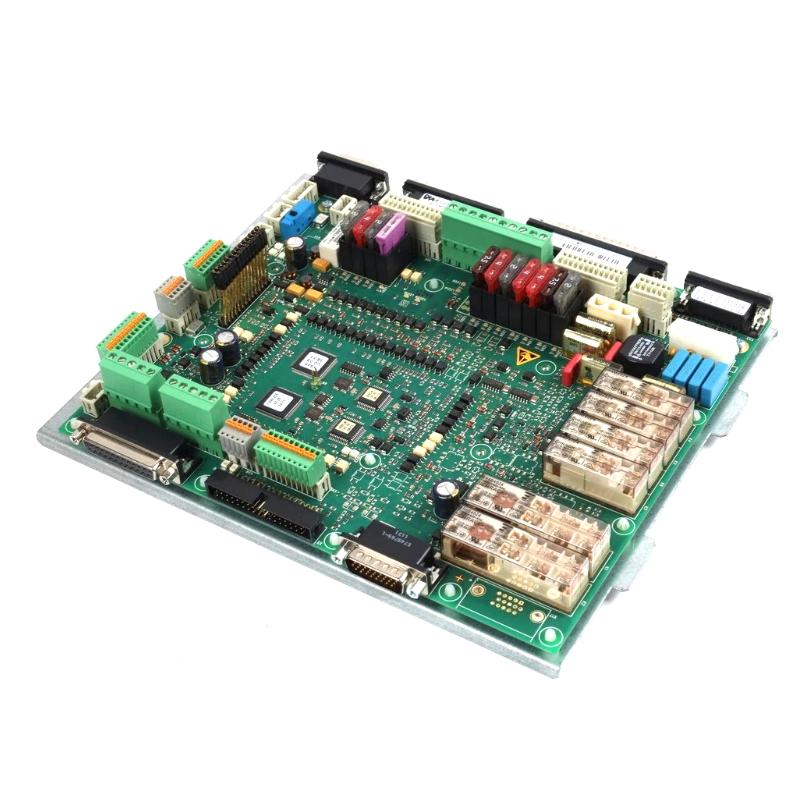
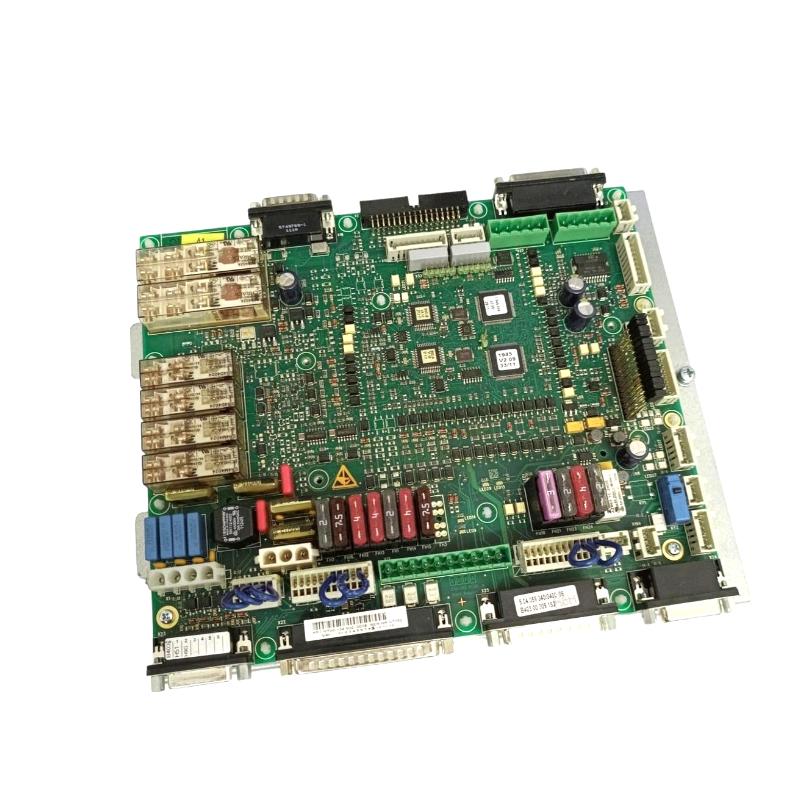
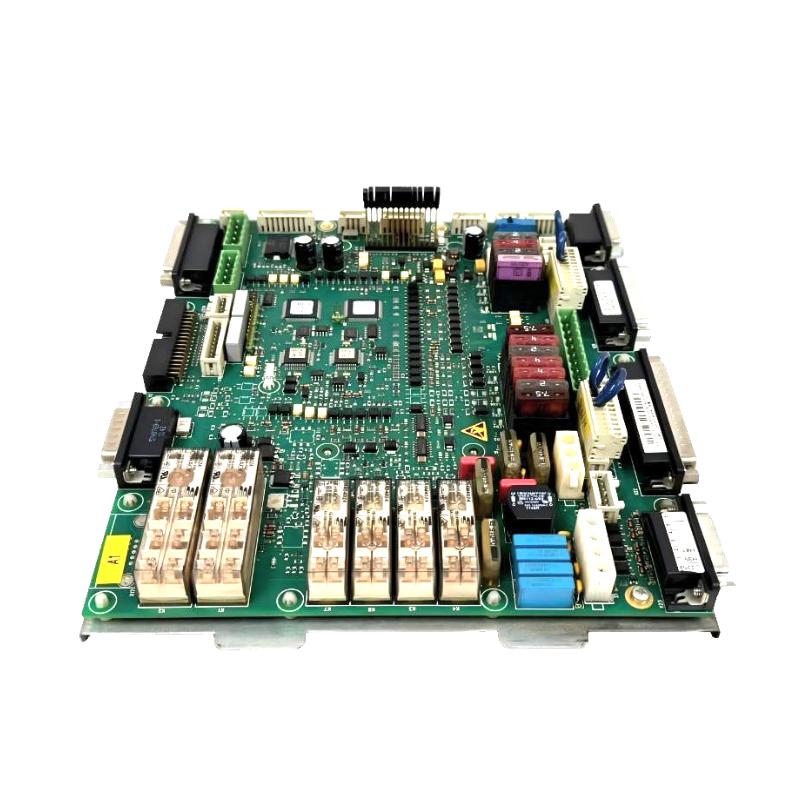
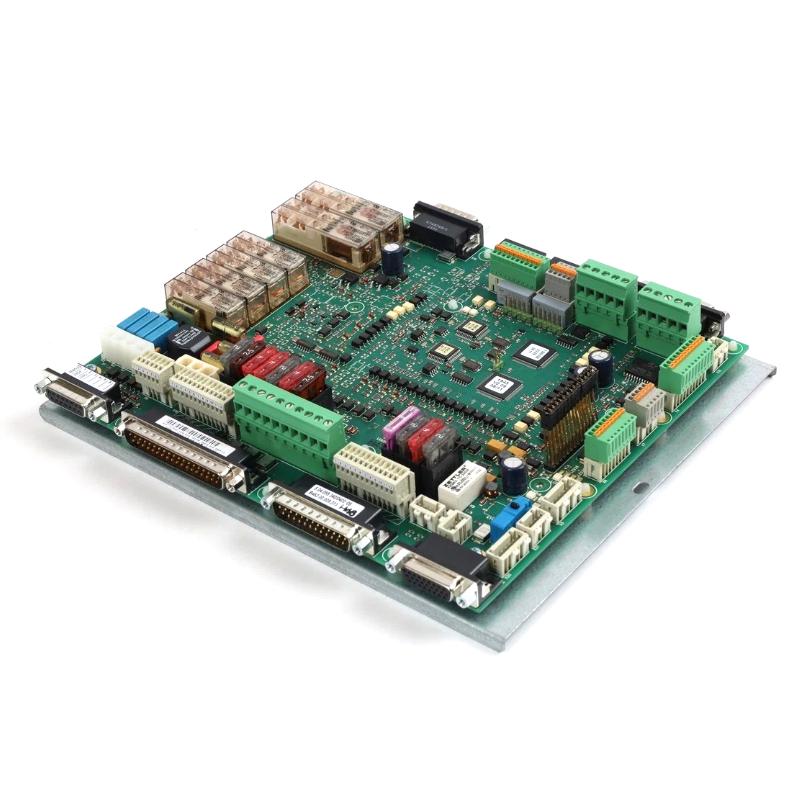
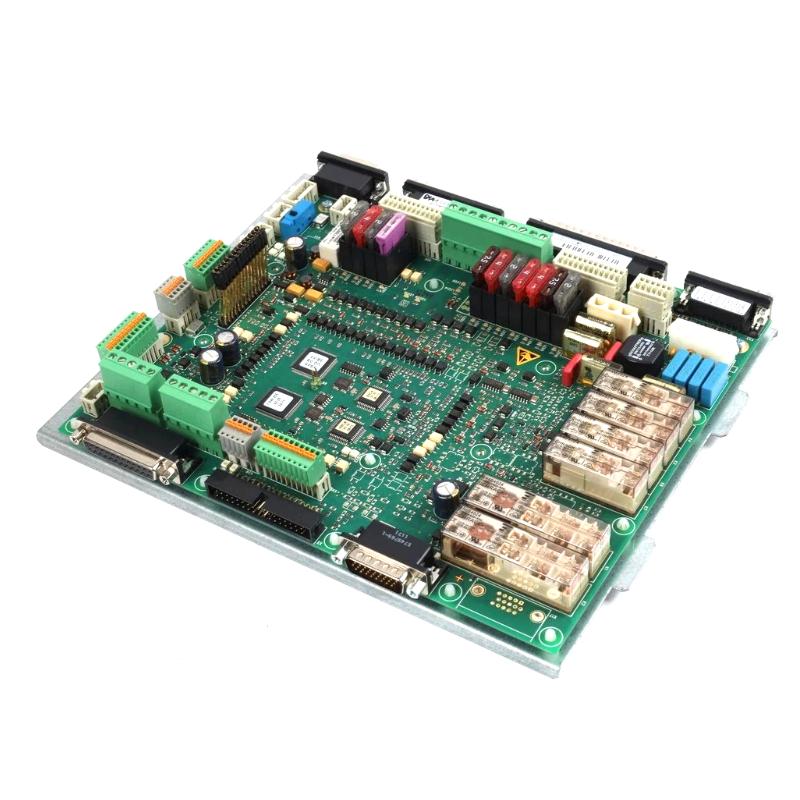
The ABB(KUKA) 00-134-932 ESC-Ci3 Safety Board is a safety-related board used in KUKA industrial robot control systems. It belongs to the safety portion of the controller architecture and works with the robot’s emergency-stop, protective-device, and safety-interlock functions.
In a robotic production cell, normal motion control and safety supervision have different responsibilities. The robot controller and servo system determine the required movement, while the safety architecture checks whether the operating conditions permit that movement to take place. The ESC-Ci3 board is associated with this safety chain.
This type of board is particularly relevant in robot cells where several external safety conditions must be monitored before the robot can enter an enabled operating state. It can therefore be encountered in applications involving guarded work areas, emergency-stop circuits, machine interlocks, and other protective functions.
The 00-134-932 should be treated as a safety-system component rather than an ordinary controller expansion board. When replacing it, the specific KUKA controller configuration and associated safety circuitry should be checked carefully.
Technical Specifications
| Parameter | Specification |
|---|---|
| Manufacturer | ABB(KUKA) |
| Model | 00-134-932 |
| Product Type | ESC-Ci3 Safety Board |
| Main Function | Robot Safety Control |
| Application | Industrial Robot Safety System |
| Dimensions | 180 × 150 × 30 mm |
| Weight | 0.85 kg |
Main Features
The 00-134-932 is intended for safety-related functions within a KUKA robot controller.
Key characteristics include:
- ESC-Ci3 safety board for KUKA robotic systems
- Safety-related controller component
- Used within the robot safety architecture
- Associated with protective and emergency-stop circuits
- Supports safety-condition monitoring
- Works alongside the main robot controller
- Separate from conventional motion-control functions
- Suitable for industrial robot cells
- Applicable to robot controller maintenance and refurbishment
- Compact electronic board construction
- Dimensions of 180 × 150 × 30 mm
- Weight of 0.85 kg
Because this board participates in a safety-related system, electrical compatibility and safety configuration are more important than simply matching the physical mounting position.
Working Principle
The ESC-Ci3 board forms part of the safety path that determines whether the robot can operate under the configured safety conditions.
A simplified relationship is:
Emergency Stop / Protective Devices → Safety Circuit → ESC-Ci3 → Robot Controller → Motion Enable
During normal operation, the safety system evaluates the status of relevant protective devices. If the required safety conditions are satisfied, the controller can proceed with the appropriate operating state.
If a safety condition is interrupted—for example, an emergency stop is activated—the safety chain changes state. The robot controller then responds according to its configured safety behavior and can prevent or interrupt normal robot movement.
The ESC-Ci3 is therefore not responsible for calculating robot trajectories. Its role is associated with safe operating permission and safety-state handling.
This distinction is important when diagnosing a KUKA robot that refuses to enable motion. A safety-board issue, an open protective circuit, an emergency-stop condition, or another safety-chain problem can produce similar symptoms and should be investigated systematically.
Safety Architecture in a KUKA Robot Cell
A typical robotic cell can contain several safety-related elements:
Emergency Stop → Safety Interlock → ESC-Ci3 → Robot Controller → Servo System → Robot Manipulator
The safety chain may also interact with:
- Protective doors
- Safety switches
- External emergency-stop stations
- Cell interlocks
- Machine safety circuits
- Operator safety devices
- External safety interfaces
The controller should only permit the appropriate robot operating state when the configured safety conditions are satisfied.
This architecture allows the robot’s normal motion-control system to remain focused on trajectory and servo control while safety-related conditions are handled through the dedicated safety path.
Industrial Applications
The 00-134-932 is applicable to KUKA robotic installations where safety supervision is integrated into the robot controller.
| Application | Typical Safety Function |
|---|---|
| Automotive Welding Cells | Robot-cell protective monitoring |
| Robotic Assembly | Operator protection and interlocking |
| Material Handling | Emergency-stop supervision |
| Machine Tending | Guard-door safety |
| Palletizing | Protected robot-cell operation |
| Packaging | Safety-device monitoring |
| Robotic Machining | Cell access protection |
| Automated Assembly | Safety interlock management |
| Handling Systems | Safe operating-state control |
| Production Cells | Integrated robot safety architecture |
It is particularly relevant to enclosed or guarded robot cells where access to the robot working area must be controlled.
Installation and Maintenance
Replacing a safety-related board requires more than checking whether the robot controller starts normally. The complete affected safety function should be verified after maintenance.
Before replacement:
- Confirm the 00-134-932 part number.
- Verify the applicable KUKA controller model.
- Check the ESC-Ci3 configuration.
- Record existing board connections.
- Back up relevant controller configuration.
- Isolate the robot from production.
- Follow the site’s lockout and maintenance procedure.
- Inspect connectors and mounting points.
- Check surrounding controller components for damage.
After installation:
- Confirm all board connections.
- Check controller diagnostics.
- Verify emergency-stop circuits.
- Test protective-device inputs.
- Check safety interlocks.
- Confirm the expected controller safety status.
- Verify that unsafe conditions inhibit the appropriate robot motion.
- Complete the required safety validation before production operation.
A normal controller boot-up should not be regarded as sufficient proof that the safety system has been restored correctly.
Related Components
The ESC-Ci3 Safety Board normally operates as part of a complete KUKA robotic control system.
| Component | Function |
|---|---|
| KUKA Robot Controller | Executes robot control functions |
| ESC-Ci3 Safety Board | Handles safety-related functions |
| Servo Drive | Controls robot-axis movement |
| Robot Servo Motor | Generates axis motion |
| Teach Pendant | Robot operation and programming |
| Emergency Stop Device | Initiates emergency safety response |
| Protective Door Switch | Detects access to guarded areas |
| Safety Interlock | Monitors machine-cell conditions |
| Robot I/O System | Handles process signals |
| Robot Manipulator | Performs programmed movement |
The exact combination of components depends on the robot model, controller generation, cell design, and safety configuration.
Recommended Related Models
For KUKA robot maintenance projects, related components should be selected according to the required safety, motion, power, and controller functions.
| Model | Product Type | Main Function | Typical Application |
|---|---|---|---|
| ABB(KUKA) 00-134-932 | ESC-Ci3 Safety Board | Robot safety control | Safety architecture |
| ABB(KUKA) 1FK6100-8AF91-1ZZ9-ZS09 | Robot Servo Motor | Axis motion | Industrial robot movement |
| ABB(KUKA) 1FK6100-8AF91-1ZZ9-ZS49 | Robot Servo Motor | Axis motion | Robot drive system |
| ABB(KUKA) 1FK7101-5AZ91-1ZZ9-ZS07 | Robot Servo Motor | Servo movement | Robotic applications |
| ABB(KUKA) 00-126-383 | DC Power Supply | Controller power | Robot control cabinet |
| ABB(KUKA) 00-119-767 | Robot Control Component | Controller integration | KUKA robot systems |
For safety-related applications, replacement components should be matched to the complete controller and safety architecture rather than selected only by physical dimensions.
Key Advantages
- KUKA ESC-Ci3 safety board
- Supports the robot controller safety architecture
- Suitable for industrial robotic cells
- Works with emergency-stop and protective circuits
- Supports safety-condition monitoring
- Helps establish safe robot operating conditions
- Separate from conventional servo-motion processing
- Suitable for KUKA controller maintenance
- Compact board format
- Dimensions of 180 × 150 × 30 mm
- Weight of 0.85 kg
Technical FAQs
What does ESC-Ci3 refer to in the 00-134-932?
ESC-Ci3 identifies the safety-board type associated with this KUKA controller component. Its function is related to the robot’s safety architecture rather than ordinary PLC-style I/O processing or servo trajectory calculation.
What can cause a KUKA robot to remain unable to move after this board has been replaced?
Possible causes include an incorrectly restored safety connection, an active emergency stop, an open protective circuit, an incompatible configuration, or another safety-chain condition. The controller’s diagnostic information and the individual safety circuits should be checked before assuming the replacement board is defective.
Why should the robot’s safety devices be tested after board replacement?
The board is part of a safety-related chain. Testing confirms that emergency stops, protective devices, and interlocks produce the expected safety response and that robot movement is appropriately inhibited when a required safety condition is removed.
Can the 00-134-932 be treated like a standard controller expansion board?
No. Its safety-related role means that replacement and commissioning require a complete verification of the affected safety functions. Mechanical installation and controller startup alone are not sufficient to establish that the robot safety system is operating correctly.