

ProductPRODUCT
Featured products
Contact Us
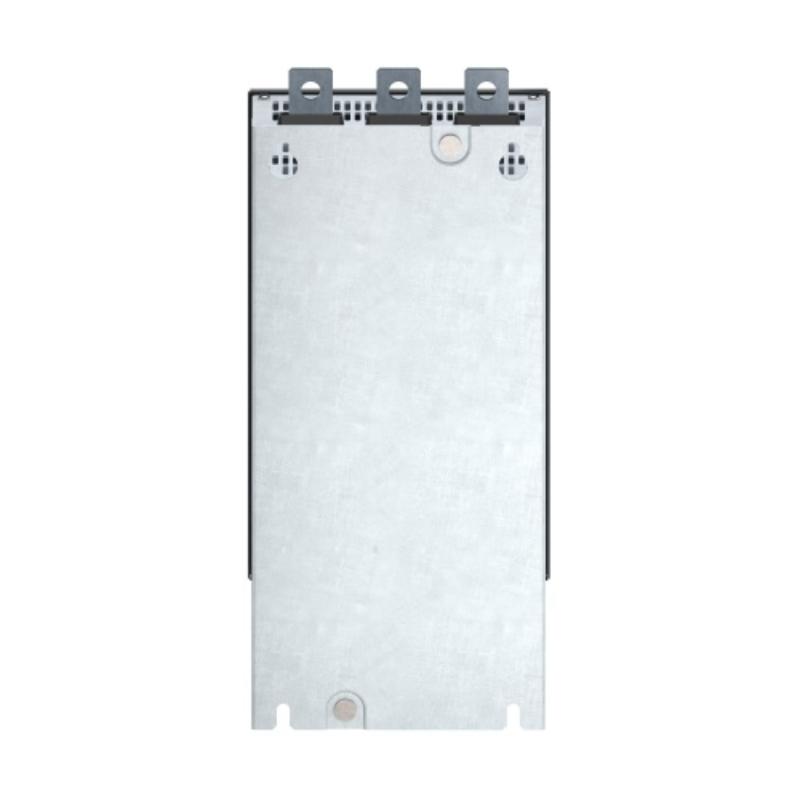
- Schneider
- ATS22C41S6
- Soft Starter for Asynchronous Motor
- France
- 425 × 206 × 299 mm
- 33 kg
- Xiamen, China
- New & In Stock
- T/T, PayPal, Western Union
- 1 Year
- 1-3 Working Days
- DHL, UPS, TNT, FedEx and EMS.
- 24-Hour Service
- COO
- 61
Our advantage

Global Logistics
We have a 10-year logistics and express cooperation agreement, so our products can be shipped to any place in the world.

Brand new and original
Our products are imported in bulk from the place of origin. Because of the cooperative relationship, our products are all original and 100% new.

24-hour service
We provide 7*24 hours service to our customers. We will be there whenever you need us.

Price advantage
All our products are priced very favorably because we have our own warehouse and supply.
| Company Information | |||
| [email protected] | |||
| Mobile | +8615980777398 | ||
| +8615980777398 | |||
| 15980777398 |
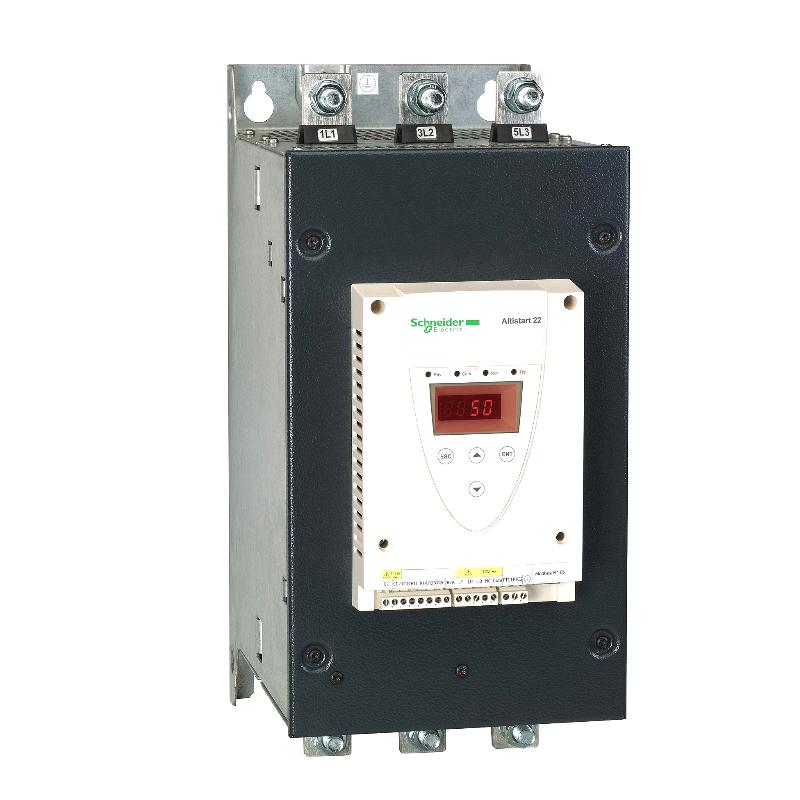
Product Overview
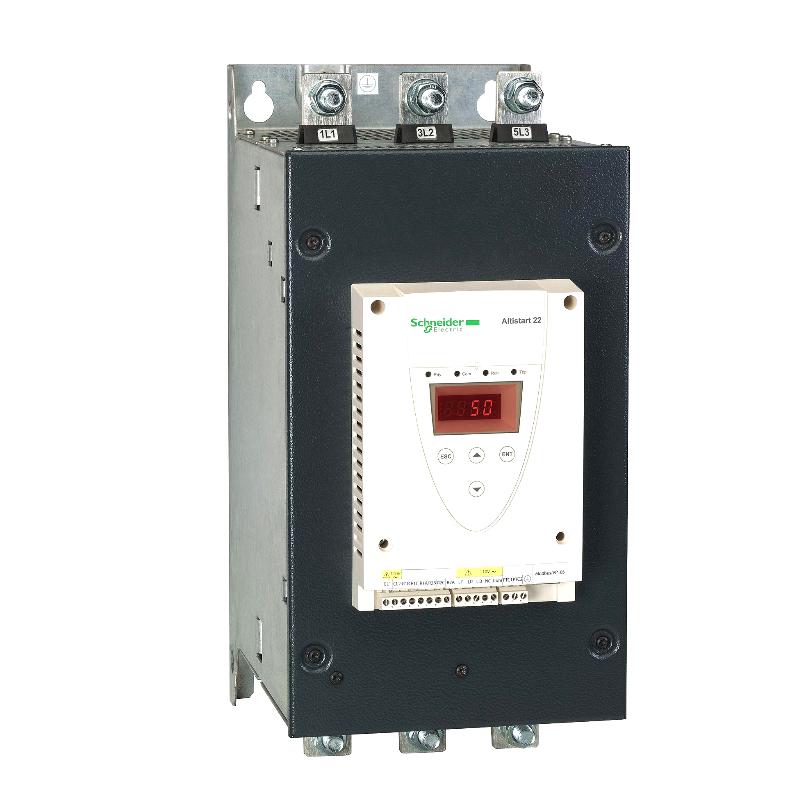
The Schneider ATS22C41S6 Soft Starter for Asynchronous Motor is an Altistart 22 motor-control device used to manage the starting and stopping of asynchronous motors in industrial equipment.
It is suited to motor-driven machinery where direct starting can create a sudden current demand and abrupt mechanical torque. By controlling the motor’s transition into operation, the ATS22C41S6 can make startup more gradual and help reduce the impact on connected mechanical components.
Typical applications include pumps, fans, compressors, conveyors, material-handling equipment, and general industrial machinery. The unit is primarily intended for controlled starting and stopping rather than continuous variable-speed operation.
Technical Specifications
| Parameter | Details |
|---|---|
| Manufacturer | Schneider Electric |
| Model | ATS22C41S6 |
| Product Type | Soft Starter |
| Series | Altistart 22 |
| Motor Type | Asynchronous Motor |
| Main Function | Motor Starting and Stopping Control |
| Control Method | Soft Start / Soft Stop |
| System Role | Motor Starter / Controller |
| Application | Industrial Motor Control |
| Typical Use | Pumps, Fans, Compressors, Conveyors and Machinery |
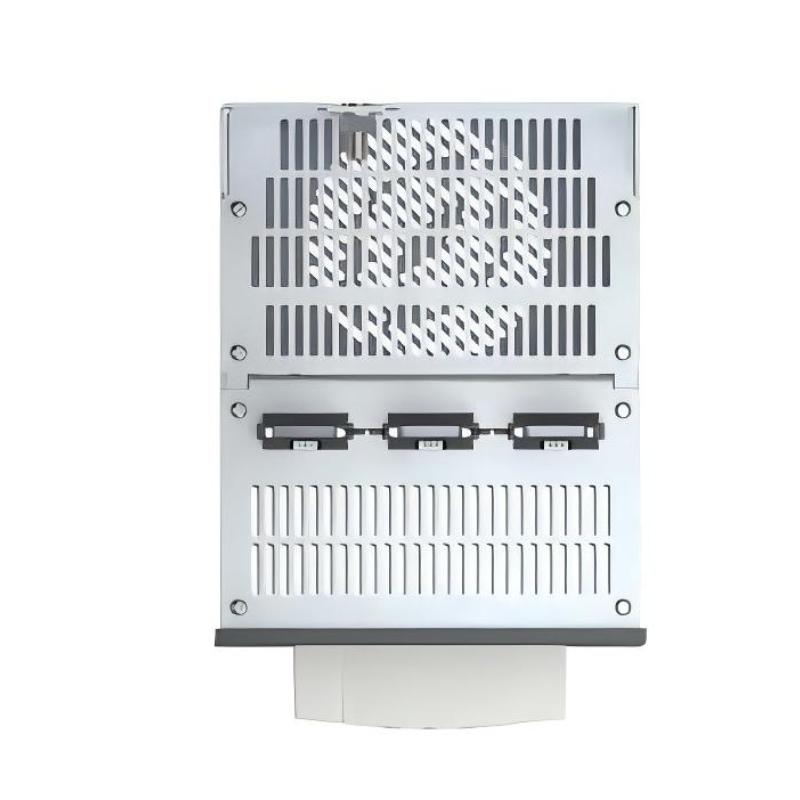
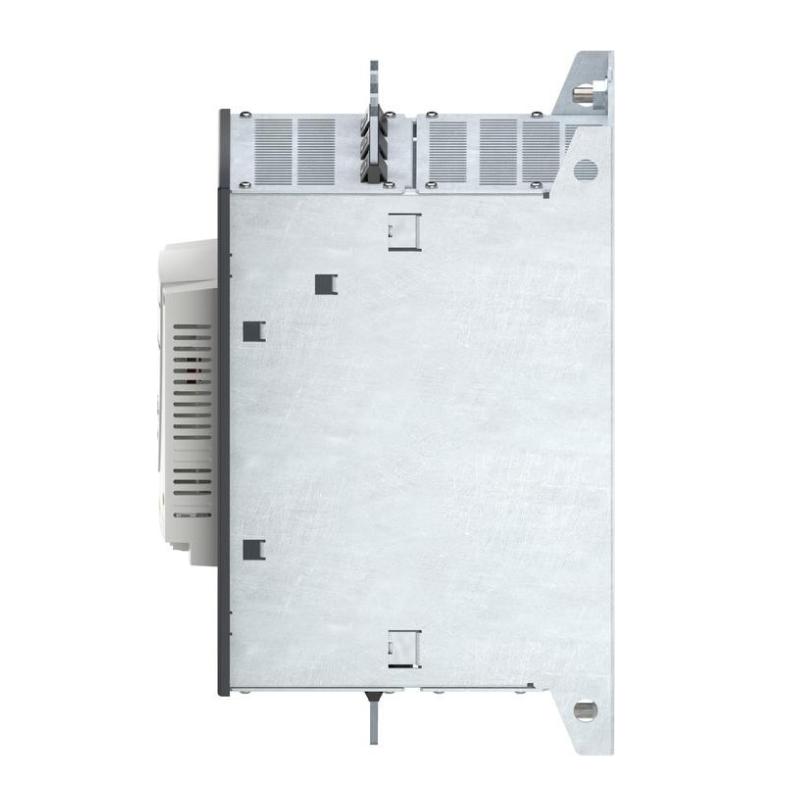
| Dimensions | 425 × 206 × 299 mm |
| Weight | 33 kg |
Product Features
The ATS22C41S6 is intended for industrial motor applications where controlled acceleration and stopping are required.
- Altistart 22 soft starter
- Suitable for asynchronous motor applications
- Controlled motor acceleration during startup
- Controlled stopping capability
- Helps reduce abrupt torque transmission
- Suitable for industrial motor-control systems
- Applicable to pumps, fans, compressors, and conveyors
- Suitable for general industrial machinery
- Dimensions of 425 × 206 × 299 mm
- Stated weight of 33 kg
Working Principle
The ATS22C41S6 is installed between the incoming power supply and the asynchronous motor.
A simplified arrangement is:
Incoming Power → ATS22C41S6 → Asynchronous Motor → Mechanical Load
During startup, the soft starter manages the electrical conditions applied to the motor, allowing the motor to accelerate progressively instead of experiencing an abrupt transition to full operating conditions.
This approach is useful for machinery where sudden torque can affect belts, couplings, shafts, pumps, or other mechanical components. For example, a conveyor can benefit from gradual acceleration, while a pump can be brought into operation more smoothly.
The starter can also manage the stopping process when controlled stopping is required by the application.
The ATS22C41S6 is therefore primarily a soft starting and stopping device, rather than a variable-frequency drive for continuous motor-speed regulation.
Industrial Applications
| Application | Typical Use |
|---|---|
| Pump Systems | Controlled motor startup and stopping |
| Industrial Fans | Gradual fan acceleration |
| Compressors | Controlled starting under load |
| Conveyor Systems | Reduced starting shock |
| Material Handling | Controlled motor acceleration |
| HVAC Equipment | Motor starting control |
| Process Machinery | Controlled asynchronous motor startup |
| General Industrial Equipment | Soft start and stop |
The actual suitability depends on the motor characteristics, starting conditions, and mechanical load.
Compatible System Components
| Component | Function |
|---|---|
| ATS22C41S6 | Controls motor starting and stopping |
| Asynchronous Motor | Converts electrical power into mechanical rotation |
| Circuit Protection | Protects the incoming power circuit |
| Motor Protection Device | Provides motor protection |
| Main Contactor | Switching and electrical isolation |
| Control System | Provides start and stop commands |
| Motor Cable | Connects the starter to the motor |
| Mechanical Load | Receives the motor’s mechanical output |
The starter should be evaluated together with the motor, protection equipment, control system, and mechanical load during installation or replacement.
Installation and Maintenance
The ATS22C41S6 is intended for installation in a suitable industrial electrical enclosure. Its stated 33 kg weight should be considered when planning cabinet mounting, handling, and mechanical support.
Before installation or replacement, verify the complete model number and the requirements of the motor-control application.
Recommended checks include:
- Confirm the complete ATS22C41S6 model number.
- Verify motor and incoming supply requirements.
- Check power-terminal connections.
- Inspect motor cables and terminals.
- Verify control wiring.
- Check grounding arrangements.
- Ensure adequate enclosure ventilation.
- Inspect terminals for looseness or overheating.
- Review the starter configuration after replacement.
- Check the mechanical load if acceleration is abnormal.
- Inspect the motor if starting problems continue.
- Perform a controlled test run after installation.
If abnormal starting occurs, check the electrical supply, motor, mechanical load, protection devices, control signals, and starter configuration before identifying the soft starter as the source of the problem.
Recommended Related Models
| Model / Component | Type | Primary Function | Application |
|---|---|---|---|
| Schneider ATS22C41S6 | Altistart 22 Soft Starter | Motor starting and stopping | Industrial motor control |
| Schneider ATS22C41Q | Altistart Soft Starter | Controlled motor starting | Industrial machinery |
| Schneider ATS22C32S6 | Altistart 22 Soft Starter | Asynchronous motor starting | Motor-control applications |
| Schneider ATS22C32S6U | Altistart 22 Soft Starter | Motor starting and stopping | Industrial motor systems |
| Schneider ATS22C32Q | Altistart Soft Starter | Controlled motor starting | Industrial machinery |
| Schneider ATS22C25S6 | Altistart 22 Soft Starter | Asynchronous motor starting | Motor-control applications |
A replacement model should be selected according to the complete model number, motor requirements, electrical configuration, starting duty, and mechanical load rather than physical dimensions alone.
Key Advantages
- Altistart 22 soft starter
- Suitable for asynchronous motor applications
- Controlled motor acceleration
- Controlled stopping capability
- Suitable for industrial motor-control systems
- Applicable to pumps, fans, compressors, and conveyors
- Suitable for larger motor-control installations
- Dimensions of 425 × 206 × 299 mm
- Stated weight of 33 kg
Technical FAQs
What is the ATS22C41S6 used for?
The ATS22C41S6 is used to control the starting and stopping of asynchronous motors in industrial equipment. It is particularly useful where a gradual motor transition is preferred over direct starting.
How does the ATS22C41S6 affect motor startup?
It manages the motor’s startup conditions so that acceleration occurs progressively. This can reduce sudden torque transmission and make the starting process less abrupt for the connected machinery.
Can the ATS22C41S6 provide continuous variable-speed control?
No. The ATS22C41S6 is a soft starter focused on controlled acceleration and stopping. Continuous speed regulation requires a variable-frequency drive or another suitable speed-control device.
What should be checked before installing an ATS22C41S6?
Verify the complete model number, motor characteristics, incoming supply, starting duty, control wiring, protection arrangement, and mechanical load. Proper enclosure ventilation and mechanical support should also be considered.