

ProductPRODUCT
Featured products
Contact Us
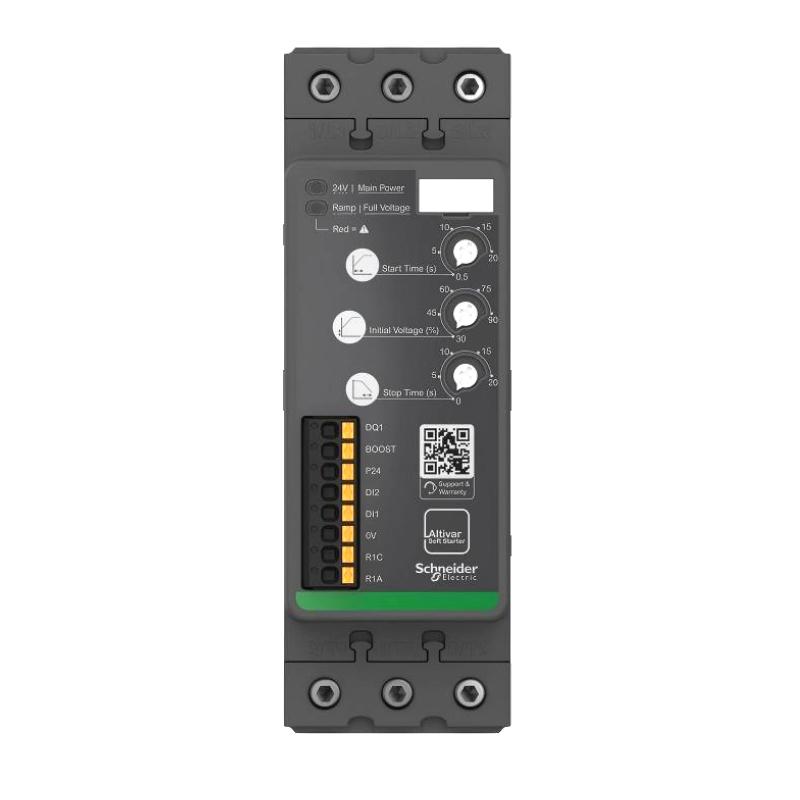
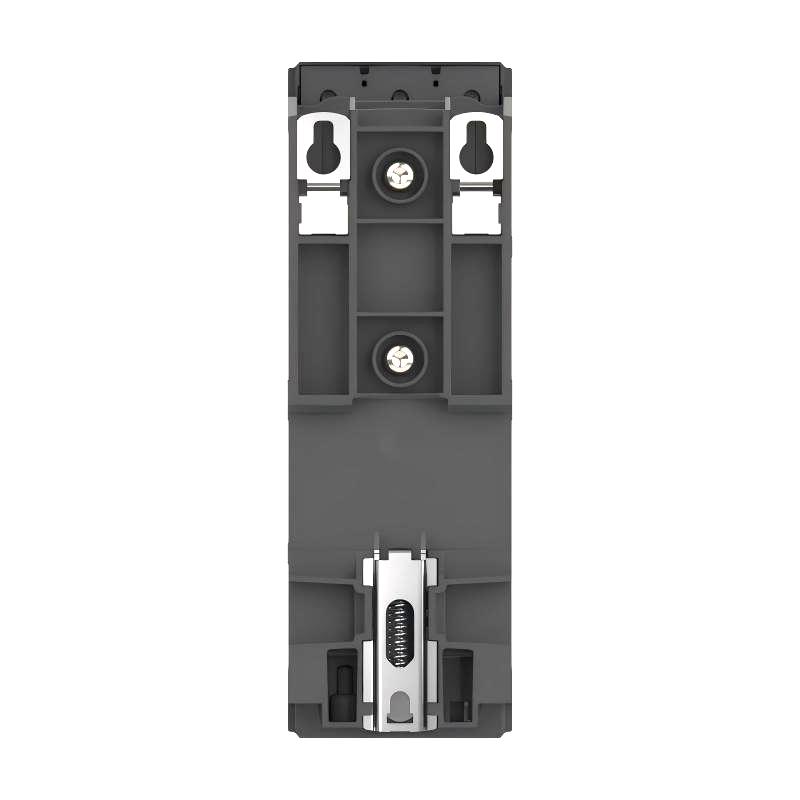
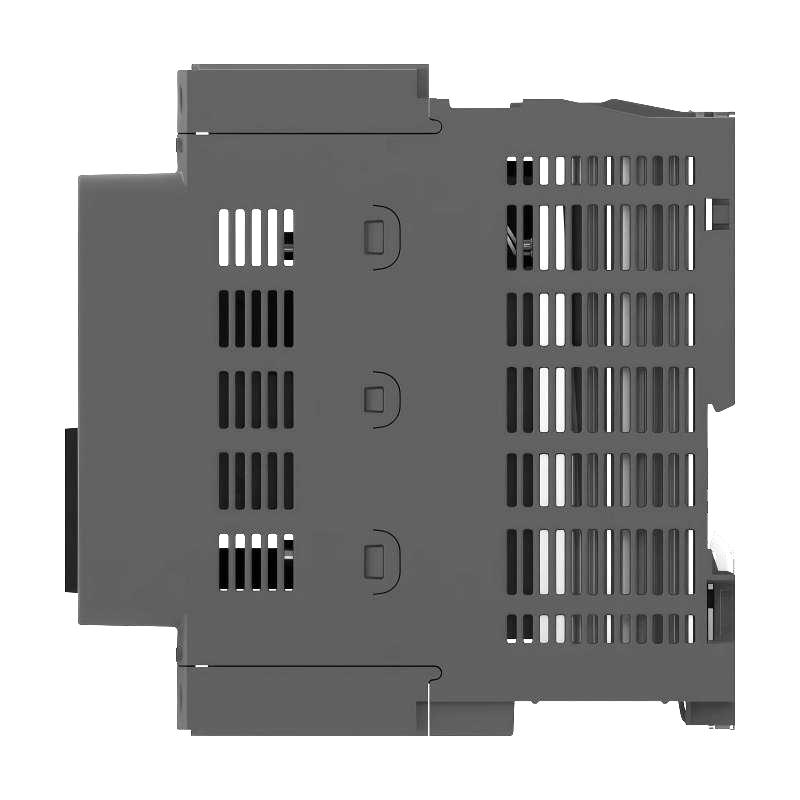
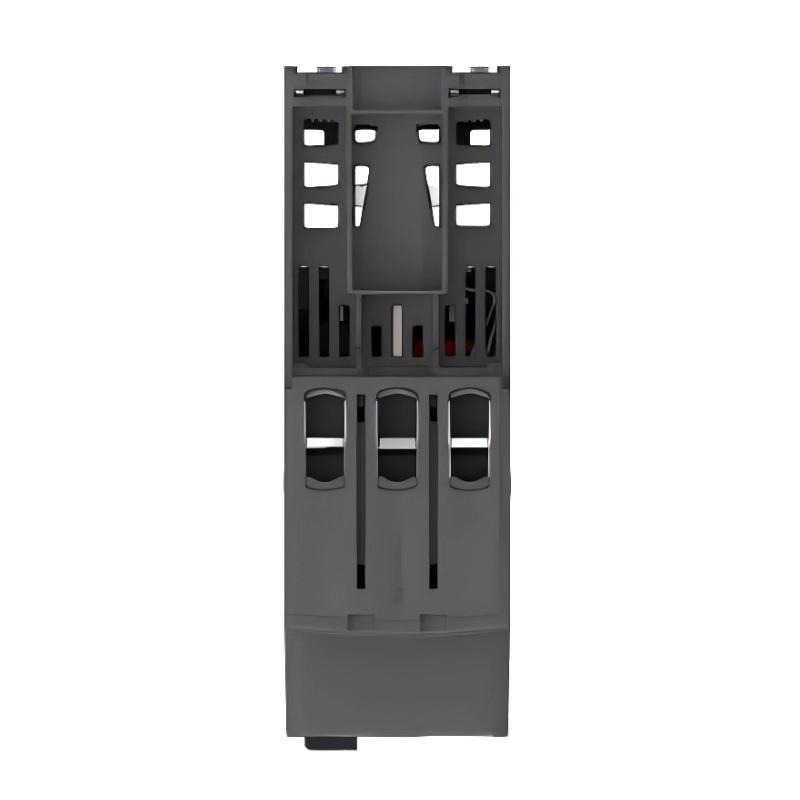
- Schneider
- ATS130N2D38LT
- Altivar Soft Starter
- France
- 166 × 55 × 165 mm
- 1.3 kg
- Xiamen, China
- New & In Stock
- T/T, PayPal, Western Union
- 1 Year
- 1-3 Working Days
- DHL, UPS, TNT, FedEx and EMS.
- 24-Hour Service
- COO
- 56
Our advantage

Global Logistics
We have a 10-year logistics and express cooperation agreement, so our products can be shipped to any place in the world.

Brand new and original
Our products are imported in bulk from the place of origin. Because of the cooperative relationship, our products are all original and 100% new.

24-hour service
We provide 7*24 hours service to our customers. We will be there whenever you need us.

Price advantage
All our products are priced very favorably because we have our own warehouse and supply.
| Company Information | |||
| [email protected] | |||
| Mobile | +8615980777398 | ||
| +8615980777398 | |||
| 15980777398 |
Product Overview
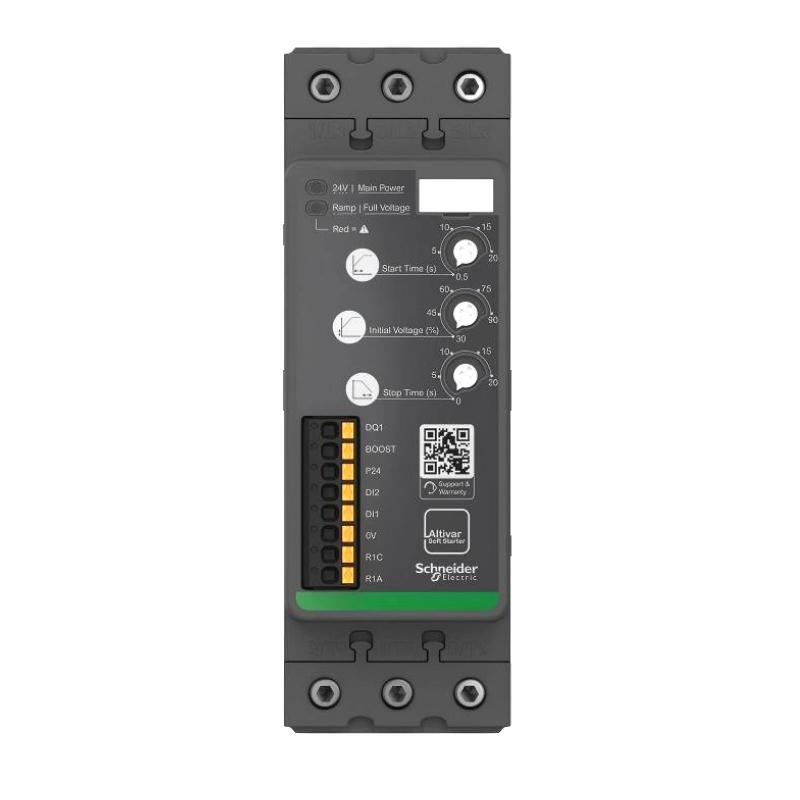
The Schneider ATS130N2D38LT Altivar Soft Starter is a motor starting and stopping device for three-phase asynchronous motors. It is used in applications where a motor normally operates at a fixed speed, but direct-on-line starting would create excessive electrical or mechanical stress.
In a typical industrial control cabinet, the ATS130N2D38LT is installed in the motor power circuit and handles the transition from standstill to normal motor operation. This is useful for machines such as pumps, fans, conveyors, compressors, and other fixed-speed rotating equipment.
Consider a centrifugal pump starting against an existing process line. Applying full voltage immediately can result in a large starting current and a sudden increase in torque. A soft starter gives the motor a controlled acceleration period, helping the mechanical system reach operating speed with less abrupt movement.
The ATS130N2D38LT belongs to the Altivar ATS130 soft starter family. It is best suited to applications where controlled starting and stopping are required but continuous motor-speed adjustment is not. Selection should be based on the motor’s electrical characteristics, starting conditions, duty cycle, and driven load.
Technical Specifications
| Parameter | Details |
|---|---|
| Manufacturer | Schneider Electric |
| Model | ATS130N2D38LT |
| Product Family | Altivar ATS130 |
| Product Type | Soft Starter |
| Main Function | Motor Starting and Stopping Control |
| Motor Type | Three-Phase Asynchronous Motor |
| Rated Operational Current | 38 A |
| Supply Voltage | 200–480 V AC |
| Supply Frequency | 50–60 Hz |
| Control Supply | 24 V DC |
| Number of Phases | 3 Phase |
| Connection Type | In-Line |
| Utilization Category | AC-53A |
| Integrated Bypass | Yes |
| Typical Application | Fixed-Speed Industrial Motor Control |
| Dimensions | 166 × 55 × 165 mm |
| Weight | 1.3 kg |
Product Features
The ATS130N2D38LT focuses on controlled motor acceleration and deceleration rather than variable-speed operation.
Key characteristics include:
- 38 A rated operational current
- 200–480 V AC supply range
- 24 V DC control supply
- Three-phase asynchronous motor applications
- AC-53A utilization category
- In-line connection
- Integrated bypass
- Suitable for fixed-speed machinery
- Suitable for pumps, fans, conveyors, and compressors
- Compact installation for motor-control panels
- Dimensions of 166 × 55 × 165 mm
- Stated weight of 1.3 kg
The 38 A current class makes this model relevant to smaller motor applications within the ATS130 family. The actual motor nameplate current should always be checked before selection, particularly when the machine has a high-inertia load or demanding starting cycle.
Working Principle
A typical motor circuit can be arranged as:
Three-Phase Supply → Motor Protection → ATS130N2D38LT → Motor → Mechanical Load
When a start command is issued, the soft starter controls the electrical conditions applied to the motor during acceleration. Instead of switching the motor directly from zero speed to full line operation, the starter manages the starting process over a controlled period.
For a conveyor, this can reduce the sudden torque transmitted through the belt and gearbox. On a pump, controlled acceleration can make the transition into normal operation less abrupt. A fan with significant rotating inertia can also benefit from a controlled starting sequence.
After the motor reaches normal operating conditions, the integrated bypass can reduce the time that the power electronics remain in the main motor current path.
Unlike a variable frequency drive, the ATS130N2D38LT does not serve as a general-purpose continuous speed controller. The motor remains essentially a fixed-speed machine once it reaches normal operation.
Industrial Applications
The ATS130N2D38LT is suitable for fixed-speed motor applications where starting characteristics are more important than continuous speed regulation.
| Application | Typical Use |
|---|---|
| Pumps | Controlled acceleration during motor startup |
| Fans | Starting motors with rotating inertia |
| Conveyors | Reducing abrupt starting torque |
| Compressors | Managing motor starting conditions |
| Material Handling | Controlled startup of fixed-speed drives |
| Process Machinery | Smoother motor acceleration and stopping |
| Industrial Equipment | Three-phase asynchronous motor control |
| Utility Machinery | Fixed-speed motor applications |
The motor’s actual current and starting duty should be considered alongside the application. Two motors with similar power ratings can behave differently during startup depending on load inertia, mechanical transmission, starting frequency, and operating conditions.
Compatible System Components
The ATS130N2D38LT normally forms part of a larger motor-control circuit rather than operating as a standalone device.
| Component | Function |
|---|---|
| Motor Circuit Breaker | Provides motor circuit protection |
| Three-Phase Asynchronous Motor | Converts electrical power into mechanical motion |
| 24 V DC Power Supply | Supplies the control circuit |
| PLC or Controller | Sends start/stop commands when automation is used |
| Contactor | Provides switching or isolation where required |
| Motor Power Cable | Carries power between the starter and motor |
| Control Wiring | Transfers control commands and status signals |
| Control Cabinet | Houses the soft starter and related equipment |
| Mechanical Coupling | Transfers motor torque to the driven machine |
| Cooling / Ventilation | Helps manage heat inside the enclosure |
The protection and switching equipment should be coordinated with the starter and motor. During a replacement, technicians should verify the complete motor feeder rather than treating the soft starter as an isolated component.
Installation and Maintenance
The ATS130N2D38LT should be installed inside a suitable electrical enclosure with adequate ventilation, wiring space, and access for maintenance.
Before commissioning, verify the motor nameplate data against the starter selection. The incoming supply, motor current, control voltage, phase arrangement, and starting requirements all need to match the intended application.
Recommended checks include:
- Confirm the complete ATS130N2D38LT part number.
- Check the motor nameplate current.
- Verify the incoming three-phase supply.
- Confirm the 24 V DC control supply.
- Check the upstream motor protection.
- Inspect motor power connections.
- Verify control wiring and start/stop commands.
- Check terminal tightness.
- Inspect the cabinet ventilation path.
- Review the expected starting frequency.
- Consider the inertia and mechanical load of the driven machine.
- Check the starter’s operating or diagnostic status after installation.
- Perform a controlled motor test before normal operation.
If the motor fails to accelerate correctly, the soft starter should not immediately be considered defective. Excessive mechanical load, incorrect motor wiring, insufficient supply conditions, inappropriate protection settings, or a starting duty beyond the intended application can all cause similar symptoms.
Recommended Related Models
For the ATS130N2D38LT, related models should be selected according to motor current and application requirements rather than simply by physical similarity.
| Model / Component | Type | Primary Function | Application |
|---|---|---|---|
| Schneider ATS130N2D38LT | Soft Starter | Controlled motor starting and stopping | 38 A motor applications |
| Schneider ATS130N2C11LT | Soft Starter | Controlled motor starting and stopping | Higher-current ATS130 applications |
| Schneider Altivar ATS130 Series | Soft Starter Family | Motor starting and stopping control | Pumps, fans, conveyors, and fixed-speed machinery |
| Schneider Altivar ATS480 | Soft Starter | Advanced motor starting control | More demanding industrial applications |
| Schneider TeSys Motor Protection Devices | Motor Protection | Motor feeder protection | Soft starter and motor assemblies |
The ATS130N2C11LT is a useful higher-current comparison within the same ATS130 family, while the ATS480 is more appropriate to consider when the application requires a broader set of motor-control and commissioning functions.
For direct replacement, the motor’s rated current, supply voltage, starting duty, control arrangement, protection equipment, and enclosure requirements should all be checked.
Key Advantages
- 38 A rated operational current
- 200–480 V AC supply range
- 24 V DC control supply
- Three-phase asynchronous motor applications
- AC-53A utilization category
- Integrated bypass
- In-line connection
- Suitable for fixed-speed machinery
- Compact control-panel installation
- Dimensions of 166 × 55 × 165 mm
- Stated weight of 1.3 kg
Technical FAQs
How should the 38 A rating be matched to the motor?
The motor’s nameplate current should be compared with the starter’s rated operational current, while also considering the actual starting duty. A motor with a suitable nominal current can still require careful evaluation if it drives a high-inertia or heavily loaded machine.
What is the practical benefit of using the ATS130N2D38LT on a conveyor?
Controlled acceleration can reduce the sudden torque transmitted to the conveyor belt, gearbox, coupling, and other mechanical components. This is particularly useful when the conveyor has a noticeable starting load or when abrupt acceleration affects the transported material.
Can the ATS130N2D38LT regulate motor speed during normal operation?
It is primarily a soft starter rather than a variable frequency drive. Its main function is to control the motor’s starting and stopping process. For applications requiring continuous speed adjustment, a suitable VFD should be evaluated instead.
What should be checked if the starter trips while the motor is accelerating?
Check the motor current, incoming supply, motor wiring, protection settings, mechanical load, starting time, and number of starts. If these conditions are normal, the starter’s diagnostic information and control signals should then be examined.