Product Overview
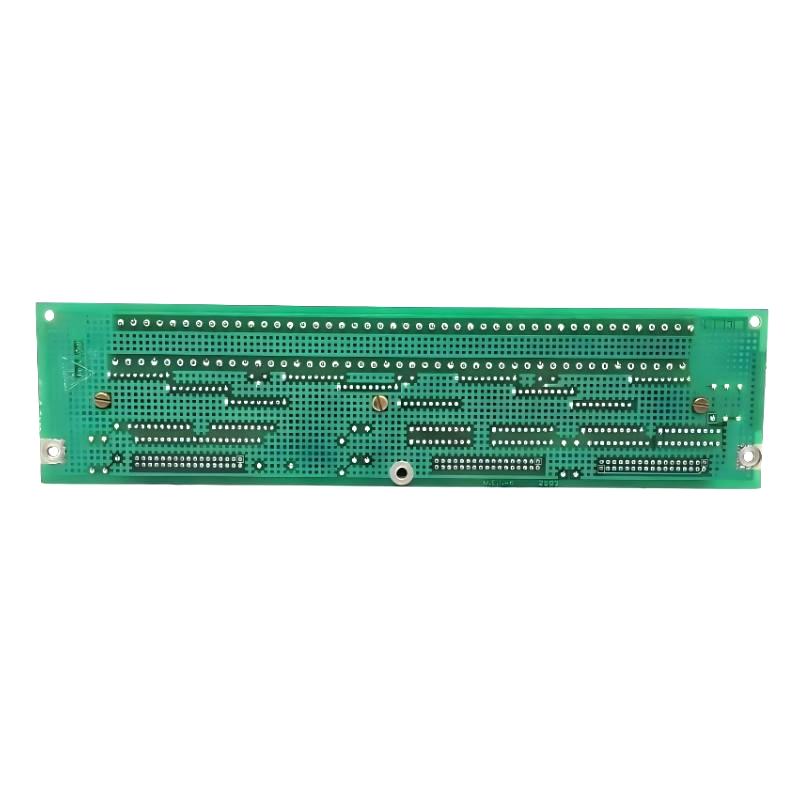
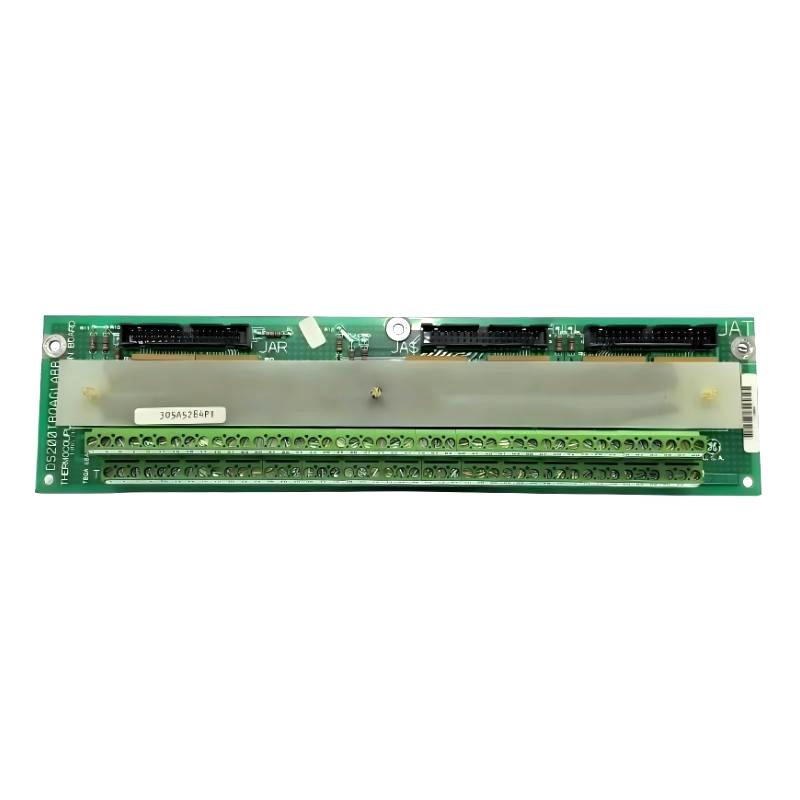
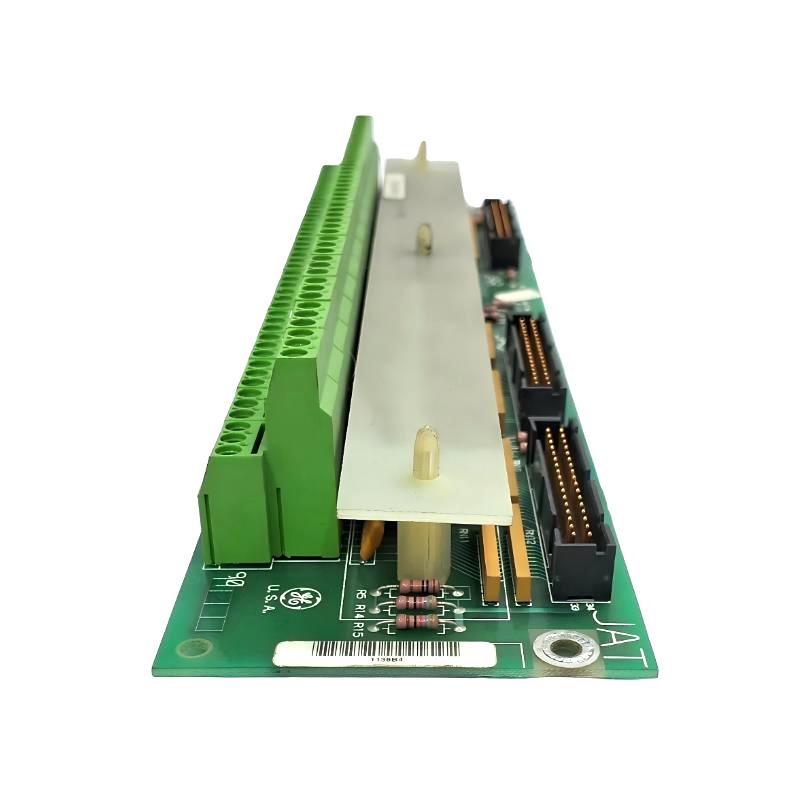
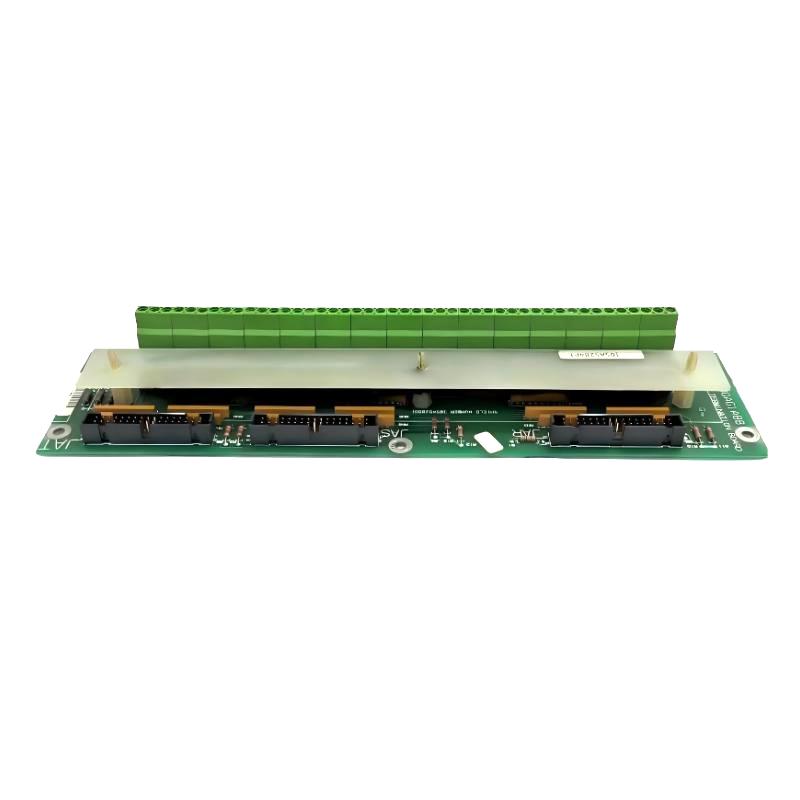
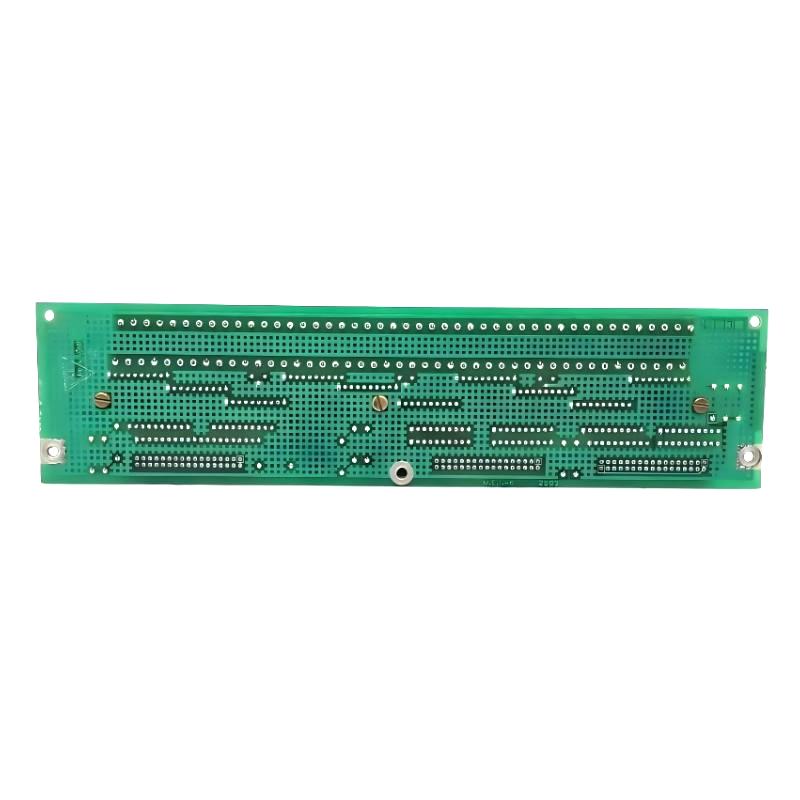
The GE DS200TBQAG1ABB Mark V Thermocouple Terminal Block is an industrial temperature-signal termination component designed for compatible GE Mark V control systems. It provides an organized connection point between field-installed thermocouples and the associated temperature-input circuitry.
Thermocouples are widely used in industrial environments to monitor temperature in turbines, generators, engines, process equipment, exhaust systems, furnaces, and other high-temperature applications. A reliable terminal interface is essential because poor connections can introduce signal instability, measurement errors, or intermittent temperature alarms.
The DS200TBQAG1ABB has stated dimensions of 200 × 120 × 50 mm and a weight of 0.34 kg, providing a compact solution for control cabinets and Mark V terminal assemblies.
Technical Specifications
| Parameter |
Details |
| Manufacturer |
GE |
| Model |
DS200TBQAG1ABB |
| Product Type |
Mark V Thermocouple Terminal Block |
| Control Platform |
GE Mark V |
| Main Function |
Thermocouple Signal Termination |
| Signal Type |
Temperature / Thermocouple |
| Application |
Industrial Temperature Monitoring |
| Installation |
Control Cabinet / Terminal Assembly |
| Interface Function |
Field Sensor and Temperature I/O Interface |
| Dimensions |
200 × 120 × 50 mm |
| Weight |
0.34 kg |
Function and Working Principle
The DS200TBQAG1ABB provides a structured termination point for thermocouple circuits.
A typical signal path is:
Process Temperature → Thermocouple → Field Wiring → DS200TBQAG1ABB → Temperature Input Circuit → Mark V Control System
A thermocouple generates a small voltage related to the temperature difference between its measuring junction and reference junction. The associated input electronics use this signal to determine the process temperature.
The terminal block provides the physical connection and organization necessary for reliable transmission of these low-level temperature signals.
Thermocouple Interface
Thermocouple signals are generally low-level electrical signals and can be sensitive to wiring quality, connection resistance, electrical interference, and incorrect polarity.
A properly installed terminal arrangement helps maintain:
- Secure electrical connections
- Correct channel identification
- Proper signal routing
- Easier maintenance
- Reliable temperature monitoring
The terminal block should therefore be regarded as part of the complete thermocouple measurement chain rather than as an independent temperature-measuring device.
Mark V System Integration
The DS200TBQAG1ABB is identified as a Mark V Thermocouple Terminal Block, making it part of the broader GE Mark V industrial control architecture.
A simplified temperature-monitoring structure is:
Thermocouple → Terminal Block → Temperature Input Circuit → Mark V Control Electronics → Operator/Protection Functions
Temperature information can be used by the control system for:
- Process monitoring
- Alarm generation
- Equipment protection
- Performance monitoring
- Control logic
- Maintenance analysis
Main Features
Thermocouple Signal Termination
The DS200TBQAG1ABB provides a dedicated termination point for thermocouple wiring.
This helps organize:
- Temperature sensor inputs
- Channel identification
- Field wiring
- Signal connections
- Maintenance access
Mark V Compatibility
The terminal block is designed for use within compatible GE Mark V control-system installations.
Its role is primarily to provide the physical interface between field thermocouple wiring and the appropriate temperature-input circuitry.
Compact Industrial Construction
The stated dimensions are:
200 × 120 × 50 mm
The stated weight is:
0.34 kg
This allows the component to be integrated into industrial control cabinets without requiring excessive installation space.
Industrial Applications
The DS200TBQAG1ABB can be used in compatible industrial temperature-monitoring applications, including:
- Gas turbine systems
- Steam turbine systems
- Generator monitoring
- Combustion systems
- Exhaust temperature monitoring
- Industrial furnaces
- Process-control equipment
- Heavy machinery
- Power-generation equipment
Thermocouple inputs are particularly useful in applications where temperatures can exceed the practical operating range of many other temperature-sensing technologies.
Installation Guide
Step 1 – Verify the Replacement
Before installation:
- Confirm the complete part number.
- Verify the Mark V system configuration.
- Compare terminal locations.
- Check the physical dimensions.
- Inspect the replacement terminal block for damage.
Step 2 – Shut Down the Equipment
Before working on the terminal block:
- Shut down the associated equipment.
- Isolate applicable power.
- Follow lockout/tagout procedures.
- Verify that circuits are safe.
- Observe ESD precautions when working near electronic control equipment.
If thermocouples are connected to high-temperature equipment, ensure the equipment is in a safe maintenance state.
Step 3 – Document Existing Wiring
Before disconnecting the existing terminal block:
- Record terminal numbers.
- Label thermocouple wires.
- Identify each temperature-measurement location.
- Record polarity.
- Document channel assignments.
- Photograph the wiring arrangement if appropriate.
Thermocouple polarity must be preserved during reconnection.
Step 4 – Remove the Existing Terminal Block
Carefully:
- Verify all circuits are identified.
- Disconnect the thermocouple wiring.
- Remove mounting hardware.
- Remove the existing terminal block.
- Inspect the mounting area and surrounding wiring.
Step 5 – Install the DS200TBQAG1ABB
Install the replacement by:
- Aligning the mounting points.
- Securing the terminal block.
- Reconnecting thermocouple wiring.
- Verifying polarity.
- Checking terminal tightness.
- Maintaining proper cable routing.
Avoid excessive force on thermocouple conductors because they can be relatively small and sensitive to mechanical damage.
Thermocouple Wiring Verification
After installation, verify:
Correct Polarity
Thermocouple wires are polarity-sensitive. Reversed connections can produce incorrect temperature readings.
Correct Channel
Each thermocouple should be connected to the intended input channel.
Secure Connections
Loose terminals can cause unstable or intermittent readings.
Correct Sensor Type
The thermocouple type must correspond to the configured input circuitry.
Commissioning and Testing
After installation:
- Check all terminal connections.
- Verify thermocouple polarity.
- Confirm channel assignments.
- Restore system power.
- Monitor temperature readings.
- Check for temperature alarms.
- Compare readings with expected operating conditions.
If a temperature reading appears abnormal, test the sensor and wiring before replacing the terminal block.
Common Failure Symptoms
| Symptom |
Possible Cause |
| Temperature input unavailable |
Open thermocouple circuit |
| Incorrect temperature |
Reversed polarity or sensor problem |
| Unstable temperature |
Loose terminal |
| Intermittent temperature alarm |
Poor connection |
| Wrong temperature channel |
Incorrect wiring |
| Multiple inputs affected |
Common wiring or input issue |
| Temperature drift |
Sensor or connection problem |
Troubleshooting Guide
Thermocouple Input Shows No Signal
If a temperature channel is unavailable:
- Inspect the thermocouple.
- Check field wiring.
- Inspect terminal connections.
- Verify polarity.
- Check the associated input circuitry.
- Review Mark V diagnostics.
An open circuit can occur at the sensor, cable, terminal block, or input circuitry.
Incorrect Temperature Reading
If the displayed temperature is incorrect:
- Verify thermocouple type.
- Check polarity.
- Inspect field wiring.
- Confirm channel assignment.
- Check terminal connections.
- Compare the reading with an independent measurement.
Incorrect polarity is a particularly important consideration when troubleshooting thermocouple circuits.
Unstable Temperature Reading
Possible causes include:
- Loose terminal connections
- Damaged thermocouple wiring
- Electrical interference
- Poor cable routing
- Vibration
- Sensor deterioration
- Connection contamination
Inspect the complete signal path before replacing the terminal block.
Multiple Thermocouple Channels Fail
If several channels fail simultaneously:
- Check common wiring.
- Inspect the terminal assembly.
- Check input-system power.
- Review controller diagnostics.
- Inspect the associated temperature-input circuitry.
Multiple simultaneous failures are often more indicative of a common system issue than independent thermocouple failures.
Physical Inspection
Inspect the DS200TBQAG1ABB for:
- Damaged terminals
- Loose screws
- Cracks
- Corrosion
- Discoloration
- Broken connectors
- Mechanical deformation
- Contamination
Terminal integrity is particularly important for low-level thermocouple signals.
Preventive Maintenance
Recommended maintenance includes:
- Periodic terminal inspection
- Thermocouple wiring inspection
- Checking terminal tightness
- Monitoring temperature trends
- Inspecting for corrosion
- Control-cabinet cleaning
- Checking cable routing
- Reviewing recurring temperature alarms
Trend monitoring can help identify sensor or connection degradation before a complete failure occurs.
Signal Integrity Considerations
Thermocouple signals are relatively small and can be affected by installation conditions.
For reliable measurements:
- Maintain correct polarity.
- Keep signal wiring properly routed.
- Avoid unnecessary proximity to high-power conductors.
- Maintain appropriate shielding practices.
- Keep terminal connections secure.
- Avoid unnecessary mechanical stress on thermocouple wires.
A poor connection can produce unstable temperature readings even when the thermocouple itself is functioning correctly.
System Integration
The DS200TBQAG1ABB forms part of a larger temperature-monitoring system.
| Component |
Typical Function |
| Thermocouple |
Detects temperature |
| Thermocouple Cable |
Transmits low-level temperature signal |
| DS200TBQAG1ABB |
Provides field termination |
| Temperature Input Circuit |
Processes thermocouple signal |
| Mark V Control Electronics |
Processes temperature information |
| Operator Interface |
Displays operating temperature |
| Protection Logic |
Responds to abnormal temperature |
Reliable temperature monitoring depends on the entire measurement chain.
Key Advantages
- Designed for thermocouple signal termination
- Intended for compatible GE Mark V systems
- Provides organized temperature-input wiring
- Simplifies maintenance and troubleshooting
- Supports industrial temperature monitoring
- Compact 200 × 120 × 50 mm dimensions
- Lightweight 0.34 kg construction
- Suitable for industrial control cabinets
Technical FAQs
What is the GE DS200TBQAG1ABB?
The GE DS200TBQAG1ABB is a Mark V Thermocouple Terminal Block designed to provide an organized connection interface between field thermocouples and compatible temperature-input circuitry.
What is the main purpose of the terminal block?
Its primary purpose is to terminate and organize thermocouple field wiring and connect those signals to the associated temperature-input system.
Why is thermocouple polarity important?
Thermocouples generate a temperature-dependent voltage, so reversing the conductors can result in an incorrect temperature indication.
What causes an unstable thermocouple reading?
Possible causes include loose terminals, damaged wiring, electrical interference, poor routing, vibration, sensor degradation, or connection contamination.
What are the dimensions?
The stated dimensions are 200 × 120 × 50 mm.
What is the weight?
The stated weight is 0.34 kg.
Can a faulty terminal connection cause a temperature alarm?
Yes. A loose or intermittent thermocouple connection can produce unstable or abnormal temperature signals that may trigger control-system alarms.
Conclusion
The GE DS200TBQAG1ABB Mark V Thermocouple Terminal Block is an important field-interface component for compatible GE Mark V temperature-monitoring systems. It provides an organized termination point for thermocouple circuits, helping connect temperature sensors to the associated input circuitry while simplifying wiring management and maintenance.
With stated dimensions of 200 × 120 × 50 mm and a weight of 0.34 kg, the terminal block provides a compact solution for industrial control installations.
For maintenance engineers and automation technicians, correct thermocouple polarity, accurate channel identification, secure terminal connections, proper signal routing, and systematic troubleshooting are essential for maintaining reliable temperature measurement and protecting critical industrial equipment.