
NewsNEWCENTER
Featured products
Contact Us
Schneider Electric Highlights Open Automation and Industrial AI at Automate 2026
2026-08-12The industrial automation industry is moving toward more open, flexible, and software-driven architectures as manufacturers seek to modernize production systems while improving efficiency and adaptability.
At Automate 2026 in Chicago, Schneider Electric highlighted the convergence of:
- Open software-defined automation
- Industrial artificial intelligence
- Electrification
- Industrial software
- Digital transformation
The event demonstrated how automation technology is increasingly moving beyond traditional hardware-centric control architectures.
Modern manufacturers are looking for automation platforms that can work across different hardware environments while providing greater flexibility for software applications.
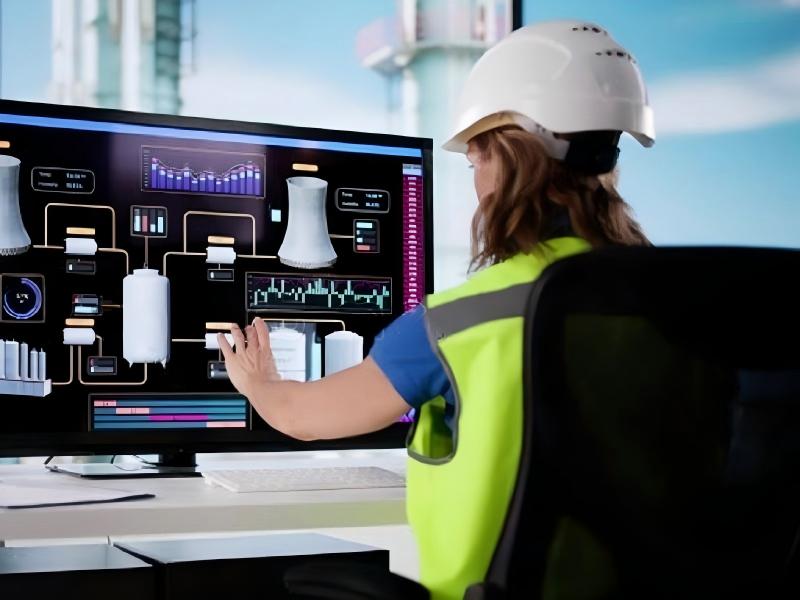
This trend is particularly important as industrial companies adopt:
- Industrial AI
- Digital twins
- Edge computing
- Industrial IoT
- Advanced analytics
Schneider Electric’s latest automation strategy reflects the industry’s broader movement toward open and software-defined industrial systems.
Open Automation Changes the Traditional Industrial Architecture
Traditional industrial automation systems often depend heavily on dedicated hardware and tightly integrated software.
This approach has advantages in reliability and control, but it can make modernization more complicated.
Modern manufacturers want greater freedom to select:
- Controllers
- Industrial computers
- Software platforms
- Communication technologies
Open automation aims to reduce unnecessary restrictions by allowing software and hardware components to work together more flexibly.
This can help manufacturers build automation systems according to their specific requirements.
Software-Defined Automation Creates Greater Flexibility
Software-defined technology is becoming increasingly important across the industrial sector.
In a software-defined automation environment, control and automation functions rely more heavily on software technologies rather than fixed hardware structures.
Potential benefits include:
- Faster system configuration
- Easier software updates
- Greater flexibility
- Simplified expansion
Manufacturers can potentially modify automation functions without replacing the entire physical infrastructure.
This creates a more adaptable production environment.
Industrial AI Becomes a Core Automation Technology
Artificial intelligence is becoming increasingly integrated into industrial automation.
Industrial AI can support:
- Equipment monitoring
- Predictive maintenance
- Process optimization
- Quality analysis
- Production planning
However, successful industrial AI requires more than powerful algorithms.
It also requires:
- Reliable industrial data
- Connected equipment
- Appropriate computing infrastructure
- Secure communication
This is why open automation and industrial AI are increasingly being developed together.
A flexible automation architecture can make it easier to integrate AI applications into production environments.
Schneider Electric Connects Automation With Industrial Software
Industrial software is becoming an increasingly important part of modern automation.
Manufacturing companies need to connect operational technology with software systems responsible for:
- Production management
- Asset performance
- Data analysis
- Energy management
This creates a more integrated industrial architecture.
Instead of treating automation and software as separate environments, manufacturers can connect them into a common digital ecosystem.
This improves visibility across:
- Machines
- Production lines
- Facilities
- Enterprise operations
Hardware-Agnostic Automation Supports Modernization
One of the important concepts highlighted by Schneider Electric is hardware-agnostic automation.
This approach aims to reduce dependence on specific physical hardware platforms.
For industrial companies, greater hardware flexibility can provide advantages when:
- Upgrading existing equipment
- Expanding production
- Integrating new technologies
- Modernizing legacy systems
Manufacturers can potentially adopt new software capabilities while maintaining useful existing equipment.
This is particularly important for brownfield factories.
Brownfield Automation Modernization Remains a Major Challenge
Many industrial facilities were designed before today’s digital technologies became widely available.
These facilities may contain:
- Legacy PLCs
- Older HMIs
- Traditional DCS systems
- Different communication networks
Complete replacement can be expensive and disruptive.
Modern open automation strategies provide another possibility.
Companies can modernize gradually by adding:
- New software
- Industrial gateways
- Edge computing
- Analytics platforms
- AI applications
This allows factories to evolve without requiring immediate replacement of every existing system.
Industrial Edge Computing Supports Real-Time Automation
Industrial edge computing is becoming an important component of digital manufacturing.
Edge technologies process information closer to the machines generating the data.
This can provide advantages including:
- Lower latency
- Faster data processing
- Reduced network traffic
- Local decision-making
For industrial applications, edge computing can support:
- Machine monitoring
- AI inference
- Predictive maintenance
- Production optimization
The combination of edge computing and open automation can create more responsive industrial systems.
Digital Twins Improve Industrial Engineering
Digital twin technologies provide virtual representations of physical industrial assets.
Manufacturers can use digital twins to simulate:
- Machines
- Production lines
- Processes
- Energy systems
This allows engineers to test changes before applying them to physical equipment.
Digital twins can support:
- Virtual commissioning
- Production optimization
- Engineering validation
- Maintenance planning
As software-defined automation develops, digital twins are likely to become increasingly connected with real-time industrial control systems.
Industrial Cybersecurity Becomes More Important
Open and connected automation systems also create cybersecurity requirements.
Modern factories may contain:
- PLC controllers
- Industrial PCs
- Edge devices
- Cloud platforms
- Remote access systems
Every additional connection must be carefully managed.
Industrial cybersecurity strategies should address:
- User access
- Network segmentation
- Authentication
- Software updates
- Data protection
Cybersecurity must become part of automation architecture rather than an additional feature added later.
AI and Automation Require Better Industrial Data
Artificial intelligence cannot deliver reliable results without reliable data.
Factories need accurate information from:
- Sensors
- Controllers
- Machines
- Production systems
Data must also have appropriate context.
For example, an AI system analyzing machine temperature needs to understand:
- Which machine generated the data
- What operating condition existed
- What production task was running
This makes industrial data architecture extremely important.
Open automation and software-defined systems can help create more connected data environments.
Energy Management Becomes Part of Digital Automation
Industrial companies are under increasing pressure to improve energy efficiency.
Automation systems can monitor:
- Electricity consumption
- Motor performance
- Production loads
- Equipment utilization
Industrial software can then analyze this information.
Companies can identify:
- Inefficient equipment
- Energy-intensive processes
- Unnecessary operating periods
This allows manufacturers to reduce energy consumption while maintaining production performance.
The Convergence of Automation and Electrification
Industrial transformation is increasingly connecting automation with electrification.
Modern manufacturing facilities need to manage both:
- Industrial control
- Electrical infrastructure
This creates opportunities to coordinate:
- Production equipment
- Motors
- Drives
- Power distribution
- Energy management
The integration of automation and electrification can improve overall facility efficiency.
What Open Automation Means for System Integrators
Open automation also creates opportunities for system integrators.
Traditional automation projects often required engineers to work within specific vendor ecosystems.
Open architectures may allow integrators to combine:
- Different hardware
- Software applications
- Industrial networks
- Analytics technologies
This can create greater flexibility when designing industrial systems.
System integrators will increasingly need skills across:
- PLC programming
- Industrial networking
- Software engineering
- Data analytics
- Cybersecurity
Future Outlook for Software-Defined Industrial Automation
The development of open and software-defined automation is likely to continue accelerating.
Future industrial systems may combine:
- PLC control
- DCS functionality
- Industrial AI
- Edge computing
- Digital twins
- Cloud services
The boundaries between traditional automation categories may become less distinct.
Manufacturers will increasingly focus on outcomes such as:
- Production efficiency
- Equipment reliability
- Energy performance
- Product quality
rather than simply selecting a particular control architecture.
Conclusion
Schneider Electric’s presence at Automate 2026 highlights a major transformation taking place across industrial automation.
Open software-defined automation, industrial AI, electrification, and digital technologies are moving industrial control toward more flexible and connected architectures.
For manufacturers, the biggest opportunity is not simply replacing traditional automation equipment.
It is creating an industrial environment where existing assets, new software, AI technologies, and digital platforms can work together.
As factories continue their digital transformation, open automation and software-defined control are likely to become increasingly important technologies for building flexible, intelligent, and future-ready manufacturing systems.