Product Overview
In industrial automation systems, reliable signal switching and electrical isolation are critical for maintaining stable control performance. PLC controllers often need interface devices to connect with external loads such as solenoid valves, contactors, indicators, and other field equipment. Relay interface modules provide a safe and efficient connection between control systems and external devices.
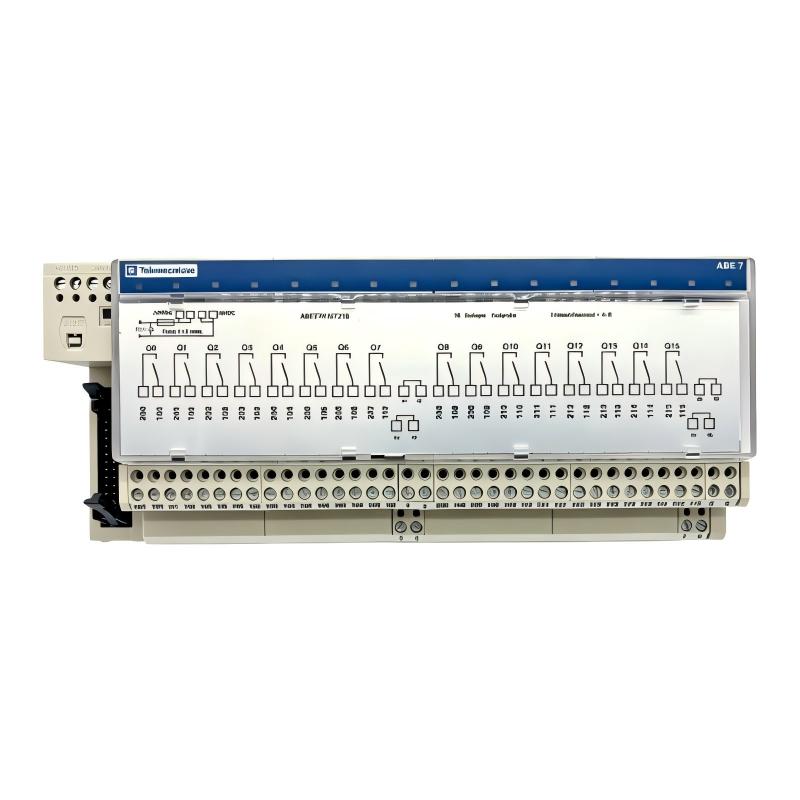
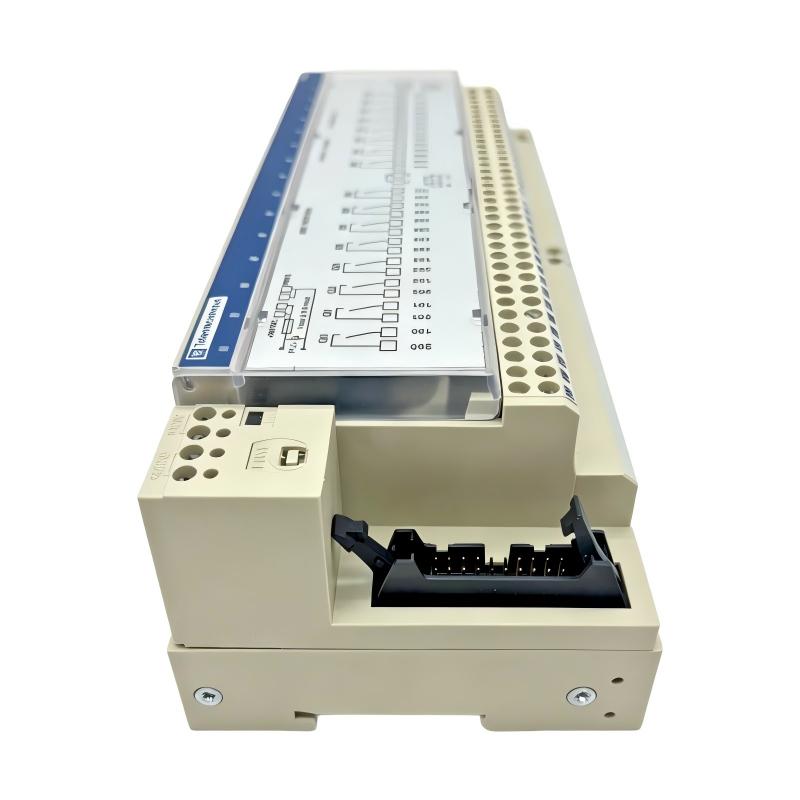
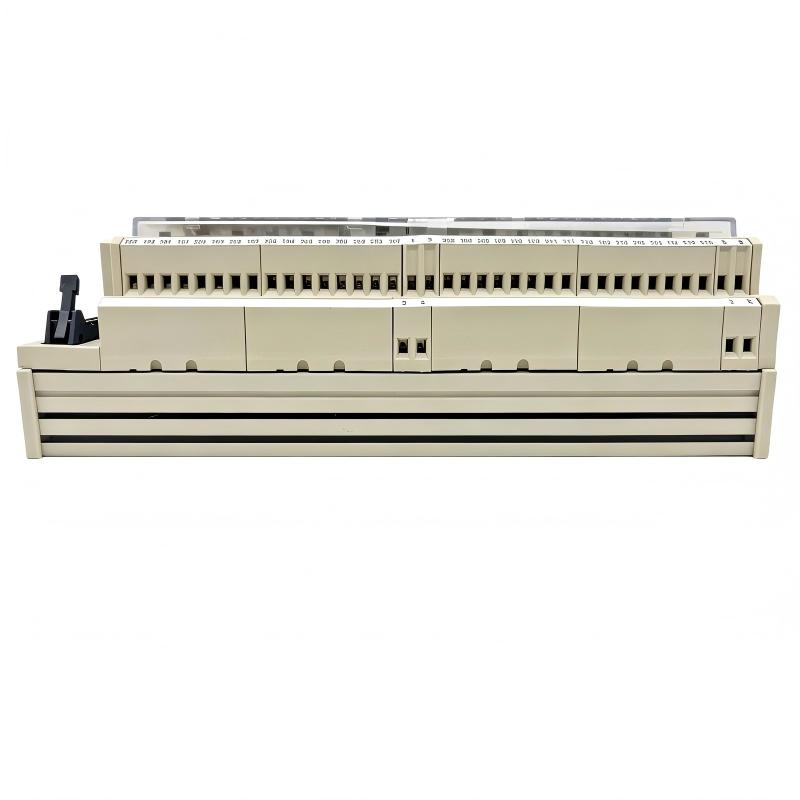
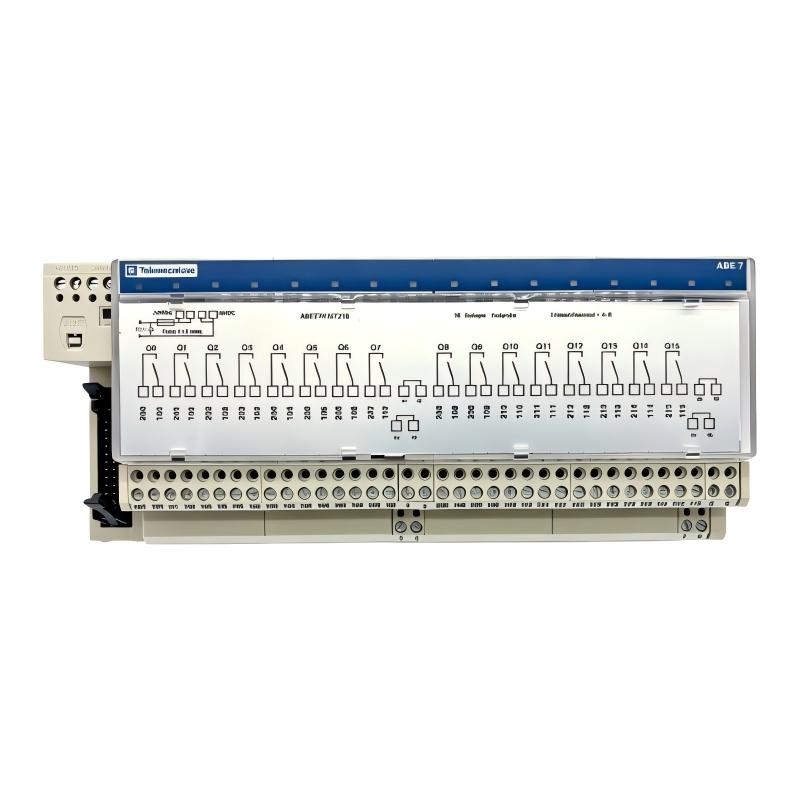
The Schneider ABE7R16T210 Plug-in Electromechanical Relay is an industrial relay interface module designed for PLC output signal switching applications. It provides multiple relay channels to connect automation controllers with external electrical devices while improving system flexibility and reliability.
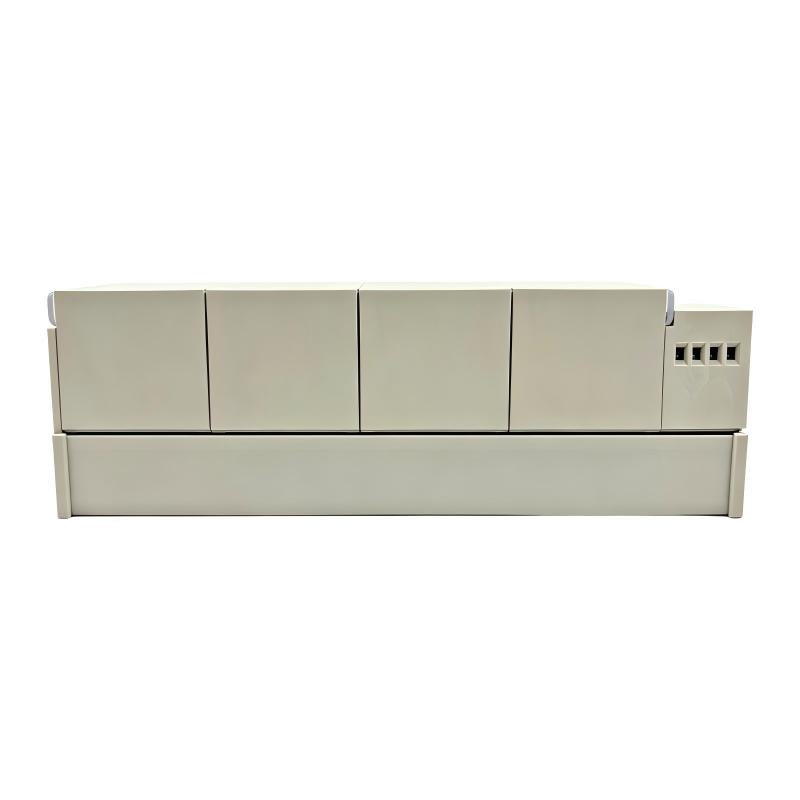
With dimensions of 220 × 130 × 60 mm and a weight of 0.735 kg, the Schneider ABE7R16T210 is designed for industrial control cabinets, automation panels, and electrical interface applications where organized wiring and reliable switching performance are required.
This relay module helps simplify PLC output expansion, improve electrical separation, and provide a convenient solution for industrial automation control systems.
Technical Specifications
| Parameter |
Details |
| Manufacturer |
Schneider Electric |
| Model |
ABE7R16T210 |
| Product Type |
Plug-in Electromechanical Relay Module |
| Application |
PLC Output Interface |
| Relay Type |
Electromechanical Relay |
| Number of Channels |
16 Channels |
| Function |
Signal Switching and Electrical Isolation |
| Installation Type |
Industrial Control Cabinet Installation |
| Dimensions |
220 × 130 × 60 mm |
| Weight |
0.735 kg |
Function and Working Principle
The Schneider ABE7R16T210 works as an intermediate switching interface between a PLC controller and external field devices.
The basic control structure is:
PLC Controller → Relay Interface Module → External Equipment
The operating process includes:
- PLC sends a digital output command
- Relay module receives the control signal
- Internal relay contacts switch according to the command
- External equipment receives the switched electrical signal
- Field devices perform the required operation
The relay interface separates the PLC control circuit from the external load circuit, helping improve system protection and reliability.
Role in Industrial Automation Systems
The Schneider ABE7R16T210 plays an important role in industrial control applications.
Its main functions include:
- Expanding PLC output capacity
- Providing electrical isolation
- Controlling external loads
- Simplifying wiring systems
- Improving automation system reliability
It is commonly used in:
- PLC control cabinets
- Industrial machinery
- Factory automation systems
- Process control equipment
- Electrical control panels
- Automated production lines
Main Features
Multi-Channel Relay Control
The ABE7R16T210 provides multiple relay outputs in one integrated module.
Advantages include:
- Control of multiple external devices
- Reduced cabinet wiring
- Improved system organization
- Easier maintenance
The multi-channel structure makes it suitable for automation systems requiring several independent switching points.
Plug-in Relay Design
The plug-in electromechanical relay structure allows easier maintenance and replacement.
Benefits include:
- Faster component replacement
- Reduced maintenance time
- Convenient troubleshooting
- Improved service efficiency
Technicians can replace relay components without major system modification.
Electrical Isolation Function
Electrical isolation is important when PLC systems control external equipment with different electrical characteristics.
The relay module helps provide:
- Protection for PLC outputs
- Separation between control and power circuits
- Reduced electrical interference
- Improved system safety
This makes the module suitable for demanding industrial environments.
Reliable Industrial Switching
Electromechanical relays are widely used in industrial applications because of their flexibility and compatibility with different loads.
Benefits include:
- Stable switching operation
- Wide application range
- Suitable for various field devices
- Long-term industrial reliability
Industrial Applications
PLC Output Expansion
PLC controllers have limited output channels and may require interface modules for additional devices.
Applications include:
- Valve control
- Contactor operation
- Alarm systems
- Indicator control
The Schneider ABE7R16T210 provides an efficient method for expanding PLC output capability.
Machine Automation Systems
Industrial machines require reliable switching signals for different operating functions.
Applications include:
- Packaging equipment
- Assembly machines
- Material handling systems
- Production machinery
The relay interface improves communication between PLC controllers and machine components.
Factory Control Systems
Large manufacturing systems contain many electrical devices controlled by PLC outputs.
Applications include:
- Production lines
- Conveyor systems
- Automated equipment
- Industrial control stations
The module helps organize output management and improve system reliability.
Electrical Control Cabinets
The Schneider ABE7R16T210 is suitable for installation inside industrial cabinets.
Applications include:
- Automation panels
- PLC cabinets
- Electrical enclosures
- Machine control boxes
Its structured design helps create cleaner and more efficient wiring layouts.
Installation Guide
Proper installation is important for ensuring stable operation.
Recommended installation steps:
- Confirm PLC output requirements
- Install the relay module correctly
- Connect PLC control signals
- Connect external device wiring
- Check relay operation
- Test the complete control system
During installation, pay attention to:
- Correct terminal wiring
- Proper electrical ratings
- Secure cable connections
- Suitable cabinet environment
- Correct relay configuration
Common Failure Symptoms
| Fault Symptom |
Possible Cause |
| External device does not operate |
Relay contact failure |
| No output switching |
PLC signal problem |
| Intermittent operation |
Loose wiring connection |
| Relay does not activate |
Control voltage issue |
| Equipment malfunction |
Load circuit problem |
Maintenance Recommendations
To maintain reliable operation of the Schneider ABE7R16T210:
- Inspect relay condition regularly
- Check wiring connections
- Monitor switching performance
- Verify PLC output signals
- Replace damaged relay components when necessary
Regular maintenance helps reduce unexpected failures and improves system availability.
Compatible System Components
| Component |
Function |
| PLC Controller |
Generates control signals |
| Relay Interface Module |
Provides switching and isolation |
| Sensors |
Provide input information |
| Actuators |
Execute control actions |
| HMI System |
Provides operator interaction |
Together, these components create a complete industrial automation control system.
Key Advantages
- Multi-channel relay switching capability
- Provides PLC electrical isolation
- Simplifies control wiring
- Supports industrial automation applications
- Easy maintenance with plug-in relay design
- Improves system reliability
- Suitable for control cabinet installation
Technical FAQs
What is Schneider ABE7R16T210 used for?
The Schneider ABE7R16T210 is a plug-in electromechanical relay interface module used for connecting PLC outputs with external industrial devices.
Why use a relay interface module in automation systems?
Relay interface modules provide electrical isolation, protect PLC outputs, and allow controllers to operate different types of external loads.
Where is Schneider ABE7R16T210 commonly used?
It is commonly used in PLC control cabinets, industrial machinery, factory automation systems, and electrical control applications.
What are the benefits of plug-in relay design?
The plug-in design allows easier maintenance, faster replacement, and reduced system downtime.
Conclusion
The Schneider ABE7R16T210 Plug-in Electromechanical Relay is a reliable interface solution designed for PLC-based industrial automation systems.
With its multi-channel relay structure, electrical isolation capability, and industrial installation design, it provides an effective way to connect controllers with external field devices.
For automation engineers, system integrators, and maintenance professionals, the Schneider ABE7R16T210 helps simplify wiring, improve control system reliability, and enhance the performance of industrial automation applications.