

ProductPRODUCT
Featured products
Contact Us
- Siemens
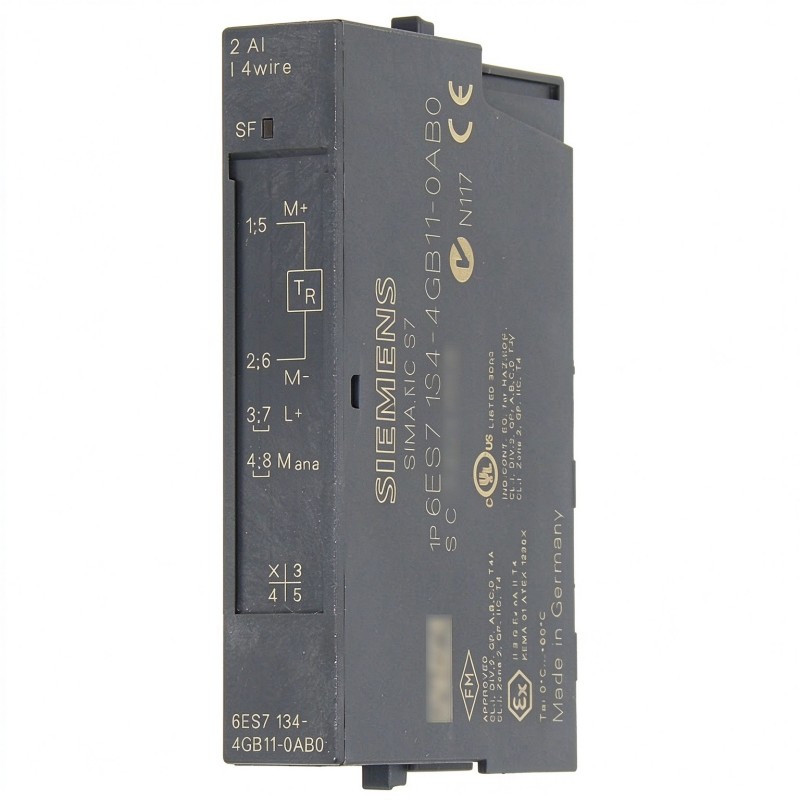
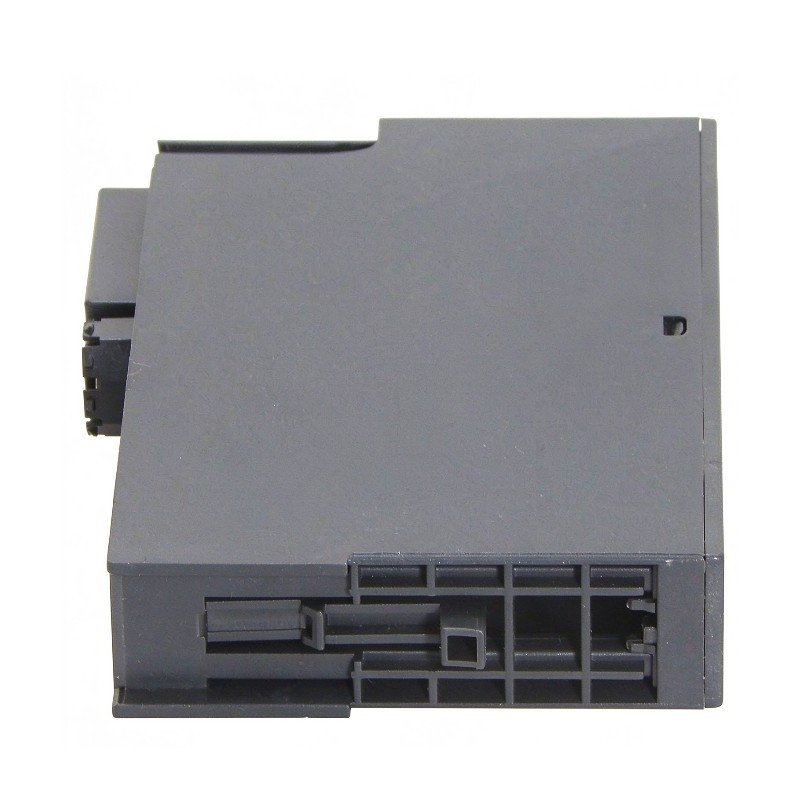
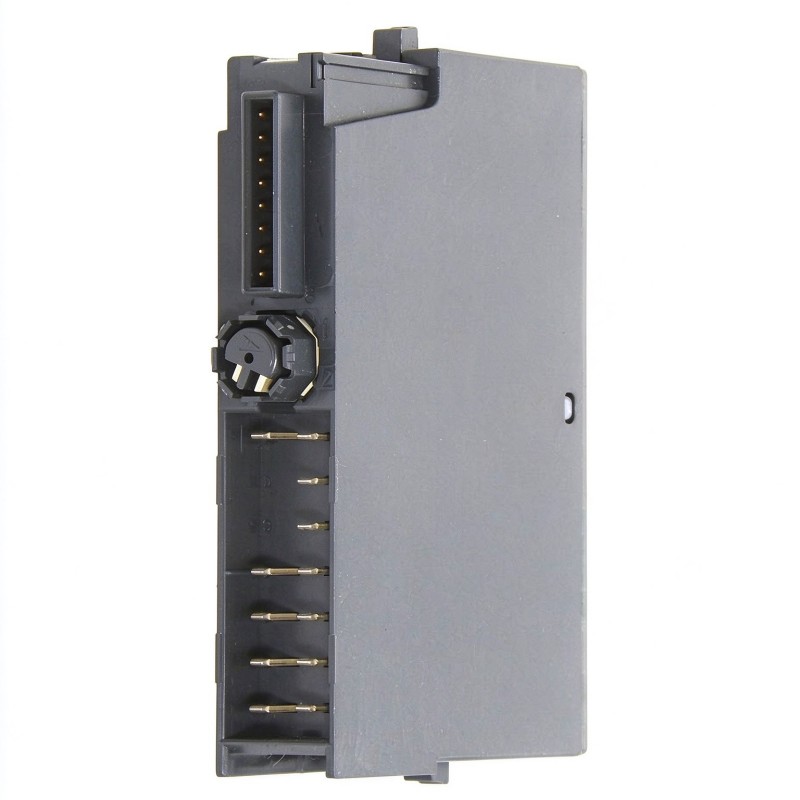
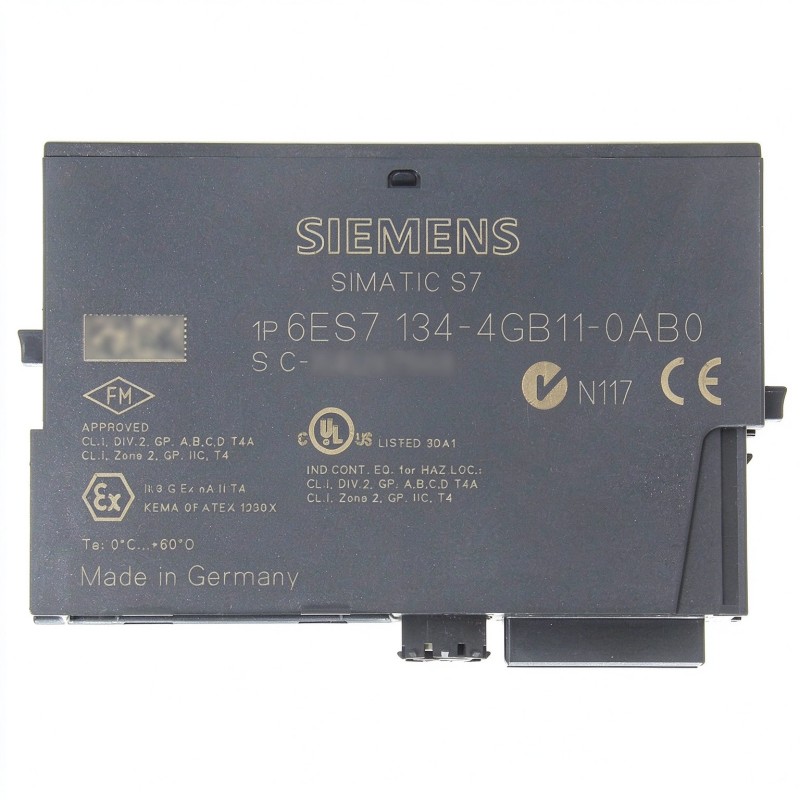
- 6ES7134-4GB11-0AB0
- Analog Input Module
- Germany
- 15 × 81 × 52 mm
- 0.044 kg
- Xiamen, China
- New & In Stock
- T/T, PayPal, Western Union
- 1 Year
- 1-3 Working Days
- DHL, UPS, TNT, FedEx and EMS.
- 24-Hour Service
- COO
- 5
Our advantage

Global Logistics
We have a 10-year logistics and express cooperation agreement, so our products can be shipped to any place in the world.

Brand new and original
Our products are imported in bulk from the place of origin. Because of the cooperative relationship, our products are all original and 100% new.

24-hour service
We provide 7*24 hours service to our customers. We will be there whenever you need us.

Price advantage
All our products are priced very favorably because we have our own warehouse and supply.
| Company Information | |||
| [email protected] | |||
| Mobile | +8615980777398 | ||
| +8615980777398 | |||
| 15980777398 |
Product Overview
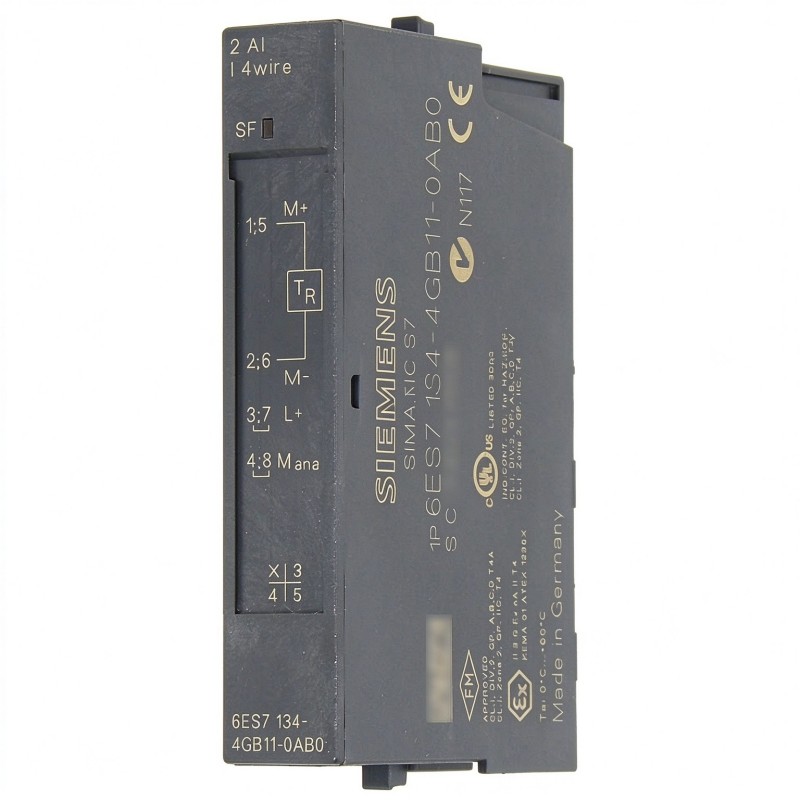
The Siemens 6ES7134-4GB11-0AB0 SIMATIC ET 200S Analog Input Module is a two-channel standard analog current input module used to acquire measurement signals from four-wire field transmitters. It belongs to the SIMATIC ET 200S distributed I/O family and provides an interface between industrial measuring instruments and the higher-level PLC.
Identified as the 2AI I 4WIRE ST electronic module, this version is specifically intended for four-wire current transmitters. It supports two independent current input channels with selectable measuring ranges of ±20 mA and 4–20 mA. Each channel has a 50 Ω input resistance, allowing the module to measure current signals from externally powered field instruments.
The distinction between two-wire and four-wire transmitters is particularly important when selecting this module. A four-wire transmitter has a separate power supply connection and provides its measurement output through an independent signal circuit. The 6ES7134-4GB11-0AB0 receives the current measurement signal, while the transmitter obtains its operating power from its own supply arrangement.
A typical application can be found in process control systems where pressure, flow, or level measurements must be collected from multiple instruments. For example, two four-wire pressure transmitters installed at different points in a pipeline can connect to the module’s two input channels. The resulting measurements are transferred to the PLC, where they can be compared to monitor pressure differences and identify abnormal operating conditions.
The module uses an integrating measurement principle with configurable integration times of 16.7 ms or 20 ms. Its conversion time is approximately 55 ms or 65 ms per channel, depending on the selected interference suppression setting. This makes it suitable for conventional process instrumentation rather than applications requiring high-speed analog sampling.
Another useful feature is its four-stage digital filtering function. When measurements fluctuate because of electrical interference or unstable process conditions, the filtering parameters can be adjusted to reduce short-term variations in the acquired values.
With a 15 mm installation width, the 6ES7134-4GB11-0AB0 fits into compact ET 200S distributed I/O stations. It is a practical choice for installations that need two standard current measurement channels for externally powered four-wire instruments.
Technical Specifications
| Parameter | Specification |
|---|---|
| Manufacturer | Siemens |
| Model | 6ES7134-4GB11-0AB0 |
| Product Type | Analog Input Module |
| Product Family | SIMATIC ET 200S |
| Module Designation | 2AI I 4WIRE ST |
| Number of Analog Inputs | 2 |
| Input Signal Type | Current |
| Supported Transmitter Type | 4-Wire Transducer |
| Input Ranges | ±20 mA, 4–20 mA |
| Input Resistance | 50 Ω |
| Resolution | 13 bit + sign (±20 mA); 13 bit (4–20 mA) |
| Measurement Principle | Integrating |
| Integration Time | 16.7 / 20 ms |
| Conversion Time | 55 / 65 ms per channel |
| Measured Value Smoothing | 4 Configurable Stages |
| Rated Load Voltage | 24 V DC (from power module) |
| Maximum Current Consumption | 30 mA from load voltage L+ |
| Typical Power Dissipation | 0.6 W |
| Maximum Shielded Cable Length | 200 m |
| Isochronous Operation | Not Supported |
| Diagnostic Indication | Red SF LED |
| Protection Rating | IP20 |
| Dimensions | 15 × 81 × 52 mm |
| Weight | 0.044 kg |
Product Features
- Two Independent Current Inputs: Acquires two analog current signals from separate field instruments.
- Four-Wire Transmitter Compatibility: Supports externally powered current-output measuring instruments.
- Dual Measuring Ranges: Supports ±20 mA and 4–20 mA input configurations.
- 50 Ω Input Resistance: Provides the specified electrical input resistance for current measurement.
- 13-Bit Resolution: Supports 13-bit measurement resolution, with an additional sign bit for the bipolar ±20 mA range.
- Integrating Measurement Principle: Evaluates incoming signals over a defined integration period.
- Selectable Integration Time: Supports 16.7 ms and 20 ms settings for different interference suppression requirements.
- Four-Stage Digital Filtering: Allows measured-value smoothing to be adjusted according to process conditions.
- Diagnostic Monitoring: Supports group fault, wire-break, and overrange or underrange diagnostics.
- Compact Installation: Occupies a 15 mm position in the ET 200S distributed I/O station.
Working Principle
The 6ES7134-4GB11-0AB0 measures current signals generated by four-wire field transmitters and converts them into digital measurement values for the SIMATIC controller.
Its signal acquisition process follows this arrangement:
Four-Wire Transmitter → ET 200S Terminal Module → 6ES7134-4GB11-0AB0 → Analog-to-Digital Conversion → Backplane Bus → PLC
In a four-wire instrumentation arrangement, the transmitter receives operating power through a separate supply connection. Its measurement output is carried through an independent current signal circuit, typically using a 4–20 mA signal.
The incoming current enters one of the module’s two measurement channels. Depending on the connected instrument, the channel can be configured for ±20 mA or 4–20 mA operation. The module measures the current through its 50 Ω input resistance.
The integrating measurement circuit evaluates the signal over the configured integration period. The available settings of 16.7 ms and 20 ms correspond to different interference suppression frequencies. This helps reduce the influence of electrical disturbances on the acquired measurement.
After conversion, the resulting digital value is transferred through the ET 200S backplane bus to the interface module and then to the PLC. The controller can scale the value into engineering units and use it in process monitoring, alarm handling, or automatic control sequences.
Consider a chemical processing installation with two four-wire pressure transmitters monitoring different sections of a process line. One transmitter sends its current output to channel 0, while the second connects to channel 1. The module acquires both measurements, allowing the PLC to compare pressure conditions and respond when either measurement moves outside its configured operating limits.
The four-stage digital filtering function provides additional control over signal behavior. For relatively stable process measurements, stronger filtering can reduce short-term fluctuations. For applications requiring a quicker response, a lower filtering level may be more appropriate.
The module also supports diagnostic monitoring. When a current signal falls outside the configured measuring range or a wire break occurs in the 4–20 mA configuration, the corresponding diagnostic information can be made available to the controller.
Role in the SIMATIC ET 200S Distributed I/O Architecture
The 6ES7134-4GB11-0AB0 acts as the current measurement interface within an ET 200S distributed I/O station. Its primary task is to acquire signals from externally powered four-wire instruments and transfer the corresponding digital values to the automation controller.
A typical signal path follows this arrangement:
Four-Wire Field Instruments → ET 200S Terminal Module → 6ES7134-4GB11-0AB0 → ET 200S Backplane Bus → Interface Module → SIMATIC PLC
| System Component | Function |
|---|---|
| Four-Wire Pressure Transmitter | Converts pressure measurements into current signals |
| Four-Wire Flow Transmitter | Supplies current signals representing fluid flow |
| ET 200S Terminal Module | Provides the electrical connection and mounting interface |
| 6ES7134-4GB11-0AB0 | Acquires two analog current signals |
| ET 200S Backplane Bus | Transfers digital measurement data within the station |
| Interface Module | Connects the distributed I/O station to the automation network |
| External 24 V DC Supply | Powers compatible four-wire field transmitters |
| ET 200S Power Module | Supplies the required station load voltage |
| SIMATIC PLC | Processes acquired measurements and executes control logic |
| Shielded Instrumentation Cable | Carries analog signals while reducing electrical interference |
One important consideration is that the module’s transmitter arrangement differs from the 6ES7134-4GB01-0AB0. The latter is a two-wire current input version, whereas the 6ES7134-4GB11-0AB0 is intended for four-wire measuring instruments.
The terminal module must also match the required wiring arrangement. The field signal connections, transmitter power supply, and grounding must be checked before commissioning. The two analog channels are not electrically isolated from each other, although the analog inputs are isolated from the backplane bus.
Industrial Applications
| Application | Typical Use |
|---|---|
| Chemical Processing Plants | Acquiring pressure, flow, and level signals from four-wire instruments |
| Water Treatment Facilities | Monitoring pipeline pressure and water flow |
| Oil and Gas Installations | Collecting current-loop measurements from process instrumentation |
| Pharmaceutical Manufacturing | Acquiring analog measurements from externally powered transmitters |
| Power Generation | Monitoring auxiliary pressure and flow conditions |
| Food and Beverage Production | Collecting process measurements from industrial instrumentation |
| Pumping Stations | Monitoring pump discharge pressure and operating conditions |
| Wastewater Treatment | Acquiring level and flow measurements from field instruments |
| Industrial Utilities | Integrating four-wire transmitters into distributed control systems |
| Manufacturing Equipment | Monitoring analog process variables through the ET 200S station |
Installation and Maintenance
- Verify the Module Number: Confirm that 6ES7134-4GB11-0AB0 matches the intended ET 200S configuration and that four-wire current measurement is required.
- Check Transmitter Compatibility: Verify that the connected instruments provide compatible ±20 mA or 4–20 mA output signals and use a separate power supply arrangement.
- Select the Correct Terminal Module: Confirm that the terminal module supports the 2AI I 4WIRE ST configuration and the intended field wiring arrangement.
- Isolate the Power Supply: Disconnect the relevant power sources according to the site’s electrical safety and lockout procedures before installing or removing the electronic module.
- Inspect the Mounting Position: Check the terminal module, electrical contacts, and mounting area for contamination, corrosion, or mechanical damage.
- Install the Electronic Module: Position the 6ES7134-4GB11-0AB0 on the designated ET 200S terminal module and secure it according to the system installation instructions.
- Connect the Current Signals: Wire the positive and negative signal connections of each four-wire transmitter to the corresponding input channel. Follow the terminal assignment for channel 0 and channel 1.
- Check Transmitter Power: Verify that each four-wire instrument receives the correct external supply voltage and that its signal output is compatible with the selected measuring range.
- Configure the Measuring Range: Select ±20 mA or 4–20 mA according to the connected transmitter’s output characteristics.
- Set Integration and Filtering Parameters: Configure the integration time and one of the four measured-value smoothing stages according to the required interference suppression and response characteristics.
- Test the Input Channels: Restore the supply and apply known reference current signals. Check the acquired PLC values, SF LED status, and available diagnostic information.
- Document the Installation: Record transmitter identification, channel assignments, wiring details, input ranges, filtering parameters, and diagnostic settings for future maintenance.
Compatible System Components
| Component | Function |
|---|---|
| Siemens 6ES7134-4GB11-0AB0 | Two-channel standard analog current input module for four-wire transmitters |
| Siemens 6ES7134-4GB01-0AB0 | Two-channel standard analog current input module for two-wire transmitters |
| Siemens 6ES7134-4FB01-0AB0 | Two-channel standard analog voltage input module |
| Siemens 6ES7134-4GB52-0AB0 | ET 200S high-speed analog current input module |
| Siemens 6ES7135-4GB01-0AB0 | ET 200S analog current output module |
| Siemens 6ES7151-1AA05-0AB0 | ET 200S interface module |
| ET 200S Terminal Module | Provides mounting and field signal connections |
| ET 200S Power Module | Supplies the required station load voltage |
| External 24 V DC Power Supply | Provides operating power for four-wire transmitters |
| Four-Wire Pressure Transmitters | Supply current signals representing pressure measurements |
| Four-Wire Flow Transmitters | Provide current signals for flow monitoring |
| Shielded Instrumentation Cable | Carries current-loop signals while reducing electrical interference |
Recommended Related Models
| Model | Product Type | Typical Application |
|---|---|---|
| Siemens 6ES7134-4GB01-0AB0 | SIMATIC ET 200S Analog Input Module | Standard two-wire current signal acquisition |
| Siemens 6ES7134-4GB52-0AB0 | SIMATIC ET 200S Analog Input Module | High-speed current signal acquisition |
| Siemens 6ES7134-4FB01-0AB0 | SIMATIC ET 200S Analog Input Module | Standard voltage signal acquisition |
| Siemens 6ES7134-4FB52-0AB0 | SIMATIC ET 200S Analog Input Module | High-speed voltage signal acquisition |
| Siemens 6ES7135-4GB01-0AB0 | SIMATIC ET 200S Analog Output Module | Analog current signal output |
| Siemens 6ES7135-4FB01-0AB0 | SIMATIC ET 200S Analog Output Module | Analog voltage signal output |
Key Advantages
- Two independent analog current input channels.
- Supports ±20 mA and 4–20 mA measuring ranges.
- Specifically suited to four-wire current transmitters.
- 13-bit measurement resolution, with sign support for bipolar measurement.
- 50 Ω input resistance.
- Integrating measurement with selectable integration time.
- Four-stage configurable digital filtering.
- Wire-break and range monitoring diagnostics.
- Compact 15 mm ET 200S installation width.
- Integration with SIMATIC ET 200S distributed I/O systems.
Technical FAQs
What is the difference between Siemens 6ES7134-4GB11-0AB0 and 6ES7134-4GB01-0AB0?
The main difference is the supported transmitter wiring arrangement. The 6ES7134-4GB11-0AB0 is the 2AI I 4WIRE ST version for externally powered four-wire current transmitters. The 6ES7134-4GB01-0AB0 is the 2AI I 2WIRE ST version intended for two-wire transducers. Although both modules provide two current input channels, their field wiring and transmitter power arrangements are different.
Can the 6ES7134-4GB11-0AB0 measure both 4–20 mA and ±20 mA signals?
Yes. Each input channel supports both measuring ranges. The 4–20 mA range is commonly used with industrial process transmitters, while the ±20 mA range accommodates bipolar current signals. The measuring range must be configured to match the connected instrument.
Does this module supply operating power to four-wire transmitters?
The 6ES7134-4GB11-0AB0 is intended for four-wire measuring transducers, which use a separate power supply arrangement. The module receives the measurement current through its input channels. The external transmitter supply must be provided and wired independently according to the instrument’s electrical requirements.
What is the function of the four-stage measured-value smoothing?
The digital filtering function reduces short-term variations in acquired current measurements. Four smoothing levels are available: none, low, medium, and high. Stronger filtering can improve the stability of fluctuating measurements, but it also increases the time required for the displayed value to respond to actual process changes. The appropriate setting depends on the measurement characteristics and control requirements.