

ProductPRODUCT
Featured products
Contact Us
- Siemens
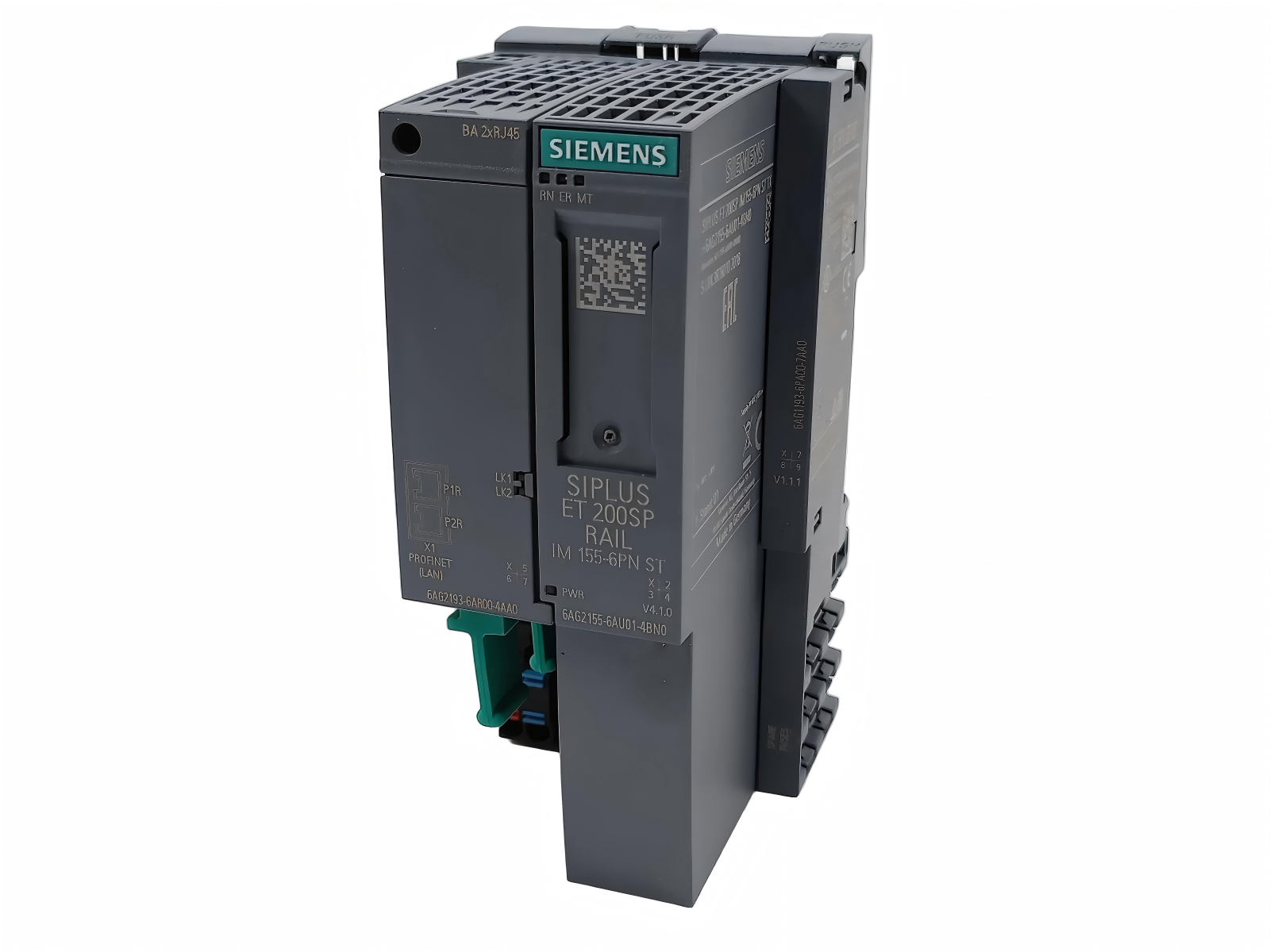
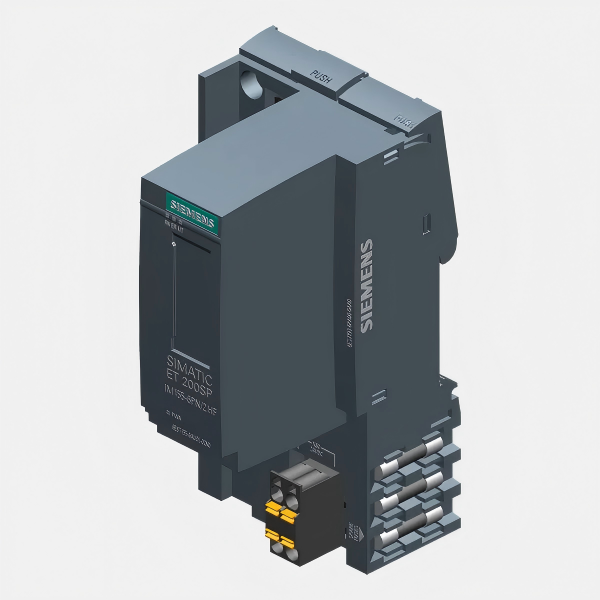
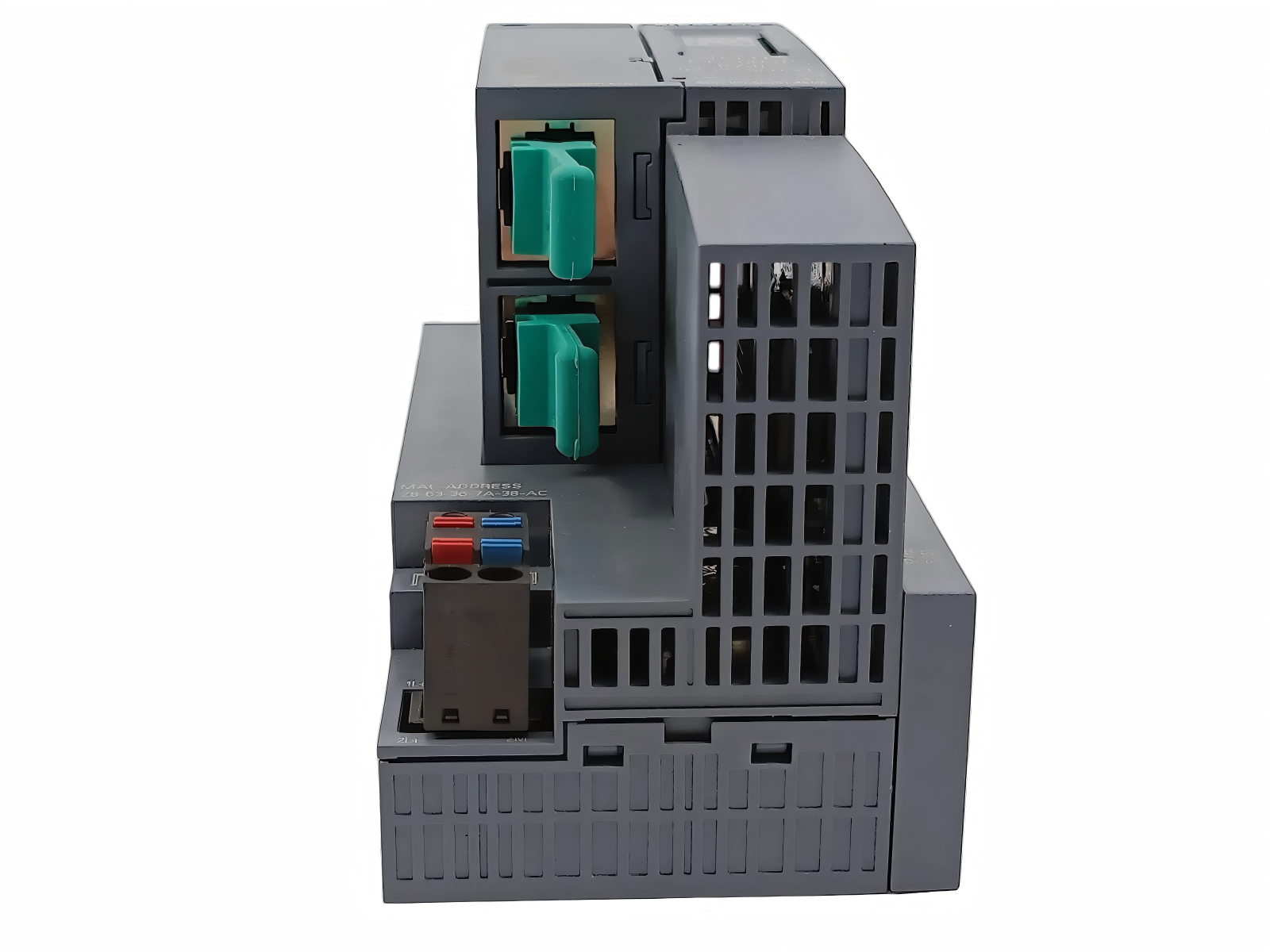
- 6AG2155-6AU01-4CN0
- SIPLUS ET 200SP IM155-6PN ST BA TX
- Germany
- 110 × 100 × 75 mm
- 0.4kg
- Xiamen, China
- New & In Stock
- T/T, PayPal, Western Union
- 1 Year
- 1-3 Working Days
- DHL, UPS, TNT, FedEx and EMS.
- 24-Hour Service
- COO
- 4
Our advantage

Global Logistics
We have a 10-year logistics and express cooperation agreement, so our products can be shipped to any place in the world.

Brand new and original
Our products are imported in bulk from the place of origin. Because of the cooperative relationship, our products are all original and 100% new.

24-hour service
We provide 7*24 hours service to our customers. We will be there whenever you need us.

Price advantage
All our products are priced very favorably because we have our own warehouse and supply.
| Company Information | |||
| [email protected] | |||
| Mobile | +8615980777398 | ||
| +8615980777398 | |||
| 15980777398 |
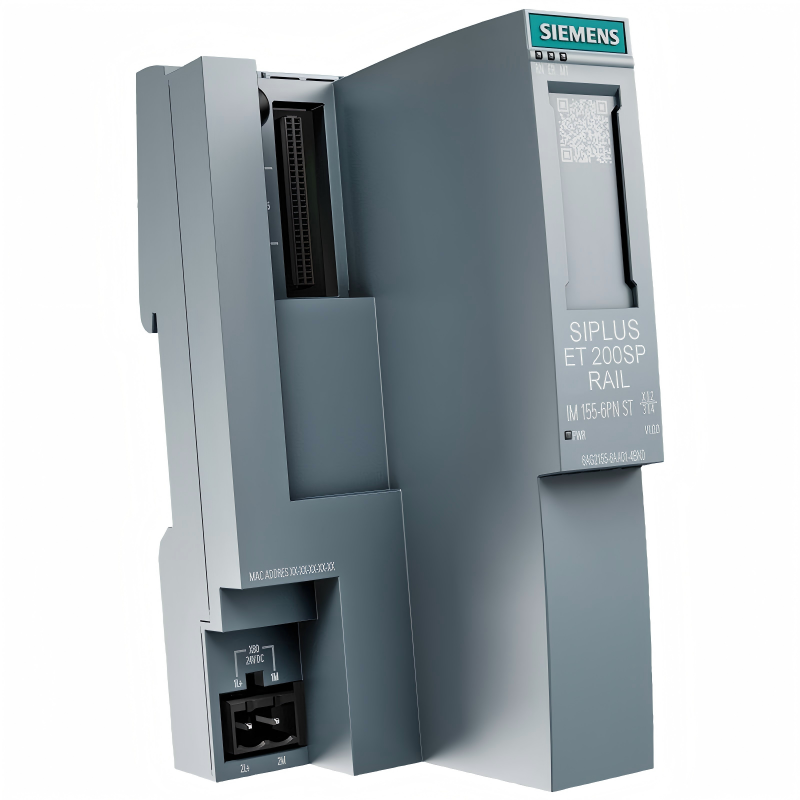
Siemens 6AG2155-6AU01-4CN0 Industrial Product Profile, Technical Specifications and Related Model Recommendations
1. Product Overview
The Siemens 6AG2155-6AU01-4CN0 is an industrial automation interface module belonging to the SIPLUS extreme RAIL product range and based on the SIMATIC ET 200SP distributed I/O platform.
It is designed to connect a distributed input/output station to an industrial PROFINET network. The module enables communication between a central programmable logic controller (PLC) and remote I/O devices, supporting the exchange of sensor signals, actuator commands, and process data.
The product is intended for industrial applications that require reliable communication, modular system expansion, and enhanced environmental performance. Its specialized environmental design makes it particularly relevant to applications involving significant temperature variations or demanding installation conditions.
The module supports advanced functions associated with the high-feature ET 200SP interface platform, including S2 system redundancy, multiple hot swapping, and isochronous operation, subject to the requirements of the complete automation system.
| Basic Information | Product Details |
|---|---|
| Model | 6AG2155-6AU01-4CN0 |
| Brand | Siemens |
| Product family | SIPLUS extreme |
| Specialized product range | SIPLUS extreme RAIL |
| Automation platform | SIMATIC ET 200SP |
| Product designation | IM155-6PN HF TX RAIL |
| Product category | Industrial communication interface module |
| Main function | Distributed I/O communication |
| Communication protocol | PROFINET |
| Functional class | High-feature interface |
| Installation method | DIN-rail mounting |
| Typical installation | Industrial control cabinets |
| Main purpose | Connecting remote I/O stations to a central automation controller |
2. Detailed Technical Parameters
The following table summarizes the principal specifications associated with the reference product. Values that depend on the exact hardware revision or configuration should be confirmed before procurement or installation.
| Technical Parameter | Specification |
|---|---|
| Model | 6AG2155-6AU01-4CN0 |
| Brand | Siemens |
| Product series | SIPLUS extreme RAIL |
| Base platform | SIMATIC ET 200SP |
| Interface type | IM155-6PN HF |
| Module type | PROFINET interface module |
| Communication protocol | PROFINET |
| Network connection | Compatible BusAdapter |
| Maximum ET 200SP I/O modules | Up to 64, subject to configuration limits |
| Maximum ET 200AL modules | Up to 16, subject to configuration limits |
| System redundancy | S2 supported |
| Hot-swapping function | Multiple-module hot swapping supported |
| Isochronous operation | Supported |
| Nominal supply voltage | 24 V DC |
| Permitted supply voltage | 19.2–28.8 V DC |
| Maximum current consumption | Approximately 700 mA |
| Maximum inrush current | Approximately 4.5 A |
| Typical power dissipation | Approximately 2.4 W |
| Minimum operating temperature | -40°C |
| Maximum operating temperature | +70°C |
| Short-duration temperature limit | Up to +85°C for 10 minutes under specified conditions |
| Environmental protection | Conformal coating |
| Protection rating | IP20 |
| Mounting method | DIN rail |
| Width | 50 mm |
| Height | 117 mm |
| Depth | 74 mm |
| Dimensions (W × H × D) | 50 × 117 × 74 mm |
| Weight (kg) | Approximately 0.120 kg, excluding BusAdapter |
| Approximate packaged weight (kg) | Approximately 0.200 kg, depending on packaging and accessories |
| Engineering environment | STEP 7 / TIA Portal, subject to version compatibility |
| Typical application | Distributed industrial automation |
Important technical note: The short-duration temperature limit is not a continuous operating rating. The module’s environmental performance does not remove the need for suitable enclosure protection, grounding, wiring, and installation practices.
The stated weight refers to the interface module itself. The complete installed assembly may weigh more because of the BusAdapter, server module, I/O modules, BaseUnits, and other accessories.
3. Product Introduction
The 6AG2155-6AU01-4CN0 is designed for distributed automation architectures in which input and output signals are collected close to the equipment being controlled rather than being routed individually to a central PLC cabinet.
In a conventional centralized installation, a large number of field wires may need to travel from sensors and actuators to a single control cabinet. This arrangement can increase cable requirements, complicate maintenance, and make expansion more difficult.
A distributed I/O architecture addresses these challenges by placing remote I/O stations near the machinery or process equipment. The interface module connects each station to the central controller through PROFINET, allowing the controller to exchange data with the connected I/O modules.
The module is installed within a compatible ET 200SP assembly and configured using supported engineering software. Once commissioned, it manages the communication between the controller and the distributed station.
The SIPLUS extreme RAIL designation indicates that the product belongs to a specialized range designed for demanding environmental conditions. Its conformal coating and extended operating-temperature capability can make it suitable for installations where ordinary industrial equipment may not provide the required environmental tolerance.
The module is particularly relevant to applications that need a combination of distributed I/O, advanced communication functions, compact installation, and enhanced environmental capability.
4. Product Applications
4.1 Industrial Automation and Manufacturing
The module can be used in automated production lines, assembly systems, packaging equipment, conveyor systems, and material-handling installations.
It allows field sensors and actuators to communicate with the central controller through a distributed I/O station. This reduces the need for long individual signal cables and can simplify the organization of electrical installations.
Typical applications include machine status monitoring, equipment interlocking, production-line sequencing, and the acquisition of digital or analog signals through compatible I/O modules.
4.2 Railway and Transportation-Related Equipment
The SIPLUS extreme RAIL product range is intended for demanding railway-related environments.
Depending on the complete system design and applicable qualification requirements, distributed automation equipment may be used for auxiliary equipment monitoring, electrical system control, and other transportation-related automation tasks.
The environmental rating of the interface module should not be interpreted as independent approval for every railway application. The complete equipment assembly must meet the relevant application-specific requirements.
4.3 Process Automation
In process-control installations, the module can connect distributed I/O stations used to monitor pumps, valves, pressure sensors, level transmitters, temperature instruments, and other field devices.
By placing I/O stations near the relevant equipment, engineers can reduce long signal-cable runs and organize the system into functional process areas.
The interface module provides the communication connection, while the selected I/O modules determine the supported signal types and measurement capabilities.
4.4 Temperature-Demanding Industrial Environments
The specified operating range of -40°C to +70°C makes the module a candidate for installations where substantial temperature fluctuations must be considered.
Potential environments include temperature-variable equipment enclosures and industrial installations that require enhanced environmental protection.
The actual suitability depends on the environmental conditions of the complete system, including the power supply, network components, wiring, and other installed modules.
4.5 Modular Machinery and Robotic Systems
The module can be integrated into compatible PROFINET-based automation systems serving robotic work cells, machine tools, automated inspection stations, and material-handling equipment.
Distributed I/O allows sensors, actuator interfaces, and auxiliary equipment to be grouped according to machine functions.
This modular approach can simplify electrical design and make future system modifications easier.
5. Product Advantages
5.1 Extended Operating-Temperature Capability
The extended operating-temperature range provides greater flexibility when designing automation equipment for demanding environments.
The ability to operate at lower temperatures than many conventional industrial modules can be particularly valuable in temperature-variable installations.
However, the permitted temperature range must be evaluated together with the product’s installation conditions and the ratings of all connected equipment.
5.2 Enhanced Environmental Protection
The conformal coating provides additional protection for electronic assemblies against certain environmental contaminants.
This feature can improve suitability for installations where environmental exposure is a significant consideration.
It does not mean that the module is waterproof or suitable for unrestricted exposure to condensation, corrosive chemicals, or direct water contact.
5.3 Flexible Distributed I/O Expansion
The ET 200SP platform uses a modular architecture that supports different combinations of compatible input and output modules.
The reference interface module can support up to 64 ET 200SP I/O modules and up to 16 ET 200AL modules, within the applicable configuration limits.
This arrangement allows engineers to design distributed stations according to machine size, signal requirements, and installation layout.
5.4 Advanced PROFINET Communication
PROFINET provides the industrial communication interface between the distributed I/O station and the controller.
It supports integration into compatible automation architectures and enables the exchange of process data between field equipment and the central control system.
The selected BusAdapter and network topology must be compatible with the intended installation.
5.5 Redundancy Support
The high-feature interface platform supports S2 system redundancy.
When implemented with compatible controllers, network infrastructure, and engineering configurations, redundancy can improve communication availability and reduce the impact of certain system faults.
Redundancy does not automatically eliminate every possible source of downtime. Its effectiveness depends on the architecture and the behavior of the connected equipment.
5.6 Maintenance Flexibility
Multiple hot swapping can simplify maintenance in supported configurations by allowing specified modules to be replaced without shutting down the entire station.
This can be valuable in production environments where equipment availability is important.
The permitted replacement procedure must follow the applicable technical instructions and the operational requirements of the complete system.
5.7 Compact Mechanical Design
The approximate dimensions of 50 × 117 × 74 mm allow the interface module to be incorporated into compact DIN-rail-based control assemblies.
The relatively low module weight also simplifies handling and panel-layout planning.
For complete cabinet design, additional space must be allocated for connectors, cables, wiring bends, adjacent modules, and maintenance access.
5.8 Support for Synchronized Operation
Isochronous operation can support applications that require synchronized process-data exchange.
This capability may be relevant to coordinated machinery and timing-sensitive automation systems.
The achievable cycle time depends on the complete system configuration, controller capabilities, network design, and connected devices.
5.9 Integration with Modular Automation Systems
The ET 200SP architecture supports a modular approach to distributed automation.
Compatible digital input, digital output, analog input, analog output, and other supported modules can be assembled according to the needs of the application.
This allows equipment designers to standardize the interface architecture while adapting individual stations to different process requirements.
6. Brand and Product Series
| Classification | Description |
|---|---|
| Brand | Siemens |
| Product line | SIPLUS |
| Environmental product range | SIPLUS extreme |
| Specialized range | SIPLUS extreme RAIL |
| Automation platform | SIMATIC ET 200SP |
| Product family | IM155-6PN |
| Functional designation | HF |
| Product type | PROFINET interface module |
| Main application | Distributed I/O communication |
| Mounting format | DIN rail |
| Environmental feature | Conformal coating and extended temperature capability |
| Main engineering software | STEP 7 / TIA Portal, subject to compatibility |
The product belongs to the SIPLUS extreme RAIL range, which combines a specialized environmental design with an industrial automation platform.
When selecting a replacement, engineers should distinguish between the SIPLUS version and the corresponding standard ET 200SP interface module. Products that share a similar family designation may have different environmental ratings, supported functions, or connector arrangements.
7. Five Recommended Models from the Same Series or Related Product Families
The following models are relevant for technical comparison when designing or maintaining distributed automation systems. Their functions and specifications differ, so they should not be treated as universally interchangeable.
| Model | Product designation | Main parameters | Dimensions (W × H × D) | Weight (kg) |
|---|---|---|---|---|
| 6AG2155-6AU01-1CN0 | SIPLUS ET 200SP IM155-6PN HF T1 RAIL | PROFINET interface; high-feature architecture; environmental protection; temperature classification specific to the T1 variant | Approx. 50 × 117 × 74 mm* | Approx. 0.120* |
| 6AG2155-6AU01-4BN0 | SIPLUS ET 200SP IM155-6PN ST TX RAIL | PROFINET; standard-function interface; conformal coating; extended environmental capability | Approx. 50 × 117 × 74 mm* | Approx. 0.147* |
| 6AG2155-6AA01-4BN0 | SIPLUS ET 200SP IM155-6PN ST BA TX RAIL | Standard-function interface; PROFINET; BusAdapter configuration; environmental protection | Approx. 50 × 117 × 74 mm* | Approx. 0.190* |
| 6ES7155-6AU01-0CN0 | SIMATIC ET 200SP IM155-6PN HF | Base high-feature interface; PROFINET communication; advanced distributed I/O functions | Approx. 50 × 117 × 74 mm* | Verify exact variant |
| 6AG1155-6AU01-7CN0 | SIPLUS ET 200SP IM155-6PN HF variant | SIPLUS interface family; distributed I/O communication; environmental specifications depend on the exact variant | Verify exact variant | Verify exact variant |
*Dimensions and weights are indicative and require verification against the exact order number and supplied accessories. Similar mechanical dimensions do not establish functional or environmental equivalence.
7.1 Model 6AG2155-6AU01-1CN0
This model is a related SIPLUS ET 200SP high-feature interface option.
It may be worth evaluating when the project requires advanced distributed I/O communication but has environmental classification requirements that differ from those of the reference model.
Before selecting it, compare the operating-temperature limits, environmental classification, hardware compatibility, and supported functions.
7.2 Model 6AG2155-6AU01-4BN0
This standard-function interface variant may suit installations that require distributed PROFINET communication and environmental protection but do not need every high-feature capability.
It can be considered for applications with relatively straightforward remote I/O requirements.
If the system depends on redundancy, synchronized operation, or advanced station functions, verify those requirements before selecting this model.
7.3 Model 6AG2155-6AA01-4BN0
This related standard-function interface model is relevant when the required BusAdapter arrangement and system architecture differ from those of the reference module.
Its suitability depends on the physical network connection, environmental classification, and required communication functions.
The exact connector arrangement should be confirmed before purchasing replacement equipment.
7.4 Model 6ES7155-6AU01-0CN0
This base ET 200SP high-feature interface model is relevant for conventional industrial installations that need advanced distributed I/O functions.
It may be an option where the installation does not require the specialized environmental enhancement of the SIPLUS extreme RAIL version.
It should not automatically replace the reference model in an installation where extended temperature performance or specialized environmental protection is mandatory.
7.5 Model 6AG1155-6AU01-7CN0
This model is included as a candidate for broader SIPLUS interface-family evaluation.
Because the precise configuration and environmental classification cannot be established from the designation alone with sufficient confidence, its suitability should be verified against the exact product specification before procurement.
8. Five Additional Siemens Industrial Automation Models
These models represent commonly used types of PLC and distributed I/O equipment. They are useful for comparing automation-system components, although the CPUs and I/O modules perform different functions from the reference interface module.
| Model | Product designation | Main parameters | Dimensions (W × H × D) | Weight (kg) |
|---|---|---|---|---|
| 6ES7214-1AG40-0XB0 | SIMATIC S7-1200 CPU 1214C DC/DC/DC | Compact PLC; 24 V DC; integrated digital inputs and transistor outputs; PROFINET interface | Approx. 110 × 100 × 75 mm* | Approx. 0.415* |
| 6ES7511-1AK02-0AB0 | SIMATIC S7-1500 CPU 1511-1 PN | Central PLC; PROFINET communication; program execution and process-data management | Verify exact hardware version | Verify exact variant |
| 6ES7134-6GF00-0AA1 | SIMATIC ET 200SP analog input module | Analog signal acquisition; measurement range and channel characteristics depend on the exact module | Approx. 15 × 73 × 58 mm* | Approx. 0.031* |
| 6ES7132-6BH01-0BA0 | SIMATIC ET 200SP digital output module | Digital output control; 24 V DC output class; channel and load ratings depend on configuration | Approx. 15 × 73 × 58 mm* | Approx. 0.032* |
| 6ES7155-6AU01-0CN0 | SIMATIC ET 200SP IM155-6PN HF | High-feature PROFINET interface; distributed I/O station communication | Approx. 50 × 117 × 74 mm* | Verify exact variant |
*Indicative values only. Confirm dimensions, weight, module version, accessories, and electrical ratings before ordering. The listed models serve different functions and are not direct replacements for one another.
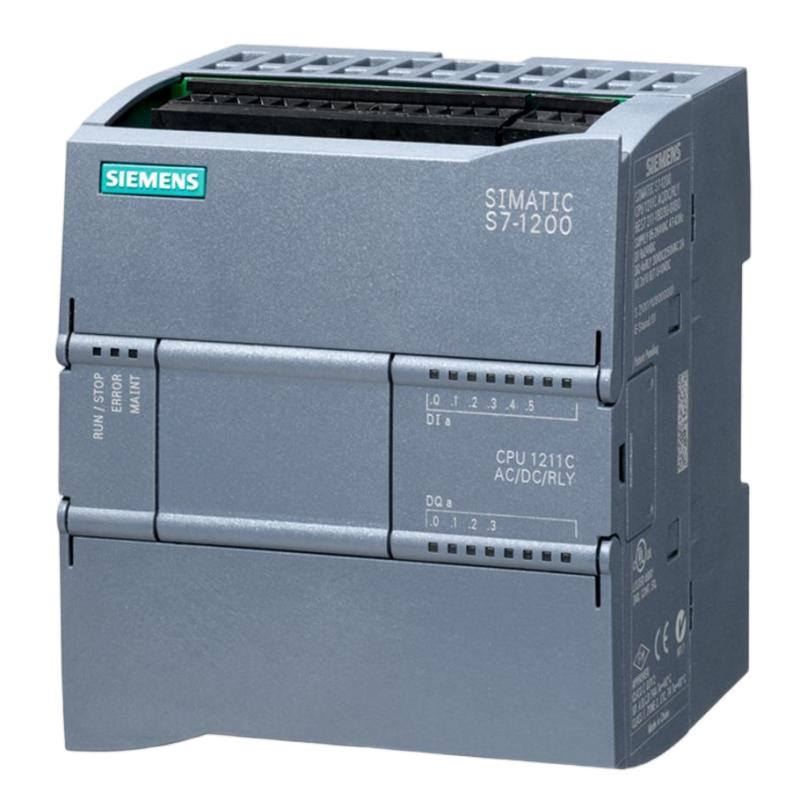
8.1 SIMATIC S7-1200 CPU 1214C
The S7-1200 CPU 1214C is a compact PLC designed for machine control, small production lines, pumping systems, and general-purpose automation.
Its primary function is to execute the control program and manage the logic of the automation process.
Compared with the 6AG2155-6AU01-4CN0, the S7-1200 is a controller rather than a distributed I/O interface. It can be considered as a controller for a suitable automation project that uses compatible remote I/O equipment.
8.2 SIMATIC S7-1500 CPU 1511-1 PN
The S7-1500 CPU 1511-1 PN is a central controller for modular industrial automation systems.
It performs program execution, manages process data, and communicates with compatible network devices.
It may be paired with an appropriate ET 200SP station when the controller, firmware, and engineering configuration support the required functions.
8.3 SIMATIC ET 200SP Analog Input Module
An analog input module acquires continuous measurement signals from compatible sensors and process instruments.
Typical measurement applications include temperature, pressure, level, and flow monitoring, depending on the module’s electrical characteristics.
This module complements the interface module by providing signal acquisition. It does not replace the communication function of the 6AG2155-6AU01-4CN0.
8.4 SIMATIC ET 200SP Digital Output Module
A digital output module provides discrete control signals to compatible field devices.
Applications may include indicator lamps, relay interfaces, solenoid valves, and other suitable electrical loads.
The output current, load type, channel protection, and wiring requirements must be checked against the exact module specification.
8.5 SIMATIC ET 200SP IM155-6PN HF
The base IM155-6PN HF is one of the most relevant products to compare with the reference model.
It belongs to the same general distributed I/O platform and offers high-feature PROFINET interface functionality.
The main consideration is whether the standard environmental specification is adequate for the installation or whether the SIPLUS extreme RAIL enhancement is required.
9. Comparison of the Main Interface Options
| Comparison item | 6AG2155-6AU01-4CN0 | Standard-function TX RAIL | Base ET 200SP HF |
|---|---|---|---|
| Distributed I/O | Yes | Yes | Yes |
| PROFINET communication | Yes | Yes | Yes |
| High-feature functionality | Yes | Standard-function variant | Yes |
| SIPLUS environmental enhancement | Yes | Yes | No, base version |
| Conformal coating | Yes | Yes | Depends on exact version |
| Extended temperature capability | Yes | Variant-specific | Verify base specification |
| S2 redundancy | Supported | Verify exact model | Supported by applicable HF version |
| Multiple hot swapping | Supported | Verify exact model | Supported by applicable HF version |
| Typical selection priority | Advanced functions and demanding environmental conditions | Environmental protection with standard functions | Advanced functions in conventional environments |
The reference model is the most relevant choice when the installation requires both high-feature communication functions and enhanced environmental performance.
A standard-function interface may be sufficient for simpler remote I/O installations, while the base ET 200SP HF version may be appropriate for conventional industrial conditions.
10. Installation and Engineering Considerations
10.1 Power Supply Requirements
The module uses a nominal 24 V DC supply with a permitted range of 19.2–28.8 V DC.
The power supply should provide adequate capacity for the interface module and other equipment connected to the same supply circuit.
Engineers should also consider startup current, voltage drop, wiring losses, and the electrical requirements of connected modules.
10.2 PROFINET Network Configuration
The selected BusAdapter must match the intended network connection and cable arrangement.
Network design should consider cable routing, electromagnetic interference, grounding, shielding, switch configuration, and the required communication topology.
Where redundancy is needed, the entire network and controller architecture must support the intended redundant operation.
10.3 Mechanical Installation
The interface module is intended for mounting within a compatible ET 200SP assembly on a DIN rail.
The installation layout should provide sufficient room for wiring, connectors, cable bends, adjacent modules, and maintenance access.
The module dimensions alone do not represent the complete footprint of the assembled remote I/O station.
10.4 Environmental Conditions
The extended operating-temperature capability and conformal coating provide additional environmental tolerance, but the complete installation must still meet the required protection level.
The enclosure, power supply, network equipment, field wiring, and associated modules should be selected for the actual operating conditions.
Condensation, vibration, contamination, and corrosive exposure should be evaluated separately where applicable.
10.5 Software and Commissioning
The hardware configuration should identify the correct interface model, supported firmware, connected I/O modules, and PROFINET parameters.
Before commissioning, confirm the engineering software version, device name, network addressing, and any required redundancy or synchronized-operation settings.
10.6 Maintenance and Replacement
When replacing an existing module, compare the complete order number rather than relying on the product family name alone.
The replacement should match the required communication functions, environmental classification, mechanical arrangement, and system configuration.
Hot swapping should only be carried out when the particular module and station configuration permit it.
11. Procurement Checklist
| Procurement Item | Recommended Verification |
|---|---|
| Exact model number | Confirm the complete order number |
| Product condition | Confirm new, unused, refurbished, or used status |
| Environmental rating | Verify continuous and short-duration temperature limits |
| Functional class | Confirm HF or standard-function requirements |
| BusAdapter | Confirm the required model and whether it is included |
| Server module | Confirm the included component and part number |
| Dimensions | Verify the mechanical drawing |
| Weight (kg) | Distinguish bare module weight from packaged weight |
| Electrical ratings | Confirm supply voltage and current requirements |
| Controller compatibility | Verify CPU, firmware, and engineering software support |
| Redundancy | Confirm support across the complete automation system |
| Lifecycle status | Verify availability before procurement |
| Replacement compatibility | Compare environmental, electrical, and functional requirements |
12. Final Product Assessment
The Siemens 6AG2155-6AU01-4CN0 is a specialized industrial interface module for PROFINET-based distributed automation systems.
Its principal strengths include enhanced environmental capability, modular ET 200SP integration, support for advanced communication functions, compact DIN-rail installation, and suitability for demanding industrial applications.
The most relevant related models are other SIPLUS ET 200SP interface modules and the base ET 200SP high-feature interface. The best choice depends on the operating environment, required network functions, controller compatibility, and the need for environmental protection.
The additional PLC and I/O models provide alternatives for broader automation-system design, but their functions differ from that of the reference interface module.
For engineering documentation and procurement, the most important points are to verify the exact order number, confirm the environmental classification, distinguish the bare module weight from packaged weight, and ensure that all dimensions and electrical specifications match the intended installation.