
NewsNEWCENTER
Featured products


Contact Us
Schneider Electric Expands Industrial AI Strategy with $3.1 Billion Acquisition to Strengthen Automation and Edge Intelligence in 2026
2026-07-06The global industrial automation landscape is undergoing a significant transformation in 2026 as leading companies accelerate investments in artificial intelligence (AI), industrial data platforms, and next-generation control systems. One of the most notable developments is Schneider Electric’s strategic expansion into industrial AI through major acquisitions and the rapid evolution of its software-defined automation ecosystem.
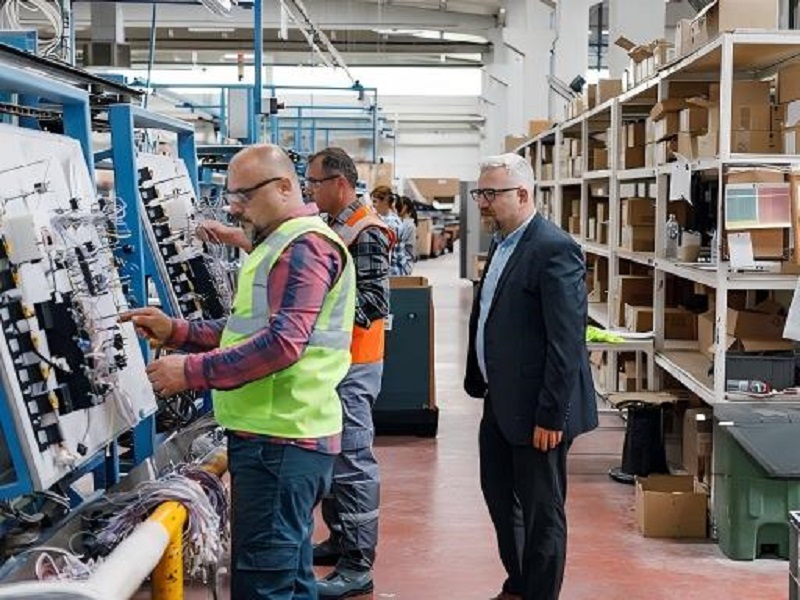
Industrial automation is no longer limited to traditional PLC and DCS control architectures. Instead, modern industrial systems are becoming data-driven, software-defined, and increasingly autonomous. This shift is driven by the need for higher productivity, improved energy efficiency, and real-time decision-making capabilities in complex manufacturing environments.
A major trend shaping the industry is the integration of AI into industrial operations. AI is now being used to analyze massive volumes of operational data generated by PLCs, sensors, SCADA systems, and industrial networks. These insights enable predictive maintenance, process optimization, and energy efficiency improvements across multiple industries including oil and gas, chemicals, power generation, and discrete manufacturing.
In 2026, Schneider Electric announced a significant expansion of its industrial AI capabilities through a $3.1 billion acquisition of an industrial data and AI software company. This move strengthens its EcoStruxure architecture and enhances its AVEVA industrial software ecosystem. The goal is to unify industrial data, AI analytics, and automation control into a single integrated platform.
This development reflects a broader industry trend: the convergence of operational technology (OT) and information technology (IT). Traditional PLC and DCS systems are now being connected directly to cloud platforms, enterprise systems, and AI engines. This integration allows manufacturers to achieve real-time visibility across entire production networks.
Another key driver of change is the rise of software-defined automation (SDA). Instead of relying solely on fixed hardware configurations, modern automation systems are increasingly controlled through flexible software layers. This allows manufacturers to modify production logic, optimize workflows, and scale operations without significant hardware changes.
Edge computing is also playing a critical role in this transformation. Industrial edge devices now process data directly at the factory level, reducing latency and enabling faster decision-making. This is particularly important in high-speed manufacturing environments where milliseconds can impact production quality and system stability.
Cybersecurity remains a top priority as industrial systems become more connected. Modern PLC and DCS architectures now incorporate zero-trust security frameworks, encrypted communication protocols, and continuous monitoring systems. These features are essential to protect critical infrastructure from increasing cyber threats targeting industrial networks.
Digital twin technology is another key innovation reshaping industrial automation. By creating virtual replicas of physical systems, engineers can simulate PLC logic, optimize DCS control strategies, and test production scenarios before deployment. This significantly reduces commissioning time and improves system reliability.
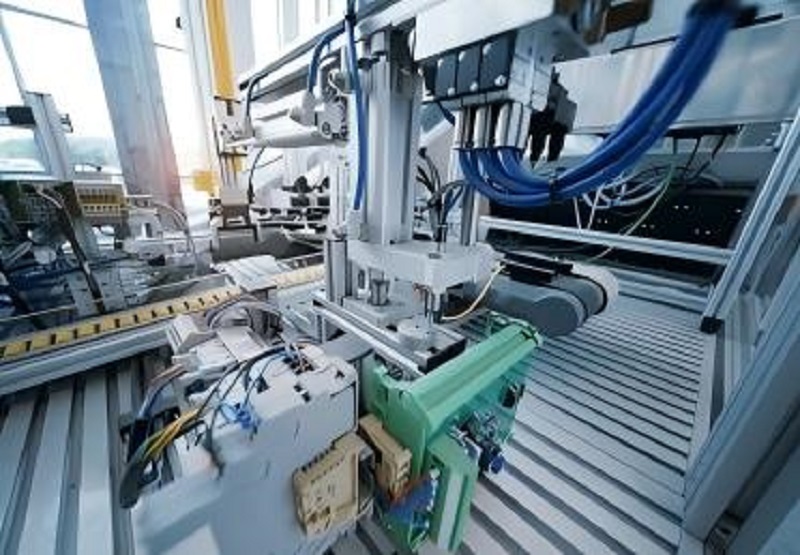
In hybrid industrial environments, PLC and DCS systems are increasingly integrated into unified architectures. PLCs handle fast discrete control tasks such as robotics and packaging, while DCS systems manage continuous process variables such as temperature, pressure, and chemical reactions. Unified platforms allow both systems to operate seamlessly in real time.
Artificial intelligence is also enabling a shift toward autonomous industrial operations. AI-driven systems can now detect anomalies, optimize production parameters, and make real-time recommendations without human intervention. This improves efficiency, reduces downtime, and lowers operational costs.
As Industry 4.0 evolves into more advanced intelligent manufacturing frameworks, industrial automation is becoming more predictive, adaptive, and self-optimizing. Companies that adopt AI-driven automation platforms are gaining significant competitive advantages in global markets.
Overall, the integration of PLC, DCS, AI, and edge computing is creating a new generation of smart factories that are more efficient, secure, and intelligent than ever before.