
NewsNEWCENTER
Featured products
Contact Us
Schneider Electric Advances Software-Defined Automation for Next-Generation Industrial Control
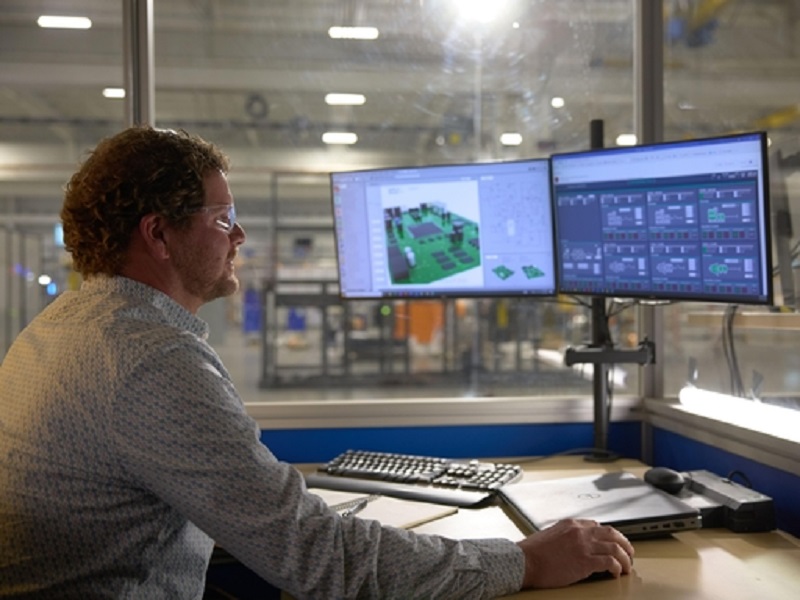
2026-10-06Schneider Electric is continuing to develop its software-defined automation strategy as manufacturers look for more flexible ways to modernize industrial control systems. The company recently highlighted EcoStruxure Foxboro Software Defined Automation (SDA) as a new approach to distributed control, combining Foxboro process automation technology with open, software-defined architecture.
Moving Beyond Hardware-Centric DCS
Traditional DCS architectures typically connect control software closely to dedicated hardware. While this approach has provided stability for decades, modernization can become difficult when plants need to replace obsolete controllers, expand capacity or integrate new digital technologies.
Schneider Electric’s Foxboro SDA takes a different approach by separating software functions from the underlying hardware. This architecture is designed to give industrial operators greater flexibility when configuring and upgrading automation systems.
For process industries, the concept is particularly relevant to plants with long operating lifecycles, where replacing an entire control infrastructure can be expensive and disruptive.
Open Architecture for Industrial Automation
A major feature of Foxboro SDA is its focus on open and interoperable automation. The architecture is based on EcoStruxure Automation Expert, allowing control functions to be implemented through a software-defined environment rather than being permanently tied to a specific hardware configuration.
This can support more flexible system architectures and provide manufacturers with additional options when expanding automation networks.
The approach also supports integration between operational technology and information technology, creating opportunities to connect control data with analytics, edge computing and industrial AI applications.
Cybersecurity and Digital Continuity
Schneider Electric is also positioning cybersecurity as an integral part of its software-defined automation strategy.
Foxboro SDA incorporates secure-by-design principles and supports IEC 62443-3-3 requirements. This is increasingly important as industrial control systems become more connected to enterprise networks, cloud platforms and remote engineering environments.
Another focus is digital continuity. Keeping engineering, operational and maintenance data connected throughout the plant lifecycle can help organizations maintain better visibility of their automation assets.
New Hardware for Software-Defined Control
Schneider Electric has also introduced hardware designed to extend the capabilities of its software-defined automation architecture.
The EcoStruxure Automation Processor 310 and EcoStruxure Foxboro Edge Communication Node are intended to provide flexible edge control and communication capabilities while maintaining the separation between hardware and software functions.
This combination creates a foundation for distributed control architectures that can adapt as plant requirements change.
Implications for Process Industries
Software-defined automation could be particularly relevant to oil and gas, chemicals, power generation, pharmaceuticals, water treatment and other process industries where automation systems may remain operational for decades.
Instead of treating modernization as a complete replacement project, manufacturers can progressively introduce new control capabilities while continuing to operate existing assets.
This approach can also make it easier to connect PLC, DCS, SCADA, edge computing and industrial analytics within a broader digital architecture.
Future of Industrial Control Systems
Schneider Electric’s latest developments demonstrate the industry’s continuing movement toward software-centric automation. As industrial facilities demand greater flexibility, cybersecurity and integration with AI technologies, the traditional hardware-bound DCS model is gradually evolving.
For automation engineers and plant operators, software-defined control provides another potential path toward modernization while maintaining the reliability required for continuous industrial operations.