
NewsNEWCENTER
Featured products



Contact Us
PLC and DCS Systems in 2026: The Shift Toward Intelligent Edge Automation in Industrial Control
2026-06-15Industrial automation in 2026 is undergoing one of the most significant transformations in decades. Programmable Logic Controllers (PLCs) and Distributed Control Systems (DCS), once designed primarily for isolated control tasks, are now evolving into intelligent, connected, and data-driven systems. This shift is being driven by the rapid adoption of edge computing, Industrial IoT (IIoT), and AI-enabled automation architectures across global manufacturing industries.
Modern factories are no longer relying solely on centralized control rooms or traditional automation hierarchies. Instead, they are transitioning toward distributed intelligence, where PLCs, DCS nodes, and industrial edge devices collaborate in real time to optimize production efficiency, reduce downtime, and improve operational resilience.

The Evolving Role of PLC in Modern Automation
Historically, PLCs were designed as deterministic controllers focused on executing predefined logic with high reliability. In 2026, however, their role has expanded significantly. PLCs are now acting as hybrid control and data processing units, bridging the gap between machine-level execution and higher-level digital systems.
Recent industrial developments show that PLCs are increasingly being used as data gateways in IIoT architectures. Instead of only controlling machines, they now collect, preprocess, and transmit real-time operational data to SCADA systems, MES platforms, and cloud analytics environments.
This evolution is enabling manufacturers to achieve:
- Real-time production visibility
- Predictive maintenance capabilities
- Adaptive process optimization
- Reduced unplanned downtime
As industrial systems become more interconnected, PLCs are no longer standalone controllers—they are becoming intelligent nodes within a larger digital ecosystem.
DCS Systems Moving Toward Distributed Intelligence
DCS platforms, widely used in process industries such as oil and gas, power generation, and chemical manufacturing, are also undergoing major upgrades in 2026.
Modern DCS architectures are shifting from centralized control models to distributed intelligence frameworks. Instead of relying entirely on a central control system, processing power and decision-making capabilities are now being embedded directly into field-level controllers and edge devices.
This allows DCS systems to:
- Maintain stable operations even during network disruptions
- Execute local control optimization in real time
- Improve process safety and reliability
- Reduce load on central control servers
The result is a more resilient and flexible automation structure that supports continuous production in complex industrial environments.
Edge Computing Becomes the Core of Industrial Automation
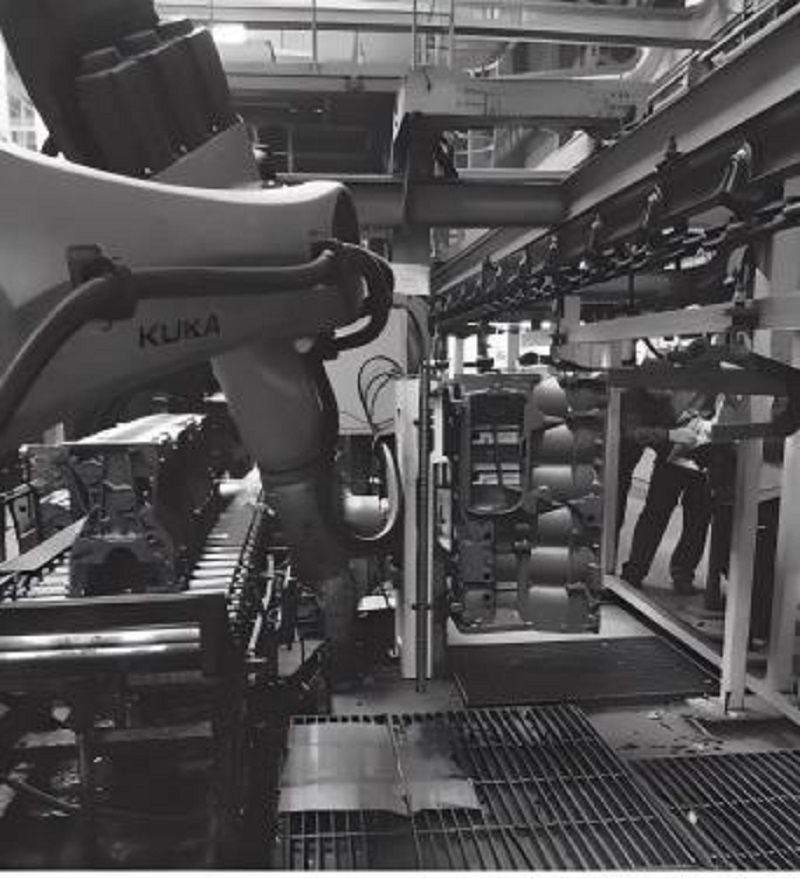
One of the most important trends shaping PLC and DCS systems in 2026 is the integration of edge computing. Industrial edge architecture allows data processing to occur directly at or near the source of generation, such as sensors, machines, and controllers.
Instead of sending all data to cloud platforms, edge-enabled PLCs and industrial controllers process critical information locally. This dramatically reduces latency and ensures faster decision-making in time-sensitive applications such as robotics, packaging lines, and high-speed assembly systems.
Key benefits of edge computing in automation include:
- Ultra-low latency control responses
- Reduced network bandwidth requirements
- Improved system reliability during connectivity failures
- Enhanced real-time analytics at machine level
Industry reports in 2026 highlight that edge-native automation systems are becoming a standard requirement for new industrial installations, especially in high-performance manufacturing sectors.
Artificial Intelligence Integration in PLC and DCS Systems
AI is also playing a growing role in industrial automation systems. In modern PLC and DCS environments, AI algorithms are being integrated to support predictive maintenance, anomaly detection, and process optimization.
Machine learning models analyze historical and real-time operational data to identify patterns that indicate potential system failures or inefficiencies. This enables maintenance teams to act before breakdowns occur, reducing production losses.
AI integration is also improving:
- Energy consumption optimization
- Quality control consistency
- Process parameter tuning
- Fault detection accuracy
As AI becomes more embedded in control systems, automation is shifting from reactive control to predictive and adaptive intelligence.
Cybersecurity Becomes a Critical Requirement
With increasing connectivity in PLC and DCS systems, cybersecurity has become a major concern in 2026. Industrial control systems are now frequently connected to IT networks, cloud platforms, and remote access systems, significantly increasing exposure to cyber threats.
Recent industry discussions highlight rising concerns about PLC vulnerabilities, especially in systems exposed to external networks. As a result, manufacturers are implementing stronger cybersecurity frameworks, including:
- Network segmentation between IT and OT systems
- Secure firmware updates for PLC devices
- Multi-layer authentication for remote access
- Real-time intrusion detection systems
- Continuous network monitoring using AI tools
Cybersecurity is no longer an optional feature—it is now a core design requirement for all modern automation systems.
Industrial Applications Driving Automation Growth
The transformation of PLC and DCS systems is impacting multiple industries globally:
- Manufacturing: Smart production lines with real-time adaptive control
- Energy: Intelligent grid control and power distribution systems
- Oil & Gas: Remote monitoring and pipeline automation
- Pharmaceuticals: High-precision process control systems
- Food & Beverage: Automated quality control and packaging systems
These industries are adopting advanced automation technologies to improve efficiency, reduce operational risks, and enhance scalability.
Future Outlook
The future of PLC and DCS systems is moving toward fully autonomous industrial environments. As edge computing, AI, and IIoT technologies continue to mature, automation systems will become increasingly self-optimizing and self-healing.
Manufacturers that adopt intelligent automation early will gain significant advantages in production efficiency, cost reduction, and global competitiveness.