
NewsNEWCENTER
Featured products

Contact Us
GE Vernova Invests $34.5 Million in Transformer Manufacturing Expansion to Support Growing Grid Infrastructure Demand
2026-11-16GE Vernova announced on November 10, 2026, a new $34.5 million investment to expand its transformer manufacturing operations in Shreveport, Louisiana, USA. The investment is intended to increase manufacturing capacity and support growing demand for critical electrical infrastructure used in power grids, industrial facilities and digital technologies.
The expansion comes at a time when electricity consumption is increasing due to data center development, industrial electrification and the modernization of aging power networks. Transformers are essential components in these systems, helping adjust voltage levels and enabling electricity to be transmitted and distributed safely and efficiently.
For industrial automation and power infrastructure markets, GE Vernova’s investment highlights the growing importance of reliable electrical equipment in supporting modern manufacturing and digital infrastructure.
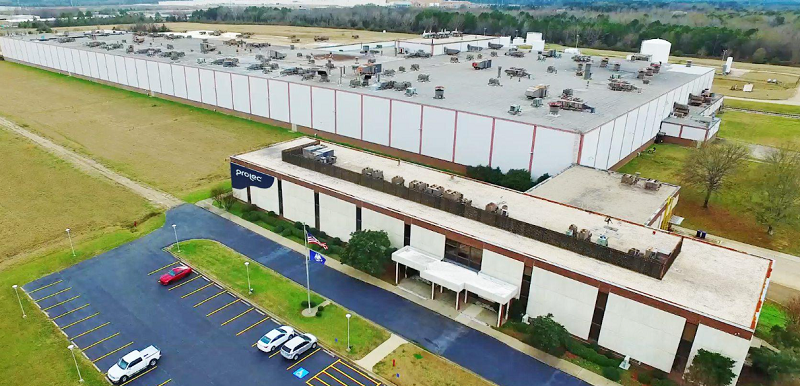
Expanding Transformer Manufacturing Capacity
GE Vernova’s Shreveport facility has more than five decades of manufacturing experience and currently employs over 630 people. The planned expansion is expected to create 175 additional direct jobs, with a further 185 indirect jobs potentially supported through the wider regional economy.
The investment is designed to strengthen the facility’s ability to manufacture transformers as demand for grid infrastructure continues to rise.
Transformers are used throughout electrical power systems, from generation facilities and transmission networks to industrial substations and distribution systems. Their performance and availability directly influence the reliability of electricity supply.
Increasing manufacturing capacity is therefore important not only for utility companies but also for industrial customers planning new facilities, expanding production capacity or upgrading existing electrical infrastructure.
Why Transformers Are Becoming More Important
The global electricity system is undergoing significant changes. Data centers, artificial intelligence infrastructure, electric transportation and industrial electrification are creating additional demand for dependable power.
At the same time, many countries are investing in grid modernization to accommodate renewable energy, improve transmission capacity and strengthen energy security.
These developments increase demand for several categories of electrical equipment, including:
-
Power transformers for transmission and high-voltage substations.
-
Distribution transformers for delivering electricity to industrial and commercial users.
-
Switchgear for electrical protection and switching operations.
-
Voltage regulation and monitoring equipment.
-
Grid connection equipment for renewable energy and large industrial loads.
Transformers are particularly important because they connect different voltage levels within the electrical network. Without suitable transformer capacity, even a power system with sufficient generation resources may struggle to deliver electricity where it is needed.
GE Vernova’s manufacturing expansion addresses part of this broader equipment supply challenge.
Supporting Industrial Electrification and Digital Infrastructure
Industrial facilities increasingly depend on stable electricity supplies to operate production machinery, automation systems and critical process equipment.
Modern manufacturing plants use large numbers of electric motors, variable frequency drives, industrial robots, PLC systems and distributed control platforms. These technologies require dependable electrical infrastructure to maintain production stability.
Data centers have similarly demanding requirements. Their electrical systems must support continuous operation, high-density computing equipment and increasingly complex cooling infrastructure.
As electricity demand grows, reliable transformers and substation equipment become essential parts of the infrastructure supporting these applications.
For industrial customers, the availability of suitable electrical equipment can influence project schedules, commissioning plans and long-term maintenance strategies.
The Relationship Between Power Infrastructure and Industrial Automation
Although transformers are not control-system components in the same way as PLCs or DCS controllers, they play an essential role in the overall industrial automation environment.
A typical industrial electrical system may include incoming power transformers, medium-voltage switchgear, distribution panels, motor control centers, variable frequency drives and control power supplies.
These components work together to deliver electrical energy to production equipment and automation systems.
A well-designed electrical infrastructure helps reduce the risk of power-related disruptions and supports stable operation of industrial equipment.
For engineering teams, transformer selection and installation should consider rated capacity, voltage levels, cooling arrangements, insulation requirements, protection coordination and the expected operating environment.
Monitoring and maintenance are also important. Regular inspections and appropriate condition assessment can help identify developing problems before they affect plant operations.
Implications for the Industrial Automation Supply Chain
GE Vernova’s investment reflects a wider trend in the industrial equipment market: the expansion of manufacturing capacity to meet growing demand for electrification and grid modernization.
For industrial automation distributors, system integrators and equipment procurement teams, the development is relevant because power infrastructure and automation systems are closely connected.
New industrial facilities often require coordinated investment in electrical distribution, motor control, instrumentation and process automation. Delays in the supply of major electrical equipment can affect the overall project schedule.
Increasing transformer production capacity may contribute to a stronger supply chain over time, although the actual effect on delivery schedules will depend on product specifications, order volumes and manufacturing lead times.
Industrial buyers should continue evaluating equipment according to technical requirements, supplier capability and lifecycle support rather than relying on general market expansion alone.
What Industrial Buyers Should Consider
When selecting transformers for industrial applications, engineering and procurement teams should evaluate several factors:
-
Electrical ratings: Confirm primary and secondary voltage, rated power and frequency requirements.
-
Load characteristics: Consider continuous loads, motor starting currents and potential future capacity increases.
-
Operating environment: Evaluate ambient temperature, installation location, ventilation and cooling requirements.
-
Protection coordination: Ensure that transformer protection is properly coordinated with upstream and downstream electrical equipment.
-
Monitoring and maintenance: Establish inspection procedures and condition-monitoring requirements.
-
Project compatibility: Verify compliance with applicable electrical standards and integration requirements.
These considerations help ensure that transformer installations support the reliability and long-term performance of industrial electrical systems.
Conclusion
GE Vernova’s $34.5 million investment in its Shreveport transformer manufacturing facility represents a significant expansion of its electrical infrastructure manufacturing capabilities. The project is expected to increase production capacity and create additional employment while supporting growing demand for transformers.
For industrial automation professionals, the announcement highlights an important reality: reliable automation depends not only on advanced PLCs, DCS platforms and intelligent control software, but also on dependable electrical infrastructure.
As industrial electrification, AI data centers and grid modernization continue to expand, transformers and other power distribution equipment will remain essential to the operation of modern industrial facilities. GE Vernova’s investment reflects the increasing importance of manufacturing capacity in supporting this changing energy landscape.