

ProductPRODUCT
Featured products
Contact Us
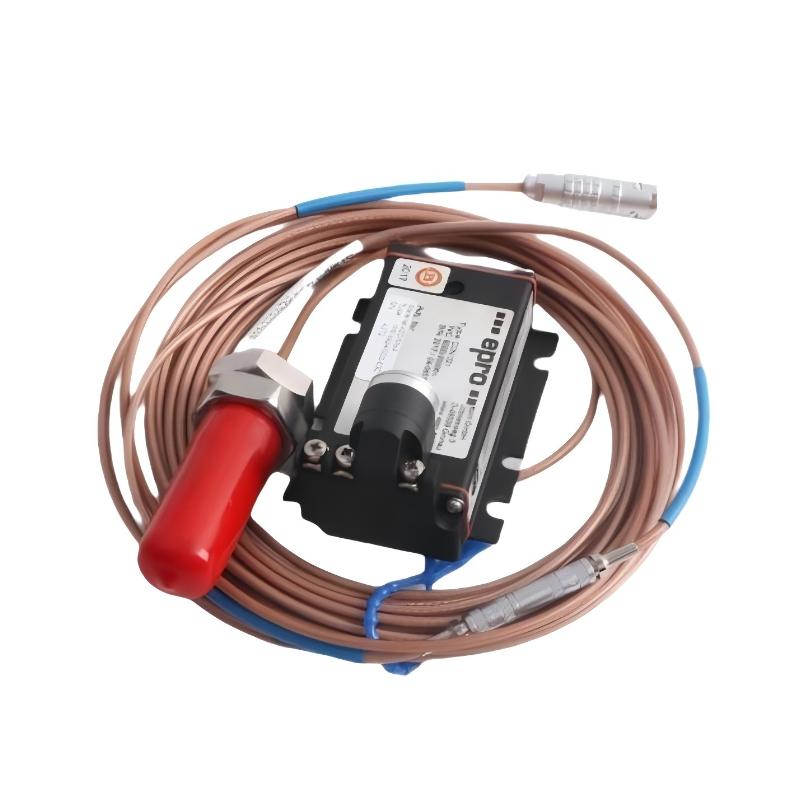
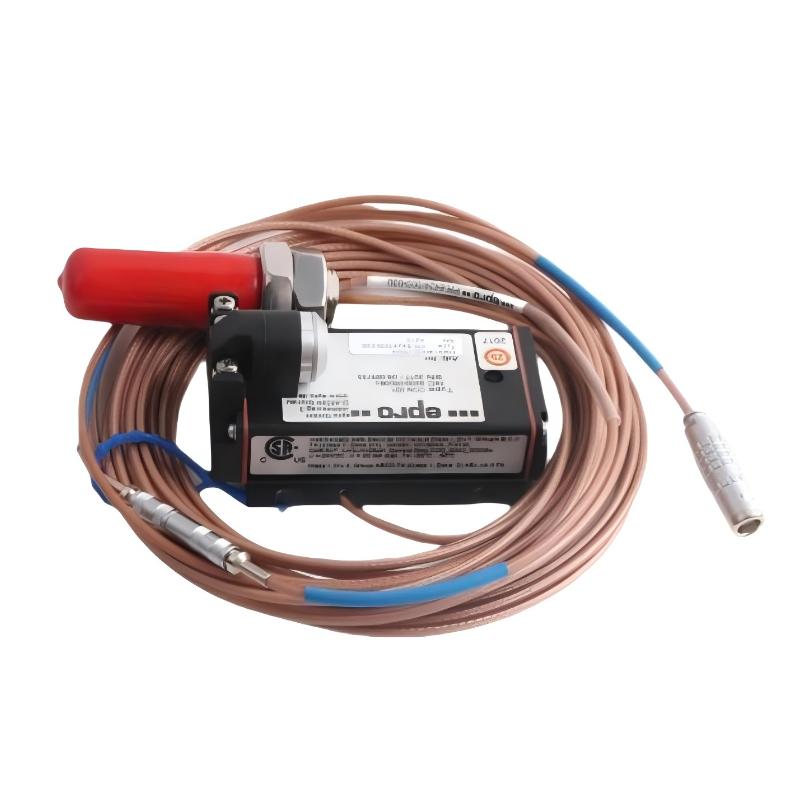
- Epro
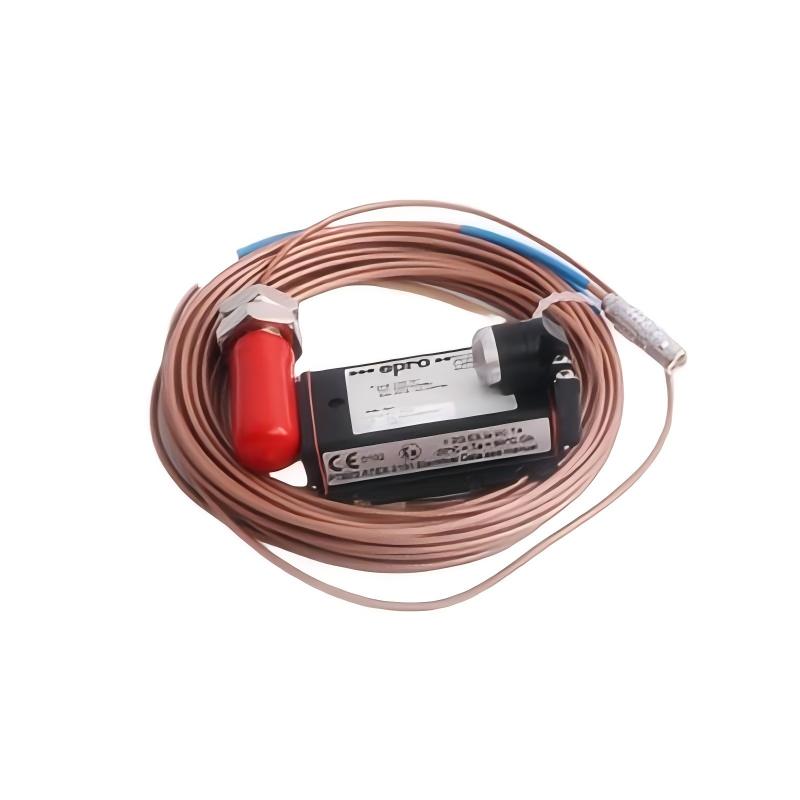
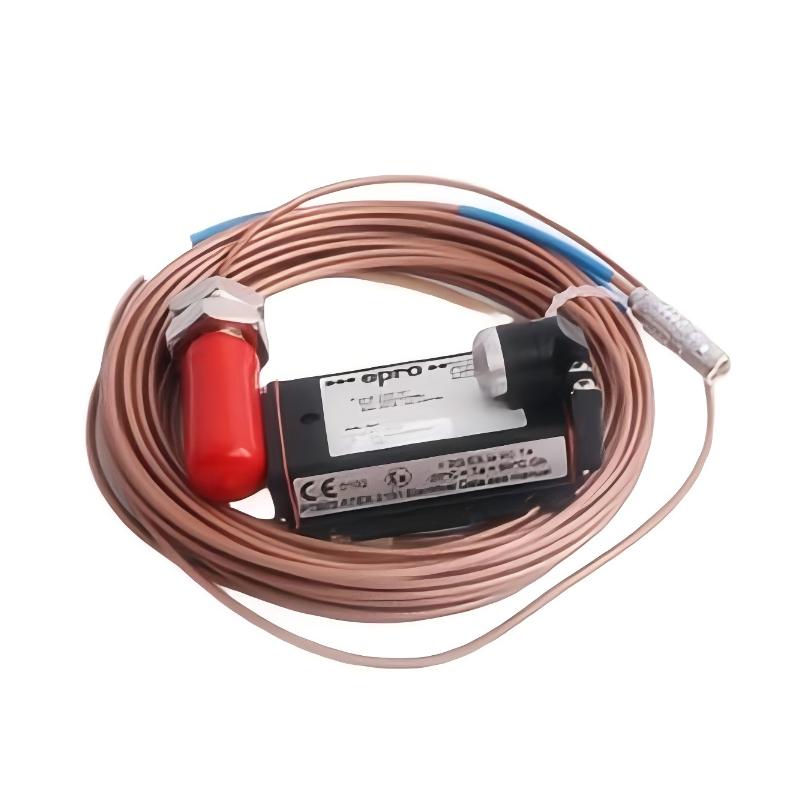
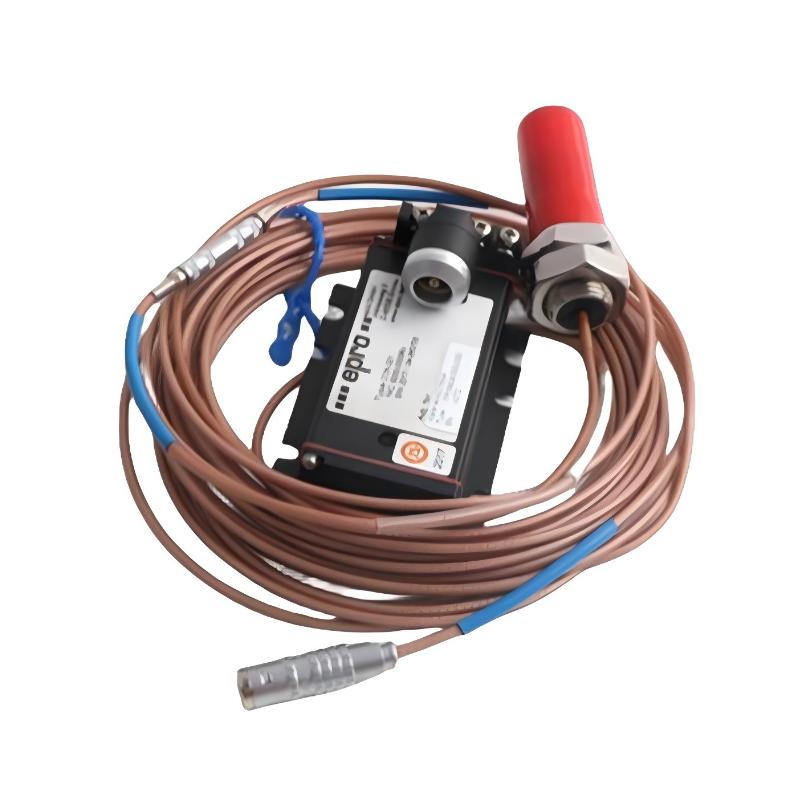
- PR6424/119-100
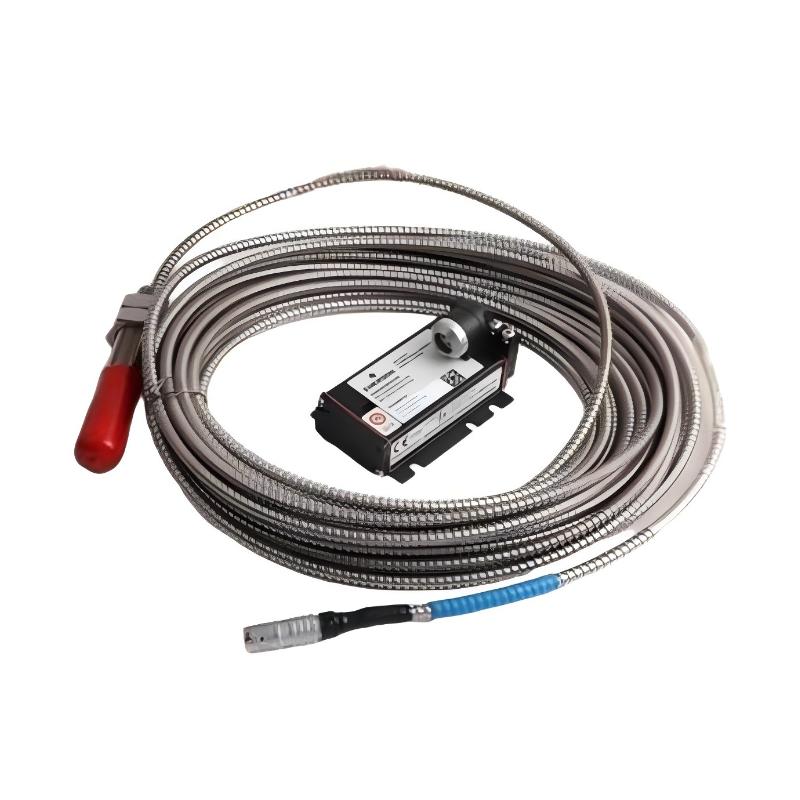
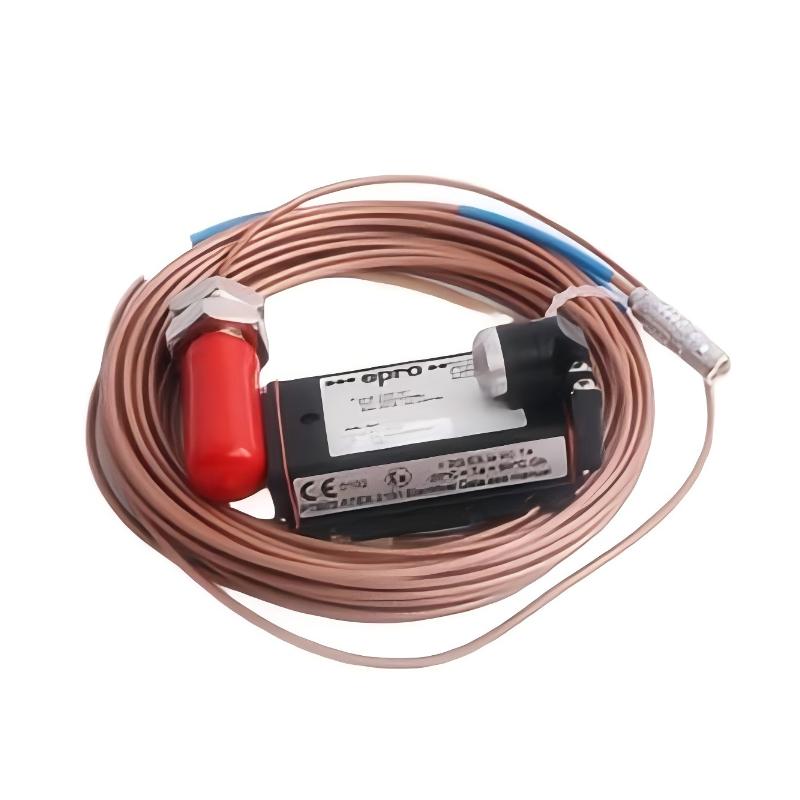
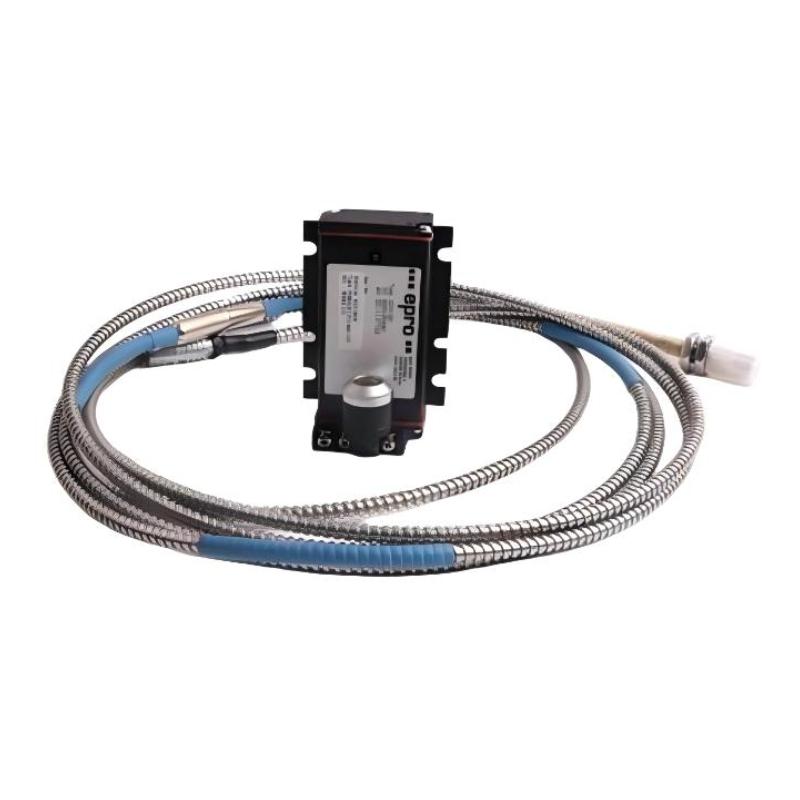
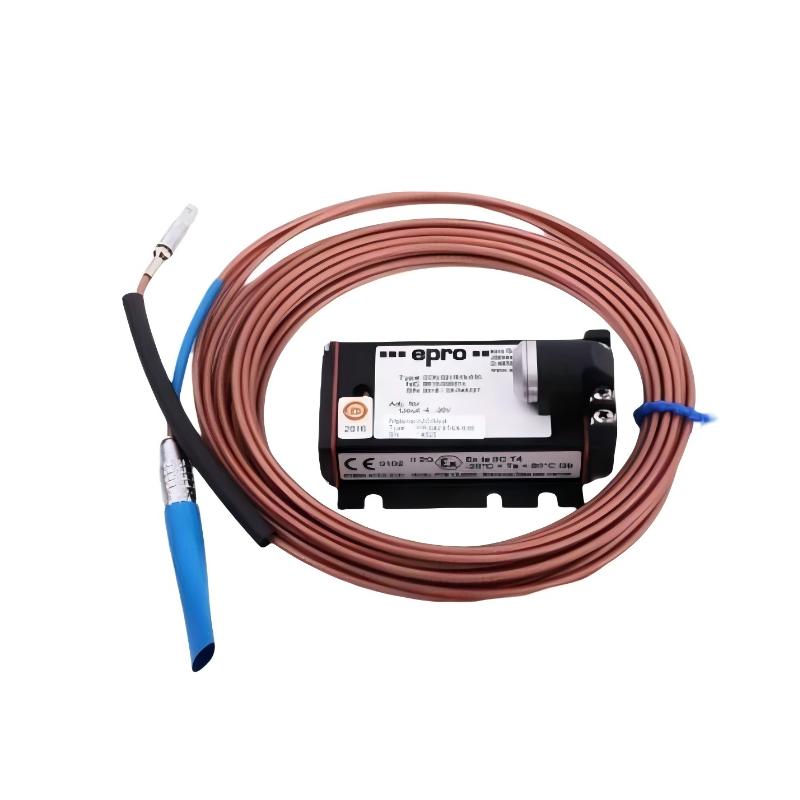
- 16 mm Eddy Current Sensor
- Germany
- 16 mm
- 0.2 kg
- Xiamen, China
- New & In Stock
- T/T, PayPal, Western Union
- 1 Year
- 1-3 Working Days
- DHL, UPS, TNT, FedEx and EMS.
- 24-Hour Service
- COO
- 5
Our advantage

Global Logistics
We have a 10-year logistics and express cooperation agreement, so our products can be shipped to any place in the world.

Brand new and original
Our products are imported in bulk from the place of origin. Because of the cooperative relationship, our products are all original and 100% new.

24-hour service
We provide 7*24 hours service to our customers. We will be there whenever you need us.

Price advantage
All our products are priced very favorably because we have our own warehouse and supply.
| Company Information | |||
| [email protected] | |||
| Mobile | +8615980777398 | ||
| +8615980777398 | |||
| 15980777398 |
Product Overview
The Epro PR6424/119-100 16 mm Eddy Current Sensor is a non-contact displacement sensor designed for monitoring the condition and operating behavior of rotating machinery. It belongs to the PR6424 sensor family, which is used in machinery protection and condition-monitoring applications involving turbines, compressors, pumps, fans, and other large rotating equipment.
The sensor operates using the eddy current measurement principle. Rather than making physical contact with a rotating shaft, it detects changes in the distance between its sensing tip and a conductive target. This allows it to measure shaft movement and vibration without introducing mechanical contact or friction at the measurement point.
In industrial machinery, shaft displacement and vibration measurements provide useful information about operating stability. Changes in shaft position, vibration amplitude, or mechanical clearance may indicate bearing wear, rotor imbalance, misalignment, or other developing mechanical conditions. A properly installed eddy current sensor can provide measurement signals to a compatible monitoring system for continuous evaluation.
The PR6424 family uses a 16 mm sensing head and is designed for demanding rotating-machinery applications. Its published series specifications include a sensitivity of 4 V/mm, linearity within ±1.5%, and a static measurement range of ±2.0 mm. The dynamic measurement range is specified as 0 to 1,000 μm.
The PR6424/119-100 model is identified as a 16 mm eddy current sensor. Its supplied product information specifies a sensor head diameter of 16 mm and a weight of 0.2 kg. Because cable construction, connector type, cable length, and mounting details can vary between PR6424 variants, the complete model suffix should be checked before ordering a replacement.
Technical Specifications
| Parameter | Specification |
|---|---|
| Brand | Epro |
| Product Family | PR6424 |
| Model | PR6424/119-100 |
| Product Type | Eddy Current Sensor |
| Sensor Technology | Non-contact eddy current measurement |
| Sensor Head Diameter | 16 mm |
| Measurement Target | Conductive / ferromagnetic metal surface |
| Typical Target Material | Ferromagnetic steel |
| Series Sensitivity | 4 V/mm |
| Series Linearity | ±1.5% |
| Static Measurement Range | ±2.0 mm |
| Dynamic Measurement Range | 0–1,000 μm |
| Nominal Center Air Gap | Approximately 2.7 mm |
| Long-Term Drift | Less than 0.3% |
| Recommended Shaft Diameter | ≥80 mm |
| Probe Sleeve Material | Stainless steel |
| Cable Material | PTFE, depending on configuration |
| Series Operating Temperature | -35°C to +180°C, subject to variant documentation |
| Sensor Head Pressure Resistance | 10,000 hPa |
| Series Shock and Vibration Reference | 5 g at 60 Hz and 25°C |
| Sensor Head Diameter Provided | 16 mm |
| Weight Provided | 0.2 kg |
| Typical Applications | Turbines, compressors, pumps, fans, and rotating machinery |
Note: Electrical and environmental performance values above are PR6424 family specifications, not independently confirmed variant-specific values for every PR6424/119-100 configuration. Confirm the exact cable, connector, mounting thread, calibration, and temperature limits against the product label and applicable documentation.
Function and Working Principle
The PR6424/119-100 uses electromagnetic eddy current technology to measure the distance between the sensor tip and a conductive target. In rotating machinery, the target is commonly a ferromagnetic steel shaft.
The sensor is installed at a controlled distance from the shaft surface. As the shaft moves, the gap between the sensor and the target changes. The sensor detects these changes and produces a corresponding electrical response.
When used with a compatible signal converter, the measurement response can be converted into a voltage signal suitable for monitoring equipment.
1. Electromagnetic Field Generation
An excitation circuit in the sensor system generates a high-frequency electromagnetic field around the probe tip. This field extends toward the nearby conductive target.
When a suitable metal surface enters the sensing field, circulating electrical currents known as eddy currents are induced in the target.
2. Impedance Variation
The induced eddy currents affect the electromagnetic characteristics of the probe. Changes in the distance between the probe and target change the strength of the interaction.
The sensor system detects this variation and uses it to determine the relative gap between the sensing tip and the metal surface.
3. Displacement Measurement
When the shaft moves toward or away from the probe, the measured gap changes. Within the calibrated linear operating range, the resulting signal changes in proportion to the displacement.
This makes the sensor suitable for measuring shaft vibration and static position. The measurement range and accuracy depend on correct installation, the target material, the matching converter, and the specified calibration.
4. Signal Conversion
The probe normally operates as part of a measurement chain rather than as an isolated measurement instrument. A compatible signal converter supplies the required excitation and converts the probe response into a usable output.
The resulting signal can be connected to a machinery protection or condition-monitoring system. The complete probe and converter combination must be compatible in terms of electrical characteristics, calibration, and cable configuration.
Role in Industrial Machinery Monitoring Systems
The PR6424/119-100 can serve as a sensing element in a machinery condition-monitoring arrangement. It provides information about the movement and position of rotating shafts, allowing monitoring equipment to evaluate mechanical behavior during operation.
Shaft Vibration Monitoring
Rotating shafts can experience vibration caused by imbalance, misalignment, bearing conditions, mechanical looseness, and other operating factors.
An eddy current sensor positioned near the shaft can measure relative shaft movement. When installed at suitable measurement locations, the resulting signals can help engineers identify changes in vibration behavior.
Shaft Position Monitoring
Shaft position measurements are important in large rotating machines where operating clearances and axial movement must remain within acceptable limits.
The sensor can provide displacement information that helps monitoring equipment evaluate shaft position relative to a fixed reference point.
Rotor Condition Evaluation
Changes in rotor movement may provide useful information about the mechanical condition of a turbine, compressor, pump, or generator.
The PR6424 series is designed for non-contact measurement of shaft displacement, position, eccentricity, and related dynamic characteristics.
Integration with Machinery Protection Systems
The sensor can be incorporated into a complete monitoring chain consisting of a probe, compatible extension cable or connection arrangement, signal converter, and machinery monitoring equipment.
The monitoring system processes the measurement signal and can provide alarms or protective responses when configured operating limits are exceeded.
Industrial Applications
The Epro PR6424 16 mm sensor family is intended for critical rotating-machinery applications. Its non-contact measurement method is useful where continuous monitoring of shaft movement is required.
1. Steam Turbines
Steam turbines operate at high rotational speeds and require continuous monitoring of rotor behavior. Shaft displacement and vibration measurements can help identify abnormal mechanical conditions.
Eddy current sensors installed at appropriate measurement points can provide information about radial shaft movement and axial position.
2. Gas Turbines
Gas turbines operate under demanding thermal and mechanical conditions. Monitoring shaft vibration and position is important for evaluating operating stability.
A compatible PR6424 sensor installation can provide non-contact displacement measurements for the machinery protection system.
3. Hydro Turbines
Hydro turbines contain large rotating assemblies whose mechanical behavior must be monitored during operation. Shaft movement, eccentricity, and vibration measurements can help maintenance personnel evaluate rotor stability.
The PR6424 series is suitable for applications involving large shaft diameters when the installation and target conditions meet its specifications.
4. Industrial Compressors
Centrifugal and other large compressors rely on stable rotor operation. Changes in shaft vibration or position can be associated with mechanical wear, imbalance, or operating disturbances.
A correctly installed eddy current sensor can provide continuous shaft displacement information for condition monitoring.
5. Industrial Pumps
Large process pumps may operate continuously in power generation, chemical processing, water treatment, and manufacturing facilities.
Shaft vibration and displacement measurements can help identify developing mechanical problems and support planned maintenance activities.
6. Industrial Fans
Large fans and ventilation systems may experience vibration due to imbalance, bearing wear, or mechanical misalignment. Non-contact shaft monitoring can provide useful information about rotating-component behavior.
Installation and System Integration
Correct installation is essential for accurate measurement. The sensor must be positioned appropriately, connected to a compatible signal converter, and calibrated for the actual target material and measurement geometry.
1. Confirm the Complete Model Number
Before installation, verify the full PR6424/119-100 designation. The PR6424 family includes different cable and connection configurations.
Check the sensor label and supplied documentation for:
- Mounting thread and mechanical dimensions.
- Cable length and cable construction.
- Connector type and pin configuration.
- Whether an extension cable or adapter is required.
- Compatibility with the selected signal converter.
Do not assume that two probes with the same 16 mm head diameter have identical cable or connector arrangements.
2. Select the Correct Mounting Position
Install the sensor so that its sensing tip faces the intended measurement surface. The probe must be securely mounted and positioned to maintain the required measurement gap.
The surrounding area should provide the clearance required by the sensor design. Nearby metal objects can affect the electromagnetic field and should be considered during installation.
3. Set the Initial Air Gap
The PR6424 series specifies a nominal center air gap of approximately 2.7 mm. The actual installation gap must be established according to the applicable calibration and system instructions.
Incorrect initial positioning may cause the sensor to operate outside its linear measurement range. This can affect measurement accuracy and the reliability of vibration readings.
4. Verify the Target Material
Eddy current measurement depends on the electrical and magnetic characteristics of the target. The PR6424 series uses ferromagnetic steel as its standard target reference.
If the shaft material differs from the specified reference material, the measurement characteristics may change. Confirm target-material compatibility before commissioning.
5. Route and Protect the Cable
The sensor cable should be routed away from high-power conductors and potential sources of mechanical damage. Avoid sharp bends, excessive tension, and unnecessary cable movement.
Cable bending radius and environmental limits depend on the exact cable construction. Follow the documentation supplied with the specific sensor variant.
6. Connect a Compatible Signal Converter
The probe must be paired with a compatible signal converter or driver designed for the PR6424 measurement system.
The converter provides the required excitation and converts the sensor response into a signal that can be interpreted by the monitoring equipment. Verify the complete probe, cable, and converter combination before connecting the system.
7. Calibrate and Test the Measurement Chain
After installation, check the initial gap, cable connections, converter configuration, and output signal. Confirm that the measurement responds correctly to controlled changes in the sensor-to-target distance.
Record the installation gap and calibration information. These values provide a useful reference for future inspection and troubleshooting.
Compatible System Components
The PR6424/119-100 should be considered part of a complete eddy current measurement system. Compatibility must be confirmed using the exact probe and converter documentation.
| Component | Function | Compatibility Considerations |
|---|---|---|
| PR6424 signal converter | Excites the probe and converts its response into a measurement signal | Confirm electrical and calibration compatibility |
| Extension cable | Connects the probe to the signal converter | Verify cable type, length, and connector arrangement |
| Connector or adapter | Provides the required electrical connection | Match the exact probe configuration |
| Machinery protection monitor | Processes vibration and displacement signals | Confirm input characteristics and measurement range |
| PLC or DCS | Receives process or monitoring information through a suitable interface | Integration depends on the monitoring system’s available outputs |
| Shaft or rotor target | Provides the conductive surface for measurement | Verify material, diameter, and surface condition |
| Probe mounting bracket | Holds the sensor at the required measurement position | Ensure mechanical stability and correct alignment |
| Monitoring software | Displays and evaluates measurement trends | Configure suitable limits and alarm logic |
The table describes typical elements of an eddy current measurement installation. It does not indicate that these components are included with the sensor.
Alternative Models and Replacement Considerations
The PR6424 family contains different model suffixes and cable configurations. Replacement selection should be based on the complete part number and measurement-system requirements rather than the 16 mm sensor diameter alone.
| Alternative or Related Product | Considerations |
|---|---|
| Other Epro PR6424 16 mm sensors | Confirm mounting thread, cable length, connector, and calibration |
| PR6424 sensors with different cable suffixes | May have different connection arrangements or physical configurations |
| Compatible PR6424 signal converter | Must match the probe’s electrical characteristics and calibration |
| Complete PR6424 probe and converter assembly | Useful when replacing a complete measurement channel |
| Alternative machinery-monitoring probe system | Requires a full review of measurement range, sensitivity, mounting, and monitoring-system compatibility |
Before replacing the PR6424/119-100, verify:
- Complete probe model number.
- Sensor head diameter and mechanical dimensions.
- Mounting thread and installation geometry.
- Cable type, length, and connector.
- Compatible signal converter.
- Measurement sensitivity and calibration.
- Static and dynamic measurement ranges.
- Target material and shaft diameter.
- Temperature and environmental requirements.
- Monitoring-system input compatibility.
A probe with the same nominal diameter may not be a direct replacement if its electrical characteristics or cable arrangement differ.
Key Advantages
Non-Contact Measurement
The sensor measures shaft movement without physical contact with the rotating surface. This avoids introducing mechanical friction at the sensing point.
16 mm Sensing Head
The 16 mm probe head is designed for applications requiring shaft displacement and vibration measurement on large rotating machinery.
High-Resolution Displacement Monitoring
The PR6424 series provides a published sensitivity of 4 V/mm and linearity of ±1.5%, supporting detailed measurement of shaft movement within its calibrated range.
Static and Dynamic Measurement
The series supports static displacement measurement and dynamic vibration measurement, allowing the monitoring system to evaluate both shaft position and movement.
Industrial Machinery Applications
The PR6424 family is used in applications involving turbines, compressors, pumps, fans, and other rotating equipment.
Continuous Condition Monitoring
When integrated with compatible monitoring equipment, the sensor can provide measurement information for machinery condition evaluation and maintenance planning.
Compact Probe Design
The 16 mm sensor head supports installation in suitable machinery locations where non-contact shaft measurement is required.
Technical FAQs
1. What is the Epro PR6424/119-100?
The PR6424/119-100 is a 16 mm eddy current sensor designed for non-contact measurement applications involving rotating machinery. It belongs to the Epro PR6424 sensor family.
2. What is the diameter of the sensor head?
The supplied product specification identifies a sensor head diameter of 16 mm.
3. What is the working principle of the PR6424 sensor?
It uses electromagnetic eddy current technology. The sensor detects changes in the gap between its sensing tip and a conductive metal target, allowing the system to measure shaft displacement and vibration.
4. What is the sensitivity of the PR6424 series?
The published PR6424 family sensitivity is 4 V/mm, equivalent to approximately 101.6 mV/mil. The exact installed measurement performance depends on the matching converter and calibration.
5. What is the static measurement range?
The PR6424 series specifies a static measurement range of ±2.0 mm. The sensor must be positioned within its calibrated linear operating range.
6. Can the sensor measure shaft vibration?
Yes. The PR6424 series is designed for dynamic shaft displacement and vibration measurement in rotating machinery.
7. What machinery can use this sensor?
Typical applications include steam turbines, gas turbines, hydro turbines, compressors, pumps, and fans.
8. Does the sensor need a signal converter?
Yes. The probe is normally used with a compatible signal converter or driver that provides excitation and converts the probe response into a usable measurement signal.
9. Can the PR6424/119-100 replace another PR6424 model?
Not automatically. The mounting thread, cable length, connector, and electrical configuration must be checked. A matching 16 mm sensing head alone does not establish full compatibility.
10. What is the weight of the PR6424/119-100?
The supplied product information lists the weight as 0.2 kg. Confirm whether the figure includes the complete cable and connector assembly when calculating shipping weight.
Procurement and Maintenance Recommendations
When purchasing the Epro PR6424/119-100, verify the full model designation and inspect the sensor’s physical condition. The sensing tip, threaded sleeve, cable, connector, and identification label should be checked carefully.
For replacement projects, compare the original probe with the proposed unit. Pay particular attention to the cable length, connector type, mounting thread, and compatible signal converter. These details can determine whether the sensor can be installed without modifying the existing measurement system.
During maintenance, inspect the cable for cuts, crushing, excessive bending, or damage to the connector. Check that the sensor remains securely mounted and that the measurement gap has not changed due to mechanical movement or maintenance work.
Where possible, record baseline measurements after commissioning. Trending shaft displacement and vibration data can help maintenance personnel identify changes in machinery behavior over time.
For critical rotating equipment, replacement work should be performed by personnel familiar with the machinery protection system and the manufacturer’s installation procedures. Correct calibration and signal-chain verification are essential before returning the monitoring channel to service.
Conclusion
The Epro PR6424/119-100 16 mm Eddy Current Sensor is designed for non-contact shaft displacement and vibration measurement in industrial rotating machinery. As part of the PR6424 family, it supports applications involving turbines, compressors, pumps, fans, and other critical equipment.
Its 16 mm sensing head and the PR6424 family’s published measurement characteristics make it suitable for machinery monitoring installations where accurate shaft movement information is required. For procurement and replacement, confirming the complete model suffix, cable configuration, connector, and signal converter compatibility is essential to maintaining reliable measurement performance.