

ProductPRODUCT
Featured products
Contact Us
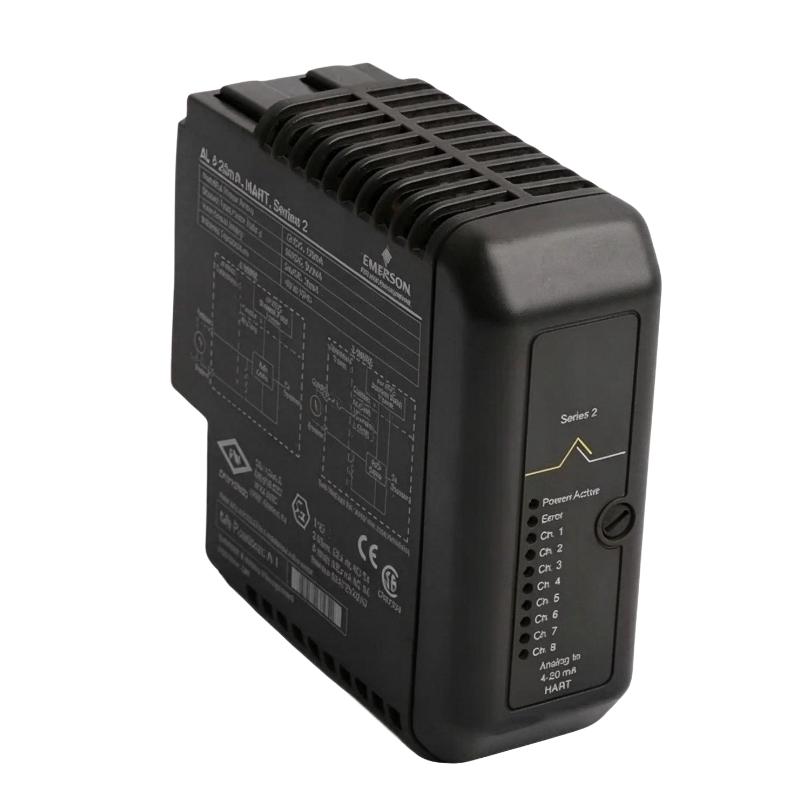
- Emerson
- VE4013S2B1
- Analog Output Module
- USA
- 107 x 41 x 105 mm
- 0.281 kg
- Xiamen, China
- New & In Stock
- T/T, PayPal, Western Union
- 1 Year
- 1-3 Working Days
- DHL, UPS, TNT, FedEx and EMS.
- 24-Hour Service
- COO
- 5
Our advantage

Global Logistics
We have a 10-year logistics and express cooperation agreement, so our products can be shipped to any place in the world.

Brand new and original
Our products are imported in bulk from the place of origin. Because of the cooperative relationship, our products are all original and 100% new.

24-hour service
We provide 7*24 hours service to our customers. We will be there whenever you need us.

Price advantage
All our products are priced very favorably because we have our own warehouse and supply.
| Company Information | |||
| [email protected] | |||
| Mobile | +8615980777398 | ||
| +8615980777398 | |||
| 15980777398 |
Product Overview
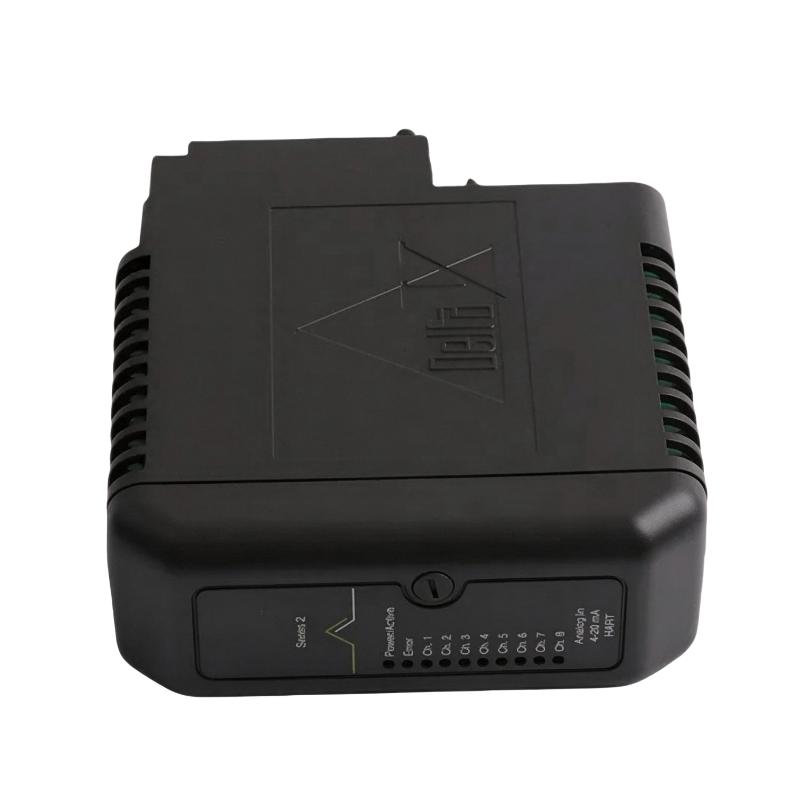
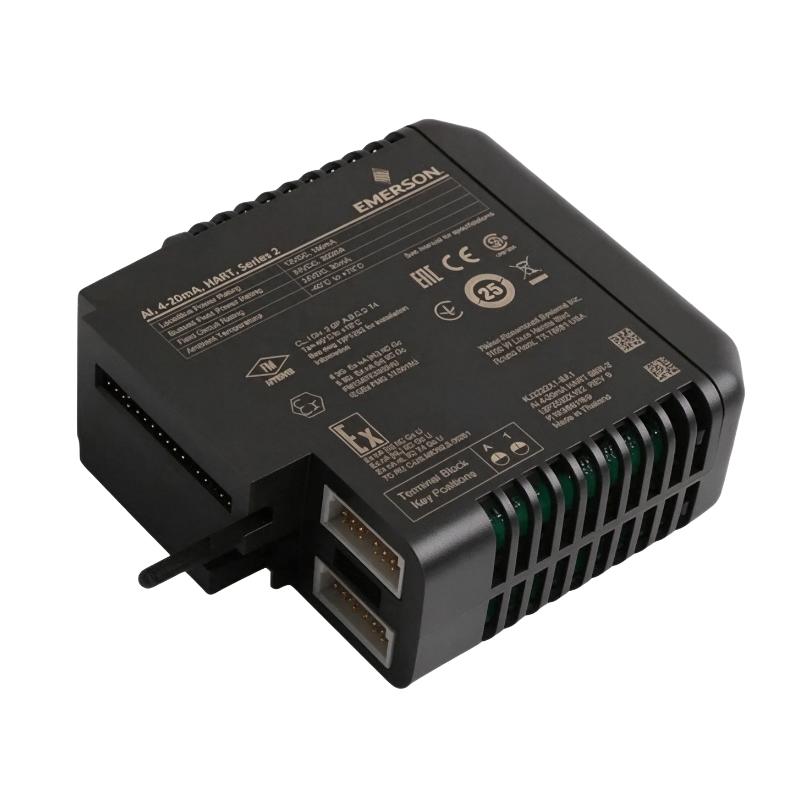
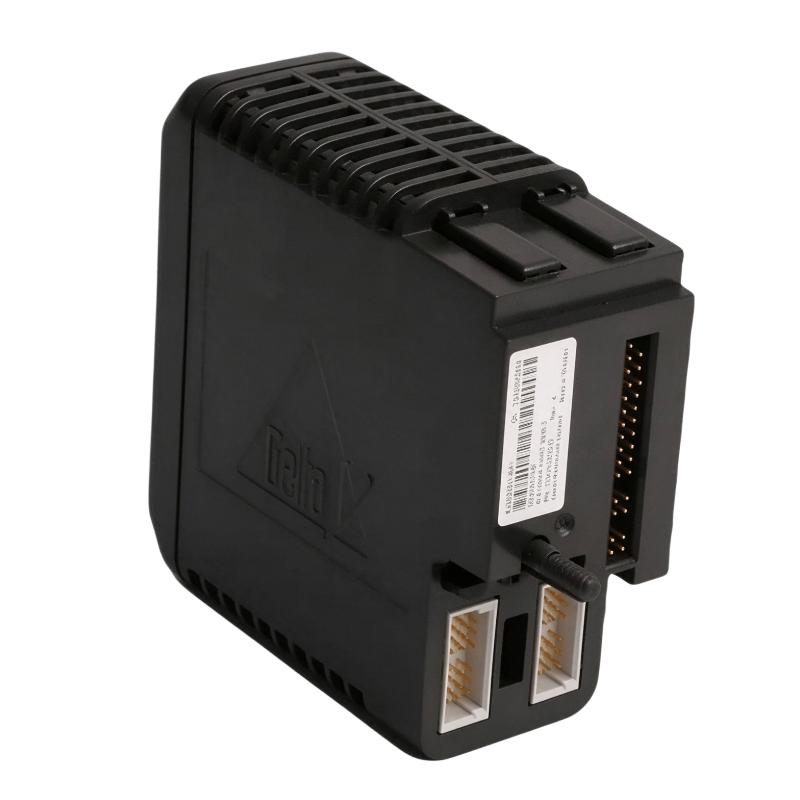
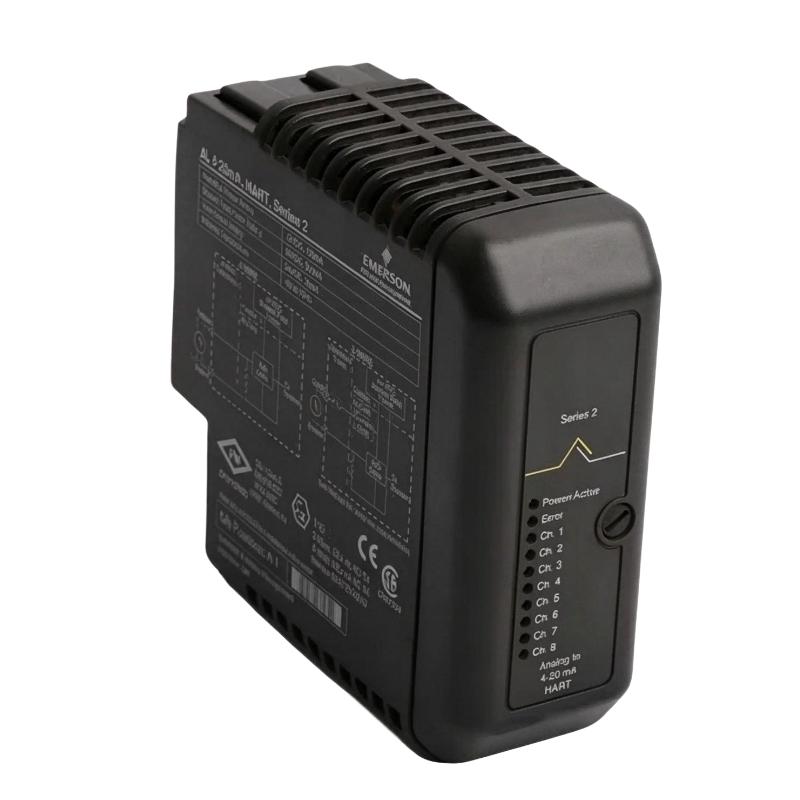
The Emerson VE4013S2B1 Analog Output Module is an 8-channel intrinsically safe analog output component designed for the DeltaV M-series distributed control system (DCS). It provides 4–20 mA output signals with HART communication capability, allowing a DeltaV controller to transmit process control commands to compatible field devices.
In industrial process automation, analog output modules form an important link between the control system and field equipment. While analog input modules collect measurements from instruments such as pressure transmitters, temperature sensors, and flow meters, analog output modules transmit control signals to devices that regulate the process. Typical examples include control valves, positioners, and other compatible actuators.
The VE4013S2B1 is designed for applications that require multiple analog control loops and intrinsically safe field connections. Its eight output channels allow a single module package to serve several control points within a process installation. The 4–20 mA signal range is widely used in industrial instrumentation because it supports reliable analog transmission and provides a standardized interface for process-control equipment.
HART communication adds digital information to the analog signal, allowing compatible instruments to exchange additional configuration and diagnostic information. This can support instrument commissioning, maintenance, and troubleshooting without replacing the basic analog control signal.
The VE4013S2B1 is associated with Emerson’s DeltaV M-series intrinsically safe I/O architecture. It is supplied in the configuration identified by Emerson as an 8-channel, 4–20 mA HART analog output package with an I/O termination block. It should be selected together with the appropriate M-series carrier, power arrangement, field wiring, and system configuration.
An important compatibility consideration is that M-series I/O cards are not compatible with DeltaV S-series controllers and carriers. Before purchasing a replacement or adding channels to an existing system, engineers should verify the installed I/O generation and the complete module identification.
Technical Specifications
| Parameter | Specification |
|---|---|
| Brand | Emerson |
| Manufacturer | Emerson |
| Model | VE4013S2B1 |
| Product Type | Analog Output Module |
| System Family | DeltaV M-series |
| I/O Category | Intrinsically Safe I/O |
| Signal Direction | Analog Output |
| Number of Channels | 8 |
| Output Signal | 4–20 mA |
| Digital Communication | HART |
| Configuration | I/O Terminal Block |
| Application | Process control and field-device signal output |
| System Compatibility | DeltaV M-series |
| S-series Compatibility | Not compatible with S-series controllers and carriers |
| Dimensions Provided | 107 × 41 × 105 mm |
| Weight Provided | 0.281 kg |
Note: Dimensions and weight are the supplied listing values. Confirm the exact assembled package, terminal-block configuration, and physical dimensions before ordering or designing an installation.
Function and Working Principle
The VE4013S2B1 converts digital control information from the DeltaV system into standardized analog output signals. These signals are delivered to compatible field devices to regulate process variables such as flow, pressure, temperature, and liquid level.
1. Digital-to-Analog Signal Conversion
The DeltaV controller calculates the required output according to the configured control strategy. The analog output package receives the corresponding command and produces a 4–20 mA signal for the selected field channel.
For example, a controller may determine that a control valve should open further to increase liquid flow. The analog output channel transmits the corresponding current signal to the valve positioner, which adjusts the valve position.
The relationship between the controller’s output value and the physical process response depends on the instrument configuration, scaling, valve characteristics, and control-loop settings.
2. Eight-Channel Output Capability
The VE4013S2B1 provides eight analog output channels. Each channel can be assigned to an individual control function within the DeltaV configuration.
This arrangement allows several field devices to receive independent control signals through one I/O package. It can help organize control wiring and reduce the need for separate single-channel output assemblies.
The actual number of usable channels in an installation depends on the configured hardware, terminal connections, field-device requirements, and system engineering.
3. 4–20 mA Current Signal
The 4–20 mA signal is a standard industrial instrumentation interface. It represents a process-control command as a current value within the configured operating range.
A typical application may use 4 mA to represent the lower end of a control range and 20 mA to represent the upper end. Intermediate values represent proportional control commands.
The specific scaling must be configured consistently between the DeltaV system and the connected field device. Incorrect scaling can cause the actuator to respond differently from the intended process command.
4. HART Communication
HART communication allows compatible field instruments to exchange digital information over the analog current loop. In addition to the primary 4–20 mA signal, HART can provide access to supported instrument parameters and diagnostic information.
This capability can be useful during commissioning and maintenance. Engineers may use compatible tools and system functions to review device information, adjust supported parameters, and investigate instrument conditions.
The availability of specific HART functions depends on the field instrument, system configuration, and communication tools.
5. Intrinsically Safe Field Interface
The VE4013S2B1 belongs to the DeltaV M-series intrinsically safe I/O product family. Intrinsic safety is an electrical protection approach intended to limit the energy available in field circuits so that ignition cannot occur under the conditions covered by the applicable certification and installation design.
The module must be used with the approved system components and wiring arrangements. Intrinsic safety depends on the complete circuit, including associated equipment, field devices, cable parameters, grounding, and hazardous-area installation practices.
The presence of an intrinsically safe I/O module alone does not make an entire installation suitable for every hazardous location.
Role in DeltaV Distributed Control Systems
The VE4013S2B1 provides the output interface between DeltaV control logic and connected field equipment. It allows control strategies implemented in the DCS to influence physical process operations.
Controller-to-Field Communication
The DeltaV controller processes measurements and executes configured control algorithms. When an output command is generated, the analog output package converts the command into the appropriate electrical signal.
This signal is transmitted through the configured field wiring to the corresponding actuator or instrument.
Process Loop Regulation
A typical closed-loop control application includes a measuring instrument, a DeltaV controller, an analog output channel, and a final control element.
For example, a pressure transmitter measures system pressure and sends the measurement to the DCS through an input channel. The controller compares the measured value with the target setpoint and adjusts the output signal through the VE4013S2B1. A compatible control valve then changes its position to regulate pressure.
The output module is therefore an important part of the control loop, although the complete control function also depends on the controller, field instrument, actuator, and engineering configuration.
HART-Based Instrument Support
HART capability can provide additional information from compatible field devices. This is useful in process plants where maintenance teams need access to instrument configuration and diagnostic information.
The digital communication functions available in an actual installation depend on the HART-enabled field device and the DeltaV system configuration.
Intrinsically Safe Process Applications
The M-series intrinsically safe I/O architecture is intended for applications where field-circuit energy limitations are part of the hazardous-area protection strategy.
The VE4013S2B1 can be incorporated into suitable installations when the complete circuit design, associated equipment, and installation practices meet the applicable requirements.
Industrial Applications
The VE4013S2B1 can support a range of process-control applications that require multiple 4–20 mA analog output signals.
1. Oil and Gas Processing
Oil and gas facilities use analog output signals to regulate valves, flow-control equipment, and other process devices.
An eight-channel output package can support several control points within an appropriately engineered DeltaV installation. In hazardous-area applications, the intrinsically safe system architecture and approved field-circuit design must be verified before commissioning.
2. Chemical Manufacturing
Chemical production processes often require accurate control of feed rates, temperatures, pressures, and liquid levels.
The VE4013S2B1 can transmit analog commands to compatible control valves and other field devices. HART communication may also support instrument configuration and maintenance when the connected equipment provides the required functionality.
3. Pharmaceutical Production
Pharmaceutical manufacturing uses automated process control to manage liquid handling, mixing, temperature regulation, and other production operations.
Analog output channels can provide control signals to compatible actuators. The final system design must account for process validation, equipment qualification, documentation, and applicable plant requirements.
4. Power Generation
Power plants use distributed control systems to coordinate auxiliary equipment, fluid systems, and process-control devices.
The VE4013S2B1 may be used in suitable DeltaV M-series installations to transmit output signals to compatible control elements. Channel allocation and signal scaling should be verified against the plant’s control documentation.
5. Water and Wastewater Treatment
Water-treatment facilities use analog control signals for flow regulation, chemical dosing, pressure control, and level management.
A compatible output module can help coordinate several control devices through the DCS. The current-loop range, connected instrument requirements, and output scaling must be configured for each application.
6. General Process Automation
Other potential applications include pulp and paper production, industrial utilities, storage systems, and process skids. Any application must meet the module’s system compatibility and field-circuit requirements.
Installation and System Integration
Correct installation is essential for reliable analog output operation and the integrity of intrinsically safe field circuits.
1. Confirm DeltaV M-Series Compatibility
Before installation, verify that the system uses the appropriate DeltaV M-series controllers and carriers.
Emerson documentation specifies that M-series I/O cards are not compatible with S-series controllers and carriers. The VE4013S2B1 should not be treated as a universal DeltaV output module.
Check the installed carrier, I/O generation, system revision, and approved configuration before replacing or adding hardware.
2. Verify the Complete Package
The VE4013S2B1 is identified as an 8-channel 4–20 mA HART output configuration with an I/O terminal block.
Before ordering, confirm whether the supplied product includes the expected I/O card, terminal block, carrier-related components, and any required accessories. Do not assume that every part of the complete installation is included in a single product listing.
3. Review Field Wiring
Each output channel must be wired according to the terminal assignment and the requirements of the connected field device.
Check conductor identification, polarity, cable type, shielding, grounding, and terminal tightness. Keep field wiring organized and clearly labeled to support commissioning and future maintenance.
For intrinsically safe circuits, use the approved wiring method and verify that the complete circuit meets the applicable hazardous-area requirements.
4. Configure Output Channels
Assign each channel to the correct control function in the DeltaV engineering environment.
Configure the output range, scaling, alarm behavior, and associated control strategy according to the process requirements. Verify that the field device interprets the current signal correctly.
5. Verify HART Requirements
If HART communication is required, confirm that the field instrument supports the appropriate HART functionality and that the system is configured to use it.
Check the instrument’s wiring, loop conditions, configuration, and available diagnostic functions. Do not assume that every field device supports the same HART commands or diagnostic features.
6. Commission the Control Loop
Before placing the system into normal operation, perform the required channel checks and loop tests.
Verify that each output channel produces the expected current signal and that the connected field device responds correctly. Confirm the controller’s output scaling, valve or actuator direction, interlocks, and alarm behavior.
Document the final channel assignments and configuration for future maintenance.
Compatible System Components
The VE4013S2B1 is designed to operate as part of a DeltaV M-series intrinsically safe I/O installation.
| Component | Function | Integration Considerations |
|---|---|---|
| DeltaV M-series controller | Executes process-control strategies | Confirm the supported controller and system configuration |
| M-series carrier | Provides the module mounting and system interface | Verify carrier type and available positions |
| I/O terminal block | Provides field wiring connections | Use the correct terminal-block configuration |
| VE5010 power supply and carrier | Supports the M-series intrinsically safe I/O power arrangement | Confirm system power requirements and compatibility |
| VE4070 LocalBus isolator and carrier | Provides the specified LocalBus isolation arrangement | Verify the approved system architecture |
| 4–20 mA control valve positioner | Receives analog control signals | Confirm signal range, loop requirements, and calibration |
| HART-compatible field instrument | Exchanges digital information over the current loop | Verify supported HART functions and system configuration |
| Intrinsically safe associated equipment | Supports hazardous-area field-circuit protection | Confirm certification and entity parameters for the complete circuit |
| Engineering workstation | Configures and maintains the DeltaV system | Use compatible engineering software and system revisions |
These components represent possible parts of a system installation. They are not all included with the VE4013S2B1 package.
Alternative Models and Replacement Considerations
When replacing the VE4013S2B1, the output function, channel count, hazardous-area requirements, and DeltaV I/O generation must all be considered.
| Alternative Model | Description | Replacement Considerations |
|---|---|---|
| VE4013S2B2 | 8-channel 4–20 mA HART analog output with loop disconnect terminal block | Different terminal-block configuration; verify wiring and package requirements |
| VE4012S2B1 | 8-channel 4–20 mA HART analog input with I/O terminal block | Input module, not an output substitute |
| VE4010B1 | 16-channel digital input module | Different signal type and function |
| VE4011B1 | 4-channel digital output solenoid driver | Different output technology and field-device application |
| VE4005S2B1 | DeltaV M-series 8-channel 4–20 mA HART analog output card | Different M-series I/O product configuration; verify terminal block, system generation, and intrinsic-safety requirements |
| VE4035S2B1 | DeltaV M-series redundant analog output configuration | Redundancy architecture differs; confirm system support and required components |
A replacement should be evaluated against the following points:
- Eight-channel output capacity.
- 4–20 mA signal compatibility.
- HART communication requirements.
- Intrinsic-safety certification and field-circuit design.
- I/O terminal-block configuration.
- DeltaV M-series compatibility.
- Controller, carrier, and power-supply requirements.
- System software and firmware compatibility.
- Channel configuration and control-loop scaling.
A module with a similar product description may not be a direct replacement. Confirm the full model number and hardware arrangement before installing an alternative.
Key Advantages
Eight Analog Output Channels
The VE4013S2B1 provides eight output channels, allowing several field devices to receive independent control signals through one package.
Standard 4–20 mA Interface
The module uses a widely adopted industrial current-loop signal, supporting integration with compatible process-control instruments and actuators.
HART Communication Capability
HART support provides additional digital communication with compatible field instruments, which can assist commissioning and maintenance.
Intrinsically Safe I/O Architecture
The module belongs to the DeltaV M-series intrinsically safe I/O family and can be used in approved field-circuit designs that meet applicable hazardous-area requirements.
DeltaV System Integration
The module is designed for the DeltaV M-series architecture, allowing analog output functions to be incorporated into a compatible distributed control system.
Multi-Loop Process Control
Eight output channels can support several control functions, helping organize analog field-device connections in process plants.
Technical FAQs
1. What is the Emerson VE4013S2B1?
The VE4013S2B1 is an 8-channel intrinsically safe analog output package for the DeltaV M-series I/O system. It supports 4–20 mA output signals with HART communication capability.
2. How many analog output channels does it provide?
It provides eight analog output channels. Each channel can be assigned to a suitable field-control function within the DeltaV configuration.
3. What output signal does the VE4013S2B1 use?
It uses a 4–20 mA analog output signal. The exact relationship between the current value and the controlled process variable is determined by channel scaling and field-device configuration.
4. Does this module support HART communication?
Yes. The specified package supports HART communication with compatible field devices. The available functions depend on the connected instrument and system configuration.
5. Is the VE4013S2B1 an intrinsically safe module?
It belongs to Emerson’s DeltaV M-series intrinsically safe I/O product family. However, hazardous-area suitability depends on the complete approved circuit design, associated equipment, field devices, and installation requirements.
6. Can the VE4013S2B1 be installed in a DeltaV S-series system?
No. Emerson documentation states that M-series I/O cards are not compatible with S-series controllers and carriers. Confirm the I/O generation before purchasing or installing the module.
7. What is the difference between VE4013S2B1 and VE4013S2B2?
Both are identified as 8-channel 4–20 mA HART analog output configurations. VE4013S2B1 uses an I/O terminal block, while VE4013S2B2 is specified with a loop disconnect terminal block.
8. What field devices can be connected to this module?
Suitable devices may include compatible control valve positioners and other field equipment accepting 4–20 mA control signals. HART functions require compatible instruments and a correctly configured system.
9. What should be checked before replacing this module?
Verify the complete model number, channel count, output signal, HART requirements, terminal-block type, M-series compatibility, and hazardous-area circuit requirements. Also confirm the existing channel configuration and field wiring.
10. What information should be requested when purchasing a used VE4013S2B1?
Request clear photographs of the product label, model number, terminal block, and physical condition. Confirm whether the package includes the expected I/O components, and request available functional-test information and warranty details.
Procurement and Maintenance Recommendations
When purchasing the Emerson VE4013S2B1, begin by checking the installed DeltaV system and confirming that it uses the M-series intrinsically safe I/O architecture. Verify the complete model number and the required I/O terminal-block configuration.
For replacement projects, compare the module’s eight-channel 4–20 mA HART output capability with the existing control-loop documentation. Confirm the field-device requirements, channel assignments, and hazardous-area circuit design before connecting the replacement unit.
For new, surplus, or refurbished products, request photographs of the label and terminal connections. Confirm the physical condition, included components, test status, and applicable warranty or return terms. If the module is supplied as a package, identify exactly which components are included.
During maintenance, inspect terminal connections, field wiring, cable identification, and the surrounding installation environment. Verify output values through appropriate loop tests and confirm that connected actuators respond correctly to controller commands.
Keep a record of channel assignments, output scaling, HART instrument information, and system configuration. This documentation can reduce troubleshooting time and help maintain consistent operation after module replacement.
Conclusion
The Emerson VE4013S2B1 Analog Output Module is an 8-channel intrinsically safe analog output package designed for the DeltaV M-series distributed control system. It provides 4–20 mA output signals with HART communication capability, supporting control of compatible field devices in industrial process applications.
Its eight-channel arrangement and M-series integration make it relevant to process-control installations requiring multiple analog output loops. However, system compatibility, terminal-block configuration, and hazardous-area circuit requirements must be verified before installation.
For maintenance and procurement projects, confirming the complete model number and the existing DeltaV hardware architecture is essential to selecting the correct replacement and maintaining reliable process control.