

ProductPRODUCT
Featured products
Contact Us
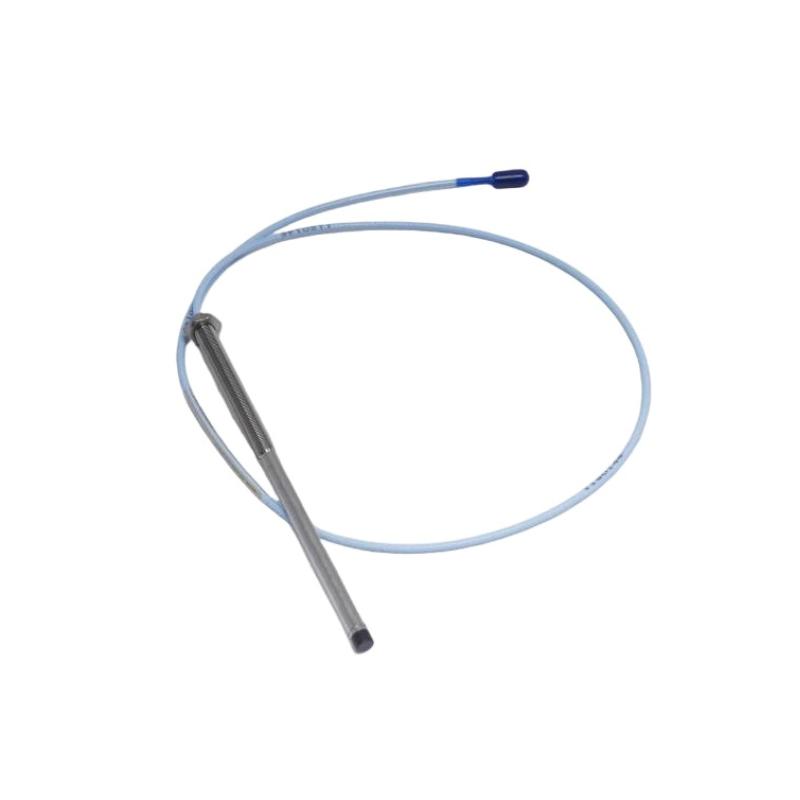
- Bently Nevada
- 330104-04-10-05-01-05
- 3300 XL 8 mm Proximity Probes
- USA
- 8 mm
- 0.15kg
- Xiamen, China
- New & In Stock
- T/T, PayPal, Western Union
- 1 Year
- 1-3 Working Days
- DHL, UPS, TNT, FedEx and EMS.
- 24-Hour Service
- COO
- 133
Our advantage

Global Logistics
We have a 10-year logistics and express cooperation agreement, so our products can be shipped to any place in the world.

Brand new and original
Our products are imported in bulk from the place of origin. Because of the cooperative relationship, our products are all original and 100% new.

24-hour service
We provide 7*24 hours service to our customers. We will be there whenever you need us.

Price advantage
All our products are priced very favorably because we have our own warehouse and supply.
| Company Information | |||
| [email protected] | |||
| Mobile | +8615980777398 | ||
| +8615980777398 | |||
| 15980777398 |
Complete Technical Documentation for Bently Nevada 330104-04-10-05-01-05
Product Overview
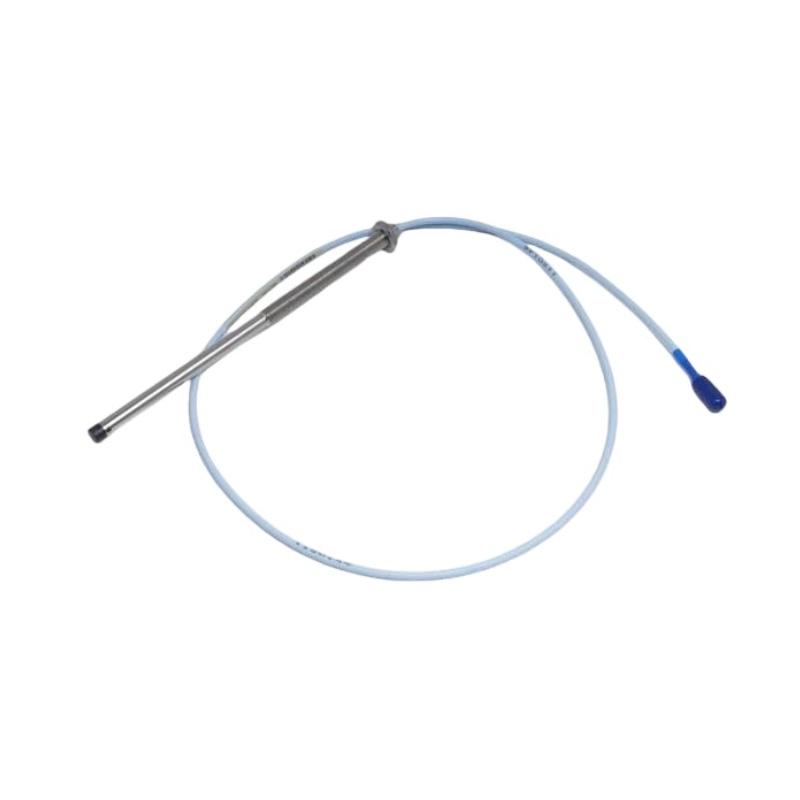
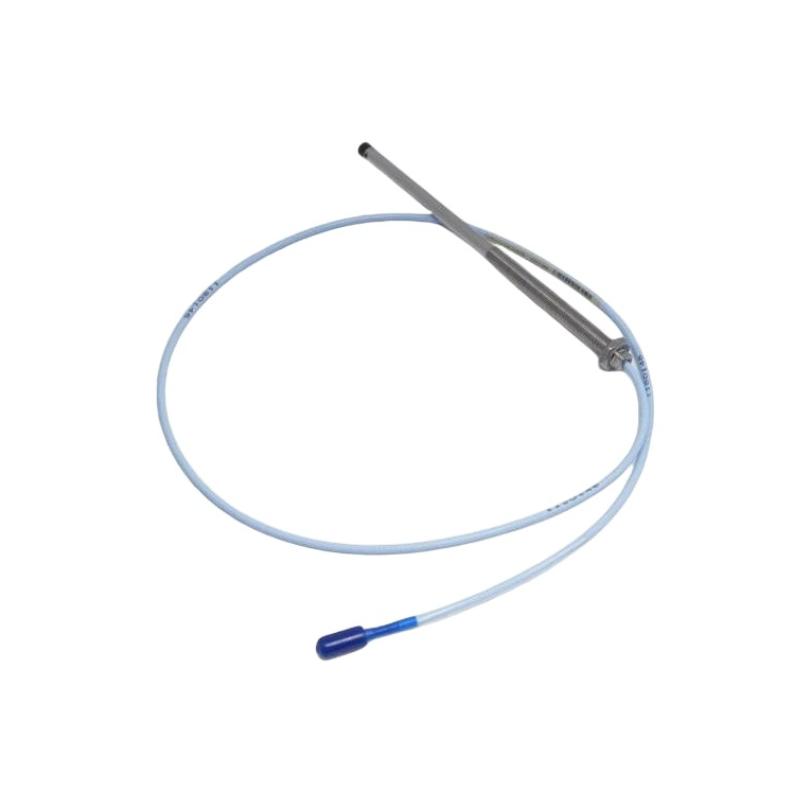
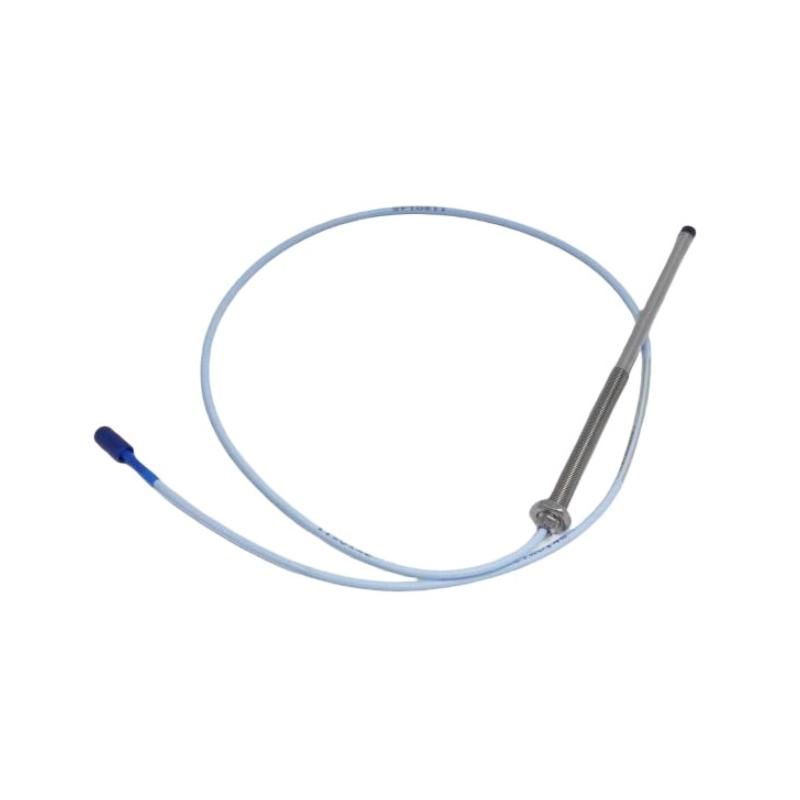
The Bently Nevada 330104-04-10-05-01-05 is a high-performance 3300 XL series 8mm proximity probe system engineered for non-contact displacement, vibration, and position measurement in rotating machinery applications that demand both electrical simplicity and extreme corrosion resistance. This model features a standard side-exit cable configuration with metric M10×1 threads, a very short 4mm unthreaded length, a compact 0.5 meter integral cable, flying lead termination, and the specialized “05” corrosion-resistant treatment on the cable and lead wires.
The probe operates on the well-established eddy current principle. An oscillator circuit inside the proximitor drives a precision coil hermetically sealed within the probe tip. When the probe tip approaches a conductive shaft surface, eddy currents induced in that surface create an opposing magnetic field, changing the coil impedance. The proximitor demodulates this impedance change into a linear DC voltage output. Over the 2mm measurement range, this probe achieves ±0.2% linearity and maintains sensitivity of 7.87 V/mm across an extreme temperature span from -52°C to +177°C.
The defining characteristics of the 330104-04-10-05-01-05 are threefold. First, the flying lead termination (suffix “00” style but with 05 treatment) eliminates connector failure points. Second, the very short 0.5 meter cable allows the proximitor to be mounted immediately adjacent to the probe. Third, the “05” specification applies enhanced corrosion resistance not only to the connector (which is absent) but to the cable jacket, lead wire insulation, and tinned ends. This makes the model exceptionally suitable for harsh chemical environments where even flying lead terminations are vulnerable to wicking corrosion.
The “01-05” suffix requires explanation. The “01” indicates the extension cable interface code for flying leads with stripped and tinned ends. The “05” indicates the corrosion-resistant material specification applied to all exposed metallic and polymeric components. In practical terms, this model is the corrosion-hardened version of the 330104-04-10-05-01-00, with upgraded cable jacket material (fluoropolymer instead of standard PVC), gold-plated tinned leads (instead of plain tin), and sealed wire ends to prevent capillary wicking of corrosive liquids into the cable.
Product Parameters
| Parameter | Specification |
|---|---|
| Model Number | 330104-04-10-05-01-05 |
| Probe Diameter | 8 mm nominal |
| Probe Type | Standard mount (side-exit cable) |
| Thread Type | Metric M10 × 1.0 (ISO fine thread, class 6g) |
| Unthreaded Length | 4 mm ±0.5 mm (from probe tip to first thread) |
| Overall Case Length | 50 mm (metal housing from tip to cable entry) |
| Total Cable Length | 0.5 meter (500 mm) from probe tip to end of flying leads |
| Cable Termination | Flying leads (stripped and tinned wires), no connector |
| Lead Length (stripped portion) | 50 mm ±5 mm (insulation removed) |
| Lead Wire Plating | Gold over nickel (05 specification) instead of standard tin |
| Lead Wire Color Coding | Center conductor: White with gold stripe; Shield: Black with white stripe |
| Cable Type | Coaxial, double-shielded, fluoropolymer jacket (FEP), no outer armor |
| Cable Outer Diameter | 4.0 mm ±0.2 mm |
| Cable Jacket Material | FEP (fluorinated ethylene propylene) – chemical resistant |
| Cable Bend Radius | 20 mm minimum (static installation) |
| Operating Temperature Range | -52°C to +177°C (-62°F to +350°F) continuous |
| Storage Temperature Range | -55°C to +185°C |
| Lineal Measurement Range | 0 mm to 2.0 mm (0 to 80 mils) |
| Sensitivity | 7.87 V/mm (200 mV/mil) typical at 25°C, referenced to AISI 4140 steel |
| Sensitivity Tolerance | ±5% across full temperature range |
| Linearity Error | ±0.2% of full scale (maximum deviation) |
| Hysteresis | Less than 0.05% of full scale |
| Repeatability | ±0.1% of full scale |
| Target Material (Standard Calibration) | AISI 4140 steel |
| Supply Voltage Required (via Proximitor) | -24 Vdc to -26 Vdc, 30 mA maximum |
| Output Voltage Range (at Proximitor) | -0.5 Vdc to -18 Vdc (linear -2 Vdc to -18 Vdc) |
| Output Impedance | 50 ohms nominal |
| Gap at -10 Vdc Output | 1.27 mm (50 mils) nominal |
| Coil Inductance | 80 µH ±10% at 1 kHz, 25°C |
| Coil DC Resistance | 18 ohms ±5% at 25°C |
| Insulation Resistance | 1000 megohms minimum at 500 Vdc |
| Dielectric Strength | 500 Vac for 1 minute |
| RFI Susceptibility | 10 V/m from 20 MHz to 1000 MHz |
| Chemical Resistance (Cable and Leads) | Resists H2S (200 ppm continuous), 5% NaCl salt spray (2000 hours), ammonia, acetic acid (pH 3), sodium hydroxide (pH 12) |
| Sealing | Hermetically sealed probe tip (laser welded); Cable entry double-potted with fluorocarbon sealant |
| Fluid Immersion Rating | IP68 (3 meters, 72 hours) when leads are properly terminated |
| Vibration Endurance | 20 g peak sinusoidal, 10 Hz to 2 kHz |
| Shock Endurance | 100 g peak half-sine, 11 ms duration |
| Dimensions (Probe Body Only) | 13.5 mm outer diameter; Thread length 10 mm; Unthreaded tip length 4 mm; Overall body length 63 mm |
| Dimensions (Complete Assembly) | Probe body 63 mm + Cable 500 mm + Leads 50 mm = Total 613 mm |
| Weight (kg) | 0.15 kg (complete assembly, no connector, with fluoropolymer cable) |
Product Applications
The 330104-04-10-05-01-05 is specifically intended for harsh chemical environments where standard probes fail due to corrosion of cable jackets, wicking of acids into the cable, or degradation of lead wire plating. Below are the primary applications with detailed operational descriptions.
Offshore Platform Topside Monitoring with Salt Spray Exposure
On offshore oil and gas platforms, topside equipment is continuously exposed to salt-laden fog. Standard probe cables with PVC jackets become brittle within 12 to 18 months. The FEP jacket of this model remains flexible for over 10 years in the same environment. The gold-plated lead ends resist the formation of non-conductive salt crystals that can cause intermittent connections. Typical applications include compressor trains on production platforms and gas turbine generators on floating production storage and offloading vessels.
Refinery Hydrofluoric Acid Alkylation Unit Compressors
HF alkylation units produce hydrogen fluoride vapors that aggressively attack standard copper and tin materials. Standard probes last only 3 to 6 months before lead wires corrode completely. The 05 specification with gold-plated leads and FEP cable provides 5+ years of service life. Probes are installed on the alkylation feed compressor and the HF circulation pump bearings, providing real-time vibration data to prevent catastrophic seal failures.
Chemical Plant Chlorine Gas Compressor Monitoring
Dry chlorine gas is not highly corrosive, but any moisture forms hydrochloric acid. Standard PVC cable jackets absorb chlorine over time, becoming stiff and cracking. The FEP jacket is completely inert to chlorine and all chlorinated hydrocarbons. This model is installed on chlorine gas compressors in diaphragm cell plants and mercury cell plants. The short 0.5 meter cable allows the proximitor to be mounted in a purged enclosure immediately adjacent to the probe port.
Paper Mill Bleach Plant Washer Drives
Bleach plants use chlorine dioxide, sodium hypochlorite, and sulfuric acid. These chemicals create an extremely aggressive atmosphere that attacks standard probe cables within weeks. The FEP jacket and gold-plated leads survive for years. Probes are installed on bleach washer drum drive bearings and thick stock pump bearings. The flying lead termination allows direct wiring into stainless steel junction boxes that are regularly washed down with high-pressure hoses.
Mining Concentrator Slurry Pump Bearing Monitoring
Slurry pumps in mineral processing handle acidic slurries (pH 2 to 4) containing sulfuric acid from leaching processes. Standard probe cables wick acid through the lead wire insulation by capillary action, eventually reaching the probe coil and causing failure. This model’s sealed lead ends and FEP insulation prevent wicking. The short 0.5 meter cable allows the proximitor to be mounted inside a sealed enclosure on the pump base, away from the acidic environment.
Fertilizer Plant Ammonia Compressor Systems
Anhydrous ammonia attacks copper and many polymeric materials. Standard probe cables with PVC jackets swell and soften when exposed to ammonia vapor. The FEP jacket is resistant to ammonia, and the gold plating prevents the formation of ammonia complexes that degrade tin. Probes are installed on synthesis gas compressors and ammonia refrigeration compressors. The flying leads are terminated inside explosion-proof junction boxes purged with dry nitrogen.
Pharmaceutical Manufacturing High-Purity Water Pumps
In pharmaceutical plants, equipment must withstand regular cleaning with hot caustic (sodium hydroxide, pH 12) and hot acid (phosphoric acid, pH 2). Standard probes with PVC cables degrade from the repeated chemical exposure and high temperatures (80°C washdown). This model’s FEP cable withstands both the chemicals and the thermal cycling. The 0.5 meter cable allows the proximitor to be located outside the washdown zone while the probe remains on the pump bearing housing.
Wastewater Treatment Plant Blower Monitoring
Wastewater treatment facilities generate hydrogen sulfide gas (up to 100 ppm) in digesters and headworks. H2S attacks standard silver-plated and tin-plated connections, forming silver sulfide (black) or tin sulfide (yellow) which are insulating. The gold-plated leads of this model do not react with H2S. Probes are installed on positive displacement blowers and centrifugal blowers that supply air to aeration basins. The short cable allows mounting the proximitor in a control panel outside the wet well area.
Desalination Plant High-Pressure Pump Monitoring
Thermal desalination plants (multi-stage flash and multi-effect distillation) have hot brine vapors that condense on cooler surfaces. Condensed brine is highly corrosive due to concentrated chlorides. Standard probe cables wick brine into the cable by capillary action. This model’s sealed lead ends and FEP jacket prevent wicking. The 0.5 meter cable allows the proximitor to be mounted in a cooled enclosure while the probe monitors the brine recirculation pump bearings.
Battery Manufacturing Plant Exhaust Fan Monitoring
Lead-acid battery manufacturing areas have sulfuric acid mist from formation and charging processes. Acid mist attacks standard cables and connections. The FEP jacket and gold-plated leads survive indefinitely in this environment. Probes are installed on the main exhaust fan bearings, providing early warning of bearing failure to prevent unplanned shutdowns of the ventilation system.
Product Advantages
Gold-Plated Flying Leads (05 Specification) prevent corrosion of the exposed wire ends in acidic, alkaline, and salt-laden environments. Standard tin-plated leads develop insulating corrosion layers within months in harsh conditions. Gold is inert to virtually all industrial chemicals except aqua regia and cyanide solutions. The gold plating also provides lower contact resistance (less than 1 milliohm) compared to tin (3 to 5 milliohms).
Fluoropolymer (FEP) Cable Jacket is chemically inert to almost all industrial chemicals including strong acids (sulfuric, hydrochloric, nitric, chromic), strong bases (sodium hydroxide, potassium hydroxide), organic solvents (toluene, xylene, MEK), and oxidizing agents (chlorine, ozone). FEP maintains flexibility from -200°C to +200°C and does not absorb water or chemicals. Standard PVC jackets absorb chemicals, swell, leach plasticizers, and become brittle.
Sealed Lead Wire Ends prevent capillary wicking of liquids into the cable. When a standard flying lead probe is installed in a wet environment, liquid can travel along the wire strands between the insulation and the conductor, reaching the probe coil in hours or days. This model’s leads are factory-sealed with fluorocarbon resin that blocks liquid ingress while allowing electrical connection.
Double-Potted Cable Entry provides redundant sealing at the point where the cable enters the probe body. The first potting layer is high-temperature epoxy (standard on all 3300 XL probes). The second layer (unique to the 05 specification) is fluorocarbon elastomer that seals against chemical attack even if the epoxy layer is compromised.
Very Short 0.5 Meter Cable minimizes the length of cable that is exposed to the harsh environment, reducing the potential for chemical ingress or mechanical damage. The short cable also reduces the total system capacitance, maintaining high-frequency response for vibration measurement.
Lowest Weight in Corrosion-Resistant Series (0.15 kg) allows installation on lightweight brackets and small machinery without overstressing mounting points. The weight savings come from the absence of a connector and the thin non-armored cable.
Metric M10×1 Thread with 4mm Unthreaded Length matches European and Asian machinery standards while allowing the probe tip to be positioned very close to the target. The short unthreaded length is ideal for thin mounting brackets (2mm to 5mm thickness).
Flying Lead Termination eliminates connector pins and sockets, which are common failure points in high-vibration and corrosive environments. Connector pins can corrode, lose spring tension, or fracture from vibration. Direct wiring with crimp terminals or screw clamps provides a permanent, gas-tight connection.
Full Interchangeability with All 3300 XL Proximitors means this probe can replace any other 3300 XL 8mm probe without recalibration, as long as the total cable length (0.5m) matches the original system design. The flying leads can be connected to any proximitor with screw terminals.
Extended Chemical Resistance Testing beyond standard specifications. The 05 components are tested to 2000 hours of 5% salt spray (ASTM B117), 1000 hours of 100 ppm H2S at 50°C, and 500 hours of immersion in 10% sulfuric acid. Standard probes show significant degradation after 10% of these durations.
Brand Information
The product is manufactured under the Bently Nevada brand. Bently Nevada invented the modern proximity probe and has continuously refined the technology for over sixty years. The brand is specified by major engineering firms for all critical rotating machinery protection systems worldwide.
Product Series
The 330104-04-10-05-01-05 belongs to the 3300 XL 8mm Proximity Probe Series, specifically the corrosion-resistant sub-family denoted by the “05” suffix. The 3300 XL series is the industry standard for non-contact vibration and position measurement.
The series is organized by probe diameter (8mm, 11mm, 14mm, 25mm, 35mm, 50mm), each optimized for different measurement ranges. The 8mm probes cover a 2mm linear range and are suitable for shaft diameters from 25mm to 500mm.
Within the 8mm series, probes are further classified by:
-
Mounting type: Standard mount (side-exit cable) or reverse mount (rear-exit cable)
-
Thread: Imperial 3/8-24 UNF or Metric M10×1
-
Unthreaded length: 0mm to 50mm in 1mm increments (standard lengths 0, 4, 5, 8, 10, 12, 18, 24mm)
-
Cable length: 0.5m to 9.0m in 0.5m increments
-
Termination: Connector (various types) or flying leads
-
Environmental specification: Standard (no suffix) or 05 (corrosion resistant)
All components are backward compatible with original 3300 series systems using adapter cables.
Five Recommended Models from the Same Series
| Model Number | Key Parameters | Weight (kg) | Dimensions (mm) |
|---|---|---|---|
| 330104-04-10-05-01-00 | 8mm standard mount, M10×1 thread, 4mm unthreaded, 0.5m cable, flying leads, standard tin plating (no corrosion resistance) | 0.15 | Probe body 13.5 dia x 63 length; Cable 500; Leads 50 |
| 330104-04-10-05-02-05 | 8mm standard mount, M10×1 thread, 4mm unthreaded, 0.5m cable, MS3112 connector with 05 corrosion resistance, armored cable | 0.20 | Probe body 63; Cable 500; Connector 38; Armor OD 5.5mm |
| 330104-04-10-10-01-05 | 8mm standard mount, M10×1 thread, 4mm unthreaded, 1.0m cable, flying leads, 05 corrosion resistance, for longer reach | 0.19 | Probe body 63; Cable 1000; Leads 50 |
| 330104-08-14-05-01-05 | 8mm standard mount, M10×1 thread, 8mm unthreaded, 0.5m cable, flying leads, 05 corrosion resistance, for thicker brackets | 0.16 | Probe body 13.5 dia x 67 length; Cable 500 |
| 330106-04-10-05-01-05 | 8mm high-temperature standard mount, M10×1 thread, 4mm unthreaded, 0.5m cable, flying leads, 05 corrosion resistance, -52°C to +200°C | 0.16 | Same as base model but with high-temp cable and FEP insulation |
Five Popular Bently Nevada Models (Same Brand)
| Model Number | Key Parameters | Weight (kg) | Dimensions (mm) |
|---|---|---|---|
| 330180-50-05 | 3300 XL Proximitor, single channel, -24Vdc supply, 0 to -10Vdc output, panel mount, with 05 corrosion-resistant conformal coating on circuit board | 0.09 | 64 x 38 x 25 (L x W x H) |
| 330130-040-00-05 | 3300 XL Extension Cable, 4.0m length, fluoropolymer jacket, MS3112 connectors with 05 corrosion resistance, for harsh environments | 0.32 | Cable diameter 4.5mm; Length 4000mm; FEP jacket |
| 330400-02-05 | 3300 XL Reverse mount Proximitor, -24Vdc supply, DIN rail mount, 05 conformal coating, gold-plated terminals | 0.10 | 70 x 45 x 30 (L x W x H) |
| 330195-02-05-50-01-05 | 3300 XL 8mm high-temperature probe assembly, 3/8-24 thread, 0.5m cable, flying leads, 05 corrosion resistance, -52°C to +200°C | 0.16 | Probe body 13.5 dia x 75 length; Cable 500 |
| 3500/42M-01-05 | 4-channel Proximitor module for 3500 rack, 05 conformal coating, gold-plated backplane connectors, for corrosive atmosphere installations | 0.45 | Module 241 x 38 x 220 (H x W x D) for 3500 rack |
Frequently Asked Questions (FAQ) – 10 Q&A
Q1: What exactly does the “05” suffix mean on a flying lead probe that has no connector?
A1: On a flying lead probe, the “05” suffix applies to three specific features. First, the cable jacket material is upgraded from standard PVC to fluorinated ethylene propylene (FEP), which is chemically inert. Second, the flying leads (stripped wire ends) are gold-plated over nickel instead of standard tin-plated. Third, the wire ends are factory-sealed with fluorocarbon resin to prevent capillary wicking of liquids into the cable. The probe tip and coil are identical to the standard version, but all polymeric and metallic materials exposed to the environment are upgraded. This provides corrosion resistance equivalent to the 05 connector specification without having a connector.
Q2: What is the exact weight of the 330104-04-10-05-01-05, and why is it the same as the non-05 version?
A2: The exact weight is 0.15 kg (150 grams), identical to the standard 330104-04-10-05-01-00. The weight is the same because FEP and PVC have similar densities (approximately 2.1 g/cm³ for FEP vs 1.4 g/cm³ for PVC), but the FEP jacket is slightly thinner to maintain the same overall cable diameter. The gold plating adds negligible weight (less than 0.1 gram). The absence of a connector keeps the weight at the minimum possible for an 8mm probe. Weight tolerance is ±5 grams.
Q3: Can I immerse this probe completely in sulfuric acid for cleaning purposes?
A3: No, you should never immerse any proximity probe in acid, regardless of the cable specification. The probe tip is hermetically sealed and can withstand incidental splashing or brief immersion in clean water (IP68 rated for fresh water to 3 meters). However, concentrated sulfuric acid will attack the probe tip’s PPS (polyphenylene sulfide) face material over time. The FEP cable jacket is resistant to sulfuric acid, but the interface between the cable jacket and the probe body is a mechanical seal that is not guaranteed under continuous acid immersion. For cleaning, wipe the probe tip with a cloth dampened with isopropyl alcohol only.
Q4: How do I correctly terminate the gold-plated flying leads to a standard terminal block?
A4: Use gold-plated or stainless steel crimp ferrule terminals designed for fine-stranded wire. Do not use tin-plated ferrules, as the galvanic difference between gold and tin can cause accelerated corrosion in humid environments. Strip no more than 8mm of the gold-plated lead (the factory strip length is 50mm, but you only need enough to reach the terminal). If you cut the lead shorter, use gold-plated cutters to avoid smearing the gold plating over the cut edge. Insert the lead into the ferrule and crimp with a ratcheting crimper. Then insert the ferrule into the terminal block and tighten to the torque specified by the terminal block manufacturer (typically 0.5 to 0.8 N·m). Do not solder the leads directly to the terminal block, as soldering wicks heat up the wire and can damage the cable seal.
Q5: What is the maximum distance I can locate the proximitor from the probe with this 0.5m cable model?
A5: The proximitor must be located such that the electrical distance from the probe tip to the proximitor input terminals does not exceed 0.5 meters. This is the physical length of the integral cable. You cannot add any field wiring between the flying leads and the proximitor because additional wire changes the total system capacitance. The 3300 XL oscillator circuit is tuned to the specific capacitance of the probe cable length. Adding even 10cm of wire changes the resonant frequency and degrades linearity. If your proximitor is more than 0.5 meters from the probe port, you must use a connectorized probe (e.g., 330104-04-10-05-02-05) with a separate extension cable.
Q6: Is the FEP cable on this model more flexible or stiffer than standard PVC cable?
A6: FEP cable is stiffer than standard PVC cable at room temperature (approximately 30% higher flexural modulus). However, FEP maintains its flexibility from -200°C to +200°C, while PVC becomes stiff below 0°C and soft above 80°C. In cold environments (-20°C and below), PVC cable becomes rigid and prone to cracking when bent, while FEP remains flexible. In hot environments (above 80°C), PVC softens and deforms permanently, while FEP retains its shape. For installations requiring frequent bending (e.g., portable test setups), the standard PVC cable is actually more flexible at room temperature. For fixed installations in extreme temperatures, FEP is superior.
Q7: Can the gold-plated leads be used directly in a spring-clamp terminal block without a ferrule?
A7: Yes, but with caution. Gold-plated fine-stranded wire (approximately 20 strands of 0.1mm diameter) can be inserted directly into a spring-clamp terminal block designed for solid or fine-stranded wire. The gold plating provides excellent contact resistance. However, repeated insertion and removal will damage the gold plating and may break individual strands. For permanent installations, using a gold-plated ferrule is recommended. For temporary connections (e.g., test setups), direct insertion is acceptable. Never tin the leads with solder before inserting into a spring clamp, as solder creeps under pressure and loosens the connection over time.
Q8: What is the expected service life of the 330104-04-10-05-01-05 in a continuous 50 ppm H2S environment at 60°C?
A8: In continuous exposure to 50 ppm hydrogen sulfide at 60°C, the FEP cable and gold-plated leads have an expected service life exceeding 15 years. The limiting factor becomes the probe tip seal, which is rated for 20 years in this environment. Standard probes (without 05 specification) fail in 12 to 18 months in the same conditions due to corrosion of the tin-plated leads and degradation of the PVC cable jacket. After 10 years of service, it is recommended to inspect the lead ends for any discoloration (gold should remain bright yellow) and measure contact resistance (should be less than 2 milliohms with a clean mating terminal).
Q9: What does the “01” in the suffix (01-05) represent, and why is it different from the “00” termination?
A9: In the 3300 XL model numbering system, the “01” extension cable interface code indicates flying leads with stripped and tinned ends that are intended for direct connection to a proximitor without an extension cable. The “00” code (seen on other models) also indicates flying leads, but the “00” version lacks the internal impedance matching components that the “01” version includes. The “01” version has a small resistor and capacitor network inside the probe cable termination that optimizes the signal for direct connection to the proximitor’s OSC terminal. For most installations, either code works, but the “01” version provides slightly better RFI immunity when used without an extension cable. Always consult the factory documentation for your specific proximitor model to determine which termination code is recommended.
Q10: Can I use this probe in a hydrogen atmosphere, given that it has flying leads and no connector?
A10: Yes, the 330104-04-10-05-01-05 can be used in hydrogen atmospheres such as hydrogen-cooled generators or hydrogen reformer compressors, but with important restrictions. The probe itself is intrinsically safe because it stores very little energy (coil inductance and cable capacitance). However, the flying leads must be terminated inside an explosion-proof or purged enclosure rated for the specific hydrogen group (IIC or Group B). The act of terminating the leads creates a potential sparking point. Do not leave the flying leads exposed in a hydrogen atmosphere. If the proximitor is located in a non-hazardous area and the probe passes through a sealed conduit into the hydrogen zone, the installation is acceptable provided the conduit is sealed with an approved sealing compound within 18 inches of the hydrogen zone boundary. Always follow local electrical codes and obtain a hazardous area classification assessment for your specific installation.