

ProductPRODUCT
Featured products
Contact Us
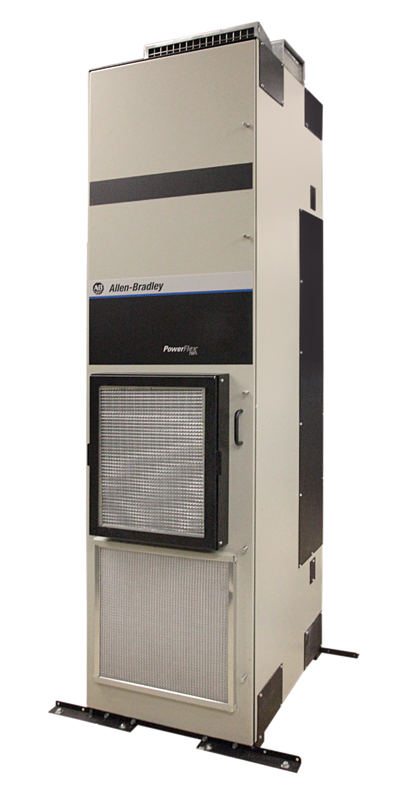
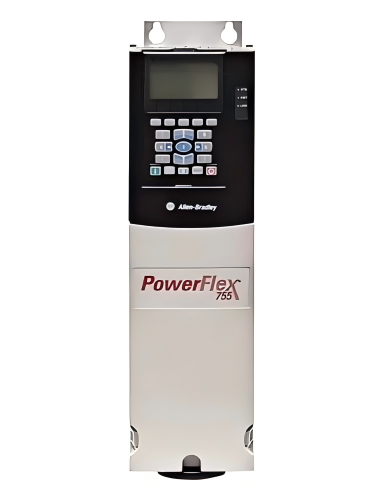
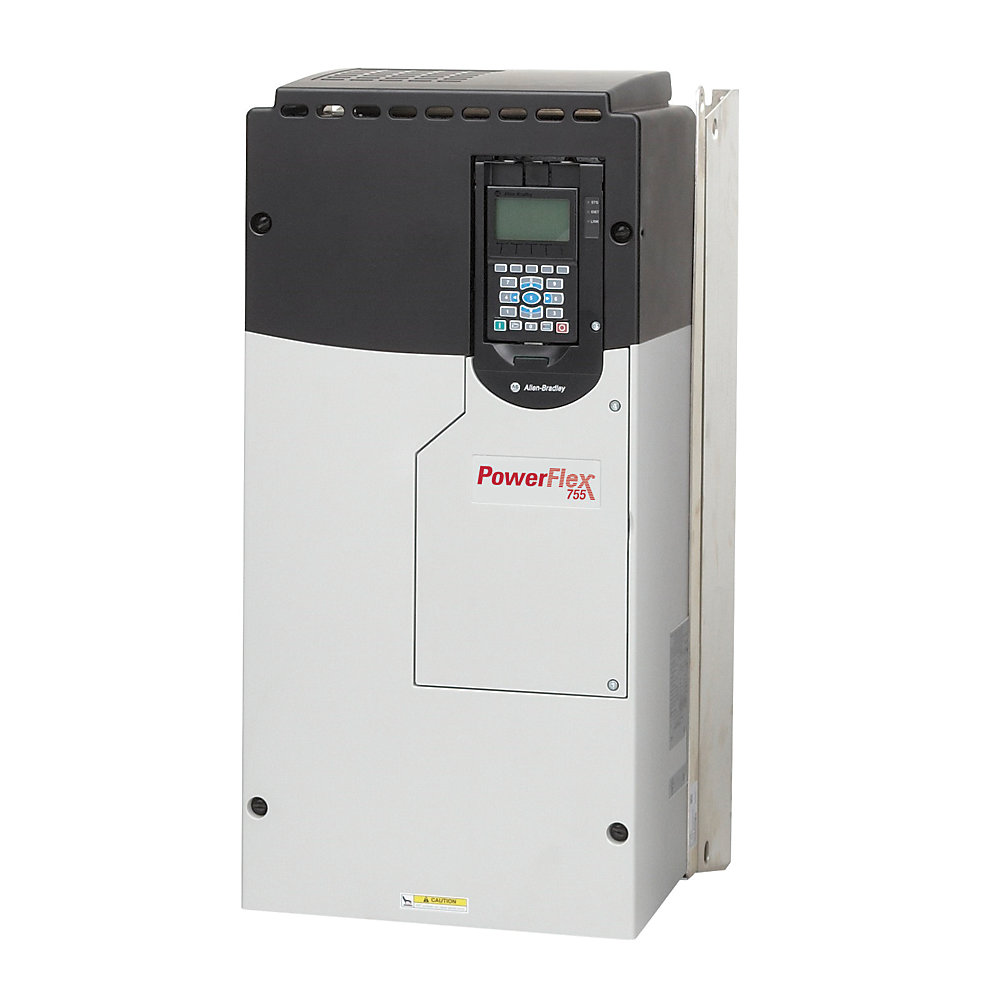
- Allen Bradley
- 20G1ANE289JA0NNNNN
- PowerFlex AC Drive
- USA
- 881.5 mm high × 430.0 mm wide × 349.6 mm deep
- 108.9kg
- Xiamen, China
- New & In Stock
- T/T, PayPal, Western Union
- 1 Year
- 1-3 Working Days
- DHL, UPS, TNT, FedEx and EMS.
- 24-Hour Service
- COO
- 2
Our advantage

Global Logistics
We have a 10-year logistics and express cooperation agreement, so our products can be shipped to any place in the world.

Brand new and original
Our products are imported in bulk from the place of origin. Because of the cooperative relationship, our products are all original and 100% new.

24-hour service
We provide 7*24 hours service to our customers. We will be there whenever you need us.

Price advantage
All our products are priced very favorably because we have our own warehouse and supply.
| Company Information | |||
| [email protected] | |||
| Mobile | +8615980777398 | ||
| +8615980777398 | |||
| 15980777398 |
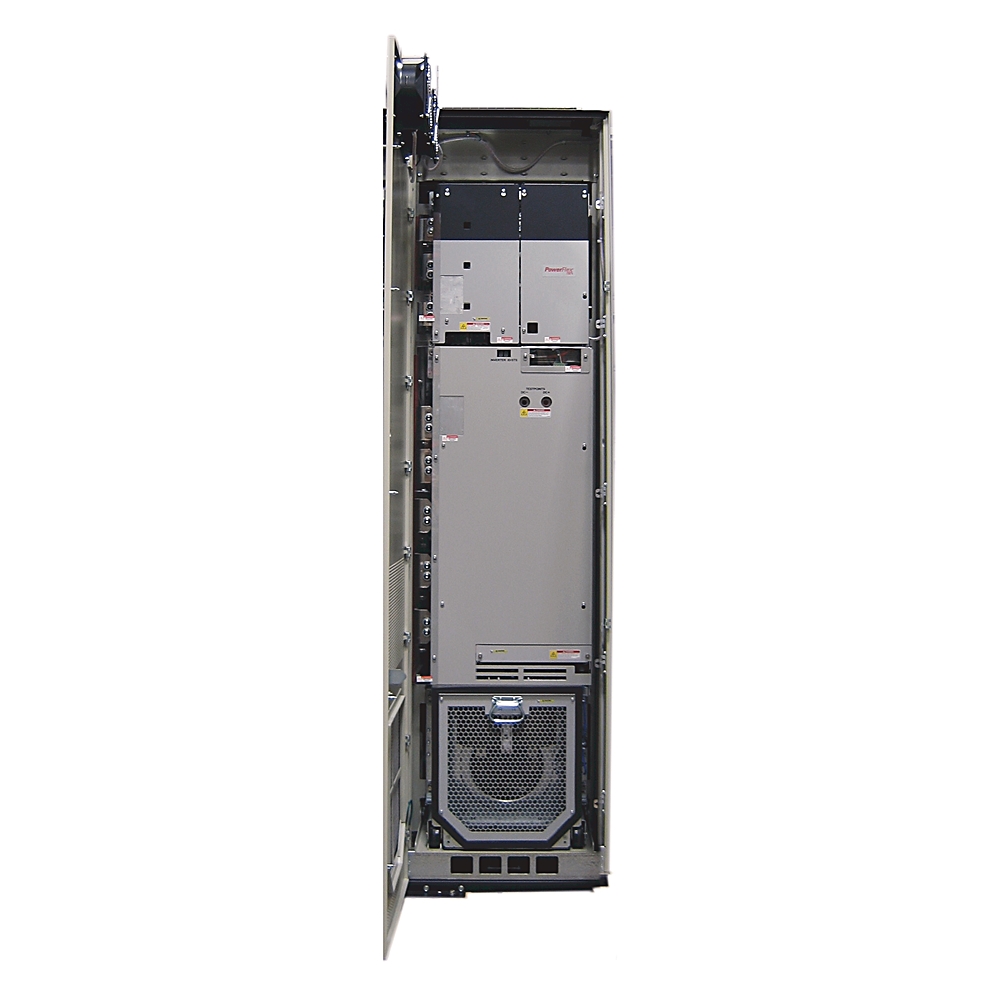
Allen-Bradley 20G1ANE289JA0NNNNN PowerFlex 755 AC Drive
1. Product Overview
The 20G1ANE289JA0NNNNN is a high-power Allen-Bradley PowerFlex 755 AC Drive designed for demanding industrial motor-control applications where substantial motor power, reliable speed regulation, flexible control functions, and integration with an industrial automation system are required.
This model belongs to the PowerFlex 755 family and is configured for 600 VAC, three-phase input, with a continuous output-current rating of 289 A under Normal Duty operation. Its corresponding Normal Duty rating is approximately 300 HP, while its Heavy Duty rating is approximately 250 HP.
The drive uses a Frame 7 mechanical platform and forced-air cooling. It is an open-type drive intended for installation inside an appropriate electrical cabinet, enclosure, or control-room environment rather than being treated as a completely enclosed standalone field device.
A particularly important characteristic of this exact catalog number is its configuration of the common-mode capacitor jumper and dynamic-braking hardware. The “J” configuration indicates that the CM jumper is installed, while the catalog number also specifies an internal dynamic-braking transistor.
The drive includes embedded EtherNet/IP, allowing it to be incorporated into an industrial control architecture without requiring an external communication adapter for basic EtherNet/IP connectivity.
2. Brand and Product Series
| Item | Details |
|---|---|
| Brand | Allen-Bradley |
| Product Family | PowerFlex |
| Product Series | PowerFlex 755 |
| Product Type | AC Variable Frequency Drive |
| Main Application | Industrial AC motor speed and torque control |
| Cooling | Forced-air / air-cooled |
| Voltage Class | 600 VAC, three-phase |
| Frame | Frame 7 |
| Communication | Embedded EtherNet/IP |
| Enclosure Classification | IP20/IP00, NEMA/UL Open Type |
| Input Configuration | AC input with precharge |
| DC Terminals | No external DC terminals |
| EMC Configuration | Filtered |
| CM Jumper | Installed |
| Dynamic Braking | Internal dynamic-braking transistor |
| HIM | Blank / no HIM |
The PowerFlex 755 series is positioned toward larger and more demanding industrial motor-control applications. Compared with compact drives intended primarily for small machinery, this series provides a much broader platform for large motors, process equipment, conveyors, pumps, fans, compressors, material-handling systems, and other high-power rotating machinery.
3. Complete Model Number
The complete catalog number is:
The individual portions of the catalog number represent configuration information rather than being an arbitrary product identification string. This is important when selecting a replacement because two drives that appear similar externally can have different input, braking, filtering, enclosure, or control configurations.
| Parameter | Specification |
|---|---|
| Model Number | 20G1ANE289JA0NNNNN |
| Series | PowerFlex 755 |
| Voltage Class | 600 VAC |
| Phase | Three-phase |
| Rated Current | 289 A Normal Duty |
| Heavy-Duty Current | 242 A |
| Normal-Duty Power | 300 HP |
| Heavy-Duty Power | 250 HP |
| Frame Size | Frame 7 |
| Cooling | Forced air |
| Input | AC input with precharge |
| External DC Terminals | None |
| Enclosure | IP20/IP00, NEMA/UL Open Type |
| EMC Filter | Included |
| CM Jumper | Installed |
| Dynamic Braking | Internal DB transistor |
| Communication | Embedded EtherNet/IP |
| HIM | Blank / no HIM |
| Approx. Dimensions | 881.5 × 430.0 × 349.6 mm |
| Approx. Weight | 72.6–108.9 kg, depending on configuration |
4. Main Electrical Parameters
The most important electrical characteristic of the 20G1ANE289JA0NNNNN is its ability to handle a large industrial motor load at the 600 VAC class.
| Electrical Parameter | Specification |
|---|---|
| Model | 20G1ANE289JA0NNNNN |
| Input Voltage Class | 600 VAC |
| Input Phase | 3-phase |
| Continuous Output Current, Normal Duty | 289 A |
| Continuous Output Current, Heavy Duty | 242 A |
| 1-Minute Current Rating | Approximately 318 A |
| 3-Second Current Rating | Approximately 434 A |
| Normal-Duty Motor Rating | 300 HP |
| Heavy-Duty Motor Rating | 250 HP |
| Approx. Normal-Duty Power | 224 kW |
| Approx. Heavy-Duty Power | 187 kW |
| Frame | Frame 7 |
| Cooling | Forced air |
| Input Type | AC input with precharge |
| DC Terminals | None |
| Dynamic Braking | Internal DB transistor |
| EMC Filtering | Filtered |
| CM Jumper | Installed |
| Communication | Embedded EtherNet/IP |
| Approx. Dimensions | 881.5 × 430.0 × 349.6 mm |
| Approx. Weight | 72.6–108.9 kg |
The Normal Duty rating is useful for applications where the motor generally operates under relatively stable loading conditions and overload requirements are moderate.
The Heavy Duty rating is lower because Heavy Duty operation is intended for applications with greater starting torque, more frequent acceleration and deceleration, higher overload requirements, or other demanding operating conditions.
For practical engineering purposes, the 289 A Normal Duty / 242 A Heavy Duty distinction should be considered when selecting the motor, load profile, acceleration requirements, and drive thermal capacity.
5. Normal Duty and Heavy Duty Ratings
The dual-rating structure is one of the useful characteristics of this drive.
| Rating Category | Current | Approx. Motor Rating | Typical Application Type |
|---|---|---|---|
| Normal Duty | 289 A | 300 HP | Pumps, fans, blowers and relatively stable loads |
| Heavy Duty | 242 A | 250 HP | Conveyors, mixers, high-inertia equipment and demanding loads |
| 1-Minute Overload Capability | Approx. 318 A | — | Short-duration overload |
| 3-Second Overload Capability | Approx. 434 A | — | Short acceleration or transient loading |
The distinction should not be treated simply as two different horsepower numbers. It reflects different thermal and overload operating conditions.
For example, a large centrifugal pump can often operate under a relatively predictable torque profile. A heavily loaded conveyor, on the other hand, can require considerably more torque during acceleration and may repeatedly experience transient load conditions.
Consequently, a 300 HP Normal Duty application is not automatically equivalent to a 250 HP Heavy Duty application from an engineering standpoint. The actual load profile should always be considered.
6. Dynamic-Braking Configuration
The 20G1ANE289JA0NNNNN includes an internal dynamic-braking transistor.
Dynamic braking is useful when a motor needs to decelerate quickly or when the mechanical load contains substantial stored kinetic energy.
During deceleration, the motor can return energy toward the DC bus. Without an appropriate energy-management method, the DC-bus voltage can rise excessively.
A dynamic-braking system provides a controlled path for this energy through a braking resistor, allowing the excess electrical energy to be dissipated as heat.
This feature can be particularly valuable for:
- High-inertia fans
- Large conveyors
- Centrifuges
- Hoists and material-handling machinery
- Certain machine tools
- Large rotating process equipment
- Applications requiring controlled deceleration
The internal braking transistor does not mean that every application automatically has complete dynamic-braking capability. The external braking resistor, resistor rating, duty cycle, thermal requirements, and installation method must still be selected according to the actual application.
7. CM Jumper Installed Configuration
One of the differences between similar PowerFlex 755 catalog numbers is the configuration of the common-mode capacitor jumper.
For this model, the configuration is CM jumper installed.
This configuration affects the drive’s grounding and common-mode behavior and should be considered during installation, especially in systems where the grounding arrangement, motor-cable construction, EMC requirements, or power-system characteristics are important.
This is also why replacing the exact catalog number with a superficially similar model should be done carefully. A model with the same current and voltage rating may have a different CM jumper configuration.
For equipment replacement, the full catalog number should therefore be checked rather than selecting a drive solely by horsepower.
8. EMC Filtering
The 20G1ANE289JA0NNNNN is configured with an EMC filter.
The filtering configuration is intended to help manage conducted electromagnetic disturbances associated with variable-frequency-drive operation.
Large industrial drives can generate electrical noise through high-frequency switching of their power semiconductors. Depending on the installation, motor cable length, grounding structure, nearby control equipment, instrumentation, and applicable plant requirements, EMC considerations can become important.
The integrated filtering configuration can therefore be useful in installations where electromagnetic compatibility is an important design consideration.
The actual EMC performance of a complete installation, however, depends on the entire system, including cabinet construction, grounding, motor cables, cable routing, shielding, and installation practices.
9. Embedded EtherNet/IP
The drive includes embedded EtherNet/IP communication.
This is particularly useful in modern industrial automation systems because the drive can participate in networked control and monitoring architectures.
Typical functions include drive status monitoring, speed reference commands, control commands, fault information, diagnostic information, and parameter-related communication.
A large motor drive is rarely an isolated device in a modern production plant. It is normally part of a larger control system involving controllers, operator interfaces, remote I/O, safety equipment, instrumentation, and other drives.
Embedded EtherNet/IP helps simplify the overall architecture by providing communication capability directly within the drive.
10. Frame 7 Mechanical Construction
The 20G1ANE289JA0NNNNN uses a Frame 7 enclosure/mechanical platform.
This is a substantially larger physical package than the smaller PowerFlex drive frames.
| Mechanical Parameter | Specification |
|---|---|
| Model | 20G1ANE289JA0NNNNN |
| Frame Size | Frame 7 |
| Cooling Method | Forced air |
| Approx. Height | 881.5 mm |
| Approx. Width | 430.0 mm |
| Approx. Depth | 349.6 mm |
| Approx. Weight | 72.6–108.9 kg |
| Enclosure Type | IP20/IP00, NEMA/UL Open Type |
| Installation | Cabinet / enclosure installation |
| Airflow Requirement | Forced-air cooling |
| Maintenance Access | Front and service-area access should be considered |
| Mounting | Industrial panel/cabinet installation |
Because the drive is physically large and relatively heavy, mechanical planning should be completed before installation.
The cabinet should have adequate structural strength, appropriate mounting hardware, sufficient ventilation, and enough service space for installation and maintenance.
11. Product Introduction
The 20G1ANE289JA0NNNNN is intended for industrial motor applications where a small compact inverter is not sufficient.
Its 600 VAC three-phase architecture and 289 A Normal Duty capacity make it suitable for large motors used in industrial plants, production lines, utility systems, process equipment, and large material-handling machinery.
The PowerFlex 755 platform is particularly appropriate where the application requires more than basic speed control.
Large industrial motors may need controlled acceleration, controlled deceleration, adjustable speed, torque regulation, overload handling, fault diagnostics, network communication, feedback, and coordination with other automation equipment.
The 20G1ANE289JA0NNNNN provides a platform for these types of requirements while retaining the flexibility associated with the PowerFlex 755 family.
12. Pump Applications
Large pumps are one of the most common application areas for a high-power variable-frequency drive.
The 20G1ANE289JA0NNNNN can be considered for large centrifugal-pump systems, water-treatment equipment, industrial circulation systems, cooling-water systems, process pumps, and similar installations where motor speed needs to be adjusted according to process demand.
Variable-speed control can allow pump operation to be coordinated with changing process requirements rather than forcing the motor to operate continuously at one fixed speed.
This can be useful for:
- Water supply systems
- Cooling-water circulation
- Industrial process pumps
- Large wastewater systems
- Chemical process circulation
- Utility pumping systems
- Irrigation and large-scale water movement
For pumping systems, engineering attention should be given to the pump’s torque-speed characteristics, minimum operating speed, required flow range, motor cooling at reduced speed, and any system resonance or hydraulic constraints.
13. Fan and Blower Applications
Large fans and blowers can also benefit from variable-speed operation.
Typical examples include industrial ventilation, combustion-air systems, exhaust systems, cooling towers, air-handling equipment, and process ventilation.
The drive can provide controlled motor acceleration and adjustable operating speed, helping the fan system respond to changes in airflow demand.
For large fan applications, the Normal Duty rating can be particularly relevant because many centrifugal fan loads have comparatively predictable torque characteristics.
Even so, the actual motor current should be checked under the complete operating range rather than selecting the drive solely from the motor nameplate horsepower.
14. Conveyor Applications
Large conveyors can place substantially different demands on a drive than pumps and fans.
A conveyor may need to start while carrying a significant load, operate at different speeds, stop repeatedly, or coordinate its speed with upstream and downstream machinery.
The 20G1ANE289JA0NNNNN can be applied to large conveyor systems when its Heavy Duty rating and overload characteristics are appropriate for the actual mechanical load.
Typical applications include:
- Mining conveyors
- Bulk-material conveyors
- Aggregate handling
- Manufacturing conveyors
- Warehouse material movement
- Packaging lines
- Large production conveyors
The internal dynamic-braking transistor can also be valuable where controlled deceleration is required, although the complete braking system must be designed according to the load inertia and stopping requirements.
15. Material-Handling Equipment
Large material-handling systems often require precise speed coordination between several pieces of equipment.
The drive can be used in systems where motor speed must be controlled according to production demand, conveyor synchronization, machine sequencing, or process requirements.
Its network communication capability can be used to exchange operating information with the wider automation system.
In a large facility, this can allow operators and control systems to monitor motor speed, drive status, fault conditions, and other operating information from a centralized interface.
16. Mixer and Agitator Applications
Industrial mixers and agitators can require substantial starting torque, particularly when the material inside the vessel is viscous or has settled during downtime.
These applications should be evaluated carefully using the Heavy Duty rating where the mechanical characteristics demand it.
The drive’s adjustable-frequency operation can allow the motor to start in a controlled manner rather than applying full-speed operation immediately.
This can reduce mechanical shock and provide greater flexibility in controlling the mixing process.
Typical applications include:
- Chemical mixing
- Water-treatment agitation
- Industrial processing
- Bulk-material mixing
- Food-processing machinery
- Pharmaceutical process equipment
- Large industrial blending systems
17. Compressor Applications
Large compressors can require substantial motor power and careful control of acceleration and operating speed.
The 20G1ANE289JA0NNNNN can be considered for suitable compressor applications when the compressor manufacturer and motor/load characteristics are compatible with variable-frequency operation.
Potential applications include industrial air systems, process gas systems, refrigeration-related equipment, and other large rotating compressor machinery.
Compressor applications require particular attention to minimum and maximum operating speed, lubrication, cooling, resonance, control strategy, and process limitations.
18. High-Inertia Machinery
High-inertia equipment is one area where the drive’s braking capability can become especially relevant.
A large rotating assembly stores considerable kinetic energy. When the commanded speed is reduced, that energy must be managed.
Examples include:
- Large fans
- Centrifuges
- Flywheel-driven equipment
- Large rollers
- High-speed rotating machinery
- Certain processing machines
The internal dynamic-braking transistor provides an important part of the braking architecture, while the final braking resistor and control strategy must be selected for the actual energy and duty cycle.
19. Major Product Advantages
19.1 High Power Capacity
The 289 A Normal Duty rating allows the drive to control large industrial motors.
Its approximately 300 HP Normal Duty rating places it in a class suitable for large industrial equipment rather than small machine automation.
19.2 600 VAC Three-Phase Platform
The 600 VAC class makes the model suitable for industrial electrical systems designed around higher-voltage three-phase motor power.
This can be useful for large motors where higher voltage helps manage current and conductor requirements.
19.3 Dual Duty Ratings
The Normal Duty and Heavy Duty ratings provide flexibility for different load profiles.
The same drive family can therefore be evaluated across both relatively stable applications and applications with more demanding overload characteristics.
19.4 Integrated Dynamic-Braking Transistor
The internal braking transistor simplifies the drive-side portion of a dynamic-braking arrangement.
This is particularly useful where the application requires controlled deceleration or needs to manage regenerated energy.
19.5 Embedded EtherNet/IP
The embedded communication capability makes the drive suitable for networked industrial automation architectures.
This can reduce the need for additional communication hardware and simplifies integration into a compatible control network.
19.6 EMC Filter
The filtered configuration helps address electromagnetic compatibility requirements within an appropriately designed installation.
This is useful in plants containing sensitive instrumentation, control electronics, communication systems, and other electrical equipment.
19.7 Large-Frame Industrial Construction
The Frame 7 design provides the physical and electrical platform necessary for high-power operation.
The larger frame also provides the space required for power components, cooling arrangements, electrical connections, and service access.
19.8 Flexible Application Range
The drive can be considered for many different types of equipment, including pumps, fans, blowers, conveyors, compressors, mixers, and other large industrial machines.
Its broad application range is one reason the PowerFlex 755 platform is commonly considered for large motor-control projects.
20. Installation Considerations
The physical size of this drive should be considered early in cabinet design.
With an approximate height of 881.5 mm, width of 430.0 mm, and depth of 349.6 mm, the drive occupies substantially more cabinet space than a small machine-mounted inverter.
The cabinet should provide sufficient clearance for cooling airflow and maintenance access.
The forced-air cooling system also means that airflow management should be treated as part of the electrical design rather than as an afterthought.
Dust, excessive heat, restricted airflow, and blocked ventilation paths can all negatively affect drive operating conditions.
21. Thermal Management
High-power variable-frequency drives generate heat during operation.
The 20G1ANE289JA0NNNNN therefore requires appropriate thermal management within the installation.
Cabinet temperature, ambient conditions, airflow, ventilation arrangement, and nearby heat-generating equipment should all be considered.
When several large drives are installed in one cabinet, their combined heat output can become significant.
The cabinet design should consequently provide sufficient heat removal capacity rather than simply providing enough physical mounting space.
22. Motor Selection
Selecting the motor should not be based only on horsepower.
The following characteristics should be checked:
- Motor rated voltage
- Motor rated current
- Motor frequency
- Motor speed
- Motor insulation system
- Motor cooling method
- Starting torque requirements
- Continuous torque requirements
- Overload requirements
- Acceleration time
- Deceleration time
- Mechanical inertia
- Operating speed range
- Cable length
The drive’s 289 A Normal Duty rating should be compared directly with the motor’s actual operating current and the intended duty classification.
For demanding loads, the 242 A Heavy Duty rating should receive particular attention.
23. Five Related PowerFlex 755 Models
The following models are closely related to the requested 20G1ANE289JA0NNNNN. They are useful when comparing different current capacities or configuration variations within the same PowerFlex 755 family.
| Model | Voltage | Current | ND / HD Rating | Frame | Dynamic Braking | CM Jumper | Approx. Dimensions | Approx. Weight |
|---|---|---|---|---|---|---|---|---|
| 20G1ANE192JA0NNNNN | 600 VAC, 3PH | 192 A | 200 / 150 HP | 7 | Internal DB transistor | Installed | Approx. 881.5 × 430.0 × 349.6 mm | Approx. 72.6–108.9 kg |
| 20G1ANE242JA0NNNNN | 600 VAC, 3PH | 242 A | 250 / 200 HP | 7 | Internal DB transistor | Installed | Approx. 881.5 × 430.0 × 349.6 mm | Approx. 72.6–108.9 kg |
| 20G1ANE289JA0NNNNN | 600 VAC, 3PH | 289 A | 300 / 250 HP | 7 | Internal DB transistor | Installed | Approx. 881.5 × 430.0 × 349.6 mm | Approx. 72.6–108.9 kg |
| 20G1ANE289AA0NNNNN | 600 VAC, 3PH | 289 A | 300 / 250 HP | 7 | Internal DB transistor | Removed | Approx. 881.5 × 430.0 × 349.6 mm | Approx. 72.6–108.9 kg |
| 20G1ANE289JN0NNNNN | 600 VAC, 3PH | 289 A | 300 / 250 HP | 7 | None | Installed | Approx. 881.5 × 430.0 × 349.6 mm | Approx. 72.6–108.9 kg |
The first three models are particularly useful when the main requirement is to compare motor capacity.
The final two models are useful when the required current remains 289 A but the braking and CM-jumper configuration changes.
24. Five Closely Related 289 A Configurations
For replacement projects, configuration variants can be even more important than horsepower.
| Model | Voltage | Current | ND / HD | EMC Filter | CM Jumper | Dynamic Braking | Frame | Approx. Dimensions | Approx. Weight |
|---|---|---|---|---|---|---|---|---|---|
| 20G1ANE289AA0NNNNN | 600 VAC | 289 A | 300 / 250 HP | Yes | Removed | Internal DB transistor | 7 | 881.5 × 430.0 × 349.6 mm | 72.6–108.9 kg |
| 20G1ANE289AN0NNNNN | 600 VAC | 289 A | 300 / 250 HP | Yes | Removed | None | 7 | 881.5 × 430.0 × 349.6 mm | 72.6–108.9 kg |
| 20G1ANE289JA0NNNNN | 600 VAC | 289 A | 300 / 250 HP | Yes | Installed | Internal DB transistor | 7 | 881.5 × 430.0 × 349.6 mm | 72.6–108.9 kg |
| 20G1ANE289JN0NNNNN | 600 VAC | 289 A | 300 / 250 HP | Yes | Installed | None | 7 | 881.5 × 430.0 × 349.6 mm | 72.6–108.9 kg |
| 20G1AGE289JA0NNNNN | 600 VAC | 289 A | 300 / 250 HP | Yes | Installed | Internal DB transistor | 7 | Approx. 881.5 × 430.0 × 349.6 mm | Approx. 72.6–108.9 kg |
These models illustrate why the complete catalog number is important.
A replacement drive may have the same voltage, current, horsepower, and frame size while still having a different braking or grounding-related configuration.
25. Five Same-Brand Popular Models
For a broader selection, the following models represent other commonly encountered drives from the same brand and related industrial drive families.
| Model | Series | Voltage Class | Current / Power Class | Typical Application | Approx. Dimensions | Approx. Weight |
|---|---|---|---|---|---|---|
| 25B-D017N104 | PowerFlex 525 | 380–480 VAC | 17 A / approx. 10 HP | Small and medium machinery | Approx. 130 × 260 × 212 mm | Approx. 3.0 kg |
| 25B-D024N114 | PowerFlex 525 | 380–480 VAC | 24 A / approx. 15 HP | General machine control | Approx. 130 × 260 × 212 mm | Approx. 3.2 kg |
| 20F11ND034JA0NNNNN | PowerFlex 753 | 480 VAC class | 34 A / approx. 25 HP class | Industrial machinery | Approx. 350 × 170 × 200 mm | Approx. 10 kg |
| 20G1AND302JN0NNNNN | PowerFlex 755 | 480 VAC | 302 A / 250 HP ND | Large pumps, fans and conveyors | Approx. 842 × 410 × 346.4 mm | Approx. 79 kg |
| 20G1AND477AN0NNNNN | PowerFlex 755 | 480 VAC | 477 A / 400 HP ND | Very large industrial machinery | Approx. 881.5 × 430 × 349.6 mm | Approx. 68 kg |
The PowerFlex 525 models are considerably smaller and are intended for a different range of motor sizes.
The PowerFlex 753 belongs to a larger industrial drive class and is more appropriate when the application requires additional control capability compared with a compact general-purpose drive.
The PowerFlex 755 models are much closer to the 20G1ANE289JA0NNNNN in terms of industrial scale and application requirements.
26. Comparison With Smaller Drives
The 20G1ANE289JA0NNNNN should not be viewed as simply a larger version of a compact inverter.
Its physical construction, electrical rating, cooling requirements, installation method, communication architecture, and application range all place it in a different class of industrial equipment.
A small drive may be mounted directly beside a motor or inside a compact machine cabinet.
A Frame 7 PowerFlex 755 installation generally requires considerably more attention to cabinet design, thermal management, power wiring, grounding, service access, and mechanical support.
This difference becomes particularly important when upgrading an older motor-control system.
27. Pump System Advantages
For pump applications, the drive can provide adjustable motor speed rather than requiring the motor to operate continuously at one fixed speed.
This can help the process control system respond to changing demand.
For example, a water circulation system may need different flow rates at different times. Variable-speed operation allows the motor speed to be coordinated with the required process condition.
The actual energy savings of a variable-speed system depend on the pump, piping, operating point, control strategy, and system characteristics. The drive itself should therefore be viewed as one part of the overall energy-management system.
28. Conveyor System Advantages
For conveyor systems, controlled acceleration can reduce mechanical shock.
A large conveyor carrying substantial material can experience significant stress if the motor is started too aggressively.
Controlled frequency ramping can provide smoother acceleration and allow the conveyor to reach operating speed in a controlled manner.
The same principle applies during stopping.
When dynamic braking is correctly engineered, the system can manage deceleration more effectively than a simple uncontrolled stop.
29. Large-Fan System Advantages
Large fan systems frequently require variable airflow.
A fixed-speed motor combined with mechanical throttling can be less flexible than directly controlling motor speed.
The PowerFlex 755 platform allows the motor speed to become a controllable process variable.
This can be useful in ventilation, cooling, combustion-air, exhaust, and industrial air-handling applications.
30. Process-Control Advantages
Industrial process equipment often requires the motor to communicate with the automation system.
The embedded EtherNet/IP capability provides a direct path for integrating the drive into a networked control structure.
This can allow operating information to be exchanged between the drive and supervisory or control equipment.
For a large production plant, this type of integration can be particularly valuable because operators can monitor multiple drive systems from centralized control stations.
31. Maintenance Considerations
Because the drive operates at high power, preventive maintenance should focus on more than just electrical terminals.
Important inspection areas include:
- Cooling fans
- Airflow paths
- Cabinet ventilation
- Electrical connections
- Grounding connections
- Motor cables
- Braking components
- Signs of overheating
- Dust accumulation
- Abnormal noise
- Fault history
- Network communication
The cooling system deserves particular attention because restricted airflow can increase internal temperatures and reduce component life.
32. Dynamic-Braking Maintenance
When the internal braking transistor is used with an external braking resistor, the resistor itself becomes an important maintenance item.
Braking resistors dissipate energy as heat and can become extremely hot during frequent braking.
The installation should therefore provide adequate ventilation and physical separation from heat-sensitive equipment.
The resistor’s electrical rating should match the required braking energy and duty cycle.
A resistor that is suitable for occasional short braking events may not be suitable for continuous or repetitive high-energy braking.
33. Cabinet Design
The open-type construction means the drive normally needs to be installed within a suitable electrical enclosure.
Cabinet designers should consider:
- Drive dimensions
- Cable entry
- Power-terminal access
- Control wiring
- Network wiring
- Grounding
- Cooling airflow
- Heat dissipation
- Service access
- Door clearance
- Component spacing
- Braking resistor location
The approximate 881.5 × 430.0 × 349.6 mm physical size should be treated as a starting point for mechanical planning rather than as the complete cabinet dimension.
The finished cabinet will normally need additional space for wiring, disconnects, protection equipment, contactors where required, terminal blocks, control devices, cooling equipment, and maintenance access.
34. Why the Exact Catalog Number Matters
The difference between:
20G1ANE289AA0NNNNN
and
20G1ANE289JA0NNNNN
is not simply a cosmetic catalog-number difference.
Both are 289 A, 600 VAC, Frame 7 PowerFlex 755 configurations, but the CM-jumper configuration is different.
Likewise, a model ending in JN0 does not have the same dynamic-braking configuration as the JA0 version.
Therefore, when replacing an existing drive, the complete catalog number should be recorded.
A selection based only on:
- Voltage
- Horsepower
- Current
- Frame size
may not reproduce the original system configuration.
35. Selection Checklist
Before selecting or replacing this drive, the following items should be checked.
| Selection Item | Requirement |
|---|---|
| Model | 20G1ANE289JA0NNNNN |
| Input Voltage | 600 VAC class |
| Input Phase | Three-phase |
| Motor Current | Must be compatible with drive rating |
| Normal Duty | Up to approximately 300 HP class |
| Heavy Duty | Up to approximately 250 HP class |
| Dynamic Braking | Internal DB transistor |
| CM Jumper | Installed |
| EMC Filter | Included |
| Communication | Embedded EtherNet/IP |
| Frame | Frame 7 |
| Cooling | Forced air |
| Enclosure | Open type |
| Approx. Dimensions | 881.5 × 430.0 × 349.6 mm |
| Approx. Weight | 72.6–108.9 kg |
| Cabinet | Required |
| Motor Cable | Must be appropriate for VFD operation |
| Grounding | Must comply with installation requirements |
| Braking Resistor | Required when dynamic braking is used |
| Network | EtherNet/IP infrastructure where applicable |
36. Five Related Models for Capacity Comparison
| Model | Voltage | Continuous Current | Normal Duty | Heavy Duty | Frame | Approx. Dimensions | Approx. Weight |
|---|---|---|---|---|---|---|---|
| 20G1ANE144JA0NNNNN | 600 VAC | 144 A | 150 HP | 125 HP | 6 | Approx. 665.5 × 308 × 346.4 mm | Approx. 38.6 kg |
| 20G1ANE192JA0NNNNN | 600 VAC | 192 A | 200 HP | 150 HP | 7 | Approx. 881.5 × 430 × 349.6 mm | Approx. 72.6–108.9 kg |
| 20G1ANE242JA0NNNNN | 600 VAC | 242 A | 250 HP | 200 HP | 7 | Approx. 881.5 × 430 × 349.6 mm | Approx. 72.6–108.9 kg |
| 20G1ANE289JA0NNNNN | 600 VAC | 289 A | 300 HP | 250 HP | 7 | Approx. 881.5 × 430 × 349.6 mm | Approx. 72.6–108.9 kg |
| 20G1ANE289JN0NNNNN | 600 VAC | 289 A | 300 HP | 250 HP | 7 | Approx. 881.5 × 430 × 349.6 mm | Approx. 72.6–108.9 kg |
The 144 A model is physically smaller, while the 192 A, 242 A, and 289 A models move into larger Frame 7 configurations.
For a project where cabinet space is limited, the difference between Frame 6 and Frame 7 can become important.
For a project where the motor is already selected, however, the motor’s actual current and load profile should take priority over physical size alone.
37. Five Same-Brand Models for Broader Selection
| Model | Product Series | Voltage | Current / Power | Application Level | Approx. Dimensions | Approx. Weight |
|---|---|---|---|---|---|---|
| 25B-D017N104 | PowerFlex 525 | 380–480 VAC | 17 A / approx. 10 HP | Small/medium machinery | Approx. 130 × 260 × 212 mm | Approx. 3.0 kg |
| 25B-D024N114 | PowerFlex 525 | 380–480 VAC | 24 A / approx. 15 HP | Small/medium machinery | Approx. 130 × 260 × 212 mm | Approx. 3.2 kg |
| 20F11ND034JA0NNNNN | PowerFlex 753 | 480 VAC class | 34 A / approx. 25 HP class | Industrial machinery | Approx. 350 × 170 × 200 mm | Approx. 10 kg |
| 20G1AND302JN0NNNNN | PowerFlex 755 | 480 VAC | 302 A / 250 HP ND | Large machinery | Approx. 842 × 410 × 346.4 mm | Approx. 79 kg |
| 20G1AND477AN0NNNNN | PowerFlex 755 | 480 VAC | 477 A / 400 HP ND | Very large machinery | Approx. 881.5 × 430 × 349.6 mm | Approx. 68 kg |
These five models cover a wide range of motor-control requirements.
The PowerFlex 525 models are more appropriate for compact machines and smaller motors.
The PowerFlex 753 and PowerFlex 755 families are more suitable when the application requires a higher level of industrial drive capability.
38. Overall Product Advantages
The main strengths of the 20G1ANE289JA0NNNNN can be summarized as follows:
High current capacity: 289 A Normal Duty provides substantial motor-control capacity for large industrial motors.
600 VAC three-phase design: Appropriate for higher-voltage industrial motor systems.
300 HP Normal Duty rating: Provides a large motor-control range for suitable load profiles.
250 HP Heavy Duty rating: Allows the same drive platform to be evaluated for more demanding applications.
Internal dynamic-braking transistor: Provides drive-side support for applications requiring controlled deceleration and energy dissipation.
CM jumper installed: Provides a defined common-mode capacitor configuration that should be considered as part of system grounding and EMC design.
EMC filtering: Helps address electromagnetic compatibility requirements when combined with appropriate installation practices.
Embedded EtherNet/IP: Supports networked industrial automation and centralized monitoring/control architectures.
Frame 7 construction: Provides a substantial platform for high-power industrial operation.
Wide application range: Suitable for pumps, fans, conveyors, compressors, mixers, blowers, material-handling systems, and other large rotating equipment.
Industrial serviceability: The large-frame construction provides access to major power and cooling components for planned maintenance.
39. Final Technical Summary
The 20G1ANE289JA0NNNNN is a high-capacity Allen-Bradley PowerFlex 755 AC drive designed around a 600 VAC three-phase electrical system.
Its principal rating is 289 A Normal Duty, corresponding to approximately 300 HP, with a 242 A Heavy Duty rating corresponding to approximately 250 HP.
The drive uses Frame 7, forced-air cooling, an open-type IP20/IP00 enclosure arrangement, an EMC filter, an installed CM jumper, and an internal dynamic-braking transistor.
It also incorporates embedded EtherNet/IP, making it suitable for integration into networked industrial control systems.
The approximate physical dimensions are 881.5 mm high × 430.0 mm wide × 349.6 mm deep, with a typical Frame 7 weight range of approximately 72.6 to 108.9 kg, depending on the particular configuration and installed components.
The model is especially well suited to large industrial motor applications where high current capacity, controlled acceleration and deceleration, network communication, and flexible motor-control functionality are required.
40. Final Product Description
The 20G1ANE289JA0NNNNN PowerFlex 755 AC Drive is a high-power industrial variable-frequency drive intended for large three-phase AC motor applications.
With a 600 VAC input class, 289 A Normal Duty rating, approximately 300 HP Normal Duty capability, and 250 HP Heavy Duty capability, it is designed for demanding industrial installations where compact general-purpose drives are not appropriate.
Its Frame 7 construction, forced-air cooling, EMC filtering, installed CM-jumper configuration, embedded EtherNet/IP communication, and internal dynamic-braking transistor provide a combination of electrical capacity and application flexibility suitable for large pumps, fans, blowers, conveyors, compressors, mixers, material-handling equipment, and other industrial machinery.
One of the most important characteristics of this exact model is that the complete catalog number identifies its specific configuration. The JA0 portion should not be treated as interchangeable with every other 289 A PowerFlex 755 configuration because braking and CM-jumper arrangements can differ between closely related models.
For replacement work, equipment upgrades, cabinet design, or new machine construction, the motor nameplate data, load profile, duty classification, braking requirements, electrical system, grounding arrangement, cabinet dimensions, cooling requirements, and communication architecture should all be checked together.
From a practical engineering perspective, the 20G1ANE289JA0NNNNN is best regarded as a large-frame industrial drive for substantial motor loads rather than simply as a high-horsepower version of a small inverter. Its physical size, thermal requirements, braking capability, and network integration all need to be considered as part of the complete motor-control system.