

ProductPRODUCT
Featured products
Contact Us
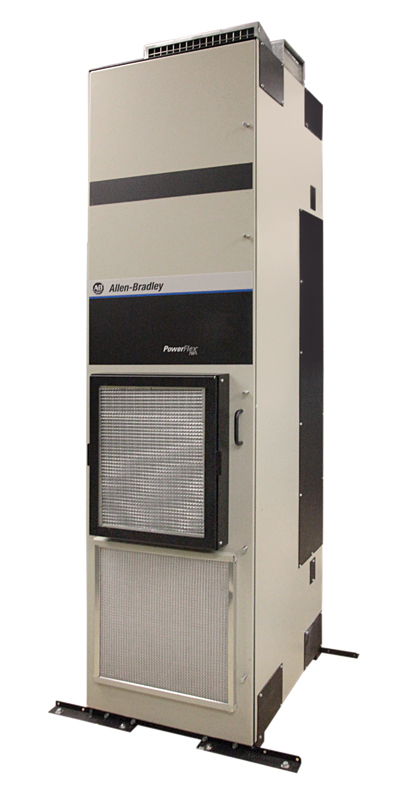
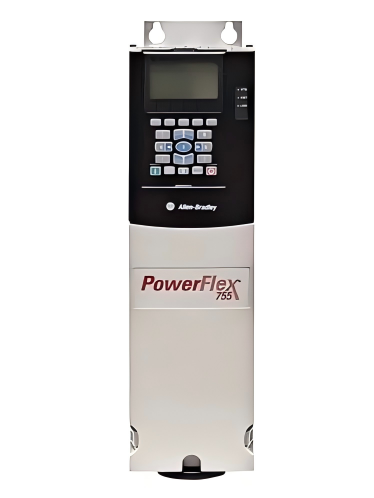
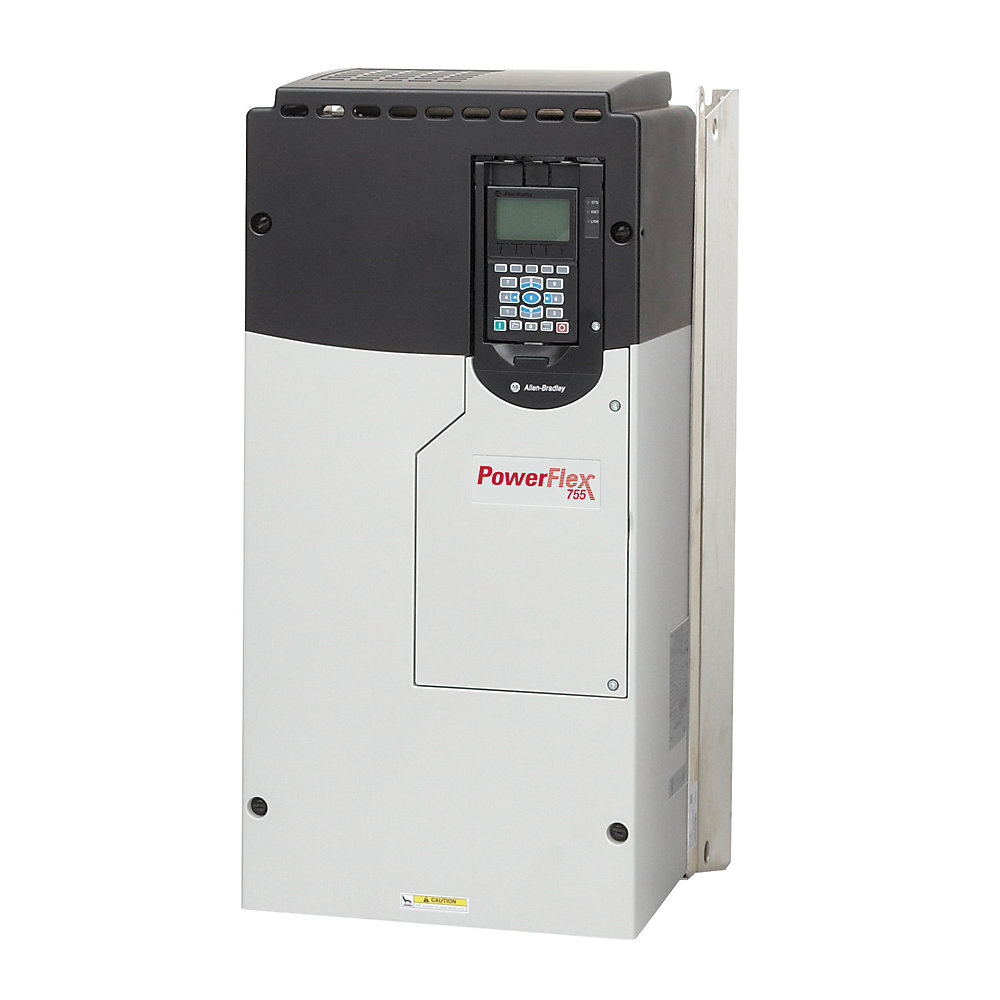
- Allen Bradley
- 20G1ALC750JN0NNNNN
- PowerFlex AC Drive
- USA
- 2450 × 600 × 800 mm
- 630kg
- Xiamen, China
- New & In Stock
- T/T, PayPal, Western Union
- 1 Year
- 1-3 Working Days
- DHL, UPS, TNT, FedEx and EMS.
- 24-Hour Service
- COO
- 4
Our advantage

Global Logistics
We have a 10-year logistics and express cooperation agreement, so our products can be shipped to any place in the world.

Brand new and original
Our products are imported in bulk from the place of origin. Because of the cooperative relationship, our products are all original and 100% new.

24-hour service
We provide 7*24 hours service to our customers. We will be there whenever you need us.

Price advantage
All our products are priced very favorably because we have our own warehouse and supply.
| Company Information | |||
| [email protected] | |||
| Mobile | +8615980777398 | ||
| +8615980777398 | |||
| 15980777398 |
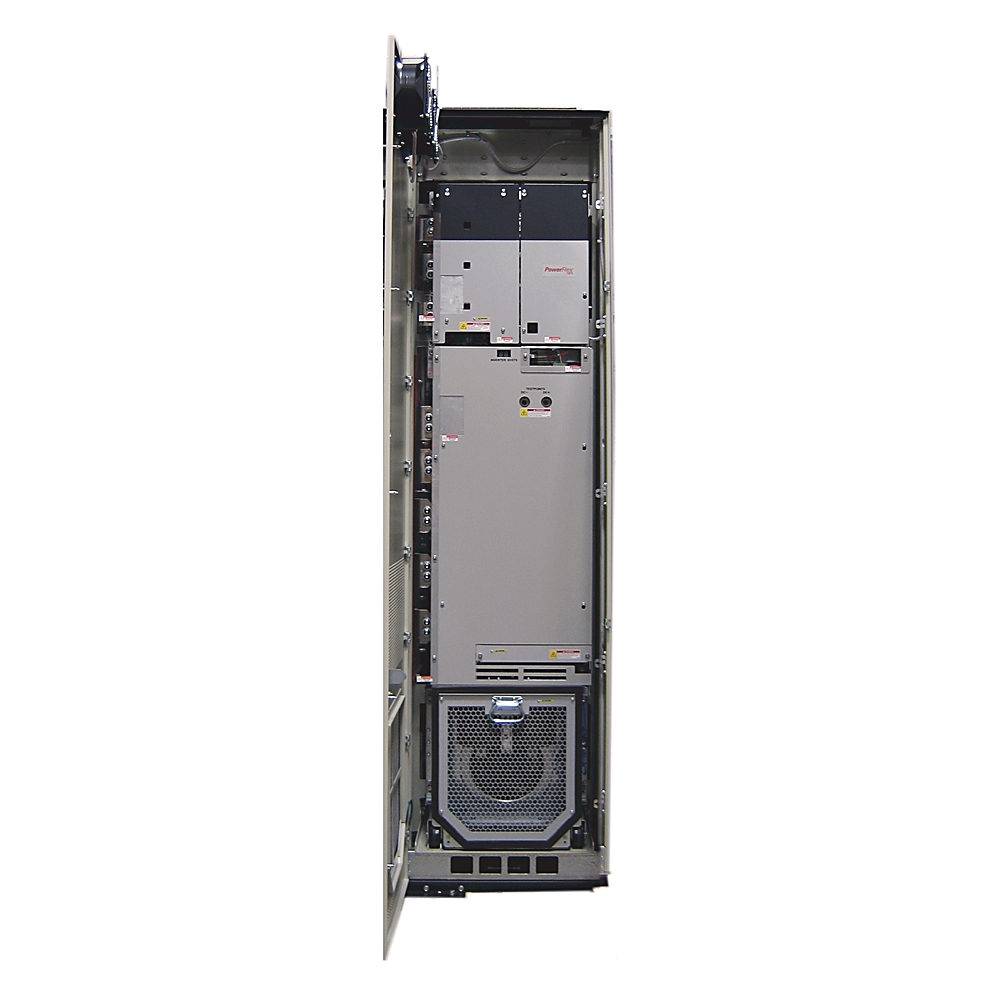
Allen-Bradley 20G1ALC750JN0NNNNN PowerFlex 755 AC Drive
1. Product Overview
The Allen-Bradley 20G1ALC750JN0NNNNN is a high-power AC variable frequency drive belonging to the PowerFlex 755 series. It is designed for demanding industrial motor-control applications where high current capacity, stable speed regulation, centralized automation, network communication, and flexible motor-control performance are required.
This model is configured for a 400 VAC, three-phase power system and provides a nominal current rating of 750 A. Its rated power capability reaches approximately 450 kW in Light Duty, 400 kW in Normal Duty, and 315 kW in Heavy Duty, making it suitable for large industrial motors and high-power mechanical systems.
The drive uses an air-cooled architecture and is based on a Frame 8 platform. The configuration is intended for an 800 mm deep MCC-style installation, with Type 1 / IP20 enclosure characteristics.
The model also incorporates embedded EtherNet/IP communication, making it suitable for integration into modern industrial automation systems where the drive needs to exchange commands, operating status, speed references, fault information, and diagnostic data with a PLC or supervisory control system.
The JN0 configuration does not include a keypad/HIM as a standard local operator interface, making it particularly appropriate for applications where the drive is controlled from a central automation system, remote HMI, control cabinet, or plant-level network.
2. Brand and Product Series
| Item | Description |
|---|---|
| Brand | Allen-Bradley |
| Product Series | PowerFlex 755 |
| Product Type | AC Variable Frequency Drive / AC Drive |
| Model | 20G1ALC750JN0NNNNN |
| Application Class | High-power industrial motor control |
| Cooling Method | Air cooled |
| Frame | Frame 8 |
| Communication | Embedded EtherNet/IP |
| Input System | 3-phase AC |
| Nominal Voltage | 400 VAC |
| Rated Current | 750 A |
| Enclosure Style | Type 1 / IP20 |
| Installation Style | 800 mm deep MCC-style configuration |
| Operator Interface | No standard HIM/keypad |
| Dynamic Braking | No integrated dynamic braking transistor |
| Product Family | PowerFlex 755 AC Drives |
The PowerFlex 755 family is intended for applications that require more than simple motor speed adjustment. It is designed around industrial automation, motor performance, diagnostics, communications, and flexible configuration.
3. Main Technical Parameters
| Parameter | Specification |
|---|---|
| Model | 20G1ALC750JN0NNNNN |
| Brand | Allen-Bradley |
| Series | PowerFlex 755 |
| Drive Type | AC variable frequency drive |
| Input Voltage | 400 VAC |
| Input Phase | 3 Phase |
| Nominal Current | 750 A |
| Light-Duty Rating | 450 kW |
| Normal-Duty Rating | 400 kW |
| Heavy-Duty Rating | 315 kW |
| Frame Size | Frame 8 |
| Cooling | Air cooled |
| Input Configuration | AC input with precharge |
| DC Terminals | None |
| Communication | Embedded EtherNet/IP |
| EMC Filtering | Filtered configuration |
| CM Jumper | Removed |
| Dynamic Braking | No integrated braking transistor |
| Enclosure | Type 1 / IP20 |
| Installation Depth | 800 mm deep MCC-style configuration |
| Operator Interface | No standard HIM |
| Approx. Planning Dimensions | 2450 × 600 × 800 mm |
| Approx. Weight | 620–630 kg |
| Mounting | Industrial cabinet / MCC-style installation |
| Intended Environment | Industrial motor-control applications |
Important mechanical note: the dimensions and weight above should be treated as approximate planning values for engineering, cabinet layout, transport, and preliminary installation work. The final mechanical drawing and project-specific configuration should always be used for actual mounting, lifting, clearance, and foundation calculations.
4. Electrical Rating
The 20G1ALC750JN0NNNNN is a large-frame AC drive rated for a 400 VAC three-phase input system.
Its 750 A nominal current rating places it in the high-current segment of the PowerFlex 755 family. This makes the unit appropriate for large motors used in pumps, fans, compressors, conveyors, mills, crushers, material-handling systems, process equipment, and other heavy industrial machinery.
The available power ratings vary according to the operating duty classification.
| Duty Classification | Rated Power |
|---|---|
| Light Duty | 450 kW |
| Normal Duty | 400 kW |
| Heavy Duty | 315 kW |
The difference between these ratings is important when selecting a drive. A motor that can be operated at 400 kW under normal-duty conditions should not automatically be assumed to be suitable for 400 kW continuous heavy-duty operation.
For applications involving frequent acceleration, high starting torque, shock loading, rapid speed changes, or prolonged high-load operation, the Heavy-Duty rating should be considered when sizing the drive.
5. 400 VAC Three-Phase Configuration
The 400 VAC three-phase configuration is commonly used in industrial electrical systems and provides a practical platform for large motor installations.
The three-phase AC input is converted inside the drive into a controlled DC link and then electronically switched through the inverter section to generate a variable-frequency, variable-voltage output for the motor.
This allows the drive to control motor speed without relying solely on mechanical throttling, dampers, gear changes, or other mechanical methods.
For large motors, this can provide significant benefits in process control because motor speed can be adjusted according to actual process requirements.
6. 750 A Current Capacity
The 750 A rating is one of the most important characteristics of this model.
A current capacity of this magnitude indicates that the drive is designed for large industrial motors and substantial mechanical loads.
In practical terms, a high-current drive such as this is typically used where a smaller general-purpose drive would not provide sufficient output capacity.
The 750 A platform is especially relevant when the application requires:
- Large motor power.
- High continuous current.
- Strong acceleration capability.
- Stable operation under varying load.
- Centralized PLC control.
- Industrial network communication.
- Large pumping capacity.
- Large fan or blower systems.
- High-capacity conveyor systems.
- Heavy process machinery.
The actual motor selection must still be based on motor nameplate current, motor voltage, duty cycle, overload requirement, ambient conditions, acceleration requirements, and the complete application profile rather than motor kW alone.
7. Light-Duty, Normal-Duty and Heavy-Duty Ratings
One of the useful characteristics of the PowerFlex 755 architecture is the ability to apply different current and power ratings depending on the operating duty.
For this model:
| Duty | Rating | Typical Application Character |
|---|---|---|
| Light Duty | 450 kW | Variable-load applications with relatively moderate overload demand |
| Normal Duty | 400 kW | General industrial continuous-load applications |
| Heavy Duty | 315 kW | Higher torque, higher overload, or more demanding mechanical applications |
Light Duty — 450 kW
The 450 kW Light-Duty rating can be suitable for applications where the load is comparatively smooth and does not require substantial overload capability.
Typical examples include large centrifugal fans and certain centrifugal pump applications.
Normal Duty — 400 kW
The 400 kW Normal-Duty rating is a practical reference point for general industrial applications where the motor operates continuously but does not experience severe cyclic overload.
Heavy Duty — 315 kW
The 315 kW Heavy-Duty rating is particularly relevant to applications where torque demand is more demanding.
Examples can include conveyors, mixers, crushers, certain processing machines, and other systems with significant starting or transient load requirements.
8. AC Input with Precharge
The drive uses an AC input with precharge.
Precharge is an important part of a large power-conversion system because the drive contains a substantial DC-link energy-storage section. The precharge function helps control the initial charging process and limits the electrical stress that could otherwise occur when the drive is first connected to the incoming supply.
For a high-power 750 A-class drive, proper power-system design is particularly important.
The incoming feeder, disconnecting equipment, protective devices, grounding system, transformer capacity, cable arrangement, and short-circuit characteristics should all be considered as part of the complete installation.
9. No DC Terminals
The specified configuration does not provide external DC terminals.
This means the product should be considered primarily as an AC-input drive configuration, rather than as a common-DC-bus inverter intended for direct connection to an external DC bus.
This can simplify certain conventional AC-drive installations because the system is designed around the AC input architecture.
However, applications requiring regenerative energy sharing, common DC bus arrangements, or specialized DC-link configurations should be evaluated separately.
10. Embedded EtherNet/IP
One of the most useful features of the 20G1ALC750JN0NNNNN is its embedded EtherNet/IP communication capability.
This allows the drive to participate directly in an industrial Ethernet control architecture.
A typical control arrangement may include:
PLC → Industrial Ethernet Network → PowerFlex 755 → Motor
The PLC can be used to provide commands and reference values, while the drive can return operating information.
Typical network-controlled information can include:
- Start command.
- Stop command.
- Speed reference.
- Frequency reference.
- Drive status.
- Running status.
- Fault status.
- Alarm information.
- Output current.
- Output frequency.
- Motor-related operating information.
- Diagnostic information.
This architecture can significantly reduce the need for extensive hardwired control circuits in a centralized automation system.
11. No Standard HIM Configuration
The JN0 configuration is supplied without a standard HIM/keypad interface.
This is not necessarily a disadvantage. In many modern industrial systems, large drives are installed inside electrical rooms, MCC sections, or dedicated drive cabinets and are operated primarily through PLCs, HMIs, SCADA systems, or industrial networks.
A no-HIM configuration can therefore be suitable for applications where local manual operation is not the primary control method.
It can also provide a cleaner installation where the drive itself does not need a permanently mounted operator keypad.
For commissioning and maintenance, technicians may instead use appropriate engineering and communication tools through the system architecture.
12. Filtered Configuration and EMC Considerations
The specified configuration includes filtering.
EMC performance is important in industrial facilities because high-power switching equipment can generate electrical noise that may affect sensitive instrumentation, communication networks, sensors, or other electronic equipment.
A properly configured drive installation should therefore consider:
- Motor cable type.
- Cable shielding.
- Cable routing.
- Grounding.
- Bonding.
- Control-cable separation.
- Network-cable installation.
- Cabinet construction.
- Incoming power arrangement.
- Motor grounding.
Filtering at the drive level is only one part of the overall EMC strategy. Correct installation practices remain important.
13. CM Jumper Removed
The specified configuration has the CM jumper removed.
This is a configuration detail that can be relevant to grounding, common-mode behavior, and the electrical characteristics of the installation.
The CM jumper configuration should not be changed casually. The appropriate arrangement depends on the grounding system, electrical distribution design, motor cable configuration, and application requirements.
For replacement projects, technicians should compare the replacement unit’s configuration against the original drive before energizing the system.
14. Dynamic Braking Configuration
The 20G1ALC750JN0NNNNN configuration is specified without an integrated dynamic braking transistor.
This means the drive should not be selected on the assumption that it contains a built-in dynamic braking transistor for dissipating regenerated energy.
Applications involving rapid deceleration, high-inertia loads, or frequent braking should therefore receive additional engineering attention.
Typical questions during application evaluation include:
- How much rotating inertia does the machine have?
- How quickly must the motor stop?
- How frequently does deceleration occur?
- Is the load capable of driving the motor?
- Is regeneration expected?
- Is an external braking solution required?
- Is regenerative equipment more appropriate than resistor-based braking?
These questions become particularly important with large motors because the amount of stored mechanical energy can be substantial.
15. Cooling System
The drive uses an air-cooled design.
Air cooling is widely used in industrial variable frequency drives because it provides a practical balance between serviceability, thermal management, and system complexity.
However, the electrical room must be designed to remove the heat generated by the drive.
For a high-power 750 A drive, ventilation should not be treated as a minor cabinet detail.
The installation should provide:
- Adequate air circulation.
- Appropriate ambient temperature.
- Clean cooling air.
- Correct cabinet airflow.
- Sufficient clearance.
- Proper exhaust arrangements.
- Regular inspection of cooling components.
Dust, oil mist, moisture, corrosive gases, and blocked ventilation paths can reduce thermal performance and shorten equipment life.
16. Enclosure and Protection
The specified enclosure classification is Type 1 / IP20.
This means the drive is intended primarily for installation within a controlled industrial electrical environment rather than direct exposure to harsh outdoor conditions.
It is generally more appropriate for:
- Electrical rooms.
- MCC rooms.
- Drive rooms.
- Industrial control cabinets.
- Indoor automation areas.
- Protected machinery electrical compartments.
It is not appropriate to interpret IP20 as a waterproof or washdown enclosure.
If the drive must operate in an environment with water spray, heavy dust, corrosive chemicals, outdoor exposure, or washdown conditions, additional enclosure protection or a different drive configuration may be required.
17. Approximate Physical Dimensions and Weight
Because this is a large Frame 8 MCC-style drive, mechanical planning is an important part of the project.
For preliminary engineering, a reasonable planning envelope is approximately:
| Mechanical Parameter | Approximate Value |
|---|---|
| Height | 2450 mm approx. |
| Width | 600 mm approx. |
| Depth | 800 mm approx. |
| Weight | 620–630 kg approx. |
| Frame | Frame 8 |
| Installation Depth | 800 mm MCC-style |
These values should be treated as engineering planning estimates rather than final certified mechanical dimensions.
The final enclosure arrangement, shipping configuration, options, mounting hardware, cable-entry arrangement, and project-specific configuration can affect actual dimensions and mass.
Before purchasing lifting equipment, designing foundations, or finalizing cabinet layouts, the approved mechanical drawing should be checked.
18. Product Introduction
The 20G1ALC750JN0NNNNN is intended for large-scale industrial motor control where the combination of high current capacity, network integration, variable-speed operation, and industrial-grade construction is required.
Unlike a small compact drive intended primarily for simple speed control, this type of drive is normally integrated into a larger automation system.
The drive can become an important part of the complete machine-control architecture.
The PLC can determine what speed the motor should run at, while the drive handles the power conversion and motor-control functions required to produce that operating condition.
This separation between process control and power control makes the drive suitable for large automated production systems.
19. How the Drive Works
The basic operating sequence can be understood as follows.
First, the incoming three-phase AC supply is connected to the drive.
The drive processes the incoming electrical power through its input and DC-link sections.
The inverter then uses high-speed electronic switching to produce a controlled three-phase output.
By controlling output voltage and frequency, the drive can regulate motor speed and torque.
For example, if a large pump does not need to operate at full speed, the drive can reduce motor speed instead of allowing the motor to operate continuously at full speed while a valve or other mechanical device restricts the process.
This makes variable-speed control particularly valuable for process applications where the required flow or pressure changes throughout the operating cycle.
20. Main Application Areas
The 20G1ALC750JN0NNNNN can be considered for a broad range of high-power industrial applications.
Water and Wastewater
Large water-treatment facilities often use variable-speed drives for pumps, booster systems, intake pumps, lift stations, and process-water systems.
The drive can adjust motor speed according to flow, pressure, tank level, or other process variables.
HVAC and Large Ventilation Systems
Large industrial fans and blowers can use variable-speed control to match airflow requirements.
This can reduce unnecessary motor operation at full speed when the process requires less airflow.
Mining
Large conveyors, pumps, fans, crushers, and material-handling systems can require high-current motor drives.
The high-power capacity of this model makes it relevant to large mining machinery where controlled acceleration and variable speed are required.
Cement and Building Materials
Large fans, conveyors, crushers, mixers, mills, and process equipment can require high-power motor control.
Metals and Steel Processing
Industrial material handling, cooling systems, fans, pumps, processing equipment, and production lines can benefit from precise variable-speed operation.
Pulp and Paper
Large pumps, fans, conveyors, process machines, and auxiliary equipment can use high-power drives.
Chemical Processing
Large pumps, fans, mixers, compressors, and process machinery can benefit from controlled motor operation.
Manufacturing
Heavy production machinery and centralized material-handling systems may require large variable-frequency drives where motor speed needs to be controlled according to production requirements.
21. Typical Application Comparison
| Application | Suitability | Typical Reason |
|---|---|---|
| Large centrifugal pump | Very suitable | Variable flow and pressure control |
| Large fan | Very suitable | Adjustable airflow |
| Large blower | Very suitable | Process airflow control |
| Conveyor | Suitable | Controlled acceleration and speed |
| Crusher | Application dependent | High torque and duty-cycle evaluation required |
| Mixer | Application dependent | Torque and starting-load evaluation required |
| Compressor | Suitable with application review | Speed and process control |
| Water treatment | Very suitable | Pump and process control |
| Mining equipment | Suitable with engineering review | High power and rugged industrial use |
| Paper machinery | Suitable | Continuous variable-speed operation |
| Chemical process machinery | Suitable | Process speed control |
| Large material-handling system | Suitable | Controlled acceleration/deceleration |
22. Main Product Advantages
22.1 High Power Capacity
The ability to support up to 450 kW Light Duty makes the model suitable for large industrial motors.
This allows one drive platform to handle applications that would otherwise require multiple smaller drive units.
22.2 High Current Rating
The 750 A current rating provides substantial electrical capacity for large motors.
This is especially valuable where motor current is the primary selection parameter.
22.3 Multiple Duty Ratings
The availability of Light-Duty, Normal-Duty, and Heavy-Duty ratings allows engineers to match the drive more closely to the actual load.
This is better than selecting a drive solely from the motor’s nominal kW value.
22.4 Embedded EtherNet/IP
Integrated EtherNet/IP simplifies integration into industrial automation systems.
It can reduce the amount of hardwired control required and allows operating information to be exchanged between the drive and control system.
22.5 No Standard HIM
The JN0 configuration is useful for centralized automation architectures where local keypad operation is not required.
The drive can be installed as part of a larger control system without relying on a permanently mounted local operator interface.
22.6 Air-Cooled Architecture
Air cooling provides a familiar industrial solution and can simplify service and maintenance compared with more complex cooling arrangements.
Proper ventilation remains essential.
22.7 Large Frame Architecture
The Frame 8 platform provides the physical and electrical capacity required for high-power applications.
It is intended for industrial installations where a small compact drive would not be appropriate.
22.8 Industrial Network Integration
The drive can be integrated into centralized control structures involving PLCs, HMIs, SCADA systems, and industrial Ethernet networks.
This is particularly useful in plants with multiple drives that need to be monitored from a central control room.
23. Five Recommended Related PowerFlex 755 Models
The following models are closely related to the requested drive and are useful when comparing current capacity, power level, voltage class, or configuration.
| Model | Voltage | Current | LD Rating | ND Rating | HD Rating | Frame / Style |
|---|---|---|---|---|---|---|
| 20G1ALC567AN0NNNNN | 400 VAC | 567 A | 355 kW | 315 kW | 250 kW | Frame 8, MCC style |
| 20G1ALC650AN0NNNNN | 400 VAC | 650 A | 400 kW | 355 kW | 315 kW | Frame 8, MCC style |
| 20G1ALC750AN0NNNNN | 400 VAC | 750 A | 450 kW | 400 kW | 315 kW | Frame 8, MCC style |
| 20G1ALC770AN0NNNNN | 400 VAC | 770 A | 450 kW | 400 kW | 355 kW | Frame 8, MCC style |
| 20G1ALD710AN0NNNNN | 480 VAC class | 710 A | 650 HP | 600 HP | 450 HP | Frame 8, MCC style |
These models are particularly useful when designing a drive replacement strategy because they represent neighboring capacity points within the larger PowerFlex 755 product family.
24. Comparison With 20G1ALC750AN0NNNNN
The 20G1ALC750AN0NNNNN is especially close to the requested JN0 model.
Both belong to the same high-power 400 VAC PowerFlex 755 configuration family and share the important 750 A / 450 kW LD / 400 kW ND / 315 kW HD rating structure.
The major distinction is the catalog configuration code.
This is important because two drives with similar electrical ratings may have differences in operator-interface configuration, enclosure arrangement, option configuration, or other ordering characteristics.
For replacement projects, the complete catalog number should therefore be matched rather than selecting a replacement based only on current and kW.
25. Five Same-Brand Popular Model Families
The following are useful same-brand models to consider when comparing different power levels and application requirements.
| Model | Product Series | Typical Application | General Rating Class |
|---|---|---|---|
| 25B-D010N104 | PowerFlex 525 | Small pumps, fans, conveyors, machines | Compact low-power drive |
| 25C-D010N103 | PowerFlex 527 | Machine automation and integrated control | Compact industrial drive |
| 20F11NC2P1JA0NNNNN | PowerFlex 753 | General industrial motor control | Medium/high-power class |
| 20F11NC8P0JA0NNNNN | PowerFlex 753 | Larger industrial equipment | Higher-power class |
| 20G1ALC750JN0NNNNN | PowerFlex 755 | Large industrial motors and process systems | High-power 750 A class |
The exact rating of the first four models depends on their voltage and complete catalog configuration, so they should not be treated as direct electrical substitutes for the 750 A PowerFlex 755.
Their main value in a comparison is to show the range of drive platforms available for different machine sizes and control requirements.
26. PowerFlex 525 vs PowerFlex 527 vs PowerFlex 753 vs PowerFlex 755
| Product Series | General Position | Typical Application | Relative Power Range | Control Architecture |
|---|---|---|---|---|
| PowerFlex 525 | Compact drive | Small machines, pumps, fans, conveyors | Low power | Distributed / machine level |
| PowerFlex 527 | Machine-oriented drive | Automation machinery | Low to medium power | Automation-integrated |
| PowerFlex 753 | Industrial drive | Pumps, fans, conveyors, process equipment | Medium to high power | Industrial automation |
| PowerFlex 755 | High-performance industrial drive | Large motors and demanding process systems | High power | Centralized industrial automation |
The 20G1ALC750JN0NNNNN is positioned toward the high-power end of this product structure.
It is therefore more appropriate for large industrial equipment than for small machine motors.
27. Why the PowerFlex 755 Series Is Suitable for Large Industrial Equipment
Large industrial motors are not simply larger versions of small motors.
As motor power increases, the electrical, thermal, mechanical, and control requirements become more significant.
The drive must handle large current levels while maintaining reliable switching and motor control.
The complete system also needs appropriate protection, grounding, ventilation, cable routing, and network integration.
The PowerFlex 755 platform is designed around this type of industrial requirement.
28. Pump Applications
For pump systems, the drive can provide variable-speed operation according to process demand.
A typical system could use pressure feedback from a transmitter.
The PLC or process controller determines the required operating condition.
The drive then adjusts the motor speed.
This can provide smoother operation than repeatedly starting and stopping the motor.
For centrifugal pump applications, reducing motor speed can also have a significant effect on power consumption because pump power demand can change substantially with operating speed.
The actual energy savings depend on the pump curve, system curve, operating point, motor efficiency, process requirements, and operating schedule.
29. Fan and Blower Applications
Large ventilation systems often do not need maximum airflow continuously.
A variable-speed drive allows the fan to operate closer to the actual airflow requirement.
For example, a production facility may require different ventilation levels during different production periods.
Instead of keeping the motor at full speed continuously, the drive can adjust the motor speed according to process demand.
This makes the PowerFlex 755 architecture useful for large ventilation and industrial blower systems.
30. Conveyor Applications
Conveyors can benefit from controlled acceleration and deceleration.
Directly applying full motor torque to a heavily loaded conveyor can create mechanical stress.
A variable-frequency drive can provide a controlled acceleration profile.
This can help reduce:
- Mechanical shock.
- Belt stress.
- Gearbox stress.
- Product movement problems.
- Electrical starting demand.
- Unnecessary mechanical wear.
For conveyors with high starting torque or severe cyclic loading, the Heavy-Duty rating and complete motor data should be carefully evaluated.
31. Crusher and Heavy Process Applications
Crusher and heavy mechanical applications can involve rapidly changing torque requirements.
The drive selection should therefore be based on actual load behavior rather than simply motor horsepower.
Factors such as:
- Starting torque.
- Locked-rotor behavior.
- Inertia.
- Mechanical shock.
- Acceleration time.
- Duty cycle.
- Overload duration.
- Stopping requirements.
should be considered.
The 315 kW Heavy-Duty rating is an important reference for such applications, but the final suitability must be established from the actual motor and machine requirements.
32. Centralized Automation Benefits
The embedded EtherNet/IP capability makes this drive well suited to centralized control architectures.
A plant can use a PLC as the main process controller while the drive handles the motor-control layer.
An HMI can display drive status and operating information.
A SCADA system can collect operating data for plant-level monitoring.
Maintenance personnel can use diagnostic information to identify problems more quickly.
This creates a structured control architecture:
Process → PLC → EtherNet/IP → PowerFlex 755 → Motor
and:
PowerFlex 755 → Status / Diagnostics → PLC / HMI / SCADA
Such an architecture is particularly useful when many large motors are installed throughout a facility.
33. Maintenance Considerations
A large air-cooled drive should be included in a planned maintenance program.
Important inspection areas include:
Cooling System
Check for dust accumulation, blocked airflow, abnormal fan operation, and excessive temperature.
Electrical Connections
Inspect power connections for signs of overheating, looseness, or discoloration.
Grounding
Verify that protective grounding and bonding connections remain secure.
Control Wiring
Inspect control and network connections for damage or loose terminals.
Environmental Conditions
Keep the electrical room within the appropriate environmental range and prevent excessive dust, moisture, oil mist, and corrosive contamination.
Network Communication
Monitor communication faults and intermittent network problems.
Drive Diagnostics
Review stored faults and warnings instead of simply resetting the drive after a fault.
Repeated faults can indicate an underlying mechanical, electrical, or process problem.
34. Installation Considerations
Because the 20G1ALC750JN0NNNNN is a large Frame 8 drive, installation planning should begin before the equipment arrives.
The project should consider:
- Cabinet dimensions.
- Drive weight.
- Transportation route.
- Lifting method.
- Floor loading.
- Cable-entry space.
- Ventilation.
- Service clearance.
- Electrical clearance.
- Network cable routing.
- Motor cable routing.
- Grounding.
- Protective devices.
- Incoming transformer capacity.
- Short-circuit conditions.
The approximate 620–630 kg planning weight is significant enough that lifting and positioning should be engineered rather than treated as a routine small-drive installation.
35. Cable Installation
The motor cable system should be designed according to the actual motor current, installation method, ambient temperature, conductor material, cable length, voltage drop, applicable electrical standards, and EMC requirements.
High-power drive installations require careful attention to cable routing.
Motor cables should generally be kept separate from sensitive analog, communication, and instrumentation wiring where practical.
Where shielded motor cable is used, the shield termination and grounding method should be consistent with the overall EMC design.
36. Grounding
Grounding is especially important with high-power variable-frequency drives.
A suitable installation should provide a low-impedance grounding path and appropriate bonding between:
- Drive enclosure.
- Motor frame.
- Electrical cabinet.
- Grounding conductor.
- Cable shields where applicable.
- Associated metallic structures.
Poor grounding can contribute to:
- Communication problems.
- Electrical noise.
- Incorrect feedback signals.
- Motor bearing currents.
- Drive faults.
- EMC problems.
Grounding should therefore be considered part of the drive-control system rather than simply a safety connection.
37. Ventilation and Heat Management
The drive converts electrical energy into useful motor output, but some energy is inevitably converted into heat.
At this power level, the resulting heat load can become significant.
The electrical room should therefore be evaluated for:
- Total installed drive heat.
- Room temperature.
- Air exchange.
- HVAC capacity.
- Cabinet airflow.
- Filter condition.
- Fan operation.
- Clearance around the drive.
A well-designed cooling system can be just as important to long-term reliability as correct electrical installation.
38. Advantages for OEM Machine Builders
For large OEM equipment, the 20G1ALC750JN0NNNNN can provide a standardized motor-control platform.
The machine builder can integrate the drive into a common automation architecture and use network commands for operation.
This can simplify machine-level control logic and reduce the number of individual hardwired signals.
The no-HIM configuration is also suitable when the machine’s HMI is already responsible for operator interaction.
39. Advantages for System Integrators
For system integrators, the PowerFlex 755 platform offers a practical approach to large motor control.
The embedded industrial network interface allows the drive to become part of a broader automation system.
Instead of treating the drive as an isolated electrical device, the integrator can use it as an intelligent field device that provides operating information and receives commands from the control system.
This can make troubleshooting and system monitoring more structured.
40. Advantages for Replacement Projects
When an older large industrial drive needs replacement, the 20G1ALC750JN0NNNNN can be considered when the electrical requirements match.
Its high current rating and PowerFlex 755 architecture make it relevant for large installed motors.
However, replacement should never be based on the old drive’s model number alone.
The following should be checked:
- Motor nameplate voltage.
- Motor full-load current.
- Motor power.
- Duty cycle.
- Overload requirement.
- Acceleration requirement.
- Deceleration requirement.
- Braking requirement.
- Existing communication architecture.
- Existing cabinet dimensions.
- Cooling requirements.
- Incoming supply.
- Grounding arrangement.
- Existing motor cable.
- Existing control system.
41. Product Selection Checklist
Before selecting the 20G1ALC750JN0NNNNN for a project, verify the following:
| Selection Item | Required Check |
|---|---|
| Motor Voltage | Must match the drive/application system |
| Motor Current | Must be within the selected duty rating |
| Motor Power | Compare against LD/ND/HD rating |
| Duty | Determine Light, Normal or Heavy Duty |
| Supply | Confirm 400 VAC three-phase system |
| Starting Torque | Evaluate application requirements |
| Acceleration | Confirm required acceleration time |
| Deceleration | Determine whether external braking is required |
| Regeneration | Evaluate if the load can regenerate |
| Communication | Confirm EtherNet/IP architecture |
| HIM | Confirm that no local keypad is required |
| Cooling | Confirm adequate airflow |
| Environment | Confirm temperature and contamination conditions |
| Cabinet | Confirm mechanical space |
| Weight | Confirm lifting and floor requirements |
| Cable | Confirm motor and input cable sizing |
| Grounding | Confirm grounding architecture |
| EMC | Confirm filtering and cable arrangement |
| Maintenance | Confirm service access |
| Replacement | Compare complete catalog configuration |
42. Five Closely Related Models — Detailed Comparison
| Model | Voltage | Current | LD | ND | HD | Typical Reason to Consider |
|---|---|---|---|---|---|---|
| 20G1ALC567AN0NNNNN | 400 VAC | 567 A | 355 kW | 315 kW | 250 kW | Lower-capacity alternative |
| 20G1ALC650AN0NNNNN | 400 VAC | 650 A | 400 kW | 355 kW | 315 kW | Slightly lower current requirement |
| 20G1ALC750AN0NNNNN | 400 VAC | 750 A | 450 kW | 400 kW | 315 kW | Closest A-configuration counterpart |
| 20G1ALC770AN0NNNNN | 400 VAC | 770 A | 450 kW | 400 kW | 355 kW | Higher current / stronger HD capacity |
| 20G1ALD710AN0NNNNN | 480 VAC class | 710 A | 650 HP | 600 HP | 450 HP | Higher-voltage application |
43. Same-Brand Model Comparison
| Model | Series | General Application | Relative Size |
|---|---|---|---|
| 25B-D010N104 | PowerFlex 525 | Compact machinery, pumps, fans | Small |
| 25C-D010N103 | PowerFlex 527 | Machine automation | Small / Medium |
| 20F11NC2P1JA0NNNNN | PowerFlex 753 | Industrial machinery | Medium / Large |
| 20F11NC8P0JA0NNNNN | PowerFlex 753 | Larger industrial systems | Large |
| 20G1ALC750JN0NNNNN | PowerFlex 755 | Large motors and process equipment | Very Large |
The 20G1ALC750JN0NNNNN should therefore be viewed as a high-power industrial drive rather than a compact machine drive.
44. What Makes 20G1ALC750JN0NNNNN Different
Several characteristics make this model particularly identifiable within the PowerFlex 755 family:
400 VAC three-phase input
The drive is designed for industrial 400 VAC three-phase applications.
750 A current
The current rating places it among the large-frame PowerFlex 755 configurations.
450 kW Light Duty
This provides substantial capacity for variable-load applications.
400 kW Normal Duty
This is a strong reference rating for general industrial continuous-duty applications.
315 kW Heavy Duty
This rating provides an important reference for higher-demand applications.
Frame 8
The large frame is consistent with the drive’s high electrical capacity.
800 mm deep MCC-style configuration
This indicates that mechanical integration should be planned as part of the electrical-system design.
Embedded EtherNet/IP
The integrated network capability supports modern automation architecture.
No HIM
The JN0 configuration is appropriate for centralized or remote operator-control systems.
Air cooled
The design is suitable for industrial electrical-room applications where controlled ventilation is available.
45. Recommended Application Strategy
For a large pump or fan, the first step is normally to determine the process operating range.
The drive should then be selected according to the motor’s actual full-load current and the required duty.
For a conveyor, crusher, mixer, or other torque-intensive machine, the acceleration profile and overload requirement become more important.
For a centralized automation system, the EtherNet/IP architecture should be considered from the beginning of the project.
For a replacement application, mechanical dimensions, electrical ratings, control wiring, network configuration, and braking requirements should all be reviewed before ordering.
46. Overall Technical Summary
| Category | 20G1ALC750JN0NNNNN |
|---|---|
| Brand | Allen-Bradley |
| Series | PowerFlex 755 |
| Product Type | High-power AC variable frequency drive |
| Input | 400 VAC, 3 Phase |
| Current | 750 A |
| Light Duty | 450 kW |
| Normal Duty | 400 kW |
| Heavy Duty | 315 kW |
| Frame | Frame 8 |
| Cooling | Air cooled |
| Communication | Embedded EtherNet/IP |
| Input Arrangement | AC input with precharge |
| DC Terminals | None |
| Enclosure | Type 1 / IP20 |
| Installation | 800 mm deep MCC style |
| Filter | Filtered |
| CM Jumper | Removed |
| HIM | None / No standard HIM |
| Dynamic Braking | No integrated braking transistor |
| Approx. Dimensions | 2450 × 600 × 800 mm |
| Approx. Weight | 620–630 kg |
| Main Application | Large industrial motor control |
47. Final Product Description
The Allen-Bradley 20G1ALC750JN0NNNNN is a high-power PowerFlex 755 AC drive designed for large industrial motor-control applications requiring high current capacity, variable-speed operation, industrial network connectivity, and centralized automation.
With a 400 VAC three-phase input, 750 A current rating, and up to 450 kW Light-Duty capability, it is designed for large motor systems rather than compact machinery.
Its 400 kW Normal-Duty and 315 kW Heavy-Duty ratings allow engineers to match the drive to different load profiles. This distinction is particularly important in industrial applications where motor torque, acceleration, overload, and operating cycles vary significantly.
The integrated EtherNet/IP capability makes the drive suitable for PLC-based automation systems. It can be incorporated into centralized control architectures in which motor speed, commands, status, alarms, and diagnostic information are exchanged over the industrial network.
The JN0 configuration without a standard HIM is well suited to installations where the drive is controlled remotely through a PLC, HMI, SCADA system, or other automation platform.
The air-cooled Frame 8 construction and 800 mm deep MCC-style format make this a substantial industrial installation. Adequate cabinet space, airflow, electrical clearance, cable routing, grounding, and maintenance access should therefore be considered during system design.
For applications such as large pumps, fans, blowers, conveyors, process machinery, water-treatment equipment, mining systems, material handling, chemical processing, pulp and paper equipment, and other large industrial motor systems, this model provides a combination of high current capability and automation-oriented functionality.
When selecting the unit for a real installation, the most important parameters are not simply motor horsepower and drive current. The complete selection should consider motor nameplate current, voltage, duty classification, starting torque, acceleration requirements, braking requirements, ambient temperature, ventilation, cable system, grounding, EMC conditions, network architecture, and the physical installation environment.
From an engineering perspective, the 20G1ALC750JN0NNNNN is best regarded as a large-frame industrial drive intended to serve as part of a complete motor-control and automation system. Its combination of 750 A current capability, 400 VAC three-phase operation, PowerFlex 755 architecture, EtherNet/IP communication, air cooling, Frame 8 construction, and remote/no-HIM configuration makes it particularly suitable for centralized high-power industrial automation projects.
For preliminary mechanical planning, the approximate envelope of 2450 × 600 × 800 mm and approximate mass of 620–630 kg can be used as a working estimate, but final cabinet design, lifting arrangements, transportation planning, and installation work should be based on the approved mechanical documentation for the exact configured unit.
In short, the 20G1ALC750JN0NNNNN is a high-capacity industrial AC drive intended for large motors and demanding process equipment. Its strongest characteristics are its high current capability, multiple duty ratings, integrated industrial communication, large-frame architecture, centralized-control suitability, and ability to serve as a major motor-control component within a modern industrial automation system.