

ProductPRODUCT
Featured products


Contact Us
- Allen Bradley
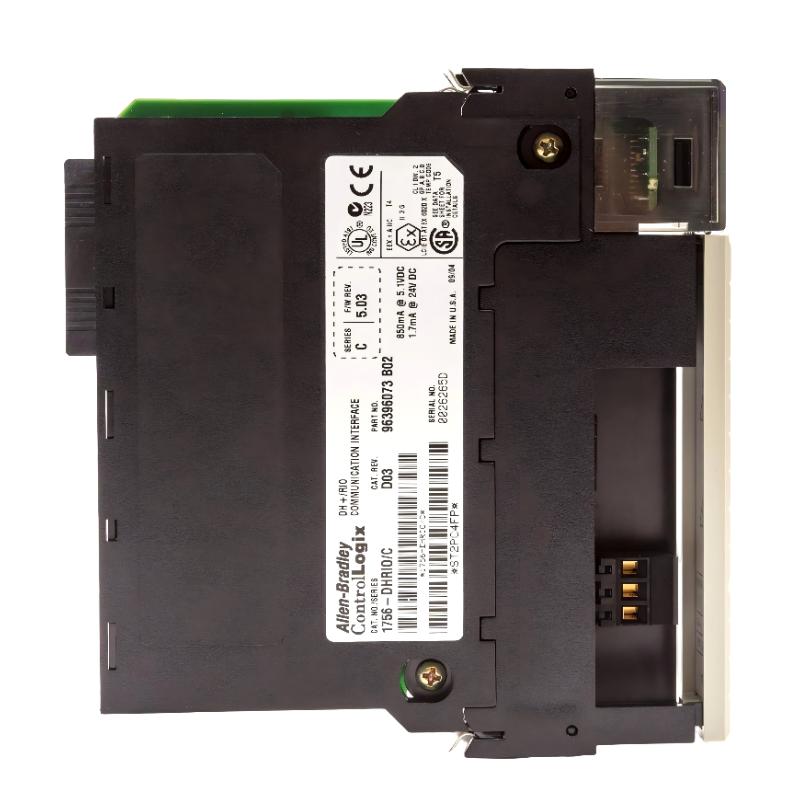
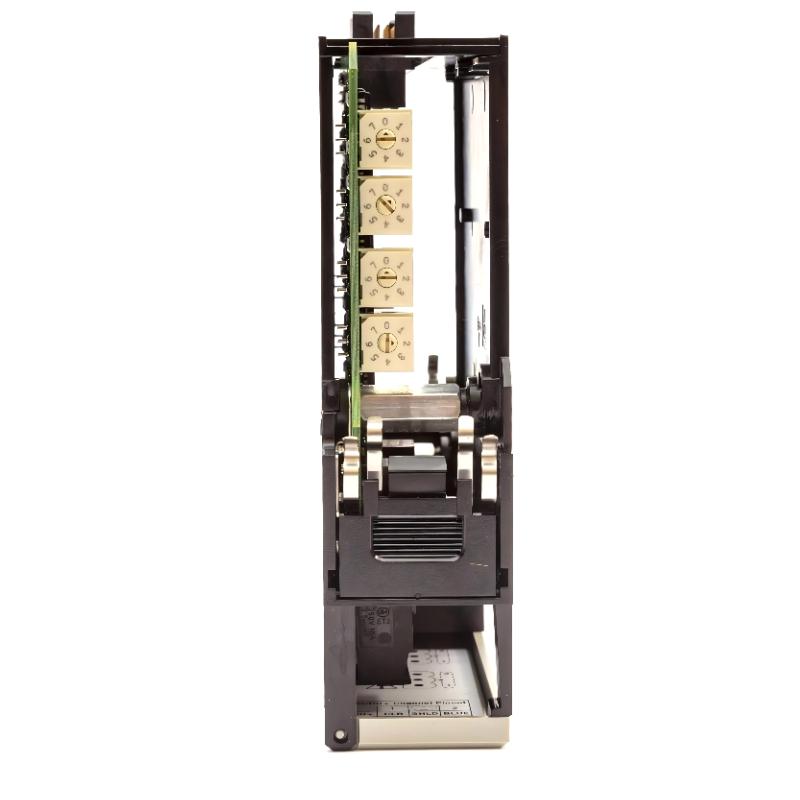
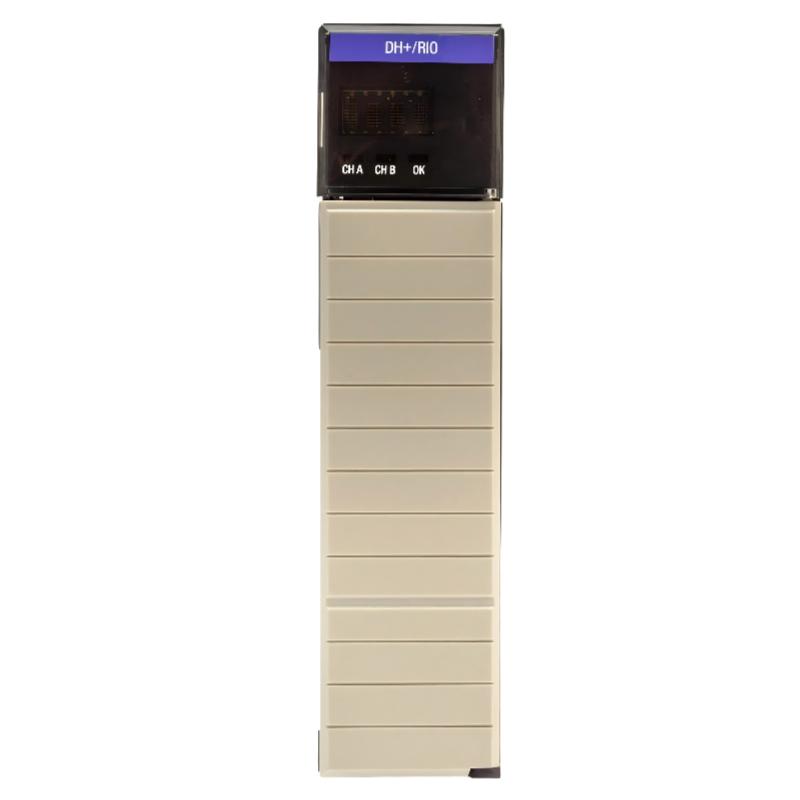
- 1756-DHRIO
- ControlLogix ControlNet Communication Module
- USA
- 140 × 145 × 35 mm
- 0.3kg
- Xiamen, China
- New & In Stock
- T/T, PayPal, Western Union
- 1 Year
- 1-3 Working Days
- DHL, UPS, TNT, FedEx and EMS.
- 24-Hour Service
- COO
- 90
Our advantage

Global Logistics
We have a 10-year logistics and express cooperation agreement, so our products can be shipped to any place in the world.

Brand new and original
Our products are imported in bulk from the place of origin. Because of the cooperative relationship, our products are all original and 100% new.

24-hour service
We provide 7*24 hours service to our customers. We will be there whenever you need us.

Price advantage
All our products are priced very favorably because we have our own warehouse and supply.
| Company Information | |||
| [email protected] | |||
| Mobile | +8615980777398 | ||
| +8615980777398 | |||
| 15980777398 |
Industrial Communication Module Technical Report
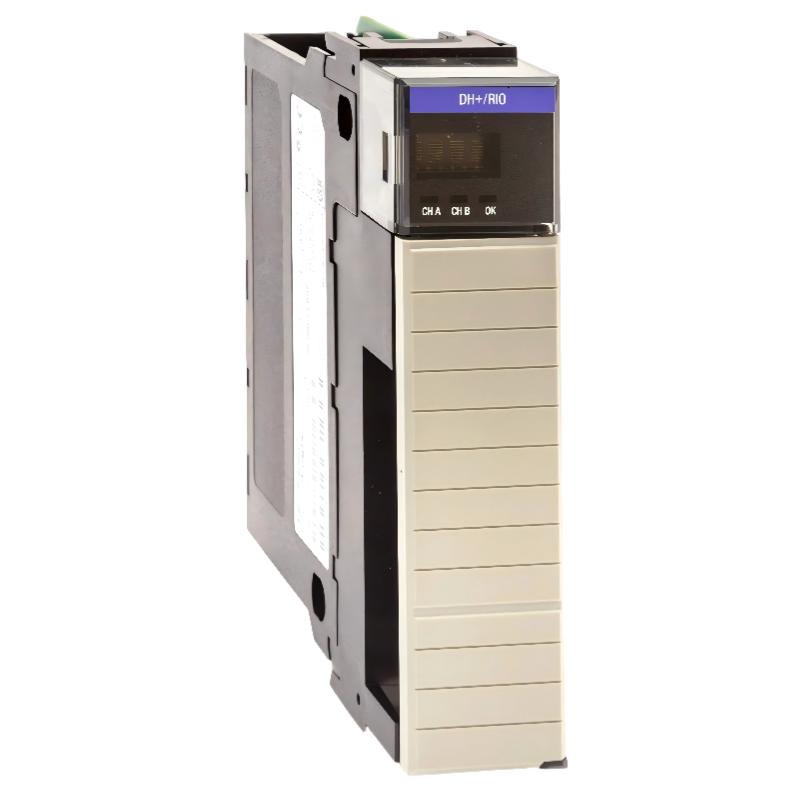
Model: 1756-DHRIO Data Highway Plus / Remote I/O Communication Module
1. Product Overview
The 1756-DHRIO is a ControlLogix communication module designed to interface legacy industrial networks such as Data Highway Plus (DH+) and Remote I/O (RIO). It serves as a bridge and scanner, enabling modern ControlLogix controllers to communicate with older PLC systems and distributed I/O architectures.
This module is widely used in system migration projects, where existing legacy equipment must be integrated into newer automation platforms without full replacement.
It supports multi-network communication and can handle both DH+ messaging and RIO scanning functions simultaneously, depending on configuration.
2. Brand and Series Information
- Brand: Industrial automation control platform
- Series: ControlLogix 1756 Series
- Product Family: Communication / Legacy Network Interface Modules
- Module Type: DH+ / Remote I/O Communication Module
The 1756 platform is a modular automation system designed for scalable control architectures and multi-protocol industrial communication, including legacy network support.
3. Product Description
The 1756-DHRIO module provides dual-channel communication capability:
- One channel can be configured for Data Highway Plus (DH+) messaging
- The other channel can be configured for Remote I/O scanning or DH+ communication
It supports integration between modern ControlLogix controllers and legacy PLC systems, including older distributed control networks.
This module is often used in retrofit projects where existing DH+ or RIO systems are retained but integrated into a modern PLC architecture.
It supports multiple communication speeds and long-distance cabling, making it suitable for large industrial plants with distributed equipment.
4. Technical Parameters
| Parameter | Specification |
|---|---|
| Communication Protocols | Data Highway Plus (DH+), Remote I/O (RIO) |
| Channels | 2 independent channels |
| Data Rates | 57.6 kbps, 115.2 kbps, 230.4 kbps |
| Maximum Cable Length | up to 3048 m (10,000 ft) at lowest baud rate |
| Network Type | Serial industrial legacy network |
| Backplane Current (5V) | 1.7 mA |
| Backplane Current (24V) | 850 mA |
| Power Consumption | ~4.5 W |
| Thermal Dissipation | ~15.4 BTU/hr |
| Operating Temperature | 0°C to 60°C |
| Storage Temperature | -40°C to 85°C |
| Humidity Range | 5% – 95% non-condensing |
| Vibration Resistance | 2 G (10–500 Hz) |
| Shock Resistance | 30 G |
| Chassis Compatibility | 1756 ControlLogix chassis |
| Slot Width | 1 slot |
| Dimensions | approx. 140 × 145 × 35 mm |
| Weight | ~0.28 – 0.30 kg |
5. Product Applications
The 1756-DHRIO is primarily used in legacy integration and industrial modernization projects:
- Migration from PLC-5 and SLC systems to ControlLogix
- Data Highway Plus network communication systems
- Remote I/O rack control systems
- Oil and gas legacy control systems
- Power plant upgrade and retrofit projects
- Manufacturing plants with mixed-generation PLC systems
- Industrial communication bridging applications
- Distributed legacy device integration
It is especially important in environments where full system replacement is not feasible due to cost or downtime constraints.
6. Product Advantages
- Supports both DH+ and Remote I/O in one module
- Enables integration of legacy systems into modern PLC architecture
- Dual-channel flexible configuration
- Long-distance communication capability (up to 10 km)
- Stable deterministic legacy protocol handling
- Reduces cost of full system replacement
- Supports mixed-generation industrial networks
- Reliable operation in harsh industrial environments
- Mature and widely adopted migration solution
- Compatible with large installed base of legacy equipment
7. Same Series / Related Models (ControlLogix Communication Family)
| Model | Function | Key Parameters |
|---|---|---|
| 1756-DHRIO | DH+ / Remote I/O communication module | Dual-channel, legacy network support |
| 1756-DH485 | DH-485 communication module | Lower-speed legacy serial communication |
| 1756-EN2TR | EtherNet/IP redundant module | Dual Ethernet ports, high-speed industrial TCP/IP |
| 1756-CN2R | ControlNet redundant module | 5 Mbps redundant ControlNet communication |
| 1756-CNB | ControlNet bridge module | Single-channel ControlNet interface |
8. Other Popular Modules in Same Ecosystem
| Model | Function | Key Parameters |
|---|---|---|
| 1756-L71 | PLC controller module | High-performance CPU, large memory capacity |
| 1756-L72 | Advanced controller module | Faster execution and expanded program support |
| 1756-IF8 | Analog input module | 8-channel industrial analog signal acquisition |
| 1756-OB16E | Digital output module | 16-point electronic output control |
| 1756-IB16 | Digital input module | 16-channel digital input module |
9. Engineering Summary
The 1756-DHRIO is a specialized legacy communication module designed to bridge older industrial networks with modern ControlLogix systems. Its main value is not high-speed performance but compatibility and system integration capability.
It remains widely used in industrial upgrade projects where DH+ and Remote I/O systems still exist, allowing gradual modernization without full infrastructure replacement.
Despite being a legacy-focused device, it continues to play a key role in industrial migration strategies due to its reliability and broad compatibility with older automation systems.