
NewsNEWCENTER
Featured products
Contact Us
Allen-Bradley 1336-BDB-SP76D Gate Driver Module Fault Diagnosis Guide
2026-06-18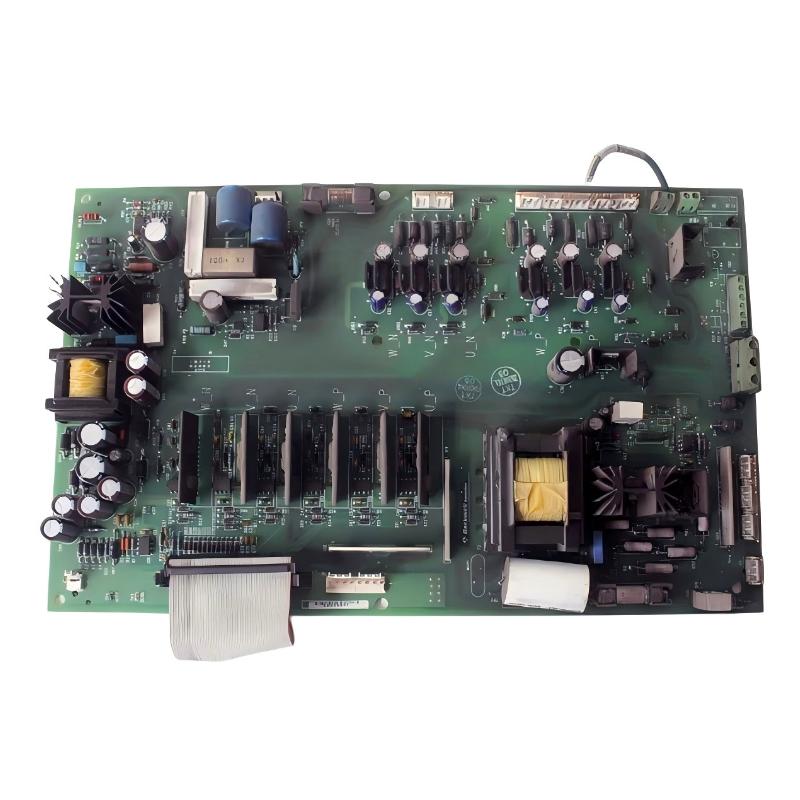
Table of Contents
- Field Case: Sudden Drive Trip with DC Bus Collapse
- Fault Symptoms of 1336-BDB-SP76D Gate Driver Module
- Observed Switching Failure & Current Anomalies
- Root Cause Analysis (IGBT Shoot-Through & Gate Timing Error)
- Diagnostic Workflow for Gate Driver Board
- Repair & Recovery Actions
- Prevention Strategy for Inverter Power Stages
- FAQs on 1336-BDB-SP76D Faults
- Engineering Summary
Field Case: Sudden Drive Trip with DC Bus Collapse
Allen-Bradley 1336-BDB-SP76D gate driver module faults can escalate into severe inverter failures. In one steel processing line, a 1336 VFD tripped instantly during acceleration with a DC bus collapse. Initial suspicion focused on rectifier failure, but further analysis identified gate driver timing failure causing inverter shoot-through conditions.
Fault Symptoms of 1336-BDB-SP76D Gate Driver Module
Typical field symptoms include:
- Instant overcurrent trip during start command
- DC bus voltage rapid collapse under load
- Severe phase current imbalance (U/V/W mismatch)
- Repeated “power stage fault” or “IGBT failure” alarms
Observed Switching Failure & Current Anomalies
During oscilloscope diagnostics, engineers observed abnormal switching overlap between high-side and low-side IGBTs:
PHASE_U_GATE = overlapping ON/OFF transition
PHASE_V_GATE = delayed turn-off signal
PHASE_W_GATE = unstable pulse width modulation
DC_BUS = sharp drop during switching event
OUTPUT_CURRENT = uncontrolled surge spike
FAULT_TRIGGER = instantaneous overcurrent shutdown
This behavior is consistent with gate timing distortion leading to shoot-through conditions inside the inverter bridge.
Root Cause Analysis (IGBT Shoot-Through & Gate Timing Error)
The 1336-BDB-SP76D gate driver is responsible for precise timing separation between complementary IGBT switches. Failures typically arise from:
- Degraded gate driver IC causing timing skew between phases
- Dead-time control failure leading to simultaneous conduction
- Noise coupling affecting isolated driver channels
- Partial short circuit stress damaging driver logic integrity
In one real case, repeated motor stall conditions damaged timing control circuits, resulting in full inverter shoot-through and DC bus collapse.
Diagnostic Workflow for Gate Driver Board
A structured power-stage isolation approach is required:
- Measure DC bus behavior during no-load startup
- Verify PWM command signals from control board
- Compare gate timing between high-side and low-side IGBTs
- Inspect driver board for thermal damage or solder fatigue
- Test IGBT modules for short circuit conditions
DRIVER_FAULT_ANALYSIS /MODEL=1336-BDB-SP76D /GATE_TIMING /SHOOT_THROUGH_CHECK /POWER_STAGE_TEST
Repair & Recovery Actions
- Replaced failed gate driver module with correct SP76D revision
- Replaced damaged IGBT module after shoot-through event
- Checked snubber and protection circuits for secondary damage
- Verified dead-time configuration in control firmware
After repair, DC bus stability returned and inverter operated normally under full load without further trips.
Prevention Strategy for Inverter Power Stages
- Ensure correct dead-time configuration in VFD control system
- Prevent repeated fault restarts without root cause elimination
- Maintain thermal stability in inverter power section
- Monitor phase current symmetry during commissioning
- Inspect gate driver boards during scheduled maintenance cycles
FAQs on 1336-BDB-SP76D Faults
What is shoot-through in a VFD?
It occurs when both IGBTs in the same phase conduct simultaneously, causing a direct DC bus short.
Can a gate driver cause DC bus collapse?
Yes. Incorrect gate timing can lead to shoot-through and rapid DC bus discharge.
Is IGBT replacement always required?
Not always, but after shoot-through events, IGBT modules must always be tested before reuse.
Engineering Summary
The Allen-Bradley 1336-BDB-SP76D gate driver module plays a critical role in inverter timing control. Field failures are often caused by gate timing distortion, thermal stress, or power-stage damage rather than control logic errors. Accurate diagnosis of switching behavior is essential to prevent catastrophic inverter failure and ensure reliable VFD operation.